I did not trust meatloaf. For years, it was the dish I politely pushed around my plate at family dinners—dense, dry, and swimming in a ketchup slick that somehow managed to be both sweet and acidic in the wrong ways. So when my neighbor dropped off a foil-wrapped loaf on a random Tuesday, I thanked her with a smile and immediately slid it to the back of the fridge, fully intending to let it become a science experiment. Three days later, out of guilt and hunger, I sliced off a corner. The glaze caught the light—sticky, dark, almost caramelized. The meat held together without crumbling into dust. I ate that cold slice standing over the kitchen sink, and I realized I had been wrong about meatloaf my entire adult life.
That neighbor’s version used a brown sugar glaze, and honestly, it changed everything. The sweetness didn’t fight the meat—it coaxed out the savory richness in a way that made every bite feel intentional. I asked for the recipe, tweaked it over maybe a dozen attempts, and landed on this version. It’s the kind of meal that makes you slow down, even on a busy weeknight. The kind that fills your kitchen with that unmistakable aroma of garlic, onion, and something slightly sweet baking low and slow.
This Classic Meatloaf with Brown Sugar Glaze is not fancy. It’s not complicated. But it is the version I now bring to potlucks, the one my kids actually request, and the one that made me a believer. Sometimes the best recipes are the ones you least expect to love.
Why You’ll Love This Recipe
This isn’t just another meatloaf recipe. After testing countless versions—some too dry, some too greasy, some that fell apart the second you looked at them—I landed on a formula that actually works every single time. Here’s why this one stands out:
- Perfectly Moist Every Time : The combination of milk-soaked breadcrumbs and the right meat-to-fat ratio keeps this loaf tender without being mushy. No more crumbly, dry slices that need drowning in ketchup.
- That Brown Sugar Glaze : This is the star. The glaze caramelizes on top during baking, creating a sticky-sweet crust that balances the savory meat. It’s not just a topping—it’s the reason people ask for seconds.
- Simple Pantry Ingredients : Ground beef, breadcrumbs, eggs, onion, garlic, and a few spices. No weird ingredients you’ll use once and forget about. You probably have most of this already.
- Family-Approved : I’ve served this to picky kids, skeptical in-laws, and hungry teenagers. It disappears fast. Even my friend who swore she “didn’t like meatloaf” asked for the recipe.
- Great for Leftovers : Cold meatloaf sandwiches the next day? Yes, please. Or slice it up and reheat with a little extra glaze. It might even be better day two.
What makes this recipe different is the technique. Instead of overworking the meat, you mix gently until just combined. Instead of baking it dry, you tent it with foil for part of the time. And instead of a boring ketchup smear, you get a thick, glossy brown sugar glaze that bakes into something almost candied. It’s comfort food that actually delivers.
What Ingredients You Will Need
This recipe uses simple, everyday ingredients that come together to create something far greater than the sum of their parts. Most of these are pantry staples, and the ones that aren’t are easy to find at any grocery store.
- Ground Beef (2 pounds) : I recommend 80/20 ground chuck. The 20% fat keeps the meatloaf moist and flavorful. Leaner blends (like 93/7) tend to dry out during baking. If you want to use a mix, try 1 pound ground beef and 1 pound ground pork for extra richness.
- Breadcrumbs (1 cup) : Plain or Italian-style both work. I prefer plain so I can control the seasoning. Panko breadcrumbs are fine too, but they absorb liquid differently—your loaf may be slightly looser. For a gluten-free option, use gluten-free breadcrumbs or crushed pork rinds.
- Milk (½ cup) : Whole milk is best here. It soaks into the breadcrumbs and creates a tender, custard-like texture. You can use 2% or even oat milk in a pinch, but avoid skim—it won’t add enough moisture.
- Eggs (2 large) : These act as the binder that holds everything together. Room temperature eggs incorporate more evenly. If you forget to set them out, place them in a bowl of warm water for 5 minutes.
- Yellow Onion (1 medium, finely diced) : Onion adds moisture and sweetness as it cooks. Dice it small so it melts into the meatloaf without leaving crunchy bits. I’ve used shallots in a pinch, and they work beautifully.
- Garlic (3 cloves, minced) : Fresh garlic is non-negotiable here. The jarred stuff has a sharper, less sweet flavor. If you only have garlic powder, use 1 teaspoon.
- Worcestershire Sauce (2 tablespoons) : This adds that deep, savory umami note that makes meatloaf taste like more than just seasoned beef. I use Lea & Perrins—it’s the gold standard.
- Ketchup (¼ cup, for the meat mixture) : A little ketchup in the mix adds tang and sweetness. Use your favorite brand; I stick with Heinz.
- Dried Thyme (1 teaspoon) : Thyme adds a subtle earthiness that pairs beautifully with beef. If you have fresh thyme, use 1 tablespoon of leaves, finely chopped.
- Salt (1½ teaspoons) : Kosher salt is best for even seasoning. If using table salt, reduce to 1 teaspoon.
- Black Pepper (½ teaspoon) : Freshly ground, please. Pre-ground pepper lacks that little pop of heat.
- Fresh Parsley (¼ cup, chopped) : Optional, but I love the freshness it brings. Flat-leaf parsley is milder than curly.
For the Brown Sugar Glaze:
- Ketchup (½ cup) : The base of the glaze. It thickens and sweetens as it bakes.
- Brown Sugar (⅓ cup, packed) : Light or dark brown sugar both work. Dark brown sugar gives a deeper, molasses-like flavor. Pack it firmly into the measuring cup.
- Apple Cider Vinegar (1 tablespoon) : This cuts through the sweetness and keeps the glaze from being cloying. White vinegar works too.
- Worcestershire Sauce (1 teaspoon) : Adds another layer of savory depth to the glaze.
- Garlic Powder (½ teaspoon) : Just a hint of garlic in the glaze rounds out the sweetness.
Equipment Needed
You don’t need a ton of fancy equipment for this recipe, which is part of its charm. Here’s what you’ll need:
- Large Mixing Bowl : Big enough to get your hands in there without making a mess. I use a stainless steel bowl because it’s lightweight and easy to clean.
- 9×5-Inch Loaf Pan : A standard loaf pan works perfectly. If you don’t have one, you can shape the meatloaf free-form on a rimmed baking sheet—just build up the sides slightly so the glaze doesn’t run off.
- Baking Sheet : Place the loaf pan on a baking sheet to catch any drips. Trust me, you’ll thank yourself later.
- Small Saucepan or Microwave-Safe Bowl : For making the glaze. A saucepan gives you more control, but the microwave works in a pinch.
- Chef’s Knife and Cutting Board : For dicing the onion and mincing the garlic. A sharp knife makes this step quick and painless.
- Measuring Cups and Spoons : Accurate measurements matter, especially for the glaze.
- Aluminum Foil : For tenting the meatloaf during the first half of baking. This traps steam and keeps the top from burning before the center is cooked.
- Meat Thermometer : This is the single most important tool for perfect meatloaf. Guessing doneness leads to dry meat. A digital instant-read thermometer takes the guesswork out. Target 160°F (71°C) in the center.
- Cooling Rack : Optional, but letting the meatloaf rest on a rack for 10 minutes after baking helps it hold its shape when sliced.
Preparation Method
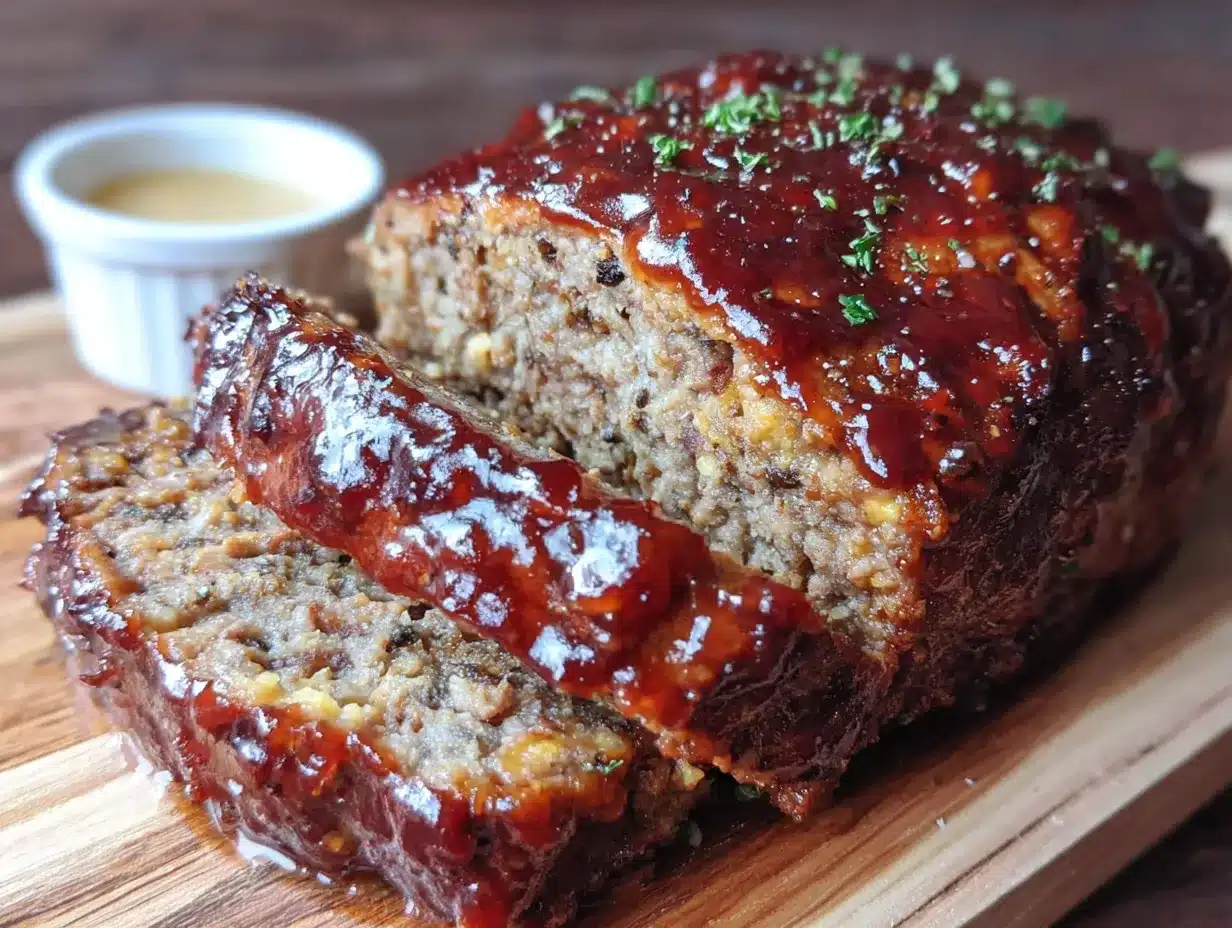
This method is straightforward, but the little details make all the difference. Follow these steps closely, and you’ll end up with a meatloaf that’s tender, flavorful, and picture-perfect.
- Preheat the oven to 350°F (175°C) . Position the rack in the center of the oven. While it heats, line a baking sheet with foil (for easy cleanup) and place your loaf pan on top.
- Soak the breadcrumbs . In your large mixing bowl, combine 1 cup of breadcrumbs with ½ cup of milk. Stir gently and let it sit for 5 minutes. The breadcrumbs will absorb the milk and turn into a thick, pasty mixture. This is your “panade”—it’s what keeps the meatloaf tender. Don’t skip this step.
- Prepare the aromatics . While the breadcrumbs soak, dice 1 medium onion finely and mince 3 cloves of garlic. You want the onion pieces small enough that they almost disappear into the meat. No one wants a big chunk of raw onion in their meatloaf.
- Mix the wet ingredients . To the soaked breadcrumbs, add 2 large eggs, 2 tablespoons Worcestershire sauce, and ¼ cup ketchup. Whisk everything together with a fork until smooth. The mixture should look like a thick, pinkish slurry.
- Add the aromatics and seasonings . Stir in the diced onion, minced garlic, 1 teaspoon dried thyme, 1½ teaspoons salt, ½ teaspoon black pepper, and ¼ cup chopped parsley (if using). Mix until evenly distributed.
- Add the ground beef . Crumble 2 pounds of ground beef into the bowl. Here’s the most important part: use your hands to mix everything together gently. Squeeze the mixture through your fingers, turning it over and over, until the ingredients are just combined. Overmixing develops the proteins in the meat and makes it tough. You want to stop as soon as you don’t see any more streaks of raw beef. This takes about 30 seconds of gentle work.
- Shape the loaf . Transfer the meat mixture to your loaf pan. Press it in gently, making sure there are no air pockets. Don’t pack it down hard—just smooth the top with your hands. The loaf should be slightly domed in the center.
- Make the glaze . In a small saucepan over medium heat, combine ½ cup ketchup, ⅓ cup packed brown sugar, 1 tablespoon apple cider vinegar, 1 teaspoon Worcestershire sauce, and ½ teaspoon garlic powder. Whisk until the sugar dissolves and the mixture is smooth, about 2 minutes. Remove from heat. Alternatively, microwave everything in a bowl for 30 seconds, stir, and repeat until smooth.
- First bake (tented) . Cover the loaf pan loosely with aluminum foil. Bake for 45 minutes. The foil traps steam and prevents the top from drying out before the center is cooked through.
- Apply the glaze . After 45 minutes, carefully remove the foil. Brush or spoon about half of the brown sugar glaze over the top of the meatloaf, spreading it evenly. Reserve the remaining glaze for serving.
- Second bake (uncovered) . Return the meatloaf to the oven, uncovered, and bake for another 20-25 minutes. The glaze will bubble and caramelize, forming a sticky, dark crust. The internal temperature should reach 160°F (71°C) when measured in the center with a meat thermometer.
- Rest before slicing . Remove the meatloaf from the oven and let it rest in the pan for 10 minutes. This is crucial—the juices need time to redistribute. If you slice too soon, the meatloaf will fall apart. After 10 minutes, transfer the loaf to a cutting board (or slice it directly in the pan).
- Serve with extra glaze . Warm the reserved glaze and drizzle it over each slice. Or serve it on the side for dipping. Either way, don’t skip it.
Cooking Tips & Techniques
I’ve made this recipe more times than I can count, and I’ve learned a few things the hard way. Here are the tips that will save you from my early mistakes:
Don’t overmix. I cannot stress this enough. The more you handle the meat, the denser and tougher the meatloaf becomes. Mix just until everything comes together. If you see streaks of egg or breadcrumb, that’s fine—they’ll cook out.
Use a meat thermometer. I ruined three meatloaves before I bought one. The difference between 155°F and 165°F is the difference between juicy and dry. Pull it at 160°F and let carryover cooking do the rest. If you don’t have a thermometer, cut into the center—the juices should run clear, not pink.
Let it rest. I know you’re hungry. I know it smells incredible. But slicing into a meatloaf straight out of the oven is a guaranteed way to end up with a crumbled mess on your plate. Ten minutes. Set a timer. It’s worth it.
Line your pan. If you want to make cleanup even easier, line your loaf pan with parchment paper, leaving a few inches overhanging on each side. After the meatloaf rests, you can lift it right out of the pan using the parchment “handles.”
Watch the glaze. Brown sugar burns quickly. If the glaze starts looking too dark or smoking during the last 10 minutes of baking, tent the meatloaf loosely with foil again. Every oven runs differently—mine runs hot, so I usually check at the 15-minute mark of the second bake.
Make it ahead. You can assemble the meatloaf (without the glaze) up to 24 hours in advance. Keep it covered in the refrigerator. When you’re ready to bake, add about 10 minutes to the first bake time since you’re starting from cold.
Variations & Adaptations
This recipe is a great starting point, but don’t be afraid to make it your own. Here are some variations I’ve tried and loved:
Turkey Meatloaf : Swap the ground beef for 2 pounds of ground turkey (93/7 works best). Add 2 tablespoons of olive oil to the mixture—turkey is leaner and needs the extra fat to stay moist. The cooking time stays about the same, but check the internal temperature at 155°F—ground turkey is safe at 165°F.
Cheesy Stuffed Meatloaf : After shaping half the meat mixture into the pan, make a shallow well down the center. Fill it with ½ cup of shredded cheddar or mozzarella, then top with the remaining meat mixture. Seal the edges well so the cheese doesn’t leak out during baking. The melted cheese center is a game-changer for kids and adults alike.
Spicy Southwest Version : Add 1 diced jalapeño (seeds removed for less heat) and 1 teaspoon cumin to the meat mixture. Replace the ketchup in the glaze with ½ cup of your favorite BBQ sauce mixed with the brown sugar. Top with sliced pickled jalapeños before the second bake for a tangy kick.
Gluten-Free Adaptation : Use gluten-free breadcrumbs or crushed pork rinds instead of regular breadcrumbs. The pork rinds add a subtle savory flavor and hold the loaf together beautifully. Make sure your Worcestershire sauce is gluten-free (Lea & Perrins is not—try a certified gluten-free brand).
Mini Meatloaves : Divide the mixture into a 12-cup muffin tin sprayed with cooking spray. Bake at 350°F for 20 minutes, then add the glaze and bake another 10 minutes. These cook faster and are perfect for meal prep or portion control. The kids love them.
Serving & Storage Suggestions
This meatloaf is a meal in itself, but the right sides can turn it into something special. Here’s how I like to serve it:
Serving Temperature : Serve warm, straight from the oven. The glaze should be sticky and glossy. If you’re making it for a crowd, you can keep it warm in a 200°F oven for up to 30 minutes—just tent it with foil so the glaze doesn’t dry out.
Classic Sides : Mashed potatoes are the obvious choice, and for good reason—the gravy-like glaze soaks into them beautifully. Roasted green beans, steamed broccoli, or a simple side salad balance the richness. For a cozy comfort meal, serve it alongside this Tuscan white bean and kale soup for a hearty, soul-warming dinner.
Leftovers : This meatloaf is possibly even better the next day. Let it cool completely, then wrap tightly in plastic wrap or foil. Store in the refrigerator for up to 4 days. For longer storage, slice the meatloaf and freeze individual portions in a freezer-safe bag for up to 3 months.
Reheating : The best way to reheat is in a 300°F oven for about 10-15 minutes, covered with foil to prevent drying. You can also microwave individual slices on a plate covered with a damp paper towel for 45-60 seconds. For a quick lunch, slice it cold and pan-fry in a little butter until crispy on both sides—trust me on this.
Meatloaf Sandwiches : This is my favorite leftover treatment. Toast two slices of sourdough, spread with a little mayo or Dijon mustard, and pile on thick slices of cold meatloaf. Add a slice of cheddar and a handful of arugula. Press in a panini press or just eat it open-faced. It’s the lunch that makes you wish you’d made a bigger meatloaf.
Nutritional Information & Benefits
This recipe makes 8 generous servings. The nutritional values below are estimates based on the ingredients listed, using 80/20 ground beef and full-fat milk.
| Nutrient | Per Serving |
|---|---|
| Calories | 385 |
| Protein | 28g |
| Fat | 22g |
| Saturated Fat | 9g |
| Carbohydrates | 18g |
| Fiber | 1g |
| Sugar | 12g |
| Sodium | 680mg |
Ground beef is an excellent source of high-quality protein, iron, and B vitamins, particularly B12. The onions and garlic provide antioxidants and compounds that support immune health. While this isn’t a “light” recipe, it’s a satisfying, nutrient-dense meal that fits well into a balanced diet. If you’re watching your sodium, reduce the added salt to 1 teaspoon and look for low-sodium ketchup.
This recipe contains gluten (from breadcrumbs) and dairy (from milk). For dairy-free, use unsweetened almond milk or oat milk in the panade—the texture will be slightly less tender but still good.
Conclusion
This Classic Meatloaf with Brown Sugar Glaze is the recipe that changed my mind about a dish I thought I’d never love. It’s humble, yes, but it’s also deeply satisfying in a way that fancy food rarely is. The glaze caramelizes into something almost candied, the meat stays tender and juicy, and every bite tastes like comfort.
I hope you give it a chance, even if you’re a skeptic like I was. Play with the variations, serve it with your favorite sides, and don’t forget those cold leftovers the next day. And if you make it your own—maybe with a different spice blend or a cheesy center—I’d love to hear about it. Drop a comment below and let me know how it turned out. Did you add anything? Change the glaze? Serve it to someone who thought they didn’t like meatloaf?
Honestly, this recipe is proof that sometimes the simplest things are the ones worth holding onto. Happy cooking, friends.
Frequently Asked Questions
Can I use ground turkey or chicken instead of beef?
Absolutely. Ground turkey (93/7) works well, but add 2 tablespoons of olive oil to the mixture to keep it from drying out. Ground chicken is also fine, but it’s even leaner, so consider mixing it with a little ground pork or adding an extra egg yolk for moisture. Cook to an internal temperature of 165°F for poultry.
Why did my meatloaf fall apart when I sliced it?
This usually happens for two reasons. Either the meatloaf didn’t rest long enough after baking (let it sit for at least 10 minutes), or the mixture was too wet. If your meatloaf seems loose before baking, add an extra ¼ cup of breadcrumbs. Also, make sure you’re using enough egg—two large eggs is the right amount for 2 pounds of meat.
Can I make this recipe without a loaf pan?
Yes. Shape the meat mixture into a free-form loaf on a rimmed baking sheet lined with parchment paper. Build the sides up slightly so the glaze doesn’t run off. The baking time stays about the same, but the meatloaf will cook a little faster since more surface area is exposed. Check the temperature at 55 minutes.
How do I prevent the glaze from burning?
Brown sugar burns quickly because of its high sugar content. If you notice the glaze getting too dark during the last 10 minutes of baking, tent the meatloaf loosely with aluminum foil. Every oven is different—my convection oven runs hot, so I start checking at the 15-minute mark of the second bake.
Can I freeze this meatloaf?
Yes, and it freezes beautifully. Let the baked meatloaf cool completely, then wrap it tightly in plastic wrap followed by a layer of aluminum foil. Freeze for up to 3 months. To reheat, thaw overnight in the refrigerator, then warm in a 300°F oven covered with foil for about 20 minutes. You can also freeze the unbaked meatloaf—just assemble it without the glaze, wrap well, and freeze. Thaw overnight, then add the glaze and bake as directed, adding about 10-15 minutes to the cooking time.
Pin This Recipe!
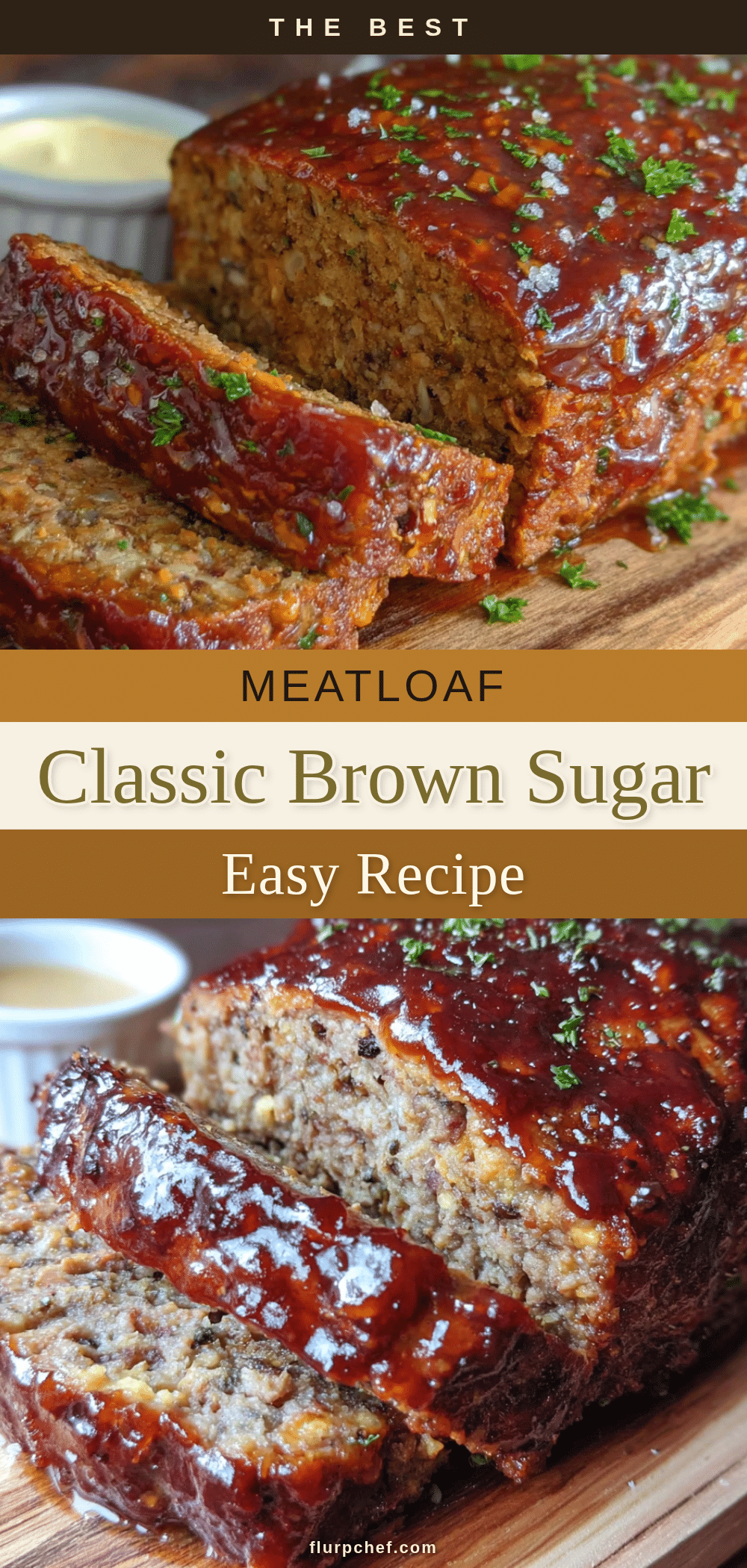
Classic Meatloaf with Brown Sugar Glaze
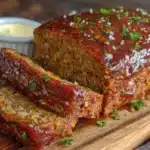
This Classic Meatloaf with Brown Sugar Glaze is tender, juicy, and topped with a sticky-sweet caramelized glaze that makes every bite irresistible. It’s a simple, family-friendly recipe that turns skeptics into believers.
- Prep Time: 15 minutes
- Cook Time: 1 hour 5 minutes
- Total Time: 1 hour 20 minutes
- Yield: 8 servings 1x
- Category: Main Course
- Cuisine: American
Ingredients
- 2 pounds ground beef (80/20)
- 1 cup breadcrumbs (plain or Italian-style)
- ½ cup whole milk
- 2 large eggs
- 1 medium yellow onion, finely diced
- 3 cloves garlic, minced
- 2 tablespoons Worcestershire sauce
- ¼ cup ketchup
- 1 teaspoon dried thyme
- 1½ teaspoons kosher salt
- ½ teaspoon black pepper, freshly ground
- ¼ cup fresh parsley, chopped (optional)
- For the Brown Sugar Glaze:
- ½ cup ketchup
- ⅓ cup brown sugar, packed
- 1 tablespoon apple cider vinegar
- 1 teaspoon Worcestershire sauce
- ½ teaspoon garlic powder
Instructions
- Preheat the oven to 350°F (175°C). Position the rack in the center of the oven. Line a baking sheet with foil and place a 9×5-inch loaf pan on top.
- In a large mixing bowl, combine 1 cup breadcrumbs with ½ cup milk. Stir gently and let sit for 5 minutes until the breadcrumbs absorb the milk and form a thick paste (panade).
- While the breadcrumbs soak, finely dice the onion and mince the garlic.
- To the soaked breadcrumbs, add 2 large eggs, 2 tablespoons Worcestershire sauce, and ¼ cup ketchup. Whisk until smooth.
- Stir in the diced onion, minced garlic, 1 teaspoon dried thyme, 1½ teaspoons salt, ½ teaspoon black pepper, and ¼ cup chopped parsley (if using). Mix until evenly distributed.
- Crumble 2 pounds of ground beef into the bowl. Use your hands to gently mix everything together until just combined—about 30 seconds. Do not overmix.
- Transfer the meat mixture to the loaf pan. Press gently to shape, smoothing the top. Do not pack tightly.
- Make the glaze: In a small saucepan over medium heat, combine ½ cup ketchup, ⅓ cup packed brown sugar, 1 tablespoon apple cider vinegar, 1 teaspoon Worcestershire sauce, and ½ teaspoon garlic powder. Whisk until the sugar dissolves and the mixture is smooth, about 2 minutes. Remove from heat. Alternatively, microwave in a bowl for 30 seconds, stir, and repeat until smooth.
- Cover the loaf pan loosely with aluminum foil. Bake for 45 minutes.
- After 45 minutes, carefully remove the foil. Brush or spoon about half of the glaze over the top of the meatloaf. Reserve the remaining glaze for serving.
- Return the meatloaf to the oven, uncovered, and bake for another 20-25 minutes, until the internal temperature reaches 160°F (71°C) in the center.
- Remove from the oven and let rest in the pan for 10 minutes. Then transfer to a cutting board or slice directly in the pan.
- Warm the reserved glaze and drizzle over each slice or serve on the side.
Notes
Don’t overmix the meat mixture to keep the meatloaf tender. Use a meat thermometer to ensure doneness without drying out. Let the meatloaf rest for 10 minutes before slicing to allow juices to redistribute. The glaze can burn quickly; if it gets too dark during the last 10 minutes, tent with foil. For make-ahead, assemble without glaze up to 24 hours in advance and refrigerate; add about 10 minutes to the first bake time.
Nutrition
- Serving Size: 1 slice (1/8 of loaf
- Calories: 385
- Sugar: 12
- Sodium: 680
- Fat: 22
- Saturated Fat: 9
- Carbohydrates: 18
- Fiber: 1
- Protein: 28
Keywords: meatloaf, brown sugar glaze, classic meatloaf, comfort food, ground beef, easy dinner