Let me tell you, the moment the scent of garlic, fresh basil, and just-picked garden vegetables mingled with warm pasta, I knew I had stumbled onto something truly unforgettable. The first time I tossed together this fresh pasta primavera with crisp garden vegetables was on a sunlit afternoon, the kind of moment where you pause, take a deep breath, and just smile because you know you’re onto something special. When I was knee-high to a grasshopper, my grandma used to make something similar, but honestly, this version feels like a bright twist on that classic comfort—lighter, fresher, and packed with that vibrant springtime crunch.
You know what’s funny? My family couldn’t stop sneaking bites off the serving bowl while I was plating it (and I can’t really blame them). That blend of tender, silky pasta intertwined with the snap of garden-fresh veggies makes this recipe dangerously easy to love. Whether it’s a casual weeknight dinner, a weekend lunch to brighten up your table, or a sweet little surprise for your Pinterest-worthy brunch spread, this fresh pasta primavera is pure, nostalgic comfort with a fresh kick. I’ve tested it more times than I can count—in the name of research, of course—and it’s become a staple for family dinners and gifting (yes, I bring it to potlucks!). Trust me, you’re going to want to bookmark this one.
Why You’ll Love This Fresh Pasta Primavera Recipe
Honestly, this fresh pasta primavera recipe has won over even the pickiest eaters in my circle—and here’s why:
- Quick & Easy: Comes together in under 30 minutes, perfect for busy weeknights or last-minute cravings.
- Simple Ingredients: No fancy grocery runs needed; you likely have most items in your kitchen right now.
- Perfect for Spring and Summer: Showcases vibrant, crisp garden veggies at their prime.
- Crowd-Pleaser: Kids and adults alike rave about the fresh flavors and satisfying textures.
- Unbelievably Delicious: The silky pasta paired with crunchy vegetables and a light, herbaceous sauce is next-level comfort food.
What makes this recipe stand out? It’s the freshness—the quick sauté of garden vegetables keeps that natural crunch and brightness alive, and a light garlic and herb sauce gently coats the pasta without overpowering the delicate flavors. Plus, I swap in homemade fresh pasta whenever I can (it’s easier than you’d think!), which gives it a luscious, tender texture that store-bought just can’t match. This isn’t just another pasta primavera; it’s a fresh take that feels both wholesome and indulgent. It’s one of those dishes where you close your eyes after the first bite and savor the simple, honest goodness.
What Ingredients You Will Need
This recipe uses simple, wholesome ingredients to deliver bold flavor and satisfying texture without the fuss. Most are pantry staples or fresh garden finds, making it a breeze to whip up any time.
- Fresh pasta: About 12 oz (340 g) of fresh fettuccine or tagliatelle (store-bought works fine in a pinch)
- Olive oil: 3 tablespoons, extra virgin preferred (I love California Olive Ranch for its buttery finish)
- Garlic: 3 cloves, thinly sliced (adds a fragrant punch)
- Yellow zucchini: 1 medium, sliced into thin half-moons
- Asparagus: 1 bunch (about 8 oz / 225 g), trimmed and cut into 2-inch pieces
- Cherry tomatoes: 1 cup (150 g), halved (use ripe, sweet ones for best flavor)
- Snap peas: 1 cup (100 g), trimmed and halved
- Fresh basil leaves: 1/2 cup (loosely packed), torn
- Fresh parsley: 1/4 cup, finely chopped
- Lemon zest: From 1 lemon (adds bright citrus notes)
- Grated Parmesan cheese: 1/2 cup (optional but highly recommended; use Parmigiano-Reggiano for depth)
- Salt and freshly ground black pepper: To taste
- Red pepper flakes: A pinch, for a subtle kick (optional)
- Vegetable broth: 1/4 cup (60 ml), to deglaze and add moisture
If you want a gluten-free option, just swap the fresh pasta with your favorite gluten-free noodles. For a vegan twist, leave out the Parmesan or use a plant-based alternative. When asparagus is out of season, green beans or broccolini work beautifully here.
Equipment Needed
- Large pot for boiling pasta (a 6-quart pot works well)
- Large skillet or sauté pan (preferably non-stick or stainless steel)
- Colander for draining pasta
- Wooden spoon or silicone spatula for stirring
- Microplane or fine grater (for lemon zest and Parmesan)
- Tongs (handy for mixing pasta and veggies)
If you don’t have a microplane, a small box grater works fine for zesting and grating cheese. For sautéing, I personally prefer a heavy-bottomed stainless steel pan—it helps prevent hot spots and browning too quickly. But honestly, a good non-stick skillet will get the job done just as well. Budget-friendly options like a basic nylon spatula and sturdy colander work perfectly too.
Preparation Method
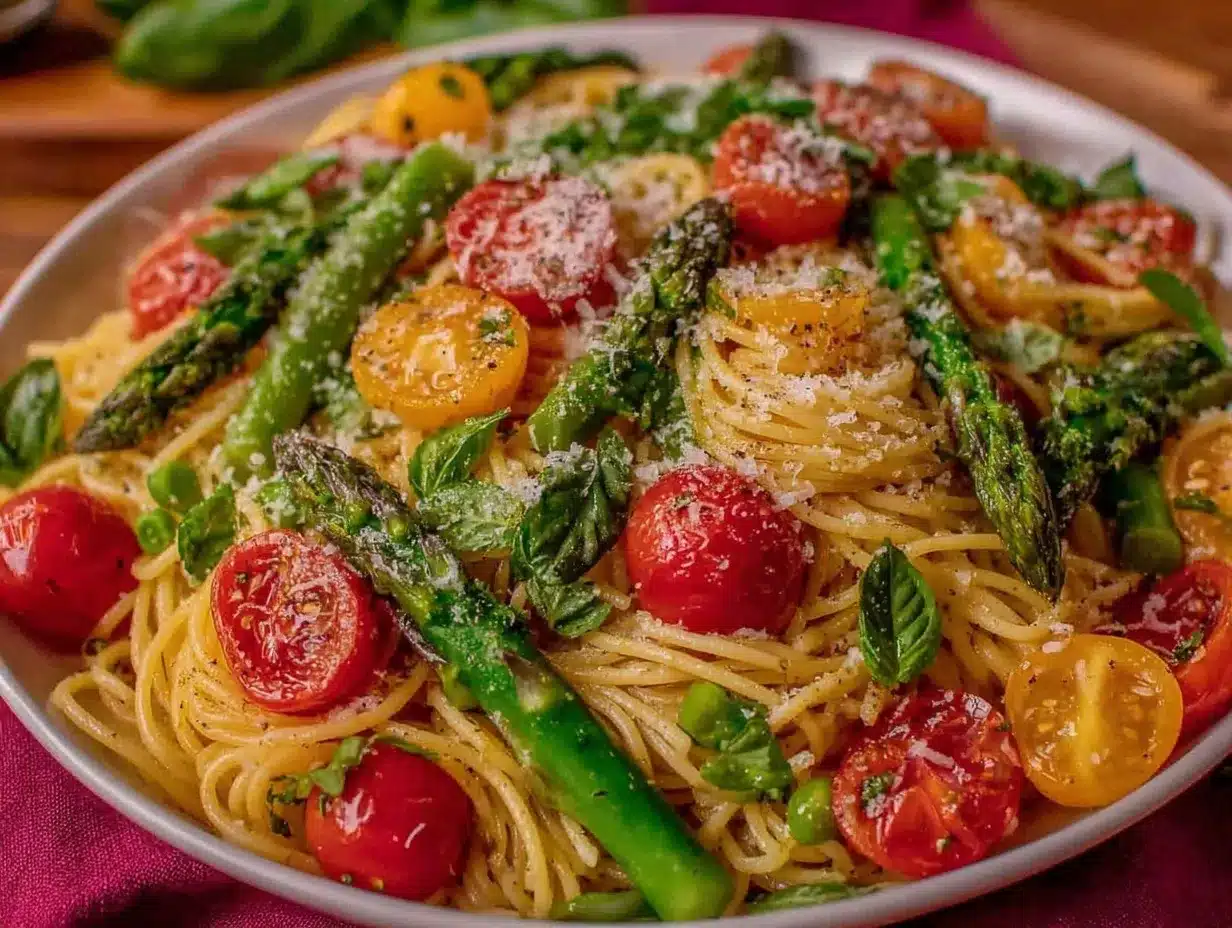
- Prepare the pasta: Bring a large pot of salted water to a rolling boil. Add 12 oz (340 g) fresh pasta and cook until al dente, about 2-3 minutes (fresh pasta cooks fast!). Reserve 1 cup (240 ml) pasta water before draining.
- Prep the vegetables: While pasta cooks, slice yellow zucchini into thin half-moons, trim and chop asparagus into 2-inch pieces, halve cherry tomatoes, and trim snap peas.
- Sauté aromatics: Heat 3 tablespoons olive oil in a large skillet over medium heat. Add sliced garlic and cook gently for 1-2 minutes until fragrant but not browned (watch it closely; burnt garlic is a bummer!).
- Add vegetables: Toss in the asparagus and yellow zucchini first; sauté for about 3-4 minutes until they begin to soften but still hold a snap.
- Add snap peas and cherry tomatoes: Stir and cook for another 2 minutes. The veggies should be bright and crisp-tender, not mushy.
- Deglaze the pan: Pour in 1/4 cup (60 ml) vegetable broth to lift any tasty bits stuck to the skillet bottom. Let it simmer for 1 minute to meld flavors.
- Combine pasta and veggies: Add the drained pasta to the skillet. Toss gently with tongs to coat everything evenly.
- Add fresh herbs and zest: Stir in torn basil, chopped parsley, and lemon zest for that fresh, herbal brightness.
- Adjust consistency: If the pasta seems dry, add reserved pasta water a few tablespoons at a time until you get a light, silky sauce that clings to the noodles.
- Season: Sprinkle with salt, freshly ground black pepper, and a pinch of red pepper flakes if you like a little heat.
- Finish with cheese: Remove from heat and toss in 1/2 cup grated Parmesan cheese. The residual heat melts it into a creamy coating—honestly, this step is pure magic.
- Serve immediately: Plate the pasta primavera, garnish with extra basil leaves or a drizzle of olive oil if you’re feeling fancy.
Pro tip: Don’t overcook the vegetables! You want that crisp garden snap to contrast with the tender pasta. Also, keep a close eye on the garlic in the early sauté; it should be golden, not burnt, for the best flavor.
Cooking Tips & Techniques
Here’s what I’ve learned through trial, error, and a few “oops” moments with this fresh pasta primavera:
- Timing is everything: Prep all your veggies before the pasta hits the water. Fresh pasta cooks quickly, so you’ll want everything ready to toss immediately.
- Keep veggies crisp: Sauté on medium heat, and avoid overcrowding the pan. Overcrowding steams veggies rather than sautés them, which dulls both texture and flavor.
- Reserve pasta water: This starchy water is the secret to a smooth sauce. Add slowly until the pasta and veggies have a lovely light coating.
- Don’t skip the fresh herbs: Adding basil and parsley at the end gives the dish a fresh, vibrant pop that dried herbs just can’t match.
- Use quality olive oil: It makes a subtle but noticeable difference in flavor and mouthfeel.
- Beware of over-salting: The Parmesan adds saltiness, so season gradually and taste as you go.
One time, I accidentally overcooked the zucchini until it was mushy—trust me, it killed the dish’s charm. Since then, I’ve made it my mission to preserve that crisp snap. Also, multitasking helps: while pasta boils, sauté veggies and prep herbs to keep the timing smooth and stress-free.
Variations & Adaptations
This fresh pasta primavera recipe is super adaptable, so feel free to make it your own:
- Seasonal swaps: In autumn, replace asparagus with tender green beans or broccolini. Winter? Use roasted root vegetables like carrots and parsnips for a cozy twist.
- Protein additions: Toss in grilled chicken, shrimp, or crispy tofu for a heartier meal.
- Vegan version: Skip the Parmesan or swap it for nutritional yeast or a vegan cheese alternative. Use olive oil or vegan butter for richness.
- Gluten-free: Use gluten-free fresh pasta or spiralized zucchini noodles for a grain-free option.
- Spicy kick: Add crushed red pepper flakes or a drizzle of chili oil when sautéing garlic for some heat.
Personally, I’ve tried adding fresh peas and baby spinach in spring, which adds a lovely sweetness and extra greens without changing the basic flavor profile. It’s a simple way to bulk up the dish with seasonal veggies.
Serving & Storage Suggestions
Serve this fresh pasta primavera warm, right off the stove, to enjoy the full snap of the garden vegetables and the silky pasta texture. A light drizzle of good olive oil and an extra sprinkle of Parmesan on top makes for a pretty presentation.
Pair it with a crisp white wine like Pinot Grigio or a refreshing sparkling water with lemon to keep things bright. For sides, a fresh green salad or crusty bread rounds out the meal nicely.
Leftovers store well in an airtight container in the refrigerator for up to 2 days. When reheating, add a splash of water or broth and gently warm over low heat to prevent drying out the pasta. Flavors tend to meld and deepen overnight, so sometimes it’s even better the next day.
Nutritional Information & Benefits
This fresh pasta primavera packs a nutrient-rich punch while keeping things light and satisfying. A typical serving provides approximately 350-400 calories, with a good balance of carbohydrates from the pasta and fiber from the crisp garden vegetables.
The fresh veggies provide vitamins A, C, and K, plus antioxidants that support immune health and vibrant skin. Olive oil adds heart-healthy monounsaturated fats, while fresh herbs contribute phytonutrients and flavor without extra calories.
This recipe can be made gluten-free and vegan with simple swaps, making it friendly for various dietary needs. Just keep in mind the Parmesan cheese for potential dairy allergens.
Conclusion
Honestly, fresh pasta primavera with crisp garden vegetables is one of those recipes that feels like a warm hug from the inside out. It’s quick, simple, and packed with fresh flavors that celebrate the season’s best produce. Whether you’re looking to impress guests with minimal effort or craving a wholesome family meal, this recipe fits the bill.
Feel free to tweak the veggies or herbs to suit your taste or what’s in your garden or market. I love how forgiving and customizable it is, which makes it a kitchen staple for me. Give it a try, and let me know how you make it your own! Don’t forget to comment below with your favorite twists or share this recipe with a friend who’d appreciate a fresh, easy pasta dish.
Here’s to many cozy, delicious meals ahead!
FAQs About Fresh Pasta Primavera with Crisp Garden Vegetables
Can I use dried pasta instead of fresh pasta?
Absolutely! Just cook the dried pasta according to package instructions and adjust the sauté time for vegetables accordingly. Fresh pasta cooks faster, so dried pasta will take a bit longer but works just fine.
What if I don’t have all the vegetables listed?
No worries! Use whatever fresh veggies you have on hand—bell peppers, broccoli, green beans, or even carrots work great. Just adjust the sauté times based on the veggies’ firmness.
How do I keep the vegetables from getting mushy?
Sauté them on medium heat without overcrowding the pan, and cook just until tender-crisp. Overcooking is the main culprit for mushiness, so keep an eye and taste as you go.
Can I make this recipe ahead of time?
You can prep the vegetables and herbs ahead, but it’s best to cook and toss with pasta just before serving to keep everything fresh and crisp.
How do I store leftovers, and can I freeze this dish?
Store leftovers in an airtight container in the fridge for up to 2 days. Freezing isn’t recommended as the fresh vegetables and pasta texture can suffer. Reheat gently on the stove with a splash of broth or water.
Pin This Recipe!
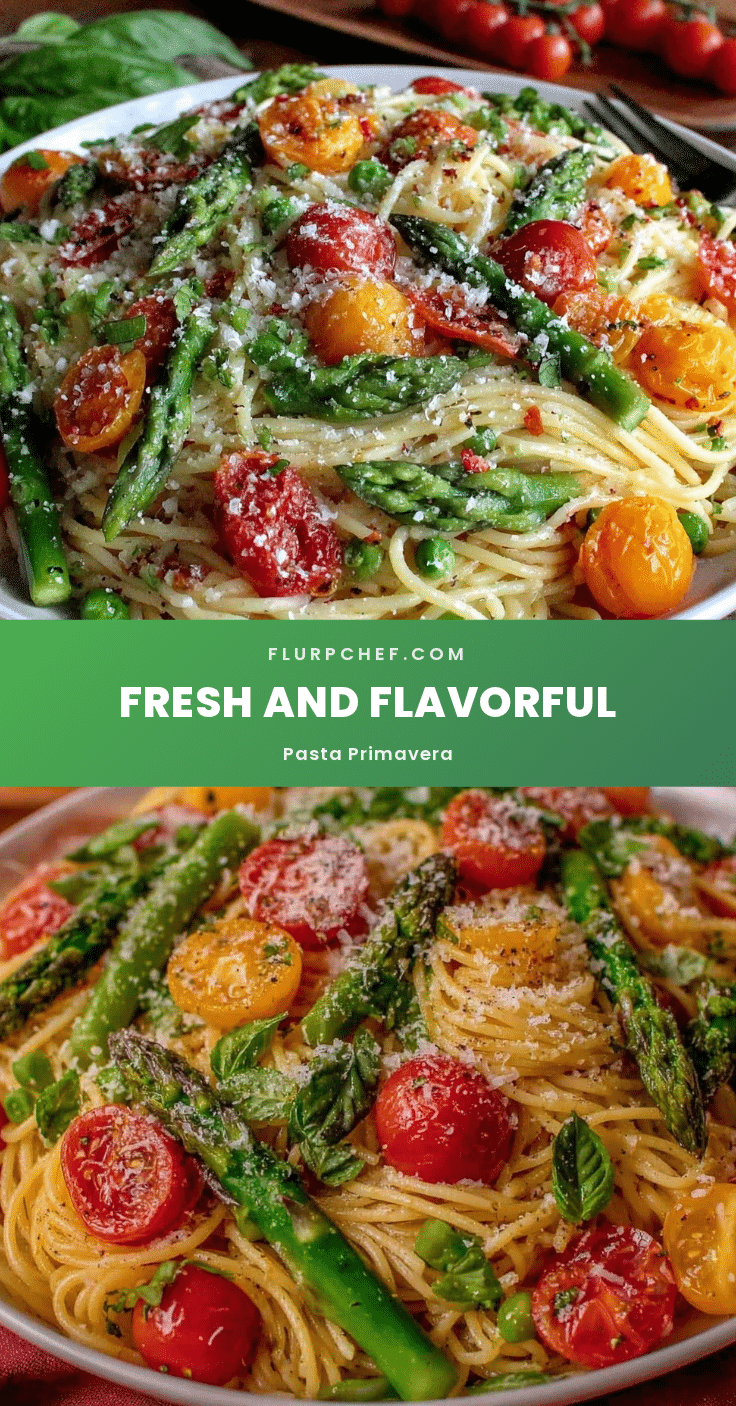
Fresh Pasta Primavera Recipe Easy Homemade with Crisp Garden Vegetables
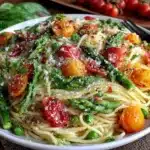
A quick and easy fresh pasta primavera featuring crisp garden vegetables, fresh herbs, and a light garlic sauce. Perfect for spring and summer meals, this recipe delivers vibrant flavors and satisfying textures in under 30 minutes.
- Prep Time: 10 minutes
- Cook Time: 15 minutes
- Total Time: 25 minutes
- Yield: 4 servings 1x
- Category: Main Course
- Cuisine: Italian
Ingredients
- 12 oz fresh fettuccine or tagliatelle (store-bought works fine)
- 3 tablespoons extra virgin olive oil
- 3 cloves garlic, thinly sliced
- 1 medium yellow zucchini, sliced into thin half-moons
- 1 bunch asparagus (about 8 oz), trimmed and cut into 2-inch pieces
- 1 cup cherry tomatoes (150 g), halved
- 1 cup snap peas (100 g), trimmed and halved
- 1/2 cup fresh basil leaves, torn
- 1/4 cup fresh parsley, finely chopped
- Zest of 1 lemon
- 1/2 cup grated Parmesan cheese (optional)
- Salt and freshly ground black pepper, to taste
- Pinch of red pepper flakes (optional)
- 1/4 cup vegetable broth (60 ml)
Instructions
- Bring a large pot of salted water to a rolling boil. Add 12 oz fresh pasta and cook until al dente, about 2-3 minutes. Reserve 1 cup pasta water before draining.
- While pasta cooks, slice yellow zucchini into thin half-moons, trim and chop asparagus into 2-inch pieces, halve cherry tomatoes, and trim snap peas.
- Heat 3 tablespoons olive oil in a large skillet over medium heat. Add sliced garlic and cook gently for 1-2 minutes until fragrant but not browned.
- Add asparagus and yellow zucchini; sauté for about 3-4 minutes until they begin to soften but still hold a snap.
- Add snap peas and cherry tomatoes; stir and cook for another 2 minutes until veggies are bright and crisp-tender.
- Pour in 1/4 cup vegetable broth to deglaze the pan. Let simmer for 1 minute to meld flavors.
- Add drained pasta to the skillet and toss gently with tongs to coat evenly.
- Stir in torn basil, chopped parsley, and lemon zest.
- If pasta seems dry, add reserved pasta water a few tablespoons at a time until a light, silky sauce forms.
- Season with salt, freshly ground black pepper, and red pepper flakes if desired.
- Remove from heat and toss in 1/2 cup grated Parmesan cheese until melted and creamy.
- Serve immediately, garnished with extra basil leaves or a drizzle of olive oil if desired.
Notes
Do not overcook the vegetables to maintain their crisp texture. Watch garlic closely to avoid burning. Reserve pasta water to adjust sauce consistency. Use quality olive oil for best flavor. Adjust seasoning gradually due to Parmesan’s saltiness. For gluten-free, substitute pasta with gluten-free noodles. For vegan, omit Parmesan or use plant-based alternatives.
Nutrition
- Serving Size: 1 serving (about 1/4
- Calories: 375
- Sugar: 6
- Sodium: 350
- Fat: 15
- Saturated Fat: 3
- Carbohydrates: 50
- Fiber: 5
- Protein: 12
Keywords: fresh pasta primavera, easy pasta recipe, garden vegetables, spring pasta, homemade pasta, vegetarian pasta, quick dinner