Let me tell you, the scent of slow-simmered beef bathing in a tangy, spiced marinade is enough to make any kitchen feel like a cozy German inn. The first time I made this classic German Sauerbraten pot roast, I was instantly hooked—the kind of moment where you pause, take a deep breath, and just smile because you know you’re onto something truly special. Years ago, when I was knee-high to a grasshopper, my grandma would tell stories about her mom’s traditional Sauerbraten, a recipe passed down through generations, bringing family and friends together on crisp autumn evenings.
I stumbled upon this recipe on a rainy weekend, looking for a dish to warm the soul and impress my rather picky crowd. Honestly, my family couldn’t stop sneaking pieces of the tender pot roast off the cooling platter (and I can’t really blame them). This recipe is dangerously easy for all the rich flavors it packs, delivering pure, nostalgic comfort that brightens up any dinner table. Whether you’re cooking for a holiday feast or a simple weekend treat, this Tender German Sauerbraten pot roast with classic sides is the real deal—you’re going to want to bookmark this one.
Why You’ll Love This Recipe
After testing this German Sauerbraten pot roast recipe more times than I can count (in the name of research, of course), I can say it stands apart for several reasons. Here’s why it deserves a spot in your recipe collection:
- Quick & Easy: While traditional Sauerbraten marinates for days, this recipe simplifies the process to a manageable overnight soak, perfect for busy weeknights or last-minute cravings.
- Simple Ingredients: You probably have most of these pantry staples on hand—no need for fancy grocery store runs.
- Perfect for Entertaining: Whether it’s a cozy family dinner, a Sunday gathering, or a festive holiday spread, this pot roast is always a showstopper.
- Crowd-Pleaser: Kids and adults alike rave about the tender beef and the perfect balance of sweet and sour notes.
- Unbelievably Delicious: The slow braising method melts the meat into fork-tender goodness while the marinade’s spices infuse every bite with authentic German charm.
What makes this recipe different? It’s all about the marinade—a tangy blend of vinegar, spices, and a touch of sweetness that’s been balanced to perfection. Plus, the classic sides like red cabbage and potato dumplings bring the whole meal together like your favorite German grandma would make. This isn’t just another pot roast; it’s a heartwarming, soul-soothing experience.
What Ingredients You Will Need
This German Sauerbraten pot roast uses simple, wholesome ingredients to deliver bold flavor and satisfying texture without fuss. Most are pantry staples or easy to find at any grocery store.
- For the Pot Roast:
- 3 to 4 pounds (1.4 to 1.8 kg) beef chuck roast or rump roast (well-marbled for tenderness)
- 2 cups (480 ml) beef broth (homemade or low-sodium store-bought)
- 1 cup (240 ml) red wine vinegar (or apple cider vinegar for a milder tang)
- 1 cup (240 ml) water
- 1 large onion, sliced
- 2 medium carrots, peeled and chopped
- 3 cloves garlic, smashed
- 2 tablespoons sugar (brown or white, adds a touch of sweetness)
- 1 tablespoon juniper berries (adds authentic German flavor, optional but highly recommended)
- 1 tablespoon whole black peppercorns
- 3 whole cloves
- 2 bay leaves
- Salt and freshly ground black pepper, to taste
- 2 tablespoons vegetable oil or lard (for searing)
- For the Classic Sides:
- Red cabbage (about 1 small head), shredded
- 2 apples, peeled and sliced (for the cabbage)
- 1/4 cup (60 ml) apple cider vinegar (for cabbage)
- 2 tablespoons sugar (for cabbage)
- Potato dumplings or spaetzle (store-bought or homemade)
- Butter and fresh parsley for garnish
- Large heavy-bottomed Dutch oven or enameled cast-iron pot (ideal for even heat and slow braising)
- Sharp chef’s knife (for slicing onions, carrots, and apples)
- Cutting board
- Measuring cups and spoons
- Slotted spoon or tongs (for handling the roast)
- Large mixing bowl (for marinating beef)
- Wooden spoon or spatula
- Colander (to drain cabbage if making homemade)
- Optional: Slow cooker (alternative method for braising)
- Prepare the Marinade: In a large mixing bowl, combine 1 cup (240 ml) red wine vinegar, 1 cup (240 ml) water, 1 large sliced onion, 2 chopped carrots, 3 smashed garlic cloves, 2 tablespoons sugar, 1 tablespoon juniper berries, 1 tablespoon whole black peppercorns, 3 whole cloves, and 2 bay leaves. Stir well to mix all the flavors. (Approx. 10 minutes)
- Marinate the Beef: Place the beef roast in a large resealable plastic bag or non-metal container. Pour the marinade over the beef, ensuring it’s fully submerged. Seal and refrigerate for at least 12 hours, preferably 24 hours for deeper flavor penetration. (Overnight marination recommended)
- Remove and Drain: After marinating, remove the beef from the marinade and pat dry with paper towels to ensure a good sear. Strain the marinade, reserving the liquid and vegetables separately. (5-10 minutes)
- Sear the Roast: Heat 2 tablespoons vegetable oil in a Dutch oven over medium-high heat. Once hot, add the beef roast and sear on all sides until deeply browned, about 3-4 minutes per side. This step locks in flavors and creates a beautiful crust. (15 minutes)
- Sauté Veggies: Remove the roast and set aside. Add the reserved onions, carrots, and garlic from the marinade into the pot and sauté for 5 minutes until softened and fragrant.
- Deglaze and Add Liquids: Pour in the strained marinade liquid along with 2 cups (480 ml) beef broth. Scrape up any browned bits from the bottom—that’s where the magic is! Return the roast to the pot, nestling it among the vegetables and liquid. (5 minutes)
- Simmer and Braise: Cover the Dutch oven with a tight-fitting lid and place it in a preheated oven at 325°F (160°C). Let it braise gently for 3 to 3.5 hours, turning the roast halfway through. The meat should be fork-tender and infused with the marinade’s tangy spices.
- Prepare the Classic Sides: While the roast is cooking, prepare the red cabbage by sautéing shredded cabbage and sliced apples with 1/4 cup (60 ml) apple cider vinegar and 2 tablespoons sugar in a large skillet over medium heat. Simmer until tender and slightly caramelized, about 30-40 minutes. Cook potato dumplings or spaetzle according to package or recipe instructions.
- Finish the Sauce: Once the roast is done, remove it and keep warm. Strain the braising liquid, pressing down on vegetables to release flavor. Return the liquid to the pot, bring it to a simmer, and reduce slightly to thicken. Adjust seasoning with salt and pepper.
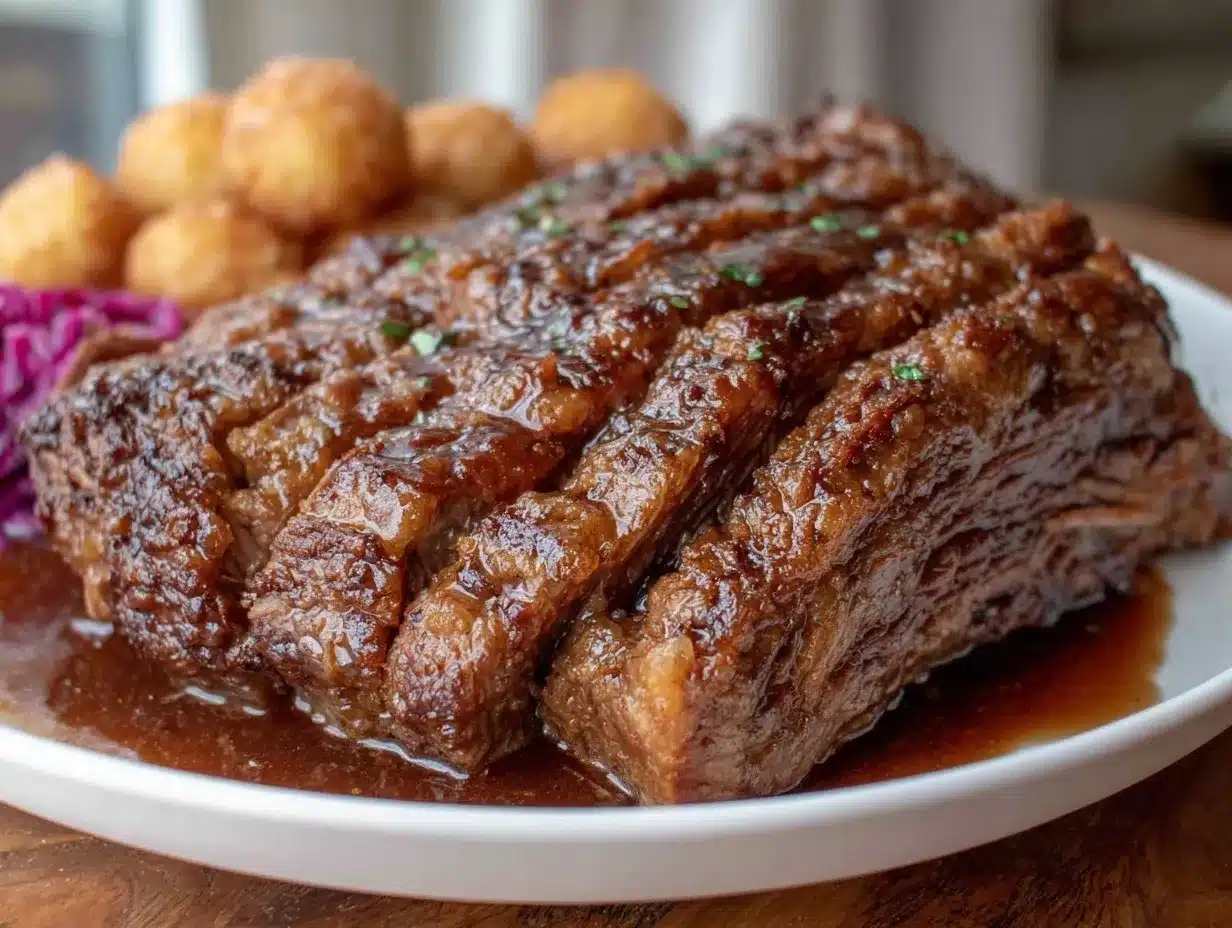
- Serve: Slice the Sauerbraten and drizzle with the rich sauce. Plate alongside the braised red cabbage and potato dumplings, garnished with fresh parsley and a pat of butter. (5-10 minutes)
- Marinate Long Enough: The marinade tenderizes the beef and infuses those signature tangy, spiced notes. Don’t rush it—overnight is best, but even 12 hours works in a pinch.
- Dry the Meat Before Searing: Moisture is the enemy of a good sear. Pat your roast dry to get a crust that locks in juices.
- Use Low and Slow Heat: Braising at a low temperature for several hours breaks down connective tissue, making the beef melt-in-your-mouth tender.
- Don’t Skip the Sauce: Straining and reducing the braising liquid transforms it from a simple broth into a luscious gravy that ties the whole dish together.
- Watch Your Pot Size: Use a pot just big enough to hold the roast and liquid snugly. Too much space, and the marinade might evaporate too quickly.
- Multitask Efficiently: While the roast braises, prep your sides—this keeps your kitchen humming and dinner ready all at once.
- Slow Cooker Sauerbraten: After searing, transfer everything to a slow cooker. Cook on low for 8 hours or high for 4-5 hours for hands-off convenience.
- Gluten-Free Option: Use gluten-free soy sauce or tamari if your recipe calls for soy sauce in the marinade. Serve with gluten-free dumplings or mashed potatoes.
- Vegetarian Twist: For a meatless version, marinate and slow-cook thick slices of seitan or portobello mushrooms in the same marinade. Serve with the classic sides for a hearty meal.
- Flavor Boost: Add a splash of dark beer or a spoonful of molasses to the marinade for richer depth.
- Seasonal Sides: Swap red cabbage for sautéed green beans in spring or roasted root vegetables in winter for variety.
Ingredient Tips: For the beef, I recommend choosing a cut with some fat marbling; it keeps the roast juicy and tender. When picking juniper berries, opt for dried ones from a reputable brand to get that piney, slightly citrusy note that really makes the dish stand out. If you’re avoiding alcohol, swapping red wine vinegar for apple cider vinegar works beautifully without losing tang.
Equipment Needed
If you don’t have a Dutch oven, a heavy skillet tightly covered with foil can work in the oven, but the Dutch oven really locks in moisture beautifully. For budget-friendly pots, enamel-coated cast iron is a great choice and easy to maintain—just hand wash and dry immediately to keep it in tip-top shape.
Preparation Method
Cooking Tips & Techniques
Cooking Sauerbraten is all about patience and layering flavors. Here are some tips I’ve picked up over countless attempts:
I once rushed the searing and ended up with a pale roast—lesson learned! Take your time on that step; it really makes a difference.
Variations & Adaptations
This recipe is wonderfully flexible, so you can make it your own depending on dietary needs or seasonal availability.
One time, I added a cinnamon stick to the marinade and it gave a subtle warmth that my family loved—definitely worth trying if you like a little spice nuance.
Serving & Storage Suggestions
Serve this German Sauerbraten pot roast warm, sliced thickly, and generously ladled with the rich sauce. The tangy, tender beef pairs beautifully with the sweet and sour red cabbage and buttery potato dumplings—classic comfort food at its finest.
Complement the meal with a crisp German lager or a dry Riesling to cut through the richness. For a non-alcoholic option, sparkling apple cider works wonders.
To store leftovers, cool the roast and sauce completely before refrigerating in an airtight container for up to 4 days. The flavors actually deepen overnight, so leftovers taste even better! For longer storage, freeze in portions for up to 3 months.
Reheat gently on the stovetop over low heat, adding a splash of broth or water if the sauce thickens too much. Avoid microwaving as it can dry out the meat.
Nutritional Information & Benefits
This Sauerbraten pot roast is a hearty dish rich in protein and iron thanks to the beef. The slow braising method uses minimal added fats, making it a wholesome meal option.
Red cabbage adds fiber, vitamin C, and antioxidants, while the vinegar-based marinade may aid digestion. Keep in mind, this recipe contains common allergens like beef and may include gluten depending on your dumpling choice.
For those watching carbs, swapping potato dumplings with cauliflower mash is a tasty alternative. Overall, this meal balances indulgence with nutrition, making it a satisfying choice for your family table.
Conclusion
This Tender German Sauerbraten pot roast recipe with classic sides is a true keeper. It’s the kind of meal that brings people together, fills the kitchen with inviting aromas, and leaves everyone asking for seconds. You can easily customize the marinade and sides to suit your taste or dietary needs, making it a versatile staple for any season.
Honestly, there’s something special about slow-cooked meals that feels like a warm hug on a plate. I love how this recipe connects me to my family’s roots while still being easy enough for weeknight dinners. Give it a try, and don’t forget to share how you made it your own—I’d love to hear your stories!
So go ahead, roll up your sleeves and get ready to impress with this dangerously delicious Sauerbraten—you won’t regret it.
FAQs
How long should I marinate the Sauerbraten for the best flavor?
Ideally, marinate the beef for 24 hours to fully develop its signature tangy, spiced flavor. If short on time, 12 hours works, but overnight is best.
Can I use a different cut of beef for Sauerbraten?
Yes! Chuck roast or rump roast are preferred for their marbling and tenderness after braising. Avoid lean cuts as they can dry out.
Is it necessary to sear the meat before braising?
Searing is highly recommended because it locks in juices and adds a delicious crust and depth of flavor to the final dish.
What are good side dishes to serve with Sauerbraten?
Traditional sides include braised red cabbage and potato dumplings or spaetzle. Mashed potatoes or roasted root vegetables also pair wonderfully.
Can Sauerbraten be made in a slow cooker?
Absolutely! After searing, transfer everything to a slow cooker and cook on low for 8 hours or high for 4-5 hours. It’s a great hands-off option.
Pin This Recipe!
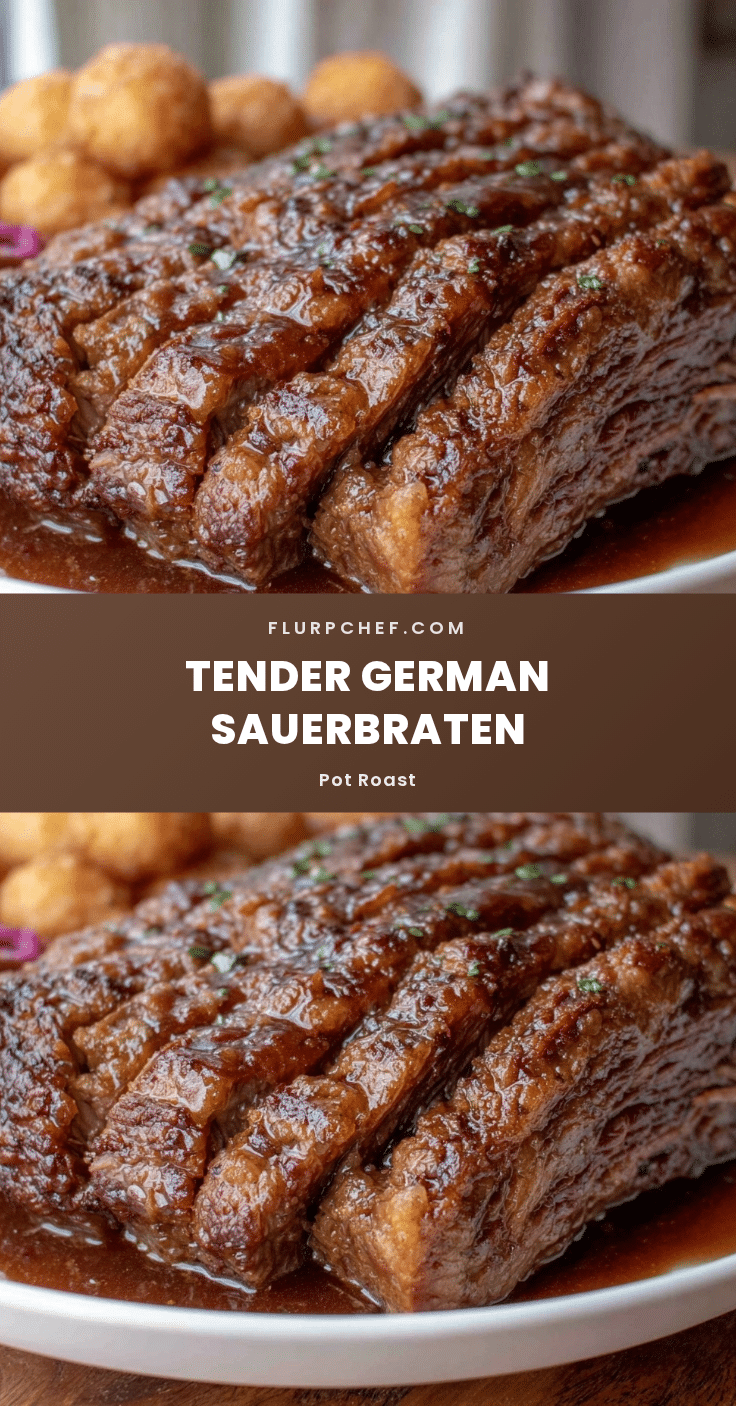
Tender German Sauerbraten Pot Roast Recipe Easy Perfect Classic Sides

A classic German Sauerbraten pot roast marinated overnight in a tangy, spiced blend and slow-braised to tender perfection, served with traditional red cabbage and potato dumplings.
- Prep Time: 15 minutes
- Cook Time: 3 hours 45 minutes
- Total Time: 4 hours
- Yield: 6 servings 1x
- Category: Main Course
- Cuisine: German
Ingredients
- 3 to 4 pounds beef chuck roast or rump roast (well-marbled for tenderness)
- 2 cups beef broth (homemade or low-sodium store-bought)
- 1 cup red wine vinegar (or apple cider vinegar for a milder tang)
- 1 cup water
- 1 large onion, sliced
- 2 medium carrots, peeled and chopped
- 3 cloves garlic, smashed
- 2 tablespoons sugar (brown or white)
- 1 tablespoon juniper berries (optional but recommended)
- 1 tablespoon whole black peppercorns
- 3 whole cloves
- 2 bay leaves
- Salt and freshly ground black pepper, to taste
- 2 tablespoons vegetable oil or lard (for searing)
- 1 small head red cabbage, shredded
- 2 apples, peeled and sliced (for the cabbage)
- 1/4 cup apple cider vinegar (for cabbage)
- 2 tablespoons sugar (for cabbage)
- Potato dumplings or spaetzle (store-bought or homemade)
- Butter and fresh parsley for garnish
Instructions
- Prepare the marinade by combining red wine vinegar, water, sliced onion, chopped carrots, smashed garlic cloves, sugar, juniper berries, black peppercorns, whole cloves, and bay leaves in a large mixing bowl. Stir well.
- Place the beef roast in a large resealable plastic bag or non-metal container. Pour the marinade over the beef, ensuring it is fully submerged. Seal and refrigerate for at least 12 hours, preferably 24 hours.
- After marinating, remove the beef from the marinade and pat dry with paper towels. Strain the marinade, reserving the liquid and vegetables separately.
- Heat vegetable oil in a Dutch oven over medium-high heat. Sear the beef roast on all sides until deeply browned, about 3-4 minutes per side.
- Remove the roast and set aside. Add the reserved onions, carrots, and garlic from the marinade into the pot and sauté for 5 minutes until softened.
- Pour in the strained marinade liquid along with beef broth. Scrape up any browned bits from the bottom. Return the roast to the pot, nestling it among the vegetables and liquid.
- Cover the Dutch oven with a tight-fitting lid and place it in a preheated oven at 325°F (160°C). Braise gently for 3 to 3.5 hours, turning the roast halfway through.
- While the roast cooks, prepare the red cabbage by sautéing shredded cabbage and sliced apples with apple cider vinegar and sugar in a skillet over medium heat. Simmer until tender and slightly caramelized, about 30-40 minutes. Cook potato dumplings or spaetzle according to package instructions.
- Once the roast is done, remove it and keep warm. Strain the braising liquid, pressing down on vegetables to release flavor. Return the liquid to the pot, bring to a simmer, and reduce slightly to thicken. Adjust seasoning with salt and pepper.
- Slice the Sauerbraten and drizzle with the rich sauce. Serve alongside braised red cabbage and potato dumplings, garnished with fresh parsley and a pat of butter.
Notes
Marinate the beef overnight for best flavor. Pat the meat dry before searing to ensure a good crust. Use low and slow heat for tender meat. Strain and reduce the braising liquid to make a rich sauce. If using a slow cooker, cook on low for 8 hours or high for 4-5 hours after searing. For gluten-free, use gluten-free soy sauce or tamari and gluten-free dumplings or mashed potatoes.
Nutrition
- Serving Size: 1 serving (approxima
- Calories: 550
- Sugar: 15
- Sodium: 600
- Fat: 22
- Saturated Fat: 7
- Carbohydrates: 35
- Fiber: 5
- Protein: 45
Keywords: Sauerbraten, German pot roast, braised beef, red cabbage, potato dumplings, classic German recipe, slow braised, traditional German dish