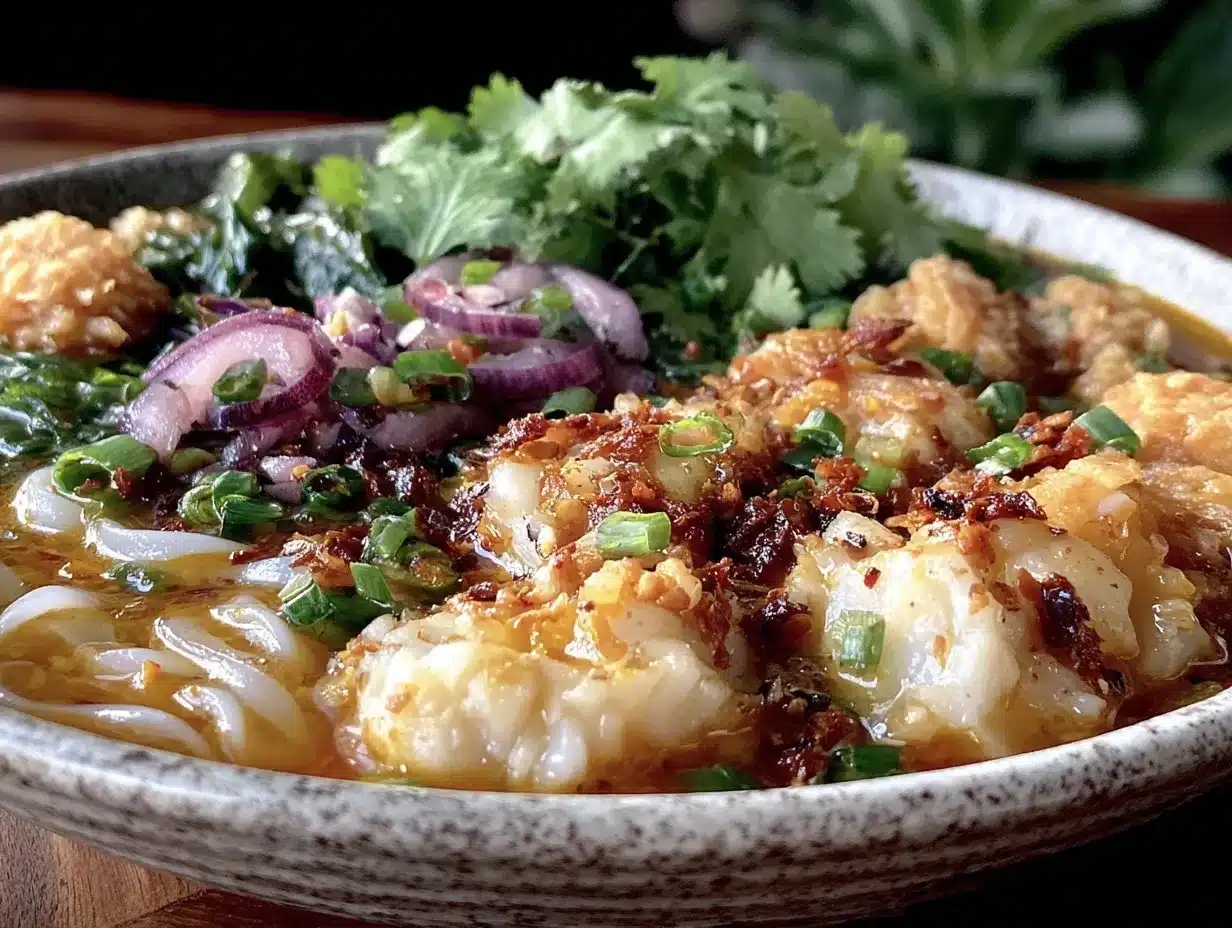
Let me tell you, the scent of simmering fish broth mingling with lemongrass, ginger, and a hint of aromatic spices is enough to make anyone’s mouth water. The first time I tasted Burmese Mohinga soup was on a rainy afternoon years ago, when I was knee-high to a grasshopper visiting a friend’s family in Yangon. I remember sitting cross-legged on the floor, spooning up that rich, tangy, and slightly spicy broth filled with tender fish flakes and soft rice noodles. It was the kind of moment where you pause, take a deep breath, and just smile because you know you’re onto something truly special. Honestly, I was instantly hooked. My family couldn’t stop sneaking bowls off the table (and I can’t really blame them). This comforting Burmese Mohinga soup feels like a warm hug after a long day and it’s dangerously easy to make at home.
You know what? Whether you’re looking for a sweet treat for your kids, a bright addition to your Pinterest recipe board, or a soul-soothing breakfast, this authentic fish noodle delight fits the bill. Years ago, I wished I’d discovered this recipe sooner—it’s become a staple for family gatherings and gift-giving moments. After testing it multiple times in the name of research, of course, I’m confident you’re going to want to bookmark this one for those cozy, comforting meals.
Why You’ll Love This Recipe
Over the years, testing and tweaking this Burmese Mohinga soup recipe has taught me a lot about what makes it so irresistible. Here’s why you’re going to love it:
- Quick & Easy: Ready in under an hour, this recipe is perfect for busy weeknights or last-minute cravings.
- Simple Ingredients: No fancy grocery trips needed; most ingredients are pantry staples or easy to find at your local Asian market.
- Perfect for Any Occasion: Whether it’s breakfast, a casual lunch, or a comforting dinner, Mohinga always hits the spot.
- Crowd-Pleaser: Kids and adults alike rave about the balanced flavors and satisfying texture.
- Unbelievably Delicious: The combination of flaky fish, tangy broth, and soft noodles delivers a next-level comfort food experience.
What sets this recipe apart? It’s the authentic use of toasted chickpea flour to thicken the broth, giving the soup that signature velvety texture. Plus, blending the fish perfectly with the spices so every spoonful is packed with flavor. This isn’t just another fish noodle soup—it’s the best version you’ll find outside Myanmar. Honestly, it’s the kind of dish that makes you close your eyes after the first bite and savor every mouthful. It’s comforting food with soul, made easy and approachable for your kitchen.
What Ingredients You Will Need
This recipe uses simple, wholesome ingredients to deliver bold flavor and satisfying texture without the fuss. Most of these you probably have on hand, and a few can be found easily at Asian markets or well-stocked grocery stores.
- For the broth:
- Fresh river fish or catfish fillets, deboned and skin removed (about 1 lb / 450 g) – the star of the dish
- Water or fish stock (6 cups / 1.4 liters) – for a rich base
- Fresh lemongrass stalks, bruised (2 stalks) – adds fragrant citrus notes
- Ginger, peeled and sliced (2-inch piece) – warming spice
- Garlic cloves, minced (4 cloves) – depth and aroma
- Shallots, thinly sliced (3 medium) – for sweetness
- Turmeric powder (1 tsp) – earthy color and flavor
- Fish sauce (3 tbsp) – authentic salty umami
- Chili powder or flakes (1 tsp, adjust to taste) – gentle heat
- Toasted chickpea flour (besan) (1/4 cup / 35 g) – to thicken and add nuttiness (I recommend using fresh roasted chickpea flour for best texture)
- For the noodles and garnish:
- Thin rice vermicelli noodles (6 oz / 170 g), soaked and drained – traditional noodle choice
- Hard-boiled eggs, halved (optional, 2 eggs) – classic topping
- Fresh cilantro leaves (a handful) – brightness
- Thinly sliced scallions (2 stalks) – mild oniony crunch
- Fried crispy onions or garlic chips (optional) – texture and flavor pop
- Lime wedges – for a fresh squeeze of acidity
If you want to switch things up, you can swap river fish with firm white fish like tilapia or cod. For a gluten-free version, the rice noodles and chickpea flour cover you. I also like to keep fresh lime and herbs handy—they really brighten the bowl before serving.
Equipment Needed
- Large stockpot or deep saucepan – for simmering the broth
- Medium bowl – for soaking the rice vermicelli noodles
- Wooden spoon or whisk – to stir the chickpea flour slurry
- Fine mesh strainer or slotted spoon – to remove fish bones or herbs if needed
- Sharp knife and cutting board – for prepping fish, herbs, and aromatics
- Measuring cups and spoons – for precise seasoning
If you don’t have a large stockpot, a deep skillet with a lid can work but watch your liquid levels closely. I’ve found a heavy-bottomed pot helps prevent burning the chickpea flour mixture. For budget-friendly options, basic kitchen knives and a simple whisk do just fine—no fancy gadgets needed.
Preparation Method
- Prepare the fish broth base: In your large stockpot, add the water or fish stock along with bruised lemongrass stalks, sliced ginger, and shallots. Bring to a gentle boil over medium-high heat (about 10 minutes). This step infuses the broth with those signature aromatic flavors.
- Add the fish: Lower the heat to medium and add the deboned fish fillets. Simmer gently for 10-12 minutes until the fish is cooked through and flakes easily. Avoid a rolling boil here to keep the broth clear and clean-tasting.
- Flake the fish: Using a slotted spoon, carefully remove the fish from the pot and place it onto a plate. Flake it into small pieces with a fork, discarding any remaining bones. Set aside.
- Make the chickpea flour slurry: In a small bowl, whisk the toasted chickpea flour with about 1 cup (240 ml) of water until smooth and lump-free. This step is crucial for creating that velvety texture Mohinga is known for.
- Thicken the broth: Slowly pour the chickpea flour slurry into the simmering broth, stirring constantly with a wooden spoon or whisk to prevent lumps. Continue to simmer for another 5-7 minutes until the broth thickens slightly and turns golden.
- Season the soup: Stir in turmeric powder, fish sauce, minced garlic, and chili powder. Taste and adjust seasoning—add more fish sauce for saltiness or chili for heat, according to preference.
- Prepare the noodles: Meanwhile, soak the rice vermicelli noodles in warm water for 5-7 minutes until soft but still slightly firm. Drain and set aside.
- Assemble the bowls: Divide the soaked noodles into serving bowls. Ladle the hot Mohinga broth over the noodles, making sure to include plenty of fish flakes in each bowl.
- Garnish generously: Top with halved hard-boiled eggs, fresh cilantro, scallions, and crispy fried onions or garlic chips if using. Serve with lime wedges on the side for squeezing.
- Enjoy immediately: The soup is best enjoyed hot, with the bright lime juice cutting through the richness and the noodles soaking up all that flavorful broth.
Pro tip: If your broth seems too thick, just stir in a bit more warm water to loosen it up. Also, keep the heat gentle after adding chickpea flour to avoid clumping or burning. I like to prep the garnishes ahead of time to streamline serving—makes hosting a breeze!
Cooking Tips & Techniques
Cooking authentic Burmese Mohinga soup is part art, part patience. Here are some tips I’ve picked up along the way:
- Fish selection matters: Use fresh river fish if you can find it. The flavor difference is noticeable. If not, firm white fish fillets work great too.
- Toasting chickpea flour: If you can, toast your chickpea flour lightly in a dry pan before using. It deepens the flavor and helps the soup thicken better.
- Simmer, don’t boil: Keep the heat gentle when cooking fish and thickening the broth to avoid breaking down ingredients too harshly or clouding the soup.
- Balance your seasoning: Fish sauce, lime, and chili create the signature flavor profile—taste as you go and adjust to your liking.
- Multitasking: While the broth simmers, soak the noodles and prep garnishes. This keeps everything fresh and ready to serve hot.
- Common mistake: Adding chickpea flour too quickly or without whisking can cause lumps. Take your time and stir continuously.
Honestly, I’ve had my fair share of clumpy soup moments—learning to whisk the slurry smoothly saved the day every time. The texture should be silky, not grainy. And don’t forget to keep your garnishes fresh—they bring that final wow factor!
Variations & Adaptations
Mohinga is versatile, and you can tailor it to suit your taste or dietary needs. Here are some variations I love trying:
- Vegetarian/Vegan: Skip the fish and use vegetable broth with sautéed mushrooms for umami. Replace fish sauce with soy sauce or tamari.
- Spice level: Add fresh chopped green chilies or a dash of chili oil for an extra kick, or reduce chili powder for milder palates.
- Seasonal twists: Swap the traditional garnishes for fresh bean sprouts, crushed peanuts, or crispy fried tofu cubes.
- Alternative noodles: Try thick rice noodles or even thin egg noodles if rice vermicelli isn’t available.
- Personal favorite: Once, I added a splash of coconut milk to the broth for a creamier, tropical flair—it was surprisingly delicious and comforting!
Feel free to experiment! Mohinga is forgiving and adapts well to what you have in your kitchen or what flavors you’re craving.
Serving & Storage Suggestions
Serve your Burmese Mohinga soup steaming hot in deep bowls with plenty of garnishes on top. A squeeze of fresh lime right before eating brightens all the flavors. It pairs beautifully with simple sides like steamed greens or a crisp cucumber salad to balance the richness.
If you have leftovers, store the broth and noodles separately in airtight containers in the refrigerator for up to 2 days. Noodles tend to soak up liquid and get mushy if stored together. Reheat the broth gently on the stove, adding a splash of water if it thickened too much. Then add noodles just before serving to keep their texture.
Flavors tend to deepen overnight, so leftovers can be even more satisfying the next day. Just make sure not to overcook noodles during reheating. If freezing, keep components separate and thaw in the fridge overnight.
Nutritional Information & Benefits
This comforting Burmese Mohinga soup is light yet nourishing. Per serving (approximately 2 cups), it provides about 250-300 calories, with protein from fresh fish and moderate carbs from rice noodles.
Key benefits include omega-3 fatty acids from the fish, which are great for heart health, and turmeric’s anti-inflammatory properties. The use of fresh herbs and aromatics adds antioxidants without extra calories. It’s naturally gluten-free and can be adapted for low-fat or vegan diets.
If you’re mindful of sodium, start with less fish sauce and add gradually to taste. This soup offers pure, nostalgic comfort that’s also mindful of wellness—perfect for anyone craving something wholesome and satisfying.
Conclusion
In a world full of quick fixes, this authentic Burmese Mohinga soup recipe stands out as a comforting, approachable dish that brings a taste of Myanmar right to your table. It’s easy to make, full of flavor, and packed with heartwarming goodness that feels like home. Whether you’re a seasoned cook or a curious beginner, you’ll find this recipe rewarding and genuinely delicious.
Don’t be shy about customizing it to your own preferences—add more spice, swap out garnishes, or try a vegan version. I truly love this recipe because it’s more than just food; it’s a connection to culture, family, and those perfect moments when a bowl of soup feels like a warm hug. Now, I’d love to hear from you—try it out, share your tweaks, and let’s keep the delicious conversation going!
FAQs About Comforting Burmese Mohinga Soup
What type of fish is best for Mohinga soup?
Traditionally, river fish or catfish is used for authentic flavor. If unavailable, firm white fish like tilapia or cod works well.
Can I make Mohinga soup ahead of time?
Yes! Prepare the broth in advance and store separately from noodles and garnishes. Reheat broth gently and add noodles just before serving.
Is Mohinga soup spicy?
It has a mild to moderate heat level, but you can easily adjust chili powder or add fresh chilies to suit your taste.
Can I freeze Burmese Mohinga soup?
It’s best to freeze broth separately from noodles and toppings. Thaw in the fridge and reheat gently to maintain texture.
What can I use if I can’t find chickpea flour?
Chickpea flour is key for authentic texture, but you can try cornstarch or rice flour as a thickener, though the flavor will differ slightly.
Pin This Recipe!
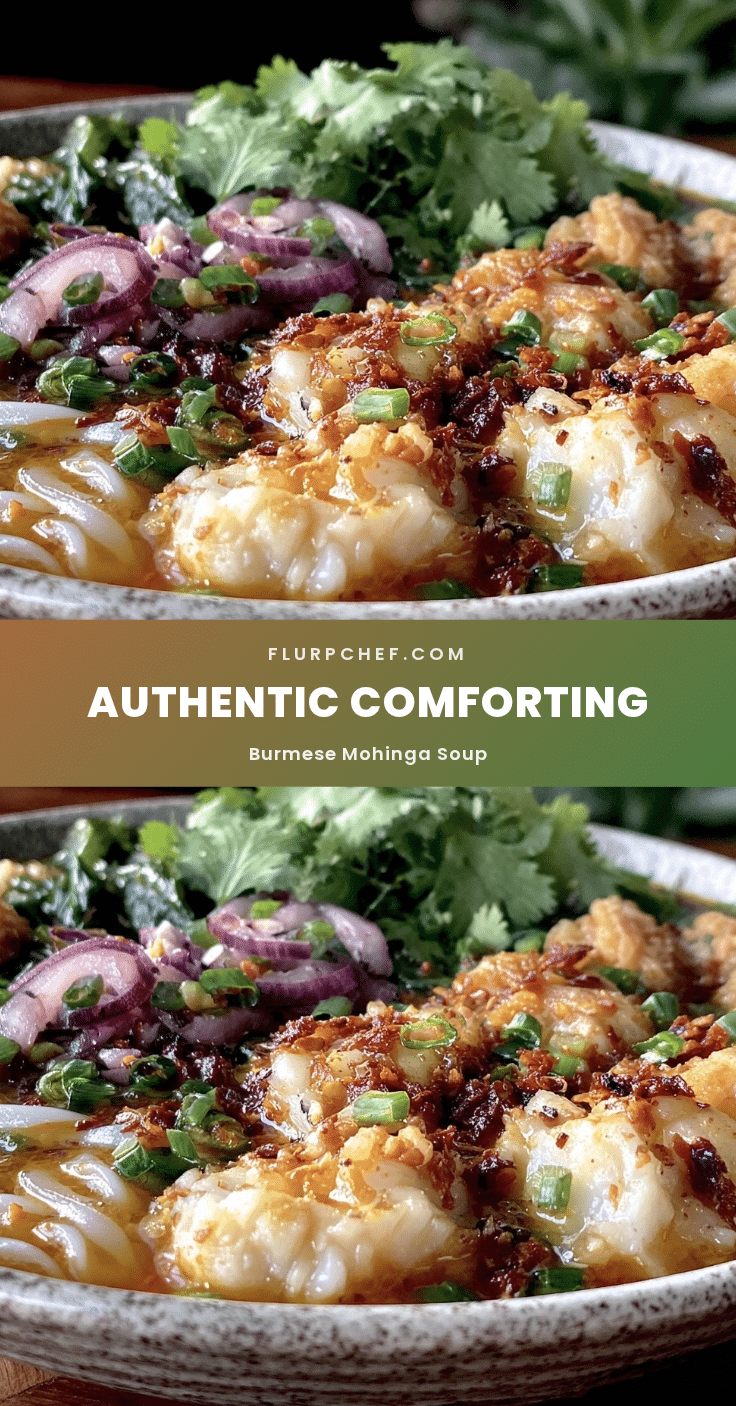
Comforting Burmese Mohinga Soup Recipe Easy Authentic Fish Noodle Delight
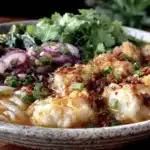
A comforting and authentic Burmese Mohinga soup featuring a rich fish broth with lemongrass, ginger, and aromatic spices, served with soft rice noodles and garnishes. This easy recipe delivers a warm, flavorful bowl perfect for any occasion.
- Prep Time: 15 minutes
- Cook Time: 40 minutes
- Total Time: 55 minutes
- Yield: 4 servings 1x
- Category: Main Course
- Cuisine: Burmese
Ingredients
- 1 lb (450 g) fresh river fish or catfish fillets, deboned and skin removed
- 6 cups (1.4 liters) water or fish stock
- 2 fresh lemongrass stalks, bruised
- 2-inch piece ginger, peeled and sliced
- 4 garlic cloves, minced
- 3 medium shallots, thinly sliced
- 1 tsp turmeric powder
- 3 tbsp fish sauce
- 1 tsp chili powder or flakes (adjust to taste)
- 1/4 cup (35 g) toasted chickpea flour (besan)
- 6 oz (170 g) thin rice vermicelli noodles, soaked and drained
- 2 hard-boiled eggs, halved (optional)
- A handful fresh cilantro leaves
- 2 scallion stalks, thinly sliced
- Fried crispy onions or garlic chips (optional)
- Lime wedges
Instructions
- In a large stockpot, add water or fish stock along with bruised lemongrass stalks, sliced ginger, and shallots. Bring to a gentle boil over medium-high heat (about 10 minutes) to infuse the broth with aromatic flavors.
- Lower heat to medium and add deboned fish fillets. Simmer gently for 10-12 minutes until fish is cooked through and flakes easily. Avoid boiling to keep broth clear.
- Using a slotted spoon, remove fish from pot and place on a plate. Flake into small pieces with a fork, discarding any bones. Set aside.
- In a small bowl, whisk toasted chickpea flour with about 1 cup (240 ml) water until smooth and lump-free to create a slurry.
- Slowly pour chickpea flour slurry into simmering broth, stirring constantly with a wooden spoon or whisk to prevent lumps. Simmer for another 5-7 minutes until broth thickens slightly and turns golden.
- Stir in turmeric powder, fish sauce, minced garlic, and chili powder. Taste and adjust seasoning as desired.
- Meanwhile, soak rice vermicelli noodles in warm water for 5-7 minutes until soft but still slightly firm. Drain and set aside.
- Divide soaked noodles into serving bowls. Ladle hot Mohinga broth over noodles, including plenty of fish flakes in each bowl.
- Garnish with halved hard-boiled eggs, fresh cilantro, scallions, and crispy fried onions or garlic chips if using. Serve with lime wedges on the side.
- Enjoy immediately while hot, squeezing fresh lime juice over the soup to brighten flavors.
Notes
Toast chickpea flour lightly in a dry pan before using to deepen flavor and improve thickening. Keep heat gentle after adding chickpea flour slurry to avoid lumps or burning. Prepare garnishes ahead to streamline serving. If broth is too thick, stir in warm water to loosen. Use fresh river fish for best flavor; firm white fish like tilapia or cod can be substituted. For vegan version, replace fish with vegetable broth and fish sauce with soy sauce or tamari.
Nutrition
- Serving Size: Approximately 2 cups
- Calories: 275
- Sugar: 2
- Sodium: 800
- Fat: 5
- Saturated Fat: 1
- Carbohydrates: 30
- Fiber: 3
- Protein: 20
Keywords: Burmese Mohinga, fish noodle soup, authentic Burmese recipe, easy Mohinga soup, fish broth soup, rice vermicelli, comfort food, Asian soup recipe