Let me tell you, the scent of golden, saffron-infused rice crisping gently at the bottom of the pot is enough to make anyone’s mouth water. The first time I mastered this crispy Persian tahdig at home, I was instantly hooked. You know that kind of moment where you pause, take a deep breath, and just smile because you know you’re onto something truly special? That’s exactly how it felt. Years ago, when I was knee-high to a grasshopper, my aunt would bring this dish to family gatherings, and it was always the star. I wish I’d discovered how to make it myself way sooner—it’s dangerously easy and delivers pure, nostalgic comfort in every crunchy bite.
My family couldn’t stop sneaking pieces off the crispy crust as it cooled (and honestly, I can’t blame them). This saffron-infused rice perfection isn’t just a side dish; it’s a celebration of texture and flavor that brightens up any meal. Perfect for potlucks, cozy dinners, or just impressing your Pinterest cookie board, tahdig brings a little magic to the table every time.
After testing this recipe multiple times in the name of research, of course, it’s become a staple for family gatherings and gifting because it feels like a warm hug on a plate. Trust me, you’re going to want to bookmark this one.
Why You’ll Love This Recipe
Honestly, this recipe nails what makes Persian tahdig so beloved—crispy, golden, and gloriously saffron-kissed rice that’s both comforting and elegant. After countless kitchen trials and taste tests, here’s why this version stands out:
- Quick & Easy: Comes together in under an hour, perfect for busy weeknights or last-minute dinner plans.
- Simple Ingredients: No fancy grocery trips needed; you probably already have saffron, rice, and pantry staples on hand.
- Perfect for Any Occasion: Whether it’s a family dinner, festive gathering, or just a treat to yourself, tahdig fits right in.
- Crowd-Pleaser: Kids and adults alike love the crunchy texture and fragrant flavor combo.
- Unbelievably Delicious: The balance of buttery crispiness with fluffy saffron rice is next-level comfort food.
What makes this crispy Persian tahdig recipe different? It’s the attention to the saffron infusion—blending just the right amount for color and aroma without overpowering the rice. Plus, a gentle layering technique that guarantees a perfect crust every single time. This isn’t just another rice dish; it’s the best version you’ll find, combining tradition with a foolproof method that even beginners will appreciate.
This recipe isn’t just good—it’s the kind that makes you close your eyes after the first bite. It’s comfort food with soul, without the fuss. Perfect for impressing guests without stress or turning a simple meal into something memorable.
What Ingredients You Will Need
This recipe uses simple, wholesome ingredients to deliver bold flavor and satisfying texture without the fuss. Most are pantry staples, and you can easily find saffron at a local grocery or specialty store. Here’s what you’ll need:
- Long-grain Basmati rice (2 cups / 400g) – The foundation for fluffy, separate grains.
- Saffron threads (1/4 tsp) – Soaked in 2 tbsp warm water for that signature golden color and aroma. Use authentic saffron for best results, brands like Mehr or Gohar work great.
- Unsalted butter (4 tbsp / 60g) – Adds richness and helps create the crispy crust.
- Vegetable oil (2 tbsp) – For frying the tahdig base; you can swap with olive oil for a slightly different flavor.
- Salt (1 tsp) – To season the rice perfectly.
- Water (about 3 cups / 720ml) – For soaking and cooking the rice.
- Optional: yogurt (2 tbsp) – Mixed in with the rice for a tangy twist that helps with crispiness.
Substitution tips: Use brown basmati if you prefer whole grain, but note it may take longer to cook. For a dairy-free version, swap butter with coconut oil and use a plant-based yogurt if including. In summer, fresh dill or parsley sprinkled on the finished tahdig adds a fresh note.
Equipment Needed
- Non-stick or heavy-bottomed pot with a tight-fitting lid – This is crucial for even heat distribution and perfect crisping.
- Fine mesh strainer – For rinsing the rice thoroughly to remove excess starch.
- Small bowl – To soak saffron threads.
- Wooden spoon or spatula – For layering and gently loosening the tahdig after cooking.
- Measuring cups and spoons – To keep ingredient amounts precise.
If you don’t have a heavy-bottomed pot, a thick cast iron pan or non-stick skillet can work as alternatives, but watch the heat to avoid burning. I personally prefer a medium-sized non-stick pot for easy cleanup and consistent results. Maintenance tip: keep your non-stick surfaces scratch-free by using wooden or silicone utensils.
Preparation Method
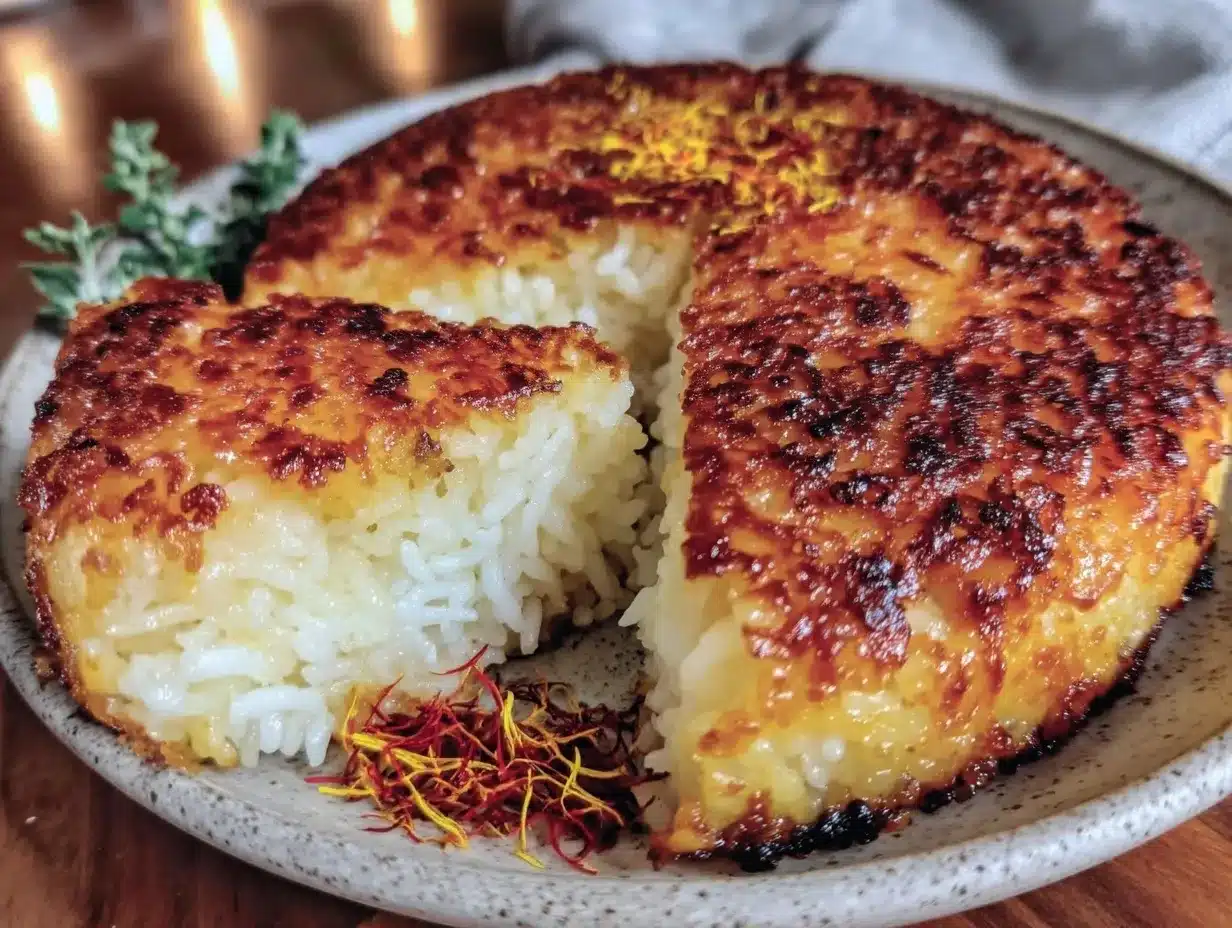
- Rinse the rice: Rinse 2 cups (400g) of basmati rice under cold water until the water runs clear, about 3-4 times. This removes excess starch and prevents clumping. Soak the rice in cold water for 30 minutes, then drain thoroughly.
- Prepare saffron infusion: Crush 1/4 tsp saffron threads lightly with your fingers and soak in 2 tbsp warm water for 10 minutes. The water should turn a deep amber, signaling that the flavor and color are ready.
- Boil rice: Bring a large pot of salted water (about 8 cups / 1.9L with 1 tsp salt) to a rolling boil. Add the soaked rice and cook for 6-7 minutes until rice is just tender but still firm in the center (al dente). Drain and rinse briefly with warm water to stop cooking.
- Prepare the pot for tahdig: Over medium heat, melt 4 tbsp (60g) unsalted butter and 2 tbsp vegetable oil in your heavy-bottomed pot. Swirl to coat the bottom evenly.
- Layer the rice: Mix half of the cooked rice with the saffron water gently. Spread the plain rice evenly over the butter-oil base in the pot. Then layer the saffron-infused rice on top, creating a beautiful gradient.
- Create the crust: Using the back of a spoon, gently press the rice down to compact it slightly. Cover the pot with a clean kitchen towel and then place the lid tightly on top. The towel catches condensation and keeps the rice fluffy.
- Cook the tahdig: Reduce heat to low and cook for 30-40 minutes. The low heat allows a perfect golden crust to form without burning. You should be able to smell a nutty, buttery aroma when it’s ready.
- Check and serve: After cooking, remove from heat and let it rest for 5 minutes. Carefully invert the pot onto a serving plate so the crispy tahdig is on top. If any rice sticks, gently loosen with a spatula.
Pro tip: Avoid lifting the lid during cooking—that steam is key to fluffy rice and a crisp crust. If you notice the tahdig browning too fast, lower the heat immediately and add a splash of water around the edges.
Cooking Tips & Techniques
Making perfect tahdig is a delicate balance of heat and timing, but once you get the hang of it, it becomes second nature. Here are some tips I’ve learned the hard way:
- Don’t skip rinsing the rice: It might seem tedious, but washing away excess starch is what keeps the grains separate and prevents mushy results.
- Use medium-low heat: Too hot and the crust burns; too low and it won’t crisp properly. I find a steady low simmer is best for that golden crunch.
- Butter and oil combo: This blend helps the crust brown evenly without sticking. Pure oil or pure butter can cause uneven crisping or burning.
- Rest before flipping: Letting the pot cool a bit helps the crust firm up, making it easier to flip without breaking.
- Use a kitchen towel under the lid: This little trick traps moisture and keeps the rice on top fluffy while the bottom crisps—trust me, it’s a game changer!
Once, I tried cranking the heat to save time and ended up with a scorched, bitter crust—not fun. Patience really pays off here. Multitasking tip: prep your protein or salad while the tahdig cooks to streamline dinner.
Variations & Adaptations
- Yogurt tahdig: Mix 2 tbsp plain yogurt into the rice before layering. This adds a slight tang and creates an extra crunchy crust that’s irresistible.
- Potato tahdig: Use thinly sliced potatoes as the bottom layer instead of rice for a different texture and flavor. Fry them in butter and oil until golden, then layer rice on top as usual.
- Herbed tahdig: Sprinkle chopped fresh dill, parsley, or chives into the rice before cooking for a fresh herbal note. Great for summer meals.
For gluten-free or vegan adaptations, simply swap butter for coconut oil or vegan margarine and avoid yogurt or use a dairy-free alternative. You can also experiment with adding turmeric alongside saffron for a different color and subtle earthiness. I once tried adding a pinch of cinnamon for a warm twist—surprisingly delicious!
Serving & Storage Suggestions
Serve your crispy Persian tahdig warm right after flipping onto a platter. The golden crust is the star, so present it proudly! It pairs beautifully with Persian stews like ghormeh sabzi or chicken kebabs, and a side of fresh herbs, yogurt, or pickled vegetables.
Leftovers keep well in an airtight container in the refrigerator for up to 3 days. Reheat gently in a non-stick pan over low heat to revive the crispiness—microwaving tends to make the crust soggy, so avoid if possible.
If you want to freeze cooked tahdig, wrap tightly and thaw overnight in the fridge before reheating. The flavors deepen over time, so leftovers often taste even better the next day!
Nutritional Information & Benefits
Per serving (approximate, based on 6 servings): 250 calories, 5g fat, 45g carbohydrates, 5g protein.
Saffron is known for its antioxidant properties and subtle mood-boosting effects, while basmati rice offers a low glycemic index compared to other white rice varieties. Using butter in moderation adds richness without overwhelming the dish.
This recipe fits nicely into gluten-free and vegetarian diets. Be mindful of dairy if you include yogurt or butter for those with sensitivities. From a wellness perspective, homemade tahdig is a comforting, wholesome way to enjoy rice with a bit of flair.
Conclusion
In the end, this crispy Persian tahdig recipe is worth every minute of your time. It’s that rare dish that delivers both simplicity and a wow factor with its crunchy, saffron-scented crust and fluffy rice. Feel free to customize it with herbs, yogurt, or potatoes depending on your mood or occasion.
Personally, I love how it brings my family together around the table—everyone sneaks pieces of the crispy crust while chatting and laughing. Give this recipe a try, and I’d love to hear your own twists or stories in the comments. Share it with friends who appreciate a good kitchen win, too!
Remember, cooking should be fun and satisfying, and this tahdig recipe absolutely fits the bill. Happy cooking, and may your rice always be perfectly crispy!
FAQs About Crispy Persian Tahdig with Saffron-Infused Rice
What type of rice is best for making tahdig?
Long-grain basmati rice is ideal because it cooks fluffy and separate, which is key for a good tahdig crust.
Can I make tahdig without saffron?
Yes, you can omit saffron, but it adds a unique aroma and golden color that really makes tahdig special.
How do I prevent the tahdig from sticking to the pot?
Using a combination of butter and oil and cooking over low heat helps create a non-stick crispy crust. Also, a non-stick or heavy-bottomed pot makes a big difference.
Can I prepare tahdig in advance?
You can par-cook the rice and assemble it before cooking the tahdig. Leftovers keep well refrigerated and reheat nicely in a pan to crisp back up.
What’s the purpose of adding yogurt to the rice?
Yogurt adds a slight tang and helps produce a crispier, more flavorful crust. It’s optional but highly recommended if you want a traditional touch.
Pin This Recipe!
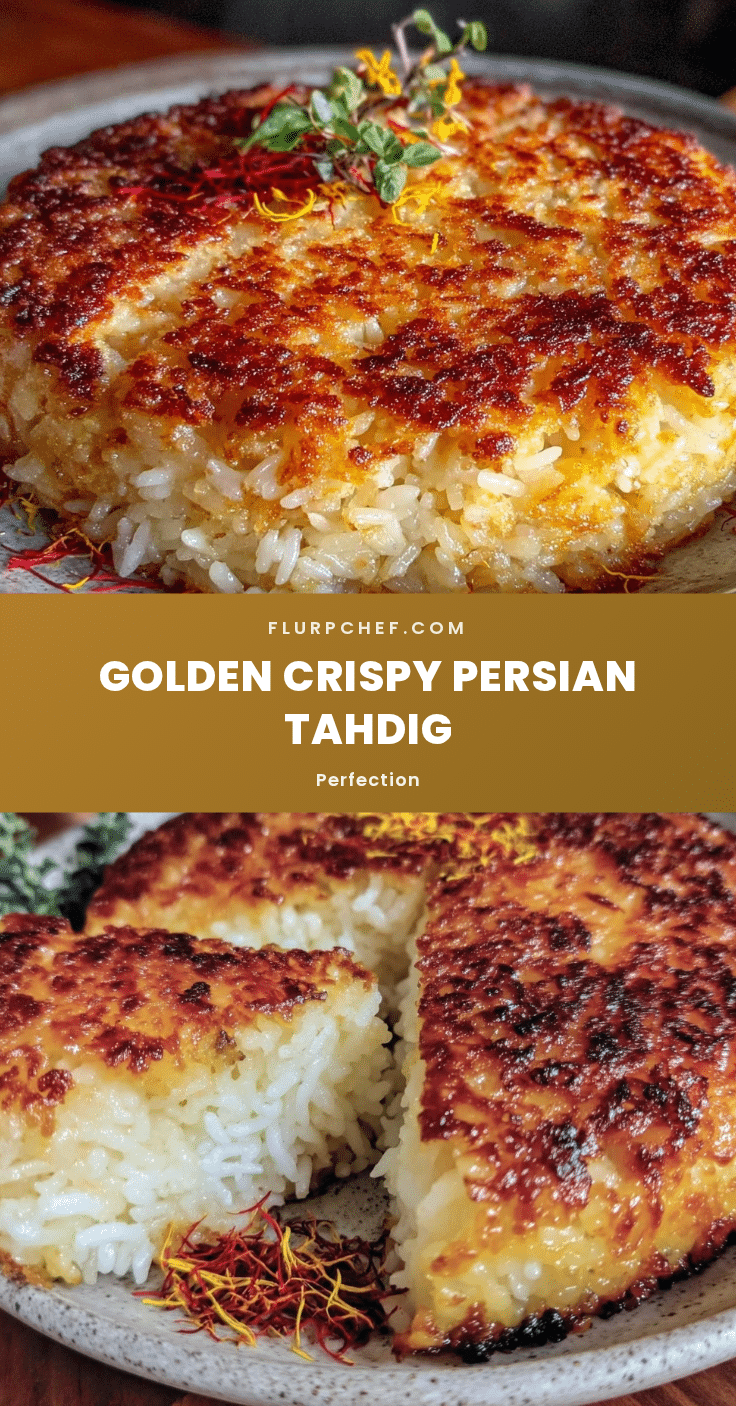
Crispy Persian Tahdig Recipe Easy Saffron Rice Perfection at Home

A traditional Persian dish featuring crispy, golden saffron-infused basmati rice with a buttery crust, perfect for family gatherings or cozy dinners.
- Prep Time: 40 minutes
- Cook Time: 30-40 minutes
- Total Time: 70-80 minutes
- Yield: 6 servings 1x
- Category: Side Dish
- Cuisine: Persian
Ingredients
- 2 cups (400g) long-grain basmati rice
- 1/4 tsp saffron threads, soaked in 2 tbsp warm water
- 4 tbsp (60g) unsalted butter
- 2 tbsp vegetable oil
- 1 tsp salt
- About 3 cups (720ml) water
- Optional: 2 tbsp plain yogurt
Instructions
- Rinse 2 cups (400g) of basmati rice under cold water until the water runs clear, about 3-4 times. Soak the rice in cold water for 30 minutes, then drain thoroughly.
- Crush 1/4 tsp saffron threads lightly and soak in 2 tbsp warm water for 10 minutes until the water turns deep amber.
- Bring a large pot of salted water (about 8 cups / 1.9L with 1 tsp salt) to a rolling boil. Add the soaked rice and cook for 6-7 minutes until just tender but still firm (al dente). Drain and rinse briefly with warm water.
- Over medium heat, melt 4 tbsp (60g) unsalted butter and 2 tbsp vegetable oil in a heavy-bottomed pot. Swirl to coat the bottom evenly.
- Mix half of the cooked rice with the saffron water gently. Spread the plain rice evenly over the butter-oil base in the pot. Then layer the saffron-infused rice on top.
- Using the back of a spoon, gently press the rice down to compact it slightly. Cover the pot with a clean kitchen towel and place the lid tightly on top.
- Reduce heat to low and cook for 30-40 minutes until a golden crust forms and you smell a nutty, buttery aroma.
- Remove from heat and let rest for 5 minutes. Carefully invert the pot onto a serving plate so the crispy tahdig is on top. Loosen any stuck rice gently with a spatula.
Notes
Do not lift the lid during cooking to keep rice fluffy and crust crispy. Use medium-low heat to avoid burning. Rest the pot before flipping to help crust firm up. For dairy-free, substitute butter with coconut oil and use plant-based yogurt or omit yogurt.
Nutrition
- Serving Size: Approximately 1/6 of
- Calories: 250
- Sodium: 300
- Fat: 5
- Saturated Fat: 3
- Carbohydrates: 45
- Fiber: 1
- Protein: 5
Keywords: Persian tahdig, saffron rice, crispy rice, basmati rice, Persian cuisine, saffron, tahdig recipe, easy tahdig, rice crust