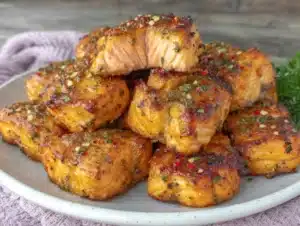
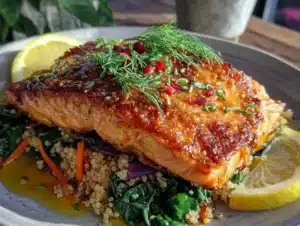
That moment when you open the fridge, already tired from a long day, and stare blankly at a jumble of half-used veggies and some sad-looking leftovers—that’s when I first stumbled upon the magic of easy DASH diet recipes for beginners. Honestly, I wasn’t sure if a diet could taste this fresh and flavorful without feeling like a chore. I remember texting a friend, “Can healthy actually be tasty?” and her reply was a simple, “Wait till you try this.”
What surprised me most was how the meals didn’t require a bunch of fancy ingredients or complicated steps. Just fresh vegetables, lean proteins, and herbs that woke up my senses in the best way. The DASH diet—originally designed to help with blood pressure—turned into a practical, delicious reset for me when I needed it most. The flavors felt bright, and the meals came together quickly, which was a total win for my busy evenings.
There’s something quietly satisfying about cooking dishes that nourish without sacrificing flavor. These recipes became my go-to, especially when I needed to unwind but still eat well. I found myself making them multiple times in a week, tweaking herbs or swapping veggies based on what was fresh at the market. If you’re new to the DASH diet or just want meals that are both vibrant and uncomplicated, this collection is for you—easy DASH diet recipes for beginners with fresh, flavorful meals that actually stick.
Why You’ll Love This Recipe
After trying and adjusting these easy DASH diet recipes for beginners, I can say they truly hit the mark for anyone looking to eat healthier without hassle. Here’s why they’ve become staples in my kitchen:
- Quick & Easy: Most recipes come together in under 30 minutes, perfect for nights when you want something wholesome but don’t want to spend all evening cooking.
- Simple Ingredients: No hunting for obscure items—just fresh produce, lean proteins, and pantry staples you probably already have.
- Perfect for Any Occasion: Whether you’re prepping weekday dinners or making a light lunch, these meals fit the bill.
- Crowd-Pleaser: Even my pickiest eaters enjoyed these dishes, which is always a pleasant surprise when cooking healthy meals.
- Unbelievably Delicious: The balance of fresh herbs, citrus, and spices creates flavor profiles that make you forget you’re eating “diet food.”
What sets these recipes apart is the thoughtful layering of flavors and textures—think crisp cucumbers paired with creamy chickpeas or tender chicken with zesty lime dressing—that make each bite satisfying. I’ve tested these recipes multiple times, adjusting seasoning and cooking times until they felt just right. Whether it’s blending cottage cheese for a creamy touch or swapping in whole grains for extra fiber, these meals are designed to be nourishing and enjoyable.
Ultimately, these recipes aren’t just about eating “clean” but about enjoying meals that make you feel good inside and out. They’ve helped me stay on track without feeling deprived, and I’m confident they’ll do the same for you.
What Ingredients You Will Need
This collection focuses on simple, wholesome ingredients that deliver bold flavor and satisfying texture without fuss. Many are pantry staples, and fresh produce is key to keeping things bright and lively.
- Fresh Vegetables: Cucumbers (crisp and hydrating), cherry tomatoes (sweet bursts), bell peppers (color and crunch), shredded carrots (natural sweetness), and leafy greens like spinach or kale.
- Lean Proteins: Skinless chicken breasts (versatile and mild), canned chickpeas (fiber-rich and filling), firm tofu (great plant-based option), and wild-caught salmon (rich in omega-3s).
- Whole Grains & Legumes: Quinoa (light and fluffy), brown rice (nutty flavor), and lentils (protein-packed and earthy).
- Dairy & Alternatives: Low-fat cottage cheese (for creaminess), plain Greek yogurt (tangy and thick), and unsweetened almond milk (for lightness).
- Herbs & Spices: Fresh mint (refreshing), dill (bright and delicate), garlic (aromatic punch), cumin (warmth), and black pepper (mild heat).
- Citrus & Oils: Fresh lemon and lime juice (for acidity), extra virgin olive oil (heart-healthy fat), and balsamic vinegar (for a touch of sweetness).
For example, in a fresh Mediterranean cucumber chickpea salad, crisp cucumbers and creamy chickpeas come together with dill and feta for a satisfying, easy dish. You can swap feta for a dairy-free cheese if needed.
When shopping, I tend to pick vegetables that are firm and vibrant in color—these always taste better and keep longer. For canned items like chickpeas, I prefer brands with low sodium (rinse them to cut extra salt). And if you want to try a gluten-free twist, quinoa and lentils work beautifully as hearty bases.
Equipment Needed
These recipes require minimal kitchen equipment—perfect for anyone just starting with DASH diet cooking or those with limited space.
- Cutting Board and Sharp Knife: Vital for prepping fresh vegetables and proteins cleanly.
- Mixing Bowls: A set of medium and large bowls for tossing salads and mixing ingredients. Glass or stainless steel works well.
- Measuring Cups and Spoons: To keep ingredient portions accurate, especially for seasonings and oils.
- Non-Stick Skillet or Sauté Pan: For cooking chicken, tofu, or quickly sautéing veggies without added fat.
- Medium Saucepan: Useful for cooking grains like quinoa or brown rice.
- Salad Spinner (Optional): If you plan to use lots of leafy greens, this helps wash and dry them quickly.
I started with just a handful of tools and found it easy to prepare most meals without fancy gadgets. For instance, using a simple cast-iron skillet gives great heat retention and flavor for sautéing chicken breasts. Budget-friendly options like silicone spatulas and wooden spoons make stirring and mixing a breeze and last for years.
Preparation Method
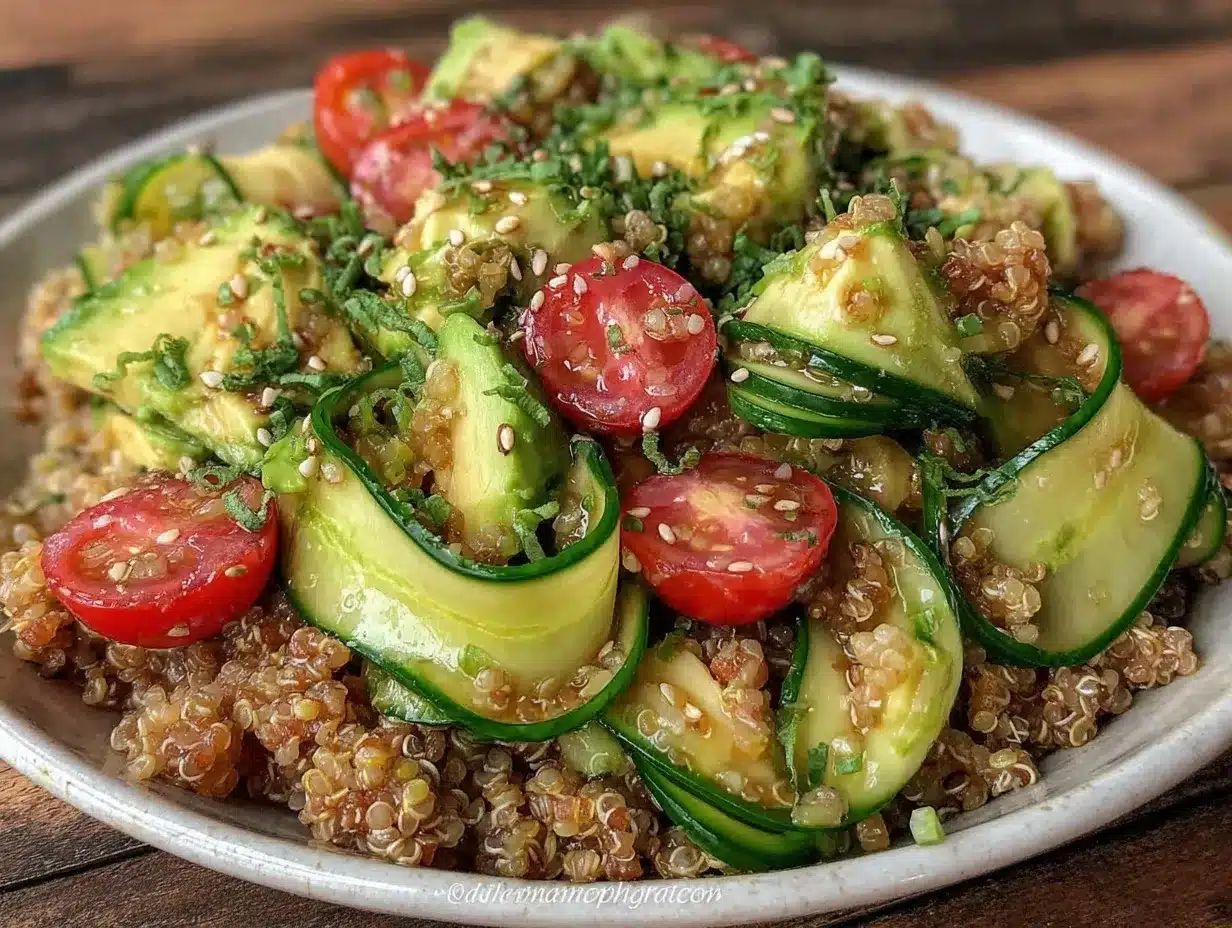
- Prepare Your Ingredients (10-15 minutes): Rinse and chop vegetables uniformly—for example, dice cucumbers into bite-sized pieces, halve cherry tomatoes, and finely chop herbs like dill or mint. This ensures even flavor distribution.
- Cook Whole Grains or Legumes (20-25 minutes): Rinse quinoa or lentils thoroughly. Add 1 cup (170 g) quinoa to 2 cups (475 ml) water in a saucepan; bring to boil, reduce to simmer, cover, and cook for 15 minutes until water is absorbed. Fluff with a fork and let cool slightly.
- Cook Proteins (10-15 minutes): For chicken breasts, season lightly with salt, pepper, and a squeeze of lemon. Heat 1 tablespoon (15 ml) olive oil in a skillet over medium heat. Cook chicken 5-7 minutes per side until internal temperature reaches 165°F (74°C). Let rest before slicing thinly.
- Mix Dressing (5 minutes): Combine fresh lemon juice, 2 tablespoons (30 ml) olive oil, minced garlic, salt, and pepper in a small bowl. Whisk until emulsified for a bright, tangy dressing.
- Assemble the Salad or Bowl (5 minutes): In a large bowl, toss together grains, vegetables, proteins, and herbs. Drizzle dressing over and gently mix to coat everything evenly.
- Final Touches: Taste and adjust seasoning with salt, pepper, or an extra splash of citrus. For a fresh crunch, add toasted nuts or seeds if desired.
Pro tip: If you want to save time, cook grains and proteins in advance and store them in the fridge for up to 3 days. That way, tossing together a meal feels effortless.
Keep an eye on the texture of your vegetables—they should be crisp but not watery. If you notice excess moisture, drain or pat them dry before mixing to prevent sogginess. This little step makes a big difference, especially in salads.
Cooking Tips & Techniques
When cooking easy DASH diet recipes for beginners, there are a few tricks I’ve picked up along the way that make a difference:
- Season Gradually: Salt and spices should be added in stages, tasting as you go. It’s easy to overdo salt, and the DASH diet emphasizes lower sodium, so fresh herbs and citrus are your best friends for flavor.
- Cook Proteins Gently: For chicken or tofu, medium heat prevents drying out. A hot pan can sear quickly but might leave the inside tough if you rush.
- Don’t Overmix Salads: Toss ingredients gently to keep textures intact. Overmixing can bruise delicate greens or make grains mushy.
- Multitask Smartly: While grains cook, prep veggies and make dressings. It cuts down overall time and keeps the process moving smoothly.
- Storage Matters: Assemble salads just before eating when possible. If prepping ahead, keep dressing separate to avoid sogginess.
I once tried blending a dressing with too much oil and ended up with a greasy mess that weighed down the salad. Lesson learned: a little oil goes a long way, especially when balanced with acidic ingredients like lemon or vinegar.
Variations & Adaptations
One of the best things about these easy DASH diet recipes for beginners is their flexibility. Here are some ways to switch things up:
- Seasonal Swaps: Use fresh berries in place of tomatoes during summer for a sweet twist, or swap kale for spinach when it’s in season.
- Protein Options: Swap chicken with grilled shrimp or baked tofu for plant-based meals. Lentils and beans also work well for a hearty boost.
- Cooking Methods: Try roasting vegetables instead of eating them raw for a deeper flavor profile, or grill proteins for a smoky finish.
- Flavor Profiles: Experiment with different herbs like cilantro instead of dill, or add a dash of cumin and smoked paprika for warmth.
- Allergen-Friendly: Use coconut yogurt instead of dairy-based options, and choose gluten-free grains like millet or buckwheat if needed.
Personally, I’ve enjoyed making a fresh Thai mango crunch salad with a peanut-lime dressing as a colorful variation that fits the DASH principles but feels like a mini escape to a tropical spot.
Serving & Storage Suggestions
These fresh, flavorful meals are best served chilled or at room temperature. For example, a quinoa and vegetable salad tastes brightest after a brief chill in the fridge, allowing flavors to meld. Serve with a wedge of lemon or lime on the side for an extra zing.
Pair these dishes with light sides like a crisp green salad or steamed vegetables for a balanced meal. A simple sparkling water with fresh mint or a citrus twist complements the flavors nicely without overpowering them.
To store, keep salads and dressings separate when possible. Store leftovers in airtight containers in the fridge for up to 3 days. When reheating protein-based dishes, do so gently on low heat to avoid drying.
Flavors often deepen after a day, making leftovers even more enjoyable. Just remember that crunchy veggies like cucumbers or celery might soften a bit, so add fresh toppings before serving if desired.
Nutritional Information & Benefits
These easy DASH diet recipes for beginners are designed with health in mind. On average, a serving contains approximately 300-400 calories, with a balanced mix of macronutrients: moderate protein, low fat, and high fiber from vegetables and whole grains.
The DASH diet focuses on lowering sodium, increasing potassium, calcium, and magnesium intake—all of which support healthy blood pressure. Ingredients like leafy greens, fresh citrus, and lean proteins contribute essential vitamins like A, C, and B-complex.
Many of these recipes are naturally gluten-free and can be adapted for dairy-free needs, making them accessible for various dietary preferences. Personally, I appreciate how these meals support energy levels without feeling heavy or bland.
Conclusion
Easy DASH diet recipes for beginners offer a practical way to enjoy fresh, flavorful meals that support your health goals without overwhelming your kitchen or schedule. They’ve become a personal favorite because they balance taste, nutrition, and simplicity so well.
Feel free to play around with the herbs and veggies you love or swap proteins based on what’s in your fridge. The goal is to create meals you look forward to, not dread.
Personally, these recipes have helped me feel more mindful about what I eat while keeping my taste buds happy—a rare combination! I’d love to hear how you customize these dishes or what your favorite DASH diet meal becomes.
Keep cooking, experimenting, and enjoying every bite.
FAQs
- What is the DASH diet? The DASH diet is a nutritional plan aimed at reducing blood pressure by emphasizing fruits, vegetables, whole grains, lean proteins, and low sodium intake.
- Are these recipes suitable for beginners? Yes, they use simple ingredients and straightforward steps, making them perfect for anyone new to DASH diet cooking.
- Can I meal prep these recipes? Absolutely! Many can be prepared in advance, especially grains and proteins, with dressings added before serving to keep everything fresh.
- Are these recipes gluten-free? Most are naturally gluten-free or can be adapted by using gluten-free grains like quinoa or brown rice.
- How do I make these meals more filling? Add extra legumes, nuts, or seeds for additional protein and fiber, which help keep you full longer.
Pin This Recipe!
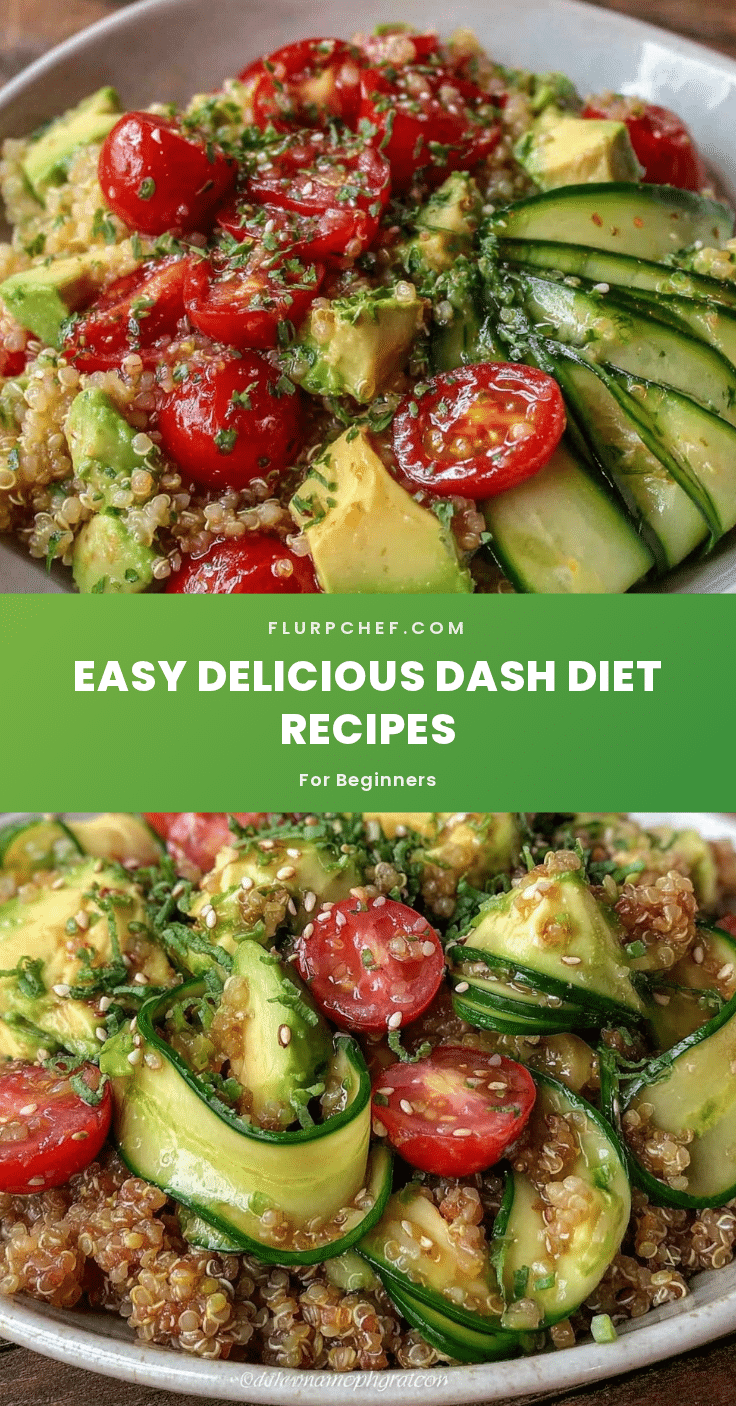
Easy DASH Diet Recipes for Beginners: 5 Fresh Flavorful Meals
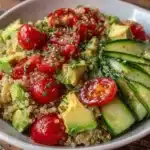
A collection of simple, fresh, and flavorful meals designed for beginners following the DASH diet, focusing on wholesome ingredients and quick preparation.
- Prep Time: 10-15 minutes
- Cook Time: 30-40 minutes
- Total Time: 40-55 minutes
- Yield: 4 servings
- Category: Main Course
- Cuisine: American
Ingredients
- Fresh vegetables: cucumbers, cherry tomatoes, bell peppers, shredded carrots, spinach or kale
- Lean proteins: skinless chicken breasts, canned chickpeas, firm tofu, wild-caught salmon
- Whole grains & legumes: quinoa, brown rice, lentils
- Dairy & alternatives: low-fat cottage cheese, plain Greek yogurt, unsweetened almond milk
- Herbs & spices: fresh mint, dill, garlic, cumin, black pepper
- Citrus & oils: fresh lemon juice, fresh lime juice, extra virgin olive oil, balsamic vinegar
Instructions
- Prepare your ingredients by rinsing and chopping vegetables uniformly (10-15 minutes).
- Cook whole grains or legumes: rinse quinoa or lentils; for quinoa, add 1 cup quinoa to 2 cups water, bring to boil, reduce to simmer, cover and cook for 15 minutes until water is absorbed. Fluff and let cool slightly (20-25 minutes).
- Cook proteins: season chicken breasts lightly with salt, pepper, and lemon. Heat 1 tablespoon olive oil in a skillet over medium heat. Cook chicken 5-7 minutes per side until internal temperature reaches 165°F. Let rest and slice thinly (10-15 minutes).
- Mix dressing: combine fresh lemon juice, 2 tablespoons olive oil, minced garlic, salt, and pepper in a small bowl. Whisk until emulsified (5 minutes).
- Assemble the salad or bowl: toss grains, vegetables, proteins, and herbs in a large bowl. Drizzle dressing and mix gently to coat (5 minutes).
- Final touches: taste and adjust seasoning with salt, pepper, or extra citrus. Optionally add toasted nuts or seeds for crunch.
Notes
Cook grains and proteins in advance to save time. Rinse canned chickpeas to reduce sodium. Add dressing just before serving to prevent sogginess. Use fresh, firm vegetables for best texture. Season gradually and taste as you go to avoid over-salting.
Nutrition
- Serving Size: 1 bowl or salad serv
- Calories: 350
- Sugar: 6
- Sodium: 300
- Fat: 10
- Saturated Fat: 1.5
- Carbohydrates: 40
- Fiber: 8
- Protein: 25
Keywords: DASH diet, healthy recipes, easy meals, fresh vegetables, lean proteins, whole grains, low sodium, beginner-friendly, quick cooking