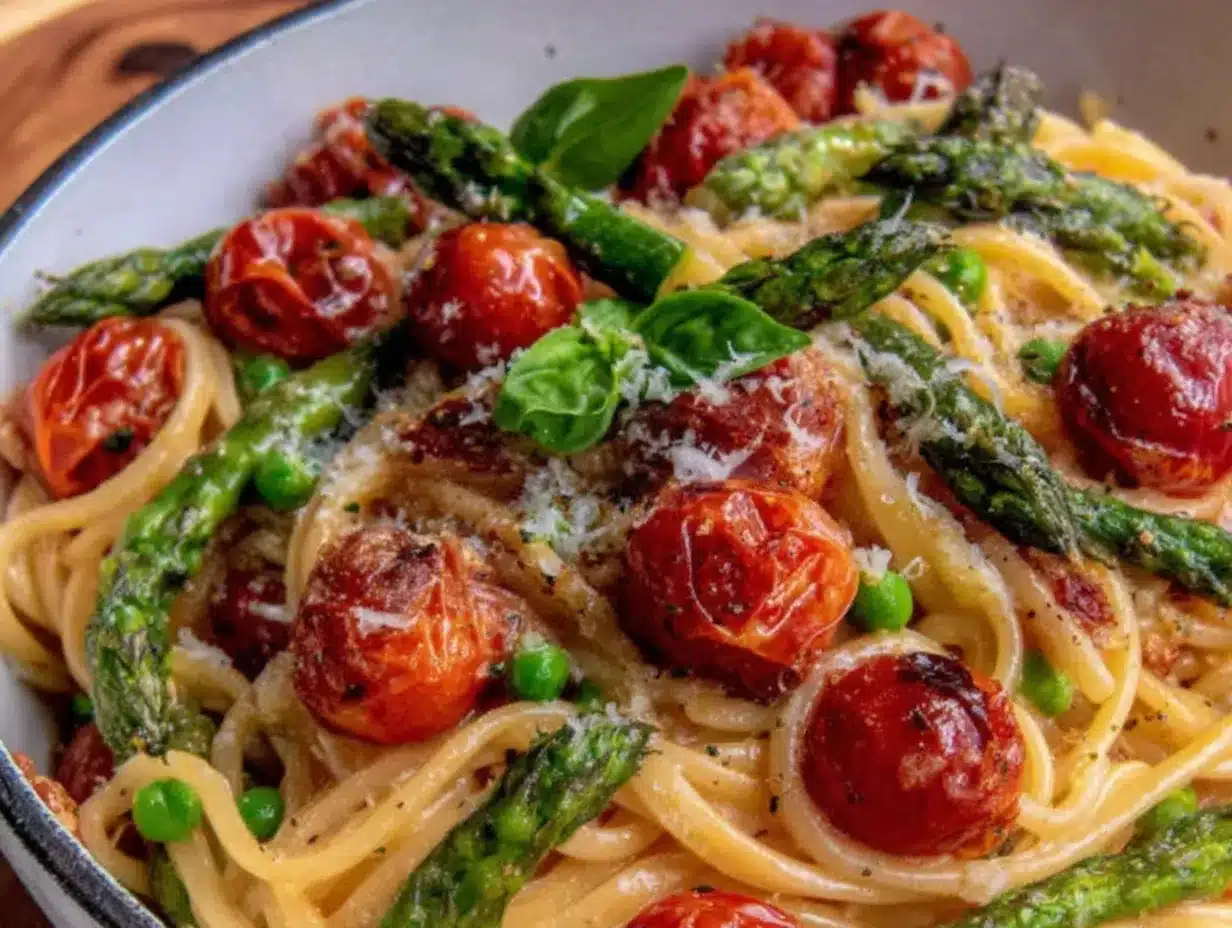
“Are you sure this will taste good with just one pan?” my roommate asked skeptically as I dumped a colorful pile of veggies and pasta into the skillet. Honestly, I wasn’t totally convinced myself at first. I was rushing home from work, starving, and didn’t want to face a mountain of dishes. So, I threw together what I had on hand—fresh cherry tomatoes, tender asparagus, sweet peas, and a handful of pasta—in one pan. The smell that filled the kitchen was surprisingly bright and inviting, with that fresh spring vibe you only get when tomatoes start ripening and greens are crisp.
That night, we sat down with plates steaming and colorful, and I realized this Easy One-Pan Spring Primavera with Cherry Tomatoes was going to be my new weeknight go-to. It’s the kind of recipe that feels light but still satisfying, plus it gives you that homemade touch without the fuss. I find myself making it nearly every week, sometimes swapping in whatever fresh veggies are in season or even adding a splash of cream or cheese. It’s become a quiet little ritual—one pan, fresh ingredients, and a fast, flavorful meal that just fits.
What stuck with me is how effortlessly spring bursts onto the plate here—no complicated steps, just honest, vibrant flavors that remind me of sunny afternoons and shared dinners. It’s a little celebration of fresh produce in the middle of a busy week, and if you ask me, that’s worth savoring.
Why You’ll Love This Recipe
After countless tests and subtle tweaks, this Easy One-Pan Spring Primavera with Cherry Tomatoes stands out as one of my favorite quick meals. Here’s why it might just become your favorite too:
- Quick & Easy: Ready in about 30 minutes, it’s perfect for those rushed evenings or when you want a fresh meal without any stress.
- Simple Ingredients: No need for fancy or hard-to-find produce—just pantry staples and seasonal veggies you probably already have.
- Perfect for Spring: Embraces fresh cherry tomatoes and spring vegetables, making it ideal for seasonal dinners or casual luncheons.
- Crowd-Pleaser: Whether you’re feeding picky kids or adults, the balance of flavors and crispy-tender veggies always gets compliments.
- Unbelievably Delicious: The way the cherry tomatoes burst and mingle with garlic and herbs creates a bright, comforting taste that’s anything but ordinary.
This isn’t just another primavera recipe; it’s the one where the pasta cooks right alongside the veggies, soaking up all the juices and flavors. The cherry tomatoes soften just enough to create a natural, light sauce that coats everything perfectly. No extra pots, no draining pasta, just an easy, satisfying dish that tastes like you spent hours in the kitchen. I often think about how this recipe compares to other simple dishes I’ve made, like the crispy garlic chicken or the tangy street food delight of pani puri, but this primavera brings a fresh, green energy that lifts the whole meal.
What Ingredients You Will Need
This Easy One-Pan Spring Primavera with Cherry Tomatoes uses straightforward ingredients that come together beautifully to deliver fresh, vibrant flavors. The veggies add crunch and sweetness, while the pasta pulls it all into a comforting dish.
- For the Primavera Base:
- 8 oz (225 g) short pasta like penne or farfalle (I prefer Barilla for consistent texture)
- 2 cups cherry tomatoes, halved (look for ripe, firm ones for the best burst)
- 1 cup fresh asparagus, trimmed and cut into 1-inch pieces
- 1 cup fresh or frozen peas (frozen works just fine if fresh aren’t available)
- 1 small yellow onion, finely chopped
- 3 cloves garlic, minced (adds that essential aromatic punch)
- For the Flavor:
- 3 cups vegetable broth (you can use low sodium for better control)
- 2 tbsp olive oil (extra virgin for the best flavor)
- 1/2 tsp red pepper flakes (optional, for a subtle heat)
- Salt and freshly cracked black pepper, to taste
- 1/4 cup fresh basil leaves, torn (adds fresh herbal brightness)
- 1/4 cup grated Parmesan cheese (optional but highly recommended for richness)
If you want, you can swap the pasta for gluten-free varieties or use almond flour pasta for a low-carb twist. For dairy-free options, leave out the Parmesan or add a sprinkle of nutritional yeast instead. When asparagus is out of season, green beans make a nice substitute, and in summer, swapping peas for zucchini ribbons is a nice change.
Equipment Needed
- Large deep skillet or sauté pan (at least 12 inches in diameter) with a lid — It’s key for cooking everything evenly in one pan.
- Sharp chef’s knife — For chopping the veggies quickly and safely.
- Cutting board — Preferably one with a non-slip base for stability.
- Measuring cups and spoons — To get the broth and seasoning just right.
- Wooden spoon or silicone spatula — For stirring without scratching your pan.
If you don’t have a lid for your pan, a large baking sheet or foil works in a pinch to trap steam. I’ve found that a well-seasoned cast iron skillet or a heavy stainless steel pan gives the best heat distribution, but nonstick pans can make cleanup simpler, especially after juicy cherry tomatoes burst. For those on a budget, simple aluminum pans with a lid work perfectly fine.
Preparation Method
- Prep the veggies: Rinse and halve the cherry tomatoes, trim and chop asparagus, peel and finely chop the onion, and mince the garlic. Set aside the peas if frozen.
- Heat the oil: Place your skillet over medium heat and add 2 tablespoons of olive oil. Let it warm for about 1 minute until shimmering but not smoking.
- Sauté onions and garlic: Add the chopped onion and cook for 3-4 minutes until translucent and fragrant. Stir in the minced garlic and red pepper flakes, cooking for another 30 seconds to release their aroma. Be careful not to burn the garlic—if it browns too fast, reduce heat.
- Add cherry tomatoes and asparagus: Toss the cherry tomatoes and asparagus pieces into the pan. Cook for 4-5 minutes, stirring occasionally, until the tomatoes start to soften but still hold their shape and asparagus is crisp-tender.
- Add pasta and broth: Pour in the dry pasta and 3 cups (720 ml) of vegetable broth. Stir everything to combine. The broth should mostly cover the pasta; if not, add a little extra water or broth.
- Simmer with lid on: Bring the broth to a gentle boil, then reduce heat to medium-low and cover the pan with a lid. Cook for 10-12 minutes, stirring every few minutes to prevent pasta from sticking. Check the pasta for doneness—al dente is best here.
- Stir in peas and season: When pasta is almost done, add the peas and season with salt and pepper to taste. Cook uncovered for 2-3 more minutes until peas are heated through and the liquid is mostly absorbed.
- Finish with basil and cheese: Turn off the heat, stir in torn fresh basil leaves and sprinkle Parmesan cheese on top. Give it a gentle toss to combine everything and melt the cheese slightly.
- Serve immediately: Portion the primavera onto plates while it’s warm, letting the freshness and colors shine.
Some quick tips: if you notice your broth evaporating too fast before pasta cooks, add a splash more water. If you like a creamier finish, a dollop of mascarpone or a swirl of cream works beautifully at the end. And don’t forget to taste as you go—seasoning is key to keeping flavors bright and balanced.
Cooking Tips & Techniques
Cooking pasta right in the pan with veggies and broth is a bit of a balancing act, but here’s what I’ve learned:
- Keep an eye on liquid levels: Because the pasta absorbs broth as it cooks, you want to keep enough liquid in the pan to avoid drying out or burning. Add broth or water in small increments if needed.
- Use medium to medium-low heat: Too high, and the liquid evaporates before pasta cooks; too low, and it takes forever. Finding that sweet spot gives you tender pasta and perfectly cooked veggies.
- Don’t overcook the veggies: Especially the asparagus and peas—they should stay crisp and vibrant, not mushy. Add them later in the cooking process if you prefer a firmer bite.
- Stir gently but frequently: This prevents the pasta from sticking to the pan while breaking up any clumps.
- Fresh herbs last minute: Add basil or parsley just before serving to preserve their bright flavor and color.
I once accidentally left the lid off for too long and ended up with dry pasta that needed a rescue splash of broth. Lesson learned: patience and a lid are your friends here. Another trick is to toast the garlic and onion just right—not too dark—to build a savory base without bitterness.
Variations & Adaptations
This primavera recipe is flexible, so feel free to make it your own:
- Protein Boost: Add cooked chicken, shrimp, or even crispy tofu for a heartier meal.
- Seasonal Swaps: Use green beans, zucchini, or even baby spinach instead of asparagus and peas depending on what’s fresh or what you have in the fridge.
- Cheesy Variations: Swap Parmesan for Pecorino Romano or sprinkle feta for a tangier finish.
- Vegan Version: Omit the cheese or replace it with vegan parmesan, and use vegetable broth to keep it plant-based.
- Spice it Up: Add a pinch more red pepper flakes or a splash of chili oil if you like heat.
One of my favorite tweaks during early summer was tossing in fresh peas, zucchini ribbons, and a handful of arugula at the very end. It gave a peppery freshness that felt like a garden on a plate. If you’re curious about adding a bit of Asian flair, a dash of toasted sesame oil right before serving adds a subtle depth.
Serving & Storage Suggestions
This primavera tastes best served warm, straight from the pan, with the basil’s aroma filling the air. A light drizzle of good olive oil over the top right before serving adds a silky richness.
Pair it with a crisp green salad or a slice of crusty bread to soak up any leftover sauce. For a refreshing contrast, a chilled glass of white wine or sparkling water with lemon works beautifully.
To store leftovers, transfer to an airtight container and refrigerate for up to 3 days. The flavors meld nicely overnight, but the pasta can absorb more liquid, so keep an eye on texture. Reheat gently in a skillet over low heat with a splash of broth or water to loosen it back up.
Freezing isn’t ideal for this dish, as the fresh veggies lose their texture, but you can always prepare the sauce base ahead and cook fresh pasta when ready.
Nutritional Information & Benefits
This Easy One-Pan Spring Primavera with Cherry Tomatoes is a nutrient-packed meal that’s light but filling. Per serving (based on four servings), it roughly contains:
| Nutrient | Amount |
|---|---|
| Calories | 350-380 kcal |
| Protein | 12-15 g |
| Carbohydrates | 50-55 g |
| Fiber | 6-8 g |
| Fat | 8-10 g |
The cherry tomatoes provide antioxidants like lycopene, while asparagus offers vitamins A, C, and K. Using whole grain or legume-based pasta can boost fiber and protein further. This recipe is naturally gluten-free if you choose gluten-free pasta, dairy-free if you skip cheese, and low in saturated fat.
Personally, I appreciate how this dish feels balanced—not too heavy but nourishing enough to keep me going after a busy day. It’s the kind of meal that fits well into a health-conscious but realistic lifestyle.
Conclusion
This Easy One-Pan Spring Primavera with Cherry Tomatoes is one of those meals that quietly wins you over with its simplicity and honest flavors. It’s a reminder that good food doesn’t have to be complicated or time-consuming—just fresh, seasonal ingredients coming together in a way that feels both comforting and light. I love how adaptable it is, letting you tweak it to match what’s on hand or your mood.
Give it a try next time you want a fuss-free, vibrant dinner. And if you have your own spins on this dish, I’d love to hear about them. Sharing those little kitchen adventures is what makes cooking so much fun. Remember, cooking is all about the joy of making something your own.
Frequently Asked Questions
Can I use dried herbs instead of fresh basil?
While fresh basil gives the best flavor and aroma, you can substitute 1 teaspoon of dried basil if needed. Add it earlier in the cooking process to help it infuse.
What pasta shape works best for this primavera?
Short pasta like penne, farfalle, or rigatoni works well because they cook evenly and hold the sauce nicely.
Can I make this recipe vegan?
Absolutely! Use vegetable broth, omit the Parmesan or swap it with a vegan cheese alternative or nutritional yeast to keep it plant-based.
How do I prevent the pasta from sticking to the pan?
Stir regularly during cooking and make sure there’s enough broth or water. Adding a little olive oil also helps.
Can I prepare this recipe ahead of time?
You can prep the vegetables and measure ingredients ahead, but it’s best to cook the pasta fresh to keep the texture perfect.
For a fresh twist on one-pan meals, you might enjoy the easy, spicy Thai Pad Krapow Basil Stir Fry or the savory Mexican Elote that bring bold flavors with minimal fuss.
Pin This Recipe!
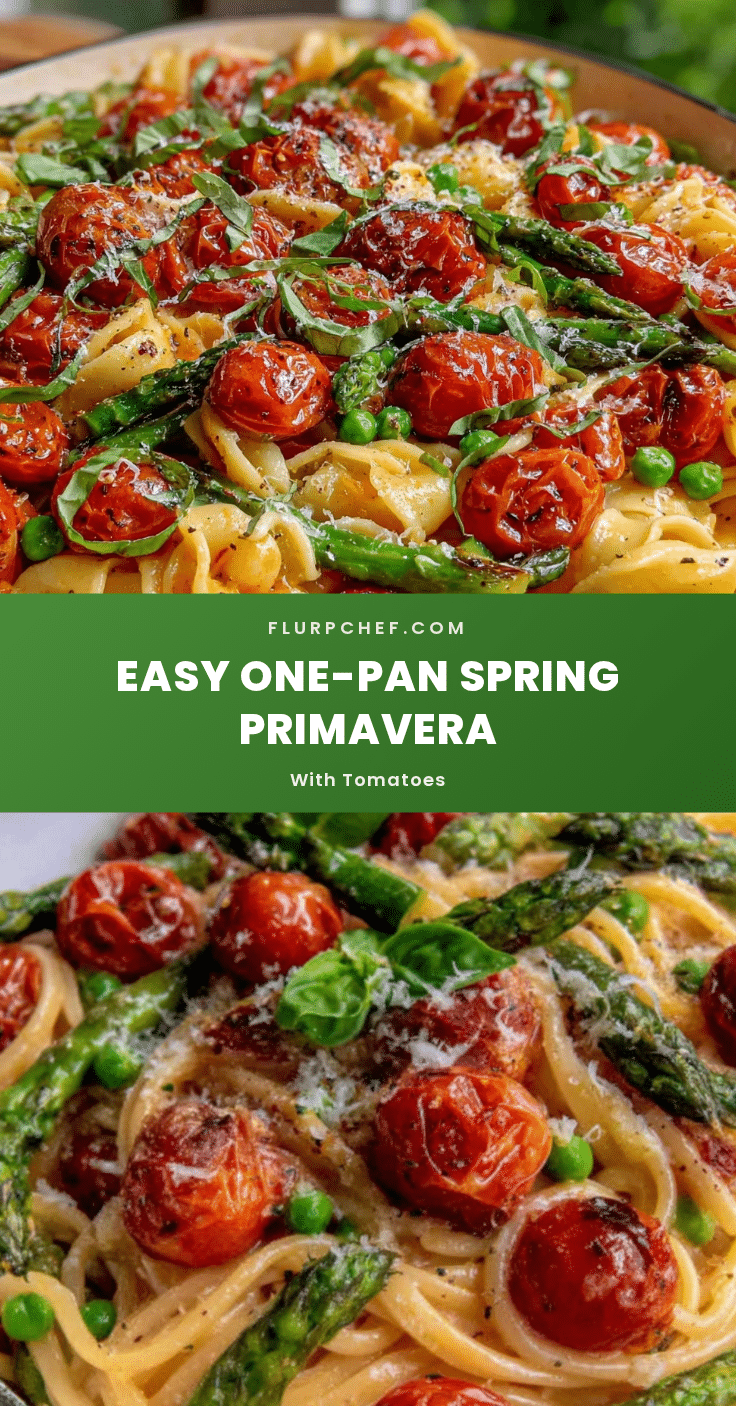
Easy One-Pan Spring Primavera with Cherry Tomatoes
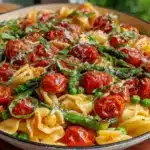
A quick and easy one-pan pasta dish featuring fresh cherry tomatoes, asparagus, peas, and a light vegetable broth sauce. Perfect for a fresh, vibrant spring meal with minimal cleanup.
- Prep Time: 10 minutes
- Cook Time: 20 minutes
- Total Time: 30 minutes
- Yield: 4 servings 1x
- Category: Main Course
- Cuisine: Italian
Ingredients
- 8 oz short pasta like penne or farfalle
- 2 cups cherry tomatoes, halved
- 1 cup fresh asparagus, trimmed and cut into 1-inch pieces
- 1 cup fresh or frozen peas
- 1 small yellow onion, finely chopped
- 3 cloves garlic, minced
- 3 cups vegetable broth
- 2 tbsp olive oil
- 1/2 tsp red pepper flakes (optional)
- Salt and freshly cracked black pepper, to taste
- 1/4 cup fresh basil leaves, torn
- 1/4 cup grated Parmesan cheese (optional)
Instructions
- Rinse and halve the cherry tomatoes, trim and chop asparagus, peel and finely chop the onion, and mince the garlic. Set aside the peas if frozen.
- Place your skillet over medium heat and add 2 tablespoons of olive oil. Let it warm for about 1 minute until shimmering but not smoking.
- Add the chopped onion and cook for 3-4 minutes until translucent and fragrant. Stir in the minced garlic and red pepper flakes, cooking for another 30 seconds to release their aroma. Be careful not to burn the garlic.
- Toss the cherry tomatoes and asparagus pieces into the pan. Cook for 4-5 minutes, stirring occasionally, until the tomatoes start to soften but still hold their shape and asparagus is crisp-tender.
- Pour in the dry pasta and 3 cups of vegetable broth. Stir everything to combine. The broth should mostly cover the pasta; if not, add a little extra water or broth.
- Bring the broth to a gentle boil, then reduce heat to medium-low and cover the pan with a lid. Cook for 10-12 minutes, stirring every few minutes to prevent pasta from sticking. Check the pasta for doneness—al dente is best.
- When pasta is almost done, add the peas and season with salt and pepper to taste. Cook uncovered for 2-3 more minutes until peas are heated through and the liquid is mostly absorbed.
- Turn off the heat, stir in torn fresh basil leaves and sprinkle Parmesan cheese on top. Give it a gentle toss to combine everything and melt the cheese slightly.
- Portion the primavera onto plates while it’s warm, letting the freshness and colors shine.
Notes
Keep an eye on liquid levels and add broth or water as needed to prevent drying out. Use medium to medium-low heat to cook pasta evenly. Add peas later to keep them crisp. For a creamier finish, add mascarpone or cream at the end. Stir frequently to prevent sticking. Fresh basil added last preserves flavor and color.
Nutrition
- Serving Size: 1 serving (approxima
- Calories: 365
- Sugar: 6
- Sodium: 400
- Fat: 9
- Saturated Fat: 1.5
- Carbohydrates: 53
- Fiber: 7
- Protein: 14
Keywords: one-pan, primavera, cherry tomatoes, spring vegetables, easy pasta, quick dinner, vegetarian, healthy meal