Let me tell you, the moment the aroma of fermented Burmese tea leaves mingled with toasted sesame and fried garlic wafted through my kitchen, I knew I had stumbled upon something truly special. The first time I made this Burmese tea leaf salad, or Lahpet, I was instantly hooked. You know that kind of moment where you pause, take a deep breath, and just smile because you realize you’re onto a recipe that’s packed with bold flavors and satisfying textures? That was it for me.
Years ago, when I was knee-high to a grasshopper, I remember my grandma telling me stories about the vibrant markets of Myanmar, where Lahpet is more than just a salad—it’s a cultural experience. I never imagined I’d be able to recreate that magic in my own kitchen until one rainy weekend I decided to try my hand at it. Honestly, it was dangerously easy to make and offered pure, nostalgic comfort in every crunchy bite.
My family couldn’t stop sneaking spoonfuls off the platter (and I can’t really blame them). This flavorful Burmese tea leaf salad with crispy toppings has become a staple for our family gatherings and potlucks, brightening up our table and Pinterest boards alike. Whether you’re looking for a sweet treat for your kids or a vibrant dish to impress guests, this recipe fits the bill. I’ve tested and tweaked it in the name of research, of course, and it’s now one of those dishes that feels like a warm hug you’ll want to bookmark for good.
Why You’ll Love This Recipe
Honestly, this flavorful Burmese tea leaf salad recipe isn’t just another salad—it’s a journey on your plate, tested and family-approved. I’ve put it through countless trials (some successful, some not so much) to get the balance just right.
- Quick & Easy: Comes together in under 30 minutes, perfect for busy weeknights or last-minute cravings.
- Simple Ingredients: No fancy grocery trips needed; you likely already have everything or can find authentic fermented tea leaves at specialty stores.
- Perfect for Social Gatherings: Great for potlucks, dinner parties, or even as a bright appetizer when you want to wow your guests.
- Crowd-Pleaser: Always gets rave reviews from kids and adults alike—crispy, tangy, nutty, and savory all at once.
- Unbelievably Delicious: The texture combo—the chewiness of the tea leaves against the crunch of peanuts and crispy garlic—makes it next-level comfort food.
What sets this recipe apart? It’s all about the toppings and the perfectly balanced seasoning. I use a special technique of rinsing and lightly pressing the fermented tea leaves to mellow their bitterness without losing that signature tang. Plus, frying the garlic and shallots to golden crispiness adds that addictive crunch you won’t find in other versions. This isn’t just a salad—it’s an experience that makes you close your eyes after the first bite and savor every flavor.
Whether you’re a seasoned foodie or new to Burmese cuisine, this recipe will impress without the stress. It’s comfort food reimagined with soul and simplicity.
What Ingredients You Will Need
This recipe uses simple, wholesome ingredients to deliver bold flavor and satisfying texture without the fuss. Most are pantry staples or easy to find at your local Asian market.
- Fermented Tea Leaves (Lahpet): About 100g (3.5 oz), drained and lightly pressed (look for small-curd, firm texture for best results).
- Peanuts: ½ cup (70g), roasted and unsalted (I prefer Planters for a clean, fresh taste).
- Sesame Seeds: 2 tbsp, toasted (adds nuttiness and texture).
- Garlic: 4 cloves, thinly sliced and fried until golden and crispy (the secret to that irresistible crunch).
- Shallots: 2 medium, thinly sliced and fried (for a sweet, crispy topping).
- Tomatoes: 1 medium, diced (adds freshness and juiciness).
- Green Chilies: 1-2, finely chopped (optional, for heat).
- Fresh Lime Juice: From 1 lime (brightens the salad).
- Fish Sauce: 1 tbsp (adds depth and umami; substitute with soy sauce for vegetarian version).
- Light Soy Sauce: 1 tsp (balances saltiness).
- Cooking Oil: 2 tbsp (for frying garlic and shallots; I use neutral vegetable oil).
- Fresh Cilantro or Mint: A handful, chopped (optional, for herbaceous freshness).
- Roasted Chickpea Flour: ¼ cup (optional, adds extra crunch and nuttiness).
Pro tip: If you can’t find fermented tea leaves, you can experiment with substitute leaves like pickled mustard greens, but do remember it won’t quite have that authentic tang. For a gluten-free option, just double-check your soy sauce choice or swap it for tamari.
Equipment Needed
- Mixing Bowls: One large for tossing the salad, and smaller ones for prepping toppings.
- Frying Pan or Skillet: For frying garlic and shallots to crispy perfection. A non-stick pan works best to avoid burning.
- Colander or Sieve: To drain and rinse the fermented tea leaves thoroughly.
- Sharp Knife: For slicing garlic, shallots, and chopping chilies and herbs.
- Citrus Juicer: Optional, but handy for squeezing fresh lime juice without seeds.
- Measuring Spoons and Cups: For accurate seasoning—trust me, it makes a difference!
If you don’t have a citrus juicer, no worries—just use your hands but watch out for seeds! And if you’re on a budget, a simple cast iron pan or well-seasoned skillet will do just fine for frying those crispy toppings.
Preparation Method
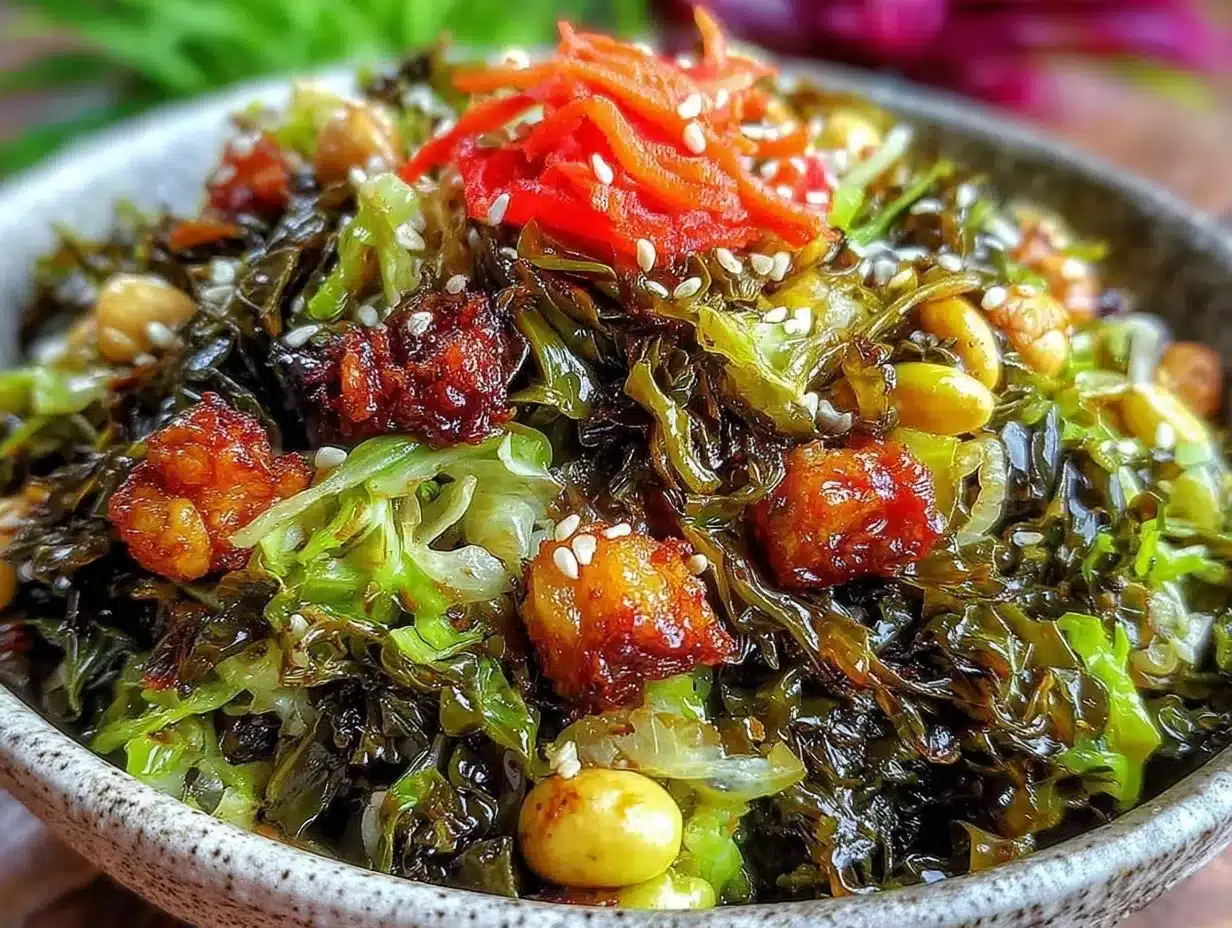
- Prepare the Tea Leaves: Rinse the fermented tea leaves under cold water using a colander to remove excess salt and bitterness. Gently press out the water, then let them drain well. This should take about 5 minutes. The leaves should be moist but not dripping.
- Fry the Garlic and Shallots: Heat 2 tablespoons of oil in a skillet over medium heat. Add the thinly sliced garlic first and fry until golden brown and crispy, about 2-3 minutes. Remove with a slotted spoon and drain on paper towels. Repeat the process with shallots. Keep an eye on the heat to avoid burning; burnt garlic will taste bitter.
- Toast the Sesame Seeds: In the same pan (wipe out any excess oil), toast the sesame seeds over low heat until fragrant and lightly browned, about 2 minutes. Stir constantly to prevent burning. Set aside.
- Roast the Chickpea Flour (optional): In a dry pan, toast chickpea flour over medium-low heat until it turns a golden brown and smells nutty, about 3-4 minutes. Stir continuously to avoid clumps. Remove and let cool.
- Mix the Salad Base: In a large bowl, combine the prepared tea leaves, diced tomatoes, chopped green chilies, and fresh herbs. Add the fish sauce, soy sauce, and freshly squeezed lime juice. Toss gently but thoroughly to mix flavors. Taste and adjust seasoning if needed—sometimes a little extra lime juice is just right.
- Add Crunchy Toppings: Sprinkle the roasted peanuts, toasted sesame seeds, crispy garlic, fried shallots, and toasted chickpea flour over the salad. Gently fold them in for a perfect balance of texture.
- Final Touch and Serve: Give the salad one last gentle toss and transfer to a serving dish. Best enjoyed fresh at room temperature or slightly chilled. It pairs beautifully with sticky rice or as a side to grilled meats.
Pro tip: If you want to prep ahead, fry the garlic and shallots the day before and store them in an airtight container to maintain crispiness. Also, keep the toppings separate until just before serving to preserve texture.
Cooking Tips & Techniques
Getting the crispy toppings right is key to mastering this flavorful Burmese tea leaf salad. I’ve learned the hard way that frying garlic and shallots on too high heat leads to burnt bits that overpower the dish. Medium heat is your friend here, and patience pays off.
Another tip? Don’t rush rinsing the fermented tea leaves. It’s tempting to skip, but that step mellows out the bitterness and brings out the umami. If your tea leaves feel too dry after rinsing, add a tiny splash of oil to keep them moist and silky.
When mixing, be gentle! Lahpet is all about texture contrast, so you want to fold in the crunchy toppings without crushing them. And a quick squeeze of fresh lime before serving brightens the whole salad like magic.
One common mistake is over-salting. Remember, the fermented tea leaves and fish sauce already carry salt, so taste as you go. Multitasking tip: fry your garlic and shallots first, then prep your fresh ingredients while they cool—this keeps your workflow smooth.
Finally, don’t be afraid to experiment with the heat level. Chilies can be dialed up or down based on your crowd, and fresh herbs add a lovely fresh note that balances the richness.
Variations & Adaptations
One of the best things about this flavorful Burmese tea leaf salad is how adaptable it is. Here are a few variations I’ve played with over time:
- Vegetarian Version: Swap fish sauce with tamari or soy sauce and omit any animal-derived toppings. You can add roasted sunflower seeds or pumpkin seeds for extra crunch.
- Spicy Kick: Add sliced fresh red chilies or a dash of chili oil for those who love heat. I like to toss in some dried chili flakes too, but go easy if you’re serving kids.
- Seasonal Twist: In summer, toss in fresh mango slices or herbs like Thai basil to brighten the salad. In cooler months, roasted nuts like cashews work beautifully instead of peanuts.
- Cooking Method Variation: Try lightly toasting the fermented tea leaves in a dry pan before mixing to intensify the flavor. Just be cautious—it’s easy to over-toast and lose that delicate tang.
- Personal Favorite: I once added a spoonful of coconut cream to the dressing for a luscious, creamy twist that mellowed the tartness and added richness—definitely a crowd-pleaser.
Serving & Storage Suggestions
Serve this flavorful Burmese tea leaf salad at room temperature or slightly chilled for the best experience. It looks stunning piled high on a shallow platter garnished with extra crispy garlic and chopped herbs.
Pair it with sticky jasmine rice or alongside grilled chicken or fish for a complete meal. I also love serving it as a vibrant side dish at potlucks or family dinners where folks can scoop up spoonfuls themselves.
If you have leftovers, store them in an airtight container in the refrigerator for up to 2 days. Keep the crunchy toppings separate and add them just before serving to maintain texture. When reheating, I recommend warming it gently and stirring in fresh lime juice—this helps refresh the flavors.
Interestingly, the flavors mellow and marry beautifully if you let the salad rest for an hour before serving, so plan ahead if you can!
Nutritional Information & Benefits
This Burmese tea leaf salad packs a punch nutritionally. Per serving, it offers approximately:
| Calories | 220 |
|---|---|
| Protein | 8g |
| Fat | 15g |
| Carbohydrates | 14g |
| Fiber | 4g |
The key ingredient, fermented tea leaves, bring antioxidants and polyphenols, which some studies suggest support digestion and heart health. Peanuts and sesame seeds add healthy fats and protein, making this salad both satisfying and nourishing.
For those watching gluten, just double-check soy sauce or choose gluten-free tamari. The salad is naturally low-carb and vegetarian-friendly with simple swaps.
From a wellness angle, I love that this salad offers a balance of fresh, fermented, and crunchy elements that keep meals interesting without heavy sauces or processed ingredients.
Conclusion
In the end, this flavorful Burmese tea leaf salad (Lahpet) with crispy toppings is worth every step. It’s a recipe that invites you to slow down, appreciate texture, and savor layers of flavor you didn’t know you needed. Customize the heat, swap ingredients to suit your pantry, and make it your own.
I genuinely love this salad because it connects me to a rich culinary tradition while being easy enough to whip up on any given night. It’s authentic yet approachable, crunchy yet fresh, and totally addictive.
If you try it, please drop a comment below and share your twists or experiences—I’m always curious how folks make it theirs! And hey, don’t forget to share it with friends who love bold flavors and crispy textures. You’re going to want to keep this one in your recipe rotation for sure.
FAQs
What can I substitute if I can’t find fermented tea leaves?
If fermented tea leaves aren’t available, you can try pickled mustard greens or even kale marinated in lemon and soy sauce as a last resort, but the flavor won’t be quite the same.
Can I make Lahpet salad ahead of time?
Yes, but keep the crispy toppings separate until just before serving to keep them crunchy. The salad base can be made a few hours in advance and refrigerated.
Is this salad vegan-friendly?
It can be! Just swap fish sauce for soy sauce or tamari and skip any animal-based toppings. The salad will still be delicious and full of flavor.
How spicy is this salad traditionally?
The heat level varies, but traditionally it has a mild to moderate kick. You can adjust the chilies to your preference or omit them for a milder version.
What dishes pair well with Burmese tea leaf salad?
Lahpet salad pairs wonderfully with sticky rice, grilled meats, or as part of a larger Burmese meal with curries and soups. It also shines as a standalone snack or appetizer.
Pin This Recipe!
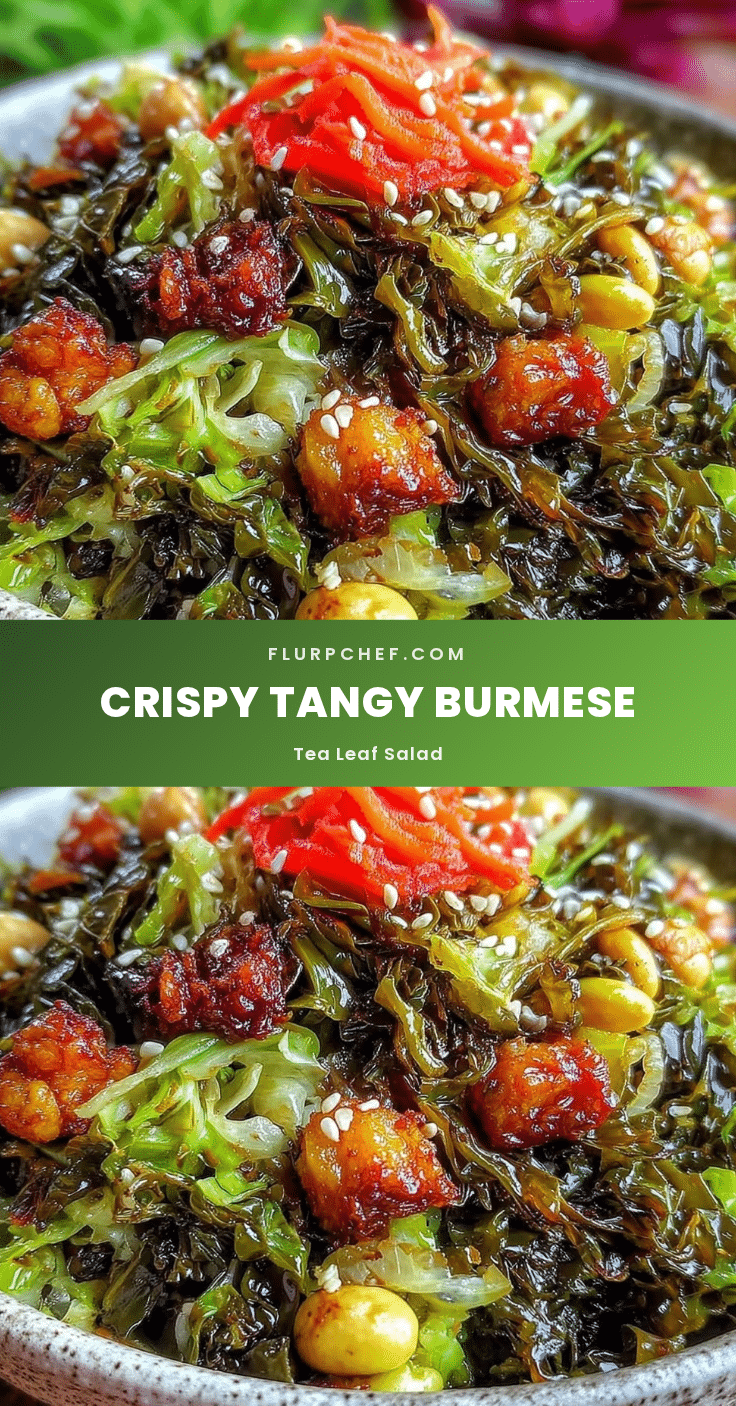
Flavorful Burmese Tea Leaf Salad Lahpet Recipe with Crispy Toppings Made Easy
A vibrant and crunchy Burmese tea leaf salad featuring fermented tea leaves, crispy garlic and shallots, peanuts, and toasted sesame seeds. This recipe offers a perfect balance of tangy, nutty, and savory flavors with satisfying textures.
- Prep Time: 10 minutes
- Cook Time: 15 minutes
- Total Time: 25 minutes
- Yield: 4 servings 1x
- Category: Salad
- Cuisine: Burmese
Ingredients
- 100g (3.5 oz) fermented tea leaves (Lahpet), drained and lightly pressed
- ½ cup (70g) roasted unsalted peanuts
- 2 tbsp toasted sesame seeds
- 4 cloves garlic, thinly sliced and fried until golden and crispy
- 2 medium shallots, thinly sliced and fried
- 1 medium tomato, diced
- 1–2 green chilies, finely chopped (optional)
- Juice of 1 lime
- 1 tbsp fish sauce (substitute with soy sauce or tamari for vegetarian/vegan)
- 1 tsp light soy sauce
- 2 tbsp neutral vegetable oil (for frying garlic and shallots)
- A handful fresh cilantro or mint, chopped (optional)
- ¼ cup roasted chickpea flour (optional)
Instructions
- Rinse the fermented tea leaves under cold water using a colander to remove excess salt and bitterness. Gently press out the water and let them drain well, about 5 minutes. Leaves should be moist but not dripping.
- Heat 2 tablespoons of oil in a skillet over medium heat. Fry the thinly sliced garlic until golden brown and crispy, about 2-3 minutes. Remove with a slotted spoon and drain on paper towels.
- Repeat the frying process with the shallots. Avoid burning by keeping the heat medium.
- In the same pan (wipe out excess oil), toast the sesame seeds over low heat until fragrant and lightly browned, about 2 minutes, stirring constantly. Set aside.
- If using, roast the chickpea flour in a dry pan over medium-low heat until golden brown and nutty, about 3-4 minutes, stirring continuously. Remove and let cool.
- In a large bowl, combine the prepared tea leaves, diced tomatoes, chopped green chilies, and fresh herbs. Add fish sauce, soy sauce, and lime juice. Toss gently but thoroughly to mix flavors. Adjust seasoning as needed.
- Sprinkle roasted peanuts, toasted sesame seeds, crispy garlic, fried shallots, and toasted chickpea flour over the salad. Gently fold them in to maintain texture balance.
- Give the salad one last gentle toss and transfer to a serving dish. Serve fresh at room temperature or slightly chilled.
Notes
Fry garlic and shallots on medium heat to avoid burning. Rinse and gently press tea leaves to mellow bitterness. Keep crunchy toppings separate until serving to maintain texture. Adjust chili heat to preference. For vegetarian/vegan, substitute fish sauce with soy sauce or tamari. Toast chickpea flour for extra crunch if desired.
Nutrition
- Serving Size: Approximately 1 cup
- Calories: 220
- Fat: 15
- Carbohydrates: 14
- Fiber: 4
- Protein: 8
Keywords: Burmese tea leaf salad, Lahpet, fermented tea leaves, crispy garlic, shallots, Burmese salad, Asian salad, vegetarian salad, gluten-free salad