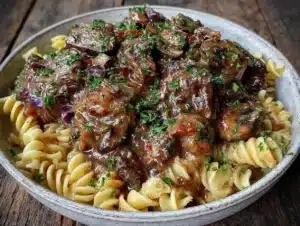
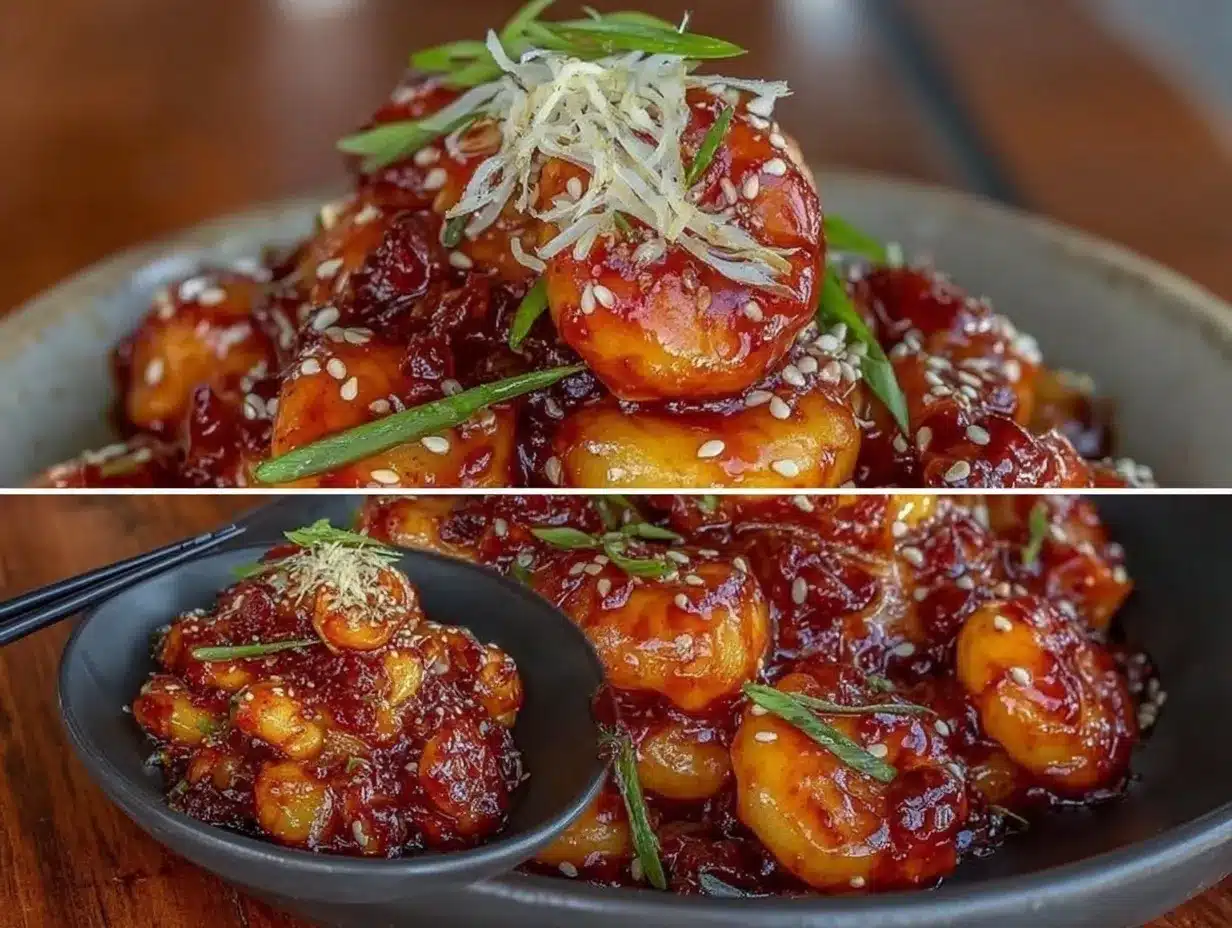
Let me tell you, the aroma of spicy gochujang sauce simmering gently in the kitchen is enough to make anyone’s mouth water. That sticky, glossy red sauce clinging to chewy rice cakes—known as tteokbokki—is honestly one of those dishes that hits all the right notes. The first time I made this flavorful Korean tteokbokki with spicy gochujang sauce, I was instantly hooked. It was one of those moments where you pause, take a deep breath, and just smile because you know you’re onto something truly special.
I remember when I was knee-high to a grasshopper, my Korean aunt would whip up these spicy rice cakes that felt like a warm hug on a chilly day. Years ago, I tried recreating those memories in my own kitchen on a rainy weekend, and I wish I’d discovered this simple yet bold recipe way sooner. My family couldn’t stop sneaking bites right off the pan (and I can’t really blame them). Honestly, this tteokbokki recipe is dangerously easy and offers pure, nostalgic comfort in every bite.
This dish is perfect for potlucks, a sweet spicy treat for your kids who love a little heat, or simply to brighten up your Pinterest recipe board with something authentically Korean. After testing this recipe multiple times in the name of research, of course, it’s become a staple for family gatherings and gifting. Trust me, this flavorful Korean tteokbokki with spicy gochujang sauce feels like a warm hug you’re going to want to bookmark.
Why You’ll Love This Recipe
This flavorful Korean tteokbokki recipe isn’t just another spicy snack—it’s a tried-and-true classic that’s been refined with love and a few kitchen-tested tweaks. Here’s why it stands out:
- Quick & Easy: Comes together in under 30 minutes, perfect for busy weeknights or last-minute cravings.
- Simple Ingredients: No fancy grocery trips needed; you probably already have most of these in your pantry or local Asian market.
- Perfect for Any Occasion: Great for casual dinners, game nights, or that spicy snack fix when you’re feeling adventurous.
- Crowd-Pleaser: Always gets rave reviews from kids and adults alike who enjoy a little kick.
- Unbelievably Delicious: The chewy rice cakes paired with that sweet, spicy, and umami-packed gochujang sauce is next-level comfort food.
What makes this recipe different? It’s all about the balance. The sauce is perfectly spicy but not overpowering, and the addition of a hint of sweetness cuts through the heat just right. Plus, I add a little depth with garlic and a splash of soy sauce that gives it that authentic Korean soul. This isn’t just a quick fix—it’s a recipe that makes you close your eyes after the first bite, savoring the cozy warmth.
Whether you’re impressing guests without stress or turning a simple meal into something memorable, this tteokbokki recipe is your go-to for a spicy, comforting Korean treat.
What Ingredients You Will Need
This flavorful Korean tteokbokki recipe uses simple, wholesome ingredients to deliver bold flavor and that satisfying chewy texture without any fuss. Most are pantry staples or easy to find in any Asian grocery store.
- Tteok (Korean Rice Cakes): 14 oz (400g) – fresh or frozen cylindrical rice cakes (if frozen, soak in warm water for 10 minutes)
- Gochujang (Korean Red Chili Paste): 3 tablespoons – this is the star, adding that signature spicy, savory depth (I recommend Chung Jung One brand for authentic flavor)
- Gochugaru (Korean Chili Flakes): 1 teaspoon – optional, for extra heat
- Soy Sauce: 2 tablespoons – adds umami and balances the heat
- Sugar: 2 tablespoons – balances the spice with a touch of sweetness
- Garlic: 3 cloves, minced – infuses a fragrant, savory note
- Water or Anchovy Broth: 2 cups (480 ml) – anchors the sauce, anchovy broth adds authentic depth but water works fine
- Green Onions: 2 stalks, sliced diagonally – fresh garnish and mild onion flavor
- Hard-Boiled Eggs: 2 (optional) – a classic addition that soaks up the sauce beautifully
- Sesame Seeds: 1 teaspoon – for garnish and subtle nuttiness
- Vegetables (optional): such as cabbage or fish cakes, sliced – adds variety and texture
Tip: If you want a gluten-free version, use tamari instead of soy sauce and check that your gochujang is gluten-free. For a vegan spin, skip the eggs and use vegetable broth instead of anchovy broth.
Equipment Needed
- Large Non-stick Skillet or Wide Pan: Ideal for cooking the tteokbokki evenly and allowing the sauce to thicken nicely.
- Measuring Spoons and Cups: For precise seasoning and liquid amounts (accuracy matters with spicy sauces!).
- Wooden Spoon or Silicone Spatula: To stir without scratching your cookware.
- Small Bowl: To mix the gochujang sauce ingredients before adding.
- Knife and Cutting Board: For prepping garlic, green onions, and any optional veggies.
If you don’t have a non-stick pan, a well-seasoned cast iron skillet works well, though be prepared to stir a bit more to prevent sticking. I once tried making this in a stainless steel pan without enough oil—lesson learned, it sticks like crazy!
For budget-friendly options, a basic skillet from any home goods store will do just fine. Keeping your tools simple lets the recipe shine without fuss.
Preparation Method
- Prepare the Rice Cakes: If using frozen tteok, soak them in warm water for about 10 minutes to soften. Drain and set aside. (This little soak ensures they cook evenly and don’t turn rubbery.)
- Mix the Sauce: In a small bowl, combine 3 tablespoons gochujang, 1 teaspoon gochugaru (if using), 2 tablespoons soy sauce, 2 tablespoons sugar, and minced garlic. Stir well until smooth and set aside.
- Heat the Pan: Add 2 cups (480 ml) water or anchovy broth to a large non-stick skillet over medium-high heat. Bring it to a gentle boil.
- Add the Sauce: Pour the prepared sauce mixture into the boiling liquid. Stir to combine and let it simmer for 2-3 minutes until the sauce starts to thicken and coat the back of a spoon.
- Add the Rice Cakes: Add the drained tteok to the sauce. Stir gently but continuously to prevent sticking. Cook for about 8-10 minutes, or until the rice cakes become soft and chewy, and the sauce thickens to a sticky glaze. (If the sauce reduces too much, add a splash more water.)
- Optional Add-ins: If using fish cakes or vegetables, add them 5 minutes into cooking so they soften but don’t get mushy.
- Add Green Onions: Stir in sliced green onions during the last minute of cooking for freshness and crunch.
- Serve: Plate the tteokbokki immediately, garnishing with sesame seeds and halved hard-boiled eggs if desired. Enjoy it hot for that perfect chewy, spicy, and sweet bite.
Pro Tip: Stir gently but constantly once you add the rice cakes to avoid burning or sticking. The sauce should cling thickly but not be dry or crusty.
This whole process takes around 25-30 minutes and honestly, the kitchen smells so good by the end that it’s hard not to sneak a few bites before serving.
Cooking Tips & Techniques
Cooking tteokbokki is both an art and a science, and after a few attempts, here are some tips that’ve saved me from disasters:
- Soften Rice Cakes Properly: Don’t skip soaking frozen tteok. It prevents tough, rubbery bites.
- Balance Your Sauce: Be mindful of sweetness vs. heat. If your gochujang is extra spicy, cut back on chili flakes or sugar slightly.
- Simmer, Don’t Boil: Keep the heat medium to medium-low once the sauce starts thickening to avoid burning or drying out.
- Stir Gently: Use a wooden spoon or silicone spatula and stir often to stop rice cakes from sticking or breaking apart.
- Adjust Thickness: If your sauce is too thick before adding rice cakes, add a splash of water. If too thin after, cook a little longer to concentrate flavors.
- Timing is Everything: Overcooking rice cakes makes them mushy. Aim for a chewy, tender texture that’s just right.
Honestly, I learned the hard way that rushing this recipe leads to sticky messes. Taking your time and tasting along the way really pays off. And hey, don’t be afraid to taste the sauce—sometimes you just need a little extra sugar or soy for balance.
Variations & Adaptations
One of the best things about this flavorful Korean tteokbokki recipe is how adaptable it is. Here are some ways you can make it your own:
- Vegetarian/Vegan: Swap anchovy broth for vegetable broth, skip hard-boiled eggs, and add mushrooms or tofu for protein.
- Seafood Twist: Toss in small shrimp or squid rings for a briny finish that pairs beautifully with the spicy sauce.
- Cheese Lover’s Dream: Sprinkle shredded mozzarella or a slice of processed cheese on top just before serving for that melty, creamy contrast.
- Less Spicy Version: Reduce gochujang to 1.5 tablespoons and omit gochugaru, adding a little more sugar to keep it balanced.
- Instant Pot Adaptation: Cook the sauce and rice cakes on sauté mode, then pressure cook for 2 minutes with quick release for hands-off convenience.
Personally, I love the cheese variation when I’m craving extra comfort food vibes. It’s like Korean mac and cheese but with that spicy kick! You know, sometimes a little indulgence just feels right.
Serving & Storage Suggestions
Tteokbokki is best served hot and fresh, right off the stove when the rice cakes are chewy and the sauce is glossy and thick. Plate it with a sprinkle of toasted sesame seeds and sliced green onions for a pop of color and flavor.
Pair it with a cold glass of milk or iced barley tea to balance the spice. For a full meal, add a simple cucumber salad or kimchi on the side for crunch and tang.
If you have leftovers (which is rare), store them in an airtight container in the refrigerator for up to 2 days. Reheat gently in a skillet with a splash of water to loosen the sauce. Avoid microwaving directly as rice cakes can become tough or dry.
Flavors often deepen after a day, so if you can wait, the sauce tastes even richer the next day—but the texture of the rice cakes is best fresh.
Nutritional Information & Benefits
This flavorful Korean tteokbokki recipe offers a satisfying balance of carbs and spice, making it a comforting snack or light meal. A typical serving contains approximately:
| Calories | 350-400 kcal |
|---|---|
| Carbohydrates | 60g |
| Protein | 6-8g |
| Fat | 3-5g |
| Sodium | 700-900mg |
Key ingredients like gochujang provide capsaicin, which may help boost metabolism, while garlic offers immune-boosting properties. Rice cakes are gluten-free, making this dish suitable for those avoiding gluten. However, soy sauce contains wheat unless you choose a gluten-free tamari variant.
From a wellness perspective, this recipe hits that sweet spot between indulgence and nourishment—giving you that spicy kick without heavy fats or artificial additives.
Conclusion
This flavorful Korean tteokbokki with spicy gochujang sauce is worth every minute you spend making it. It’s quick, comfort-food magic that brings a little heat, a lot of soul, and a whole lot of smiles to the table. Customize it with your favorite add-ins or spice level, and don’t be shy about making it your own.
Personally, I love this recipe because it’s like a little taste of Korea right in my kitchen—friendly enough for weeknights, exciting enough for guests. If you give it a try, drop a comment or share your version! I’m always curious how this humble dish gets a twist in your home.
Go ahead, get those rice cakes simmering, and enjoy a spicy, satisfying treat that’s as fun to make as it is to eat.
FAQs
What can I use if I can’t find Korean rice cakes (tteok)?
Try substituting with cylindrical Italian gnocchi or mochi if you can’t find tteok, though the texture differs slightly. Asian markets or online stores often carry frozen tteokbokki rice cakes.
Is gochujang very spicy?
Gochujang has a moderate heat level with a sweet and savory flavor. It’s spicy but balanced, and you can adjust the amount to suit your heat tolerance.
Can I make this recipe vegan?
Absolutely! Use vegetable broth instead of anchovy broth and skip the eggs. Make sure your gochujang and soy sauce are vegan-friendly.
How do I store leftover tteokbokki?
Store in an airtight container in the fridge for up to 2 days. Reheat gently on the stove with a splash of water to loosen the sauce.
Can I freeze tteokbokki?
Freezing isn’t recommended because rice cakes can get mushy when thawed. It’s best enjoyed fresh or refrigerated for short-term storage.
Pin This Recipe!
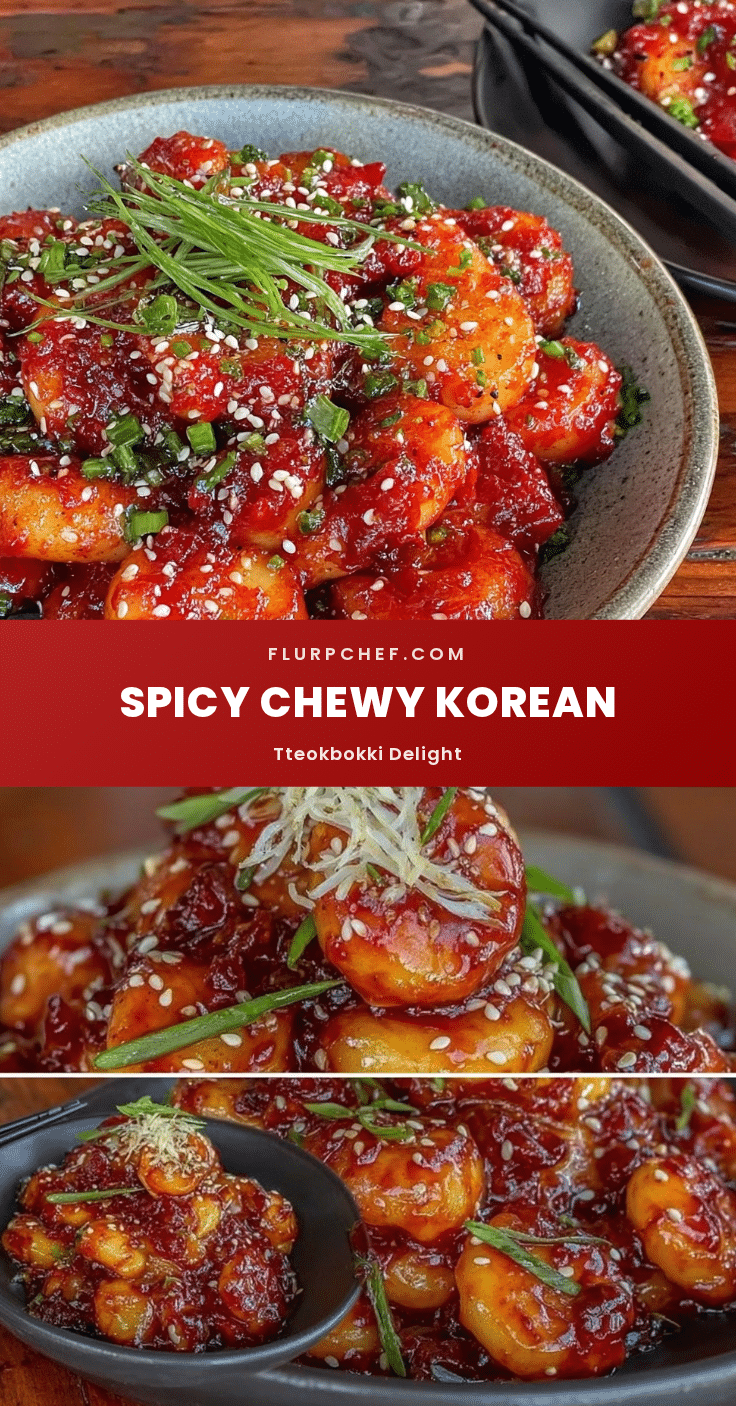
Flavorful Korean Tteokbokki Recipe Easy Spicy Gochujang Sauce Guide
A quick and easy Korean tteokbokki recipe featuring chewy rice cakes in a sweet, spicy, and umami-packed gochujang sauce, perfect for a comforting snack or meal.
- Prep Time: 10 minutes
- Cook Time: 20 minutes
- Total Time: 30 minutes
- Yield: 4 servings 1x
- Category: Main Course
- Cuisine: Korean
Ingredients
- 14 oz (400g) Tteok (Korean Rice Cakes) – fresh or frozen cylindrical rice cakes (if frozen, soak in warm water for 10 minutes)
- 3 tablespoons Gochujang (Korean Red Chili Paste)
- 1 teaspoon Gochugaru (Korean Chili Flakes) – optional
- 2 tablespoons Soy Sauce
- 2 tablespoons Sugar
- 3 cloves Garlic, minced
- 2 cups (480 ml) Water or Anchovy Broth
- 2 stalks Green Onions, sliced diagonally
- 2 Hard-Boiled Eggs – optional
- 1 teaspoon Sesame Seeds
- Vegetables (optional) such as cabbage or fish cakes, sliced
Instructions
- If using frozen tteok, soak them in warm water for about 10 minutes to soften. Drain and set aside.
- In a small bowl, combine 3 tablespoons gochujang, 1 teaspoon gochugaru (if using), 2 tablespoons soy sauce, 2 tablespoons sugar, and minced garlic. Stir well until smooth and set aside.
- Add 2 cups (480 ml) water or anchovy broth to a large non-stick skillet over medium-high heat. Bring it to a gentle boil.
- Pour the prepared sauce mixture into the boiling liquid. Stir to combine and let it simmer for 2-3 minutes until the sauce starts to thicken and coat the back of a spoon.
- Add the drained tteok to the sauce. Stir gently but continuously to prevent sticking. Cook for about 8-10 minutes, or until the rice cakes become soft and chewy, and the sauce thickens to a sticky glaze. Add a splash more water if the sauce reduces too much.
- If using fish cakes or vegetables, add them 5 minutes into cooking so they soften but don’t get mushy.
- Stir in sliced green onions during the last minute of cooking for freshness and crunch.
- Plate the tteokbokki immediately, garnishing with sesame seeds and halved hard-boiled eggs if desired. Serve hot.
Notes
Soak frozen rice cakes in warm water for 10 minutes to prevent tough, rubbery texture. Stir gently and continuously to avoid sticking or burning. Adjust sweetness and spice to taste. Use tamari for gluten-free version and vegetable broth for vegan adaptation. Reheat leftovers gently on stovetop with a splash of water; avoid microwaving.
Nutrition
- Serving Size: Approximately 1 cup
- Calories: 350400
- Sodium: 700900
- Fat: 35
- Carbohydrates: 60
- Protein: 68
Keywords: tteokbokki, Korean rice cakes, gochujang sauce, spicy Korean food, Korean street food, easy Korean recipe, comfort food