Let me tell you, the scent of fresh butter melting over soft, pillowy German Spätzle noodles is enough to make anyone’s mouth water. The first time I made these tender German Spätzle noodles, I was instantly hooked—the kind of moment where you pause, take a deep breath, and just smile because you know you’re onto something truly special. I still remember the rainy afternoon years ago when I stumbled upon this recipe while trying to recreate a dish I’d tasted at a cozy Bavarian restaurant. Honestly, I wish I’d discovered this homemade buttery delight when I was knee-high to a grasshopper; it’s pure, nostalgic comfort wrapped in every bite.
My family couldn’t stop sneaking the Spätzle off the stove, and I can’t really blame them—it’s dangerously easy to eat way too much! Whether it’s a quiet weeknight or a festive family gathering, these noodles bring everyone together. You know what’s great? This tender German Spätzle noodles recipe is perfect for brightening up your Pinterest cookie board or for impressing guests without breaking a sweat. After testing this recipe more times than I can count—in the name of research, of course—it’s become a staple for holidays, potlucks, or just a sweet treat for my kids. You’re going to want to bookmark this one.
Why You’ll Love This Recipe
This tender German Spätzle noodles recipe has won over my heart (and stomach) for plenty of good reasons. It’s not just another pasta recipe—it’s a simple, buttery delight that feels like a warm hug.
- Quick & Easy: Comes together in under 30 minutes, perfect for busy weeknights or last-minute cravings.
- Simple Ingredients: No fancy grocery trips needed; you likely already have everything in your kitchen.
- Perfect for Any Occasion: Great for cozy dinners, family meals, or side dishes at holiday feasts.
- Crowd-Pleaser: Always gets rave reviews from kids and adults alike—trust me, it disappears fast.
- Unbelievably Delicious: The texture and flavor combo is next-level comfort food, with a buttery finish that’s hard to resist.
What sets this recipe apart is the balance between the light, tender texture and the rich buttery flavor. Instead of heavy dough, this batter is just right—airy and soft. I’ve found that using a quick hand-stirring method with a simple batter gives you the best Spätzle every time. Plus, tossing the noodles in real butter at the end makes all the difference—nothing beats that silky, melt-in-your-mouth goodness.
This recipe isn’t just good—it’s the kind that makes you close your eyes after the first bite. It’s comfort food that feels authentic yet easy to make at home, perfect for impressing guests or turning a simple meal into something memorable.
What Ingredients You Will Need
This recipe uses simple, wholesome ingredients to deliver bold flavor and satisfying texture without the fuss. Most are pantry staples, and substitutions are easy if needed.
- All-purpose flour (about 2 cups / 250g) – the base for the dough; I prefer King Arthur for consistent texture.
- Large eggs (3, room temperature) – these give the noodles structure and richness.
- Whole milk (about 3/4 cup / 180ml) – adds moisture; you can use dairy-free milk if needed.
- Salt (1 tsp) – enhances flavor.
- Unsalted butter (4 tbsp / 60g) – for tossing the noodles after cooking; use real butter for the best buttery goodness.
- Nutmeg (a pinch, optional) – adds a subtle warmth that’s classic in German Spätzle.
- Fresh parsley (2 tbsp, chopped, optional) – for garnish and a pop of color.
If you want a gluten-free option, swapping all-purpose flour for almond flour or a gluten-free blend works well, though the texture will differ slightly. For a lighter taste, you can try swapping whole milk with almond or oat milk, but I find whole milk gives the best richness. When I make this in summer, I like to add a sprinkle of fresh herbs like chives or thyme for a fresh twist.
Equipment Needed
- Large mixing bowl: For combining the dough ingredients; I prefer glass or stainless steel for easy cleanup.
- Spätzle maker, colander, or large-holed grater: To shape the noodles—if you don’t have a Spätzle maker, a colander with large holes or a slotted spoon works just fine.
- Large pot: For boiling water to cook the noodles.
- Slotted spoon or spider strainer: To scoop out the cooked noodles.
- Large skillet or frying pan: To melt butter and toss the noodles.
If you’re on a budget, a simple colander with large holes doubles as a Spätzle maker—just press the dough through with a spatula. I’ve tried different tools over the years, and while a dedicated Spätzle maker is handy, improvising works just as well. To keep your tools in top shape, make sure to wash and dry the Spätzle maker or colander thoroughly to avoid rust or residue buildup.
Preparation Method
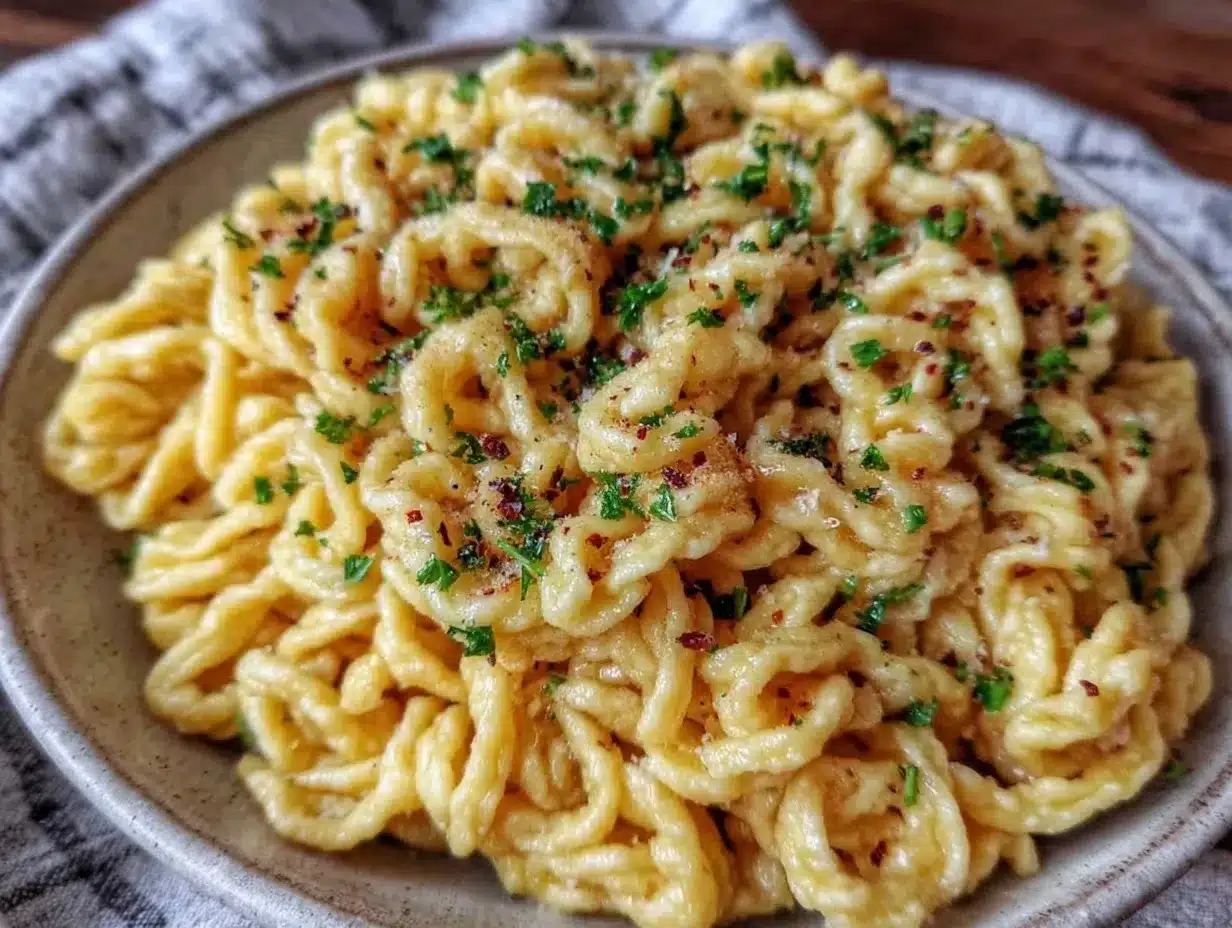
- Prepare the batter: In a large mixing bowl, whisk together 2 cups (250g) of all-purpose flour and 1 teaspoon of salt. Add a pinch of nutmeg if using. Crack 3 large room-temperature eggs into the bowl and pour in 3/4 cup (180ml) of whole milk. Stir everything together with a wooden spoon or whisk until smooth. The batter should be thick but still pourable—think pancake batter consistency. If it’s too thick, add a splash more milk; if too thin, sprinkle in a bit more flour. Let the batter rest for about 10 minutes to hydrate the flour.
- Boil water: Bring a large pot of salted water to a rolling boil. You want enough water to give the Spätzle room to float and cook evenly.
- Shape the noodles: If you have a Spätzle maker, place it over the pot and spread a thin layer of batter onto it. Press or scrape the batter through the holes directly into the boiling water. If you don’t have one, use a colander with large holes or a slotted spoon—spoon some batter onto it and press through gently with a spatula. Don’t worry if the noodles look uneven; that’s part of the charm!
- Cook the Spätzle: Let the noodles cook until they float to the surface, about 2-3 minutes. Once floating, give them another 30 seconds, then scoop them out with a slotted spoon or spider and transfer to a colander to drain.
- Butter toss: In a large skillet over medium heat, melt 4 tablespoons (60g) of unsalted butter. Add the drained Spätzle and toss gently to coat them in the butter. Cook for another 2 minutes, stirring occasionally, until the noodles are warm, tender, and glistening with buttery goodness.
- Garnish and serve: Sprinkle with freshly chopped parsley if desired, and serve immediately while warm and tender.
Pro tip: Don’t rush the resting time for the batter—it makes the Spätzle lighter. Also, be patient when pressing the batter through the holes; a gentle but steady hand gives the best shape. Overcrowding the pot with too much batter at once slows cooking and can clump the noodles together.
Cooking Tips & Techniques
Making tender German Spätzle noodles is more about technique than fancy ingredients. One key tip is to get the batter consistency just right—too thick, and your noodles will be dense; too thin, and they won’t hold shape. I learned this after a batch that turned out more like dumplings than noodles (lesson learned!).
When pressing the batter through your Spätzle maker or colander, keep a bowl or spatula handy to scrape off excess batter so it doesn’t dry out and clog the holes. Also, don’t dump all the batter in at once; working in batches helps noodles cook evenly and prevents sticking.
Timing is everything—watch for the noodles to float, which signals they’re done. Overcooking turns them mushy, undercooking leaves a raw flour taste. When tossing in butter, keep the heat moderate; too high and the butter burns, ruining the delicate flavor.
Lastly, multitasking helps: while the water boils and batter rests, prep your garnish or sides. I usually have a salad or roasted veggies ready to go, so the whole meal comes together without a hitch.
Variations & Adaptations
This recipe is wonderfully adaptable, so feel free to tweak it based on your taste or dietary needs.
- Cheesy Spätzle: Stir in 1 cup (100g) shredded Emmental or Gruyère cheese during the butter toss for a rich, gooey version reminiscent of Käsespätzle.
- Herb-infused: Add finely chopped fresh herbs like chives, parsley, or thyme to the batter for a fresh, aromatic twist.
- Gluten-free: Swap all-purpose flour for a gluten-free blend or almond flour, adjusting milk to get the right consistency. The texture will be a bit different but still delicious.
- Vegan: Use a flaxseed egg substitute (1 tbsp flaxseed meal + 3 tbsp water per egg) and dairy-free milk, then toss the cooked noodles in vegan butter or olive oil.
Personally, I tried adding sautéed mushrooms and caramelized onions over the buttery noodles once, and it became an instant favorite in my house. The variations let you customize the dish to suit your mood or occasion.
Serving & Storage Suggestions
Serve your tender German Spätzle noodles warm, straight from the pan, for the best buttery experience. They pair beautifully with hearty mains like roasted pork, schnitzel, or sauerbraten, and a crisp green salad balances the richness perfectly.
If you have leftovers, store them in an airtight container in the refrigerator for up to 3 days. To reheat, toss gently in a skillet over medium heat with a little butter until warmed through—adding a splash of milk helps bring back moisture. You can also microwave, but be sure to cover to keep them from drying out.
Freezing is possible too—spread cooled Spätzle on a baking sheet to freeze individually, then transfer to a freezer bag for up to 2 months. Reheat frozen noodles in boiling water for a minute or two before buttering.
Fun fact: Spätzle flavors deepen after resting overnight, making them perfect for preparing ahead for gatherings. Just reheat gently to enjoy that melt-in-your-mouth tenderness.
Nutritional Information & Benefits
This tender German Spätzle noodles recipe is a comforting source of energy, with moderate calories mainly from carbohydrates and fats. Each serving (about 1 cup or 150g cooked) roughly provides:
| Nutrient | Amount |
|---|---|
| Calories | 220-250 kcal |
| Carbohydrates | 30-35g |
| Protein | 6-8g |
| Fat | 8-10g |
| Sodium | 400mg (varies with added salt) |
The eggs provide quality protein and essential amino acids, while butter offers fat-soluble vitamins. Using whole milk adds calcium and richness. This recipe is naturally free from nuts and soy but contains gluten and dairy, so consider substitutions if you have allergies.
From a wellness perspective, these Spätzle noodles are a delightful treat that you can enjoy as part of a balanced diet. The simplicity of ingredients means fewer additives, and making them at home lets you control the salt and fat content more than store-bought versions.
Conclusion
Honestly, this tender German Spätzle noodles recipe is a must-try if you want a buttery, comforting dish that’s surprisingly easy to make. The simple ingredients and straightforward method deliver a homemade touch that feels special yet approachable. Whether you stick to the classic version or add your own twist, these noodles bring a little piece of German tradition right to your table.
I love this recipe because it reminds me of cozy family dinners and the joy of sharing simple food made with care. So go ahead, give it a whirl, and make it your own. Don’t forget to leave a comment sharing your tweaks or stories—I’m always curious how you make it yours!
Happy cooking, and here’s to many buttery, tender Spätzle moments ahead!
FAQs about Tender German Spätzle Noodles
What is the best way to press Spätzle dough without a Spätzle maker?
If you don’t have a Spätzle maker, use a colander with large holes or a slotted spoon to press or scrape the batter through. A sturdy spatula or the back of a large spoon works well to push the batter through evenly.
Can I prepare the Spätzle dough ahead of time?
Yes, you can prepare the dough and refrigerate it for up to 24 hours. Give it a good stir before pressing it through, as it may thicken slightly while resting.
How do I prevent Spätzle noodles from sticking together?
Cook the noodles in plenty of boiling salted water and stir gently to keep them separated. After draining, toss them immediately in melted butter to coat and prevent clumping.
Can I freeze cooked Spätzle noodles?
Absolutely! Spread cooked Spätzle on a baking sheet to freeze individually, then transfer to a freezer bag. Reheat by boiling briefly or pan-warming with butter.
Is this Spätzle recipe gluten-free?
The traditional recipe uses all-purpose flour, which contains gluten. For a gluten-free version, substitute with a gluten-free flour blend or almond flour, but note the texture will be a bit different.
Pin This Recipe!
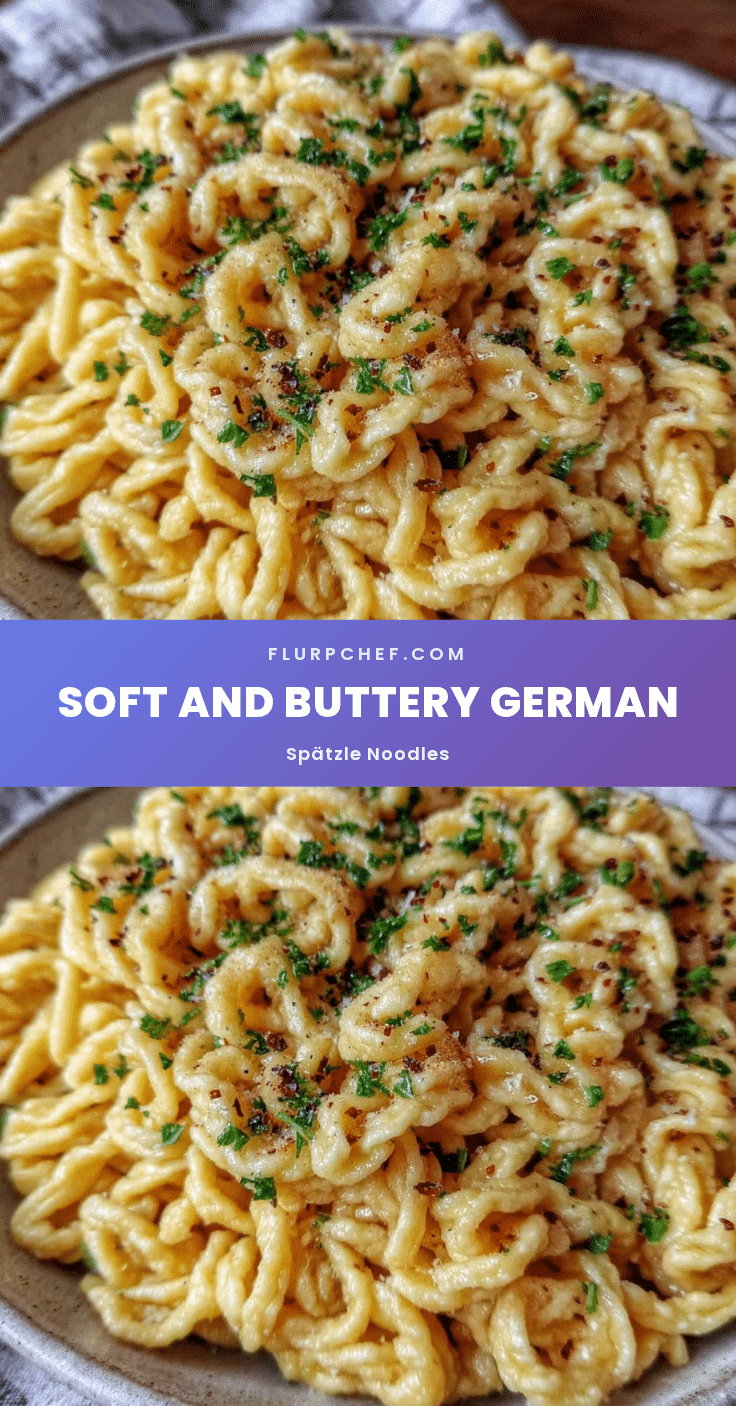
Tender German Spätzle Noodles Recipe Easy Homemade Buttery Delight

This tender German Spätzle noodles recipe is a simple, buttery delight with a light, tender texture and rich buttery flavor. Perfect for cozy dinners, family meals, or festive gatherings.
- Prep Time: 15 minutes
- Cook Time: 10 minutes
- Total Time: 25 minutes
- Yield: 4 servings 1x
- Category: Main Course
- Cuisine: German
Ingredients
- 2 cups (250g) all-purpose flour
- 3 large eggs, room temperature
- 3/4 cup (180ml) whole milk
- 1 teaspoon salt
- 4 tablespoons (60g) unsalted butter
- Pinch of nutmeg (optional)
- 2 tablespoons fresh parsley, chopped (optional)
Instructions
- In a large mixing bowl, whisk together 2 cups (250g) of all-purpose flour and 1 teaspoon of salt. Add a pinch of nutmeg if using.
- Crack 3 large room-temperature eggs into the bowl and pour in 3/4 cup (180ml) of whole milk.
- Stir everything together with a wooden spoon or whisk until smooth. The batter should be thick but still pourable—like pancake batter consistency. Adjust with more milk or flour if needed.
- Let the batter rest for about 10 minutes to hydrate the flour.
- Bring a large pot of salted water to a rolling boil.
- If you have a Spätzle maker, place it over the pot and spread a thin layer of batter onto it. Press or scrape the batter through the holes directly into the boiling water.
- If you don’t have a Spätzle maker, use a colander with large holes or a slotted spoon—spoon some batter onto it and press through gently with a spatula.
- Let the noodles cook until they float to the surface, about 2-3 minutes. Once floating, cook for another 30 seconds.
- Scoop out the noodles with a slotted spoon or spider and transfer to a colander to drain.
- In a large skillet over medium heat, melt 4 tablespoons (60g) of unsalted butter.
- Add the drained Spätzle and toss gently to coat them in the butter. Cook for another 2 minutes, stirring occasionally, until warm and tender.
- Sprinkle with freshly chopped parsley if desired and serve immediately.
Notes
Let the batter rest for 10 minutes to hydrate the flour for lighter Spätzle. Press the batter gently but steadily through the holes to get the best shape. Avoid overcrowding the pot to prevent noodles from clumping. Toss noodles in butter over moderate heat to avoid burning.
Nutrition
- Serving Size: About 1 cup (150g) c
- Calories: 235
- Sugar: 2
- Sodium: 400
- Fat: 9
- Saturated Fat: 5
- Carbohydrates: 32
- Fiber: 1
- Protein: 7
Keywords: Spätzle, German noodles, homemade noodles, buttery noodles, easy pasta, traditional German recipe