“Wait, you made all this from scratch?” my friend asked, eyes wide as she eyed the colorful array on the table. Honestly, I almost laughed. Just a couple of hours earlier, the plan was to throw together something quick for a casual evening. But then I remembered a batch of chickpeas soaking in the fridge, and well, one thing led to another.
There’s something about pulling out the spices, chopping fresh vegetables, and watching a creamy hummus come together that feels like a little moment of calm in an otherwise hectic day. The smell of garlic and lemon zest mixing with the earthiness of tahini filled the kitchen and, unexpectedly, turned a rushed night into a mini celebration.
Now, this Fresh Greek Mezze Platter with Creamy Hummus and Pita has quietly become my go-to when friends drop by unannounced or when I just want to treat myself without fuss. The balance of flavors—the tangy feta, the juicy olives, the crisp cucumbers alongside that silky hummus—always seems to draw people in, no matter the occasion. And the pita? Soft, warm, and perfect for scooping up every bit of goodness.
It surprised me how such simple, wholesome ingredients could come together so effortlessly, and yet feel so special. It’s not about fancy techniques or exotic components—just fresh, honest food that invites you to slow down and savor each bite. I guess that’s why this recipe sticks with me: it’s comfort and freshness wrapped up in one beautiful platter, ready whenever life calls for a little shared joy.
Why You’ll Love This Fresh Greek Mezze Platter Recipe
Having whipped up this Fresh Greek Mezze Platter with Creamy Hummus and Pita more times than I can count, I’ve learned a few things that make it stand out from other mezze spreads. It’s not just about the flavors, but how easily it comes together and how versatile it is.
- Quick & Easy: The hummus blends up in about 10 minutes, and the whole platter is ready in under 30, perfect for those spontaneous get-togethers or a casual night in.
- Simple Ingredients: No need for exotic shopping trips. Most ingredients like chickpeas, tahini, cucumbers, and olives are pantry and fridge staples—plus, the pita is made with just a handful of basics.
- Perfect for Any Occasion: Whether it’s a laid-back brunch, a light dinner, or a potluck, this platter fits right in. It’s flexible enough to pair with grilled meats or stand alone as a vegetarian delight.
- Crowd-Pleaser: Kids and adults alike seem to love the creamy hummus paired with fresh veggies and warm pita. It’s a hit every time, and you might find yourself making extra just to keep some for yourself.
- Unbelievably Delicious: The secret is in the balance—the hummus is silky smooth with a hint of lemony brightness, the veggies add crunch, and the feta brings that salty punch. Honestly, it’s comfort food that feels light and fresh.
What sets this recipe apart is the homemade pita, which is soft and pillowy without being tough or chewy. I used to buy pita until I realized how simple it is to make at home, and now I can’t go back. Plus, blending the hummus just long enough to get that creamy texture (without turning it grainy) is a little trick I picked up after several kitchen experiments. It makes all the difference.
This platter isn’t just food; it’s a little ritual of gathering, sharing, and enjoying simple pleasures. It’s the kind of dish that makes you pause, take a bite, and smile.
What Ingredients You Will Need
This Fresh Greek Mezze Platter recipe uses simple, wholesome ingredients to deliver bold flavor and satisfying textures without any fuss. Most of these are pantry staples or easy to find in any grocery store, and you can swap a few items to suit your taste or dietary needs.
- For the Creamy Hummus:
- 1 ½ cups cooked chickpeas (about 250g, drained if canned)
- ¼ cup tahini (I prefer Joyva brand for its smoothness)
- 3 tablespoons fresh lemon juice (about 1 large lemon)
- 2 cloves garlic, minced (adjust based on your love for garlic)
- ½ teaspoon ground cumin
- ¼ teaspoon salt
- 3 tablespoons cold water (or more for desired creaminess)
- 2 tablespoons extra virgin olive oil (plus more for drizzling)
- For the Pita Bread:
- 2 cups all-purpose flour (or use whole wheat for nuttier flavor)
- 1 teaspoon active dry yeast
- 1 teaspoon sugar
- ¾ cup warm water (about 110°F or 43°C)
- 1 tablespoon olive oil
- ½ teaspoon salt
- For the Mezze Platter:
- 1 cup cherry tomatoes, halved
- 1 cucumber, sliced thinly (English cucumber works well)
- 1 cup Kalamata olives (pitted)
- ½ cup crumbled feta cheese
- Fresh parsley or mint leaves for garnish
- Optional: roasted red peppers or artichoke hearts for extra zest
If you want to swap ingredients, almond flour can replace all-purpose flour for gluten-free pita, but expect a denser texture. Greek yogurt can be added to the hummus for a tangier creaminess, or coconut yogurt for a dairy-free twist. In summer, I sometimes swap cherry tomatoes for juicy fresh figs on the platter, which adds an unexpected sweet note.
Equipment Needed
- Food processor or high-speed blender (for the hummus)
- Large mixing bowl
- Measuring cups and spoons
- Mixing spoon or spatula
- Kitchen towel or plastic wrap (for dough resting)
- Cast iron skillet or heavy-bottomed frying pan (for cooking pita)
- Rolling pin (optional, but handy for shaping pita)
If you don’t have a food processor, a sturdy blender can work; just scrape down the sides often to get a smooth texture. For the pita, a non-stick pan works fine if you don’t have cast iron, but the heat retention of cast iron really helps puff the bread beautifully. A stand mixer with a dough hook is a nice-to-have for kneading but not necessary; hand kneading works perfectly fine and can be quite therapeutic.
Preparation Method
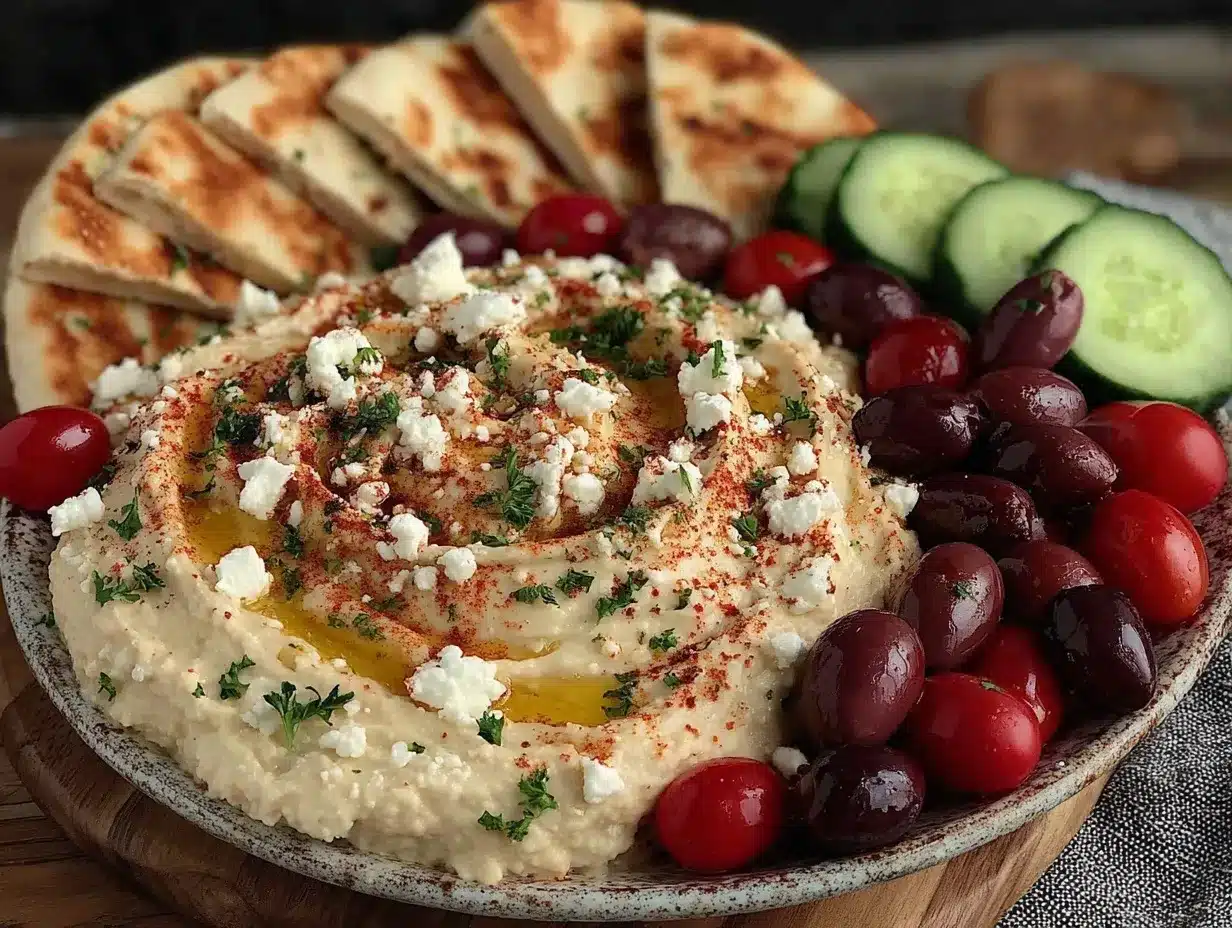
- Make the Hummus: In a food processor, combine chickpeas, tahini, lemon juice, garlic, cumin, and salt. Blend until the mixture starts to look smooth—this should take about 2-3 minutes. Scrape the sides as needed to keep everything moving.
- Add Water and Oil: With the processor running, slowly drizzle in cold water and olive oil. Blend until creamy and silky, about another 2 minutes. If it’s too thick, add a little more water, one tablespoon at a time. Taste and adjust seasoning—sometimes a little extra lemon juice or salt does the trick.
- Prepare the Pita Dough: In a small bowl, dissolve yeast and sugar in warm water. Let sit for 5-10 minutes until foamy.
- In a large bowl, combine flour and salt. Add the yeast mixture and olive oil. Stir with a spoon until the dough comes together.
- Knead the Dough: Turn the dough onto a lightly floured surface and knead for about 8-10 minutes until smooth and elastic. If it’s sticky, sprinkle a bit more flour but don’t overdo it—you want the dough soft.
- Let the Dough Rise: Place the dough in a lightly oiled bowl, cover with a towel or plastic wrap, and let it rise for 1 to 1 ½ hours, until doubled in size.
- Shape the Pita: Punch down the dough and divide into 6 equal pieces. Roll each into a ball, then flatten into discs about ¼ inch (6mm) thick using a rolling pin. Let the discs rest for 10-15 minutes before cooking.
- Cook the Pita: Heat a cast iron skillet over medium-high heat. Cook each pita for 1-2 minutes on one side until bubbles form, then flip and cook another 1-2 minutes. The pita should puff up slightly and develop golden spots.
- Prepare the Mezze Arrangement: While the pita cooks, arrange cherry tomatoes, cucumber slices, olives, and feta on a large platter. Garnish with fresh herbs and drizzle a little olive oil over the veggies for shine and flavor.
- Serve: Place the warm pita alongside the creamy hummus in a bowl. Invite everyone to scoop, dip, and enjoy.
Pro tip: If your pita doesn’t puff on the skillet, it might be the heat—make sure the pan is hot enough but not smoking. Also, rolling the dough discs evenly helps them cook properly. If the dough feels too tough after rising, a quick gentle knead before shaping can help relax the gluten.
Cooking Tips & Techniques
One trick I’ve learned is to soak dried chickpeas overnight and cook them fresh instead of using canned. It makes the hummus smoother and less bitter. If you’re short on time, canned works fine—just rinse well.
When blending hummus, pulse at first to break down chickpeas gently, then blend continuously for a creamier texture. Adding water slowly helps avoid a grainy finish.
For the pita, yeast freshness is key. Old yeast can leave you with dense, flat bread. If your dough isn’t rising well, try proofing the yeast separately with sugar and warm water first—you’ll see bubbles if it’s active.
Multitasking tip: While the dough rises, prep your veggies and assemble the platter. It’s a great way to stay efficient and keep the cooking flow smooth without crowding your space.
Don’t rush the resting time for pita dough discs—that little rest lets the gluten relax and makes the bread softer and easier to puff up.
Variations & Adaptations
If you want to switch things up, here are a few ideas that worked well for me:
- Spicy Hummus: Add a pinch of smoked paprika or a drizzle of harissa for a smoky, spicy kick.
- Gluten-Free Pita: Use a gluten-free flour blend and add a tablespoon of xanthan gum to help bind the dough.
- Seasonal Veggies: Swap cucumbers for roasted zucchini or grilled eggplant in cooler months—it brings a warm, savory element to the platter.
- Herb-Infused Hummus: Blend in fresh basil or dill for a bright, garden-fresh flavor that pairs wonderfully with feta and olives.
Personally, I once made this platter with juicy Turkish döner kebab on the side, and it was a total hit—mixing the creamy mezze with savory meat made for a fantastic meal.
Serving & Storage Suggestions
Serve the platter at room temperature or slightly chilled. The hummus tastes best when it’s cool but not cold, allowing the lemon and garlic flavors to shine through. Pita is obviously best warm and fresh, but if you have leftovers, wrap them in foil and reheat in a hot oven or skillet for a few minutes—steaming can make them chewy.
This platter pairs beautifully with a crisp white wine or a light iced tea for a laid-back afternoon. For a heartier meal, add grilled chicken or lamb skewers alongside.
Store leftover hummus in an airtight container in the fridge for up to 4 days. Pita can be frozen for up to a month—just thaw at room temperature before reheating. The flavors of the mezze often deepen after a day as the ingredients mingle.
Nutritional Information & Benefits
This Fresh Greek Mezze Platter is packed with wholesome nutrients. Chickpeas provide plant-based protein and fiber, supporting digestion and sustained energy. Tahini adds healthy fats and minerals like calcium and magnesium.
Fresh vegetables contribute vitamins and antioxidants, while feta offers a dose of calcium and protein. The olive oil drizzle brings heart-healthy monounsaturated fats, making this platter both satisfying and nourishing.
Gluten-free and vegetarian options are easy to make here, and the recipe is naturally low in added sugars and preservatives. It’s a balanced way to enjoy Mediterranean flavors while keeping meals wholesome and fresh.
Conclusion
This Fresh Greek Mezze Platter with Creamy Hummus and Pita is one of those recipes that feels like a small celebration of simple, fresh ingredients. It’s easy enough to whip up on a weekday but impressive enough to share with friends or family. I love how it brings people together—everyone digging in, sharing stories, and savoring bites of that creamy hummus with just the right touch of lemon and garlic.
Feel free to tweak the ingredients or add your own favorite veggies or dips. It’s a flexible recipe that welcomes your personal touch. Whether you’re new to making pita or a hummus enthusiast, this platter is a satisfying way to enjoy Mediterranean flavors at home.
Next time you want to bring a little sunshine to your table, this mezze platter will be waiting—ready to turn a simple meal into something memorable.
Frequently Asked Questions
Can I use canned chickpeas for the hummus?
Absolutely! Just rinse them well to remove excess sodium and drain thoroughly. Freshly cooked chickpeas give a creamier texture, but canned works perfectly for convenience.
How do I store leftover pita bread?
Wrap the pita tightly in foil or plastic wrap and store in the fridge for up to 3 days. For longer storage, freeze them in a sealed bag for up to a month.
Can I make the hummus without a food processor?
Yes, you can use a strong blender or even mash chickpeas by hand with a fork or potato masher, but the texture won’t be as silky smooth.
Is this platter suitable for vegans?
You can make it vegan by omitting the feta cheese or substituting with a plant-based alternative. The rest of the platter and hummus are naturally vegan.
What can I serve alongside this mezze platter?
This platter pairs well with grilled meats, roasted vegetables, or dishes like crispy Indian pani puri for a fun, international spread.
Pin This Recipe!
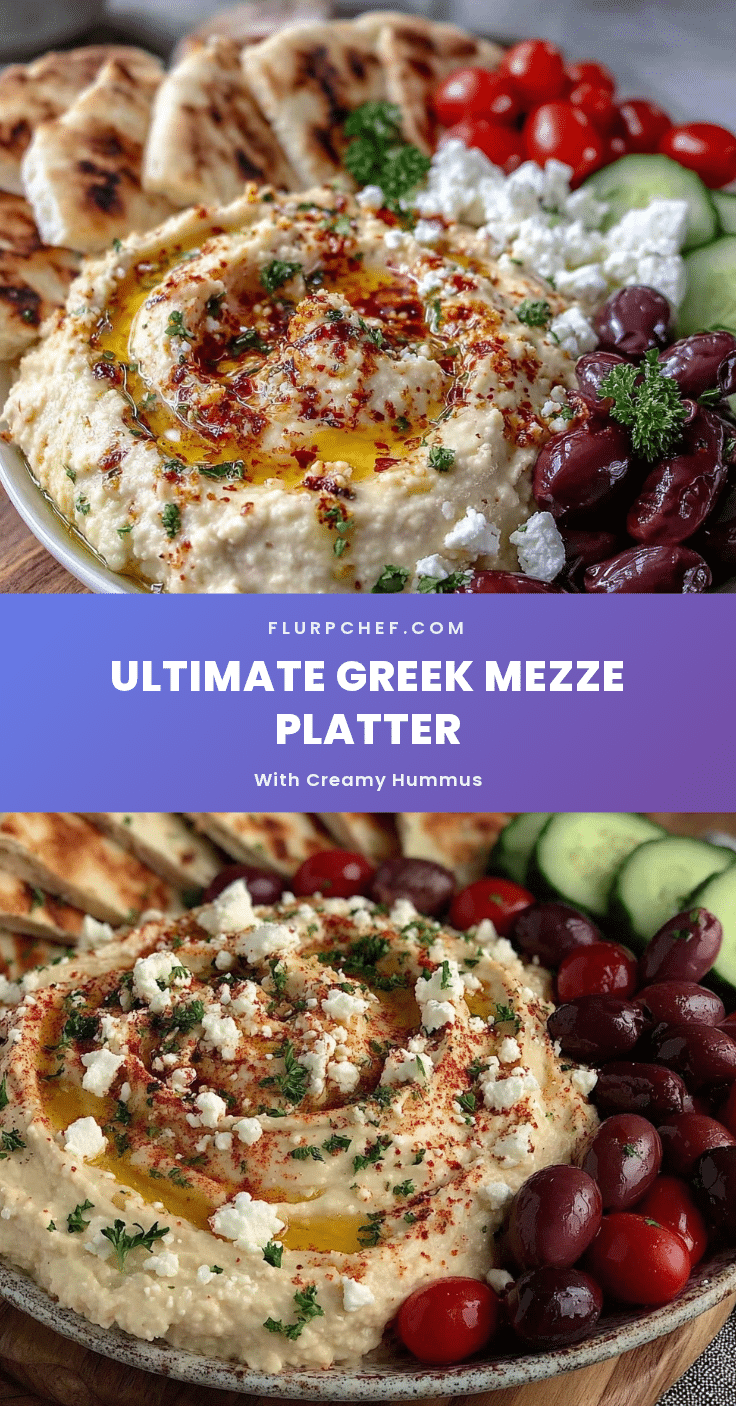
Fresh Greek Mezze Platter Recipe Easy Homemade Hummus and Pita Ideas
A vibrant and easy-to-make Greek mezze platter featuring creamy homemade hummus, soft warm pita bread, and fresh vegetables. Perfect for casual gatherings or a light, flavorful meal.
- Prep Time: 20 minutes
- Cook Time: 15 minutes
- Total Time: 1 hour 35 minutes
- Yield: 6 servings 1x
- Category: Appetizer
- Cuisine: Greek, Mediterranean
Ingredients
- 1 ½ cups cooked chickpeas (about 250g, drained if canned)
- ¼ cup tahini
- 3 tablespoons fresh lemon juice (about 1 large lemon)
- 2 cloves garlic, minced
- ½ teaspoon ground cumin
- ¼ teaspoon salt
- 3 tablespoons cold water (or more for desired creaminess)
- 2 tablespoons extra virgin olive oil (plus more for drizzling)
- 2 cups all-purpose flour (or whole wheat for nuttier flavor)
- 1 teaspoon active dry yeast
- 1 teaspoon sugar
- ¾ cup warm water (about 110°F or 43°C)
- 1 tablespoon olive oil
- ½ teaspoon salt
- 1 cup cherry tomatoes, halved
- 1 cucumber, sliced thinly (English cucumber works well)
- 1 cup Kalamata olives (pitted)
- ½ cup crumbled feta cheese
- Fresh parsley or mint leaves for garnish
- Optional: roasted red peppers or artichoke hearts for extra zest
Instructions
- Make the Hummus: In a food processor, combine chickpeas, tahini, lemon juice, garlic, cumin, and salt. Blend until smooth, about 2-3 minutes, scraping sides as needed.
- Add Water and Oil: With the processor running, slowly drizzle in cold water and olive oil. Blend until creamy and silky, about 2 more minutes. Add more water if needed. Taste and adjust seasoning.
- Prepare the Pita Dough: Dissolve yeast and sugar in warm water. Let sit 5-10 minutes until foamy.
- In a large bowl, combine flour and salt. Add yeast mixture and olive oil. Stir until dough forms.
- Knead the Dough: Turn dough onto floured surface and knead 8-10 minutes until smooth and elastic. Add flour if sticky but keep dough soft.
- Let the Dough Rise: Place dough in oiled bowl, cover, and let rise 1 to 1 ½ hours until doubled.
- Shape the Pita: Punch down dough, divide into 6 pieces. Roll each into balls, then flatten into ¼ inch thick discs. Rest 10-15 minutes.
- Cook the Pita: Heat cast iron skillet over medium-high heat. Cook each pita 1-2 minutes per side until bubbles form and golden spots appear. Pita should puff slightly.
- Prepare the Mezze Arrangement: Arrange cherry tomatoes, cucumber slices, olives, and feta on a platter. Garnish with herbs and drizzle olive oil.
- Serve: Place warm pita alongside hummus. Scoop, dip, and enjoy.
Notes
Use fresh or canned chickpeas (rinsed) for convenience. For gluten-free pita, substitute all-purpose flour with gluten-free flour blend and add xanthan gum. Let pita dough discs rest before cooking for softer bread. Keep skillet hot but not smoking for best pita puffing. Store leftover hummus in airtight container up to 4 days; freeze pita up to 1 month.
Nutrition
- Serving Size: 1/6 of the platter i
- Calories: 320
- Sugar: 3
- Sodium: 420
- Fat: 14
- Saturated Fat: 2.5
- Carbohydrates: 38
- Fiber: 7
- Protein: 9
Keywords: Greek mezze, hummus, pita bread, homemade hummus, Mediterranean platter, vegetarian appetizer, easy mezze, healthy snacks