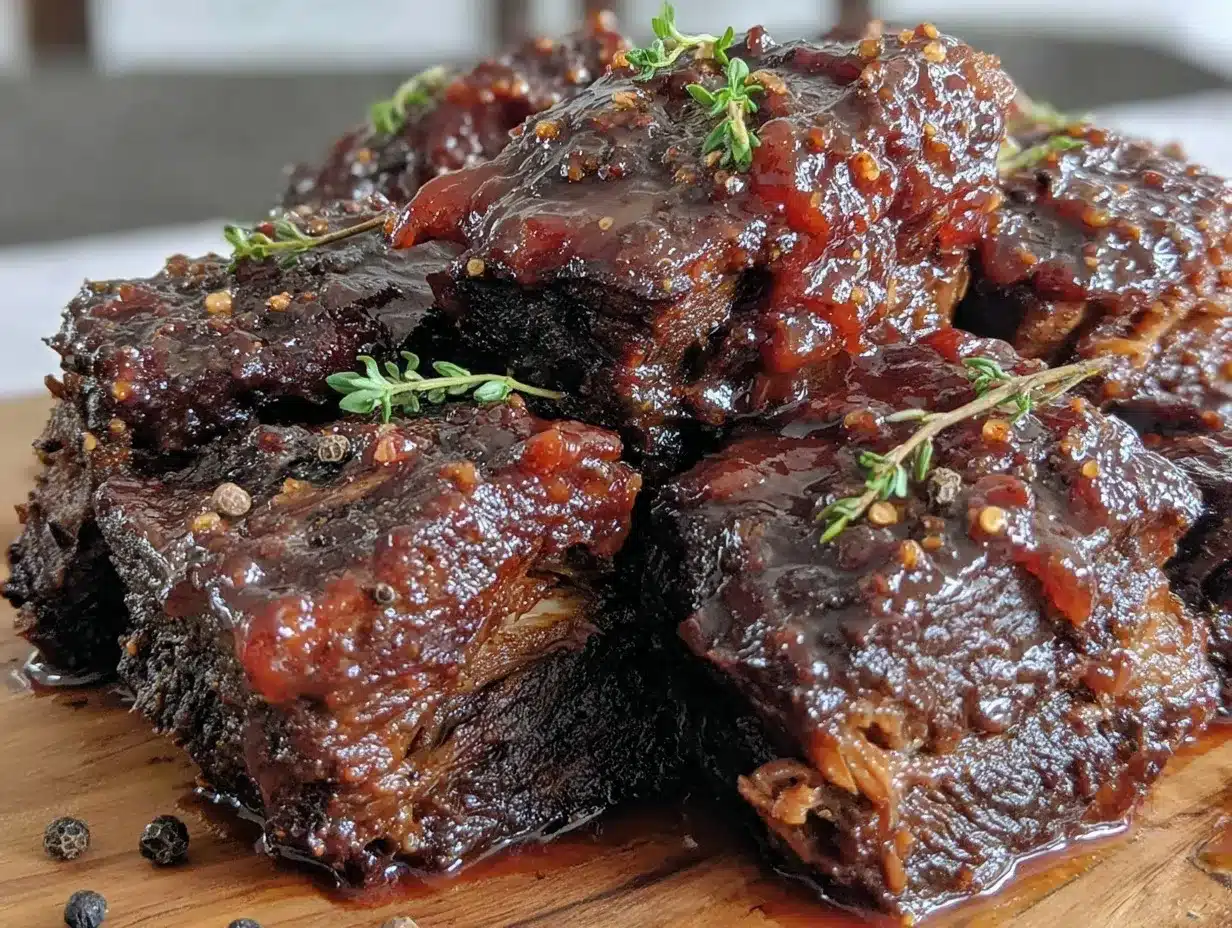
“You sure that’s how you want to do it?” my buddy asked, eyeing the mound of brisket cubes I had just tossed into the smoker at a rather unconventional temperature. Honestly, I wasn’t sure myself. It was one of those afternoons where the plan was “smoke some brisket,” but the brisket was tougher than expected and my patience was thinner than I wanted to admit. I’d sliced the point into chunks, knowing burnt ends are the prize for BBQ lovers, but I wasn’t convinced mine would turn out right this time. The kitchen smelled of hickory and anticipation, a slow dance of smoke weaving through the air as the charcoal quietly glowed beneath. Hours later, what emerged was a revelation: rich, tender bites cloaked in a sticky, caramelized Kansas City BBQ glaze that made me rethink everything I thought I knew about burnt ends.
That day, my skepticism softened into genuine confidence as I realized this recipe was more than just a method—it was a comforting ritual. The smoky bark, the sweet tang of the glaze, the way the fat rendered to buttery perfection… it all came together in a way that made me want to keep chopping brisket for days. The flavorful smoked brisket burnt ends with Kansas City BBQ glaze didn’t just satisfy a craving; they rewrote the rulebook on what burnt ends could be. I’ve since made this recipe multiple times a week, tweaking the glaze just enough to keep it exciting but never straying from the core that makes these burnt ends undeniably crave-worthy. If you’re someone who appreciates that messy, finger-licking, “don’t hold back” kind of BBQ, this one’s going to stick with you, too.
Why You’ll Love This Recipe
After countless smoke sessions and glaze experiments, this flavorful smoked brisket burnt ends recipe stands out for so many reasons. It’s not just about making BBQ; it’s about capturing that perfect balance of smoky, sweet, and tender that’s tough to nail but so rewarding when you do.
- Quick & Easy: While traditional brisket can take all day, this recipe focuses on the burnt ends, which come together in a manageable timeline once you have the point trimmed and cubed.
- Simple Ingredients: No need for obscure spices or sauces. The Kansas City BBQ glaze is made from pantry staples like ketchup, brown sugar, and molasses, making it accessible for most home cooks.
- Perfect for Gatherings: Burnt ends are always a hit at weekend cookouts or casual dinners, giving you a chance to impress with minimal fuss.
- Crowd-Pleaser: The combination of smoky bark and sticky glaze wins over BBQ veterans and newbies alike, with plenty of requests for seconds.
- Unbelievably Delicious: The texture contrast between the crispy edges and tender interior keeps every bite interesting and satisfying.
What makes this recipe different? The Kansas City BBQ glaze is the star here. I blend just the right amount of sweetness and tang, layering it throughout the smoking process to build depth without overpowering the meat’s natural flavor. Plus, the technique of cubing and returning the brisket to the smoker for a final caramelized finish ensures every bite is packed with flavor and that signature burnt ends texture. It’s comfort food with soul, and honestly, it’s the kind of thing that makes you pause mid-bite and appreciate the magic of BBQ done right.
What Ingredients You Will Need
This recipe uses simple, wholesome ingredients to deliver bold flavor and satisfying texture without the fuss. Most of these are pantry staples, and the rest are easy to find at any butcher or grocery store.
- Beef Brisket Point: About 4 to 5 pounds (1.8 to 2.3 kg), trimmed of excess fat but leaving enough to keep it juicy.
- Dry Rub:
- 2 tablespoons kosher salt
- 2 tablespoons coarse black pepper
- 1 tablespoon smoked paprika (adds smoky depth)
- 1 tablespoon garlic powder
- 1 tablespoon onion powder
- 1 teaspoon cayenne pepper (optional for heat)
- Kansas City BBQ Glaze:
- 1 cup ketchup (I prefer Heinz for its balance)
- ½ cup packed dark brown sugar (for rich molasses flavor)
- ¼ cup molasses (unsulfured, for that classic sweetness)
- 2 tablespoons apple cider vinegar (balances sweetness)
- 1 tablespoon Worcestershire sauce
- 1 teaspoon smoked paprika
- 1 teaspoon garlic powder
- Salt and pepper to taste
- Wood Chips or Chunks: Hickory or oak work best for authentic smoky flavor.
- Optional: Mustard or yellow mustard for binding the rub (adds a subtle tang and helps the rub stick).
If you don’t have molasses, you can substitute with an equal amount of honey or maple syrup, though the flavor will be a bit lighter. For a gluten-free version, double-check your Worcestershire sauce or swap it for tamari. The dry rub is flexible, too—feel free to adjust the heat with more or less cayenne pepper.
Equipment Needed
- Smoker or Grill: A pellet smoker, offset smoker, or charcoal grill with a lid will work. I’ve used both a Weber Smokey Mountain and a Traeger pellet grill with great results.
- Sharp Chef’s Knife: For trimming and cubing the brisket point precisely.
- Cutting Board: A sturdy, sizable one to handle the brisket cubes safely.
- Mixing Bowls: For combining the dry rub and the BBQ glaze ingredients.
- Aluminum Foil or Pans: To hold the burnt ends during the final glazing and smoking stage.
- Tongs and Heat-Resistant Gloves: Essential for safely handling meat and hot equipment.
- Meat Thermometer: A must for monitoring internal temperature to nail that perfect tender texture.
If you don’t have a dedicated smoker, a charcoal grill set up for indirect heat can work just fine. I once used a budget-friendly charcoal kettle grill and managed to get lovely bark and smoke ring, so don’t stress if you’re just starting out! Just keep the temps steady and monitor your smoke levels carefully.
Preparation Method
- Trim and Cube the Brisket Point: Trim excess fat, leaving about ¼ inch for moisture. Cut into roughly 1.5-inch (4 cm) cubes. This step takes about 15 minutes. Be sure to remove any silverskin or hard fat that won’t render.
- Apply the Dry Rub: Toss the brisket cubes in a bowl with the dry rub mixture. If you like, coat them lightly with yellow mustard before rubbing to help spices stick. Let them sit for 30 minutes at room temperature to absorb flavors.
- Prepare the Smoker: Preheat your smoker to 225°F (107°C) using hickory or oak wood chunks for smoke. Maintain a steady temperature throughout cooking.
- Smoke the Brisket Cubes: Place the cubes on a wire rack or directly on the smoker grates. Smoke for about 2.5 to 3 hours, or until the internal temperature reaches 190°F (88°C). This slow smoke develops the bark and tenderizes the meat.
- Make the Kansas City BBQ Glaze: While smoking, whisk together ketchup, brown sugar, molasses, vinegar, Worcestershire sauce, and spices in a saucepan. Simmer gently for 10-15 minutes to thicken slightly, then cool.
- Toss and Glaze: Transfer smoked brisket cubes to a foil pan. Pour the glaze over them and gently toss to coat every piece. Return to the smoker for an additional 1 hour at 250°F (121°C) to caramelize the glaze and intensify flavors.
- Check for Tenderness: The burnt ends should be tender but hold their shape, with a sticky, glossy finish. If not quite there, smoke in 15-minute increments until perfect.
- Rest and Serve: Remove from smoker and let rest for 10 minutes before serving. This lets juices redistribute and glaze set slightly.
Pro tip: Use a reliable meat thermometer to avoid overcooking. The magic zone for burnt ends is around 195-205°F (90-96°C), where the collagen breaks down but the cubes don’t fall apart completely. Also, don’t skip the glaze step—it’s the difference between decent burnt ends and ones that get everyone asking for your secret.
Cooking Tips & Techniques
Smoking brisket burnt ends is an art, but a few learned tricks make it less finicky. First, patience is your best friend. Rushing the smoke or cranking the heat ruins the bark and chew. Keep your smoker steady at 225°F (107°C) during the initial phase—temp swings stress the meat.
Trim with intention. Leaving a thin fat cap ensures the burnt ends stay juicy without becoming greasy. And don’t be shy about seasoning generously; the rub forms the foundation of flavor that the glaze builds on.
When it comes to glazing, apply it in layers. Toss the cubes halfway through the final smoking hour to build that irresistible sticky crust. Too much glaze too soon can get soggy, so timing matters.
Speaking from experience, my first batch was under-smoked and bland—lesson learned: smoke is flavor. Never underestimate the power of good quality wood chips. Also, keep a water pan in the smoker to maintain humidity; this prevents the burnt ends from drying out.
Multi-task by prepping your side dishes or cleaning up while the brisket smokes to make the process smoother. And hey, if you’re interested in other comforting, hearty meals to go alongside these burnt ends, my slow cooker beef stew is a perfect match for a chill night in.
Variations & Adaptations
Burnt ends are surprisingly versatile, and this recipe can flex to suit different tastes or dietary needs.
- Spicy Kick: Add chipotle powder or cayenne pepper to the dry rub and glaze for a smoky heat that wakes up the palate.
- Sweet & Tangy: Swap apple cider vinegar with balsamic vinegar in the glaze for a deeper, richer tang.
- Gluten-Free: Use gluten-free Worcestershire sauce and verify all spices are gluten-free to keep it safe for sensitive eaters.
- Oven Method: No smoker? No problem. After cubing and rubbing, bake the brisket cubes at 275°F (135°C) covered with foil for 2 hours, then glaze and broil for caramelization.
- Personal Twist: I once tried mixing in a tablespoon of bourbon into the glaze—it added a subtle warmth that made my family go nuts over dinner.
Serving & Storage Suggestions
Serve these burnt ends hot, fresh from the smoker for the best texture and flavor. They’re fantastic piled on a platter alongside classic BBQ sides like baked beans, coleslaw, or cornbread. I’ve found pairing them with tangy, crisp salads—like my fresh Greek salad—really cuts through the richness beautifully.
Leftovers keep well in an airtight container in the fridge for up to 4 days. Reheat gently in a covered pan over low heat or in the oven at 300°F (150°C) to avoid drying out. Burnt ends also freeze well for up to 3 months—just thaw overnight in the fridge before reheating.
Fun fact: letting the burnt ends sit overnight in their glaze deepens the flavor and softens the edges, making for an even more indulgent bite the next day.
Nutritional Information & Benefits
Per serving (about 4 oz or 113 g), these burnt ends pack approximately 320 calories, 22 grams of protein, 24 grams of fat, and 6 grams of carbohydrates mostly from the BBQ glaze.
Beef brisket provides a good source of iron and B vitamins essential for energy and metabolism. The moderate fat content contributes to satiety, making these burnt ends a satisfying meal choice. This recipe is naturally gluten-free if you use gluten-free Worcestershire sauce and spices.
While indulgent, the combination of slow-smoked meat and a homemade glaze without artificial preservatives offers a comforting, more wholesome alternative to store-bought BBQ. I appreciate how this recipe balances flavor with thoughtful ingredient choices, perfect for weekend feasts or special occasions.
Conclusion
If you’re looking for a smoked brisket burnt ends recipe that delivers rich, smoky flavor and that signature sticky-sweet Kansas City BBQ glaze, this one’s for you. It’s a recipe born from trial, error, and plenty of mouthwatering successes that I still find myself making again and again. The process may take some time, but every step is worth it when you bite into those tender, caramelized morsels.
Feel free to tweak the glaze, spice level, or smoking wood to fit your taste buds and equipment. Remember, BBQ is as much about personal touch as it is about tradition. I’ve shared my favorite version here, but you’ll make it your own in no time.
After all, there’s nothing like the scent of smoked brisket filling your kitchen and the joy of sharing burnt ends with friends and family. If you give this recipe a try, I’d love to hear how it turned out or any creative spins you added. Happy smoking and savor every bite!
FAQs About Flavorful Smoked Brisket Burnt Ends
What cut of brisket is best for burnt ends?
The point cut of the brisket is preferred due to its fat content and tenderness, which makes for juicy and flavorful burnt ends.
Can I make burnt ends without a smoker?
Yes! You can use a charcoal or gas grill set up for indirect cooking, or even the oven method by slow roasting and finishing under the broiler.
How long should I smoke burnt ends?
Typically, smoke the cubed brisket at 225°F (107°C) for about 2.5 to 3 hours, then glaze and smoke for an additional hour to caramelize.
What wood is best for smoking brisket burnt ends?
Hickory and oak are classic choices that provide a robust, smoky flavor without overpowering the meat.
Can I prepare the Kansas City BBQ glaze in advance?
Absolutely! The glaze can be made a day ahead and stored in the fridge. It actually tastes better once the flavors have melded overnight.
Pin This Recipe!
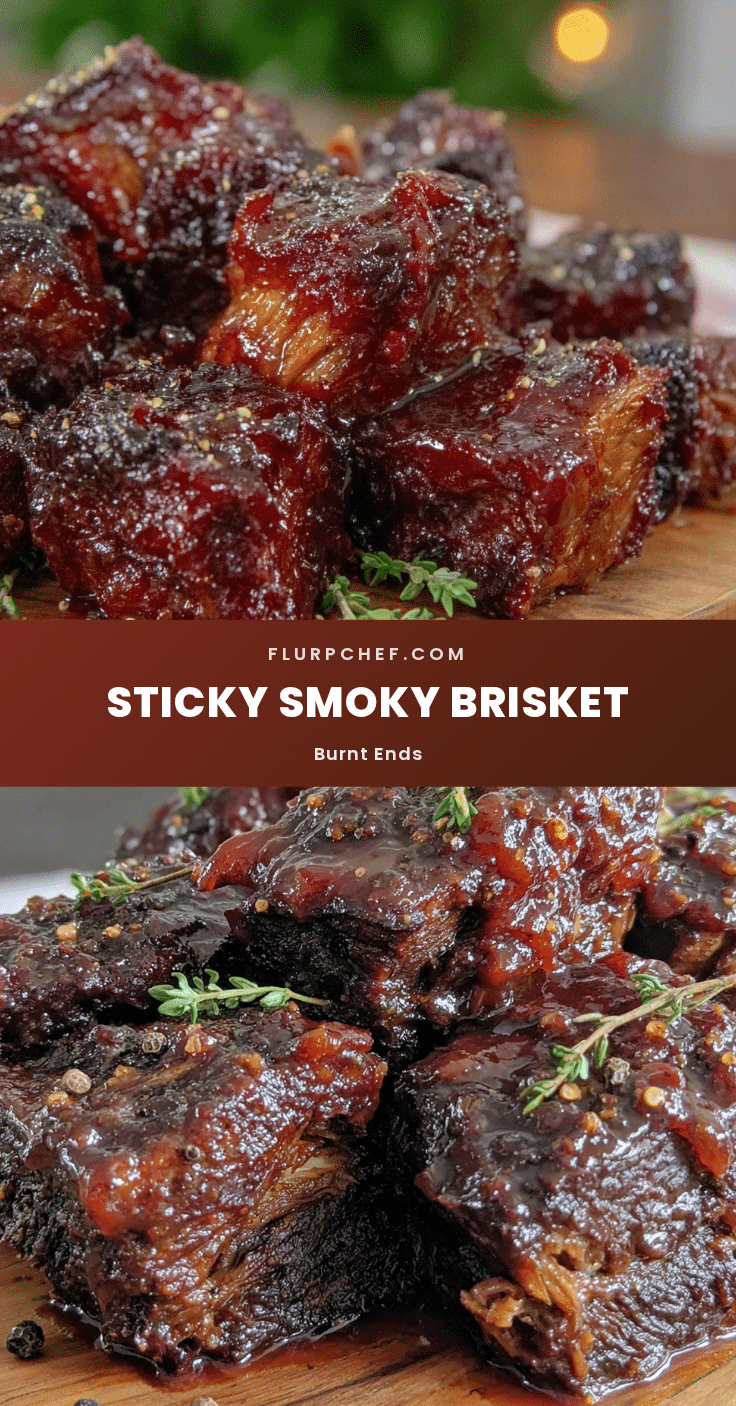
Flavorful Smoked Brisket Burnt Ends Recipe with Best Kansas City BBQ Glaze
This recipe delivers rich, tender smoked brisket burnt ends cloaked in a sticky, caramelized Kansas City BBQ glaze, perfect for BBQ lovers seeking smoky, sweet, and tender bites.
- Prep Time: 45 minutes
- Cook Time: 4 hours
- Total Time: 4 hours 45 minutes
- Yield: 6 servings 1x
- Category: Main Course
- Cuisine: American
Ingredients
- 4 to 5 pounds beef brisket point, trimmed of excess fat but leaving about 1/4 inch fat cap
- 2 tablespoons kosher salt
- 2 tablespoons coarse black pepper
- 1 tablespoon smoked paprika
- 1 tablespoon garlic powder
- 1 tablespoon onion powder
- 1 teaspoon cayenne pepper (optional)
- 1 cup ketchup (preferably Heinz)
- 1/2 cup packed dark brown sugar
- 1/4 cup molasses (unsulfured)
- 2 tablespoons apple cider vinegar
- 1 tablespoon Worcestershire sauce
- 1 teaspoon smoked paprika
- 1 teaspoon garlic powder
- Salt and pepper to taste
- Hickory or oak wood chips or chunks for smoking
- Optional: yellow mustard for binding the rub
Instructions
- Trim excess fat from the brisket point, leaving about 1/4 inch fat for moisture. Remove any silverskin or hard fat that won’t render. Cut into roughly 1.5-inch cubes.
- Toss the brisket cubes in a bowl with the dry rub mixture (salt, black pepper, smoked paprika, garlic powder, onion powder, cayenne pepper). Optionally, coat cubes lightly with yellow mustard before applying rub. Let sit for 30 minutes at room temperature.
- Preheat smoker to 225°F using hickory or oak wood chunks. Maintain steady temperature throughout cooking.
- Place brisket cubes on a wire rack or directly on smoker grates. Smoke for 2.5 to 3 hours or until internal temperature reaches 190°F.
- While smoking, prepare the Kansas City BBQ glaze by whisking ketchup, brown sugar, molasses, apple cider vinegar, Worcestershire sauce, smoked paprika, garlic powder, salt, and pepper in a saucepan. Simmer gently for 10-15 minutes to thicken, then cool.
- Transfer smoked brisket cubes to a foil pan. Pour glaze over cubes and gently toss to coat evenly.
- Return glazed cubes to smoker at 250°F for an additional 1 hour to caramelize the glaze and intensify flavors. Toss halfway through to build sticky crust.
- Check tenderness; burnt ends should be tender but hold shape with a sticky, glossy finish. Smoke in 15-minute increments if needed.
- Remove from smoker and let rest for 10 minutes before serving to allow juices to redistribute and glaze to set.
Notes
Use a reliable meat thermometer to avoid overcooking; ideal internal temperature is 195-205°F. Maintain steady smoker temperature at 225°F during initial smoke. Apply glaze in layers by tossing halfway through final smoking hour. Keep a water pan in smoker to maintain humidity and prevent drying out. Leftovers keep well refrigerated for 4 days or frozen for up to 3 months. Reheat gently to avoid drying.
Nutrition
- Serving Size: About 4 oz (113 g) p
- Calories: 320
- Fat: 24
- Carbohydrates: 6
- Protein: 22
Keywords: smoked brisket, burnt ends, Kansas City BBQ glaze, BBQ recipe, smoked meat, brisket burnt ends, hickory smoked, oak smoked, barbecue, smoked beef