“Are you seriously telling me you’ve never tried reverse searing a ribeye?” That question came from my buddy Dan one late evening, just as I was about to give up on grilling steaks the “usual way.” I’d been stubbornly flipping thick cuts over high heat, only to end up with a crust that was too charred and an inside that was sadly more well done than medium rare. Dan’s teasing nudged me to try something different, and honestly, I wasn’t convinced at first.
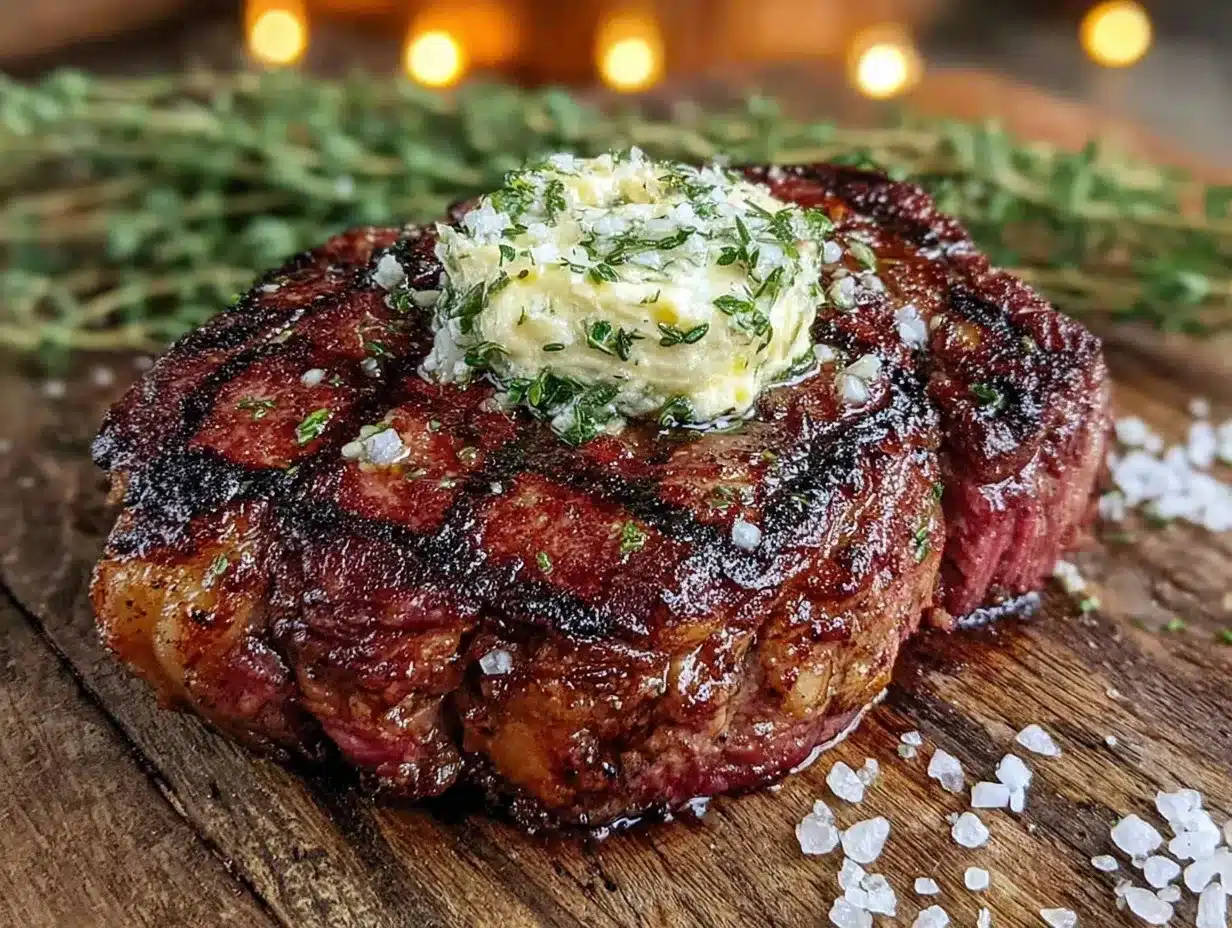
That night, I pulled out a thick 1.5-inch ribeye, sprinkled on some salt and pepper, then slid it into my oven at a low temperature. The smell of the meat cooking slowly, combined with the anticipation of that perfect crust, was something else. When it finally hit the hot skillet and sizzled with a sharp sear, my kitchen filled with the most mouthwatering aroma of browned meat and garlic herb butter bubbling away. The butter melted over the steak like a velvet cloak, carrying hints of fresh thyme, rosemary, and garlic.
One bite in, I realized this method wasn’t just a fluke or fancy chef talk—it was a game changer for juicy steaks at home. Since then, I’ve made this perfect reverse seared ribeye with garlic herb butter more times than I can count, each time impressing my family and friends (Dan included). There’s something about the slow, gentle heat that lets the steak cook evenly, while the last-minute sear locks in all those precious juices and flavors. And honestly, the garlic herb butter? It’s the kind of finishing touch that makes you close your eyes and savor every bite.
What stuck with me is how approachable this technique is, even if you don’t have a fancy grill. It’s a simple way to get steakhouse-quality flavor right in your own kitchen, without the stress or guesswork. So if you’ve ever been frustrated by dry steaks or uneven cooking, this recipe is the reset you didn’t know you needed.
Why You’ll Love This Recipe
This perfect reverse seared ribeye with garlic herb butter isn’t just another steak recipe—it’s the one you’ll keep coming back to, trust me. After testing it multiple times, here’s why it stands out:
- Quick & Easy: The hands-on time is surprisingly low. After seasoning, the oven does most of the work, making it perfect for busy weeknights or those spontaneous steak cravings.
- Simple Ingredients: No special marinades or exotic spices needed. Just a good quality ribeye, fresh herbs, garlic, butter, salt, and pepper—you probably already have these.
- Perfect for Special Occasions: Whether it’s a cozy dinner for two or impressing guests during the holidays, this steak delivers every single time.
- Crowd-Pleaser: The balance of a tender, juicy interior with a crispy, flavorful crust always gets rave reviews, no matter the audience.
- Unbelievably Delicious: The garlic herb butter melts into every crevice of the steak, adding richness and a fresh, savory note that’s just next-level comfort food.
What sets this recipe apart is the reverse sear technique itself. Unlike traditional grilling or pan-searing first, cooking the steak low and slow before finishing it on high heat means you get that perfect medium-rare center without sacrificing the crust. Plus, I like to blend my own garlic herb butter—fresh thyme, rosemary, and a touch of lemon zest—to bring a bright, aromatic finish that’s anything but ordinary.
This steak isn’t just about flavor; it’s about the experience of making a meal that feels special without the fuss. It’s the kind of recipe that makes you want to pair it with a glass of wine and savor every bite, knowing you nailed it without spending hours in the kitchen.
What Ingredients You Will Need
This recipe keeps things straightforward, using simple, wholesome ingredients that combine to create bold flavors and a satisfying texture. Here’s what you’ll want to have ready:
- Ribeye steak, 1.5 to 2 inches thick (Look for USDA Choice or Prime for the best marbling; I usually get mine from a trusted local butcher.)
- Kosher salt (Coarse salt helps draw out moisture and create that amazing crust.)
- Freshly ground black pepper (Add just before searing to prevent burning.)
- Unsalted butter, 4 tablespoons (Using unsalted lets you control the saltiness and get a cleaner herb flavor.)
- Fresh garlic, 3 cloves (Minced or lightly crushed to release maximum aroma.)
- Fresh thyme sprigs, 3-4 (Adds a lovely earthy note.)
- Fresh rosemary sprigs, 2-3 (A classic pairing with steak for that piney kick.)
- Optional lemon zest, 1 teaspoon (Brightens up the butter without overpowering.)
These ingredients mostly come from pantry staples or fresh herbs you can grow on your windowsill. If you want to mix it up, try swapping the rosemary for sage or adding a pinch of smoked paprika to the seasoning for a subtle smoky flavor. For a dairy-free option, use vegan butter, but the richness might differ slightly.
Equipment Needed
You won’t need fancy gadgets for this ribeye recipe, just some trusty kitchen basics:
- Oven-safe wire rack and baking sheet: The wire rack lets air circulate around the steak for even cooking. If you don’t have one, placing the steak directly on a rimmed baking sheet works, but the bottom might cook a little differently.
- Cast iron skillet or heavy-bottomed frying pan: For that perfect sear, a cast iron pan is unbeatable. It holds heat well and creates the signature crust.
- Tongs: Essential for flipping the steak without piercing it and losing juices.
- Meat thermometer: This is a game-changer. I swear by it for getting the doneness exactly right without cutting into the steak and losing precious juices.
- Small bowl and spoon: For mixing the garlic herb butter before melting.
If you don’t own a cast iron skillet, a stainless steel pan works too, but avoid nonstick as it won’t get hot enough for a good sear. For budget-friendly options, secondhand or affordable brands like Lodge make reliable cast iron skillets that last forever. Keeping your cast iron seasoned properly will help with nonstick performance and flavor over time.
Preparation Method
- Preheat your oven to 275°F (135°C). This low temperature will slowly bring the steak to the perfect interior temperature without overcooking the exterior.
- Season the ribeye generously on all sides with kosher salt. I usually wait to add black pepper until later, just before searing, to avoid burnt pepper bits.
- Place the steak on a wire rack set inside a rimmed baking sheet. This setup allows air to circulate, cooking the steak evenly. Transfer to the oven and bake for about 20-30 minutes, depending on thickness. Use a meat thermometer to check—the target temperature is 120°F (49°C) for medium-rare.
- While the steak is baking, prepare the garlic herb butter: In a small bowl, combine softened unsalted butter with minced garlic, chopped fresh thyme, rosemary, and lemon zest if using. Mix well and set aside.
- Once the steak reaches 120°F (49°C), remove it from the oven and let it rest for 5-10 minutes. This resting phase lets juices redistribute and prepares the steak for searing.
- Heat your cast iron skillet over high heat until it’s smoking hot—this usually takes 5-7 minutes. Add a small knob of butter or a splash of oil to the pan.
- Carefully place the ribeye in the hot skillet and sear for about 1-2 minutes on each side, including the edges. During the last 30 seconds, add the garlic herb butter to the pan and spoon it over the steak continuously—this technique is known as basting and infuses the meat with flavor.
- Remove steak from the skillet and place it on a cutting board. Let it rest for another 5 minutes before slicing. The internal temperature should rise to about 130-135°F (54-57°C) for a perfect medium-rare.
Pro tip: If you don’t have a meat thermometer, press the steak gently with your finger. It should feel like the fleshy part below your thumb when your hand is relaxed. But honestly, getting a cheap digital thermometer makes life easier and more precise.
Cooking Tips & Techniques
Mastering the perfect reverse seared ribeye means paying attention to some key details:
- Don’t rush the oven step: Low and slow is the secret here. It cooks the steak evenly and gently, so the center is just right without the edges being overdone.
- Season early, but pepper late: Salt brings out moisture and flavor during the slow cook. Pepper can burn during searing, so add it just before the skillet step.
- Use high smoke point oil if needed: If your butter starts to brown too fast while searing, add a bit of avocado or grapeseed oil to raise the smoke point and prevent bitterness.
- Basting is a must: Spoon that garlic herb butter over the steak during searing to build layers of flavor and keep the surface juicy.
- Resting matters: Letting the steak rest after both the oven and sear phases locks in juices. Cutting too soon leads to a dry steak.
- Don’t overcrowd the pan: If cooking multiple steaks, sear in batches to maintain high heat and a proper crust.
Over the years, I learned the hard way that skipping the resting step or rushing the sear leads to disappointing results. Also, I used to season everything with pepper right away, only to get blackened bits that ruined the flavor. Now, timing the seasoning and resting properly has become second nature—and it shows on the plate.
Variations & Adaptations
Feel free to tweak this recipe to suit your tastes or dietary needs. Here are some ideas I’ve tried or recommend:
- Herb variations: Swap thyme and rosemary for sage and tarragon for a softer, more floral butter flavor.
- Spice it up: Add a pinch of smoked paprika or cayenne to the seasoning for a subtle smoky heat.
- Different cuts: Try this method on a thick New York strip or filet mignon. The slow cooking and sear technique works beautifully on any thick steak.
- Allergen substitutions: Use a plant-based butter alternative if you’re dairy-free, and fresh herbs still bring that punch of flavor.
- Cooking method adjustment: If you prefer, finish the steak on an outdoor grill instead of a skillet for a slightly smoky crust.
Personally, I love using this recipe as a base for experimenting. Once, I tried adding minced shallots into the garlic herb butter for a sweet twist, which paired wonderfully with a side of creamy mashed potatoes. It’s a flexible recipe that adapts well to whatever you have on hand.
Serving & Storage Suggestions
Serve your perfect reverse seared ribeye immediately, ideally sliced against the grain to maximize tenderness. A generous dollop of the garlic herb butter on top while the steak is still warm is non-negotiable—trust me on this.
Pair the steak with classic sides like garlic mashed potatoes, roasted asparagus, or a fresh spinach salad. For a delicious beverage, a robust red wine such as Cabernet Sauvignon or Malbec complements the richness beautifully.
To store leftovers, wrap the steak tightly in foil or an airtight container and refrigerate for up to 3 days. Reheat gently in a low oven (~250°F/120°C) or in a skillet over low heat to avoid overcooking. Avoid microwaving as it tends to dry out the meat.
Over time, the steak’s flavor deepens as the garlic herb butter melds with the meat, so leftovers can be surprisingly delicious when reheated properly.
Nutritional Information & Benefits
One serving of this perfect reverse seared ribeye (about 8 oz / 225 g) provides approximately:
| Calories | 600-700 kcal |
|---|---|
| Protein | 55g |
| Fat | 45g (mostly from butter and marbling) |
| Carbohydrates | 0-1g |
This steak is a great source of high-quality protein, essential for muscle repair and satiety. The fresh herbs in the garlic herb butter add antioxidants and micronutrients, enhancing the nutritional profile a bit. While this recipe is naturally gluten-free and low-carb, it’s higher in fat, so balance it with plenty of veggies on the side.
From a personal wellness perspective, I appreciate that this recipe emphasizes whole ingredients and simple preparation. It feels indulgent without artificial additives or complicated steps—perfect for anyone aiming for satisfying, real-food meals.
Conclusion
After many attempts and tweaks, this perfect reverse seared ribeye with garlic herb butter has become my go-to steak recipe. It’s approachable, reliable, and downright delicious every time. Whether you’re a steak novice or someone who’s tried every method under the sun, this technique brings out the best in a ribeye.
Feel free to customize the herbs or seasoning to your liking—cooking is all about making recipes your own. What I love most is how this recipe turns a simple steak dinner into something truly special, with minimal fuss and maximum flavor.
If you give it a try, I’d love to hear how it turns out for you, or if you’ve made your own garlic herb butter twist. And if you enjoy dishes that pair beautifully with steak, you might want to check out my creamy smoked salmon eggs benedict or the easy overnight blueberry french toast bake for perfect brunch companions.
Here’s to juicy, flavorful steaks that make every meal memorable.
FAQs About Perfect Reverse Seared Ribeye with Garlic Herb Butter
What is reverse searing, and why is it better for ribeye?
Reverse searing means cooking the steak slowly at low heat first, then finishing with a high-heat sear. It results in a more evenly cooked interior and a beautifully crisp crust without overcooking the edges.
Can I use this method on other cuts of steak?
Absolutely! Thick cuts like New York strip, filet mignon, or even thick pork chops work well with reverse searing.
How do I know when my steak is done without a thermometer?
While a meat thermometer is best, you can use the finger test method—comparing the firmness of the steak to the fleshy part below your thumb when your hand is relaxed.
Can I prepare the garlic herb butter ahead of time?
Yes! Garlic herb butter can be mixed and stored in the fridge for up to 3 days or frozen for longer. Just bring it to room temperature before using.
What if I don’t have fresh herbs on hand?
Dried herbs can be used in a pinch, but fresh herbs provide a brighter, more vibrant flavor. If using dried, reduce the amount by half to avoid overpowering.
Pin This Recipe!
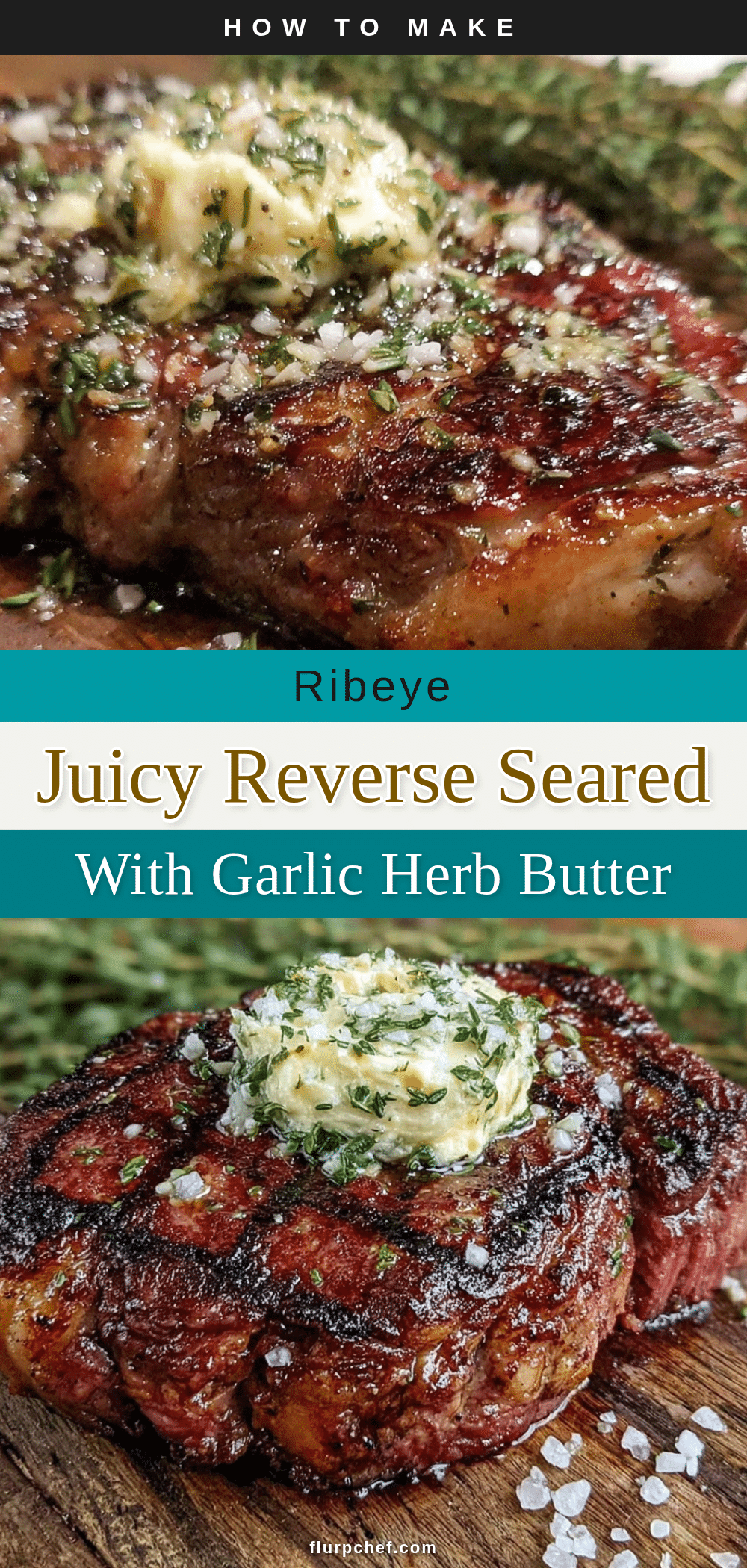
Perfect Reverse Seared Ribeye with Garlic Herb Butter
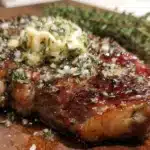
A juicy, tender ribeye steak cooked using the reverse sear method and finished with a flavorful garlic herb butter for a perfect medium-rare crust and rich taste.
- Prep Time: 10 minutes
- Cook Time: 30 minutes
- Total Time: 40 minutes
- Yield: 1 serving 1x
- Category: Main Course
- Cuisine: American
Ingredients
- 1 ribeye steak, 1.5 to 2 inches thick (USDA Choice or Prime)
- Kosher salt, to taste
- Freshly ground black pepper, to taste
- 4 tablespoons unsalted butter
- 3 cloves fresh garlic, minced or lightly crushed
- 3–4 fresh thyme sprigs
- 2–3 fresh rosemary sprigs
- 1 teaspoon optional lemon zest
Instructions
- Preheat your oven to 275°F (135°C).
- Season the ribeye generously on all sides with kosher salt. Do not add black pepper yet.
- Place the steak on a wire rack set inside a rimmed baking sheet to allow air circulation.
- Bake in the oven for 20-30 minutes, depending on thickness, until the internal temperature reaches 120°F (49°C) for medium-rare.
- While the steak bakes, prepare the garlic herb butter by combining softened unsalted butter with minced garlic, chopped fresh thyme, rosemary, and lemon zest if using. Mix well and set aside.
- Remove the steak from the oven and let it rest for 5-10 minutes to redistribute juices.
- Heat a cast iron skillet over high heat until smoking hot (about 5-7 minutes). Add a small knob of butter or a splash of oil.
- Add freshly ground black pepper to the steak just before searing.
- Place the ribeye in the hot skillet and sear for 1-2 minutes on each side, including edges.
- During the last 30 seconds of searing, add the garlic herb butter to the pan and continuously spoon it over the steak to baste.
- Remove the steak from the skillet and let it rest for another 5 minutes. The internal temperature should rise to 130-135°F (54-57°C) for perfect medium-rare.
- Slice against the grain and serve immediately with a dollop of garlic herb butter on top.
Notes
Use a meat thermometer for best results. Add black pepper just before searing to avoid burning. Basting with garlic herb butter during searing enhances flavor and juiciness. Let the steak rest after oven cooking and after searing to lock in juices. For dairy-free, substitute vegan butter. Avoid overcrowding the pan when searing multiple steaks.
Nutrition
- Serving Size: Approximately 8 oz (
- Calories: 650
- Sodium: 600
- Fat: 45
- Saturated Fat: 20
- Carbohydrates: 1
- Protein: 55
Keywords: reverse sear, ribeye steak, garlic herb butter, juicy steak, medium rare, cast iron skillet, steak recipe