“You can’t eat anything hard for a while,” my dentist said, and honestly, I felt like the kitchen had turned into a minefield overnight. The first few days after dental work were a blur of cold drinks and cautious sips, trying to avoid anything that might jab at the tender spots. I remember staring at my fridge, thinking, “Great, now what?” But then, somehow, a small batch of creamy mashed potatoes and silky soups became my saving grace. It wasn’t just about eating—it was about feeling human again.
Soft foods aren’t usually on my radar, but after that dental appointment, I found myself obsessively experimenting with easy creamy soft food recipes after dental work. Each spoonful offered comfort, and the smooth textures made chewing a breeze. It’s funny how a little mishap can lead to discovering some of the most satisfying homemade meals. No crunch, no chew—just pure, soothing goodness that felt like a warm hug from the inside.
These recipes aren’t just for healing mouths; they’re for anyone craving something gentle yet flavorful. I kept coming back to these dishes because they were simple, creamy, and most importantly, delicious. If you’re in the same boat—navigating the world of soft foods post-dental work—this collection might just be the quiet comfort you need right now.
Why You’ll Love This Recipe
Having gone through dental work myself, I know how tricky it can be to find meals that don’t irritate your mouth but still satisfy your appetite. These easy creamy soft food recipes are more than just bland mush—they’re thoughtfully crafted to be nourishing, flavorful, and gentle.
- Quick & Easy: Most of these recipes come together in under 30 minutes, perfect when you’re not up for a long cooking session.
- Simple Ingredients: No need for specialty stores—these use pantry staples and common fridge finds.
- Perfect for Recovery: The creamy textures soothe sensitive gums and make swallowing a breeze.
- Crowd-Pleaser: Even friends and family love these dishes, so you’re not stuck with boring food during recovery.
- Unbelievably Delicious: Smooth, rich, and comforting—each recipe has a little twist that keeps it interesting, like a hint of garlic in the mashed potatoes or a splash of coconut milk in the soups.
This isn’t just about eating soft food—it’s about enjoying meals that actually make you feel better. For example, blending cottage cheese into a creamy dip gives you protein without the chew, and using puréed vegetables adds color and nutrients without any hassle. This collection was my go-to when I needed meals that felt like a treat, not a compromise. Honestly, once you try these, you might find yourself craving them even without dental work.
What Ingredients You Will Need
These easy creamy soft food recipes after dental work rely on simple, wholesome ingredients to create bold flavors and smooth textures without fuss. You probably already have most of these in your kitchen, which makes whipping up a comforting meal hassle-free.
- For Creamy Soups and Purees:
- Vegetables like carrots, potatoes, sweet potatoes, and cauliflower (fresh or frozen for convenience)
- Onion and garlic (for gentle flavor, finely minced)
- Low-sodium chicken or vegetable broth (look for brands like Swanson or Pacific for best taste)
- Heavy cream or coconut milk (adds richness and smooth texture)
- Butter or olive oil (for sautéing and depth)
- Fresh herbs like parsley or thyme (optional, finely chopped)
- For Creamy Mashed Dishes:
- Russet or Yukon Gold potatoes (peeled, for a silky mash)
- Cream cheese or Greek yogurt (adds tang and creaminess)
- Milk or plant-based milk (warm, to loosen the mash)
- Salt and pepper (to taste)
- For Smooth Snacks and Desserts:
- Ripe bananas or avocados (mashed for natural creaminess)
- Cottage cheese or ricotta (choose small-curd for smoother texture)
- Honey or maple syrup (for mild sweetness)
- Soft oats (rolled oats work well, especially if soaked overnight)
For anyone who’s dairy-sensitive, swapping heavy cream with coconut milk or almond milk works beautifully. And if you want to give a fun twist to your creamy breakfast, try the creamy overnight oats with peanut butter and banana—it’s silky enough to eat with a spoon and totally satisfying.
Equipment Needed
Cooking these easy creamy soft food recipes after dental work doesn’t call for much. Most of the tools are probably already hanging out in your kitchen.
- Blender or Immersion Blender: Essential for pureeing soups, smoothies, and dips to that perfect smooth consistency.
- Medium to Large Saucepan: For simmering vegetables and making soups or mashed potatoes.
- Potato Masher or Fork: Handy for mashing potatoes or avocados without overworking the texture.
- Mixing Bowls: For combining ingredients, especially for creamy dips or overnight oats.
- Measuring Cups and Spoons: To keep your recipes consistent and hassle-free.
If you don’t have a high-powered blender, an immersion blender will do the job just fine—and it’s easier to clean. For mashing, a simple fork works in a pinch, though a dedicated potato masher can save some elbow grease. Honestly, I’ve made mashed sweet potatoes just with a fork when I was feeling lazy (and it still tasted great!).
Preparation Method

- Prepare Your Vegetables: Peel and chop potatoes, carrots, or cauliflower into uniform pieces (about 1-inch chunks). This helps them cook evenly and blend smoothly—no surprises.
- Cook Until Tender: Boil or steam vegetables until fork-tender, usually around 15-20 minutes depending on size. You want them soft enough to mash without lumps but not falling apart.
- Sauté Aromatics: In a saucepan, gently sauté minced garlic and onions in butter or olive oil until fragrant and translucent (about 3-4 minutes). This adds depth without overpowering the delicate flavors.
- Add Broth and Simmer: Pour in your broth and add cooked vegetables. Let everything simmer together for 5-10 minutes to marry the flavors. Don’t rush this step—it makes a difference.
- Blend Until Silky: Use a blender or immersion blender to purée the mixture. Stop and scrape down the sides as needed. The goal is a creamy, lump-free texture that’s easy on the mouth.
- Stir in Cream or Milk: Add heavy cream, coconut milk, or your choice of dairy substitute slowly. Adjust the consistency until it’s just right—thick but pourable.
- Season to Taste: Add salt, pepper, and any herbs. Taste carefully; sometimes a pinch of nutmeg or a squeeze of lemon juice brightens the dish.
- Serve Warm: Ladle into bowls and enjoy while it’s comforting and smooth.
For creamy mashed potatoes, mash cooked potatoes with cream cheese and warm milk, adding salt and pepper. Don’t over-mash to keep a light, fluffy texture. If you’re in the mood for a snack, try mashing ripe bananas with a bit of cottage cheese and honey for a naturally sweet treat.
Feeling adventurous? This creamy base approach can be adjusted for quick meals like Tuscan chicken penne, where you can blend the creamy sauce and keep the texture smooth but flavorful.
Cooking Tips & Techniques
One trick I learned is to always start with room temperature or warm ingredients when blending. Cold veggies sometimes don’t blend as smoothly, leaving unwanted texture. Also, don’t skip the step of sautéing aromatics—it’s the secret to making soft food taste anything but boring.
If your puree turns out too thick, add broth or milk a little at a time rather than all at once. This way, you can control the texture without watering down the flavor. On the flip side, if it’s too thin, simmer gently to reduce and thicken, but be careful not to burn it.
For mashed potatoes, resistance to over-mixing is key! Overworking the starch can make them gluey rather than fluffy. A quick mash with a gentle hand keeps them light and creamy.
When reheating, always warm soft foods slowly over low heat or in a microwave with short bursts to avoid curdling or drying out. Adding a splash of cream or broth before reheating refreshes the texture nicely.
Variations & Adaptations
These easy creamy soft food recipes after dental work can be tweaked to fit your taste or dietary needs.
- Dairy-Free: Swap butter and cream with olive oil and coconut milk. Coconut milk adds a gentle sweetness that pairs beautifully with root veggies.
- Protein Boost: Blend in silken tofu or pureed white beans for extra protein without altering texture.
- Seasonal Veggies: Use pumpkin or butternut squash in the fall instead of potatoes or cauliflower for a warm, comforting twist.
- Flavor Twists: Add a pinch of smoked paprika or a dash of curry powder for subtle warmth and complexity.
- Sweet Options: Try mashed ripe bananas with a drizzle of honey and cinnamon for a soft, creamy dessert or breakfast.
I once swapped Greek yogurt with dairy-free coconut yogurt in a creamy cucumber salad after dental work, and it was surprisingly refreshing and gentle on my mouth. If you’re a fan of salads, you might want to check out the fresh cucumber watermelon feta salad for a refreshing bite when you’re feeling up to something a bit more textured.
Serving & Storage Suggestions
Serve these creamy soft foods warm or at room temperature to avoid any discomfort. Presentation can be simple—smooth bowls topped with a sprinkle of fresh herbs or a drizzle of olive oil can make all the difference.
Pair these meals with soft breads or a mild cheese if your mouth allows. For drinks, light herbal teas or lukewarm broths complement the gentle flavors without overwhelming your palate.
Store leftovers in airtight containers in the refrigerator for up to 3 days. For longer storage, most pureed soups and mashed dishes freeze well—just thaw overnight in the fridge and warm gently.
Reheat slowly, adding a splash of broth or milk to maintain that creamy texture. Flavors often deepen after sitting a day or two, so sometimes leftovers taste even better.
Nutritional Information & Benefits
These recipes are generally low in fiber and easy to digest, making them ideal during recovery. Ingredients like potatoes and carrots provide potassium and vitamin A, supporting healing. Using Greek yogurt or cottage cheese adds protein, which is crucial for tissue repair.
Many recipes are naturally gluten-free, especially if you skip any added bread or pasta. For dairy-sensitive folks, coconut milk and plant-based yogurt keep things creamy without lactose.
Overall, these meals balance gentle nutrition with satisfying flavors, helping you get through recovery without sacrificing wholesome eating. I often found that sticking to soft, nutrient-rich foods helped me bounce back quicker and kept my energy steady.
Conclusion
Finding meals that feel comforting, delicious, and gentle after dental work can be surprisingly challenging. These easy creamy soft food recipes after dental work are proof that you don’t have to settle for bland or boring. They’re designed to soothe your mouth while satisfying your cravings for something tasty and nourishing.
Feel free to adjust these recipes to match your taste and dietary needs—the key is to keep it soft, smooth, and enjoyable. I still turn to these dishes when I want a cozy, no-fuss meal, and I hope they bring you the same quiet comfort.
Don’t hesitate to share your own twists or questions—I’d love to hear how you make these recipes your own. Here’s to healing with good food that feels like a gentle hug.
FAQs
- Q: How long should I stick to soft foods after dental work?
A: It usually depends on your dentist’s advice, but generally 3-7 days of soft food is common to avoid irritation. - Q: Can I use frozen vegetables for these recipes?
A: Absolutely! Frozen veggies are just as nutritious and often cook faster, making them perfect for easy purees. - Q: What if I’m lactose intolerant—can I still make these creamy recipes?
A: Yes, swap dairy cream or butter with coconut milk, olive oil, or dairy-free alternatives to keep that creamy texture. - Q: Is it okay to eat these recipes cold or do they need to be warm?
A: Warm or room temperature is best to avoid sensitivity, but some like creamy overnight oats can be enjoyed chilled. - Q: Can I add protein like chicken or beans to these soft recipes?
A: Yes! Pureed cooked chicken or white beans blend smoothly and add needed protein without tough textures.
Pin This Recipe!
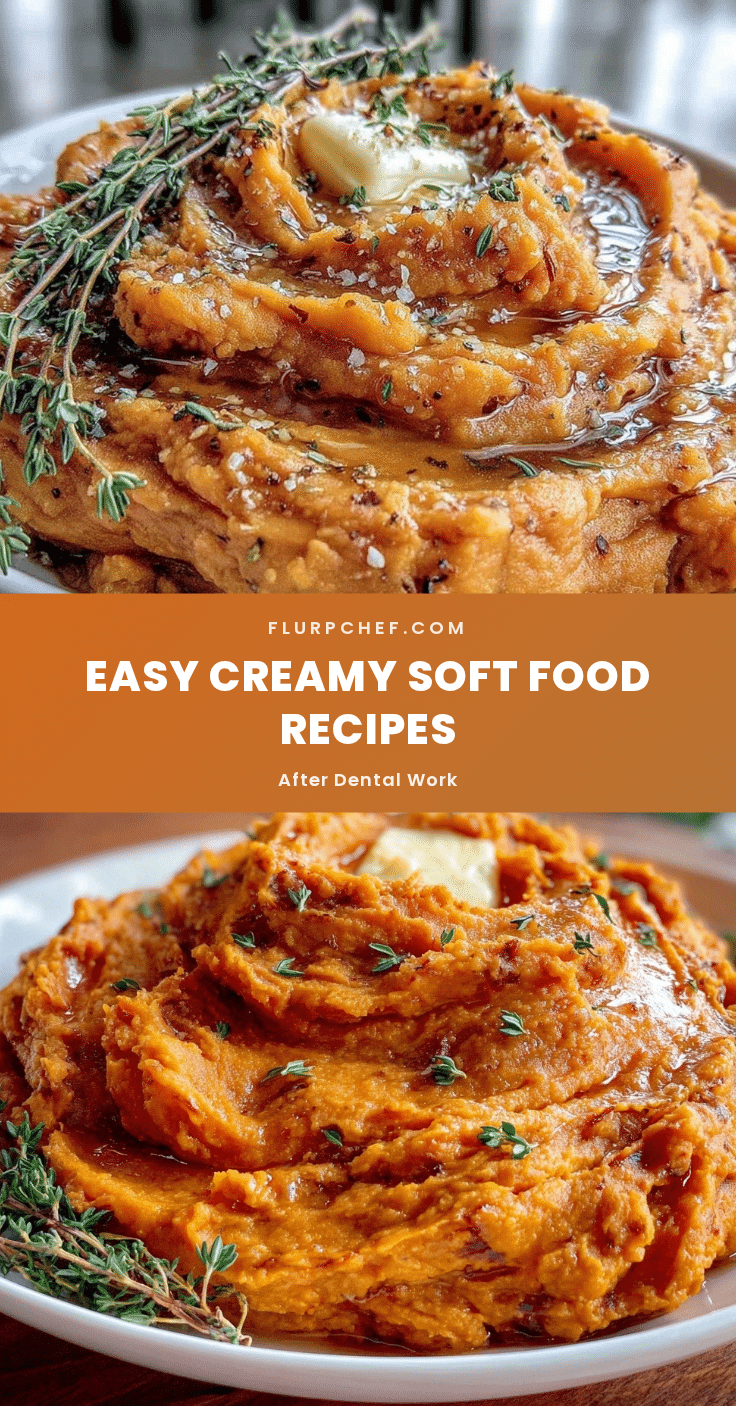
Easy Creamy Soft Food Recipes After Dental Work 10 Best Homemade Meals

A collection of easy, creamy soft food recipes designed to soothe sensitive mouths after dental work, featuring simple ingredients and smooth textures for comfort and nourishment.
- Prep Time: 10 minutes
- Cook Time: 20 minutes
- Total Time: 30 minutes
- Yield: 4 servings
- Category: Main Course
- Cuisine: American
Ingredients
- Vegetables like carrots, potatoes, sweet potatoes, and cauliflower (fresh or frozen)
- Onion and garlic (finely minced)
- Low-sodium chicken or vegetable broth
- Heavy cream or coconut milk
- Butter or olive oil
- Fresh herbs like parsley or thyme (optional)
- Russet or Yukon Gold potatoes (peeled)
- Cream cheese or Greek yogurt
- Milk or plant-based milk
- Salt and pepper
- Ripe bananas or avocados (mashed)
- Cottage cheese or ricotta (small-curd)
- Honey or maple syrup
- Soft oats (rolled oats, soaked overnight)
Instructions
- Prepare your vegetables by peeling and chopping potatoes, carrots, or cauliflower into uniform 1-inch chunks.
- Boil or steam vegetables until fork-tender, about 15-20 minutes.
- Sauté minced garlic and onions in butter or olive oil until fragrant and translucent, about 3-4 minutes.
- Add broth and cooked vegetables to the saucepan and simmer for 5-10 minutes.
- Blend the mixture using a blender or immersion blender until silky and lump-free.
- Stir in heavy cream, coconut milk, or dairy substitute to desired consistency.
- Season with salt, pepper, and optional herbs or spices to taste.
- Serve warm.
- For mashed potatoes, mash cooked potatoes with cream cheese and warm milk, seasoning with salt and pepper without over-mashing.
- For snacks, mash ripe bananas with cottage cheese and honey.
Notes
Start with room temperature or warm ingredients for smoother blending. Avoid over-mashing potatoes to keep them fluffy. Reheat slowly with a splash of broth or milk to maintain creamy texture. Swap dairy with coconut milk or olive oil for dairy-free versions. Frozen vegetables can be used for convenience.
Nutrition
- Serving Size: 1 bowl or 1 cup serv
- Calories: 180
- Sugar: 4
- Sodium: 300
- Fat: 8
- Saturated Fat: 4
- Carbohydrates: 22
- Fiber: 3
- Protein: 5
Keywords: soft food recipes, creamy recipes, dental work meals, easy soft foods, mashed potatoes, creamy soups, dairy-free soft food, recovery meals