“You know, I wasn’t expecting much the day my neighbor dropped off that basket of fresh veggies and herbs,” I said, recalling the moment that sparked my journey into crafting healthy nutritious meals for seniors with fresh ingredients. It was late morning, and the kitchen smelled faintly of basil and ripe tomatoes—something about that combination just pulled me in. Honestly, I was skeptical at first. Cooking for seniors can sometimes feel like a juggling act between nutrition, taste, and simplicity, and I wasn’t sure if these fresh ingredients would really make a difference.
But as I started experimenting, those simple veggies transformed into meals that were not just nourishing but surprisingly vibrant. The balance of flavors, the bright colors, and the gentle textures made every dish feel like a little celebration. I realized these meals weren’t just about feeding the body—they were about sparking joy and comfort, especially for those who might be facing dietary challenges or simply wanting something wholesome.
Cooking these healthy, nutritious meals for seniors with fresh ingredients became my quiet ritual in the mornings—chopping, mixing, tasting—each step grounding me. It wasn’t a big production, just honest food made with care. And that’s why I keep coming back to these recipes; they’re straightforward but packed with personality and good-for-you goodness. I hope as you read through this, you’ll find that same calm confidence that I did, making wholesome fresh food feel accessible and, well, pretty comforting too.
Why You’ll Love This Recipe
After trying countless variations, I can say with some certainty that these healthy nutritious meals for seniors with fresh ingredients hit the sweet spot between ease and flavor. Here’s why they’ve earned a spot in my regular rotation:
- Quick & Easy: Each recipe comes together in under 30 minutes, perfect for busy mornings or when energy is low.
- Simple Ingredients: No hunting for obscure items—you’ll find most of these in your local market or even your own garden.
- Perfect for Seniors’ Needs: These meals emphasize gentle textures and balanced nutrition, supporting digestion and overall wellness.
- Crowd-Pleaser: Family dinners, casual visits, or solo meals—everyone appreciates the fresh flavors and satisfying bites.
- Unbelievably Delicious: Fresh herbs, crisp veggies, and wholesome proteins come together for meals that are both comforting and bright.
What sets these recipes apart? For one, they’re crafted with a specific focus on freshness and nutrient density, avoiding heaviness or overly processed ingredients. I’ve found that using fresh herbs like dill and mint (instead of dried) adds a subtle lift that makes a real difference. Plus, the seasoning is gentle but thoughtful—enough to awaken the palate without overwhelming sensitive taste buds.
There’s a reason these meals bring a sense of calm and contentment—especially when paired with a glass of infused water or a light salad. It’s more than food; it’s a small act of care that feels just right.
What Ingredients You Will Need
These recipes rely on fresh, wholesome ingredients that work harmoniously to create meals full of flavor and nutrition. Most are pantry staples or easy to find in farmers’ markets, and some can be swapped based on preference or availability.
For the Main Dishes
- Fresh leafy greens: Spinach or kale, washed and roughly chopped (adds vitamins and fiber)
- Seasonal vegetables: Carrots, zucchini, bell peppers—choose what’s freshest and vibrant
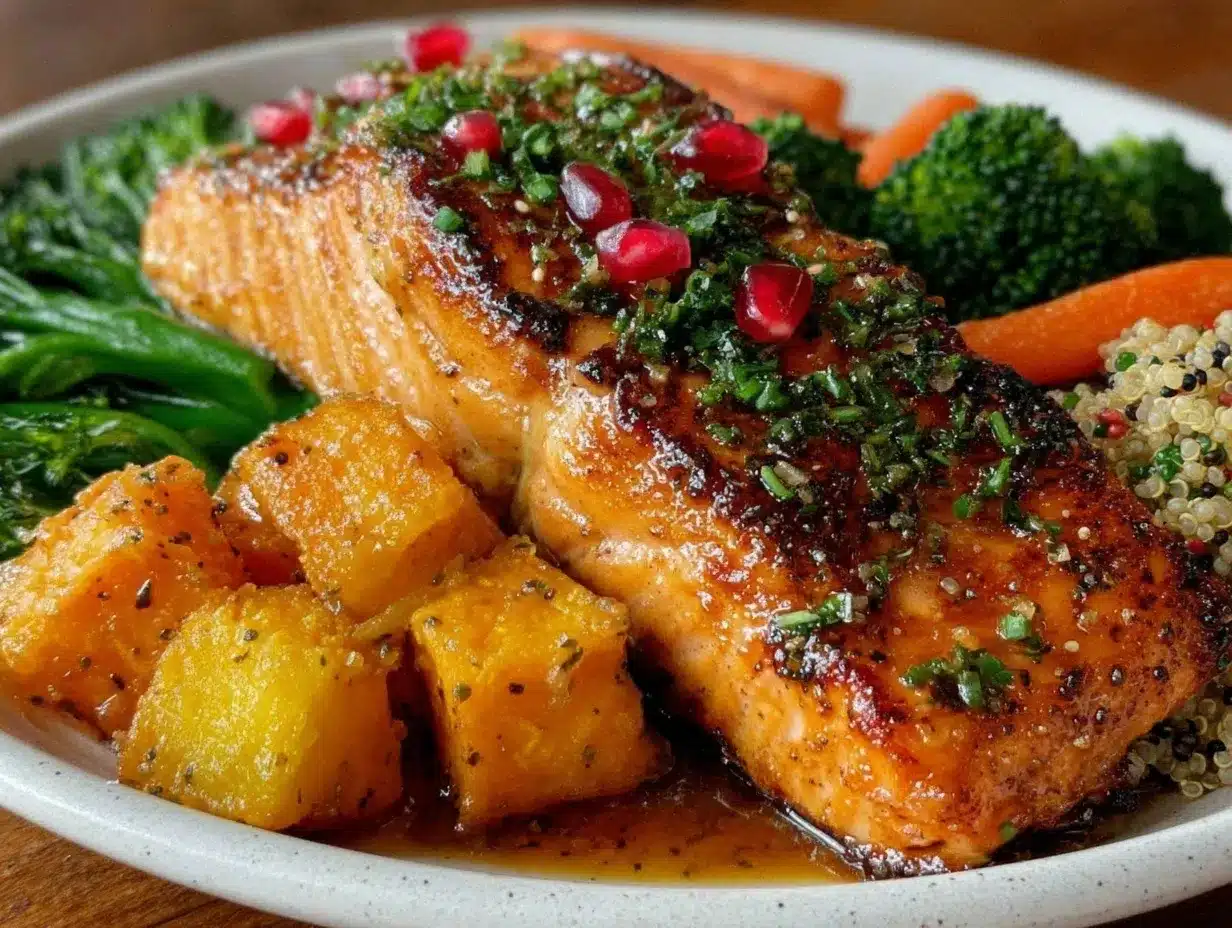
- Lean proteins: Skinless chicken breast, firm tofu, or wild-caught salmon fillets (rich in omega-3s)
- Whole grains: Quinoa, brown rice, or farro (for sustained energy)
- Fresh herbs: Dill, parsley, mint, or basil (for brightness and aroma)
- Extra virgin olive oil: For cooking and dressing (choose a trusted brand like California Olive Ranch)
- Fresh garlic and ginger: Minced for subtle warmth
- Lemons: Zested and juiced for natural acidity
For the Salads & Sides
- Cucumbers: Thinly sliced or diced (refreshing crunch)
- Tomatoes: Cherry or heirloom, halved (adds sweetness and juiciness)
- Feta cheese: Crumbled (optional, adds creamy tang)
- Chickpeas: Cooked or canned, rinsed (fiber and plant protein)
- Seasonal fruits: Fresh peaches or berries (for light natural sweetness)
Substitutions & Tips
- Use almond milk or oat milk in place of dairy if needed.
- Opt for gluten-free grains like millet or amaranth if gluten is a concern.
- Swap feta with a dairy-free cheese or omit for lactose intolerance.
- Frozen veggies work fine if fresh aren’t available, just thaw and drain well.
Personally, I always pick vegetables that are firm and vibrant—this little step helps keep meals fresh-tasting and visually appealing. When I’m short on time, I reach for pre-washed greens or pre-cut veggies, which do the trick without sacrificing quality.
Equipment Needed
Nothing fancy here—just the basics to keep cooking straightforward and manageable:
- Sharp chef’s knife: For safe and efficient chopping (I like a 7-inch blade for versatility)
- Cutting board: Preferably a medium-sized wooden or plastic one
- Non-stick skillet or sauté pan: Ideal for cooking lean proteins and veggies evenly
- Medium saucepan: For grains and boiling
- Mixing bowls: Various sizes for tossing salads and mixing ingredients
- Measuring cups and spoons: Precision helps maintain consistency
- Colander: For rinsing grains and vegetables
If you don’t have a non-stick pan, a well-seasoned cast iron skillet works beautifully, though it requires a bit more attention to heat control. For seniors or those with limited hand strength, consider kitchen tools with ergonomic handles to make prep easier. Keeping your knives sharp is crucial—not just safer but less tiring too.
Preparation Method
- Prepare the grains: Rinse 1 cup (170 g) of quinoa or brown rice under cold water. Add to a medium saucepan with 2 cups (475 ml) of water. Bring to a boil, then reduce heat, cover, and simmer for 15-20 minutes until tender. Fluff with a fork and set aside. (Tip: Cooking grains ahead saves time and effort.)
- Chop the vegetables: While grains cook, roughly chop 2 cups (60 g) of fresh spinach or kale, 1 medium carrot peeled and sliced thin, 1 small zucchini diced, and 1 bell pepper cut into strips. (Sensory cue: The veggies should smell fresh and have a crisp snap.)
- Cook the protein: Heat 1 tablespoon (15 ml) olive oil in a non-stick skillet over medium heat. Season 12 ounces (340 g) of chicken breast or salmon with salt, pepper, and a pinch of dried herbs. Cook chicken for 5-7 minutes per side or salmon skin-side down for 4-5 minutes until opaque and flaky. Remove and let rest.
- Sauté the vegetables: In the same pan, add an additional teaspoon of olive oil if needed. Toss in minced garlic (1 clove) and ginger (1 teaspoon) for 30 seconds until fragrant. Add chopped veggies and cook for 4-5 minutes, stirring occasionally, until tender-crisp but still vibrant.
- Assemble the meal: Combine the cooked grains, sautéed vegetables, and flaked protein in a large bowl. Add a handful of chopped fresh herbs (dill, parsley, or mint). Drizzle with juice of half a lemon and 1 tablespoon (15 ml) of olive oil. Toss gently to combine.
- Adjust seasoning: Taste and add salt or fresh cracked pepper as needed. (Note: Keeping salt moderate is key for seniors.)
- Optional salad side: Mix 1 cup (150 g) halved cherry tomatoes, 1 cup (120 g) sliced cucumber, and ½ cup (75 g) crumbled feta with a simple dressing of 1 tablespoon balsamic vinegar and 1 tablespoon olive oil.
- Serve: Plate the main dish alongside the fresh salad for a balanced, colorful meal.
One thing I’ve learned is to keep the textures varied but gentle—cooked grains with crisp veggies and tender protein make eating easier and more enjoyable. If you’re prepping for multiple days, store components separately to keep freshness intact.
Cooking Tips & Techniques
When cooking for seniors, texture and flavor balance are everything. Here’s what helped me get these recipes just right:
- Keep it gentle: Avoid overcooking vegetables; aim for tender-crisp to retain nutrients and color.
- Mind seasoning: Use herbs and lemon juice to brighten dishes instead of heavy salt or sauces.
- Batch prep grains: Cooking grains in advance saved me from feeling rushed and kept meals fresh when combined later.
- Protein cooking: For fish, watch closely—overcooked fish becomes dry quickly. For chicken, a quick rest after cooking keeps it juicy.
- Texture variety: Including a crunchy salad side or soft cooked veggies helps keep meals interesting and easier to chew.
- Use fresh herbs last: Adding herbs at the end preserves their flavor and aroma, which can be a real mood booster.
One time, I accidentally overcooked the kale, and honestly, it turned bitter. That mistake taught me to pay attention to timing and to trust the feel of the veggies—if they still have some bounce, they’re perfect. Also, multitasking is your friend here: start grains first, then chop while they cook, and finish with protein and veggies for efficiency.
Variations & Adaptations
These healthy nutritious meals for seniors with fresh ingredients are flexible enough for different tastes and needs:
- Vegetarian version: Swap chicken or salmon for hearty grilled tofu or chickpeas for protein.
- Seasonal twist: In warmer months, add fresh peaches or berries to the salad for a hint of sweetness.
- Low-sodium: Skip added salt, and boost flavor with garlic, lemon, and fresh herbs instead.
- Gluten-free: Use quinoa or millet instead of wheat-based grains.
- Personal favorite: I sometimes toss in a spoonful of homemade pesto (basil, walnuts, olive oil) for a flavor punch that’s both fresh and comforting.
For easy adjustments, cooking the veggies lightly steamed instead of sautéed can be gentler for sensitive stomachs. Also, swapping olive oil for avocado oil works well if you want a milder fat profile. In a pinch, frozen peas or green beans add a nice pop of color and nutrition without fuss.
Serving & Storage Suggestions
Serving these meals warm brings out the aromas and soft textures, but they also work wonderfully at room temperature—especially the grain bowls mixed with fresh herbs and lemon.
Pair the main dishes with a light, refreshing salad like the fresh Mediterranean cucumber chickpea salad for a cool complement. A glass of infused water with cucumber or mint adds hydration and subtle flavor.
Store leftovers in airtight containers in the refrigerator for up to 3 days. Keep cooked grains, proteins, and salads separate if possible to maintain freshness. For reheating, use a low setting on the microwave and add a splash of water or olive oil to prevent dryness.
Flavors tend to mellow and blend overnight, so sometimes I find the next-day meal even more satisfying. Just make sure to check textures before serving, especially for the veggies, and refresh with a squeeze of lemon if needed.
Nutritional Information & Benefits
Each meal is designed to provide balanced nutrition that supports senior health:
- Calories: Approximately 350-450 per serving, depending on protein choice and portion size.
- Protein: 25-30 grams from lean sources like chicken, salmon, or tofu.
- Fiber: 6-8 grams from whole grains, fresh veggies, and legumes.
- Healthy fats: From olive oil, nuts (if added), and fish like salmon rich in omega-3 fatty acids.
- Vitamins & minerals: High in vitamins A, C, K, and calcium thanks to fresh greens and vegetables.
These meals are naturally gluten-free if you choose appropriate grains, and low in added sugars and sodium, making them suitable for common dietary restrictions in seniors. The fresh ingredients also provide antioxidants and anti-inflammatory benefits, which are especially helpful for maintaining vitality and reducing chronic disease risk.
Conclusion
Healthy nutritious meals for seniors with fresh ingredients don’t have to be complicated or bland. These recipes show that simple, fresh food can nourish the body and lift the spirit without a fuss. Whether you’re cooking for a loved one or yourself, these dishes offer flexibility and flavor that can be tailored to your tastes and needs.
I keep coming back to these meals because they remind me that good food is about care, patience, and a little creativity. Don’t hesitate to mix in your favorite herbs, try new veggies, or swap proteins to keep things interesting.
Give these recipes a try and see how fresh ingredients can quietly transform your mealtime. And if you have your own twists or stories, I’d love to hear them—drop a comment or share your version for others who might benefit from these nourishing meals.
Here’s to simple, wholesome food that feels just right.
FAQs
What are some easy proteins to include in meals for seniors?
Lean options like skinless chicken breast, wild-caught salmon, tofu, and cooked legumes such as chickpeas are excellent choices. They provide quality protein without heavy fats or complicated preparation.
Can these meals be prepared ahead of time?
Absolutely! Cooking grains and proteins in advance can save time. Store components separately in the refrigerator and assemble just before eating to maintain freshness.
How can I make these recipes more suitable for seniors with chewing difficulties?
Opt for softer cooked vegetables, finely chop ingredients, or lightly steam veggies instead of sautéing. Avoid tough or stringy textures and consider pureeing sauces if needed.
Are there dairy-free options for these meals?
Yes, you can substitute dairy ingredients like feta with dairy-free cheese or omit them entirely. Use plant-based milks like almond or oat milk in any dressings or side dishes.
What’s a simple way to add flavor without extra salt?
Fresh herbs, citrus juices, garlic, and spices add natural brightness and depth to dishes without relying on salt. For example, a squeeze of lemon or a sprinkle of dill can transform a meal.
For a breakfast idea that complements these nutritious meals, you might enjoy the creamy overnight oats with peanut butter and banana—a great way to start the day with wholesome energy.
Pin This Recipe!
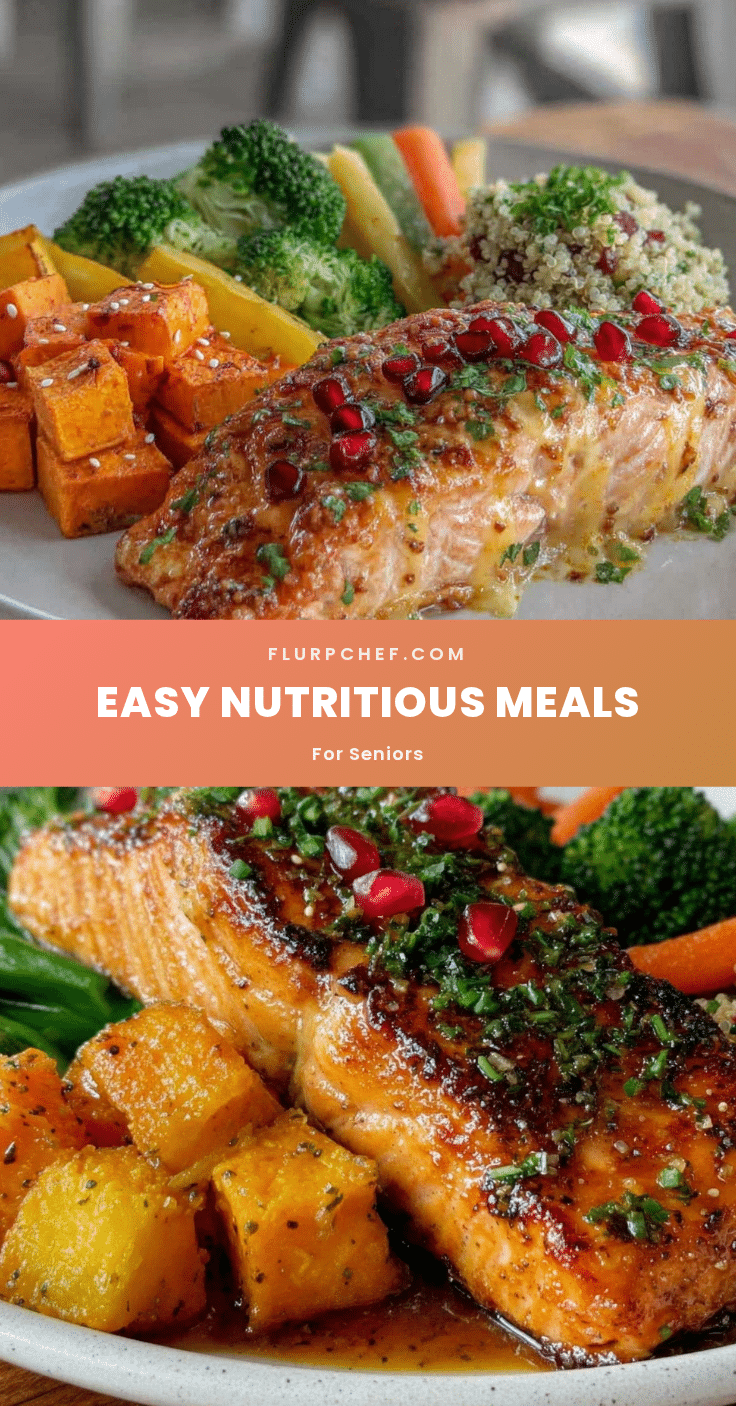
Healthy Nutritious Meals for Seniors with Fresh Ingredients
Simple, fresh ingredient recipes designed to provide balanced nutrition, gentle textures, and vibrant flavors ideal for seniors. These meals are quick, easy, and adaptable to various dietary needs.
- Prep Time: 10 minutes
- Cook Time: 20 minutes
- Total Time: 30 minutes
- Yield: 4 servings
- Category: Main Course
- Cuisine: Healthy / Senior Nutrition
Ingredients
- Fresh leafy greens: spinach or kale, washed and roughly chopped
- Seasonal vegetables: carrots, zucchini, bell peppers
- Lean proteins: skinless chicken breast, firm tofu, or wild-caught salmon fillets
- Whole grains: quinoa, brown rice, or farro
- Fresh herbs: dill, parsley, mint, or basil
- Extra virgin olive oil
- Fresh garlic, minced
- Fresh ginger, minced
- Lemons, zested and juiced
- Cucumbers, thinly sliced or diced
- Tomatoes, cherry or heirloom, halved
- Feta cheese, crumbled (optional)
- Chickpeas, cooked or canned, rinsed
- Seasonal fruits: fresh peaches or berries
Instructions
- Rinse 1 cup (170 g) of quinoa or brown rice under cold water. Add to a medium saucepan with 2 cups (475 ml) of water. Bring to a boil, then reduce heat, cover, and simmer for 15-20 minutes until tender. Fluff with a fork and set aside.
- While grains cook, roughly chop 2 cups (60 g) of fresh spinach or kale, 1 medium carrot peeled and sliced thin, 1 small zucchini diced, and 1 bell pepper cut into strips.
- Heat 1 tablespoon (15 ml) olive oil in a non-stick skillet over medium heat. Season 12 ounces (340 g) of chicken breast or salmon with salt, pepper, and a pinch of dried herbs. Cook chicken for 5-7 minutes per side or salmon skin-side down for 4-5 minutes until opaque and flaky. Remove and let rest.
- In the same pan, add an additional teaspoon of olive oil if needed. Toss in minced garlic (1 clove) and ginger (1 teaspoon) for 30 seconds until fragrant. Add chopped veggies and cook for 4-5 minutes, stirring occasionally, until tender-crisp but still vibrant.
- Combine the cooked grains, sautéed vegetables, and flaked protein in a large bowl. Add a handful of chopped fresh herbs (dill, parsley, or mint). Drizzle with juice of half a lemon and 1 tablespoon (15 ml) of olive oil. Toss gently to combine.
- Taste and add salt or fresh cracked pepper as needed, keeping salt moderate.
- Optional salad side: Mix 1 cup (150 g) halved cherry tomatoes, 1 cup (120 g) sliced cucumber, and ½ cup (75 g) crumbled feta with a simple dressing of 1 tablespoon balsamic vinegar and 1 tablespoon olive oil.
- Plate the main dish alongside the fresh salad for a balanced, colorful meal.
Notes
Avoid overcooking vegetables to maintain tender-crisp texture and nutrients. Use fresh herbs at the end to preserve flavor. Cook grains ahead to save time. For seniors with chewing difficulties, steam veggies lightly or finely chop. Store components separately for freshness if preparing ahead. Use ergonomic kitchen tools for easier prep.
Nutrition
- Serving Size: 1 bowl with protein,
- Calories: 350450
- Sugar: 58
- Sodium: 300400
- Fat: 1218
- Saturated Fat: 23
- Carbohydrates: 3545
- Fiber: 68
- Protein: 2530
Keywords: healthy meals for seniors, nutritious meals, fresh ingredients, easy recipes, senior nutrition, balanced diet, quick meals, gentle textures