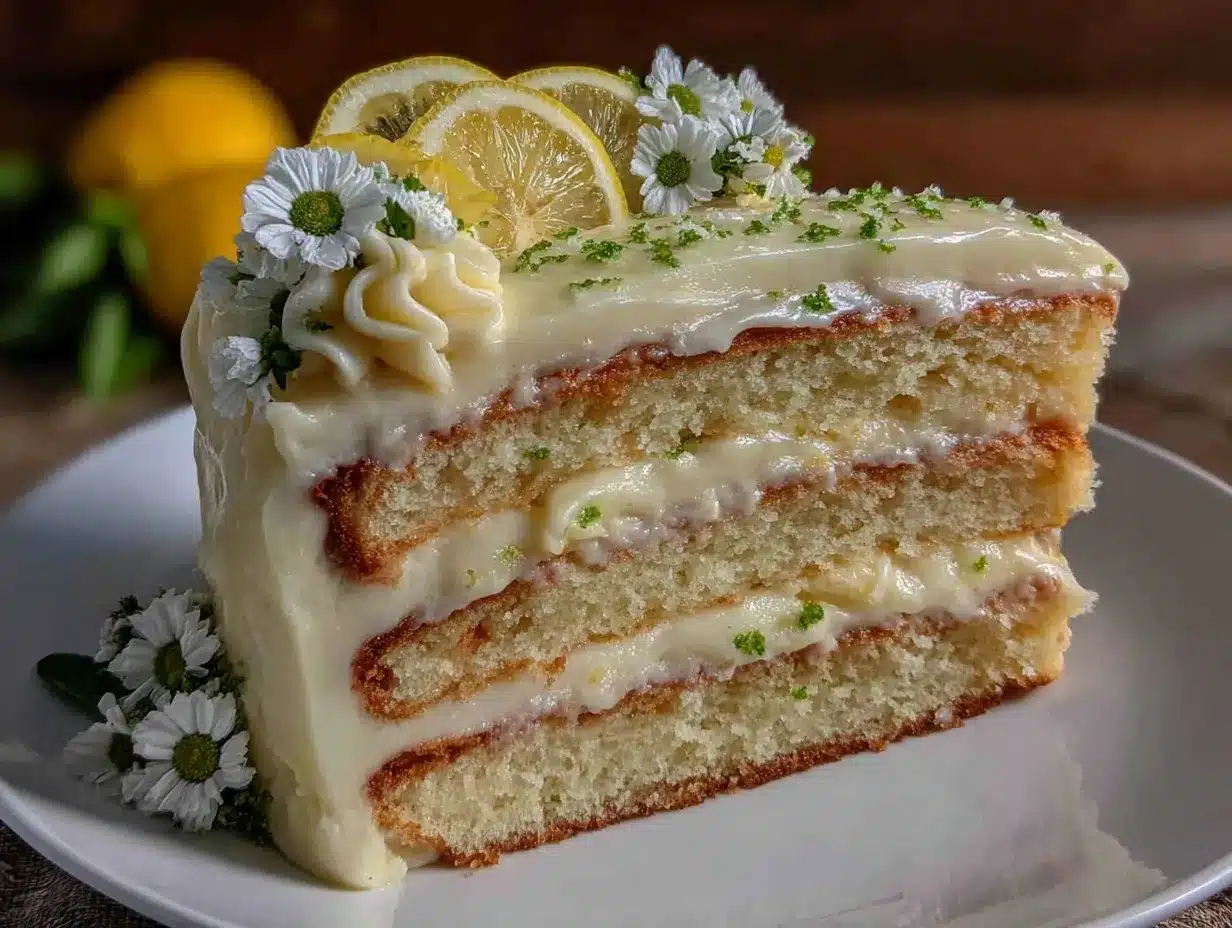
“You brought this cake? Wow, it smells like a garden in spring!” my friend exclaimed, mid-bite, as the sun filtered through the kitchen window. Honestly, that moment sticks with me—not because of the praise, but because I almost didn’t make this cake at all. I was originally aiming for a simple lemon loaf to bring to a casual get-together, but halfway through, I realized my loaf pan had vanished into thin air (probably hid behind something in my cluttered cupboard). So I grabbed my round cake pans, deciding to wing it with a layered cake instead—something I rarely attempt.
The elderflower syrup was an afterthought, left over from a cocktail experiment the week before, and the Swiss meringue frosting? Well, that was a last-minute switch because my usual buttercream felt too heavy for the bright, floral notes I wanted to highlight. I wasn’t sure if the delicate flavors of lemon and elderflower would survive the frosting, let alone impress everyone. But, honestly, it turned out to be one of those rare kitchen accidents that you keep thinking about days later.
That light, airy frosting combined with the zing of lemon and subtle elderflower essence somehow made this cake the star of the party. It’s not too sweet, not too dense, and that perfect balance is what kept people coming back for more. If you’re someone who enjoys baking but sometimes finds layering intimidating, this recipe will quietly convince you that it’s worth the effort. Plus, it’s a refreshing take that’s far from your everyday lemon cake.
There’s just something about the way the elderflower whispers through the layers, paired with the silky Swiss meringue frosting, that makes you pause—and maybe even close your eyes for a moment. This cake stuck around in my rotation because it’s not just dessert; it’s a little celebration in every slice.
Why You’ll Love This Recipe
This Perfect Lemon Elderflower Layer Cake with Swiss Meringue Frosting isn’t one of those recipes you make once and forget. It’s been tested in my kitchen more times than I can count, and it always delivers that impressive wow-factor without demanding all day at the stove.
- Quick & Easy: The cake layers come together in under 30 minutes, and the frosting whips up in about 15. Perfect for when you want a show-stopper without the stress.
- Simple Ingredients: No obscure items here—just pantry staples with a few special touches like elderflower syrup, which you can often find in most well-stocked grocery stores or specialty shops.
- Perfect for Special Occasions: Whether it’s a birthday, bridal shower, or a fancy weekend treat, this cake fits right in with its elegant flavors and light texture.
- Crowd-Pleaser: I’ve served this for both kids and adults, and honestly, it disappears fast every time.
- Unbelievably Delicious: The Swiss meringue frosting is silky and smooth, not overly sweet, which pairs beautifully with the bright lemon and floral elderflower.
What sets this apart from other lemon cakes? It’s the layering and the frosting technique that really bring out the flavors. Unlike a typical buttercream, this Swiss meringue frosting adds that cloud-like texture and just the right amount of sweetness. Plus, the elderflower syrup adds a subtle floral note you won’t find in most lemon cakes. You might even find yourself craving it again the next day (I’m speaking from experience here).
It’s the kind of cake that turns a normal afternoon into something a bit more special—and that’s why I keep coming back to it.
What Ingredients You Will Need
This recipe uses simple, wholesome ingredients to deliver bold flavor and satisfying texture without the fuss. Most of them are pantry staples, with elderflower syrup being the special touch that adds a unique floral brightness.
- For the Cake Layers:
- All-purpose flour – 2 ½ cups (310g), sifted for lightness
- Baking powder – 2 ½ teaspoons, to give the cake a nice rise
- Baking soda – ½ teaspoon, balances the acidity
- Salt – ½ teaspoon, enhances flavor
- Unsalted butter – 1 cup (227g), softened (I recommend using Plugrá or Kerrygold for a richer taste)
- Granulated sugar – 1 ¾ cups (350g), for sweetness and structure
- Large eggs – 4, room temperature (this helps with emulsification)
- Buttermilk – 1 cup (240ml), adds moisture and tang
- Lemon zest – from 2 large lemons, finely grated for fresh citrus punch
- Fresh lemon juice – ¼ cup (60ml), for acidity and brightness
- Elderflower syrup – 3 tablespoons, preferably from a trusted brand like Stirrings or homemade if you’re feeling adventurous
- For the Swiss Meringue Frosting:
- Large egg whites – 4
- Granulated sugar – 1 cup (200g)
- Salt – a pinch, balances sweetness
- Unsalted butter – 1 cup (227g), softened and cut into cubes
- Vanilla extract – 1 teaspoon, for warmth and depth
- Fresh lemon juice – 1 tablespoon, adds a subtle tartness to the frosting
- Optional: a teaspoon of elderflower syrup to echo the cake’s floral notes
If elderflower syrup is hard to find, you can substitute with a light honey or orange blossom water, though the flavor will be slightly different. For a gluten-free version, swapping the all-purpose flour with a 1:1 gluten-free baking blend works well too, but texture might vary a little.
Equipment Needed
- Two 8-inch (20 cm) round cake pans, greased and lined with parchment paper
- Electric mixer (stand or hand-held) – essential for whipping the Swiss meringue frosting to the perfect silky texture
- Heatproof mixing bowl – preferably stainless steel or glass, for the double boiler method when making the meringue
- Double boiler setup or a saucepan and a heatproof bowl that fits on top
- Rubber spatula – for folding and scraping the batter and frosting
- Cooling racks – to cool the cakes evenly and prevent sogginess
- Offset spatula or butter knife – for smooth frosting application
- Zester or microplane grater – to get fresh lemon zest
If you don’t have a double boiler, a heatproof bowl resting over a pot with simmering water works just fine. I once made this cake with a trusty hand mixer when my stand mixer was in the shop, and it worked—though it took a bit longer whipping the meringue.
Preparation Method
- Preheat the oven to 350°F (175°C). Grease and line your two 8-inch cake pans with parchment paper. This helps the cake release easily after baking.
- Mix dry ingredients: In a medium bowl, sift together 2 ½ cups (310g) all-purpose flour, 2 ½ teaspoons baking powder, ½ teaspoon baking soda, and ½ teaspoon salt. Set aside.
- Cream butter and sugar: In a large mixing bowl, beat 1 cup (227g) softened unsalted butter with 1 ¾ cups (350g) granulated sugar until light and fluffy—about 4-5 minutes on medium speed. You’ll notice the mixture turn pale and airy, which is key for a tender crumb.
- Add eggs: Add 4 large eggs one at a time, beating well after each addition to prevent curdling. Scrape down the sides to keep everything well-incorporated.
- Incorporate zest and liquids: Mix in the lemon zest from 2 lemons and ¼ cup (60ml) fresh lemon juice with 3 tablespoons elderflower syrup. The batter may look slightly curdled here—that’s normal because of the lemon juice.
- Alternate flour and buttermilk: Add the dry ingredients in three parts, alternating with 1 cup (240ml) of buttermilk, beginning and ending with the dry. Mix gently after each addition until just combined—don’t overmix or the cake will be tough.
- Divide batter: Pour batter evenly into the two prepared pans. Smooth the tops with a spatula for even layers.
- Bake: Bake for 28-32 minutes, or until a toothpick inserted into the center comes out clean and the cakes spring back when lightly pressed. Rotate pans halfway through baking for even cooking.
- Cool: Let cakes cool in the pans for 10 minutes before transferring to wire racks to cool completely. No frosting on warm cake—trust me, it melts and turns into a mess.
- Make Swiss meringue frosting: Combine 4 large egg whites, 1 cup (200g) granulated sugar, and a pinch of salt in a heatproof bowl over simmering water. Whisk constantly until sugar dissolves and mixture reaches about 160°F (71°C) on a candy thermometer (or feels smooth between fingers).
- Whip meringue: Transfer the bowl to an electric mixer and beat on high until stiff, glossy peaks form and the bowl is cool to the touch—that can take 8-10 minutes.
- Add butter: With the mixer on medium, add 1 cup (227g) softened unsalted butter a few cubes at a time. The mixture might look curdled at points—keep beating, it always comes together! Add 1 teaspoon vanilla extract, 1 tablespoon lemon juice, and optional 1 teaspoon elderflower syrup.
- Assemble: Place one cake layer on your serving plate. Spread a generous layer of frosting over the top, then place the second cake layer on top. Use the remaining frosting to cover the top and sides evenly.
- Chill and serve: Chill the cake for at least 30 minutes to set the frosting before slicing.
Pro tip: If your frosting looks grainy or runny, keep beating—it often just needs more time. I once almost gave up on a batch only to have it come together beautifully with patience.
Cooking Tips & Techniques
Swiss meringue frosting can be intimidating, but here’s the trick: temperature and patience. Heating the egg whites and sugar ensures the sugar dissolves fully, stopping gritty sugar crystals later. Using a candy thermometer is a great idea, but if you don’t have one, rub a little of the syrup between your fingers—if it’s smooth, you’re good to go.
When adding butter to the meringue, add it slowly and don’t rush. The mixture will look odd, sometimes curdled or separated. I promise it will come back together if you keep mixing. If it doesn’t, chilling the bowl briefly and then whipping again usually helps.
For the cake, don’t skip sifting the flour and leaveners—it makes a noticeable difference in texture. Also, always bring eggs and butter to room temperature before mixing; cold ingredients can cause uneven batter.
One common mistake I’ve seen is overmixing the batter once the dry ingredients are added, which can make the cake dense. Gently fold in the flour and buttermilk instead.
Multitasking tip: While the cakes bake, start heating the egg whites for the frosting. That way, you can jump straight into whipping once the cakes are out of the oven. Efficiency is key when you want fresh, fluffy frosting.
Variations & Adaptations
- Berry Twist: Add a thin layer of raspberry or blackberry jam between the cake layers for a fruity surprise. It pairs beautifully with lemon and elderflower.
- Gluten-Free Version: Swap all-purpose flour with a 1:1 gluten-free baking blend like Bob’s Red Mill. The texture will be a touch different but still delicious.
- Dairy-Free Frosting: Substitute butter with a firm dairy-free margarine and use coconut milk yogurt in the cake for moisture. Use aquafaba (chickpea water) in place of egg whites for the frosting, though it requires a slightly different whipping technique.
- Herbal Infusion: For a twist, steep fresh thyme or basil in the buttermilk before adding it to the batter. It adds a subtle herbaceous note that complements the elderflower.
Once, I made this cake with a honey lavender frosting instead of the Swiss meringue—while delicious, it lacked the lightness that makes this version so special. The frosting really is the star here.
Serving & Storage Suggestions
Serve this cake chilled or at room temperature for the best flavor and texture. The frosting softens slightly at room temp, which makes each bite melt in your mouth. Slicing with a sharp, serrated knife helps keep those layers neat.
This cake pairs wonderfully with a cup of Earl Grey tea or a glass of sparkling elderflower lemonade for a full-on floral experience. For a more casual pairing, try it alongside simple vanilla ice cream.
Store leftover cake covered tightly in the refrigerator for up to 4 days. The flavors actually deepen overnight, so it’s perfect for making a day ahead. For longer storage, wrap tightly and freeze for up to 2 months—thaw overnight in the fridge before serving.
When reheating slices, let them come to room temperature or warm gently in a low oven (about 300°F/150°C) for 10 minutes to revive that fresh-baked softness.
Nutritional Information & Benefits
This lemon elderflower cake is moderately sweet and lighter than traditional buttercream cakes, thanks to the Swiss meringue frosting. Each serving (about 1/12th of the cake) contains approximately:
| Calories | 320 kcal |
|---|---|
| Fat | 18g |
| Sugar | 30g |
| Protein | 3g |
The fresh lemon juice and zest provide vitamin C and antioxidants, while elderflower syrup adds floral compounds with potential anti-inflammatory properties. The use of real butter and eggs ensures this cake has wholesome fats and protein, making it a more balanced indulgence than many store-bought alternatives.
If you’re mindful of allergens, note this recipe contains eggs, dairy, and gluten (unless adapted). It’s a treat best enjoyed in moderation but certainly one that feels a bit lighter thanks to the frosting choice.
Conclusion
This Perfect Lemon Elderflower Layer Cake with Swiss Meringue Frosting holds a special place in my baking repertoire because it’s unexpectedly light, elegantly flavored, and surprisingly easy to make once you know the steps. Whether you’re baking for a milestone or simply want a bright, floral dessert to brighten up your week, this recipe has you covered.
Feel free to adjust the elderflower level or swap in seasonal berries to make it your own. It’s a flexible recipe that invites a bit of creativity while still promising consistent results.
Honestly, I love this cake because it combines the best of classic baking with a fresh twist that’s just right for spring and summer celebrations. If you try it, I’d love to hear how you made it your own—drop a comment or share your tweaks!
Frequently Asked Questions
What is Swiss meringue frosting and how is it different from buttercream?
Swiss meringue frosting is made by gently heating egg whites and sugar before whipping them into a glossy meringue, then adding butter. It’s lighter and less sweet than traditional buttercream, with a silky texture that’s perfect for delicate cakes.
Can I use regular elderflower cordial instead of syrup?
Yes, but syrup is usually thicker and sweeter, which helps balance the cake’s moisture and flavor. If using cordial, you might want to reduce other liquids slightly.
How do I prevent my Swiss meringue frosting from curdling?
Be patient when adding butter—add it slowly and keep beating. If it curdles, chilling the frosting briefly and then whipping again usually brings it back together.
Can this cake be made ahead of time?
Absolutely! You can bake the layers a day or two in advance and keep them wrapped tightly. The frosting is best made fresh but can also be refrigerated and lightly whipped again before use.
Is there a substitute for buttermilk in this recipe?
You can make a buttermilk substitute by adding 1 tablespoon of lemon juice or white vinegar to 1 cup of milk. Let it sit for 5 minutes before using.
For a lighter dinner pairing after enjoying this cake, I sometimes turn to the easy juicy chicken breast with honey mustard glaze—simple, flavorful, and quick. Or if you want to keep the comfort going, the cozy single serving casserole with golden cheese crust is a snug meal to round out the day.
Pin This Recipe!
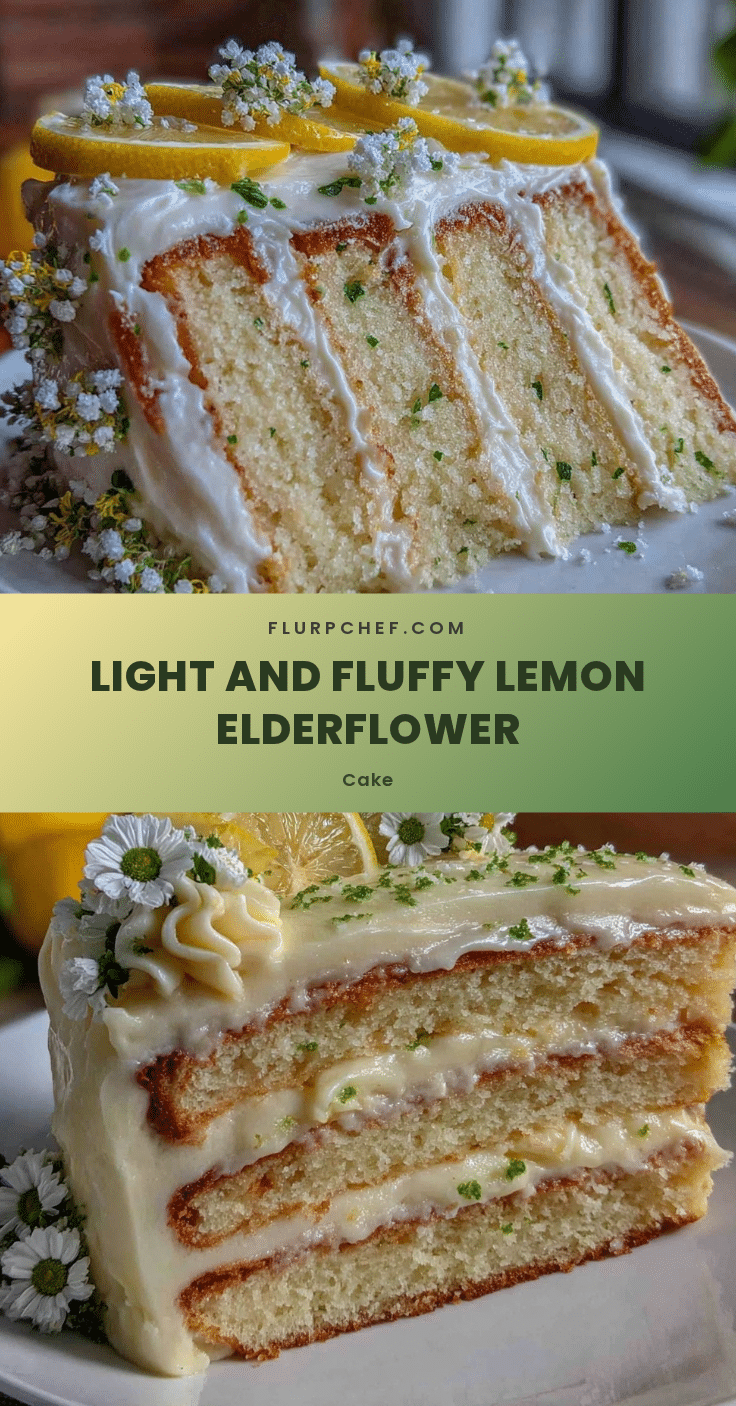
Perfect Lemon Elderflower Layer Cake with Swiss Meringue Frosting
A light and elegant layered lemon cake infused with elderflower syrup and topped with silky Swiss meringue frosting. This cake balances bright citrus and floral notes with a fluffy texture, perfect for special occasions.
- Prep Time: 30 minutes
- Cook Time: 30 minutes
- Total Time: 1 hour
- Yield: 12 servings 1x
- Category: Dessert
- Cuisine: American
Ingredients
- 2 ½ cups (310g) all-purpose flour, sifted
- 2 ½ teaspoons baking powder
- ½ teaspoon baking soda
- ½ teaspoon salt
- 1 cup (227g) unsalted butter, softened (recommend Plugrá or Kerrygold)
- 1 ¾ cups (350g) granulated sugar
- 4 large eggs, room temperature
- 1 cup (240ml) buttermilk
- Zest of 2 large lemons
- ¼ cup (60ml) fresh lemon juice
- 3 tablespoons elderflower syrup (or substitute with light honey or orange blossom water)
- For the Swiss Meringue Frosting:
- 4 large egg whites
- 1 cup (200g) granulated sugar
- Pinch of salt
- 1 cup (227g) unsalted butter, softened and cubed
- 1 teaspoon vanilla extract
- 1 tablespoon fresh lemon juice
- Optional: 1 teaspoon elderflower syrup
Instructions
- Preheat oven to 350°F (175°C). Grease and line two 8-inch round cake pans with parchment paper.
- In a medium bowl, sift together flour, baking powder, baking soda, and salt. Set aside.
- In a large bowl, beat softened butter and granulated sugar on medium speed until light and fluffy, about 4-5 minutes.
- Add eggs one at a time, beating well after each addition and scraping down the sides.
- Mix in lemon zest, lemon juice, and elderflower syrup. Batter may look slightly curdled—this is normal.
- Add dry ingredients in three parts, alternating with buttermilk, beginning and ending with dry ingredients. Mix gently until just combined; do not overmix.
- Divide batter evenly between prepared pans and smooth tops.
- Bake for 28-32 minutes or until a toothpick inserted in the center comes out clean and cakes spring back when lightly pressed. Rotate pans halfway through baking.
- Cool cakes in pans for 10 minutes, then transfer to wire racks to cool completely.
- To make Swiss meringue frosting: Combine egg whites, sugar, and salt in a heatproof bowl over simmering water. Whisk constantly until sugar dissolves and mixture reaches 160°F (71°C) or feels smooth between fingers.
- Transfer bowl to electric mixer and beat on high until stiff, glossy peaks form and bowl is cool to touch (8-10 minutes).
- With mixer on medium, add softened butter a few cubes at a time. Continue beating until smooth, even if mixture looks curdled at times.
- Add vanilla extract, lemon juice, and optional elderflower syrup; beat until fully incorporated.
- Place one cake layer on serving plate. Spread a generous layer of frosting on top. Place second layer on top and cover entire cake with remaining frosting.
- Chill cake for at least 30 minutes to set frosting before slicing and serving.
Notes
If elderflower syrup is unavailable, substitute with light honey or orange blossom water. For gluten-free, use a 1:1 gluten-free baking blend instead of all-purpose flour. When making Swiss meringue frosting, patience is key—add butter slowly and keep beating to avoid curdling. Chill frosting briefly and re-whip if it separates. Bring eggs and butter to room temperature before mixing. Avoid overmixing batter after adding dry ingredients to keep cake tender.
Nutrition
- Serving Size: 1 slice (1/12th of c
- Calories: 320
- Sugar: 30
- Fat: 18
- Protein: 3
Keywords: lemon cake, elderflower cake, Swiss meringue frosting, layered cake, spring dessert, floral cake, easy lemon cake, homemade frosting