My mother-in-law did not trust squash in a main dish. For years, she’d set a roasted chicken on the table and maybe some butternut soup on the side, but the idea of stuffing a winter squash and calling it dinner? She’d just shake her head. “That’s a side dish,” she’d say, and I’d nod because, honestly, I wasn’t sure either. I’d seen those beautiful stuffed acorn squash photos on Pinterest—the ones with the glistening wild rice and jewel-toned cranberries—and I wanted to believe. But a part of me worried it would be one of those meals that looks incredible in photos but leaves you hungry an hour later, you know?
Then last November, I got my hands on a few perfect acorn squashes from the farmers’ market. They were these deep green beauties with orange patches, and I just knew I had to try stuffing them. I roasted them until they were tender, whipped up a savory-sweet filling with nutty wild rice, tart dried cranberries, and loads of toasted pecans, and stuffed them high. The smell alone—that warm, woodsy aroma of sage and roasted squash—was enough to make a believer out of anyone.
When I brought the platter to the table, my mother-in-law eyed it suspiciously. She took one bite, then another, and finally looked up and said, “Okay, I was wrong.” That was the moment this cozy stuffed acorn squash with wild rice and cranberries became our official fall holiday main dish. It’s filling, it’s gorgeous, and it’s the kind of meal that makes you feel like you’re eating a warm hug. Trust me on this one.
Why You’ll Love This Recipe
This isn’t just another stuffed squash recipe that promises a lot and delivers a little. I’ve tested this one at least six times—tweaking the rice-to-vegetable ratio, adjusting the herbs, and even trying different roasting temperatures to get that perfect squash texture. Here’s why it works:
- Hearty Enough to Be a Main Dish : The wild rice and chickpeas add serious staying power. You won’t be reaching for a snack an hour later.
- Simple Ingredients : Everything is available at a regular grocery store. No hunting down obscure spices or specialty items.
- Perfect for Entertaining : Each squash half acts as its own little serving bowl. It looks impressive on a platter but comes together with surprisingly little fuss.
- Make-Ahead Friendly : You can prep the filling a day in advance and stuff the squash just before baking. It’s a lifesaver on busy holidays.
- Naturally Vegetarian and Gluten-Free : This dish works for almost everyone at the table without needing complicated substitutions.
What really sets this recipe apart is the balance. The squash gets caramelized and buttery, the wild rice stays chewy and nutty, the cranberries add little pops of sweetness, and the pecans bring crunch. Every bite is different, and every bite is satisfying. It’s the kind of meal that makes you close your eyes after the first forkful—and I don’t say that lightly.
What Ingredients You Will Need
This recipe uses simple, wholesome ingredients that come together to create something genuinely special. Most of these are pantry staples for me during the fall months, and I bet you already have many of them on hand.
For the Squash
- 2 medium acorn squashes (about 1.5 pounds each) — Look for squashes that feel heavy for their size and have firm, unblemished skin. I prefer the green-and-orange variety, but any acorn squash works.
- 2 tablespoons olive oil — For brushing the cut sides. It helps the squash caramelize and keeps it from drying out.
- Salt and black pepper — To season the squash before roasting.
For the Wild Rice Filling
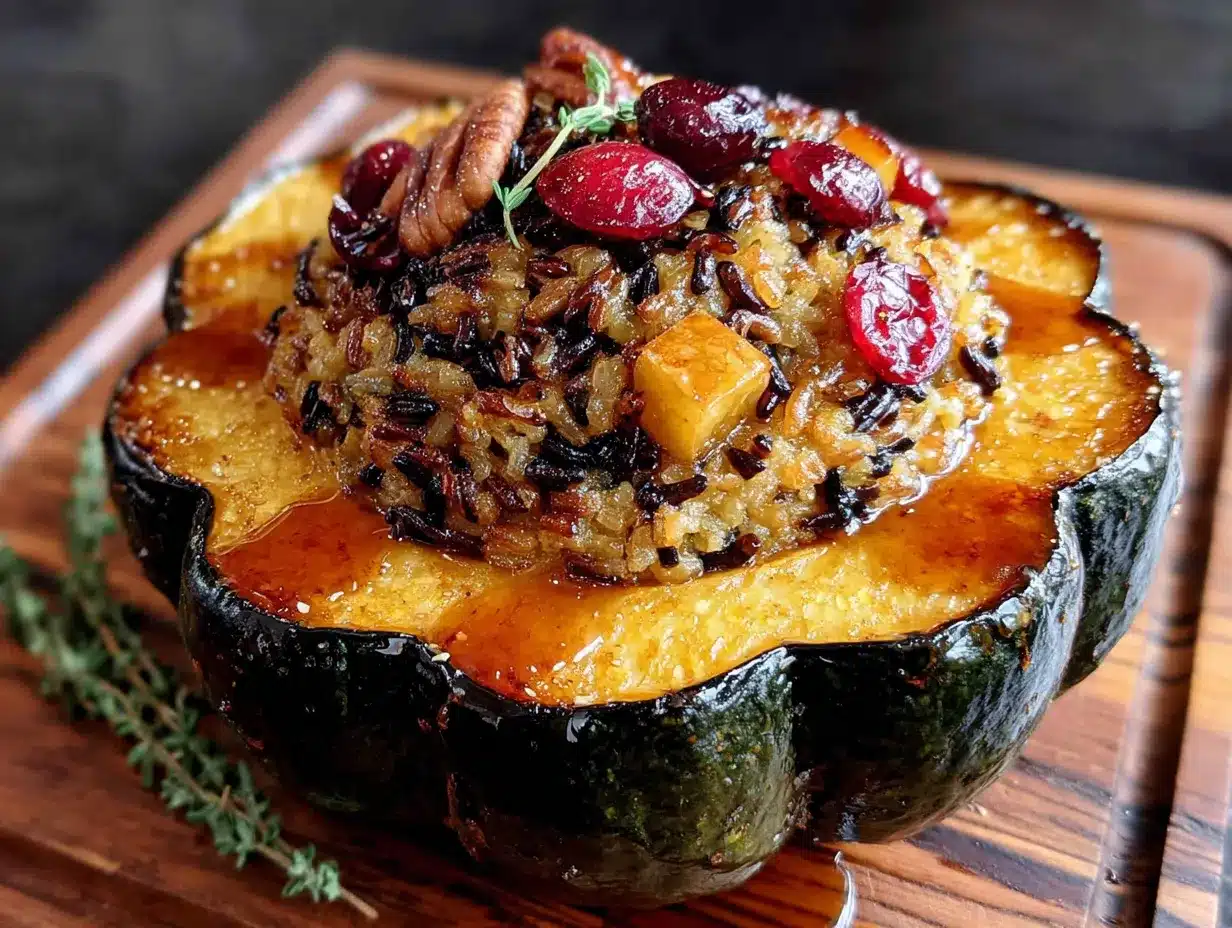
- 1 cup wild rice blend (or ¾ cup wild rice plus ¼ cup brown rice) — I use a pre-mixed wild rice blend from Lundberg Farms because it cooks evenly and has a nice texture. If using straight wild rice, it will take longer to cook.
- 2 cups vegetable broth — For cooking the rice. Using broth instead of water adds a ton of savory flavor. I like Pacific Foods or homemade.
- 1 tablespoon olive oil or butter — For sautéing the aromatics.
- 1 medium yellow onion, diced — About 1 cup. Onion gives the filling a savory backbone.
- 2 celery stalks, diced — Adds crunch and that classic stuffing flavor.
- 2 cloves garlic, minced — Because garlic makes everything better.
- 1 teaspoon dried sage — The star herb here. It’s earthy and woodsy and pairs perfectly with squash.
- ½ teaspoon dried thyme — Adds a subtle floral note.
- ½ teaspoon smoked paprika — For a hint of warmth and color.
- ½ cup dried cranberries — Use unsweetened or reduced-sugar if you prefer a less sweet filling.
- ½ cup toasted pecans, roughly chopped — Toast them in a dry skillet for 3-4 minutes until fragrant. It makes a huge difference.
- 1 can (15 ounces) chickpeas, drained and rinsed — These add protein and make the dish more filling. You can leave them out if you want a simpler filling.
- 2 tablespoons maple syrup — Just a touch to balance the savory flavors. Use pure maple syrup, not pancake syrup.
- Salt and black pepper to taste
- ¼ cup fresh parsley, chopped — For brightness at the end.
For the Optional Topping
- ¼ cup pomegranate arils — For a fresh, juicy pop of color and flavor.
- Extra toasted pecans — For garnish.
- Fresh sage leaves — For a pretty presentation.
Equipment Needed
You don’t need a professional kitchen to pull this off, but a few key tools make the process smoother. Here’s what I use:
- Large baking sheet — A rimmed half-sheet pan works best. It catches any juices that might drip from the squash.
- Parchment paper or silicone baking mat — For easy cleanup. The maple syrup in the filling can get sticky.
- Medium saucepan with lid — For cooking the wild rice. A heavy-bottomed pot prevents scorching.
- Large skillet — For sautéing the vegetables and combining the filling. I use a 12-inch cast iron skillet.
- Sharp chef’s knife — Acorn squash is tough. A sharp knife makes cutting it in half much safer and easier.
- Large spoon or cookie scoop — For scooping the filling into the squash halves.
- Cutting board — Preferably a large one that won’t slide around.
If you don’t have a silicone baking mat, parchment paper is fine. And if your knife isn’t super sharp, try microwaving the whole squash for 2 minutes to soften it slightly before cutting. It’s a trick I learned after struggling with a dull knife one year—it works!
Preparation Method
Let’s get into the actual cooking. I’ve broken this down into clear steps with time estimates and sensory cues so you know exactly what to look for.
Step 1: Preheat and Prep the Squash (10 minutes)
Preheat your oven to 400°F (200°C). Line a baking sheet with parchment paper. Carefully cut each acorn squash in half from stem to tip. Use a sharp knife and go slow—acorn squash is dense. Scoop out the seeds and stringy pulp with a spoon. A grapefruit spoon with serrated edges works great here, but a regular spoon does the job too. Brush the cut sides and cavities with olive oil, then season generously with salt and pepper. Place the squash halves cut-side down on the prepared baking sheet. Roasting them cut-side down first helps them steam and soften evenly without drying out.
Step 2: Roast the Squash (35-40 minutes)
Roast the squash for 35 to 40 minutes, until the flesh is fork-tender. You should be able to pierce the skin easily with a paring knife. The squash will look slightly collapsed and the edges will be caramelized. Set the baking sheet aside to cool slightly. Leave the oven on—you’ll need it later.
Step 3: Cook the Wild Rice (30-40 minutes)
While the squash roasts, rinse the wild rice blend under cold water in a fine-mesh strainer. In a medium saucepan, bring the vegetable broth to a boil. Add the rice, reduce the heat to low, cover, and simmer for 30 to 40 minutes, or until the rice is tender and most of the liquid is absorbed. Some grains will split open—that’s normal and desirable. Drain any excess liquid and fluff the rice with a fork. Set it aside.
Step 4: Sauté the Aromatics (8 minutes)
While the rice cooks, heat 1 tablespoon of olive oil (or butter) in a large skillet over medium heat. Add the diced onion and celery and cook for 5 to 6 minutes, stirring occasionally, until softened and translucent. Add the minced garlic, dried sage, dried thyme, and smoked paprika. Cook for another minute until fragrant. Your kitchen should smell like a cozy autumn day at this point.
Step 5: Build the Filling (5 minutes)
Reduce the heat to low. Add the cooked wild rice, dried cranberries, toasted pecans, chickpeas, and maple syrup to the skillet. Stir everything together until well combined. Season with salt and black pepper to taste. Fold in the fresh parsley. The filling should be slightly sweet, savory, and packed with texture. If it seems dry, add a splash of vegetable broth or water. If it seems too wet, cook it for another minute or two uncovered.
Step 6: Stuff the Squash (10 minutes)
Flip the roasted squash halves cut-side up on the baking sheet. Divide the filling evenly among the four halves, mounding it up slightly in the center. Don’t be shy—pack it in there. A little overflow onto the baking sheet is fine; it gets crispy and delicious.
Step 7: Final Bake (15-20 minutes)
Return the stuffed squash to the oven and bake for 15 to 20 minutes, until the filling is heated through and the tops are slightly golden. If you want extra browning, switch the oven to broil for the last 2 minutes. Watch it closely so the pecans don’t burn.
Step 8: Garnish and Serve (5 minutes)
Remove from the oven and let the squash rest for 5 minutes. Top with pomegranate arils, extra toasted pecans, and fresh sage leaves if desired. Serve warm.
Cooking Tips & Techniques
I’ve made this recipe enough times to know where things can go wrong. Here are the pitfalls I’ve stumbled into—and how to avoid them.
Don’t undercook the squash. The first time I made this, I pulled the squash out after 25 minutes because it looked done. It wasn’t. The flesh was still firm and not nearly sweet enough. Acorn squash needs a full 35-40 minutes to become truly tender and develop that buttery texture. When in doubt, pierce the thickest part with a fork—it should slide in with zero resistance.
Toast your pecans. I know it’s an extra step, but raw pecans in the filling taste flat. Toasting them in a dry skillet over medium heat for 3-4 minutes brings out their natural oils and makes them nutty and crunchy. You can do this while the onion is cooking to save time.
Season the squash itself. Don’t just season the filling—season the squash. A good pinch of salt and pepper on the cut sides before roasting makes a huge difference. The squash needs its own flavor identity, even after it’s stuffed.
Mind the moisture. If your filling seems dry after mixing, add a splash of broth. If it seems wet, cook it uncovered for a minute or two. The goal is a filling that holds together when spooned but isn’t soggy. Nobody wants a watery stuffed squash.
Multitask like a pro. Get the squash in the oven first, then start the rice. While the rice simmers, prep the vegetables. By the time the squash is done, you’ll have everything ready to assemble. It’s a smooth workflow once you get the hang of it.
Variations & Adaptations
One of the best things about this recipe is how flexible it is. Here are a few ways I’ve adapted it depending on the season or who’s coming to dinner.
Vegan Version
This recipe is already vegan as written, but if you want to add a bit more richness, stir in 2 tablespoons of nutritional yeast along with the herbs. It adds a cheesy, savory depth without any dairy.
Add Sausage for Meat Lovers
Cook ½ pound of sweet or spicy Italian sausage (casings removed) in the skillet before adding the onion and celery. Drain off excess fat, then proceed with the recipe. The sausage adds a hearty, savory punch that pairs beautifully with the sweet squash and cranberries.
Swap the Grains
If you don’t have wild rice, use farro, quinoa, or even cooked brown rice. Each grain changes the texture slightly—quinoa is lighter, farro is chewier—but they all work. Just adjust the cooking time and liquid accordingly.
Make It Spicy
Add ½ teaspoon of red pepper flakes or a diced jalapeño along with the garlic. The heat cuts through the sweetness of the squash and cranberries and adds a nice kick.
Seasonal Swaps
In the fall, I use dried cranberries and pecans. In the winter, I swap in dried cherries and walnuts. In the spring, I’ve used dried apricots and pistachios. The formula stays the same—dried fruit + nut + herb—and it always works.
If you’re looking for another cozy fall dish to serve alongside this, you might enjoy these cozy pumpkin cream cheese swirl muffins for dessert. And if you’re planning a full holiday menu, these overnight pumpkin cinnamon rolls make a fantastic breakfast the next morning.
Serving & Storage Suggestions
Serving Temperature: Serve the stuffed squash warm, not piping hot. Letting it rest for 5 minutes after baking allows the flavors to meld and makes the squash easier to handle. The filling should be warm throughout but not steaming.
Presentation: Place each squash half on a plate with the filling mounded high. Sprinkle pomegranate arils and extra pecans over the top for a pop of color and texture. A few fresh sage leaves add a beautiful finishing touch. This dish looks stunning on a serving platter for a dinner party.
What to Serve With It: A simple green salad with a tangy vinaigrette balances the richness of the squash. Roasted Brussels sprouts or steamed green beans also work well. For drinks, a dry apple cider or a light Pinot Noir complements the flavors beautifully. And if you’re hosting a game day gathering, these football charcuterie board ideas make a great appetizer.
Storage: Store leftovers in an airtight container in the refrigerator for up to 4 days. The squash will soften further, but the flavors actually deepen overnight. To reheat, place the stuffed squash in a 350°F oven for 10-15 minutes, or microwave individual portions for 2-3 minutes. The microwave is faster, but the oven keeps the texture better.
Freezing: You can freeze the assembled but unbaked stuffed squash. Wrap each half tightly in plastic wrap, then in foil, and freeze for up to 3 months. To bake from frozen, add 20-25 minutes to the final bake time. Alternatively, freeze the filling separately and stuff fresh squash halves when you’re ready.
Flavor Development: This is one of those dishes that tastes even better the next day. The squash absorbs the flavors of the filling, and the cranberries soften and release their sweetness. I often make the filling a day ahead just for this reason.
Nutritional Information & Benefits
This recipe is as nourishing as it is delicious. Here’s the approximate nutritional breakdown per serving (one stuffed squash half):
| Nutrient | Amount |
|---|---|
| Calories | 420 |
| Total Fat | 14g |
| Saturated Fat | 2g |
| Carbohydrates | 68g |
| Fiber | 12g |
| Sugar | 18g |
| Protein | 12g |
| Sodium | 480mg |
Acorn squash is rich in vitamin A, vitamin C, and potassium. Wild rice is a whole grain packed with fiber, B vitamins, and magnesium. Chickpeas add plant-based protein and fiber, while pecans contribute healthy fats and antioxidants. The dried cranberries provide a dose of vitamin C and natural sweetness without refined sugar (if you use unsweetened ones).
This meal is naturally gluten-free, dairy-free, and vegan. It’s also relatively low in saturated fat and high in fiber, making it a heart-healthy choice for fall dinners. The only potential allergen is tree nuts (pecans), which you can easily omit or substitute with sunflower seeds.
Conclusion
This cozy stuffed acorn squash with wild rice and cranberries has become my go-to for fall gatherings, Thanksgiving alternatives, and those quiet evenings when I want something that feels special without spending hours in the kitchen. It’s proof that a plant-based main dish can be hearty, satisfying, and absolutely beautiful on the plate.
I love how customizable this recipe is—you can make it your own with different grains, add-ins, or spice levels. That’s the beauty of a good stuffing recipe. It’s forgiving, it’s flexible, and it always delivers.
If you make this recipe, I’d love to hear about it. Leave a comment below and let me know what variations you tried, or tag me in your photos on social media. Did you add sausage? Swap in quinoa? Forget the cranberries and use raisins instead? Tell me all about it. Your adaptations might just inspire someone else’s dinner tonight.
Here’s to cozy nights, good food, and the joy of a meal that feels like a warm hug. Happy cooking!
Frequently Asked Questions
Can I use butternut squash instead of acorn squash?
Absolutely. Butternut squash works well, though it will take slightly longer to roast because it’s denser. Cut it in half lengthwise, scoop out the seeds, and proceed with the recipe. The presentation will be different, but the flavor is just as good.
Do I have to use wild rice, or can I use something else?
You can use any grain you like. Farro, quinoa, brown rice, or even cooked lentils all work beautifully. Just adjust the cooking time and liquid ratio according to the grain you choose. I’ve made this with farro before and it was fantastic.
Can I make this ahead of time for a party?
Yes! You can prepare the filling up to 2 days in advance and store it in the refrigerator. Roast the squash, stuff it, and keep it covered in the fridge for up to 24 hours before baking. Add 10 minutes to the final bake time if starting from cold.
How do I prevent the squash from being watery?
Make sure you roast the squash cut-side down first. This allows steam to escape and prevents the flesh from becoming soggy. Also, don’t overfill the squash with wet filling—if your filling seems too moist, cook it uncovered for a minute or two before stuffing.
Can I freeze the stuffed squash?
Yes. Assemble the stuffed squash but don’t bake it. Wrap each half tightly in plastic wrap and then foil, and freeze for up to 3 months. To bake, remove the wrapping and bake from frozen at 375°F for 45-50 minutes, or until heated through.
Pin This Recipe!
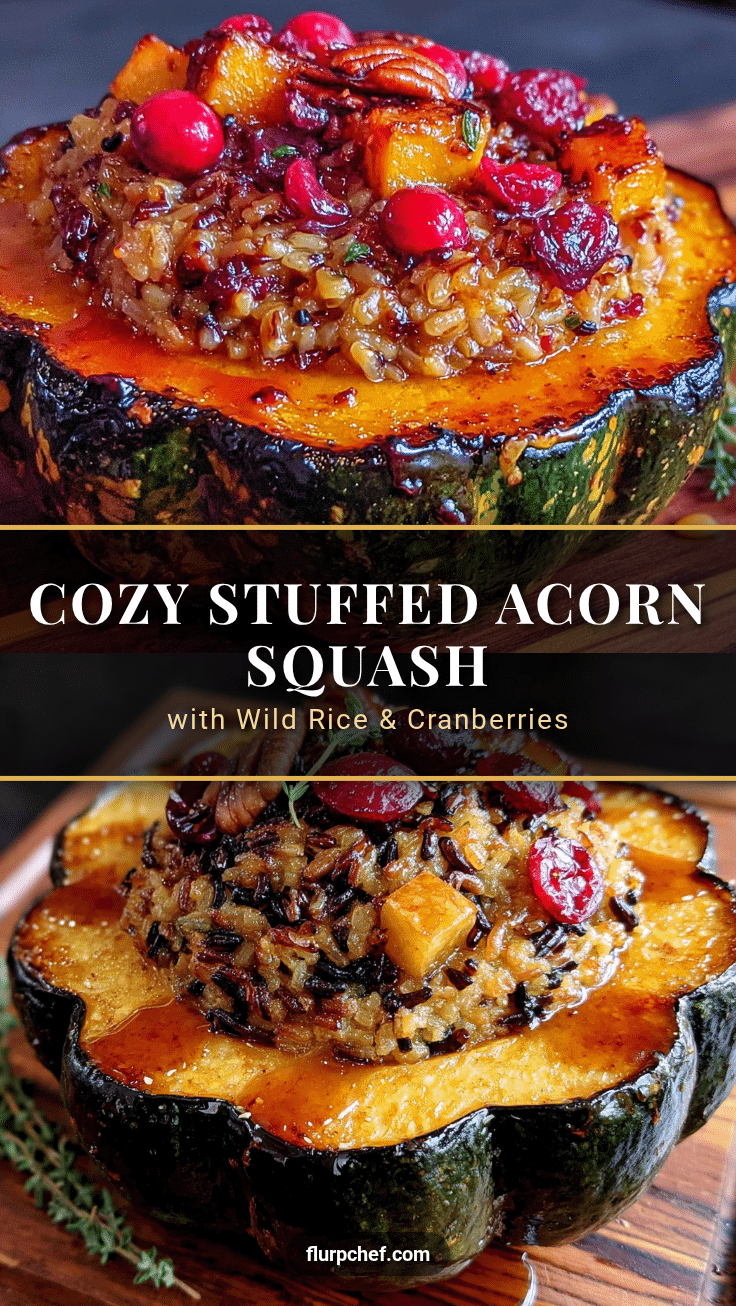
Cozy Stuffed Acorn Squash with Wild Rice and Cranberries
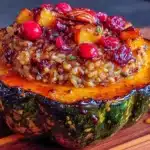
A hearty, plant-based main dish featuring roasted acorn squash filled with a savory-sweet wild rice, cranberry, and pecan stuffing. Perfect for fall gatherings and holiday meals, this recipe is naturally vegetarian, gluten-free, and make-ahead friendly.
- Prep Time: 15 minutes
- Cook Time: 1 hour 10 minutes
- Total Time: 1 hour 25 minutes
- Yield: 4 servings 1x
- Category: Main Course
- Cuisine: American
Ingredients
- 2 medium acorn squashes (about 1.5 pounds each)
- 2 tablespoons olive oil
- Salt and black pepper to taste
- 1 cup wild rice blend (or ¾ cup wild rice plus ¼ cup brown rice)
- 2 cups vegetable broth
- 1 tablespoon olive oil or butter
- 1 medium yellow onion, diced (about 1 cup)
- 2 celery stalks, diced
- 2 cloves garlic, minced
- 1 teaspoon dried sage
- ½ teaspoon dried thyme
- ½ teaspoon smoked paprika
- ½ cup dried cranberries
- ½ cup toasted pecans, roughly chopped
- 1 can (15 ounces) chickpeas, drained and rinsed
- 2 tablespoons maple syrup
- Salt and black pepper to taste
- ¼ cup fresh parsley, chopped
- ¼ cup pomegranate arils (optional, for topping)
- Extra toasted pecans (optional, for garnish)
- Fresh sage leaves (optional, for garnish)
Instructions
- Preheat oven to 400°F (200°C). Line a baking sheet with parchment paper.
- Cut each acorn squash in half from stem to tip. Scoop out seeds and stringy pulp. Brush cut sides and cavities with olive oil; season with salt and pepper. Place cut-side down on prepared baking sheet.
- Roast squash for 35-40 minutes until fork-tender. Set aside to cool slightly; keep oven on.
- Rinse wild rice blend under cold water. In a medium saucepan, bring vegetable broth to a boil. Add rice, reduce heat to low, cover, and simmer for 30-40 minutes until tender and liquid is absorbed. Drain excess liquid and fluff with fork.
- While rice cooks, heat 1 tablespoon olive oil or butter in a large skillet over medium heat. Add onion and celery; cook 5-6 minutes until softened. Add garlic, sage, thyme, and smoked paprika; cook 1 minute until fragrant.
- Reduce heat to low. Add cooked wild rice, dried cranberries, toasted pecans, chickpeas, and maple syrup to the skillet. Stir to combine. Season with salt and pepper. Fold in fresh parsley.
- Flip roasted squash halves cut-side up on the baking sheet. Divide filling evenly among the four halves, mounding slightly.
- Return stuffed squash to oven and bake 15-20 minutes until filling is heated through and tops are golden. For extra browning, broil for the last 2 minutes.
- Remove from oven and let rest 5 minutes. Garnish with pomegranate arils, extra pecans, and fresh sage leaves if desired. Serve warm.
Notes
Toast pecans in a dry skillet for 3-4 minutes until fragrant. Season the squash itself with salt and pepper before roasting. If filling seems dry, add a splash of broth; if too wet, cook uncovered for a minute. For make-ahead, prepare filling up to 2 days in advance and stuff squash just before baking. To freeze, assemble unbaked stuffed squash, wrap tightly, and freeze up to 3 months; bake from frozen at 375°F for 45-50 minutes.
Nutrition
- Serving Size: 1 stuffed squash hal
- Calories: 420
- Sugar: 18
- Sodium: 480
- Fat: 14
- Saturated Fat: 2
- Carbohydrates: 68
- Fiber: 12
- Protein: 12
Keywords: stuffed acorn squash, wild rice, cranberries, vegetarian, gluten-free, fall recipe, holiday main dish