That sharp, clean scent of lemon zest and fresh dill—the kind that cuts through the quiet of a Tuesday evening—still takes me straight back to my tiny first apartment. I had just moved out on my own, and my kitchen was basically a collection of mismatched pans and a lot of good intentions. I wanted to cook something that felt impressive, something that didn’t taste like sad, solo-dinner despair, but I also didn’t want to spend an hour scrubbing dishes afterward. That night, I grabbed a salmon fillet from the discount bin, a bunch of asparagus that was slightly past its prime, and a lemon I’d been using to flavor my water. I didn’t have a recipe. I just sort of… winged it.
I laid everything out on a sheet pan—because I only had one—drizzled it with olive oil, squeezed the lemon haphazardly, and sprinkled on some dried herbs I couldn’t even identify anymore. Twenty-five minutes later, I pulled out a dinner that smelled like a restaurant kitchen. The salmon was flaky, the asparagus was perfectly tender-crisp, and the whole thing came together on one pan. No separate pots. No complicated steps. Just good food that made me feel like I actually knew what I was doing. It was a total accident, honestly, but it became my go-to. It still is.
That’s the thing about this Easy Lemon Herb Salmon and Asparagus Sheet Pan Dinner. It’s not fussy or demanding. It’s the kind of meal that meets you where you are—whether you’re a seasoned cook or someone who just wants dinner on the table without a meltdown. The flavors are bright and simple, the cleanup is almost nonexistent, and it’s ready in about 30 minutes. I’ve made it for myself on quiet weeknights and for friends who thought I’d spent way more effort than I actually did. It’s become my little secret weapon, and now it can be yours, too.
Why You’ll Love This Recipe
Let’s be real for a second. We all want dinners that taste like we tried hard without actually trying hard. This sheet pan dinner delivers that in spades. Here’s why it’s earned a permanent spot in my weekly rotation:
- Quick & Easy: From prep to plate in about 30 minutes. No marinating, no babysitting, no stress. It’s perfect for those nights when you’re starving and the thought of a complicated recipe makes you want to order pizza.
- Simple Ingredients: You probably have most of these in your kitchen right now. Lemon, garlic, olive oil, salt, pepper, and your choice of fresh or dried herbs. The fish and asparagus are the only real grocery list items.
- Perfect for Busy Weeknights: This is the definition of a weeknight hero. It’s elegant enough for a casual dinner party but fast enough for a Tuesday when you’ve got nothing left in the tank.
- Crowd-Pleaser: I’ve served this to picky eaters, seafood skeptics, and veggie-avoiders. The lemon herb flavor is so bright and approachable that everyone digs in. The salmon stays moist, and the asparagus gets just the right amount of caramelization.
- Unbelievably Delicious: The combination of flaky, buttery salmon with the slight char on the asparagus and that punchy lemon-herb finish? It’s simple, but it’s next-level comfort food. You’ll close your eyes after the first bite. I still do.
What makes this recipe different from the dozens of other sheet pan salmon recipes out there? It’s the balance. I’ve tested this dozens of times to get the timing just right so the salmon is perfectly cooked and the asparagus isn’t mushy. The trick is in the prep—cutting the asparagus slightly thicker and arranging everything for even roasting. Plus, the herb combination is flexible but foolproof. It’s not just another version of salmon and veggies. It’s the best version.
What Ingredients You Will Need
This recipe uses simple, wholesome ingredients to deliver bold flavor and satisfying texture without the fuss. Most of these are pantry staples, which makes this meal a lifesaver on busy nights.
- Salmon Fillets (4 fillets, about 6 oz / 170g each): Look for fillets that are similar in thickness so they cook evenly. I prefer wild-caught salmon when I can find it, but farm-raised works beautifully too. If using frozen, thaw completely and pat very dry with paper towels to avoid steaming instead of roasting.
- Fresh Asparagus (1 lb / 450g, woody ends trimmed): Thicker spears hold up better to high-heat roasting. Thin asparagus can get too soft. I recommend snapping off the woody ends naturally—they’ll break right where they need to.
- Lemons (2 large): One for zesting and juicing, one for slicing and roasting. Fresh lemon is non-negotiable here. Bottled juice just won’t give you that bright, clean flavor.
- Garlic (4 cloves, minced): Fresh garlic is key. Pre-minced jarred garlic can taste bitter when roasted at high heat. I love using a microplane for a paste-like consistency that coats everything evenly.
- Olive Oil (3 tablespoons / 45 ml): A good quality extra virgin olive oil adds richness and helps everything caramelize. You can also use avocado oil for a higher smoke point.
- Fresh Dill (2 tablespoons, chopped): Dill and salmon are a classic pairing. If you don’t have fresh, use 1 teaspoon dried dill.
- Fresh Parsley (2 tablespoons, chopped): Adds a fresh, slightly peppery note. Flat-leaf Italian parsley is my preference.
- Dried Oregano (1 teaspoon): Brings an earthy, slightly floral depth. You could substitute with dried thyme or marjoram.
- Salt and Black Pepper (to taste): I use kosher salt for its clean flavor and flaky texture. Freshly ground black pepper makes a difference here.
- Optional: Red Pepper Flakes (¼ teaspoon): For a subtle kick of heat. Totally optional, but I love the little warmth it adds.
Equipment Needed
One of the best things about this recipe is that it doesn’t require a ton of fancy equipment. Here’s what you’ll need:
- Sheet Pan (18×13 inch / half-sheet pan): This is the star of the show. A rimmed baking sheet is essential to catch any juices. I recommend a heavy-duty aluminum or stainless steel pan for even heat distribution. Darker pans can cause the bottom to brown too quickly.
- Parchment Paper or Aluminum Foil: Lining the pan makes cleanup even easier. Parchment is my go-to because nothing sticks, but foil works in a pinch. Just spray it lightly with cooking spray.
- Chef’s Knife: For trimming the asparagus and mincing garlic. A sharp knife makes prep faster and safer.
- Cutting Board: Any sturdy board will do. I prefer wood because it’s gentle on knife blades.
- Microplane or Zester: For getting that fine lemon zest without the bitter white pith. If you don’t have one, a vegetable peeler can work, just mince the zest finely afterward.
- Small Bowl: For mixing the herb and oil mixture.
- Measuring Spoons: For accuracy, though I often eyeball it now.
- Tongs: For flipping the asparagus halfway through, if you want to be extra careful.
A quick tip: if you don’t have a sheet pan, a large rimmed baking dish or even a cast iron skillet can work. Just adjust the cooking time slightly, as the heat distribution may vary.
Preparation Method
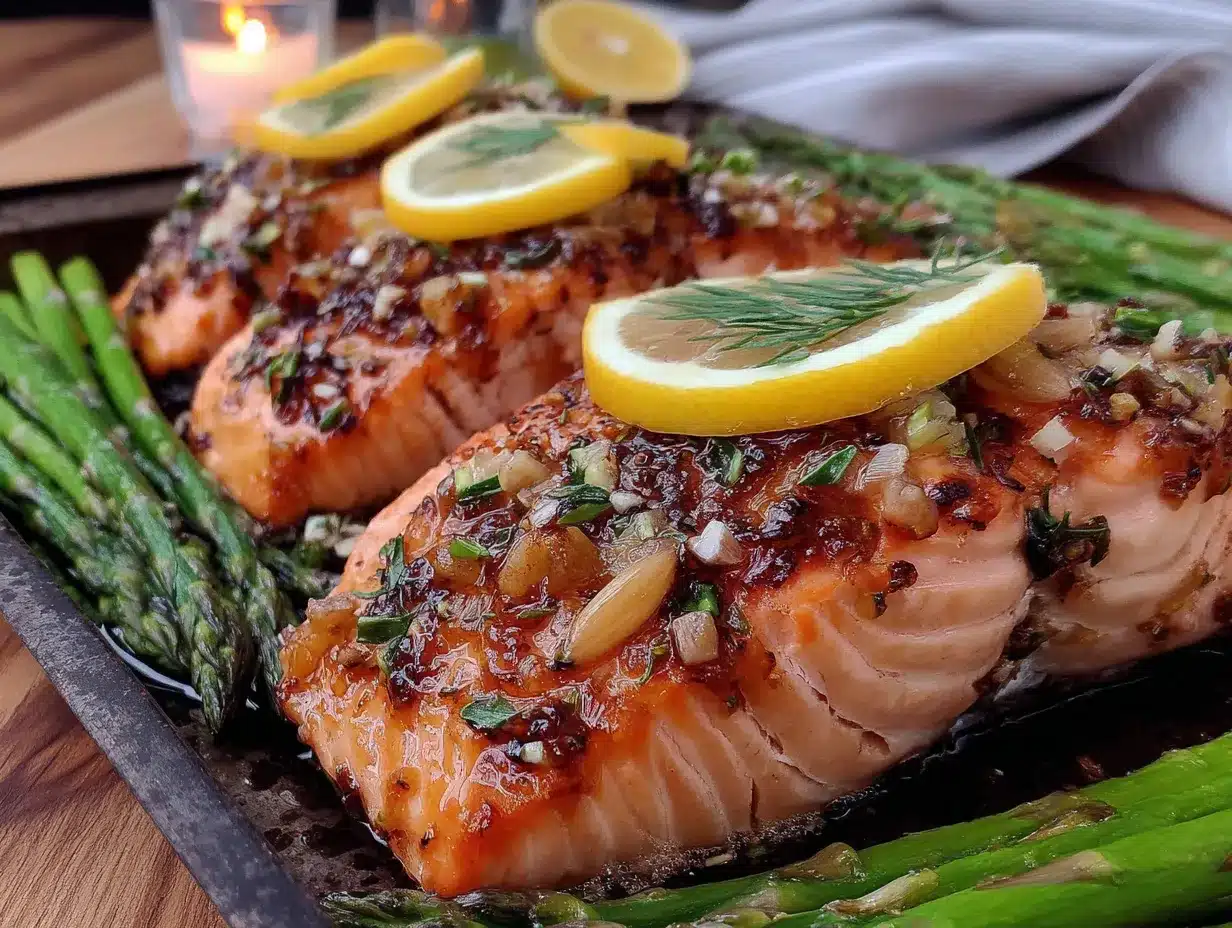
Alright, let’s get cooking. This is straightforward, but I’ll walk you through every step so you get perfect results every time.
- Preheat and Prep the Pan: Preheat your oven to 400°F (200°C). While it’s heating, line your sheet pan with parchment paper or foil. This isn’t just for easy cleanup—it also prevents the fish from sticking and helps the asparagus caramelize without burning.
- Make the Lemon Herb Mixture: In a small bowl, combine 3 tablespoons olive oil, the zest of 1 lemon, the juice of 1 lemon, 4 minced garlic cloves, 2 tablespoons fresh dill, 2 tablespoons fresh parsley, and 1 teaspoon dried oregano. Add ½ teaspoon salt and ¼ teaspoon black pepper. Whisk it all together. Taste it. It should be bright, herby, and slightly sharp from the lemon. If it tastes flat, add another pinch of salt.
- Prep the Asparagus: Rinse the asparagus and snap off the woody ends. I do this by holding each spear near the bottom and bending—it will naturally break where the tough part ends. Pat them dry with a clean towel. Place the asparagus on one half of the sheet pan. Drizzle with about 1 tablespoon of the lemon herb mixture and toss gently to coat. Spread them in a single layer. Don’t overcrowd them, or they’ll steam instead of roast.
- Prep the Salmon: Pat the salmon fillets dry with paper towels. This is crucial for getting a nice sear and preventing the fish from becoming watery. Place the fillets skin-side down (if they have skin) on the other half of the sheet pan. If your fillets are skinless, just place them directly on the pan. Drizzle the remaining lemon herb mixture over the fillets, using a spoon or brush to coat the tops evenly. Reserve a little bit for drizzling after cooking if you want extra flavor.
- Add Lemon Slices: Slice the second lemon into thin rounds. Place 2-3 slices on top of each salmon fillet. This isn’t just for looks—the lemon slices infuse the fish with moisture and flavor as they roast. Plus, they caramelize slightly and become almost candy-like.
- Season Everything: Sprinkle a little extra salt and pepper over the asparagus and salmon. If you’re using red pepper flakes, sprinkle them over the salmon now. Don’t go overboard—you can always add more heat later.
- Roast: Place the sheet pan in the preheated oven on the middle rack. Roast for 12-15 minutes, depending on the thickness of your salmon. For fillets that are about 1 inch thick, 13 minutes is usually perfect. The salmon should be opaque and flake easily with a fork. The asparagus should be tender-crisp and slightly browned at the tips. If you prefer your asparagus softer, leave it in for an extra 2 minutes.
- Check for Doneness: The USDA recommends an internal temperature of 145°F (63°C) for salmon. If you have an instant-read thermometer, insert it into the thickest part of the fillet. I personally prefer my salmon a little less done—around 130-135°F (54-57°C)—for a more tender, buttery texture. It will continue to cook slightly after you pull it out of the oven.
- Rest and Serve: Remove the pan from the oven and let it rest for 2-3 minutes. This allows the juices to redistribute. Discard the roasted lemon slices if you want (some people love eating them, but they can be bitter). Drizzle any reserved lemon herb mixture over the top. Serve immediately.
A personal tip: I like to sprinkle a little flaky sea salt and a squeeze of fresh lemon juice right before serving. It brightens everything up and adds a lovely crunch.
Cooking Tips & Techniques
I’ve made this recipe more times than I can count, and I’ve definitely had my share of missteps. Here are the lessons I learned the hard way so you don’t have to.
- Don’t Skip Drying the Salmon: This is the number one mistake I see. Wet salmon releases steam, which prevents that nice caramelization. Pat those fillets dry like your dinner depends on it. It does.
- Cut Asparagus Evenly: If your spears are wildly different thicknesses, they won’t cook at the same rate. Thicker spears might still be crunchy while thin ones turn to mush. Try to pick a bunch with similar thickness, or cut thicker spears in half lengthwise.
- Watch the Oven, Not the Clock: Every oven runs a little differently. My old apartment oven ran 25°F hot, which meant my salmon was overcooked more than once. Start checking at the 10-minute mark, especially if your fillets are on the thinner side. The salmon should feel firm but still have a little give when pressed gently.
- Don’t Overcrowd the Pan: If you’re doubling the recipe, use two sheet pans or cook in batches. When the pan is too crowded, everything steams instead of roasting. You want that beautiful golden-brown color, not pale, soggy food.
- Use Room Temperature Ingredients: If you have time, let the salmon sit at room temperature for 10-15 minutes before cooking. This helps it cook more evenly. Cold salmon straight from the fridge can end up overcooked on the outside and raw in the middle.
- Multitask Like a Pro: While the oven preheats, prep the asparagus and make the herb mixture. While the salmon roasts, set the table or make a quick side salad. This meal comes together so fast that timing is everything.
Variations & Adaptations
This recipe is a fantastic base for customization. Here are some of my favorite ways to switch it up.
- Change the Vegetables: Not an asparagus fan? Swap it out. Broccoli florets, zucchini slices, bell pepper strips, or green beans all work beautifully. Just adjust the roasting time—denser veggies like broccoli might need an extra 5 minutes, while zucchini cooks faster. I’ve also made this with cherry tomatoes, which burst and create a lovely sauce.
- Try Different Herbs: The lemon herb combination is classic, but you can play with it. Use basil and oregano for an Italian twist, cilantro and lime for a Mexican-inspired version, or tarragon and chives for a French flair. Dried herbs work in a pinch but use about half the amount since they’re more concentrated.
- Make it Spicy: Add ½ teaspoon of smoked paprika or cayenne pepper to the herb mixture. Or, drizzle the finished dish with sriracha or chili oil. My personal favorite is a sprinkle of Aleppo pepper flakes—they add warmth without too much heat.
- Go Dairy-Free or Paleo: This recipe is naturally dairy-free and paleo-friendly. Just make sure your Dijon mustard (if you add it) doesn’t have any added sugars. It’s also gluten-free as written.
- Add a Crunchy Topping: For extra texture, sprinkle the salmon with toasted almonds, panko breadcrumbs (use gluten-free if needed), or crushed pistachios during the last 5 minutes of cooking. It adds a lovely crunch that contrasts with the tender fish.
- Use a Different Protein: This method works beautifully with other fish. Try it with trout, cod, or even halibut. Adjust cooking times based on thickness. Chicken breasts or thighs work too—just increase the cooking time to about 20-25 minutes, depending on size.
I once made this with leftover roasted vegetables from a sheet pan teriyaki chicken bento box recipe I had prepped earlier in the week. I just swapped the teriyaki glaze for the lemon herb mixture and added the salmon. It was a total improvisation, but honestly, it was one of the best versions I’ve ever made. Don’t be afraid to experiment with what you have on hand.
Serving & Storage Suggestions
This dish is incredibly versatile when it comes to serving. Here’s how I like to enjoy it.
- Serving Temperature: Serve the salmon and asparagus warm, straight from the oven. The flavors are at their peak when fresh. If you’re serving it to guests, transfer everything to a platter for a more elegant presentation. I like to garnish with extra fresh dill and a few lemon wedges.
- What to Serve With It: This meal is pretty complete on its own, but it pairs beautifully with a light side dish. I love serving it with fluffy rice, quinoa, or a simple green salad with a lemon vinaigrette. For a low-carb option, try cauliflower rice or roasted zucchini noodles. A side of crusty bread is also perfect for soaking up any leftover juices on the pan.
- Storage: Store leftovers in an airtight container in the refrigerator for up to 3 days. The asparagus will soften over time, but the salmon stays moist. I don’t recommend freezing this dish, as the texture of both the fish and the vegetables can become watery when thawed.
- Reheating: The best way to reheat is in the oven at 300°F (150°C) for about 5-8 minutes, or until warmed through. This helps maintain the texture of the salmon and keeps the asparagus from turning to mush. You can also reheat in a skillet over medium heat with a splash of water or lemon juice. Avoid the microwave if you can—it tends to dry out the fish and make the asparagus limp.
- How Flavors Develop: Interestingly, the flavors meld together even more after a day in the fridge. The lemon and herbs infuse the salmon and asparagus, creating a deeper, more unified taste. It’s almost like a quick marinade effect. I’ve been known to make this specifically for next-day lunch leftovers.
Nutritional Information & Benefits
This dish is not just delicious—it’s packed with nutrients that make you feel good about eating it.
- Estimated Nutritional Values (per serving, based on 4 servings): Approximately 350-400 calories, 25g fat (mostly healthy unsaturated fats), 35g protein, 8g carbohydrates, 3g fiber, and 4g sugar. These values will vary based on the exact size of your salmon fillets and the amount of oil used.
- High in Omega-3 Fatty Acids: Salmon is one of the best sources of omega-3s, which are essential for heart health, brain function, and reducing inflammation. A single serving provides more than the recommended daily intake.
- Rich in Vitamins and Minerals: Asparagus is loaded with vitamin K, folate, and vitamin A. Salmon provides B vitamins, selenium, and potassium. Together, they’re a powerhouse of nutrition.
- Low in Carbohydrates: This meal is naturally low-carb and keto-friendly, making it a great option for those watching their carb intake. It’s also gluten-free and dairy-free.
- High in Protein: With about 35g of protein per serving, this dish is incredibly satiating. It’s perfect for post-workout recovery or keeping you full through the evening.
- Potential Allergens: This recipe contains fish (salmon). It does not contain dairy, gluten, nuts, or eggs, but always check your specific ingredients for cross-contamination if you have severe allergies.
I personally love that this meal feels indulgent but is actually incredibly healthy. It’s the kind of dinner that leaves you feeling satisfied and energized, not weighed down. If you’re looking for more high-protein, nutrient-dense meals, you might also enjoy this quick high-protein cottage cheese snack bowl for another easy option.
Conclusion
This Easy Lemon Herb Salmon and Asparagus Sheet Pan Dinner is more than just a recipe—it’s a solution. It’s for those nights when you want something that feels special but doesn’t demand hours of your time or a sink full of dishes. It’s proof that simple ingredients, treated with a little care, can create something truly memorable.
I love that this recipe has become a cornerstone of my weeknight cooking. It’s reliable, forgiving, and always delivers. Whether you’re cooking for one or feeding a family, it adapts to your needs. And the best part? You can tweak it endlessly to suit your taste. Add more garlic. Swap the herbs. Throw in some cherry tomatoes. Make it your own.
I’d love to hear how it turns out for you. Did you try a variation? Did you discover a new favorite herb combination? Drop a comment below and let me know. And if you loved it, share it with a friend who needs a quick, delicious dinner in their life. Happy cooking, friend. You’ve got this.
Frequently Asked Questions
Can I use frozen salmon for this recipe?
Yes, you can use frozen salmon. Just make sure to thaw it completely in the refrigerator overnight or under cold running water. Pat it very dry with paper towels before cooking to remove excess moisture. Frozen salmon can sometimes release more water, so you might need to increase the roasting time by 2-3 minutes.
How do I know when the salmon is fully cooked?
The easiest way is to use an instant-read thermometer. The USDA recommends 145°F (63°C) for salmon. If you don’t have a thermometer, look for the fish to be opaque and flake easily with a fork. The flesh should separate into clean, moist flakes. If it still looks translucent or resists flaking, give it another minute or two.
Can I make this recipe with other vegetables?
Absolutely. Broccoli, zucchini, bell peppers, green beans, and cherry tomatoes all work great. Just keep in mind that different vegetables have different cooking times. Denser vegetables like broccoli may need a few extra minutes, while softer ones like zucchini cook faster. You can also add the vegetables to the pan at different times if needed.
How do I prevent the asparagus from getting soggy?
The key is to not overcrowd the pan and to make sure the asparagus is dry before adding the oil. Spread the spears in a single layer with a little space between them. Roasting at a high temperature (400°F/200°C) also helps them caramelize instead of steam. If your asparagus is very thin, reduce the cooking time by a few minutes.
Can I prepare this meal ahead of time?
You can prep the ingredients ahead, but I recommend cooking it fresh for the best texture. You can trim the asparagus, mince the garlic, and mix the lemon herb mixture up to a day in advance. Store everything separately in the refrigerator. When you’re ready to cook, just assemble and roast. Leftovers are great for lunch the next day.
If you’re looking for another one-pan wonder, try this easy honey garlic baked salmon with roasted asparagus for a slightly sweeter twist. Or, for a completely different flavor profile, check out this quick lemon herb pan-seared chicken breast that uses a similar flavor profile but with chicken.
Pin This Recipe!
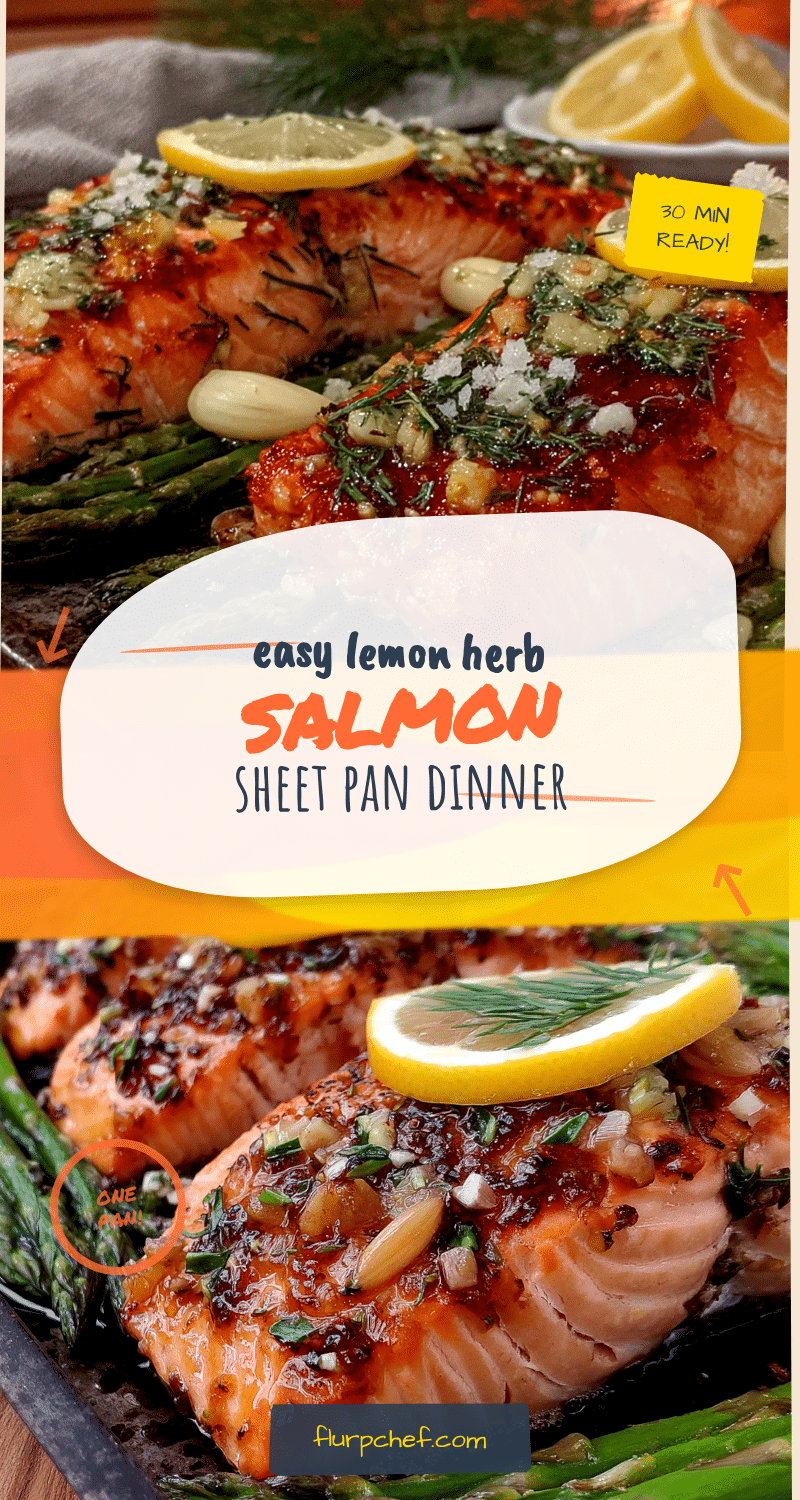
Easy Lemon Herb Salmon and Asparagus Sheet Pan Dinner (30 Minutes!)

A quick and easy sheet pan dinner featuring flaky lemon herb salmon and tender-crisp asparagus, all cooked on one pan in about 30 minutes. Perfect for busy weeknights with minimal cleanup.
- Prep Time: 10 minutes
- Cook Time: 15 minutes
- Total Time: 25 minutes
- Yield: 4 servings 1x
- Category: Main Course
- Cuisine: American
Ingredients
- 4 salmon fillets (about 6 oz / 170g each)
- 1 lb (450g) fresh asparagus, woody ends trimmed
- 2 large lemons (1 for zesting and juicing, 1 for slicing)
- 4 cloves garlic, minced
- 3 tablespoons (45 ml) olive oil
- 2 tablespoons fresh dill, chopped (or 1 teaspoon dried)
- 2 tablespoons fresh parsley, chopped
- 1 teaspoon dried oregano
- Salt and black pepper to taste
- ¼ teaspoon red pepper flakes (optional)
Instructions
- Preheat oven to 400°F (200°C). Line a sheet pan with parchment paper or foil.
- In a small bowl, combine 3 tablespoons olive oil, zest of 1 lemon, juice of 1 lemon, 4 minced garlic cloves, 2 tablespoons fresh dill, 2 tablespoons fresh parsley, 1 teaspoon dried oregano, ½ teaspoon salt, and ¼ teaspoon black pepper. Whisk together.
- Rinse asparagus and snap off woody ends. Pat dry. Place on one half of the sheet pan, drizzle with about 1 tablespoon of the lemon herb mixture, and toss to coat. Spread in a single layer.
- Pat salmon fillets dry with paper towels. Place skin-side down on the other half of the sheet pan. Drizzle remaining lemon herb mixture over the fillets, coating evenly.
- Slice the second lemon into thin rounds. Place 2-3 slices on top of each salmon fillet.
- Sprinkle extra salt and pepper over asparagus and salmon. Add red pepper flakes if using.
- Roast on the middle rack for 12-15 minutes, depending on thickness. Salmon should be opaque and flake easily; asparagus should be tender-crisp.
- Remove from oven and let rest for 2-3 minutes. Discard roasted lemon slices if desired. Drizzle any reserved herb mixture over the top. Serve immediately.
Notes
Pat salmon very dry for best caramelization. Cut asparagus evenly for consistent cooking. Start checking at 10 minutes if fillets are thin. Let salmon rest 2-3 minutes before serving. Sprinkle with flaky sea salt and fresh lemon juice before serving for extra brightness.
Nutrition
- Serving Size: 1 serving (1 salmon
- Calories: 375
- Sugar: 4
- Sodium: 450
- Fat: 25
- Saturated Fat: 4
- Carbohydrates: 8
- Fiber: 3
- Protein: 35
Keywords: sheet pan dinner, salmon, asparagus, lemon herb, quick dinner, healthy, 30 minute meal, one pan meal