“You’re telling me I can cook dinner on just one pan?” my friend asked with a raised eyebrow while I slid the sheet pan into the oven. Honestly, that was my exact thought the first time I made this easy one-pan lemon butter salmon with asparagus. It started on a chaotic weeknight when I was juggling work emails, a cranky toddler, and zero energy to clean up the kitchen afterward. The idea of a fuss-free, flavorful meal that didn’t leave me with a mountain of dishes sounded too good to be true.
The smell of sizzling butter, fresh lemon, and garlic filled the kitchen almost immediately, cutting through the usual evening haze. I remember watching those salmon fillets turn that perfect shade of pink, while the asparagus roasted beside them, slightly caramelized but still bright green. It felt like a little culinary win on a day when I wasn’t sure I’d get dinner on the table at all.
Since then, I can’t stop making this dish — sometimes twice a week, just because it’s that reliable and satisfying. It’s become my go-to when I want something that feels special but is totally doable, even after a busy day. Plus, it’s one of those recipes that people actually ask me for, which is a rare compliment in my circle. There’s something quietly comforting about the buttery lemon glaze paired with flaky salmon and crisp-tender asparagus that keeps me coming back.
Not to mention, this recipe has a way of making you feel like you’ve put in more effort than you actually have. I’ve learned a few tricks along the way to get that buttery sauce just right, and I’ll share those with you too. So, if you’re after a dinner that’s simple, tasty, and leaves the kitchen mostly clean, this one-pan lemon butter salmon with asparagus might just become your new favorite.
Why You’ll Love This Recipe
After cooking this easy one-pan lemon butter salmon with asparagus countless times, I’m confident it ticks all the boxes for a stress-free, delicious dinner. Here’s why it stands out:
- Quick & Easy: Ready in about 25 minutes from start to finish — perfect for hectic weeknights or spontaneous guests.
- Simple Ingredients: No need for exotic items. Most of these ingredients are pantry staples or easy to find at any grocery store.
- Perfect for Dinner Parties: The presentation is elegant without being complicated, making it a great choice for impressing friends.
- Crowd-Pleaser: The buttery lemon sauce pairs so well with the salmon and asparagus that even picky eaters usually ask for seconds.
- Unbelievably Delicious: The balance of tangy lemon, rich butter, and fresh garlic creates a flavor combo that feels indulgent but fresh.
What sets this recipe apart is the way the salmon stays tender and juicy, thanks to a quick sear before roasting, while the asparagus gets just the right amount of crispness without turning soggy. I also blend in a touch of fresh herbs to lift the flavors — something I learned from making dishes like my teriyaki chicken bowls, where balancing sweet and savory is key.
This isn’t just another salmon recipe; it’s one that makes you pause and savor every bite. Plus, the minimal cleanup means you’re not stuck in the kitchen afterward, which honestly makes a huge difference when you’re juggling everything else. I think you’ll find it’s a recipe that fits into your routine without fuss, but gives you that cozy, homemade feeling every time.
What Ingredients You Will Need
This recipe uses simple, wholesome ingredients to deliver bold flavor and satisfying texture without the fuss. Most are pantry staples, and you can swap a few out if needed without losing the magic.
- Salmon fillets (skin-on, about 6 ounces/170 grams each) – Fresh and firm, preferably wild-caught for better flavor.
- Asparagus spears (1 bunch, trimmed) – Choose medium thickness for best roasting results.
- Unsalted butter (4 tablespoons/60 grams, melted) – I trust Kerrygold or Plugrá for their creamy richness.
- Fresh lemon juice (from 1 large lemon) – Brightens the dish and cuts through the butter.
- Garlic cloves (3, minced) – Adds depth and aroma.
- Fresh parsley (2 tablespoons, chopped) – Optional but recommended for a fresh herbal note.
- Salt and freshly ground black pepper – To taste.
- Olive oil (1 tablespoon) – For tossing asparagus before roasting.
For substitutions: Use coconut oil or vegan butter if dairy-free. Swap asparagus for green beans or broccolini if preferred. And if you want a gluten-free option, rest easy — this recipe naturally fits that bill.
Pro tip: When selecting salmon, look for fillets that have a vibrant pink color and firm flesh that bounces back when pressed. For asparagus, fresher means more tender, so snap off the woody ends before cooking.
Equipment Needed
- Baking sheet or rimmed sheet pan: A sturdy sheet pan with a rim helps keep the butter sauce contained while roasting.
- Mixing bowl: For tossing asparagus in olive oil and seasoning.
- Small bowl or measuring cup: To mix the melted butter, lemon juice, and garlic.
- Pastry brush or spoon: To spread the lemon butter sauce evenly over the salmon and asparagus.
- Spatula or tongs: For handling the asparagus and salmon gently.
If you don’t have a rimmed sheet pan, a roasting pan or oven-safe skillet with raised edges can work, but watch for spills. I’ve also tried this recipe on an air fryer salmon setup, and while it’s great for crispiness, the one-pan roast gives the sauce that lovely mingling flavor.
For budget-friendly options, a basic non-stick sheet pan will do just fine. Just line it with foil or parchment for easier cleanup — trust me, your future self will thank you.
Preparation Method
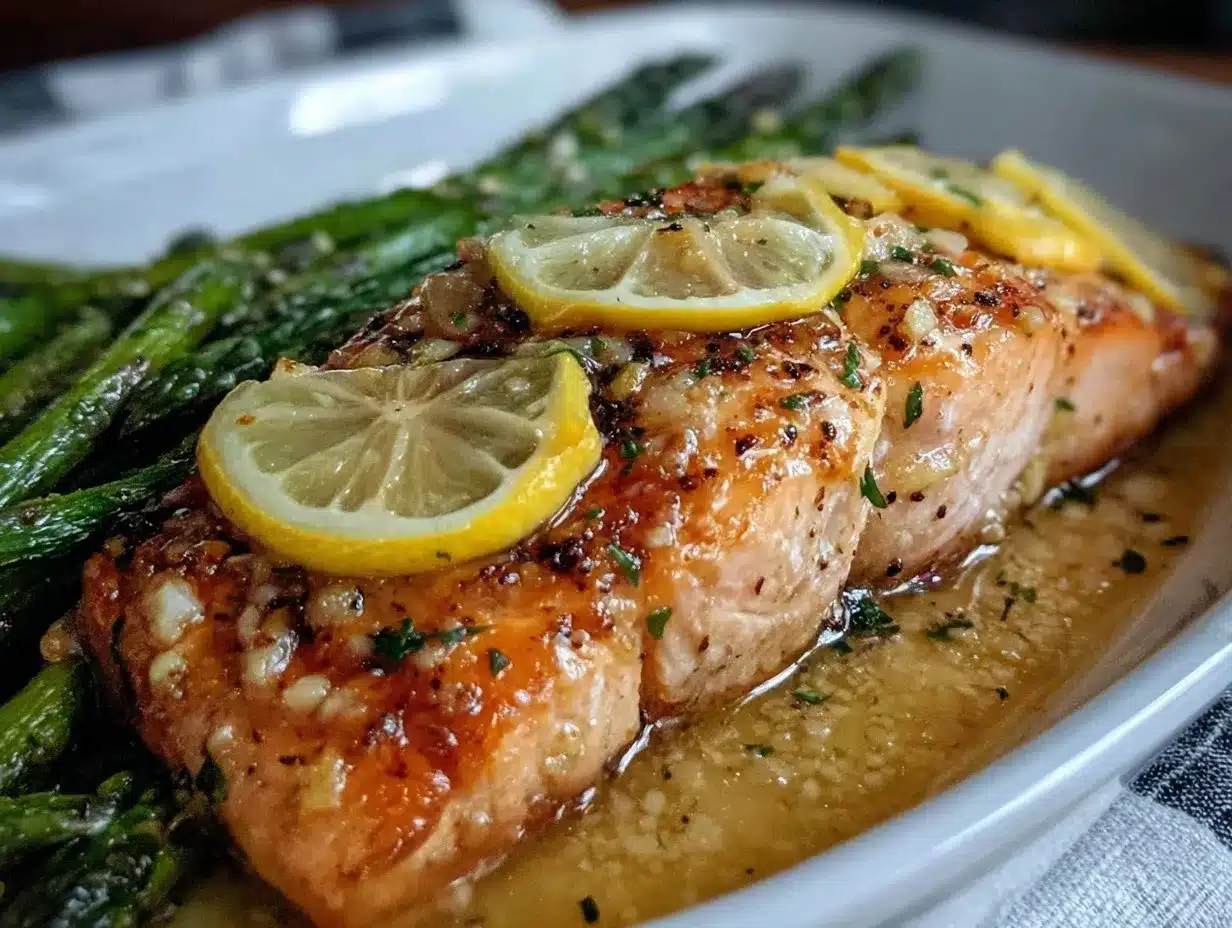
- Preheat the oven to 400°F (200°C). This temperature is perfect for roasting salmon and asparagus evenly without drying out the fish.
- Prepare the asparagus. Trim the tough ends off the asparagus and toss them in a mixing bowl with 1 tablespoon olive oil, a pinch of salt, and pepper. Set aside.
- Melt the butter and mix the sauce. In a small bowl, combine 4 tablespoons melted unsalted butter with the juice of one large lemon and minced garlic cloves. Stir well to blend the flavors.
- Prepare the salmon fillets. Pat the salmon dry with paper towels — this helps the butter stick and the fish to sear nicely. Season both sides generously with salt and freshly ground black pepper.
- Arrange the salmon and asparagus on the baking sheet. Place the salmon fillets skin-side down on one side of the rimmed sheet pan. Spread the asparagus evenly on the other side in a single layer.
- Brush the lemon butter sauce. Using a pastry brush or spoon, generously coat the salmon fillets with the lemon butter mixture. Drizzle any remaining sauce over the asparagus, tossing lightly with tongs to coat them evenly.
- Roast in the preheated oven for 12-15 minutes. Cooking time depends on the thickness of your salmon; aim for an internal temperature of 125°F (52°C) for medium-rare to medium. The asparagus should be tender but still have a slight snap.
- Optional: Broil for 1-2 minutes. If you like a bit of a golden crust on your salmon, switch the oven to broil for the last 1-2 minutes, watching closely to prevent burning.
- Remove from oven and garnish. Sprinkle chopped fresh parsley over the salmon and asparagus for a bright finishing touch.
- Serve immediately. Plate the salmon alongside the roasted asparagus, spooning any remaining buttery sauce from the pan over the top.
Note: If your salmon fillets are especially thick, consider increasing the roasting time by 3-5 minutes and keep an eye on the asparagus to avoid overcooking. Patience and vigilance here make a big difference in texture.
When I first tried this, I was worried the asparagus might get soggy, but keeping it on one side and spreading it out in a single layer really helps it roast perfectly each time. Also, brushing the sauce generously locks in moisture and flavor — don’t be shy with it!
Cooking Tips & Techniques
Getting that perfect balance between tender salmon and crisp asparagus is easier than you think, but a few tricks help:
- Pat the salmon dry: Moisture is the enemy of a good sear. Dry fish skin crisps better and prevents steaming.
- Use room temperature salmon: Let the fillets sit out for 10-15 minutes before cooking to promote even roasting.
- Don’t overcrowd the pan: Spreading the asparagus and salmon out ensures hot air circulates and everything cooks evenly.
- Watch the garlic: Minced garlic can burn quickly in the oven. Mixing it into the melted butter and lemon juice keeps it moist and fragrant.
- Broil cautiously: The broil step adds a nice crust, but it can go from golden to burnt in seconds. Stand by with the oven door cracked open.
- Rest before serving: Let the salmon rest for a couple of minutes after roasting to let juices redistribute.
One lesson I learned the hard way was rushing the drying step — soggy skin meant limp texture. Also, don’t skimp on fresh lemon juice; bottled just doesn’t have that same zing. I once swapped asparagus for broccolini, and while tasty, the thinner spears of asparagus give that perfect bite and roast time.
Multitasking tip: While the salmon roasts, you can whip up a quick side salad or prepare a dessert like my blueberry lemon trifle parfaits to keep the citrus theme going effortlessly.
Variations & Adaptations
This recipe is flexible and adapts well to different tastes and dietary needs:
- Spicy Twist: Add a pinch of smoked paprika or red pepper flakes to the lemon butter sauce for a subtle heat kick.
- Herb Swap: Use fresh dill or tarragon instead of parsley for a different herbal note that pairs beautifully with salmon.
- Vegetable Variations: Substitute asparagus with green beans, broccolini, or even thinly sliced zucchini for seasonal variety.
- Dairy-Free: Swap butter for coconut oil or a vegan butter alternative; the lemon and garlic still shine through.
- Cooking Method: For a faster option, try searing the salmon skin-side down in a skillet for 3-4 minutes, then adding the asparagus and lemon butter sauce before finishing in a 400°F (200°C) oven for 8-10 minutes.
Personally, I once replaced the asparagus with roasted cherry tomatoes and it gave the dish a sweeter, juicier profile that was surprisingly good. Feel free to experiment with what’s fresh and available — this recipe is forgiving and fun that way.
Serving & Storage Suggestions
Serve the salmon and asparagus hot from the oven to enjoy the full buttery, lemony sauce at its best. A sprinkle of flaky sea salt on top right before serving adds a nice texture contrast.
This dish pairs wonderfully with simple sides like garlic mashed potatoes, steamed jasmine rice, or a crisp green salad. For drinks, a chilled glass of Sauvignon Blanc or a light sparkling water with lemon complements the citrus notes nicely.
Leftovers keep well in the refrigerator for up to 2 days in an airtight container. To reheat, gently warm in a low oven (about 300°F/150°C) for 10-15 minutes or use a microwave on medium power, covered with a damp paper towel to keep moisture.
Note that the asparagus may soften after reheating, but the salmon remains delicious. Flavors often deepen overnight as the lemon butter sauce melds with the fish and veggies.
Nutritional Information & Benefits
This easy one-pan lemon butter salmon with asparagus is a nutrient-packed meal, rich in protein and healthy fats. A typical serving offers approximately:
| Calories | 400-450 |
|---|---|
| Protein | 35 grams |
| Fat | 28 grams (mostly from heart-healthy omega-3s in salmon and butter) |
| Carbohydrates | 5 grams |
| Fiber | 2 grams |
Salmon is an excellent source of omega-3 fatty acids, which support heart and brain health. Asparagus adds fiber, vitamins A and C, and antioxidants. The lemon juice boosts vitamin C content and adds a fresh brightness without calories.
This meal naturally fits into gluten-free and low-carb eating plans. Just be mindful of the butter quantity if monitoring saturated fat intake.
Conclusion
In the end, this easy one-pan lemon butter salmon with asparagus recipe is a dinner that feels thoughtfully made without taking over your evening. Its simplicity, combined with that rich, tangy sauce, makes it a dish I turn to when I want something nourishing and satisfying without fuss.
Feel free to tweak the herbs, spice level, or veggies to suit your tastes — it’s a versatile formula that rewards a little personalization. For me, it’s the recipe that reminds me a simple meal can still feel special and bring people to the table.
If you give it a try, I’d love to hear how you make it your own or any tricks you discover. Cooking should be fun, after all, and this one-pan meal keeps it that way. Here’s to less cleanup and more delicious moments!
FAQs
Can I use frozen salmon for this recipe?
Yes, but thaw it completely and pat dry before cooking to avoid excess moisture and ensure even roasting.
What if I don’t have fresh asparagus? Can I use canned or frozen?
Fresh asparagus works best for roasting texture and flavor. Frozen can be used but should be thawed and patted dry; canned is not recommended as it’s too soft.
Is it necessary to use skin-on salmon?
Skin-on salmon helps hold the fillet together during cooking and crisps nicely. You can use skinless, but handle gently to avoid breaking the fish.
How do I know when the salmon is cooked perfectly?
The salmon should flake easily with a fork and reach an internal temperature of around 125°F (52°C) for medium doneness. It will continue to cook slightly after removal from the oven.
Can I prepare this recipe ahead of time?
You can prep the lemon butter sauce and trim the asparagus ahead, but it’s best to roast the salmon and asparagus just before serving for optimal freshness and texture.
Pin This Recipe!
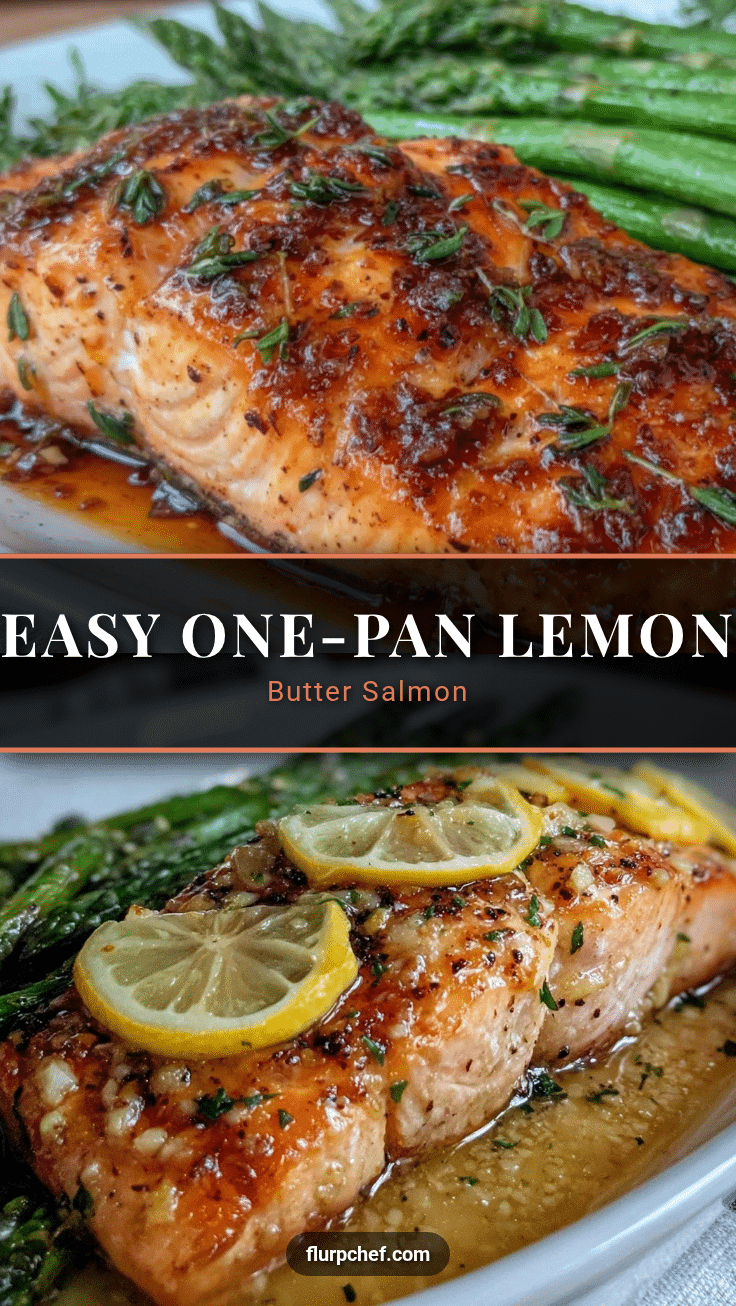
Easy One-Pan Lemon Butter Salmon with Asparagus
A quick and easy one-pan dinner featuring tender salmon fillets roasted with crisp-tender asparagus in a buttery lemon garlic sauce. Perfect for busy weeknights or elegant dinner parties with minimal cleanup.
- Prep Time: 10 minutes
- Cook Time: 15 minutes
- Total Time: 25 minutes
- Yield: 2 servings 1x
- Category: Main Course
- Cuisine: American
Ingredients
- 2 salmon fillets (skin-on, about 6 ounces each)
- 1 bunch asparagus spears, trimmed
- 4 tablespoons unsalted butter, melted
- Juice of 1 large lemon
- 3 garlic cloves, minced
- 2 tablespoons fresh parsley, chopped (optional)
- Salt, to taste
- Freshly ground black pepper, to taste
- 1 tablespoon olive oil
Instructions
- Preheat the oven to 400°F (200°C).
- Trim the tough ends off the asparagus and toss them in a mixing bowl with 1 tablespoon olive oil, a pinch of salt, and pepper. Set aside.
- In a small bowl, combine 4 tablespoons melted unsalted butter with the juice of one large lemon and minced garlic cloves. Stir well to blend the flavors.
- Pat the salmon dry with paper towels. Season both sides generously with salt and freshly ground black pepper.
- Place the salmon fillets skin-side down on one side of a rimmed baking sheet. Spread the asparagus evenly on the other side in a single layer.
- Using a pastry brush or spoon, generously coat the salmon fillets with the lemon butter mixture. Drizzle any remaining sauce over the asparagus and toss lightly to coat.
- Roast in the preheated oven for 12-15 minutes, until salmon reaches an internal temperature of 125°F (52°C) and asparagus is tender but crisp.
- Optional: Broil for 1-2 minutes to develop a golden crust on the salmon, watching closely to prevent burning.
- Remove from oven and sprinkle chopped fresh parsley over salmon and asparagus.
- Serve immediately, spooning any remaining buttery sauce from the pan over the top.
Notes
Pat salmon dry before seasoning to ensure a good sear and prevent soggy skin. Use fresh lemon juice for best flavor. Spread asparagus in a single layer to avoid sogginess. Broil cautiously to add a golden crust without burning. Let salmon rest a few minutes after roasting to redistribute juices. Can substitute butter with coconut oil or vegan butter for dairy-free option. Asparagus can be swapped with green beans or broccolini.
Nutrition
- Serving Size: 1 salmon fillet with
- Calories: 425
- Sugar: 2
- Sodium: 150
- Fat: 28
- Saturated Fat: 15
- Carbohydrates: 5
- Fiber: 2
- Protein: 35
Keywords: one-pan, salmon, lemon butter, asparagus, easy dinner, healthy, quick recipe, weeknight meal, gluten-free, low-carb