My neighbor, a retired baker named Frank, asked me why I couldn’t just use the food processor to cut the butter into the flour. I started to explain why that wouldn’t work—something about overworking the dough and losing that delicate crumb. Then I stopped. Honestly, I had never actually tried it. I had just been repeating what my first baking instructor told me fifteen years ago. So I handed Frank the machine, watched him pulse the cold butter cubes into the flour in about four seconds flat, and braced myself for disaster. The dough came together perfectly. The cookies baked up tender, with those signature shortbread edges that crumble just right. I stood there in my kitchen, holding a warm cranberry orange shortbread cookie that tasted better than any batch I had ever made by hand, and I had to admit it—Frank was right. The whole thing took maybe twenty minutes less than my usual method. Let me tell you, that moment of being wrong never tasted so good. I have been making these cookies for holiday gatherings ever since, and every time someone asks for the recipe, I think about Frank and his food processor. Maybe you have been there too—stubborn about some kitchen rule that turns out to be more habit than truth.
Why You Will Love This Recipe
These cranberry orange shortbread cookies have earned a permanent spot on my holiday baking list, and for good reason. I have tested this recipe at least a dozen times across different ovens and humidity levels, and it delivers consistent results every single time. Here is what makes them special:
- Incredibly Simple : You only need three main ingredients plus the mix-ins. No creaming butter and sugar for ten minutes, no chilling the dough for hours, no fussy rolling and cutting.
- Perfect for Entertaining : These cookies look like you spent all day in the kitchen, but they come together in about thirty minutes of active work. Your guests will think you are a pastry chef.
- Make-Ahead Friendly : The dough freezes beautifully, and the baked cookies stay fresh for over a week in an airtight container. That is a lifesaver when you are hosting a dinner party.
- Crowd-Pleasing Flavor : The tart cranberries cut through the buttery richness, and the orange zest adds a bright, aromatic note that makes everyone ask what that secret ingredient is.
- No Special Equipment Needed : Besides a food processor if you want to use Frank’s method, but a pastry cutter or even your hands work just fine.
What sets this recipe apart from other shortbread cookies is the balance. Most shortbread leans too sweet or too bland, but the dried cranberries bring this tangy pop that wakes up your taste buds, while the orange zest adds a layer of complexity without overwhelming the butter. I have brought these to potlucks, cookie exchanges, and Thanksgiving dinners, and they are always the first plate to empty. There is something about that combination of textures—the crisp edge, the tender center, the chewy burst of cranberry—that makes people reach for just one more.
What Ingredients You Will Need
This recipe uses simple, pantry-friendly ingredients to deliver that classic shortbread texture with a festive twist. The magic happens when these few components come together in the right proportions.
- 1 cup (2 sticks) unsalted butter, cold and cut into small cubes : Butter is the heart of shortbread. Cold butter creates steam pockets as it bakes, giving you that tender, flaky crumb. I prefer Kerrygold or Plugrá for their higher butterfat content, which means richer flavor and better texture. If you only have salted butter, reduce the added salt to 1/4 teaspoon.
- 1/2 cup granulated sugar : Regular white sugar works best here. It dissolves easily into the butter and gives the cookies a clean sweetness that lets the cranberries and orange shine. You can use organic cane sugar if you prefer, but avoid powdered sugar—it changes the texture.
- 1 and 3/4 cups all-purpose flour : Standard all-purpose flour gives shortbread its signature structure. Spoon and level your flour rather than scooping directly from the bag, which packs it down and leads to dry cookies. For a gluten-free version, use a 1:1 gluten-free baking flour blend with xanthan gum.
- 1/2 teaspoon salt : Salt balances the sweetness and enhances the buttery flavor. Fine sea salt dissolves more evenly than kosher salt in this application.
- 3/4 cup dried cranberries : Choose soft, plump dried cranberries rather than hard, dry ones. I like Craisins or store-brand equivalents, but check the ingredient list—some brands add extra sugar. If your cranberries seem dry, soak them in hot water for ten minutes, then pat them dry before using.
- Zest of 1 large orange (about 1 tablespoon) : Fresh orange zest is non-negotiable here. Bottled zest lacks the essential oils that give these cookies their bright, aromatic flavor. Wash your orange well, then use a microplane or fine grater to get just the orange part, avoiding the bitter white pith underneath.
- Optional: 1 teaspoon vanilla extract : Vanilla rounds out the citrus and adds warmth. Pure vanilla extract is best, but imitation works in a pinch.
- Optional: Sanding sugar for topping : A sprinkle of coarse sugar on top before baking adds a lovely crunch and a professional-looking sparkle. Turbinado or demerara sugar works beautifully.
That is it. Seven ingredients, most of which you probably already have in your kitchen. The cranberries and orange zest are the only special purchases, and they are available year-round at any grocery store.
Equipment Needed
You do not need a fancy kitchen to make these cranberry orange shortbread cookies. Here is what you will need:
- Food processor (optional but recommended) : Frank converted me. A food processor makes cutting butter into flour effortless and fast. If you do not have one, a pastry cutter or two forks work fine—just work quickly to keep the butter cold.
- Mixing bowls : One large bowl for the dough, one small bowl for the zest and sugar if you want to rub them together.
- Baking sheet : A rimmed half-sheet pan works perfectly. Line it with parchment paper for easy cleanup and even browning.
- Parchment paper : Non-stick and makes lifting cookies off the sheet a breeze.
- Sharp knife or bench scraper : For cutting the dough logs into even slices.
- Plastic wrap : To shape and chill the dough logs.
- Cooling rack : Lets air circulate around the cookies so they cool evenly and stay crisp.
- Microplane or fine grater : For zesting the orange. A box grater works too, but a microplane gives you finer zest that distributes more evenly.
I have made these cookies with nothing but a bowl and my hands, and they turned out great. The food processor just makes the process faster and more consistent, especially when you are making multiple batches for a party.
Preparation Method
Follow these steps carefully, and you will have perfect cranberry orange shortbread cookies every time.
Step 1: Preheat and prepare. Preheat your oven to 325°F (163°C). Line a baking sheet with parchment paper. This lower temperature is important—shortbread bakes slowly to dry out evenly and develop that delicate crumb without browning too much.
Step 2: Combine dry ingredients. In the bowl of your food processor, add the flour, sugar, and salt. Pulse three or four times to combine. If you are doing this by hand, whisk them together in a large mixing bowl.
Step 3: Cut in the butter. Scatter the cold butter cubes over the flour mixture. If using a food processor, pulse in short bursts—about eight to ten pulses—until the mixture looks like coarse sand with some pea-sized butter pieces remaining. Do not over-process, or the cookies will be tough. By hand, use a pastry cutter or your fingertips to work the butter into the flour until you achieve the same texture. Work quickly so the butter stays cold.
Step 4: Add the cranberries and zest. In a small bowl, rub the orange zest into the sugar with your fingers for about thirty seconds. This releases the oils and infuses the sugar with orange flavor. Add this mixture to the dough along with the dried cranberries. Pulse just a few times to distribute—you want the cranberries intact, not chopped into bits. If mixing by hand, fold them in gently with a spatula.
Step 5: Bring the dough together. The dough should look crumbly but hold together when squeezed in your fist. If it seems too dry, add one tablespoon of cold water and pulse again. Do not add too much water—shortbread dough should be slightly shaggy, not sticky. Turn the dough out onto a clean work surface and gather it into a ball with your hands.
Step 6: Shape into logs. Divide the dough in half. Place each half on a sheet of plastic wrap and shape into a log about 2 inches (5 cm) in diameter. Roll the plastic wrap tightly around the log, twisting the ends to seal. Refrigerate for at least 30 minutes, or up to three days. Chilling solidifies the butter, which prevents the cookies from spreading too much during baking.
Step 7: Slice and bake. Unwrap the chilled dough logs and place them on a cutting board. Using a sharp knife, slice into rounds about 1/4 inch (6 mm) thick. Place them on the prepared baking sheet about 1 inch apart—shortbread does not spread much, so you can fit about twelve cookies per standard sheet. If desired, sprinkle the tops with sanding sugar before baking.
Step 8: Bake. Bake for 14 to 16 minutes, rotating the sheet halfway through. The cookies should look set and very lightly golden on the edges, but not browned on top. The bottoms will be a warm golden color. They will feel soft when you take them out—do not overbake, or they will be dry.
Step 9: Cool completely. Let the cookies cool on the baking sheet for 5 minutes, then transfer them to a wire rack to cool completely. They will firm up as they cool. This is important—moving them too soon can cause them to break.
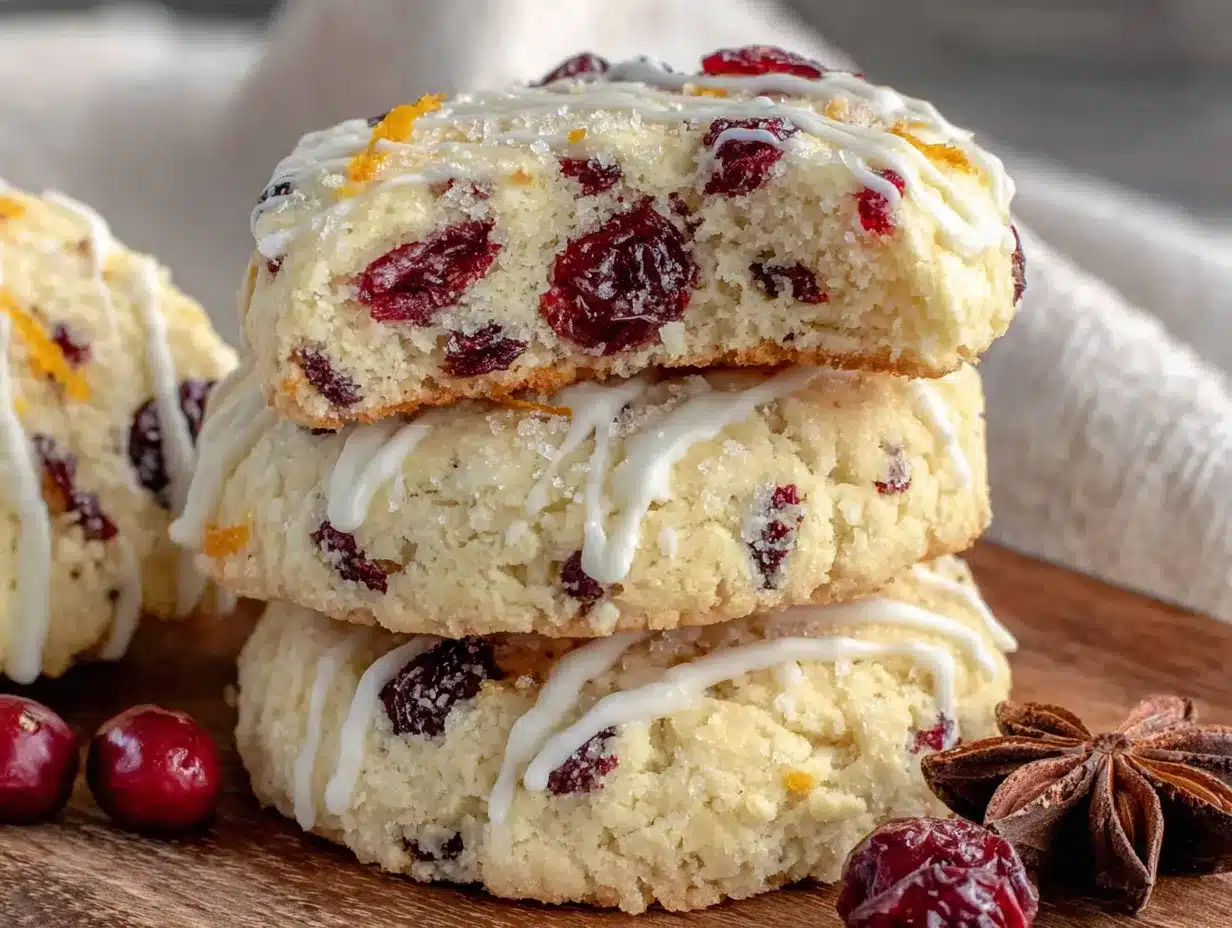
Sensory cues to watch for: When you slice the dough, you should see little flecks of orange zest and red cranberries throughout. The dough should feel firm but not rock-hard after chilling. During baking, your kitchen will smell like butter and orange—heavenly. The cookies are done when the edges just start to turn golden and the centers look dry, not glossy.
Cooking Tips & Techniques
I have learned a few things the hard way so you do not have to. Here are my best tips for perfect shortbread every time.
Keep everything cold. This is the number one rule of shortbread. If your butter warms up, the cookies will spread into flat discs instead of holding their shape. If your kitchen is warm, pop the shaped dough logs back in the fridge for ten minutes before slicing. I once made the mistake of letting the dough sit on the counter while I answered the phone, and the resulting cookies looked more like lace than shortbread.
Use a sharp knife for slicing. A dull knife will squish the dough and create uneven cookies. I use a chef’s knife and wipe the blade clean between cuts. For perfectly round cookies, roll the log gently between your palms after slicing to smooth the edges.
Do not overwork the dough. The more you handle shortbread dough, the tougher it gets. Mix just until combined, and shape the logs with a light touch. Overworking develops gluten, which gives you bread-like cookies instead of tender shortbread.
Bake on the middle rack. The middle rack provides the most even heat. Baking too close to the top or bottom can cause uneven browning. I rotate my baking sheet halfway through just to be safe.
Let them cool completely. Warm shortbread is fragile and crumbly. Patience pays off here. I know it is tempting to grab one fresh from the oven, but they truly need that cooling time to set up properly. Plus, the flavor develops as they cool—the orange becomes more pronounced and the butter mellows.
Trust your senses over the timer. Ovens vary wildly. My friend’s oven runs hot, and her cookies are done in twelve minutes. Mine take the full sixteen. Look for the visual cues—set edges, dry centers, lightly golden bottoms—rather than relying solely on the timer.
Variations & Adaptations
One of the best things about this cranberry orange shortbread cookie recipe is how adaptable it is. Here are some variations I have tried and loved.
Chocolate-Dipped Shortbread: After the cookies cool completely, melt 1/2 cup of dark chocolate chips with 1 teaspoon of coconut oil. Dip half of each cookie into the chocolate and let set on parchment paper. The combination of tart cranberry, buttery shortbread, and rich chocolate is absolutely decadent. I made these for a Christmas party last year, and they disappeared in minutes.
Lemon Blueberry Variation: Swap the orange zest for lemon zest and the dried cranberries for dried blueberries. The lemon-blueberry combination is brighter and more summery, perfect for spring brunches or baby showers. I use the same measurements—zest of one large lemon and 3/4 cup dried blueberries.
Pistachio Cranberry: Add 1/3 cup of finely chopped pistachios along with the cranberries. The green nuts against the red cranberries make these cookies stunning on a holiday cookie platter. Toast the pistachios lightly before adding them for extra depth of flavor.
Gluten-Free Version: Substitute the all-purpose flour with a 1:1 gluten-free baking flour blend that contains xanthan gum. I have tested this with Bob’s Red Mill 1:1 Baking Flour, and the texture is nearly identical to the original. No one at my dinner party could tell the difference.
Vegan Adaptation: Use vegan butter sticks (I recommend Miyoko’s or Country Crock Plant Butter) in place of dairy butter. The texture will be slightly different—a bit less crisp—but still delicious. Make sure your sugar is vegan-friendly, as some granulated sugars are processed with bone char.
Spiced Orange: Add 1/2 teaspoon of cinnamon and 1/4 teaspoon of nutmeg along with the dry ingredients. The warm spices complement the orange beautifully and make these cookies taste even more like the holidays.
Serving & Storage Suggestions
These cranberry orange shortbread cookies are incredibly versatile when it comes to serving. Here is how I present them for gatherings.
Serving temperature: Serve at room temperature. The texture is at its best—crisp on the outside, tender inside. If you have stored them in the fridge, let them sit out for about fifteen minutes before serving.
Presentation ideas: Arrange them on a white platter or cake stand for maximum visual impact. The red cranberry flecks against the pale golden cookie look beautiful. For holiday parties, I stack them in a decorative tin lined with parchment paper or arrange them on a wooden board alongside other cookies and fresh cranberries for color.
What to serve alongside: These cookies pair wonderfully with a cup of hot tea—Earl Grey or chamomile work especially well. For a dessert spread, serve them with vanilla ice cream or a dollop of whipped cream. They also make a lovely addition to a cheese board, where the sweetness balances sharp cheddar or blue cheese.
Storage instructions: Store baked cookies in an airtight container at room temperature for up to 10 days. Layer them between sheets of parchment paper to prevent sticking. They actually improve after a day or two as the flavors meld together.
Freezing instructions: You can freeze either the unbaked dough logs or the baked cookies. For dough logs, wrap tightly in plastic wrap and then foil, and freeze for up to 3 months. Slice and bake directly from frozen, adding 2 to 3 minutes to the baking time. For baked cookies, freeze in a single layer on a baking sheet, then transfer to a freezer bag. They keep for up to 3 months. Thaw at room temperature for about 30 minutes before serving.
Gifting tip: These cookies are my go-to homemade gift during the holidays. I pack them in clear cellophane bags tied with a ribbon, or in small mason jars layered with parchment paper. Attach a handwritten tag with the recipe name and storage instructions—your friends and family will thank you.
Nutritional Information & Benefits
While shortbread is certainly a treat, these cookies offer a few redeeming qualities worth noting.
Estimated nutrition per cookie (based on 24 cookies):
- Calories: 145
- Total Fat: 8g
- Saturated Fat: 5g
- Cholesterol: 20mg
- Sodium: 55mg
- Total Carbohydrates: 17g
- Dietary Fiber: 1g
- Sugars: 9g
- Protein: 1g
Health highlights: Dried cranberries are a good source of antioxidants and vitamin C, which support immune health—especially welcome during cold and flu season. The orange zest provides a small amount of vitamin C and essential oils that aid digestion. Butter, while high in saturated fat, contains butyrate, a short-chain fatty acid that supports gut health in moderate amounts.
Dietary considerations: This recipe is vegetarian and can be made vegan with the substitutions mentioned above. It is not suitable for those with dairy allergies unless using vegan butter. The gluten-free version accommodates celiac-friendly diets. These cookies are relatively low in sugar compared to many cookie recipes, making them a more moderate indulgence.
I believe in balance—these cookies are a celebration food, meant to be enjoyed in good company without guilt. One or two with a cup of tea is pure joy, and that matters for our wellbeing too.
Frequently Asked Questions
Can I use fresh cranberries instead of dried?
I do not recommend it. Fresh cranberries contain too much moisture, which will make the cookies soggy and cause them to spread unevenly. Dried cranberries provide concentrated flavor and the right texture. If you only have fresh cranberries, you can dry them in a low oven (200°F) for about two hours before using.
Why did my shortbread cookies spread too much?
This usually happens when the butter is too warm. Make sure your butter is cold when you start, and chill the shaped dough logs for at least 30 minutes before slicing and baking. Also, check that your oven temperature is accurate—an oven that runs cool can cause spreading.
Can I make the dough ahead of time?
Absolutely. The dough logs can be refrigerated for up to three days before baking. You can also freeze them for up to three months. This makes these cookies perfect for holiday prep—make the dough weeks ahead, then slice and bake fresh cookies whenever you need them.
How do I get evenly sized cookies?
Use a ruler to measure the dough logs—aim for 2 inches in diameter. When slicing, use a sharp knife and cut with a single smooth motion rather than sawing. For perfectly uniform cookies, you can weigh each slice, but eyeballing works fine for home baking.
Can I double this recipe?
Yes, this recipe doubles beautifully. I often make a double batch for holiday parties. Just be careful not to overcrowd your food processor if using one—work in batches to ensure even mixing. The dough logs can all be refrigerated together and baked in successive batches.
Conclusion
These cranberry orange shortbread cookies have become a staple in my kitchen for good reason. They are simple enough for a Tuesday afternoon bake session but elegant enough for a holiday cookie exchange. The bright citrus and tart cranberries cut through the rich butter in a way that feels both familiar and special. Every time I make them, I think of Frank and his food processor, and I smile at how a small moment of humility led me to a better, easier recipe.
I encourage you to make these your own. Maybe you will add a pinch of cardamom or dip them in white chocolate. Maybe you will shape them into little crescents or press a thumbprint into each one and fill it with orange marmalade. The base recipe is forgiving and adaptable, ready to become your signature cookie. I would love to hear how they turn out for you.
Drop a comment below and let me know—did you try Frank’s food processor method? What variations did you experiment with? And if you bring these to your next gathering, watch how fast they disappear. That is the best compliment a baker can get.
Pin This Recipe!

Perfect Cranberry Orange Shortbread Cookies: Easy 3-Ingredient Recipe

These cranberry orange shortbread cookies are incredibly simple, perfect for entertaining, and make-ahead friendly. With tart cranberries and bright orange zest, they deliver a crowd-pleasing flavor that looks like you spent all day in the kitchen.
- Prep Time: 15 minutes
- Cook Time: 16 minutes
- Total Time: 1 hour 1 minute (including 30 minutes chilling)
- Yield: 24 cookies 1x
- Category: Dessert
- Cuisine: American
Ingredients
- 1 cup (2 sticks) unsalted butter, cold and cut into small cubes
- 1/2 cup granulated sugar
- 1 and 3/4 cups all-purpose flour
- 1/2 teaspoon salt
- 3/4 cup dried cranberries
- Zest of 1 large orange (about 1 tablespoon)
- 1 teaspoon vanilla extract (optional)
- Sanding sugar for topping (optional)
Instructions
- Preheat your oven to 325°F (163°C). Line a baking sheet with parchment paper.
- In the bowl of your food processor, add the flour, sugar, and salt. Pulse three or four times to combine. If doing by hand, whisk them together in a large mixing bowl.
- Scatter the cold butter cubes over the flour mixture. If using a food processor, pulse in short bursts—about eight to ten pulses—until the mixture looks like coarse sand with some pea-sized butter pieces remaining. Do not over-process. By hand, use a pastry cutter or your fingertips to work the butter into the flour until you achieve the same texture.
- In a small bowl, rub the orange zest into the sugar with your fingers for about thirty seconds. Add this mixture to the dough along with the dried cranberries. Pulse just a few times to distribute. If mixing by hand, fold them in gently with a spatula.
- The dough should look crumbly but hold together when squeezed in your fist. If it seems too dry, add one tablespoon of cold water and pulse again. Turn the dough out onto a clean work surface and gather it into a ball with your hands.
- Divide the dough in half. Place each half on a sheet of plastic wrap and shape into a log about 2 inches (5 cm) in diameter. Roll the plastic wrap tightly around the log, twisting the ends to seal. Refrigerate for at least 30 minutes, or up to three days.
- Unwrap the chilled dough logs and place them on a cutting board. Using a sharp knife, slice into rounds about 1/4 inch (6 mm) thick. Place them on the prepared baking sheet about 1 inch apart. If desired, sprinkle the tops with sanding sugar before baking.
- Bake for 14 to 16 minutes, rotating the sheet halfway through. The cookies should look set and very lightly golden on the edges, but not browned on top.
- Let the cookies cool on the baking sheet for 5 minutes, then transfer them to a wire rack to cool completely.
Notes
Keep everything cold to prevent spreading. Use a sharp knife for slicing. Do not overwork the dough. Bake on the middle rack. Let cookies cool completely before moving. Trust your senses over the timer.
Nutrition
- Serving Size: 1 cookie
- Calories: 145
- Sugar: 9
- Sodium: 55
- Fat: 8
- Saturated Fat: 5
- Carbohydrates: 17
- Fiber: 1
- Protein: 1
Keywords: cranberry orange shortbread cookies, easy shortbread recipe, 3-ingredient cookies, holiday cookies, butter cookies, cranberry cookies