I had a long-standing position on beef stew. For years, I swore it was a weekend-only affair—a slow-simmering project that demanded a free afternoon and a patient cook. Something about the idea of browning meat in batches, deglazing a heavy pot, and then letting it bubble away for hours felt deeply incompatible with a Tuesday night. Then last fall, on a particularly chaotic Wednesday, I found myself staring at a pile of chuck roast and a clock that was ticking toward dinner with alarming speed. I threw everything into one pot out of sheer desperation, fully expecting a compromise. I didn’t tell anyone what I was doing. I just chopped, browned, and poured, muttering to myself about how this was probably a mistake.
The moment of truth came when my husband walked into the kitchen, sniffed the air, and said, “What smells that good?” I shrugged, keeping my eyes on the cutting board. But twenty minutes later, when I ladled the stew into bowls and watched him take that first bite, I saw his eyebrows go up. “This is the best beef stew you’ve made,” he said, completely unaware that I’d just broken every rule I thought mattered. Honestly, I felt a little caught. Maybe you’ve been there—when you accidentally prove yourself wrong about something you were so sure of. That’s how this quick one-pot beef stew became my weeknight secret weapon. It’s the kind of recipe that stays with you because it works when nothing else should.
Why You’ll Love This Recipe
Let me tell you why this recipe has earned a permanent spot in my weekly rotation. I tested it on three different weeknights—one where I was rushing, one where I was distracted, and one where I just wanted dinner over with. It passed every single test.
- Quick & Easy: Comes together in under an hour, start to finish. No hours-long simmer required. Perfect for those nights when you walk in the door at 6:30 and need food on the table by 7:15.
- Simple Ingredients: You likely have most of these in your pantry right now. Carrots, potatoes, onions, garlic, beef broth, and a decent cut of chuck roast. No fancy trips to a specialty store.
- Perfect for Busy Weeknights: This is the definition of a one-pot wonder. Less cleanup, less stress, more time to actually sit down and eat.
- Crowd-Pleaser: My kids, who usually pick around chunks of meat, asked for seconds. My husband went back for thirds. It’s that kind of recipe.
- Unbelievably Delicious: The secret is browning the meat well and letting the vegetables caramelize just enough. You get deep, rich flavor without the all-day wait.
What makes this different from every other beef stew recipe out there is the technique. Instead of relying on a long simmer to tenderize the meat, I use a combination of smaller cuts and a quick pressure-cooker-style approach (or a heavy pot with a tight lid) that breaks down the collagen fast. It’s not just another version—it’s the version that respects your time without sacrificing taste. This is comfort food reimagined for the reality of a busy life. It’s the kind that makes you close your eyes after the first bite, even if you’re eating it standing at the counter.
What Ingredients You Will Need
This recipe uses simple, wholesome ingredients to deliver bold flavor and satisfying texture without the fuss. Most of these are pantry staples, and the few fresh items are easy to find at any grocery store.
- 2 pounds beef chuck roast, cut into 1-inch cubes (look for good marbling—it adds flavor and tenderness)
- 2 tablespoons olive oil, divided (I prefer extra-virgin for flavor, but regular works fine)
- 1 large yellow onion, diced (about 1.5 cups)
- 3 cloves garlic, minced (fresh is best, but jarred works in a pinch)
- 4 medium carrots, peeled and sliced into 1/2-inch rounds
- 3 medium Yukon Gold potatoes, cubed into 1-inch pieces (they hold their shape better than Russets)
- 2 tablespoons tomato paste (adds richness and depth)
- 4 cups beef broth, low-sodium (so you can control the salt)
- 1 cup red wine (optional, but highly recommended—use something you’d drink)
- 2 bay leaves
- 1 teaspoon dried thyme
- 1 teaspoon smoked paprika
- 1/2 teaspoon black pepper
- 1 teaspoon salt, plus more to taste
- 2 tablespoons all-purpose flour (for thickening—or use cornstarch slurry for gluten-free)
- 1 cup frozen peas (added at the end for a pop of color and sweetness)
- Fresh parsley, chopped, for garnish (optional, but nice)
A few notes on ingredients: I recommend using chuck roast over stew meat from the store—it’s usually more consistent in quality. For the wine, a decent Cabernet Sauvignon or Merlot works beautifully. If you skip the wine, add an extra cup of beef broth and a splash of balsamic vinegar for acidity. For a gluten-free version, swap the all-purpose flour with a 1:1 gluten-free blend or use a cornstarch slurry (1 tablespoon cornstarch mixed with 2 tablespoons cold water) stirred in at the end.
Equipment Needed
You don’t need a lot of fancy gear for this recipe. Here’s what you’ll need:
- Large Dutch oven or heavy-bottomed pot (5 to 6 quarts is ideal—I use my trusty Lodge enameled cast iron pot)
- Sharp chef’s knife (for cutting the beef and vegetables)
- Cutting board
- Wooden spoon or spatula (for stirring and scraping up those browned bits)
- Measuring cups and spoons
- Ladle (for serving)
If you don’t have a Dutch oven, a large stainless steel pot with a tight-fitting lid works just as well. I’ve even made this in a deep non-stick skillet with a lid in a pinch. The key is having a pot that holds heat evenly and has a lid that seals well. If you’re using a thinner pot, just keep an eye on the liquid level—you might need to add a splash more broth if it evaporates too quickly.
Preparation Method
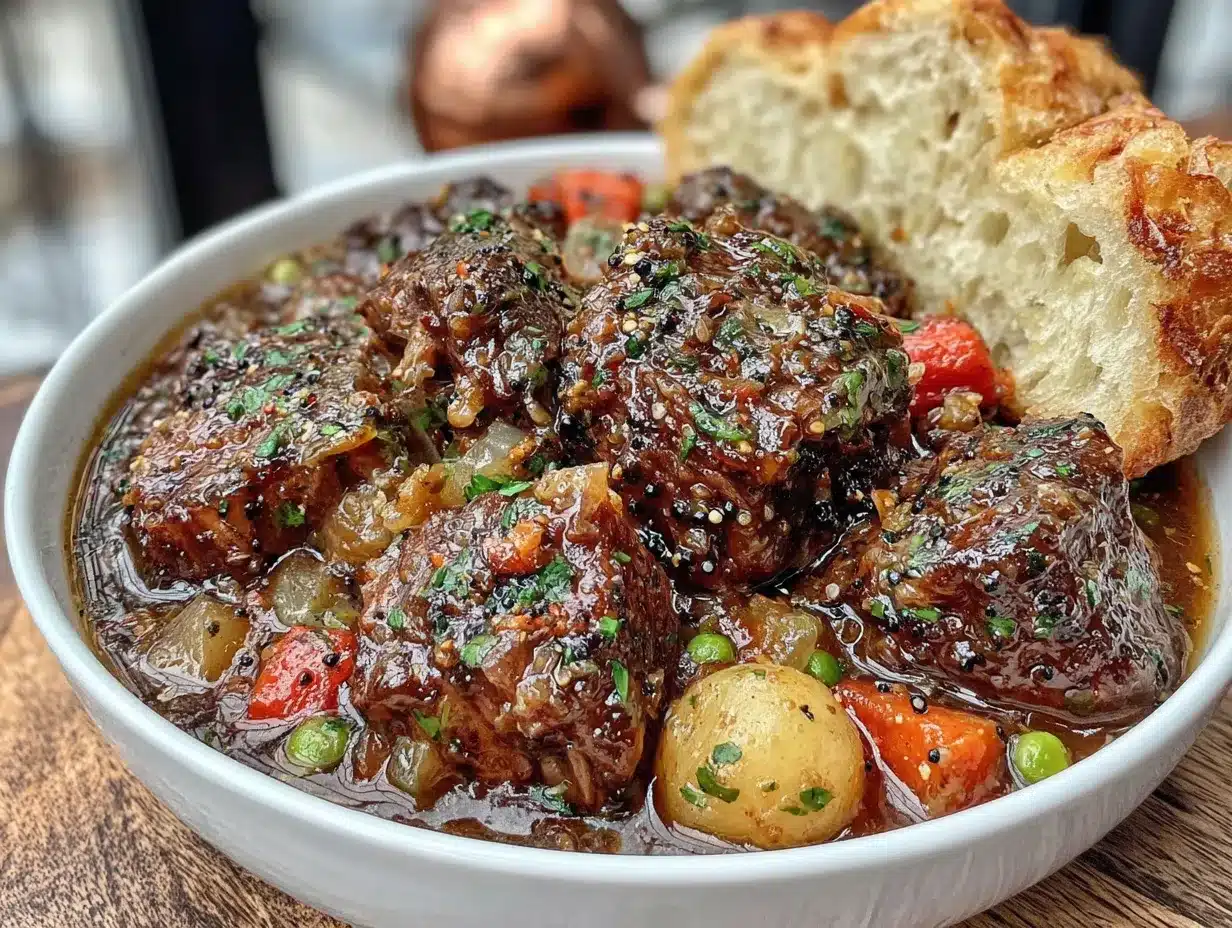
Let’s get cooking. This comes together faster than you think, especially if you prep your ingredients while the pot heats up.
- Pat the beef cubes dry with paper towels. This is crucial—wet meat won’t brown properly. Season generously with salt and pepper. Don’t be shy here; it’s your only chance to season the meat directly.
- Heat 1 tablespoon of olive oil in your Dutch oven over medium-high heat. When the oil shimmers, add half the beef cubes in a single layer. Don’t crowd the pot—work in batches if needed. Let them brown undisturbed for 3-4 minutes per side. You’re looking for a deep, dark crust. Transfer browned beef to a plate and repeat with remaining beef, adding the second tablespoon of oil if needed.
- Reduce heat to medium and add the diced onion. Scrape up any browned bits from the bottom of the pot—that’s pure flavor. Cook the onion for 4-5 minutes until soft and translucent. Add the minced garlic and cook for 30 seconds until fragrant. Your kitchen should smell incredible right now.
- Stir in the tomato paste and cook for 1-2 minutes, stirring constantly. It will darken and smell richer. This step deepens the overall flavor of the stew.
- Pour in the red wine (if using) and let it bubble for 2-3 minutes, scraping the bottom of the pot. The alcohol will cook off, leaving behind a beautiful depth. If you’re skipping the wine, add a splash of beef broth and a teaspoon of balsamic vinegar instead.
- Add the beef broth, bay leaves, dried thyme, smoked paprika, and the browned beef (along with any juices that collected on the plate). Stir everything together. Bring the liquid to a gentle boil, then reduce heat to low, cover, and let it simmer for 25 minutes.
- After 25 minutes, add the carrots and potatoes. Stir them in, cover again, and let it cook for another 20 minutes. The vegetables should be fork-tender but not falling apart. The beef should be fork-tender too—if it’s still tough, give it another 10 minutes.
- In a small bowl, whisk the flour with 3 tablespoons of cold water until smooth. Slowly stir this slurry into the stew. Let it simmer uncovered for 5 minutes, stirring occasionally. The stew will thicken nicely. If you prefer a thicker stew, mix another tablespoon of flour with water and repeat.
- Stir in the frozen peas and cook for 2 minutes until they’re bright green and heated through. Taste and adjust salt and pepper as needed.
- Remove the bay leaves and discard. Ladle the stew into bowls, garnish with fresh parsley if you’re feeling fancy, and serve hot with crusty bread or over mashed potatoes.
A quick note: if you’re using a pressure cooker or Instant Pot, you can brown the beef using the sauté function, then cook on high pressure for 35 minutes with a natural release. The result is even faster and just as tender.
Cooking Tips & Techniques
I’ve made this stew at least a dozen times, and I’ve learned a few things along the way. Here are my best tips for getting it right every time.
Don’t skip the browning step. I know it’s tempting to just dump everything in the pot and save time, but browning the beef is where the magic happens. That deep, caramelized crust is pure flavor. If you’re in a rush, at least brown half the beef—it makes a noticeable difference.
Cut your vegetables uniformly. This sounds like a small detail, but it matters. If your potatoes are cut into different sizes, some will be mushy while others are still hard. Aim for 1-inch cubes across the board. I learned this the hard way after serving a bowl of stew with potato mush and potato rocks in the same bite.
Use low-sodium broth. Store-bought beef broth can be incredibly salty. By using low-sodium, you control the salt level. You can always add more salt at the end, but you can’t take it out. Trust me on this one.
Let it rest. If you have the time, let the stew sit off the heat for 10-15 minutes before serving. The flavors meld together beautifully, and the stew thickens slightly as it cools. It’s even better the next day—if you have any left.
One mistake I made early on: I added the peas too early and they turned into sad, gray mush. Now I add them at the very end, just to heat through. They stay bright green and add a nice pop of sweetness.
Variations & Adaptations
This recipe is flexible, and I’ve tried several variations depending on what I have on hand or who I’m feeding.
Dietary Variations: For a gluten-free version, skip the flour and use a cornstarch slurry at the end. For a low-carb option, replace the potatoes with cauliflower florets or turnips. Add them in the last 15 minutes of cooking so they don’t get mushy.
Seasonal Twists: In the summer, I add a handful of fresh green beans instead of peas. In the fall, cubed butternut squash is a lovely addition alongside the potatoes. I once made this with parsnips and sweet potatoes, and it was a hit at a cozy November dinner.
Flavor Variations: You can easily change the flavor profile. Add a tablespoon of Worcestershire sauce for extra umami. Stir in a teaspoon of curry powder for a warming twist. Or add a pinch of red pepper flakes for a subtle kick. My personal favorite variation is adding a quarter cup of pearl barley along with the broth—it thickens the stew and adds a chewy texture that I love.
Different Cooking Methods: This works beautifully in a slow cooker. Brown the beef and sauté the onions on the stovetop first, then transfer everything (except the flour and peas) to the slow cooker. Cook on low for 6-8 hours or high for 3-4 hours. Thicken with the flour slurry at the end, then stir in the peas.
Serving & Storage Suggestions
This stew is a meal in itself, but a few simple sides make it even better. Serve it hot with crusty bread for dipping, or ladle it over a bed of mashed potatoes, egg noodles, or rice. A side salad with a simple vinaigrette balances the richness nicely.
For presentation, I like to ladle the stew into wide, shallow bowls and sprinkle fresh parsley on top. A dollop of sour cream or a sprinkle of grated Parmesan is also lovely, though not traditional.
Storage: Leftovers keep beautifully in an airtight container in the refrigerator for up to 4 days. The flavors actually deepen overnight, so it might taste even better the next day. I’ve been known to make a double batch just for the leftovers.
Freezing: This stew freezes wonderfully. Let it cool completely, then transfer to freezer-safe containers or zip-top bags. It will keep for up to 3 months. Thaw overnight in the refrigerator and reheat gently on the stovetop or in the microwave.
Reheating: Reheat on the stovetop over medium-low heat, stirring occasionally. If the stew has thickened too much, add a splash of beef broth or water to loosen it. You can also reheat individual portions in the microwave for 2-3 minutes, stirring halfway through.
Nutritional Information & Benefits
Here’s the approximate nutritional breakdown per serving (based on 6 servings):
- Calories: ~420
- Protein: 35g
- Fat: 18g
- Carbohydrates: 28g
- Fiber: 5g
- Sugar: 8g
- Sodium: 680mg (varies based on broth and added salt)
This stew is packed with protein from the beef, which helps keep you full and satisfied. The carrots and potatoes provide fiber, vitamins A and C, and potassium. The olive oil offers healthy monounsaturated fats. It’s a balanced meal that fits well into a moderate-carb or balanced diet.
If you’re watching your sodium, use low-sodium broth and go easy on the added salt. You can also boost the vegetable content by adding extra carrots, celery, or even chopped kale in the last 5 minutes of cooking.
Conclusion
This quick one-pot beef stew has become my go-to for busy weeknights when I need something hearty, comforting, and fast. It’s proof that you don’t have to spend all day in the kitchen to get deep, slow-cooked flavor. The beef comes out tender, the vegetables are perfectly cooked, and the broth is rich and satisfying—all in under an hour.
I love this recipe because it respects my time without compromising on taste. It’s the kind of meal that makes you feel like you’ve got it together, even on the craziest nights. And honestly, that’s a feeling worth holding onto.
I’d love to hear how it goes for you. Did you try any variations? Did your family love it as much as mine did? Drop a comment below and share your experience. And if you found this helpful, share it with a friend who could use a quick weeknight win. Happy cooking!
Frequently Asked Questions
Can I make this beef stew in a slow cooker?
Absolutely! Brown the beef and sauté the onions on the stovetop first, then transfer everything (except the flour and peas) to the slow cooker. Cook on low for 6-8 hours or high for 3-4 hours. Thicken with the flour slurry at the end, then stir in the peas.
Can I use a different cut of beef?
Yes. Chuck roast is ideal because of its marbling, but you can also use bottom round or brisket. Avoid lean cuts like sirloin—they can become tough and dry during cooking.
How do I make this stew gluten-free?
Skip the all-purpose flour and use a cornstarch slurry instead. Mix 1 tablespoon of cornstarch with 2 tablespoons of cold water, then stir it into the stew at the end. Cook for 2-3 minutes until thickened.
Can I freeze this stew?
Yes, it freezes beautifully. Let it cool completely, then transfer to freezer-safe containers. It will keep for up to 3 months. Thaw overnight in the refrigerator before reheating.
How can I thicken the stew if it’s too thin?
If your stew is thinner than you’d like, mix another tablespoon of flour (or cornstarch for gluten-free) with 2 tablespoons of cold water to make a slurry. Stir it in and let it simmer for 3-5 minutes until thickened. Alternatively, you can mash a few of the potatoes directly in the pot to naturally thicken the broth.
Pin This Recipe!
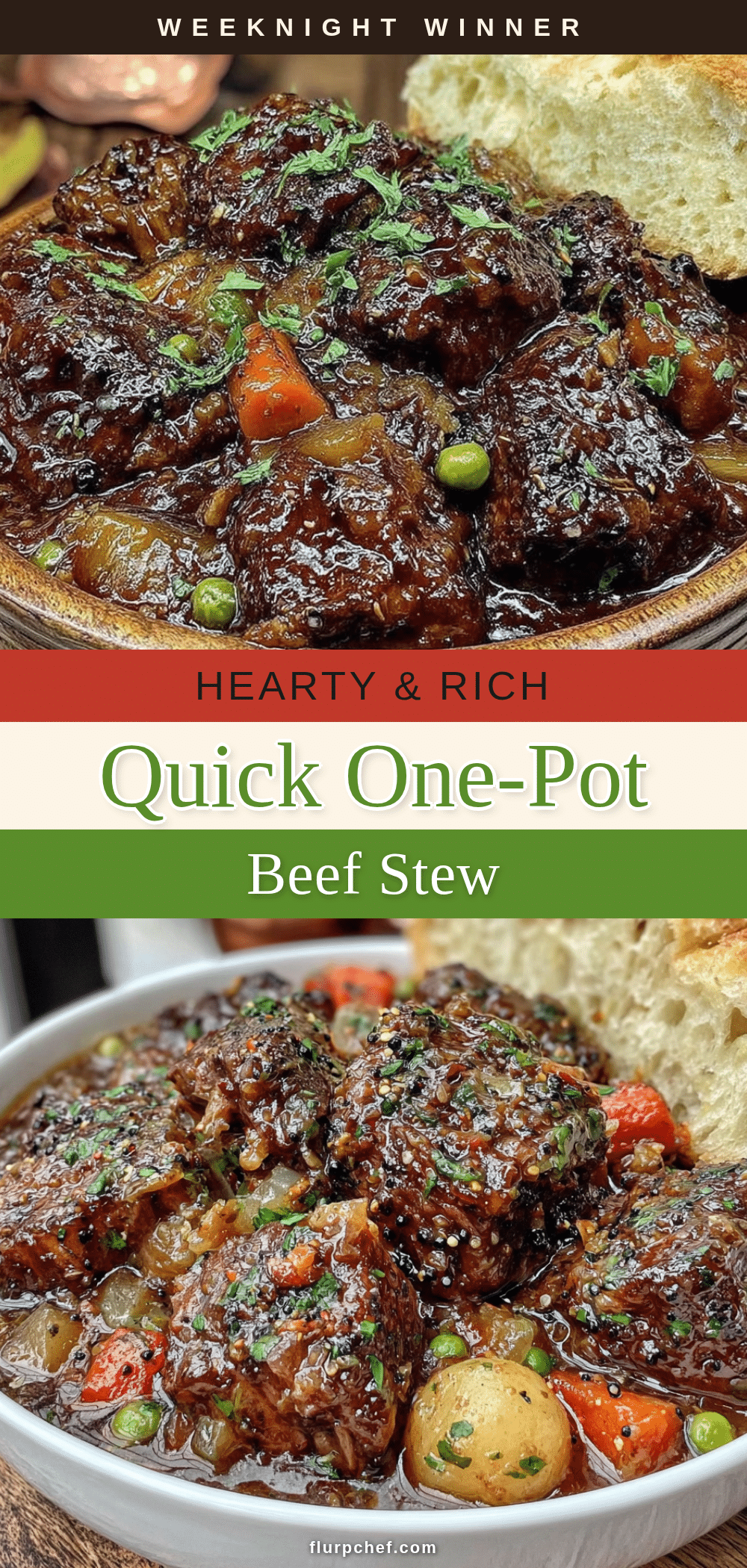
Quick One-Pot Beef Stew: Easy Weeknight Dinner Recipe
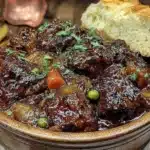
A hearty and comforting beef stew that comes together in under an hour, perfect for busy weeknights. This one-pot wonder delivers deep, rich flavor without the all-day simmer, using simple ingredients and smart techniques.
- Prep Time: 15 minutes
- Cook Time: 40 minutes
- Total Time: 55 minutes
- Yield: 6 servings 1x
- Category: Main Course
- Cuisine: American
Ingredients
- 2 pounds beef chuck roast, cut into 1-inch cubes
- 2 tablespoons olive oil, divided
- 1 large yellow onion, diced (about 1.5 cups)
- 3 cloves garlic, minced
- 4 medium carrots, peeled and sliced into 1/2-inch rounds
- 3 medium Yukon Gold potatoes, cubed into 1-inch pieces
- 2 tablespoons tomato paste
- 4 cups low-sodium beef broth
- 1 cup red wine (optional, such as Cabernet Sauvignon or Merlot)
- 2 bay leaves
- 1 teaspoon dried thyme
- 1 teaspoon smoked paprika
- 1/2 teaspoon black pepper
- 1 teaspoon salt, plus more to taste
- 2 tablespoons all-purpose flour (or cornstarch for gluten-free)
- 1 cup frozen peas
- Fresh parsley, chopped, for garnish (optional)
Instructions
- Pat the beef cubes dry with paper towels. Season generously with salt and pepper.
- Heat 1 tablespoon of olive oil in a Dutch oven over medium-high heat. When the oil shimmers, add half the beef cubes in a single layer. Brown undisturbed for 3-4 minutes per side until a deep, dark crust forms. Transfer to a plate and repeat with remaining beef, adding the second tablespoon of oil if needed.
- Reduce heat to medium and add the diced onion. Scrape up any browned bits from the bottom of the pot. Cook for 4-5 minutes until soft and translucent. Add the minced garlic and cook for 30 seconds until fragrant.
- Stir in the tomato paste and cook for 1-2 minutes, stirring constantly, until it darkens.
- Pour in the red wine (if using) and let it bubble for 2-3 minutes, scraping the bottom of the pot. If skipping wine, add a splash of beef broth and 1 teaspoon balsamic vinegar instead.
- Add the beef broth, bay leaves, dried thyme, smoked paprika, and the browned beef (with any juices). Stir together. Bring to a gentle boil, then reduce heat to low, cover, and simmer for 25 minutes.
- After 25 minutes, add the carrots and potatoes. Stir, cover, and cook for another 20 minutes until vegetables are fork-tender and beef is tender.
- In a small bowl, whisk the flour with 3 tablespoons of cold water until smooth. Slowly stir this slurry into the stew. Let it simmer uncovered for 5 minutes, stirring occasionally, until thickened.
- Stir in the frozen peas and cook for 2 minutes until bright green and heated through. Taste and adjust salt and pepper as needed.
- Remove the bay leaves and discard. Ladle into bowls, garnish with fresh parsley if desired, and serve hot with crusty bread or over mashed potatoes.
Notes
For a gluten-free version, use a cornstarch slurry (1 tablespoon cornstarch mixed with 2 tablespoons cold water) instead of flour. For a low-carb option, replace potatoes with cauliflower florets or turnips. The stew can be made in a slow cooker: brown beef and sauté onions on stovetop first, then transfer everything (except flour and peas) to slow cooker. Cook on low for 6-8 hours or high for 3-4 hours. Thicken with slurry at the end and stir in peas. Leftovers keep in the refrigerator for up to 4 days or freeze for up to 3 months.
Nutrition
- Serving Size: 1 serving (about 1.5
- Calories: 420
- Sugar: 8
- Sodium: 680
- Fat: 18
- Saturated Fat: 6
- Carbohydrates: 28
- Fiber: 5
- Protein: 35
Keywords: beef stew, one-pot meal, weeknight dinner, comfort food, quick dinner, easy recipe, hearty stew