Third batch in two weeks, and I finally stopped adding sugar before tasting the berries first. That was the moment everything clicked—not the technique, not the fancy rosemary sprigs, but actually paying attention to what the cranberries were telling me. Some bags are tart enough to make your cheeks ache, others have a softer bite that lets the orange shine through. I’d been following the same formula every time, assuming the recipe was the problem. Turns out, the recipe was fine. I just wasn’t listening.
This cranberry orange sauce with fresh rosemary became my Thanksgiving white whale for about fourteen days straight. I made it for a random Tuesday dinner, then for a friend’s potluck, then for no reason at all except I couldn’t stop thinking about how the rosemary smelled when it hit the hot orange juice. There’s something about that combination—sharp citrus, piney herb, and those little berries popping open—that feels like the whole holiday season condensed into one saucepan. No turkey required.
What finally stuck wasn’t some secret ingredient or chef trick. It was the simple realization that this sauce doesn’t need to be complicated to be the best version of itself. Just good fruit, a single herb, and the patience to let it do its thing. That’s the version I keep coming back to.
Why You’ll Love This Recipe
I tested this cranberry orange sauce with fresh rosemary about seven times before I felt confident sharing it. Not because it’s difficult—it’s embarrassingly simple—but because I wanted to understand exactly why some batches sang and others just sat there. Here’s what I learned, and why this version works every single time.
- Comes together in under 20 minutes — No chopping, no fussing, no standing over the stove stirring for an hour. Set a timer and walk away if you want.
- Uses simple, real ingredients — Cranberries, orange juice, sugar, rosemary, and a pinch of salt. That’s it. No corn syrup, no gelatin, no weird stabilizers.
- Tastes like the holidays without the stress — This isn’t just a Thanksgiving side dish. I’ve served it with roast chicken, spread it on leftover turkey sandwiches, and spooned it over vanilla ice cream for a quick dessert.
- Gets even better after a day in the fridge — The flavors meld together overnight, and the texture firms up to that perfect jammy consistency. Make it ahead and cross one thing off your list.
- Looks impressive with zero effort — The whole rosemary sprigs floating in the deep ruby sauce are genuinely beautiful. Guests will think you fussed. You didn’t.
What makes this recipe different from every other cranberry sauce out there is the balance. Most versions lean too sweet or too tart, or they bury everything under cinnamon and cloves. Here, the rosemary adds a subtle savory note that keeps the brightness of the orange front and center. It’s the kind of sauce that makes you pause after the first bite—not because it’s complicated, but because it just tastes right.
What Ingredients You Will Need
This recipe relies on a short list of ingredients, each pulling its weight. No fillers, no fuss. Here’s what you need and why each one matters.
- Fresh cranberries (12 ounces, about 3 cups) — Look for bags where the berries are firm and bright red. Avoid any that feel soft or look shriveled. Frozen cranberries work fine in a pinch—just add them straight from the freezer and increase the cooking time by a couple of minutes.
- Fresh orange juice (1 cup, about 2 large oranges) — Bottled juice won’t give you the same bright flavor. Trust me on this one. Roll your oranges on the counter before juicing to get every last drop. I use a handheld citrus juicer that cost me eight dollars and it’s perfect.
- Granulated sugar (¾ cup) — You can adjust this up or down depending on how tart your cranberries are. Start with ¾ cup, taste after the berries pop, and add more a tablespoon at a time if needed.
- Fresh rosemary (2 large sprigs, plus more for garnish) — Use whole sprigs, not chopped leaves. The rosemary infuses the sauce while it simmers, and you can pull the sprigs out before serving. No one wants to bite into a needle of rosemary at Thanksgiving dinner.
- Orange zest (1 tablespoon, from 1 orange) — Zest the orange before you juice it. The oils in the zest add a concentrated citrus punch that juice alone can’t deliver. Use a microplane if you have one.
- Pinch of salt — Just a small one. Salt doesn’t make the sauce salty; it makes everything else taste more like itself. Don’t skip it.
- Vanilla extract (½ teaspoon, optional) — I add this about half the time. It rounds out the edges and adds a subtle warmth that plays nicely with the rosemary. Try it once with and once without, see which you prefer.
I recommend using organic oranges if you can find them, since you’re using the zest. The flavor is noticeably brighter, and you don’t have to worry about wax or pesticides hanging out on the peel.
Equipment Needed
You don’t need a fancy kitchen to make this sauce. Here’s what I used during my two-week testing spree, and what you can swap in if you’re missing something.
- Medium saucepan — A 2-quart or 3-quart pot works perfectly. I used my old stainless steel one that’s got a few scratches on the bottom. Nonstick works too, but you won’t really need it for this.
- Wooden spoon or silicone spatula — Something heat-resistant for stirring. I prefer a flat-edged wooden spoon because it helps break up any berries that are being stubborn about popping.
- Microplane or fine grater — For zesting the orange. A vegetable peeler works in a pinch, but you’ll want to finely mince the strips afterward.
- Citrus juicer — A simple handheld one is fine. I’ve also used a fork and a lot of elbow grease in a pinch. It’s not elegant, but it works.
- Fine-mesh strainer — Optional, but useful if you want a smoother sauce without any rosemary bits or stray seeds. I usually skip this step because I like the texture.
- Glass jar or airtight container — For storing the sauce. A mason jar works great. I’ve also used a repurposed salsa jar in a moment of desperation.
That’s genuinely it. If you have a pot and a spoon, you can make this sauce. It’s one of those recipes that reminds you why cooking from scratch doesn’t have to be complicated.
Preparation Method
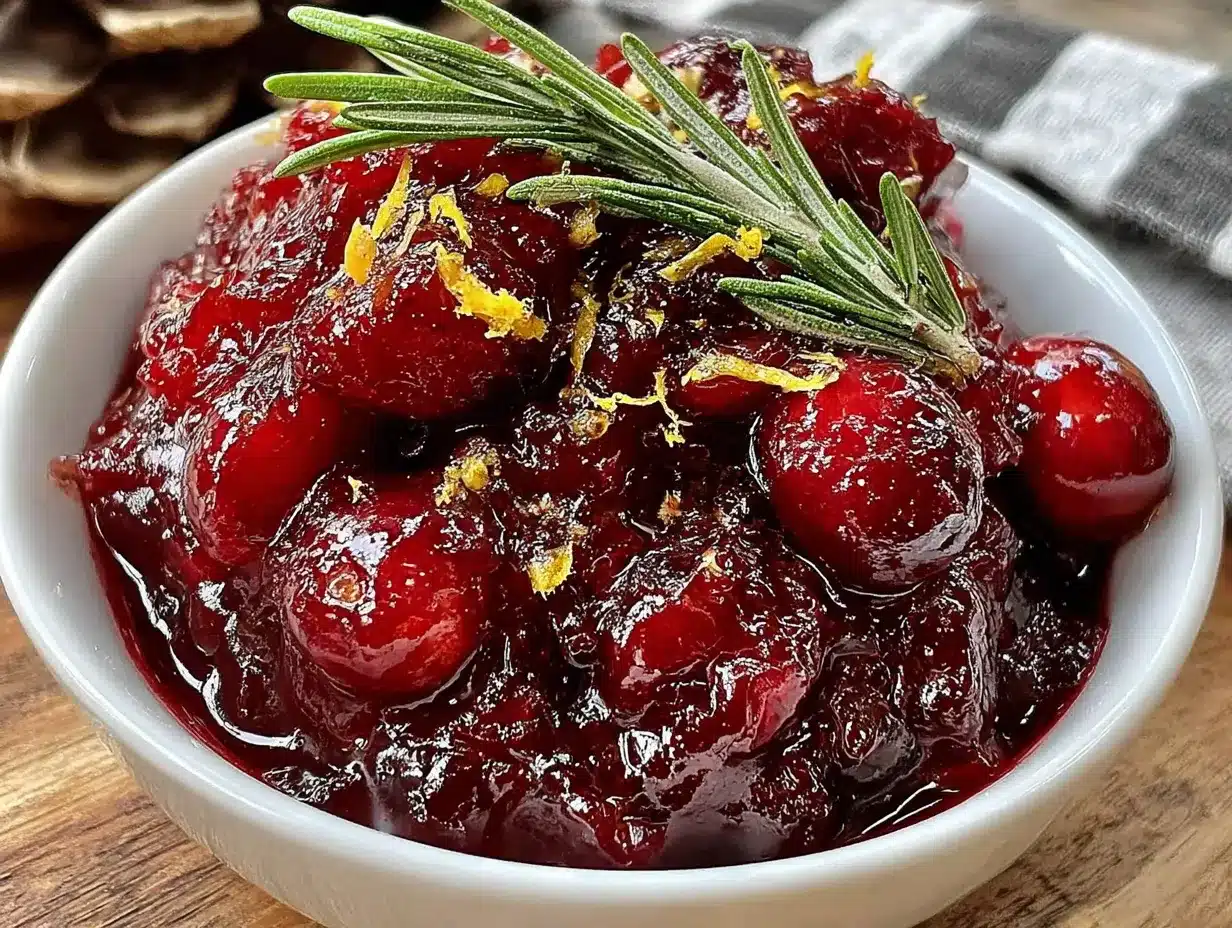
This is where the magic happens. The process is straightforward, but a few small details make the difference between a good sauce and one people ask for the recipe.
- Zest and juice your oranges first. Wash the oranges thoroughly, then zest one of them before cutting. You want about a tablespoon of zest—just the orange part, not the bitter white pith underneath. After zesting, juice both oranges until you have 1 cup of fresh juice. Strain out any seeds. Set both aside.
- Combine the cranberries, orange juice, and sugar in your saucepan. Give everything a quick stir. The sugar will look like a lot sitting on top of the berries, but trust the process. It dissolves as the berries heat up. Don’t add any water—the cranberries release their own liquid as they cook.
- Add the rosemary sprigs and the pinch of salt. Tuck the rosemary sprigs down into the liquid so they’re submerged as much as possible. This helps the flavor infuse evenly. If the sprigs are too long, snap them in half.
- Bring the mixture to a boil over medium-high heat. Don’t walk away at this point. Watch for the first bubbles breaking the surface, then immediately reduce the heat to medium-low. You want a gentle simmer, not a rolling boil.
- Let it simmer for 10 to 12 minutes. You’ll hear the cranberries start to pop—that’s the sound of success. Stir occasionally, gently pressing some of the berries against the side of the pot with your spoon to help them break down. The sauce will thicken as it cooks. At the 10-minute mark, start checking the consistency. It should coat the back of your spoon but still be slightly loose. Remember, it will thicken more as it cools.
- Remove the rosemary sprigs. Fish them out with tongs or a fork. Taste the sauce at this point. Add more sugar if it’s too tart, a splash more orange juice if it’s too sweet. This is your chance to adjust.
- Stir in the orange zest and vanilla extract (if using). The zest goes in at the end so it stays bright and fresh. If you add it too early, the heat will dull its flavor. Give everything one last stir.
- Let the sauce cool completely before transferring to a container. It will continue to thicken as it cools. I usually let it sit in the pot for about 20 minutes, then pour it into a glass jar. Don’t put the lid on until it’s fully cool, or condensation will make the sauce watery on top.
A quick note: if your sauce seems too thin after cooling, don’t panic. You can return it to the pot and simmer it for another 3 to 5 minutes to reduce it further. If it’s too thick, stir in a tablespoon of orange juice or water until it loosens up.
Cooking Tips & Techniques
I learned most of these the hard way—by making mistakes and eating mediocre sauce until I figured things out. Here’s what I wish someone had told me before my first batch.
Don’t crush every single cranberry. I know it’s tempting to mash them all into a uniform paste, but leaving some berries whole gives the sauce a better texture. Aim for about half the berries popped and half still holding their shape. You get those lovely little bursts of tartness in an otherwise smooth sauce.
Watch the heat. Cranberries have a lot of natural pectin, which means they thicken quickly once they start boiling. If your heat is too high, the sauce can go from perfect to jam in about thirty seconds. Keep it at a gentle simmer and check the consistency frequently toward the end.
Taste the cranberries before you add sugar. This was my biggest revelation. Some bags of cranberries are naturally sweeter than others. If you add the full amount of sugar without tasting first, you might end up with sauce that’s cloyingly sweet. Start with ¾ cup, taste after the berries pop, and add more if needed. You can always add sugar, but you can’t take it out.
Make it a day ahead. This sauce actually improves overnight. The flavors meld together, the rosemary becomes more subtle, and the texture sets up perfectly. I make mine the morning before Thanksgiving and let it hang out in the fridge until dinner. One less thing to think about on the big day.
Double the recipe if you want leftovers. This sauce freezes beautifully, and it’s amazing on leftover turkey sandwiches. I always make a double batch and stash half in the freezer for those random January nights when I need a taste of the holidays.
Variations & Adaptations
One of the best things about this cranberry orange sauce with fresh rosemary is how easily it adapts to different tastes and dietary needs. Here are a few variations I’ve tried and loved.
Maple-sweetened version. Swap the granulated sugar for ½ cup of pure maple syrup. The flavor is a little more complex, with a subtle smokiness that pairs beautifully with the rosemary. Reduce the orange juice to ¾ cup to account for the extra liquid from the syrup.
Spiced cranberry sauce. Add a cinnamon stick and two star anise pods along with the rosemary. The warm spices give the sauce a more traditional holiday flavor. Just remember to fish them out before serving, along with the rosemary sprigs.
Bourbon-orange cranberry sauce. Stir in 2 tablespoons of good bourbon after you remove the rosemary sprigs. The alcohol cooks off, leaving behind a warm vanilla-oak note that’s absolutely incredible with roasted meats. I tried this version for a Friendsgiving potluck and it disappeared in minutes.
Low-sugar option. Use a sugar substitute like monk fruit sweetener or allulose. Start with ½ cup and adjust to taste. The texture will be slightly looser because sugar helps with thickening, so you might need to simmer it an extra 2 to 3 minutes.
Herb swap. If you’re not a rosemary fan (or you just want to mix things up), try fresh thyme sprigs instead. Use 4 to 5 sprigs and follow the same method. The thyme adds a more subtle, earthy note that’s lovely with the orange.
Serving & Storage Suggestions
This sauce is versatile enough to show up at breakfast, lunch, and dinner. Here’s how I serve and store mine.
Serving temperature. I prefer this sauce at room temperature or slightly chilled. Straight from the fridge, it’s a bit too firm. Let it sit out for about 20 minutes before serving. It also tastes great warm, especially if you’re serving it alongside a hot turkey dinner.
Presentation ideas. Transfer the sauce to a beautiful bowl and garnish with a fresh rosemary sprig and a few thin orange slices. The deep red color against the green herb is stunning. For a more casual vibe, serve it straight from the mason jar—it’s rustic and honest.
What to serve it with. Obviously, it’s perfect with roast turkey or chicken. But don’t stop there. Spread it on a Mississippi pot roast sandwich for a sweet-savory twist. Spoon it over brie and bake until bubbly for an easy appetizer. Swirl it into yogurt or oatmeal for a quick breakfast. I’ve even used it as a topping for creamy strawberry cheesecake overnight oats—the tart cranberries cut through the richness perfectly.
Storage instructions. Keep the sauce in an airtight container in the refrigerator for up to 2 weeks. The flavors will continue to develop, and the texture will firm up. If it gets too thick after a few days, stir in a teaspoon of orange juice or water to loosen it.
Freezing instructions. This sauce freezes like a dream. Pour it into a freezer-safe container, leaving about ½ inch of headspace, and freeze for up to 3 months. Thaw overnight in the refrigerator before serving. I like to freeze it in small portions so I can pull out just what I need.
Nutritional Information & Benefits
This cranberry orange sauce with fresh rosemary is surprisingly good for you, considering how indulgent it tastes. Here’s the breakdown per ¼ cup serving.
- Calories: Approximately 120
- Carbohydrates: 31g
- Sugar: 27g (mostly from added sugar and natural fruit sugars)
- Fiber: 2g
- Vitamin C: 15% of the daily value
- Fat: 0g
- Protein: 0g
Cranberries are packed with antioxidants, particularly proanthocyanidins, which are known for supporting urinary tract health. They also contain vitamin C and fiber, which are great for your immune system and digestion. The fresh orange juice adds even more vitamin C, plus a dose of potassium. Rosemary contains compounds that have anti-inflammatory properties, so you’re getting a little wellness boost with every spoonful.
If you’re watching your sugar intake, use the maple-sweetened or low-sugar variation. The natural sweetness of the oranges helps reduce the amount of added sugar you need. This recipe is naturally gluten-free, dairy-free, and vegan, so it works for almost any dietary preference.
Conclusion
This cranberry orange sauce with fresh rosemary has officially earned a permanent spot in my holiday rotation. It’s the kind of recipe that looks complicated but isn’t, tastes luxurious but uses simple ingredients, and makes everyone at the table feel special without requiring you to spend all day in the kitchen. That’s my favorite kind of cooking—the stuff that looks like magic but is really just a little bit of patience and a few good ingredients.
I’d love to hear how this sauce turns out for you. Did you try one of the variations? Add your own twist? Serve it with something unexpected? Drop a comment below and let me know. And if you’re looking for more easy, crowd-pleasing recipes, check out my cozy sheet pan cheeseburger sliders or this creamy slow cooker Tuscan ravioli soup for more weeknight wins.
Now go make some sauce. Your future self—and your dinner guests—will thank you.
Frequently Asked Questions
Can I use dried rosemary instead of fresh?
You can, but the flavor won’t be as bright. Use 1 teaspoon of dried rosemary and stir it in with the sugar. Keep in mind that dried rosemary is more intense, so start with less and add more to taste. Fresh really is best here if you can find it.
How do I fix cranberry sauce that’s too tart?
Stir in an additional tablespoon of sugar at a time until the tartness mellows. You can also add a splash of maple syrup or honey, which will add sweetness along with a little extra flavor complexity. Taste as you go—it’s easier to add than to take away.
Can I make this sauce ahead of time for Thanksgiving?
Absolutely. In fact, I recommend it. Make the sauce 1 to 2 days in advance and store it in the refrigerator. The flavors meld together beautifully, and it frees up stove space on the big day. Just let it come to room temperature before serving, or warm it gently on the stove.
What if I don’t have fresh oranges for the juice?
Use 100% pure orange juice from a carton. Avoid orange juice concentrate or orange-flavored drinks, which have added sugars and artificial flavors. The sauce will still be good, but the flavor won’t be quite as bright. If you can, add a teaspoon of orange extract to boost the citrus note.
How long does this cranberry sauce last in the fridge?
Stored in an airtight container, it will keep for up to 2 weeks. The texture will continue to firm up over time, so you may need to stir in a splash of orange juice or water before serving if it gets too thick. If you see any mold or off smells, toss it and make a fresh batch.
Pin This Recipe!
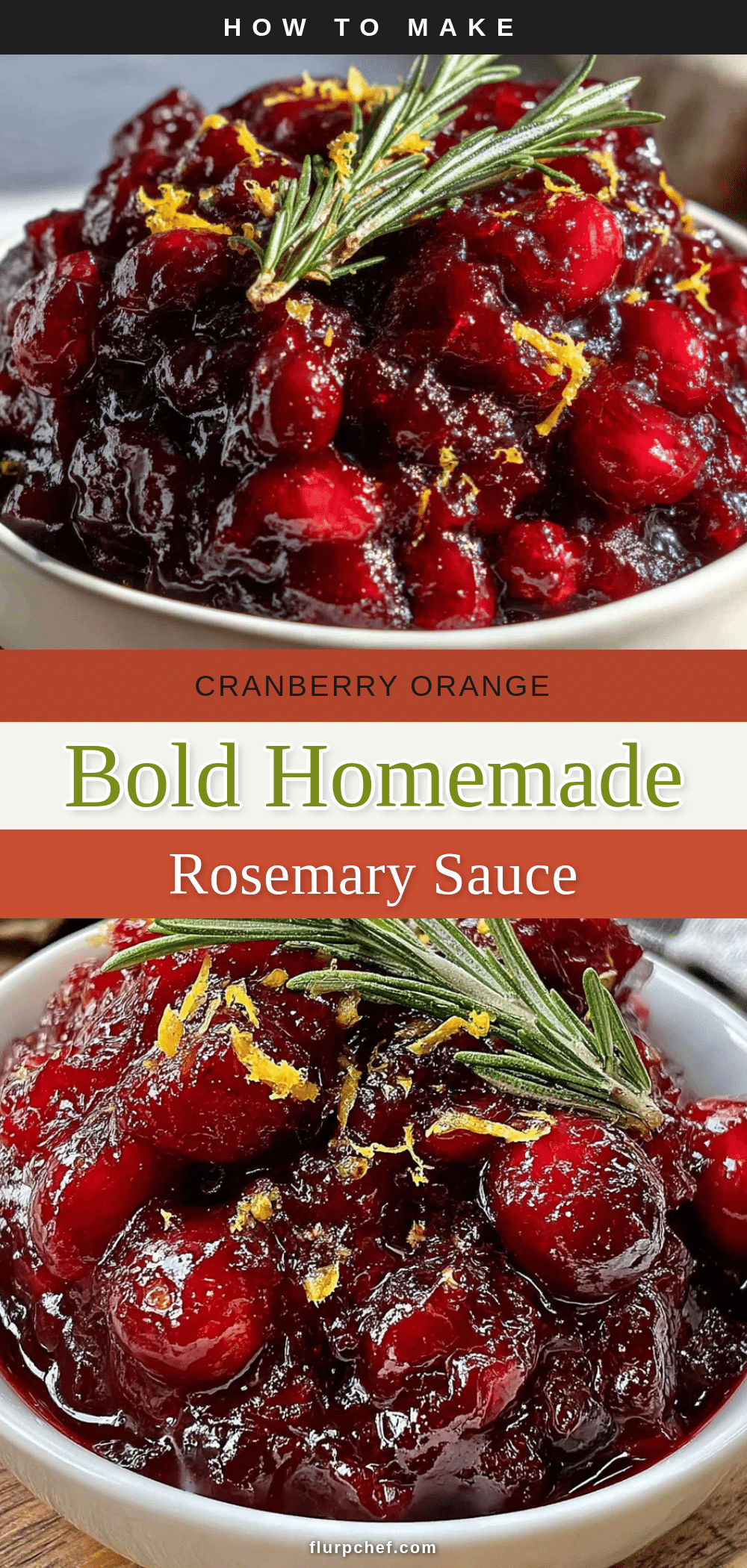
Best Cranberry Orange Sauce with Fresh Rosemary Recipe

This cranberry orange sauce with fresh rosemary is a simple, 20-minute recipe that balances tart cranberries, bright citrus, and piney rosemary. Perfect for Thanksgiving or any holiday meal, it uses just a handful of real ingredients and gets even better after a day in the fridge.
- Prep Time: 5 minutes
- Cook Time: 15 minutes
- Total Time: 20 minutes
- Yield: 8 servings 1x
- Category: Side Dish
- Cuisine: American
Ingredients
- 12 ounces fresh cranberries (about 3 cups)
- 1 cup fresh orange juice (from about 2 large oranges)
- ¾ cup granulated sugar
- 2 large sprigs fresh rosemary, plus more for garnish
- 1 tablespoon orange zest (from 1 orange)
- Pinch of salt
- ½ teaspoon vanilla extract (optional)
Instructions
- Zest and juice your oranges first. Wash the oranges thoroughly, then zest one of them before cutting. You want about a tablespoon of zest—just the orange part, not the bitter white pith underneath. After zesting, juice both oranges until you have 1 cup of fresh juice. Strain out any seeds. Set both aside.
- Combine the cranberries, orange juice, and sugar in your saucepan. Give everything a quick stir. The sugar will look like a lot sitting on top of the berries, but trust the process. It dissolves as the berries heat up. Don’t add any water—the cranberries release their own liquid as they cook.
- Add the rosemary sprigs and the pinch of salt. Tuck the rosemary sprigs down into the liquid so they’re submerged as much as possible. This helps the flavor infuse evenly. If the sprigs are too long, snap them in half.
- Bring the mixture to a boil over medium-high heat. Don’t walk away at this point. Watch for the first bubbles breaking the surface, then immediately reduce the heat to medium-low. You want a gentle simmer, not a rolling boil.
- Let it simmer for 10 to 12 minutes. You’ll hear the cranberries start to pop—that’s the sound of success. Stir occasionally, gently pressing some of the berries against the side of the pot with your spoon to help them break down. The sauce will thicken as it cooks. At the 10-minute mark, start checking the consistency. It should coat the back of your spoon but still be slightly loose. Remember, it will thicken more as it cools.
- Remove the rosemary sprigs. Fish them out with tongs or a fork. Taste the sauce at this point. Add more sugar if it’s too tart, a splash more orange juice if it’s too sweet. This is your chance to adjust.
- Stir in the orange zest and vanilla extract (if using). The zest goes in at the end so it stays bright and fresh. If you add it too early, the heat will dull its flavor. Give everything one last stir.
- Let the sauce cool completely before transferring to a container. It will continue to thicken as it cools. I usually let it sit in the pot for about 20 minutes, then pour it into a glass jar. Don’t put the lid on until it’s fully cool, or condensation will make the sauce watery on top.
Notes
Taste the cranberries before adding sugar, as some bags are sweeter than others. Start with ¾ cup sugar and adjust after the berries pop. For a smoother sauce, use a fine-mesh strainer. The sauce thickens as it cools, so don’t overcook. Make it a day ahead for best flavor. Freezes well for up to 3 months.
Nutrition
- Serving Size: ¼ cup
- Calories: 120
- Sugar: 27
- Sodium: 1
- Carbohydrates: 31
- Fiber: 2
Keywords: cranberry sauce, orange cranberry sauce, rosemary cranberry sauce, Thanksgiving side dish, easy cranberry sauce, homemade cranberry sauce


