This was supposed to be a batch of gingerbread men for a cookie swap. I had it all planned out—the royal icing was ready, the little silver dragées were in a bowl, and I’d even bought a tiny piping tip just for the buttons. But I grabbed the wrong measuring cup, the one that’s actually a quarter-cup smaller than I thought, and by the time I realized, the dough was already too wet. It was a Tuesday, I was already running late from a phone call with my sister, and honestly, I just wanted to throw the whole sticky mess in the trash. Instead, I scooped it into a 9×13 pan, baked it anyway, and cut it into squares. What came out was nothing like the plan—and better. These soft, pillowy gingerbread cookies with a glossy molasses glaze are what happens when you stop panicking and let the dough do what it wants. I mean, maybe you’ve been there, staring at a dough that feels more like a batter, thinking you’ve ruined everything. But let me tell you, that “ruined” batch turned into the most requested treat in my kitchen. I keep making them because they taste like the part of winter that actually feels warm.
Why You’ll Love This Recipe
These aren’t your typical crisp gingerbread cookies. They are soft, almost cake-like, with a tender crumb that practically melts in your mouth. I’ve tested this recipe about six times to get the texture just right—soft enough to bend, but sturdy enough to hold a thick layer of glaze.
- Quick & Easy: From mixing to glazing, you’re looking at about 45 minutes. No chilling the dough, no rolling pins, no cookie cutters. Just scoop, bake, and drizzle.
- Simple Ingredients: You probably have molasses, butter, and spices in your pantry right now. No need for a special trip to the store for obscure extracts or fancy sugars.
- Perfect for Cozy Evenings: These are the cookies you want with a mug of tea when the wind is howling outside. They’re also fantastic for holiday cookie plates, but honestly, I make them all winter long.
- Crowd-Pleaser: I brought a batch to a book club meeting last month, and three people asked for the recipe before I even sat down. Kids love them because they’re soft, and adults love them because the molasses flavor is deep and rich, not cloyingly sweet.
- Unbelievably Delicious: The secret is using melted butter instead of creaming it. It gives the cookies a denser, fudgier texture that stays soft for days. Plus, the molasses glaze seeps into the cracks just a little bit, creating these little pockets of sticky sweetness.
This recipe is different because it skips the fuss. No chilling, no rolling, no cutting. It’s the kind of cookie that makes you close your eyes after the first bite because it tastes like a hug. It’s comfort food reimagined—faster, easier, but with the same soul-soothing satisfaction. Perfect for when you need a little warmth, fast.
What Ingredients You Will Need
This recipe uses simple, mostly pantry-staple ingredients to deliver that deep, spiced flavor and impossibly soft texture. Here is what you will need and a few notes on how to choose them.
- Unsalted butter, melted and slightly cooled (1/2 cup, or 1 stick, 113g) — I use Kerrygold for its rich flavor, but any unsalted butter works. Melting the butter is key here; it gives the cookies a chewier, more tender texture than creaming it.
- Light brown sugar, packed (1/2 cup, 100g) — This adds moisture and a subtle molasses flavor that complements the main event. Dark brown sugar works too, but it will make the cookies slightly darker and more intensely flavored.
- Unsulphured molasses (1/3 cup, 110g) — Do not use blackstrap molasses here; it is too bitter and strong. Look for “Grandma’s” or “Brer Rabbit” mild or robust molasses. This is the star of the show, so don’t skimp on quality.
- One large egg, room temperature — A cold egg can seize the melted butter, so let it sit on the counter for 15 minutes before you start.
- All-purpose flour (2 cups, 250g) — Spoon and level your flour. Scooping directly from the bag can pack in too much, leading to dry cookies.
- Baking soda (1 ½ teaspoons) — This helps the cookies spread just enough and gives them a soft lift.
- Ground ginger (1 ½ teaspoons) — Freshly ground is nice, but the jarred stuff is totally fine. This is the main spice, so be generous.
- Ground cinnamon (1 teaspoon) — It adds warmth without overpowering the ginger.
- Ground cloves (½ teaspoon) — A little goes a long way. It adds that classic holiday spice note.
- Salt (½ teaspoon) — Balances the sweetness and enhances the spices.
For the Molasses Glaze:
- Powdered sugar (1 cup, 120g) — Sift it if it is lumpy for a perfectly smooth glaze.
- Unsulphured molasses (2 tablespoons) — The same kind you used in the cookies.
- Milk or heavy cream (2-3 tablespoons) — Heavy cream makes a richer, creamier glaze, but milk works just fine. Start with 2 tablespoons and add more until you reach a drizzling consistency.
- Vanilla extract (½ teaspoon) — A little splash rounds out the molasses flavor.
Equipment Needed
You don’t need a lot of fancy tools for this recipe, which is part of its charm. Here is what you will need:
- Mixing bowls: One large bowl for the wet ingredients, one medium bowl for the dry.
- Whisk and spatula: A whisk for the wet ingredients and a sturdy rubber spatula for folding in the flour.
- 9×13-inch baking pan: This is the key piece of equipment. A metal pan works best for even baking. If you only have glass, reduce the oven temperature by 25°F to prevent over-browning. I have a cheap non-stick one from Target that has lasted me years.
- Parchment paper: Line your pan for easy removal and cleanup. It is worth the small cost.
- Cooling rack: A wire rack lets the cookies cool evenly before you glaze them.
- Spoon or piping bag for glaze: I usually just use a spoon and drizzle it back and forth. It looks rustic and homemade, which I prefer. A piping bag with a small tip gives you more control if you want a neater look.
Preparation Method
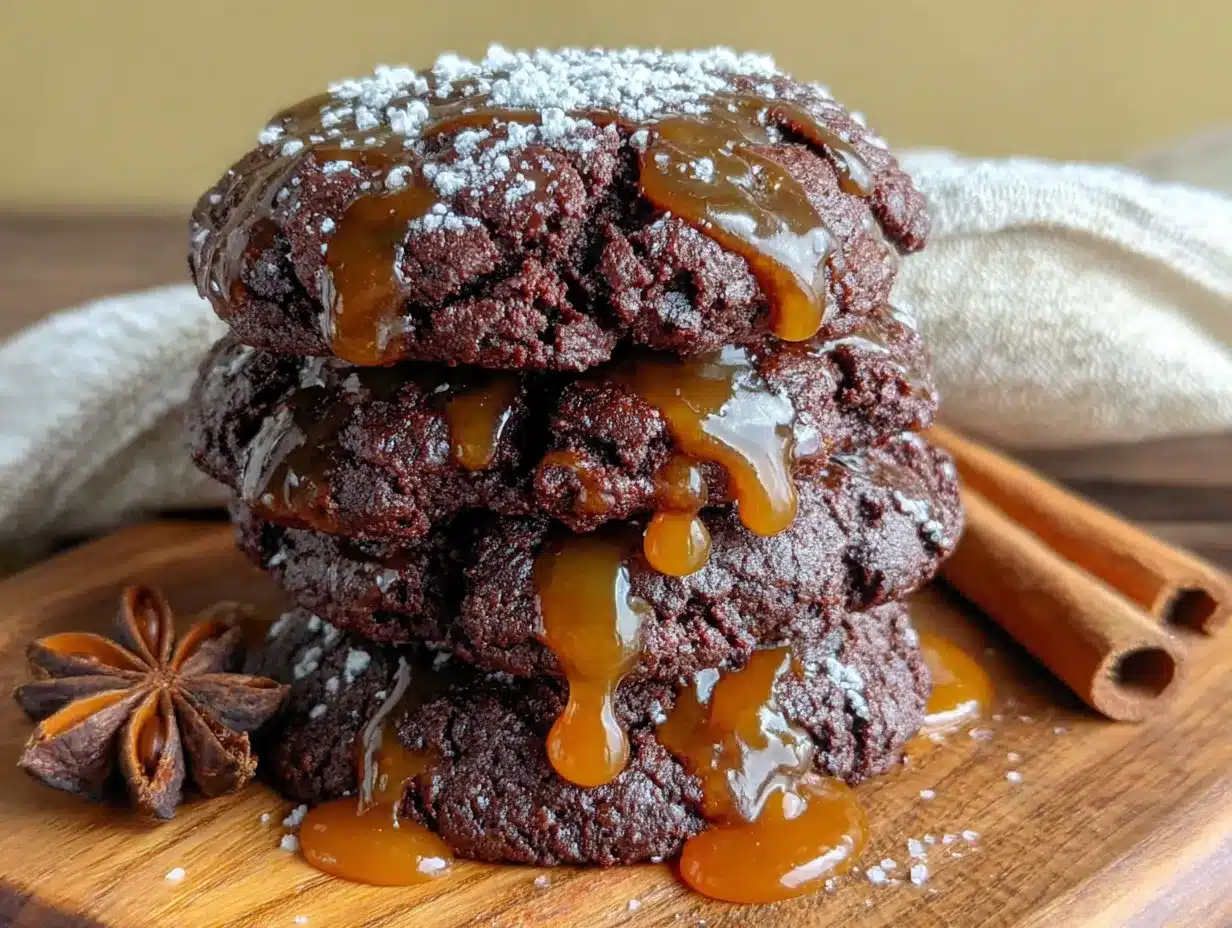
This is the easiest part. No chilling, no rolling, no stress. Follow these steps, and you will have soft, glazed gingerbread squares in under an hour.
- Preheat your oven to 350°F (175°C). Line your 9×13 baking pan with parchment paper, leaving a little overhang on the long sides. This creates handles that will let you lift the whole batch out later.
- Mix the wet ingredients. In a large bowl, whisk together the melted butter and packed brown sugar until smooth. It will look a little grainy at first, but keep whisking. Add the molasses and the room-temperature egg, and whisk until everything is completely combined and glossy. The mixture should smell amazing already.
- Whisk the dry ingredients. In a separate, medium bowl, whisk together the flour, baking soda, ginger, cinnamon, cloves, and salt. Whisking aerates the flour and ensures the spices are evenly distributed.
- Combine wet and dry. Pour the dry ingredients into the wet mixture. Use your rubber spatula to fold it together. Do not overmix. Stop as soon as you no longer see streaks of flour. The dough will be thick and slightly sticky—that is exactly what you want. If it seems too dry, you can add a teaspoon of milk, but you likely won’t need it.
- Press into the pan. Scrape the dough into your prepared pan. It will be thick, so use the back of your spatula or a slightly wet hand to press it evenly into the corners. The layer of dough will be about 1/2-inch thick. Try to make it as even as possible for uniform baking.
- Bake. Bake for 14-17 minutes. The edges should look set and slightly darker, and the center should still look a little soft and puffed. A toothpick inserted into the center should come out with a few moist crumbs, not wet batter. If it comes out clean, you have overbaked them. I start checking at the 14-minute mark. My first batch, I baked them for 18 minutes, and they were still good, just a little less soft. So don’t stress too much, but keep an eye on them.
- Cool completely. Let the pan cool on a wire rack for about 10 minutes. Then, using the parchment paper overhang, lift the whole sheet of gingerbread out of the pan and transfer it to the cooling rack to cool completely. Do not glaze them while they are still warm, or the glaze will just melt and soak in.
- Make the glaze. While the cookies cool, make the glaze. In a small bowl, whisk together the powdered sugar, 2 tablespoons of molasses, vanilla, and 2 tablespoons of milk or cream. Whisk until smooth. It should be thick but pourable. If it is too thick, add another teaspoon of milk. If it is too thin, add a little more powdered sugar.
- Glaze and slice. Once the gingerbread is completely cool, drizzle the glaze over the top. Use a spoon to create a back-and-forth pattern, or use a piping bag for more precision. Let the glaze set for about 10 minutes before slicing into squares. A sharp chef’s knife works best. Wipe the blade clean between cuts for neat edges.
Cooking Tips & Techniques
I have made this recipe a lot, and I have learned a few things the hard way so you don’t have to.
- Don’t overbake. This is the single most important tip. These cookies are meant to be soft, so pulling them out when the center still looks slightly underdone is the right move. They will continue to cook from the residual heat of the pan as they cool. Overbaked gingerbread is dry and crumbly, and we are not doing that here.
- Use room temperature egg. I forgot to take my egg out once and just cracked a cold one into the melted butter. The butter seized up into little hard bits, and I had to microwave the whole bowl for a few seconds to smooth it out. It still worked, but it was a hassle. Just let the egg sit out for 15 minutes.
- Line the pan properly. The parchment paper overhang is not optional. It is the only way to get the entire sheet of gingerbread out of the pan cleanly. If you skip this, you will be digging out squares with a spatula, and they will likely break.
- Let the glaze set before stacking. I was in a hurry once and stacked the cookies in a container while the glaze was still wet. They all stuck together into one giant, sugary blob. It was delicious, but not very pretty. Give the glaze at least 15 minutes to set.
- Check your baking soda. Baking soda loses its potency over time. If your cookies don’t spread or puff at all, your baking soda might be old. To test it, drop a little bit in vinegar. If it fizzes vigorously, it is still good.
Variations & Adaptations
One of the best things about this recipe is how easy it is to change up. Here are a few ways I have played with it.
- Spice it up: Add 1/4 teaspoon of black pepper or a pinch of cayenne pepper to the dry ingredients. It doesn’t make the cookies spicy, but it adds a subtle warmth that deepens the ginger flavor. I did this for a holiday party, and everyone kept asking what the “secret ingredient” was.
- Add some texture: Fold in 1/2 cup of chopped crystallized ginger or toasted pecans right before pressing the dough into the pan. The crystallized ginger adds little chewy, spicy bursts, and the pecans add a nice crunch against the soft cookie.
- Make it dairy-free: Use a good quality vegan butter stick (like Miyoko’s or Country Crock Plant Butter) in place of the dairy butter. The cookies will still be soft and delicious. For the glaze, use any plant-based milk like oat or almond milk.
- Make it gluten-free: Swap the all-purpose flour for a 1:1 gluten-free baking flour blend (I like King Arthur Measure for Measure). The texture will be slightly more delicate, but they still hold together well and taste fantastic. Do not overmix the dough if using gluten-free flour, as it can get gummy.
- Different glaze flavors: Instead of the molasses glaze, try a simple vanilla glaze (1 cup powdered sugar + 2-3 tablespoons milk + 1/2 teaspoon vanilla) or a cream cheese glaze for a tangy twist.
Serving & Storage Suggestions
These cookies are best served at room temperature with a tall glass of cold milk or a hot cup of chai tea. The warmth of the spices and the sweetness of the glaze are a perfect match for something creamy or astringent.
For a cozy dessert, serve them warm with a scoop of vanilla bean ice cream. The cold ice cream melting over the soft, spiced cookie is a next-level experience. I also love crumbling them over a bowl of vanilla yogurt for a quick, dessert-like breakfast (no judgment here).
Storage: Store the cookies in an airtight container at room temperature for up to 5 days. To keep them extra soft, place a slice of plain bread in the container. The cookies will absorb the moisture from the bread, staying soft and tender. The bread will get stale, so just toss it after a day or two.
Freezing: You can freeze the unglazed gingerbread sheet for up to 3 months. Wrap it tightly in plastic wrap, then in a layer of aluminum foil. When you are ready to serve, let it thaw at room temperature, then make the glaze and drizzle it on. The flavor actually deepens after freezing, which I find fascinating.
Reheating: If you want that just-baked warmth, pop a cookie in the microwave for 10-15 seconds. Do not overdo it, or the glaze will melt. For a larger batch, warm them in a 300°F oven for about 5 minutes.
Nutritional Information & Benefits
Here is the estimated nutritional breakdown for one cookie (based on 16 cookies per batch). Please note that these are estimates and can vary based on the exact ingredients you use.
| Nutrient | Amount per Cookie |
|---|---|
| Calories | 195 |
| Fat | 7g |
| Carbohydrates | 32g |
| Sugar | 21g |
| Protein | 2g |
| Sodium | 155mg |
While these are a treat, they do offer a few small benefits. Molasses is a good source of iron, potassium, and calcium. The ginger and cinnamon are known for their anti-inflammatory properties. So, while I wouldn’t call them a health food, they are certainly not empty calories. They are made with real, simple ingredients, and that counts for something. I feel better about giving these to my family than something from a box with a long list of preservatives.
Dietary Considerations: This recipe contains gluten, dairy, and eggs. See the variations section above for gluten-free and dairy-free adaptations.
Conclusion
These soft gingerbread cookies with molasses glaze are the kind of recipe that proves perfection is overrated. That failed batch of cookie-cutter gingerbread men taught me that sometimes the best things come from letting go of the plan and just going with it. These cookies are forgiving, they are fast, and they taste like the best kind of winter memory.
I honestly think you are going to love them. They have become my go-to for last-minute guests, lazy Sunday baking sessions, and any day that needs a little extra warmth. Please, make them your own. Add your favorite spices, try a different glaze, or just eat them plain. And when you do, come back and let me know how they turned out. I would love to hear about your happy accidents in the comments below. Happy baking!
Frequently Asked Questions
Can I use a different size pan?
Yes, you can. A 9×13 pan is ideal for the perfect thickness. If you use an 8×8 pan, the cookies will be much thicker and will need to bake for about 20-22 minutes. If you use a larger jelly roll pan, they will be thinner and will bake in about 10-12 minutes. Just keep an eye on them.
Why did my cookies turn out dry?
The most common reason is overbaking. Pull them out when the center still looks a little soft. Another possibility is too much flour. Make sure you are spooning and leveling your flour, not scooping it directly from the bag.
Can I make the dough ahead of time?
You can, but it will be very stiff after chilling. Let it sit at room temperature for about 20 minutes before pressing it into the pan. I prefer to bake it right away for the best texture.
My glaze is too thick/thin. How do I fix it?
If the glaze is too thick, add milk one teaspoon at a time until it reaches a drizzling consistency. If it is too thin, whisk in a little more powdered sugar until it thickens up.
Can I use blackstrap molasses?
I do not recommend it. Blackstrap molasses is very bitter and has a much stronger, less sweet flavor. It will overpower the spices and make the cookies taste harsh. Stick with mild or robust unsulphured molasses for the best result.
Pin This Recipe!
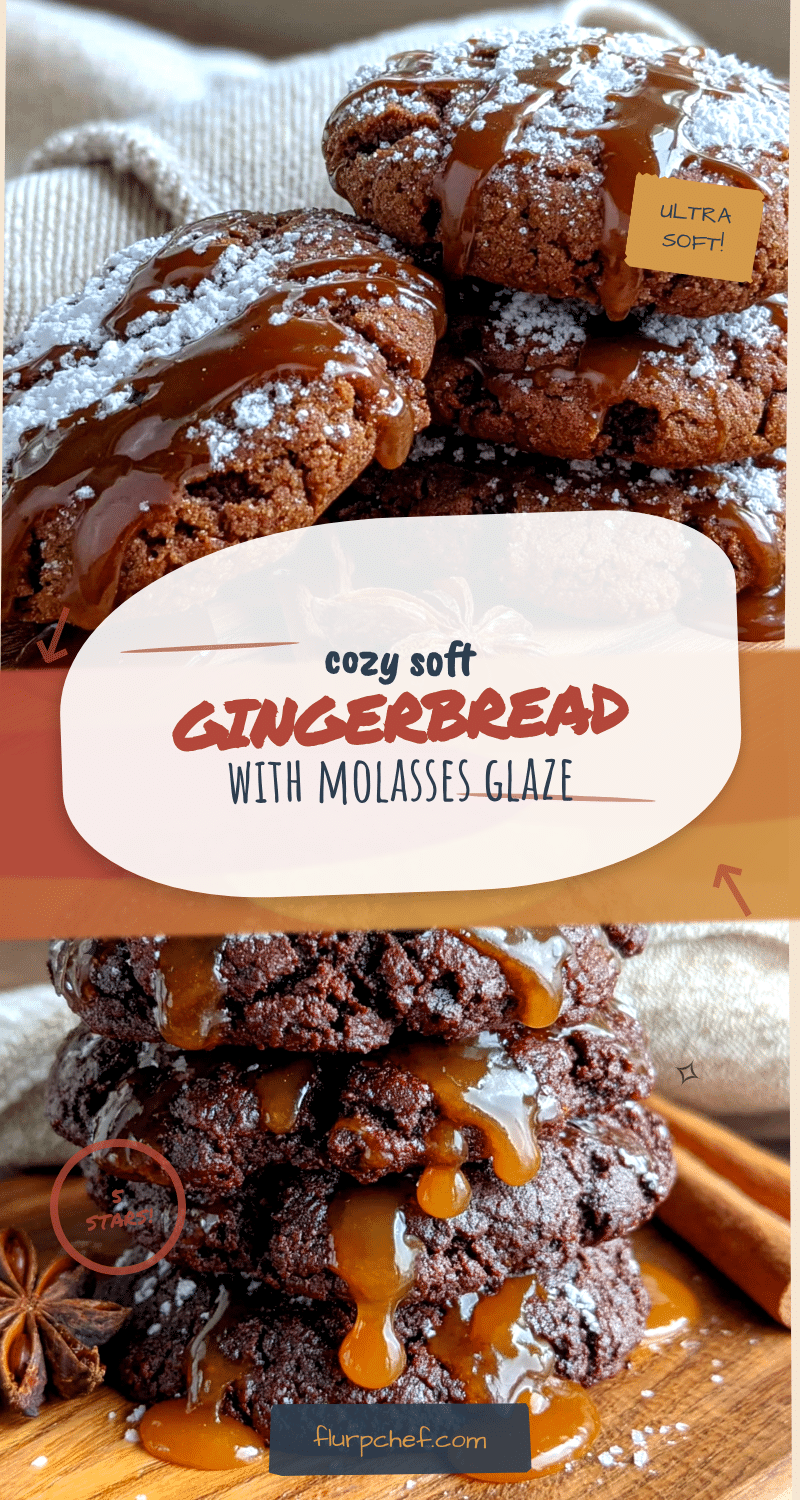
Soft Gingerbread Cookies with Molasses Glaze
These soft, pillowy gingerbread cookies with a glossy molasses glaze are what happens when you stop panicking and let the dough do what it wants. They are quick, easy, and taste like the part of winter that actually feels warm.
- Prep Time: 15 minutes
- Cook Time: 17 minutes
- Total Time: 45 minutes
- Yield: 16 servings 1x
- Category: Dessert
- Cuisine: American
Ingredients
- 1/2 cup (1 stick, 113g) unsalted butter, melted and slightly cooled
- 1/2 cup (100g) light brown sugar, packed
- 1/3 cup (110g) unsulphured molasses
- 1 large egg, room temperature
- 2 cups (250g) all-purpose flour
- 1 1/2 teaspoons baking soda
- 1 1/2 teaspoons ground ginger
- 1 teaspoon ground cinnamon
- 1/2 teaspoon ground cloves
- 1/2 teaspoon salt
- 1 cup (120g) powdered sugar
- 2 tablespoons unsulphured molasses
- 2–3 tablespoons milk or heavy cream
- 1/2 teaspoon vanilla extract
Instructions
- Preheat your oven to 350°F (175°C). Line a 9×13-inch baking pan with parchment paper, leaving overhang on the long sides.
- In a large bowl, whisk together the melted butter and packed brown sugar until smooth. Add the molasses and room-temperature egg, and whisk until completely combined and glossy.
- In a separate medium bowl, whisk together the flour, baking soda, ginger, cinnamon, cloves, and salt.
- Pour the dry ingredients into the wet mixture. Use a rubber spatula to fold together until just combined. Do not overmix. The dough will be thick and slightly sticky.
- Scrape the dough into the prepared pan. Use the back of a spatula or a slightly wet hand to press it evenly into the corners, about 1/2-inch thick.
- Bake for 14-17 minutes. The edges should look set and slightly darker, and the center should still look soft and puffed. A toothpick inserted into the center should come out with a few moist crumbs.
- Let the pan cool on a wire rack for 10 minutes. Then, using the parchment paper overhang, lift the whole sheet of gingerbread out of the pan and transfer to the cooling rack to cool completely.
- While the cookies cool, make the glaze. In a small bowl, whisk together the powdered sugar, 2 tablespoons molasses, vanilla, and 2 tablespoons milk or cream until smooth. Add more milk if needed for a pourable consistency.
- Once the gingerbread is completely cool, drizzle the glaze over the top. Let the glaze set for about 10 minutes before slicing into squares with a sharp chef’s knife.
Notes
Do not overbake; pull cookies out when center still looks slightly underdone. Use room temperature egg to prevent butter from seizing. Line pan with parchment paper for easy removal. Let glaze set before stacking cookies. Check baking soda freshness for proper rise.
Nutrition
- Serving Size: 1 cookie
- Calories: 195
- Sugar: 21
- Sodium: 155
- Fat: 7
- Saturated Fat: 4
- Carbohydrates: 32
- Fiber: 1
- Protein: 2
Keywords: soft gingerbread cookies, molasses glaze, easy gingerbread, holiday cookies, no chill gingerbread


