This was supposed to be a roasted root vegetable situation—the kind where you toss everything in oil, spread it on a sheet pan, and hope the kids don’t notice there are parsnips hiding under the carrots. I had the butternut squash cubed, the Brussels sprouts trimmed, and my oven preheating to 425°F. Then my youngest wandered into the kitchen, took one look at the cutting board, and said, “Mom, that looks like the dinner we had last week.” And honestly? She wasn’t wrong.
I stood there, mid-chop, feeling that familiar pang of defeat. You know the one—when you’re trying to get vegetables into your family and it feels like you’re fighting a losing battle. The oven beeped, the timer on my phone went off for something I’d already forgotten, and I just… stopped. I grabbed a big bowl instead of the sheet pan, tossed the raw cubes of squash with some apple cider vinegar and maple syrup, and started adding things cold. Crunchy things. Sweet things. Things that looked more like a snack than a side dish.
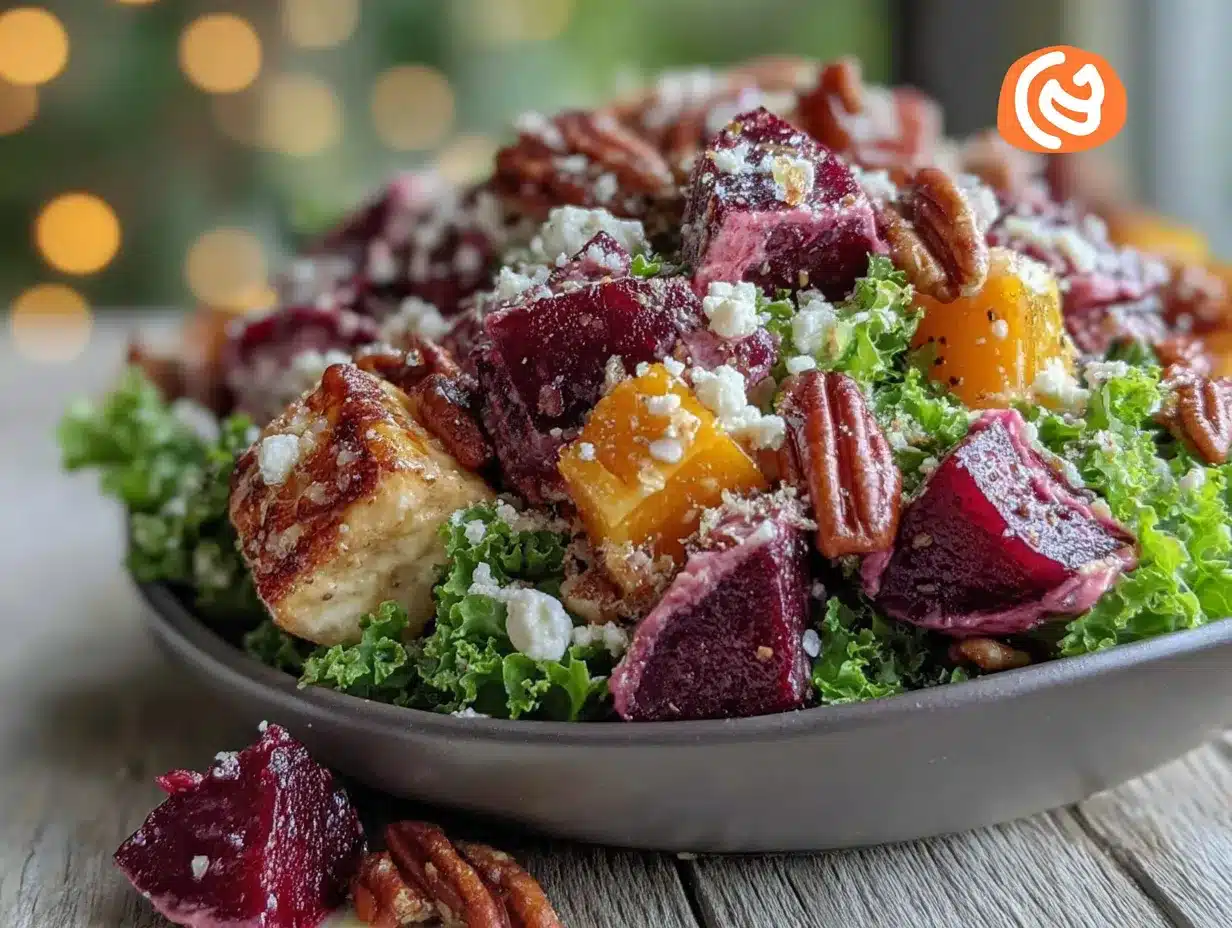
What came out of that moment of pure kitchen frustration was this Kid-Friendly Fall Chopped Salad with Maple Vinaigrette. It’s nothing like what I planned—and honestly, it’s better. My kids ate it without complaint. My husband asked for seconds. And I stood there at the counter, fork in hand, feeling like I’d accidentally stumbled onto something worth keeping. Maybe you’ve been there too—the moment when letting go of the plan is exactly what you needed to do.
Why You’ll Love This Recipe
I’ve tested this salad on what feels like a hundred different palates—my own picky eaters, my neighbor’s kids who “don’t do green things,” and my mother-in-law who has very strong opinions about what belongs in a salad. Every single time, it worked. That’s not luck. That’s a recipe built on experience, a few kitchen failures, and a whole lot of tweaking.
- Quick & Easy: This comes together in about 20 minutes, start to finish. No roasting, no waiting, no complicated steps.
- Simple Ingredients: Everything here is probably already in your fridge or pantry—or at least easy to grab on a regular grocery run.
- Perfect for Family Meals: It works as a side dish for busy weeknights or as the main event for a casual weekend lunch.
- Crowd-Pleaser: I’ve watched kids who swear they hate salad go back for seconds. The combination of sweet, salty, and crunchy is basically irresistible.
- Unbelievably Delicious: The maple vinaigrette is the kind of dressing that makes you want to put it on everything—roasted veggies, grain bowls, even drizzled over a baked sweet potato.
What makes this different from every other fall salad out there? It’s the texture. Most chopped salads end up sad and soggy after five minutes. This one stays crunchy because of how I layer the ingredients and dress it. Plus, the vinaigrette has just enough maple to feel like a treat without being cloying. It’s the kind of recipe that makes you close your eyes after the first bite—and then immediately think about when you can make it again.
What Ingredients You Will Need
This recipe uses simple, wholesome ingredients that come together to create something surprisingly special. No fancy trips to a specialty store required—just good, honest food that works for real families.
For the Salad
- Butternut squash, peeled and diced small (about 2 cups) – I buy pre-cut cubes from the store when I’m in a hurry, but dicing them yourself is cheaper and lets you control the size. You want tiny pieces—think pea-sized or a little bigger—so they blend into the salad without overwhelming it.
- Apple, diced (1 medium, any crisp variety) – Honeycrisp or Fuji work great. Leave the skin on for color and fiber. The sweetness balances the savory elements perfectly.
- Dried cranberries (1/3 cup) – Look for ones sweetened with apple juice instead of added sugar if you’re watching that kind of thing. They add that chewy, tart pop that kids love.
- Sharp cheddar cheese, diced small (1/2 cup) – I use block cheddar and cut it into tiny cubes myself. Pre-shredded cheese has anti-caking agents that don’t melt the same way. For a dairy-free version, skip it or use a plant-based alternative.
- Pepitas (shelled pumpkin seeds) (1/4 cup) – These add the crunch that makes this salad feel like a snack. Toasted ones have more flavor, but raw works fine too.
- Chopped kale or romaine lettuce (4 cups) – I prefer a mix of both: kale for staying power and romaine for that classic crunch. If you use all kale, massage it with a little olive oil first to soften it up.
- Cooked quinoa, cooled (1 cup) – This is optional but highly recommended. It adds protein and makes the salad more filling. Leftover quinoa from earlier in the week is perfect here.
For the Maple Vinaigrette
- Pure maple syrup (3 tablespoons) – Not pancake syrup. Real maple syrup makes a huge difference in flavor. I recommend Grade A for its lighter, more delicate taste.
- Apple cider vinegar (2 tablespoons) – This gives the dressing its tangy backbone. White wine vinegar works in a pinch, but apple cider vinegar feels more fall-appropriate.
- Dijon mustard (1 teaspoon) – It helps emulsify the dressing and adds a subtle kick. Whole grain mustard is a nice alternative if you want more texture.
- Extra virgin olive oil (1/4 cup) – A good-quality olive oil makes a difference here. Don’t use the super peppery stuff—go for something mild and buttery.
- Salt and black pepper (to taste) – I use about 1/4 teaspoon of salt and a few cracks of pepper. Adjust based on your preference.
- Garlic powder (1/4 teaspoon) – This is my secret ingredient. It adds depth without being garlicky. Trust me on this one.
Equipment Needed
You don’t need much for this recipe, which is part of what makes it so great. Here’s what I use:
- Large mixing bowl – I have a wooden bowl I inherited from my grandmother that I use for everything, but any big bowl works. Glass or ceramic is nice because it doesn’t absorb flavors.
- Sharp chef’s knife – A good knife makes dicing butternut squash so much easier. I’ve used the same 8-inch chef’s knife for years, and it’s worth every penny.
- Cutting board – Go for a large one so you have room to work. I prefer wood, but plastic is fine and easier to sanitize.
- Small jar or bowl for dressing – A mason jar with a tight-fitting lid is perfect for shaking up the vinaigrette. If you don’t have one, a small bowl and whisk work just fine.
- Measuring cups and spoons – I know some people eyeball everything, but for this recipe, the ratios matter. At least measure the dressing ingredients.
- Vegetable peeler – Only needed if you’re peeling your own butternut squash. A Y-shaped peeler is my favorite—it’s faster and gives you more control.
If you don’t have a mason jar, don’t stress. I’ve made the dressing in a coffee mug before, whisking it with a fork. It still came out great. The key is just getting everything emulsified, not the vessel you use.
Preparation Method
Let me walk you through this step by step. I’ve made this salad so many times I could do it in my sleep, but I’ll slow it down so you don’t miss anything.
- Make the dressing first. In a small jar or bowl, combine 3 tablespoons of maple syrup, 2 tablespoons of apple cider vinegar, 1 teaspoon of Dijon mustard, 1/4 teaspoon of garlic powder, and a pinch of salt and pepper. Whisk or shake until everything is combined. Then slowly drizzle in 1/4 cup of olive oil while whisking continuously—or just put the lid on the jar and shake it like crazy. Set it aside. The flavors need a few minutes to meld, so making this first is actually a smart move.
- Prep your squash. If you’re using a whole butternut squash, peel it first with a vegetable peeler, then cut it in half lengthwise and scoop out the seeds. Dice it into very small pieces—about 1/4-inch cubes. I know this sounds tedious, but tiny pieces are the secret to making this salad work with kids. They blend in with everything else and don’t feel like a “vegetable chunk.” Pro tip: microwave the whole squash for 2 minutes before peeling—it softens the skin just enough to make peeling easier.
- Cook the quinoa (if using). Rinse 1/2 cup of quinoa under cold water, then combine it with 1 cup of water in a small saucepan. Bring to a boil, then reduce to a simmer, cover, and cook for 15 minutes. Remove from heat and let it sit, covered, for 5 more minutes. Fluff with a fork and let it cool completely. I often make quinoa earlier in the week and keep it in the fridge specifically for salads like this.
- Chop your greens and veggies. Wash and dry your kale and/or romaine thoroughly—wet greens make sad salads. Chop them into bite-sized pieces. Dice your apple (leave the skin on for color and fiber) and cut your cheddar into tiny cubes. I aim for pieces about the size of a pea. It sounds fussy, but uniform sizes mean every bite has a little bit of everything.
- Toast the pepitas (optional but recommended). Heat a small dry skillet over medium heat. Add the pepitas and cook, stirring frequently, until they start to pop and turn golden—about 2-3 minutes. Watch them carefully because they burn fast. Remove from the pan immediately and let them cool.
- Assemble the salad. In your large bowl, combine the chopped greens, diced squash, apple, dried cranberries, cheddar cubes, cooled quinoa, and toasted pepitas. Toss gently with your hands or two large spoons. Don’t add the dressing yet—this is just the dry mix.
- Dress and serve. Give your dressing another good shake or whisk, then drizzle about half of it over the salad. Toss to coat, then add more dressing as needed. You want everything lightly coated, not swimming in it. Serve immediately.
A note on timing: this salad is best eaten right after it’s dressed. If you’re meal prepping, keep the dressing separate and toss everything together just before serving. The undressed salad will keep in the fridge for up to 3 days, making it perfect for packed lunches.
Cooking Tips & Techniques
I’ve made enough mistakes in the kitchen to fill a cookbook, and this salad taught me a few things the hard way. Let me save you some trouble.
The biggest mistake I see people make is overdressing the salad. I did it myself the first time—poured the whole jar of vinaigrette over the bowl and ended up with a soggy mess. Start with half, toss, and add more if you need it. You can always add dressing, but you can’t take it out.
Another thing: don’t skip toasting the pepitas. I know it’s an extra step, and sometimes you’re just trying to get dinner on the table. But those few minutes in a hot pan transform them from bland seeds into little flavor bombs. They get nutty and crunchy and completely addictive. I’ve caught my kids eating them straight from the pan.
Here’s a timing trick I learned from years of feeding a family: Make the dressing and chop the squash while the quinoa cooks. Then chop everything else while the squash and quinoa cool. You can have the whole salad prepped in the time it takes to cook the quinoa. Multitasking isn’t always fun, but in the kitchen, it’s a survival skill.
One more thing about the squash. I used to leave it raw because I liked the crunch, but my youngest kept picking it out. Now I blanch it quickly—drop the diced cubes in boiling water for 60 seconds, then transfer them to an ice bath. It softens them just enough to make them kid-friendly without turning them mushy. If you don’t want to do that, just dice them extra small. Trust me, the size matters more than you think.
Consistency tip: If you’re making this for a crowd, double the dressing recipe. People always want extra, and it’s better to have too much than not enough. Plus, leftover dressing keeps in the fridge for up to a week and tastes great on everything from roasted vegetables to grain bowls.
Variations & Adaptations
This recipe is flexible, which is one of the reasons I love it. Here are some ways to make it work for your family.
Make it dairy-free: Skip the cheddar cheese or swap it for a plant-based alternative. I’ve used vegan cheddar cubes from a brand I like, and honestly, they work fine. The salad doesn’t rely on cheese for its flavor, so you won’t miss it much.
Swap the protein: Not a fan of quinoa? Use cooked chickpeas or diced grilled chicken instead. Both add protein and make the salad more filling. I’ve done a version with leftover rotisserie chicken that was absolutely perfect for lunch the next day.
Seasonal variations: In the fall, this salad is perfect as written. But in winter, try swapping the apple for diced pear and adding some pomegranate seeds. In spring, use fresh strawberries instead of dried cranberries. The maple vinaigrette works with all of them—it’s surprisingly versatile.
For picky eaters: My youngest still isn’t a fan of kale, so I sometimes make her a separate bowl with just romaine and all the other ingredients. It takes two extra minutes and saves me from hearing complaints. Sometimes meeting them halfway is the smartest move.
Add some crunch: If you’re like me and can’t resist extra texture, throw in some chopped pecans or walnuts. Toast them first for maximum flavor. I’ve also added crumbled bacon on top for special occasions—it’s not exactly healthy, but it sure is delicious.
I once made a version with roasted sweet potatoes instead of raw squash because I had leftovers from another meal. It was completely different but equally good. That’s the beauty of this recipe—it’s forgiving. You can mess with it and it still works.
Serving & Storage Suggestions
This salad is best served cold or at room temperature, right after it’s dressed. The contrast between the cool greens, the crunchy pepitas, and the sweet-tangy dressing is what makes it special.
For family dinners, I serve it alongside something warm and comforting—like a bowl of soup or a simple roasted chicken. The temperature contrast is nice, and the salad adds a fresh element to heavier meals. It also works beautifully as a main dish for lunch, especially if you add the quinoa and some extra protein.
Storage tip: Keep the dressing separate from the salad until you’re ready to eat. The undressed salad will stay fresh in an airtight container in the fridge for up to 3 days. The dressing keeps for about a week in a sealed jar. When you’re ready to serve, just toss everything together.
Reheating? Honestly, this isn’t a reheated kind of dish. But if you have leftovers that are already dressed, they’ll be softer the next day—more like a wilted salad. It’s still good, just different. My kids actually prefer it that way for some reason. Go figure.
Packing for lunch: Layer the undressed salad in a mason jar with the dressing at the bottom. When you’re ready to eat, shake it up and enjoy. It stays crunchy for hours this way. I do this at least once a week for my own lunch.
The flavors actually develop over time—the squash absorbs a little of the dressing, the cranberries plump up slightly, and everything melds together. It’s not better, just different. Both versions have their place.
Nutritional Information & Benefits
This salad is packed with good stuff, and I love that about it. Here’s a rough breakdown per serving (based on 4 servings, with quinoa and dressing):
- Calories: Approximately 320-350
- Protein: 10-12 grams
- Fat: 18-20 grams (mostly from olive oil and pepitas—the good kind)
- Carbohydrates: 35-40 grams
- Fiber: 6-8 grams
- Sugar: 14-16 grams (naturally occurring from maple syrup, apples, and cranberries)
Health highlights: Butternut squash is loaded with vitamin A and fiber. Kale is a powerhouse of vitamins K, C, and A. Pepitas are rich in magnesium and zinc. And the maple vinaigrette uses real maple syrup instead of refined sugar, so you get a touch of sweetness with some antioxidants.
Dietary considerations: This recipe is naturally vegetarian and can be made vegan by skipping the cheese or using a plant-based alternative. It’s also gluten-free as written. If you’re watching your sugar intake, you can reduce the maple syrup to 2 tablespoons—it’ll still be plenty sweet.
I’m not a nutritionist, but I’ve done enough reading to know that getting a variety of colorful vegetables into your diet is one of the best things you can do for your health. This salad makes that easy. And when something this good is also good for you? That’s a win in my book.
Conclusion
This Kid-Friendly Fall Chopped Salad with Maple Vinaigrette started as a kitchen accident—a moment of frustration that turned into something I now make on repeat. It’s proof that sometimes the best recipes come from letting go of the plan and trusting your instincts. Or, you know, just being too tired to follow through with the original idea.
I love this recipe because it makes vegetables feel like a treat. My kids eat it without complaint. My husband asks for it. And I get to feel like I’ve done something good for my family without spending hours in the kitchen. That’s the kind of win I’ll take any day of the week.
I’d love to hear how it turns out for you. Did your kids eat it? Did you try a variation? Drop a comment below and let me know—I read every single one, and your feedback helps me create better recipes for all of us. And if you make it, tag me in your photos. There’s nothing that makes my day like seeing someone else enjoying a recipe that started as a happy accident in my own kitchen.
Happy cooking, friends. And remember—sometimes the best dinners are the ones you never planned.
Frequently Asked Questions
Can I make this salad ahead of time?
Yes, but keep the dressing separate until you’re ready to serve. The undressed salad will stay fresh in the fridge for up to 3 days. When you’re ready to eat, just toss everything together with the dressing.
My kids don’t like kale. Can I use something else?
Absolutely. Romaine lettuce works great and has a milder flavor. You can also use a mix of spinach and romaine, or just stick with all romaine. The key is chopping everything small so it all blends together.
Can I roast the squash instead of leaving it raw?
Yes, and it’s delicious that way. Toss the diced squash with a little olive oil and salt, then roast at 400°F for about 15-20 minutes until tender. Let it cool completely before adding it to the salad. The texture will be softer, but the flavor gets sweeter and more concentrated.
What can I use instead of maple syrup?
Honey is the best substitute—use the same amount. Agave nectar or date syrup would also work, though they’ll change the flavor slightly. If you’re out of all of them, you can use brown sugar dissolved in a little warm water, but the dressing won’t emulsify as well.
How do I keep the apples from turning brown?
Toss the diced apples in a little lemon juice or apple cider vinegar right after you chop them. The acid prevents oxidation and keeps them looking fresh. Alternatively, just add them right before serving—they don’t have time to brown if you’re eating immediately.
Pin This Recipe!
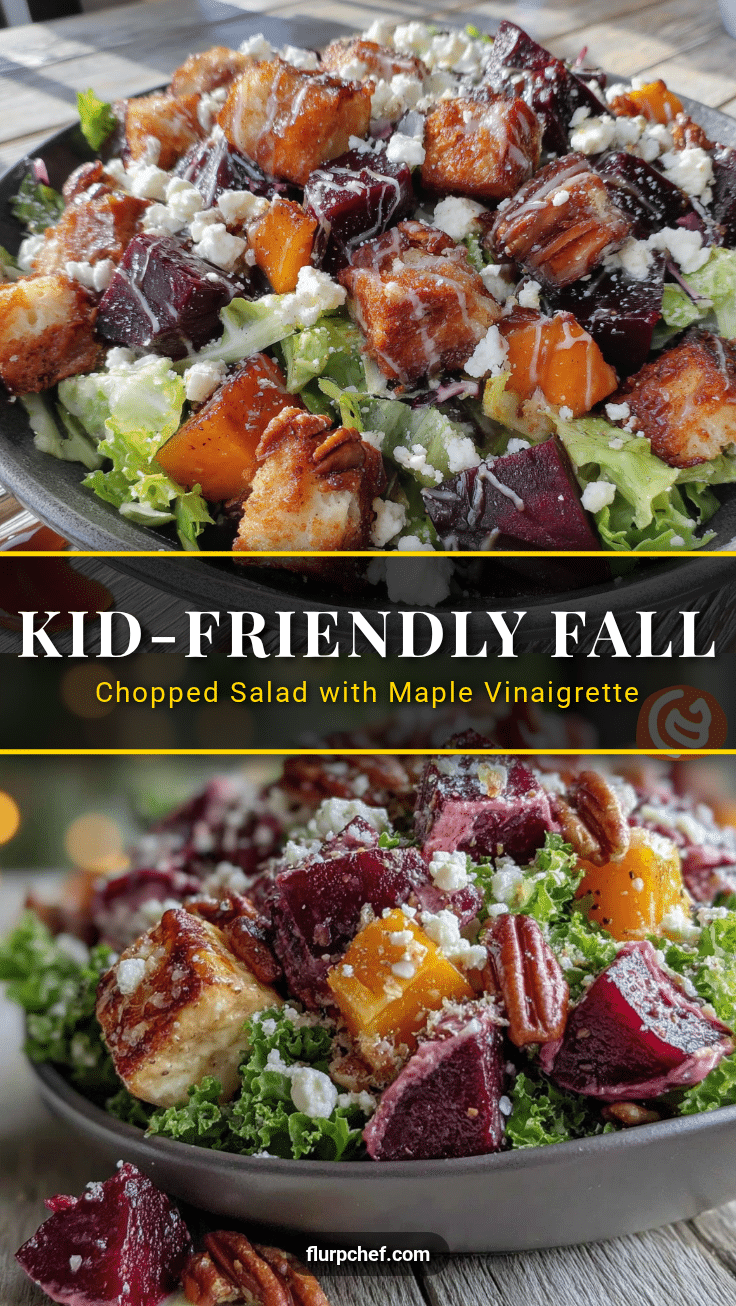
Kid-Friendly Fall Chopped Salad
A quick and easy fall chopped salad with butternut squash, apple, dried cranberries, sharp cheddar, pepitas, and a maple vinaigrette. Perfect for family meals and picky eaters.
- Prep Time: 20 minutes
- Cook Time: 15 minutes
- Total Time: 35 minutes
- Yield: 4 servings 1x
- Category: Salad
- Cuisine: American
Ingredients
- 2 cups butternut squash, peeled and diced small (about 1/4-inch cubes)
- 1 medium apple (Honeycrisp or Fuji), diced
- 1/3 cup dried cranberries
- 1/2 cup sharp cheddar cheese, diced small
- 1/4 cup pepitas (shelled pumpkin seeds)
- 4 cups chopped kale or romaine lettuce (or a mix)
- 1 cup cooked quinoa, cooled (optional)
- 3 tablespoons pure maple syrup
- 2 tablespoons apple cider vinegar
- 1 teaspoon Dijon mustard
- 1/4 cup extra virgin olive oil
- 1/4 teaspoon garlic powder
- Salt and black pepper to taste
Instructions
- Make the dressing first: In a small jar or bowl, combine maple syrup, apple cider vinegar, Dijon mustard, garlic powder, and a pinch of salt and pepper. Whisk or shake until combined. Slowly drizzle in olive oil while whisking continuously, or shake in a jar. Set aside.
- Prep the squash: If using a whole butternut squash, peel it, cut in half lengthwise, scoop out seeds, and dice into very small pieces (about 1/4-inch cubes). For easier peeling, microwave the whole squash for 2 minutes first.
- Cook the quinoa (if using): Rinse 1/2 cup quinoa, combine with 1 cup water in a small saucepan. Bring to a boil, reduce to simmer, cover, and cook for 15 minutes. Remove from heat, let sit covered for 5 minutes, then fluff with a fork and cool completely.
- Chop greens and veggies: Wash and dry kale and/or romaine, chop into bite-sized pieces. Dice apple (skin on) and cheddar into small cubes.
- Toast the pepitas (optional): Heat a dry skillet over medium heat. Add pepitas and cook, stirring frequently, until golden and popping (about 2-3 minutes). Remove from pan immediately and let cool.
- Assemble the salad: In a large bowl, combine chopped greens, diced squash, apple, dried cranberries, cheddar cubes, cooled quinoa, and toasted pepitas. Toss gently.
- Dress and serve: Shake or whisk dressing again, then drizzle about half over the salad. Toss to coat, adding more dressing as needed. Serve immediately.
Notes
For best texture, keep dressing separate until serving. Undressed salad keeps in fridge up to 3 days. Dressing keeps up to 1 week. To prevent apple browning, toss with lemon juice or apple cider vinegar. For picky eaters, blanch squash in boiling water for 60 seconds then ice bath to soften.
Nutrition
- Serving Size: 1 serving (about 2 c
- Calories: 335
- Sugar: 15
- Sodium: 280
- Fat: 19
- Saturated Fat: 4
- Carbohydrates: 38
- Fiber: 7
- Protein: 11
Keywords: fall salad, chopped salad, kid-friendly, butternut squash, maple vinaigrette, healthy, quick, easy