It was 11:47 PM on a random Wednesday in October, and I had a very specific, almost ridiculous craving for butternut squash soup. Not just any soup—I wanted the kind you see in magazines, served inside a tiny pumpkin. The problem? I had a single butternut squash sitting on my counter, a few sad-looking onions, and absolutely no intention of running to the store at that hour. I also didn’t have the “right” pumpkins for serving—you know, the cute little sugar pumpkins that show up at farmers’ markets. What I did have was a bag of mini decorative pumpkins I’d bought on impulse at the grocery store two weeks ago, thinking they’d look nice on my table. They were still sitting there, gathering dust, looking at me with their little stems.
So I did what any reasonable person with a late-night cooking obsession would do. I grabbed a knife, hacked the top off one of those tiny pumpkins, and scraped out the insides. I figured if it worked for Pinterest, it would work for me at 11:47 PM on a Wednesday. Honestly, I wasn’t sure if they were even edible—turns out, mini pumpkins are totally fine to eat, though some are a bit more stringy than others. I roasted the pumpkin flesh alongside the butternut squash, blended everything together with some coconut milk I found hiding in the back of the fridge, and poured it back into the hollowed-out pumpkin shell. Let me tell you, when I took that first spoonful, scraping the roasted pumpkin meat from the sides of the bowl, I knew I had stumbled onto something special. Maybe you’ve been there—that moment when a desperate, half-baked idea turns into a recipe you’ll make for years.
Why You’ll Love This Recipe
This isn’t just another butternut squash soup recipe. This is the one you’ll pull out when you want to impress your dinner party guests without spending all day in the kitchen. I’ve tested this version at least a dozen times, tweaking the ratios of squash to pumpkin, adjusting the spice blend, and perfecting the roasting time so the mini pumpkins don’t collapse. Here’s why this recipe is a total game-changer for your next gathering:
- Stunning Presentation: Serving soup in mini pumpkins is pure dinner party magic. Your guests will literally gasp when you set these on the table. It’s a showstopper with zero fussy plating.
- Simple Ingredients: You only need a handful of pantry staples. No weird specialty items or expensive imported spices—just good, honest vegetables and basic seasonings.
- Perfect for Fall Gatherings: Whether it’s a Halloween party, a Friendsgiving, or a cozy dinner with close friends, this dish fits right in. It’s festive without being gimmicky.
- Crowd-Pleaser: I’ve served this to kids, picky eaters, and serious foodies. Everyone loves it. The creamy texture and warm spices are universally appealing.
- Make-Ahead Friendly: You can make the soup base a day or two before your party. Just reheat, pour into the pumpkins, and bake. Less stress, more time to enjoy your guests.
What makes this recipe different from every other squash soup out there is the double-roasting technique. You roast the butternut squash and the mini pumpkin flesh together, which deepens the flavor and adds a subtle sweetness you just can’t get from boiling. Plus, the pumpkin shell acts as both a bowl and an edible garnish—the roasted pumpkin meat on the sides of the bowl gets scooped up with each spoonful. It’s comfort food reimagined for the host who wants to look like a rockstar without actually working that hard. Honestly, this soup makes you look like you spent hours when really, you just let the oven do the heavy lifting.
What Ingredients You Will Need
This recipe uses simple, wholesome ingredients to deliver bold flavor and satisfying texture. Most of these are probably already in your kitchen, which makes this perfect for last-minute entertaining. I’ve noted a few tips and substitutions based on my own trial-and-error experiences.
- Butternut Squash (1 large, about 3 pounds): Look for one that feels heavy for its size and has a matte, beige skin. I prefer using a whole squash and roasting it myself—the flavor is much deeper than pre-cut cubes. If you’re short on time, you can use 4 cups of pre-cut squash, but the texture won’t be quite as silky.
- Mini Pumpkins (6-8, for serving): These are the small decorative pumpkins you see at grocery stores in the fall. Make sure they’re labeled as edible or “sugar pumpkins.” You’ll also use the flesh from one or two of them in the soup itself for extra pumpkin flavor. I like to buy a few extra in case one cracks while roasting.
- Yellow Onion (1 large, diced): The base of any good soup. It adds sweetness and depth. Don’t skip this—it’s not the same with just garlic.
- Garlic Cloves (4-5, minced): Fresh garlic is non-negotiable here. The jarred stuff has a metallic taste that ruins the soup’s delicate flavor profile.
- Coconut Milk (1 can, full-fat): This is what makes the soup luxuriously creamy without any dairy. I’ve tried light coconut milk, and it’s just not the same—the soup ends up watery. Trust me on the full-fat version.
- Vegetable Broth (3 cups): Use a good-quality broth here. I like Better Than Bouillon for its rich flavor. You can also use chicken broth if you’re not keeping it vegetarian.
- Olive Oil (3 tablespoons): For roasting the squash and sautéing the aromatics. A good extra virgin olive oil makes a difference in the final flavor.
- Maple Syrup (1 tablespoon): Just a touch to enhance the natural sweetness of the squash. Use real maple syrup, not pancake syrup—it’s a world of difference.
- Ground Cinnamon (1 teaspoon): Warm, cozy, and essential for that fall flavor. Freshly ground is best, but pre-ground works fine.
- Ground Nutmeg (½ teaspoon): A little goes a long way. Freshly grated nutmeg is incredible here if you have it.
- Ground Ginger (½ teaspoon): Adds a subtle warmth that complements the squash beautifully. You can use fresh grated ginger instead—about 1 teaspoon—but I find ground ginger easier for this recipe.
- Salt and Black Pepper (to taste): Don’t be shy with the salt. It’s what makes all the flavors pop. I use sea salt or kosher salt.
- Optional Toppings: Toasted pumpkin seeds (pepitas), a drizzle of coconut cream or heavy cream, fresh thyme or sage leaves, and a sprinkle of cinnamon. These aren’t just for looks—they add texture and freshness.
Equipment Needed
You don’t need a fancy kitchen to pull this off. Here’s what you’ll need:
- Large Baking Sheet (2): One for the butternut squash and one for the mini pumpkins. If you only have one, just roast in batches.
- Sharp Chef’s Knife: Cutting through butternut squash and mini pumpkins requires a good, sharp knife. A dull knife is dangerous here—I learned that the hard way when I nearly sliced my finger off.
- Vegetable Peeler: For peeling the butternut squash. A Y-shaped peeler works best.
- Large Soup Pot or Dutch Oven: For sautéing the aromatics and simmering the soup. A heavy-bottomed pot prevents scorching.
- Immersion Blender or Regular Blender: An immersion blender is easier and less messy. If using a regular blender, work in batches and don’t fill it more than halfway with hot liquid—trust me, hot soup explosions are not fun to clean up.
- Small Knife and Spoon: For hollowing out the mini pumpkins. A grapefruit spoon with serrated edges works great for scraping out the seeds and strings.
- Parchment Paper: For lining the baking sheets. Makes cleanup a breeze.
Preparation Method

Take your time with this one—the roasting is where all the magic happens. Here’s how to do it, step by step.
- Preheat your oven to 400°F (200°C). Line two large baking sheets with parchment paper. This high heat is key for caramelizing the squash and deepening the flavor.
- Prepare the butternut squash. Using a sharp chef’s knife, carefully cut the squash in half lengthwise. Scoop out the seeds and stringy bits with a spoon—save the seeds for roasting if you want! Place the squash halves cut-side down on one of the prepared baking sheets. Roast for 35-40 minutes, or until the flesh is fork-tender and the edges are starting to caramelize. The skin should look slightly wrinkled and browned. Let it cool slightly, then scoop the flesh out with a spoon. You should have about 3-4 cups of roasted squash.
- Prepare the mini pumpkins. While the squash is roasting, work on the pumpkins. Using a small, sharp knife, cut the top off each mini pumpkin, about 1 inch from the stem, just like you would a jack-o’-lantern. Set the tops aside. Use a spoon to scoop out the seeds and stringy flesh from inside each pumpkin. Be careful not to puncture the walls—you want them to hold the soup. Rub the inside of each pumpkin with a little olive oil and season with salt and pepper. Place the pumpkins and their tops on the second baking sheet, cut-side up.
- Roast the mini pumpkins. Roast the pumpkins for 20-25 minutes, until the flesh is tender but the shells are still firm enough to hold their shape. You want them to be cooked through but not mushy. The tops will cook faster—check them at 15 minutes and remove them if they’re done. Set the pumpkins aside to cool slightly.
- Sauté the aromatics. While the pumpkins are roasting, heat 2 tablespoons of olive oil in a large soup pot or Dutch oven over medium heat. Add the diced onion and cook for 5-6 minutes, until translucent and starting to brown at the edges. Add the minced garlic and cook for another 30 seconds, until fragrant. Don’t let the garlic burn—it turns bitter.
- Combine and simmer. Add the roasted butternut squash flesh to the pot, along with the vegetable broth, coconut milk, maple syrup, cinnamon, nutmeg, and ginger. Stir everything together, scraping up any browned bits from the bottom of the pot. Bring the soup to a gentle simmer, then reduce the heat to low and let it cook for 10 minutes, allowing the flavors to meld. If you’re using the flesh from one of the mini pumpkins, add it here too.
- Blend the soup. Remove the pot from the heat. Using an immersion blender, puree the soup until it’s completely smooth and silky. If you’re using a regular blender, work in batches—fill the blender no more than halfway, hold the lid firmly with a kitchen towel, and blend until smooth. Return the blended soup to the pot. Taste and adjust the seasoning with salt and pepper. If the soup is too thick, add a splash more broth or coconut milk. If it’s too thin, let it simmer for a few more minutes to reduce.
- Fill the pumpkins. Place the roasted mini pumpkins on a serving platter or individual plates. Carefully ladle the hot soup into each pumpkin, filling them almost to the top. Don’t overfill—you need room for the toppings and the lid. If you have extra soup, serve it in a regular bowl on the side for seconds.
- Garnish and serve. Top each pumpkin with a sprinkle of toasted pumpkin seeds, a few fresh thyme or sage leaves, and a drizzle of coconut cream or heavy cream. Place the little pumpkin lids on top at a jaunty angle. Serve immediately, while everything is still warm. Warn your guests that the pumpkins will be hot—I usually put them on small plates or napkins for easy handling.
Cooking Tips & Techniques
I’ve made this soup more times than I can count, and I’ve definitely made my share of mistakes along the way. Here’s what I’ve learned so you don’t have to repeat my errors.
Don’t skip the roasting step. I know it’s tempting to save time by boiling the squash, but roasting is what gives this soup its deep, caramelized flavor. The high heat concentrates the natural sugars and adds a subtle smokiness that you just can’t get from boiling. Your guests will notice the difference, even if they can’t quite put their finger on it.
Watch your pumpkins carefully. Mini pumpkins vary in size and thickness, so cooking times can differ. The first time I made this, I roasted my pumpkins for 30 minutes and they completely collapsed when I tried to fill them. Now I start checking at 15 minutes by poking the side with a fork. You want the flesh to be tender but the shell to still hold its shape. It’s better to undercook slightly than to overcook—you can always pop them back in the oven for a few minutes if needed.
Season as you go. This is a lesson I learned from a chef friend years ago. If you only season the soup at the end, it tastes flat. Season the onions as they cook, season the squash before roasting, and season the soup after blending. Each layer of seasoning builds complexity. I use about 1 teaspoon of salt total for the full recipe, but start with less and adjust to taste.
Make it ahead for less stress. This is a host’s best friend. You can make the soup base up to 3 days in advance and store it in the fridge. You can also roast the mini pumpkins a day ahead—just store them in an airtight container in the fridge. When your guests arrive, reheat the soup on the stove, reheat the pumpkins in a 350°F oven for 5-7 minutes, and assemble. It takes 10 minutes and looks like you spent all day.
Don’t over-blend. If you blend the soup for too long, especially in a high-speed blender, it can become gummy and unpleasantly thick. Blend just until smooth—about 30 seconds with an immersion blender or 45 seconds in a regular blender. The texture should be velvety, not gluey.
Variations & Adaptations
One of the best things about this recipe is how flexible it is. Here are some ways to make it your own.
Vegan and Dairy-Free: This recipe is already vegan if you use vegetable broth and skip the heavy cream drizzle. For the garnish, use coconut cream or a dairy-free yogurt. I’ve also made it with oat milk instead of coconut milk, and it works well—just a little less rich.
Spicy Version: Add ½ teaspoon of cayenne pepper or a chopped chipotle pepper in adobo sauce to the soup before blending. The smoky heat pairs beautifully with the sweet squash. I made this version for a friend who loves spicy food, and she said it was the best soup she’d ever had.
Herb-Infused: Swap the cinnamon and nutmeg for fresh herbs. Add 2 sprigs of fresh rosemary and 4 sage leaves to the pot while the soup simmers, then remove them before blending. This version is more savory and pairs wonderfully with roasted chicken or turkey.
Apple Squash Combo: Replace half the butternut squash with 2 peeled and chopped apples (Honeycrisp or Granny Smith work great). The apple adds a bright, tangy note that cuts through the richness. This is my go-to variation for Thanksgiving—it feels a little lighter.
Gluten-Free: This soup is naturally gluten-free, so no changes needed. Just double-check your vegetable broth to make sure it’s certified gluten-free if that’s a concern.
Roasted Garlic Version: Cut the tops off 2 heads of garlic, drizzle with olive oil, wrap in foil, and roast alongside the squash for 35-40 minutes. Squeeze the soft, caramelized garlic cloves into the soup before blending. It adds a mellow, nutty sweetness that’s absolutely divine.
Serving & Storage Suggestions
This soup is best served hot, straight from the oven. The mini pumpkins act as both a serving vessel and a flavor enhancer—the roasted pumpkin flesh on the sides of the bowl gets scooped up with each spoonful. It’s a fun, interactive way to eat soup that always gets people talking.
What to Serve Alongside: This soup is rich enough to be a main course, but it also works beautifully as a starter. For a full meal, serve it with a crisp green salad dressed with a tangy vinaigrette (the acidity cuts through the richness) and a crusty baguette or garlic bread for dipping. If you’re hosting a dinner party, I like to follow this soup with a lighter main course, like roasted chicken or seared fish.
Beverage Pairings: A dry white wine like Sauvignon Blanc or unoaked Chardonnay pairs beautifully with the creamy soup. For a non-alcoholic option, a sparkling apple cider or a warm chai tea is lovely.
Storing Leftovers: If you have leftover soup (unlikely, but possible), let it cool completely and store it in an airtight container in the refrigerator for up to 5 days. The mini pumpkins won’t store well once filled—they’ll get soggy—so it’s best to store the soup separately. The flavor actually improves after a day or two as the spices meld together.
Freezing Instructions: This soup freezes beautifully. Transfer the cooled soup to freezer-safe containers or zip-top bags, leaving some room for expansion. It will keep for up to 3 months. Thaw overnight in the refrigerator and reheat gently on the stove or in the microwave. You’ll need to make fresh mini pumpkins when you serve it again, but the soup base is ready to go.
Reheating Tips: Reheat the soup gently over medium-low heat, stirring occasionally. If it’s too thick after freezing, add a splash of broth or water to thin it out. Don’t boil it—it can cause the coconut milk to separate and become grainy.
Nutritional Information & Benefits
This soup is as good for you as it is delicious. Here’s the approximate nutritional breakdown per serving (one filled mini pumpkin, assuming 6 servings):
- Calories: 280-320
- Fat: 14g (mostly from coconut milk and olive oil)
- Carbohydrates: 38g
- Fiber: 8g
- Protein: 5g
- Vitamin A: 450% of the Daily Value (from the butternut squash and pumpkin)
- Vitamin C: 35% of the Daily Value
- Potassium: 800mg
Butternut squash and pumpkins are nutritional powerhouses. They’re loaded with beta-carotene, which your body converts into vitamin A for healthy vision and immune function. The fiber content keeps you full and supports digestive health. Coconut milk provides healthy medium-chain triglycerides (MCTs) that can boost energy and support brain function. This is comfort food you can feel good about serving to your family and friends.
Dietary Considerations: This recipe is naturally vegan, dairy-free, and gluten-free. It’s also nut-free if you skip the pumpkin seed garnish. The main potential allergen is coconut, so if you have a coconut allergy, you can substitute full-fat oat milk or cashew cream for the coconut milk.
Conclusion
This butternut squash soup served in mini pumpkins is more than just a recipe—it’s an experience. It’s the kind of dish that makes people stop mid-conversation and say, “Wait, we’re eating the bowl?” It’s the dish you’ll pull out when you want to impress without stress, the one that makes you look like you spent all day when really, you just let the oven do the work.
I love this recipe because it captures everything I want from fall cooking: warm, cozy flavors, a stunning presentation, and the joy of sharing something special with the people I care about. Whether you’re hosting a Halloween party, a Thanksgiving dinner, or just a quiet night with close friends, this soup delivers. Don’t be afraid to make it your own—swap the spices, try different toppings, or experiment with the variations I’ve shared. That’s the beauty of cooking, isn’t it? The recipe is just a starting point.
I’d love to hear how yours turns out! Leave a comment below and let me know what variations you tried, or tag me in your photos on social media. Happy cooking, friends—and don’t forget to save those pumpkin seeds for roasting!
Frequently Asked Questions
Can I use canned pumpkin puree instead of fresh butternut squash?
You can, but the flavor won’t be as rich. Canned pumpkin puree has a milder taste and a different texture than roasted butternut squash. If you’re in a pinch, use 2 cups of canned pumpkin puree and skip the roasting step for the squash. Just add it directly to the pot with the broth. The soup will still be good—just not quite as deep and caramelized.
How do I know if my mini pumpkins are edible?
Look for pumpkins labeled as “sugar pumpkins,” “pie pumpkins,” or “sweet pumpkins” at the store. These are smaller, sweeter, and have a denser flesh than the giant carving pumpkins. If you’re not sure, ask your grocer. Avoid pumpkins that feel very light for their size—they’re likely dried out and stringy. When in doubt, you can always serve the soup in regular bowls and use the mini pumpkins as decoration instead.
Can I make this soup in a slow cooker or Instant Pot?
Absolutely! For a slow cooker, add the peeled and cubed butternut squash, diced onion, garlic, broth, and spices to the slow cooker. Cook on low for 6-8 hours or high for 3-4 hours. Stir in the coconut milk and maple syrup, then blend with an immersion blender. For an Instant Pot, sauté the onion and garlic using the sauté function, then add the squash, broth, and spices. Pressure cook on high for 10 minutes, do a quick release, stir in the coconut milk and maple syrup, and blend. You’ll still need to roast the mini pumpkins separately, but the soup base is a breeze.
How far in advance can I prepare the mini pumpkins?
You can roast the mini pumpkins up to 2 days in advance. Let them cool completely, then store them in an airtight container in the refrigerator. When you’re ready to serve, reheat them in a 350°F oven for 5-7 minutes until warmed through. Don’t fill them until just before serving, or they’ll get soggy. The lids can be reheated alongside the pumpkins.
What can I use instead of mini pumpkins for serving?
If you can’t find mini pumpkins, don’t worry! You can serve this soup in small hollowed-out acorn squash, small bread bowls, or even regular soup bowls with a fun garnish on top. For a similar visual effect, try serving the soup in small ramekins with a pumpkin seed and herb garnish. The flavor of the soup is the star—the mini pumpkins are just a beautiful bonus.
Pin This Recipe!
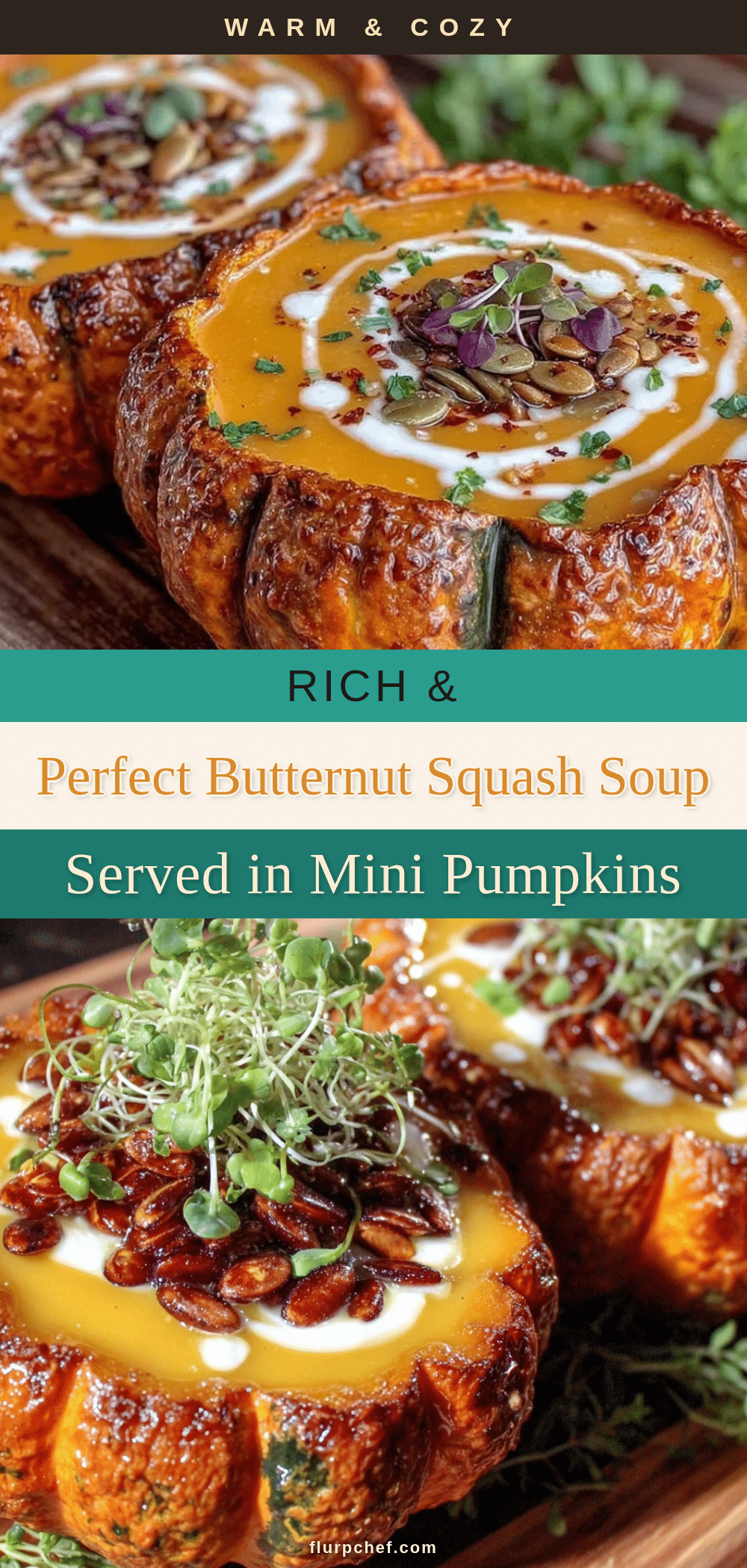
Perfect Butternut Squash Soup in Mini Pumpkins
A stunning butternut squash soup served inside edible mini pumpkins, featuring a double-roasting technique for deep, caramelized flavor. Perfect for fall gatherings and dinner parties.
- Prep Time: 20 minutes
- Cook Time: 45 minutes
- Total Time: 1 hour 5 minutes
- Yield: 6 servings 1x
- Category: Soup
- Cuisine: American
Ingredients
- 1 large butternut squash (about 3 pounds)
- 6–8 mini pumpkins (for serving)
- 1 large yellow onion, diced
- 4–5 garlic cloves, minced
- 1 can (13.5 oz) full-fat coconut milk
- 3 cups vegetable broth
- 3 tablespoons olive oil
- 1 tablespoon maple syrup
- 1 teaspoon ground cinnamon
- ½ teaspoon ground nutmeg
- ½ teaspoon ground ginger
- Salt and black pepper to taste
- Optional toppings: toasted pumpkin seeds, coconut cream or heavy cream, fresh thyme or sage leaves, cinnamon
Instructions
- Preheat oven to 400°F (200°C). Line two large baking sheets with parchment paper.
- Cut butternut squash in half lengthwise, scoop out seeds. Place cut-side down on one baking sheet. Roast 35-40 minutes until fork-tender. Let cool slightly, then scoop out flesh (about 3-4 cups).
- Cut tops off mini pumpkins (1 inch from stem). Scoop out seeds and strings. Rub inside with olive oil, season with salt and pepper. Place on second baking sheet with tops.
- Roast mini pumpkins 20-25 minutes until tender but still firm. Check tops at 15 minutes. Set aside.
- Heat 2 tablespoons olive oil in a large pot over medium heat. Sauté onion 5-6 minutes until translucent. Add garlic, cook 30 seconds.
- Add roasted squash, broth, coconut milk, maple syrup, cinnamon, nutmeg, and ginger. Bring to a simmer, cook 10 minutes.
- Remove from heat. Blend with immersion blender until smooth. Season with salt and pepper.
- Place roasted pumpkins on serving platter. Ladle soup into each pumpkin, almost to the top.
- Garnish with pumpkin seeds, herbs, and cream. Place lids on top at an angle. Serve immediately.
Notes
Don’t skip roasting—it deepens flavor. Watch pumpkins carefully to avoid collapse. Season in layers. Soup base can be made 3 days ahead; pumpkins can be roasted 1 day ahead. For vegan, use vegetable broth and skip heavy cream.
Nutrition
- Serving Size: 1 filled mini pumpki
- Calories: 300
- Sugar: 12
- Sodium: 600
- Fat: 14
- Saturated Fat: 8
- Carbohydrates: 38
- Fiber: 8
- Protein: 5
Keywords: butternut squash soup, mini pumpkins, fall soup, dinner party, vegan, gluten-free


