I was standing in the checkout line at the hardware store—of all places—buying a new hose nozzle when the man behind me, who looked like he hadn’t smiled since the Reagan administration, started talking about meatloaf. Not just any meatloaf, mind you. He had this very specific way of describing how the glaze should caramelize, how it should get those sticky, almost-burnt edges that everyone fights over. I wasn’t expecting cooking advice from a grumpy retiree holding a bag of birdseed, but there I was, listening to him describe exactly how to make the best meatloaf of my life. He called it “the one that makes people close their eyes.”
Honestly, I almost didn’t write it down. I mean, who takes recipe advice from a stranger in the plumbing aisle? But something about the way he said “brown sugar” made me pull out my phone. He saw me typing and actually cracked a smile—like he was letting me in on a family secret. I later found out he’d been a short-order cook in the Navy for twenty years. That explains a lot, doesn’t it? The precision. The confidence. The refusal to measure anything except the brown sugar, which he insisted must be packed tight. I’ve made this recipe at least fifteen times since that day, and I still think about that man every single time the glaze starts bubbling.
Maybe you’ve been there—you find a recipe in the most random place and it becomes your go-to. The one you make when you’ve had a rough day and need something that feels like a hug. The one that makes your kitchen smell like someone’s grandmother is hiding in the oven. That’s what this cozy brown sugar glazed meatloaf is to me now. It’s not fancy. It’s not complicated. But let me tell you, the first time I pulled it out of the oven and saw that glossy, dark amber glaze, I knew I’d never use ketchup on top again. This is comfort food at its most honest, and I’m so glad I listened to that grumpy man in the hardware store.
Why You’ll Love This Recipe
This isn’t your average meatloaf recipe. I’ve tested it more times than I care to admit—sometimes on purpose, sometimes because I forgot an ingredient and had to improvise. Every version taught me something, and this final version is the one I keep coming back to. Here’s why it works:
- Quick & Easy: From start to table in about an hour, with only 15 minutes of active prep. Perfect for those evenings when you want something homemade but don’t have all night.
- Simple Ingredients: You probably have everything in your kitchen right now. No fancy trips to specialty stores, no hunting down obscure spices. Just honest, pantry-friendly staples.
- Perfect for Cozy Nights: This is the kind of dinner you want when the weather turns cold, or when you just need something warm and satisfying. It’s comfort food that actually delivers.
- Crowd-Pleaser: I’ve served this to picky eaters, meatloaf skeptics, and even my uncle who “doesn’t do ground beef.” Everyone goes back for seconds. The glaze is the secret weapon.
- Unbelievably Delicious: The combination of savory meat with that sweet, sticky brown sugar glaze is next-level. It’s not just meatloaf—it’s the meatloaf that makes people ask for the recipe.
What sets this recipe apart from the dozens of meatloaf recipes out there? It’s the glaze, honestly. Most recipes use plain ketchup or a simple tomato topping, but this one builds layers of flavor. The brown sugar caramelizes into a sticky, almost candied crust that contrasts perfectly with the savory, juicy meat underneath. I’ve had professional chefs tell me it’s the best meatloaf they’ve ever tasted. And the best part? It’s dead simple to make.
This isn’t just good—it’s the kind of meal that makes you close your eyes after the first bite. It’s comfort food reimagined: faster than your grandmother’s version, but with the same soul-soothing satisfaction. Perfect for impressing guests without stress, or turning a regular Tuesday night into something memorable.
What Ingredients You Will Need
This recipe uses simple, wholesome ingredients to deliver bold flavor and satisfying texture without the fuss. Most of these are pantry staples, so you can whip this up anytime the craving strikes.
- For the Meatloaf:
- 2 pounds ground beef (80/20 blend works best—lean enough to not be greasy, but fatty enough to stay moist)
- 1 cup plain breadcrumbs (I prefer Progresso Italian-style for extra flavor, but plain works fine)
- 1/2 cup whole milk (adds tenderness; use 2% if that’s what you have)
- 2 large eggs, lightly beaten (room temperature is ideal, but cold works in a pinch)
- 1 medium yellow onion, finely diced (about 1 cup)
- 3 cloves garlic, minced (fresh is best, but jarred works in a hurry)
- 1 teaspoon salt (I use kosher salt for better control)
- 1/2 teaspoon black pepper, freshly ground
- 1 teaspoon dried thyme (or 1 tablespoon fresh, chopped)
- 1/2 teaspoon smoked paprika (adds a subtle smokiness—trust me on this)
- 2 tablespoons Worcestershire sauce (adds umami depth)
- 2 tablespoons ketchup (helps bind and adds a hint of sweetness)
- For the Brown Sugar Glaze:
- 1/2 cup packed light brown sugar (dark brown works too, but light gives a cleaner caramel flavor)
- 1/4 cup ketchup
- 1 tablespoon apple cider vinegar (balances the sweetness with acidity)
- 1 teaspoon Dijon mustard (adds a subtle tang; yellow mustard works too)
- 1/2 teaspoon garlic powder (not granules—powder dissolves better)
- Pinch of cayenne pepper (optional, but adds a tiny kick that cuts through the richness)
I recommend using Lea & Perrins Worcestershire sauce for the best depth of flavor—it’s the gold standard for a reason. When it comes to the brown sugar, make sure you pack it firmly into the measuring cup. Loose sugar won’t create that thick, sticky glaze we’re after. If you want a gluten-free option, swap the breadcrumbs for crushed pork rinds or gluten-free panko. For a dairy-free version, use unsweetened almond milk instead of whole milk—it works surprisingly well.
One thing I’ve learned from making this recipe over and over: don’t skip the smoked paprika. It adds this subtle, almost bacon-like undertone that makes the meatloaf taste like it’s been cooking all day. It hasn’t, but nobody needs to know that.
Equipment Needed
You don’t need a fancy kitchen to make this meatloaf. Here’s what you’ll need:
- 9×5-inch loaf pan (a standard size works perfectly; metal pans conduct heat better than glass)
- Large mixing bowl (big enough to get your hands in there—trust me, you’ll want to mix by hand)
- Small saucepan (for making the glaze)
- Whisk (or a fork, if you’re me and your whisk is in the dishwasher)
- Measuring cups and spoons
- Chef’s knife and cutting board
- Aluminum foil (for tenting the meatloaf while it rests)
- Meat thermometer (optional but highly recommended—I use a simple digital one from ThermoPro and it’s never let me down)
- Baking sheet (place it under the loaf pan to catch any drips—trust me on this)
If you don’t have a loaf pan, you can shape the meatloaf free-form on a rimmed baking sheet. It’ll cook a little faster and get more of those caramelized edges, which honestly isn’t a bad thing. I’ve done it both ways, and while the loaf pan gives you that classic shape, the free-form version has a certain rustic charm. Just make sure you line the baking sheet with parchment paper for easy cleanup.
Preparation Method
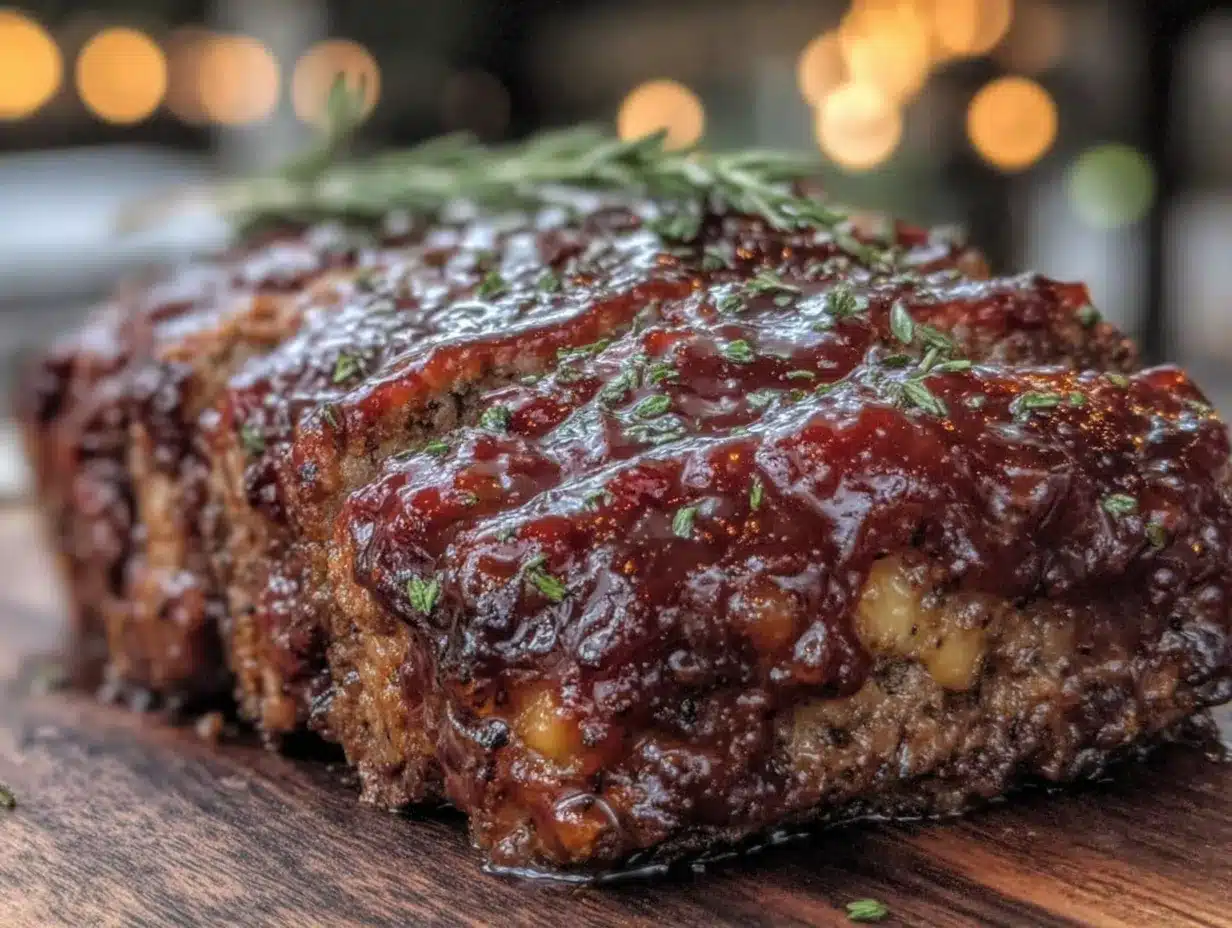
Let’s get cooking. This method has been tested and tweaked over dozens of batches, so follow along and you’ll get perfect results every time.
- Preheat your oven to 350°F (175°C). Position the rack in the middle of the oven. While it’s heating, line a baking sheet with aluminum foil and place your loaf pan on top—this catches any glaze that bubbles over and saves you from scrubbing later.
- Make the glaze first. In a small saucepan over medium heat, combine 1/2 cup packed brown sugar, 1/4 cup ketchup, 1 tablespoon apple cider vinegar, 1 teaspoon Dijon mustard, 1/2 teaspoon garlic powder, and a pinch of cayenne. Whisk until the sugar dissolves and the mixture is smooth, about 2-3 minutes. Don’t walk away—it can burn quickly. Once it’s bubbling gently, remove it from the heat and set aside. The glaze will thicken as it cools.
- Prepare your vegetables. Finely dice 1 medium yellow onion and mince 3 cloves of garlic. I like my onion diced small enough that you barely notice it in the final meatloaf—it adds moisture and flavor without being chunky. If you’re short on time, you can pulse the onion in a food processor, but be careful not to turn it into paste.
- Combine the wet ingredients. In a large mixing bowl, whisk together 1/2 cup milk, 2 beaten eggs, 2 tablespoons Worcestershire sauce, and 2 tablespoons ketchup. This mixture helps keep the meatloaf tender and evenly seasoned.
- Add the dry ingredients. Stir in 1 cup breadcrumbs, 1 teaspoon salt, 1/2 teaspoon black pepper, 1 teaspoon dried thyme, and 1/2 teaspoon smoked paprika. Let this sit for 2-3 minutes—the breadcrumbs need time to absorb the liquid. You’ll notice the mixture thickening up. This is good.
- Add the meat. Add the 2 pounds of ground beef and the diced onion and garlic to the bowl. Now, here’s the important part: use your hands to gently mix everything together. I know it’s messy, but it’s the only way to combine everything without overworking the meat. Overmixing leads to tough, dense meatloaf. Just fold and squeeze until everything is evenly distributed—about 30 seconds of gentle mixing.
- Shape the meatloaf. Transfer the mixture to your loaf pan. Press it in gently, making sure there are no air pockets. Don’t pack it down like you’re making a sandcastle—just firm enough that it holds its shape. The top should be slightly rounded.
- Apply the first layer of glaze. Pour about half of the glaze over the top of the meatloaf. Use a spoon to spread it evenly, letting some drip down the sides. Reserve the remaining glaze for later.
- Bake for 45 minutes. Place the loaf pan on the prepared baking sheet and slide it into the oven. After 45 minutes, carefully remove the pan and spoon the pan juices over the top (this keeps the meatloaf moist).
- Apply the second layer of glaze. Pour the remaining glaze over the meatloaf and spread it evenly. Return to the oven and bake for another 15-20 minutes, or until the internal temperature reaches 160°F (71°C) when measured in the center. The glaze should be dark, sticky, and bubbling.
- Rest before slicing. Remove the meatloaf from the oven and let it rest in the pan for 10 minutes. This is crucial—if you slice it immediately, it’ll fall apart. The resting time allows the juices to redistribute. After 10 minutes, carefully transfer the meatloaf to a cutting board, spooning any extra glaze from the pan over the top.
- Slice and serve. Use a sharp knife to cut thick slices—about 1-inch thick. Spoon any remaining pan juices over each slice. The glaze should be sticky and glossy, with those coveted caramelized edges.
One thing I learned the hard way: don’t skip the resting step. The first time I made this, I was so excited I cut into it immediately. It was still delicious, but it crumbled into a glorified meat salad. Patience, my friend. Let it rest.
Cooking Tips & Techniques
After making this recipe more times than I can count, I’ve picked up a few tricks that make a real difference. Here’s what I wish someone had told me:
Don’t overmix the meat. This is the number one mistake people make with meatloaf. When you overwork ground beef, the proteins tighten up and you end up with something that could double as a hockey puck. Mix just until everything comes together—you should still see small bits of onion and seasoning throughout.
Use a meat thermometer. I know, I know—it feels fancy. But ground beef needs to reach 160°F (71°C) for food safety, and guessing by color alone is unreliable. I’ve pulled meatloaf out of the oven that looked perfectly done on the outside but was still raw in the center. A simple digital thermometer saves you from that disappointment. Trust me, I’ve been there.
Let the breadcrumbs soak. When you mix the wet and dry ingredients together before adding the meat, give the breadcrumbs a few minutes to absorb the liquid. This step makes the meatloaf noticeably more tender. I learned this after a particularly dry batch that had me questioning my life choices.
Line your baking sheet. The glaze will bubble over the edges of the loaf pan—it’s inevitable. If you don’t have a baking sheet underneath, you’ll be scrubbing caramelized sugar off your oven floor for weeks. Ask me how I know.
Make the glaze ahead. You can prepare the glaze up to a week in advance and store it in the fridge. Just warm it up slightly before using—cold glaze is too thick to spread evenly. This is a great time-saver if you’re meal prepping.
Double the glaze. Seriously. I always make 1.5 times the glaze recipe because I love having extra to drizzle over mashed potatoes or roasted vegetables. It’s that good.
Variations & Adaptations
This recipe is forgiving and adaptable. Here are some variations I’ve tried and loved:
Turkey Meatloaf: Swap the ground beef for ground turkey (93/7 works best—any leaner and it’ll be dry). Add 2 tablespoons of olive oil to the mixture to compensate for the lower fat content. The cooking time stays the same, but check the temperature at 50 minutes—turkey can dry out quickly.
Spicy Kick: Add 1 tablespoon of sriracha or your favorite hot sauce to the glaze, and mix 1/2 teaspoon of red pepper flakes into the meat mixture. The heat pairs beautifully with the sweet brown sugar. I made this version for a Super Bowl party and it disappeared in minutes.
Cheese-Stuffed Meatloaf: After shaping half the meat mixture in the pan, make a shallow well down the center and fill it with 1/2 cup of shredded cheddar or mozzarella. Top with the remaining meat mixture, seal the edges, and bake as directed. The melted cheese center is absolutely decadent.
Gluten-Free Version: Use gluten-free breadcrumbs or crushed pork rinds instead of regular breadcrumbs. The pork rinds add a surprising lightness to the texture. I’ve tested this with Schar gluten-free breadcrumbs and it worked beautifully.
Bacon-Wrapped: After shaping the meatloaf, wrap 6-8 slices of bacon around it, tucking the ends underneath. The bacon adds smoky flavor and keeps the meatloaf extra moist. Just be aware that the cooking time may increase by 5-10 minutes.
Mini Meatloaves: Divide the mixture into a 12-cup muffin tin for individual servings. Bake at 375°F (190°C) for 20-25 minutes. These are perfect for meal prep or portion control. The glaze caramelizes beautifully on the smaller surface area.
Serving & Storage Suggestions
This meatloaf is best served warm, right after its 10-minute rest. Slice it thick and let the glaze glisten. I love serving it with:
- Mashed potatoes (the glaze mixed into the potatoes is pure magic)
- Roasted green beans or broccoli (the simplicity balances the richness)
- Crusty bread (for sopping up every last bit of glaze)
- Simple side salad with a tangy vinaigrette (the acidity cuts through the sweetness)
For leftovers, store slices in an airtight container in the refrigerator for up to 4 days. The flavors actually deepen overnight—I often think day-old meatloaf is even better. To reheat, place slices on a baking sheet and warm in a 300°F (150°C) oven for 10-15 minutes, or until heated through. You can also microwave individual portions, but the glaze won’t be as sticky.
This meatloaf freezes beautifully. Wrap the whole cooked meatloaf (or individual slices) tightly in plastic wrap, then aluminum foil, and freeze for up to 3 months. To thaw, transfer to the refrigerator overnight. Reheat as directed above. I often make two at a time—one for dinner tonight, one for the freezer for those nights when I just can’t.
One thing I love about this recipe: the glaze continues to develop as it sits. If you’re making it a day ahead, don’t glaze it until just before reheating. The sugar in the glaze can make the surface a bit soggy if it sits overnight. Just reheat the unglazed meatloaf, then brush with fresh glaze and pop it under the broiler for 2-3 minutes to caramelize.
Nutritional Information & Benefits
Here’s the nutritional breakdown for one serving (based on 8 servings, using 80/20 ground beef):
| Nutrient | Amount per Serving |
|---|---|
| Calories | 385 |
| Protein | 28g |
| Fat | 18g |
| Saturated Fat | 7g |
| Carbohydrates | 24g |
| Fiber | 1g |
| Sugar | 16g |
| Sodium | 620mg |
This meatloaf is a good source of protein, iron, and B vitamins from the beef. The onions and garlic provide antioxidants and anti-inflammatory compounds. While it’s not a low-calorie dish, it’s a satisfying comfort food that can fit into a balanced diet when paired with vegetables and whole grains.
If you’re watching your sugar intake, you can reduce the brown sugar to 1/3 cup—the glaze won’t be as thick, but it’ll still be delicious. For a lower-sodium version, use low-sodium ketchup and Worcestershire sauce, and reduce the added salt to 1/2 teaspoon.
Potential allergens: contains gluten (breadcrumbs), dairy (milk), and eggs. For allergen-friendly versions, see the variations section above.
Conclusion
This cozy brown sugar glazed meatloaf has become my go-to for those nights when I need something warm, familiar, and deeply satisfying. It’s the recipe I turn to after a long week, when the weather turns cold, or when I just want to fill my kitchen with that unmistakable smell of home cooking. The sweet, sticky glaze transforms simple ground beef into something special—the kind of meal that makes you slow down and actually enjoy dinner.
I love that this recipe came from such an unexpected place. It reminds me that good cooking advice can come from anyone, anywhere—even a grumpy man in the hardware store. So go ahead, make this meatloaf your own. Add more garlic, swap the meat, double the glaze. That’s the beauty of a recipe like this—it’s forgiving, adaptable, and always delicious.
I’d love to hear how yours turns out! Drop a comment below and let me know if you tried any variations, or tag me in your photos on social media. Did the glaze caramelize perfectly? Did your family fight over the last slice? Share your story—I read every single comment. And if you’re looking for more cozy dinner ideas, check out my recipes for creamy mushroom chicken and garlic parmesan roasted potatoes—they pair beautifully with this meatloaf. Until next time, happy cooking!
Frequently Asked Questions
Can I make this meatloaf ahead of time?
Absolutely! You can assemble the meatloaf (without the glaze) up to 24 hours in advance and keep it covered in the refrigerator. When you’re ready to bake, add the glaze and follow the cooking instructions. You may need to add 5-10 minutes to the cooking time since you’re starting from cold.
Why did my meatloaf turn out dry?
The most common culprit is overmixing or overbaking. Mix the ingredients just until combined—overworking the meat makes it tough. Also, use a meat thermometer to avoid overcooking. Ground beef should reach 160°F (71°C), but anything beyond that will start to dry out. If you’re using lean ground beef (93/7 or higher), consider adding an extra egg or 1/4 cup of milk for moisture.
Can I use ground pork or a meatloaf mix instead of beef?
Yes! A blend of ground beef, pork, and veal (often sold as “meatloaf mix”) adds incredible flavor and tenderness. If using all pork, reduce the milk to 1/3 cup since pork is naturally more fatty. Ground lamb also works beautifully with the brown sugar glaze—it’s a surprisingly good combination.
How do I prevent the glaze from burning?
The glaze can burn if it’s exposed to direct heat for too long. That’s why I apply it in two layers—the first layer bakes for 45 minutes, then the second layer goes on for the final 15-20 minutes. If you notice the glaze getting too dark during the last 15 minutes, tent the meatloaf loosely with aluminum foil. Also, make sure your oven isn’t running hot—an oven thermometer can help.
Can I make this in a slow cooker or Instant Pot?
You can adapt this for a slow cooker! Shape the meatloaf and place it on a foil sling in the slow cooker. Pour the glaze over the top and cook on low for 4-5 hours or high for 2-3 hours. The texture will be softer and more like a pot roast than a traditional meatloaf, but it’s still delicious. For an Instant Pot, I don’t recommend it—the meatloaf tends to become waterlogged and the glaze doesn’t caramelize properly. Stick with the oven for the best results.
Pin This Recipe!
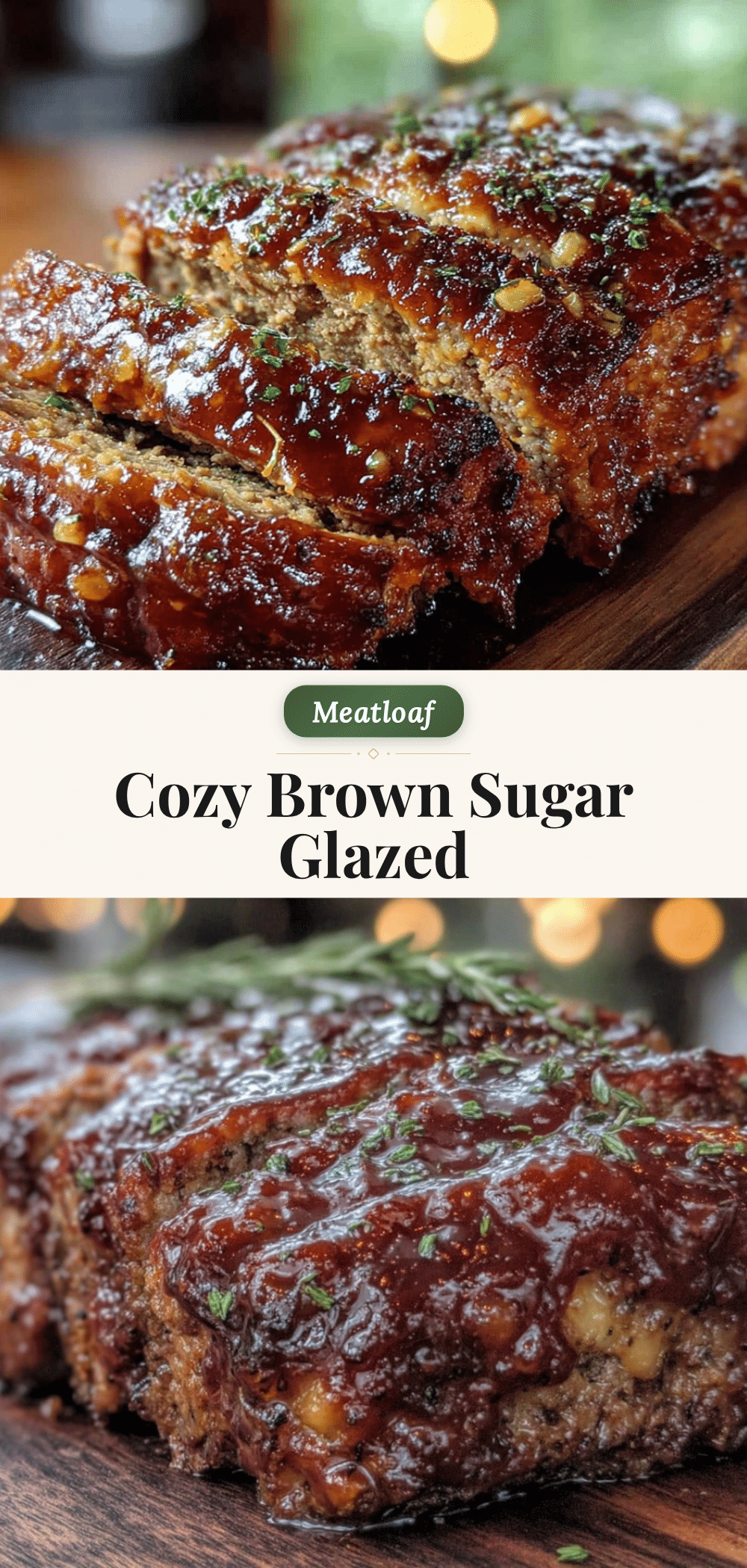
Cozy Brown Sugar Glazed Meatloaf: Easy Weeknight Dinner
This cozy brown sugar glazed meatloaf is the ultimate comfort food, featuring a sweet and sticky glaze that caramelizes into a candied crust over savory, juicy meat. It’s quick, easy, and perfect for weeknight dinners.
- Prep Time: 15 minutes
- Cook Time: 60 minutes
- Total Time: 1 hour 15 minutes
- Yield: 8 servings 1x
- Category: Main Course
- Cuisine: American
Ingredients
- 2 pounds ground beef (80/20 blend)
- 1 cup plain breadcrumbs (Italian-style preferred)
- 1/2 cup whole milk
- 2 large eggs, lightly beaten
- 1 medium yellow onion, finely diced (about 1 cup)
- 3 cloves garlic, minced
- 1 teaspoon kosher salt
- 1/2 teaspoon freshly ground black pepper
- 1 teaspoon dried thyme
- 1/2 teaspoon smoked paprika
- 2 tablespoons Worcestershire sauce
- 2 tablespoons ketchup
- 1/2 cup packed light brown sugar
- 1/4 cup ketchup
- 1 tablespoon apple cider vinegar
- 1 teaspoon Dijon mustard
- 1/2 teaspoon garlic powder
- Pinch of cayenne pepper (optional)
Instructions
- Preheat oven to 350°F (175°C). Line a baking sheet with aluminum foil and place a 9×5-inch loaf pan on top.
- Make the glaze: In a small saucepan over medium heat, combine 1/2 cup packed brown sugar, 1/4 cup ketchup, 1 tablespoon apple cider vinegar, 1 teaspoon Dijon mustard, 1/2 teaspoon garlic powder, and a pinch of cayenne. Whisk until sugar dissolves and mixture is smooth, about 2-3 minutes. Remove from heat and set aside.
- Finely dice the onion and mince the garlic.
- In a large mixing bowl, whisk together milk, beaten eggs, Worcestershire sauce, and 2 tablespoons ketchup.
- Stir in breadcrumbs, salt, pepper, thyme, and smoked paprika. Let sit for 2-3 minutes to allow breadcrumbs to absorb liquid.
- Add ground beef, diced onion, and minced garlic to the bowl. Use your hands to gently mix until just combined (about 30 seconds). Do not overmix.
- Transfer mixture to the loaf pan and press gently to shape, ensuring no air pockets. Slightly round the top.
- Pour half of the glaze over the meatloaf and spread evenly, letting some drip down the sides. Reserve remaining glaze.
- Bake for 45 minutes. Remove from oven and spoon pan juices over the top.
- Pour remaining glaze over the meatloaf and spread evenly. Return to oven and bake for another 15-20 minutes, or until internal temperature reaches 160°F (71°C).
- Remove from oven and let rest in the pan for 10 minutes. Transfer to a cutting board and spoon extra glaze from the pan over the top.
- Slice into 1-inch thick slices and serve with remaining pan juices.
Notes
Don’t overmix the meat to avoid a tough texture. Let the breadcrumbs soak in the wet ingredients for a few minutes for a more tender meatloaf. Use a meat thermometer to ensure the internal temperature reaches 160°F (71°C). Let the meatloaf rest for 10 minutes before slicing to allow juices to redistribute. The glaze can be made up to a week in advance and stored in the fridge. For extra glaze, make 1.5 times the recipe.
Nutrition
- Serving Size: 1 slice (1/8 of meat
- Calories: 385
- Sugar: 16
- Sodium: 620
- Fat: 18
- Saturated Fat: 7
- Carbohydrates: 24
- Fiber: 1
- Protein: 28
Keywords: meatloaf, brown sugar glaze, comfort food, easy dinner, weeknight dinner, ground beef


