This was supposed to be a roasted chicken. A simple, honest, no-fuss Sunday chicken. I had the bird, I had the lemons, I had the herbs. What I did not have was an oven that cooperated. The temperature gauge on my old oven had been lying to me for weeks—I knew it, but I kept hoping it would sort itself out. That Sunday, it decided to run about fifty degrees cooler than what it said on the dial. The chicken went in, and an hour later, it was still pale and sad-looking. Dinner was in two hours, and I had a house full of hungry people coming. I panicked. I grabbed the biggest thing I could find in the freezer—a fully cooked, bone-in ham that my neighbor had given me months ago, and I had no idea what to do with—and I shoved it in the oven next to the half-cooked chicken. Honestly, I was just trying to salvage something edible. The ham, of course, came out beautifully. The chicken was a disaster. But that ham? It was the first time I ever made a brown sugar glazed ham, and it was purely by accident. I mean, I had no recipe, no plan, and definitely no confidence. I just mixed some brown sugar, a little mustard, and a splash of juice from a can of pineapple rings I found in the back of the pantry. I spread it over the ham, cranked the oven up as high as it would go, and prayed. What came out was this sticky, caramelized, impossibly tender ham that everyone went quiet over. And that’s the thing about this recipe—it started as a total mess-up, and it ended up being the dish I’m most asked to make. Maybe you’ve been there, staring at a kitchen disaster and wondering how you’re going to feed everyone. Let me tell you, this ham is your way out.
Why You’ll Love This Recipe
This brown sugar glazed ham is the kind of recipe that makes you look like a hero without actually having to do much. It’s forgiving, it’s affordable, and it feeds a crowd without breaking the bank. I’ve tested this method more times than I can count, and every single time, it delivers that perfect balance of sweet and savory with a sticky, caramelized crust that people fight over.
- Budget-Friendly: A bone-in ham is one of the most affordable ways to feed a large group. You’re getting a lot of meat for your money, and leftovers stretch even further.
- Simple Ingredients: You probably already have brown sugar, mustard, and a little vinegar in your pantry. No fancy grocery trips needed.
- Perfect for Holidays or Sunday Dinners: Whether it’s Easter, Christmas, or just a big family gathering, this ham fits right in.
- Crowd-Pleaser: Kids and adults both love it. The sweetness is familiar, and the salty-savory ham underneath is just comforting.
- Unbelievably Delicious: The glaze caramelizes into a crust that’s almost like candy, while the ham stays juicy and tender. It’s next-level comfort food.
What makes this recipe different from the rest is the technique. Most recipes tell you to score the ham and slap on the glaze, but I’ve learned that a little patience with the temperature and a couple of basting steps make all the difference. It’s not just another version—it’s the version that works every time, even when your oven is lying to you.
What Ingredients You Will Need
This recipe uses simple, everyday ingredients to create a glaze that’s deeply flavorful and beautifully caramelized. You don’t need anything exotic—just a few pantry staples and a good-quality ham. I’ve tested this with different brands and cuts, and the key is always the same: let the glaze do the work.
- 1 (8-10 lb) bone-in fully cooked ham – I prefer a shank portion for its tenderness and easy carving. Look for one that’s not pre-glazed or pre-seasoned so you can control the flavor. (A spiral-cut ham works too, but it can dry out faster, so watch the temperature.)
- 1 cup packed brown sugar – Light or dark both work. Dark brown sugar gives a deeper, molasses-like flavor that I personally love. (Use coconut sugar for a less refined option.)
- 2 tablespoons Dijon mustard – This cuts the sweetness and adds a little tang. Yellow mustard works in a pinch, but Dijon is smoother. (Whole grain mustard adds a nice texture if you have it.)
- 2 tablespoons apple cider vinegar – A splash of acidity balances the sugar. White vinegar or lemon juice can substitute.
- 1/4 cup honey or maple syrup – This helps the glaze stick and adds another layer of sweetness. I’ve used both, and maple syrup gives a slightly earthier finish.
- 1/2 teaspoon ground cloves – A little goes a long way. Cloves are classic with ham, but you can skip them if you’re not a fan. (Allspice or cinnamon are good alternatives.)
- 1/4 teaspoon ground ginger – Adds a gentle warmth that complements the brown sugar. (Fresh grated ginger works too, but use half the amount.)
- Optional: 1/2 cup pineapple juice or orange juice – This adds moisture and a fruity note to the glaze. I’ve used both, and orange juice is my favorite for brightness.
Equipment Needed
You don’t need a lot of fancy tools for this recipe, but a few key items will make the process smoother. I’ve made this ham in a cheap roasting pan from the grocery store, and it still turned out great.
- Large roasting pan with a rack – The rack keeps the ham elevated so the glaze doesn’t burn on the bottom. If you don’t have a rack, roll up a few foil strips to create a makeshift one.
- Sharp carving knife – A long, thin knife makes slicing the ham neat and easy. A serrated knife works too, but it can tear the meat.
- Basting brush or spoon – For spreading the glaze evenly. A silicone brush is easiest to clean.
- Aluminum foil – For tenting the ham while it rests. Heavy-duty foil is best.
- Meat thermometer – This is non-negotiable. An instant-read thermometer ensures the ham is heated through without drying out. (I’ve ruined a ham by guessing, so trust me on this one.)
- Small saucepan – For warming the glaze ingredients together so they blend smoothly.
Preparation Method
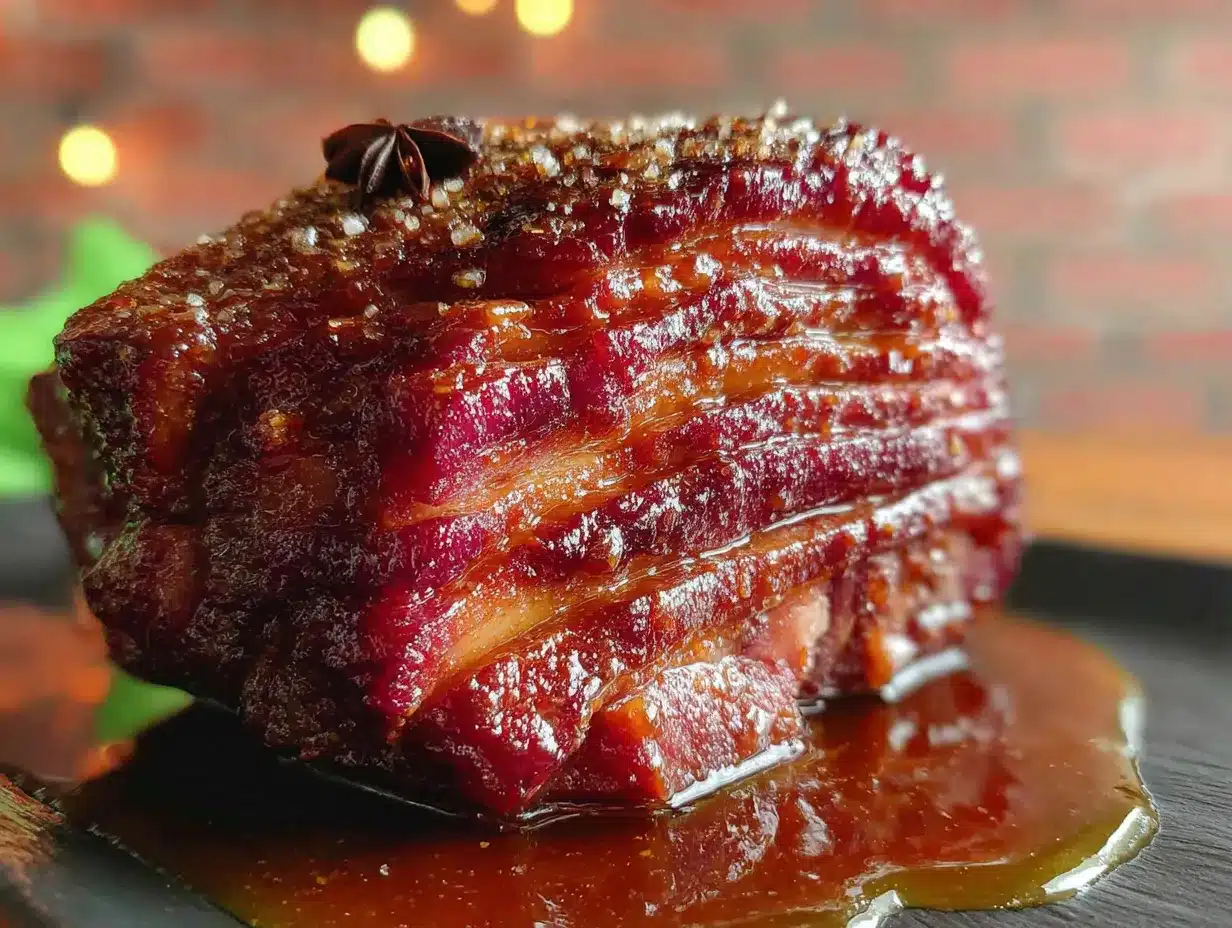
Follow these steps carefully, and you’ll have a ham that looks like it came from a fancy restaurant. The key is low heat and patience—don’t rush the glaze.
- Preheat the oven to 325°F (163°C). While it’s heating, take the ham out of the fridge and let it sit at room temperature for about 30 minutes. This helps it cook more evenly.
- Prepare the glaze: In a small saucepan over medium heat, combine the brown sugar, Dijon mustard, apple cider vinegar, honey or maple syrup, ground cloves, and ground ginger. If you’re using pineapple or orange juice, add it now. Stir constantly until the sugar dissolves and the mixture is smooth, about 3-4 minutes. Don’t let it boil—just warm it through. Set aside.
- Score the ham: Using a sharp knife, cut shallow diagonal lines across the surface of the ham, about 1/4 inch deep, creating a diamond pattern. This helps the glaze penetrate and creates those beautiful crispy edges. (I once skipped this step, and the glaze just slid off. Don’t skip it.)
- Place the ham in the roasting pan: Set it on the rack, flat side down. If you don’t have a rack, place it directly in the pan, but watch the bottom for burning.
- Brush the glaze generously: Use a basting brush to coat the entire surface of the ham with the glaze. Don’t be shy—use about half of the glaze now. Reserve the rest for later.
- Bake the ham: Place the ham in the preheated oven and bake for 15 minutes per pound. For an 8-pound ham, that’s about 2 hours. For a 10-pound ham, about 2.5 hours. Every 30 minutes, baste the ham with the pan juices or additional glaze. This keeps it moist and builds up that sticky crust.
- Check the temperature: About 30 minutes before the end of the cooking time, insert a meat thermometer into the thickest part of the ham, avoiding the bone. You’re looking for an internal temperature of 140°F (60°C). If it’s not there yet, keep baking and check again in 15 minutes.
- Apply the final glaze: When the ham hits 130°F (54°C), brush on the remaining glaze. Turn the oven up to 400°F (204°C) for the last 15-20 minutes to caramelize the sugar. Watch it closely—it can burn fast.
- Rest and carve: Remove the ham from the oven and tent it loosely with aluminum foil. Let it rest for 15-20 minutes. This allows the juices to redistribute. Carve against the grain into thin slices. (I always sneak a piece while it’s resting—don’t judge me.)
Cooking Tips & Techniques
I’ve made this ham more times than I can count, and I’ve learned a few things the hard way. Here are my best tips for success.
- Don’t overcook it. A fully cooked ham just needs to be heated through. Going past 140°F (60°C) will dry it out. I once left a ham in the oven while I answered the phone, and it came out like shoe leather. Never again.
- Baste every 30 minutes. This is the secret to a sticky, caramelized crust. If you skip basting, the glaze will just sit on top and not penetrate. Set a timer.
- Use a thermometer. I cannot stress this enough. Oven temperatures vary, and ham sizes vary. A thermometer takes the guesswork out. (I’ve used the same cheap one for years, and it’s never let me down.)
- Score deeply enough. Shallow cuts won’t let the glaze soak in. Aim for about 1/4 inch deep. You want to see the fat layer underneath.
- Let it rest. I know it’s hard to wait when the house smells amazing, but resting the ham makes it juicier and easier to carve. Use that time to make gravy or set the table.
- Make extra glaze. If you have leftovers, drizzle them over the sliced ham before serving. It adds a final touch of sweetness.
Variations & Adaptations
This recipe is flexible, and I’ve tried several twists over the years. Here are a few of my favorites.
- Spicy Brown Sugar Glaze: Add 1 teaspoon of chipotle powder or a pinch of cayenne to the glaze. The heat balances the sweetness beautifully. I made this for a Super Bowl party, and it was gone in minutes.
- Honey Mustard Version: Swap the brown sugar for 1/2 cup honey and increase the Dijon to 3 tablespoons. This gives a tangier, less sweet glaze that’s perfect with a side of roasted vegetables.
- Pineapple-Infused Glaze: Use 1/2 cup pineapple juice instead of apple cider vinegar, and add 1/4 cup crushed pineapple to the glaze. This is a classic combination that feels tropical and bright.
- Gluten-Free Adaptation: This recipe is naturally gluten-free, but check your mustard and vinegar labels to be sure. Some mustards contain wheat flour.
- Slow Cooker Method: Place the scored ham in a large slow cooker. Brush with glaze and cook on low for 4-6 hours. Baste every hour. The glaze won’t caramelize as much, but it’s still delicious. (I did this once when my oven broke, and it worked surprisingly well.)
Serving & Storage Suggestions
This ham is a showstopper, but how you serve and store it matters. Here’s what I’ve learned.
Serving: Serve the ham warm, sliced thin, with the pan juices drizzled over the top. It pairs beautifully with classic sides like scalloped potatoes, green bean casserole, or a simple salad. For a budget-friendly meal, I often serve it with roasted carrots and mashed potatoes. The sweetness of the ham complements earthy vegetables perfectly.
Storage: Leftover ham keeps well in the refrigerator for up to 5 days. Wrap it tightly in plastic wrap or aluminum foil, or store it in an airtight container. The glaze will harden slightly, but it softens when reheated.
Reheating: To reheat, place slices in a skillet over medium-low heat with a splash of water or apple juice. Cover and warm for 2-3 minutes per side. You can also reheat in the oven at 300°F (149°C) for 10-15 minutes, tented with foil. Avoid the microwave—it makes the ham tough and rubbery.
Freezing: Ham freezes well for up to 3 months. Slice it first, then wrap individual portions in plastic wrap and place them in a freezer bag. Thaw overnight in the fridge before reheating. The flavor actually deepens after freezing, which I love.
Nutritional Information & Benefits
This ham is a good source of protein, and the brown sugar glaze adds a touch of sweetness without being overwhelming. Here’s a rough estimate per serving (based on a 3-ounce portion with glaze).
- Calories: 250-300
- Protein: 20-25g
- Fat: 10-15g
- Carbohydrates: 20-25g (mostly from sugar)
- Sodium: 800-1000mg (ham is naturally salty, so watch your intake)
Ham is rich in B vitamins, particularly B6 and B12, which support energy metabolism. It also provides zinc and selenium, important for immune health. If you’re watching your sodium, look for a low-sodium ham or rinse the surface before glazing. (I’ve done this, and it works fine—just pat it dry before scoring.)
Conclusion
This brown sugar glazed ham is the recipe that turned a kitchen disaster into a family tradition. It’s forgiving, affordable, and absolutely delicious. Whether you’re feeding a crowd on a holiday or just want a special Sunday dinner, this ham delivers every time. I love how it brings people together—the smell alone is enough to make everyone gather in the kitchen. Don’t be afraid to customize it with your favorite spices or add-ins. The glaze is just a starting point. I’d love to hear how yours turns out. Leave a comment below and let me know what variations you tried. And if you have a kitchen disaster story, share it—I promise I’ll understand. Happy cooking!
Frequently Asked Questions
Can I use a spiral-cut ham for this recipe?
Yes, but watch the temperature closely. Spiral-cut hams dry out faster because they have more exposed surface area. Reduce the cooking time by about 10-15 minutes and baste more frequently.
How do I keep the glaze from burning?
Keep the oven temperature at 325°F (163°C) for most of the cooking time, and only increase it to 400°F (204°C) for the last 15-20 minutes. If the glaze starts to darken too quickly, tent the ham with foil.
Can I make the glaze ahead of time?
Absolutely. Prepare the glaze up to 3 days in advance and store it in an airtight container in the fridge. Warm it gently before using, and add a splash of water if it’s too thick.
What size ham do I need for a crowd?
Plan for about 1/2 pound per person for a bone-in ham. For 10-12 people, an 8-10 pound ham is perfect. Leftovers are a bonus—they’re great for sandwiches, soups, and breakfast hash.
Can I cook this ham in a convection oven?
Yes, but reduce the temperature by 25°F (14°C) and check the ham 15-20 minutes earlier. Convection ovens cook faster and more evenly, so the glaze may caramelize sooner.
Pin This Recipe!
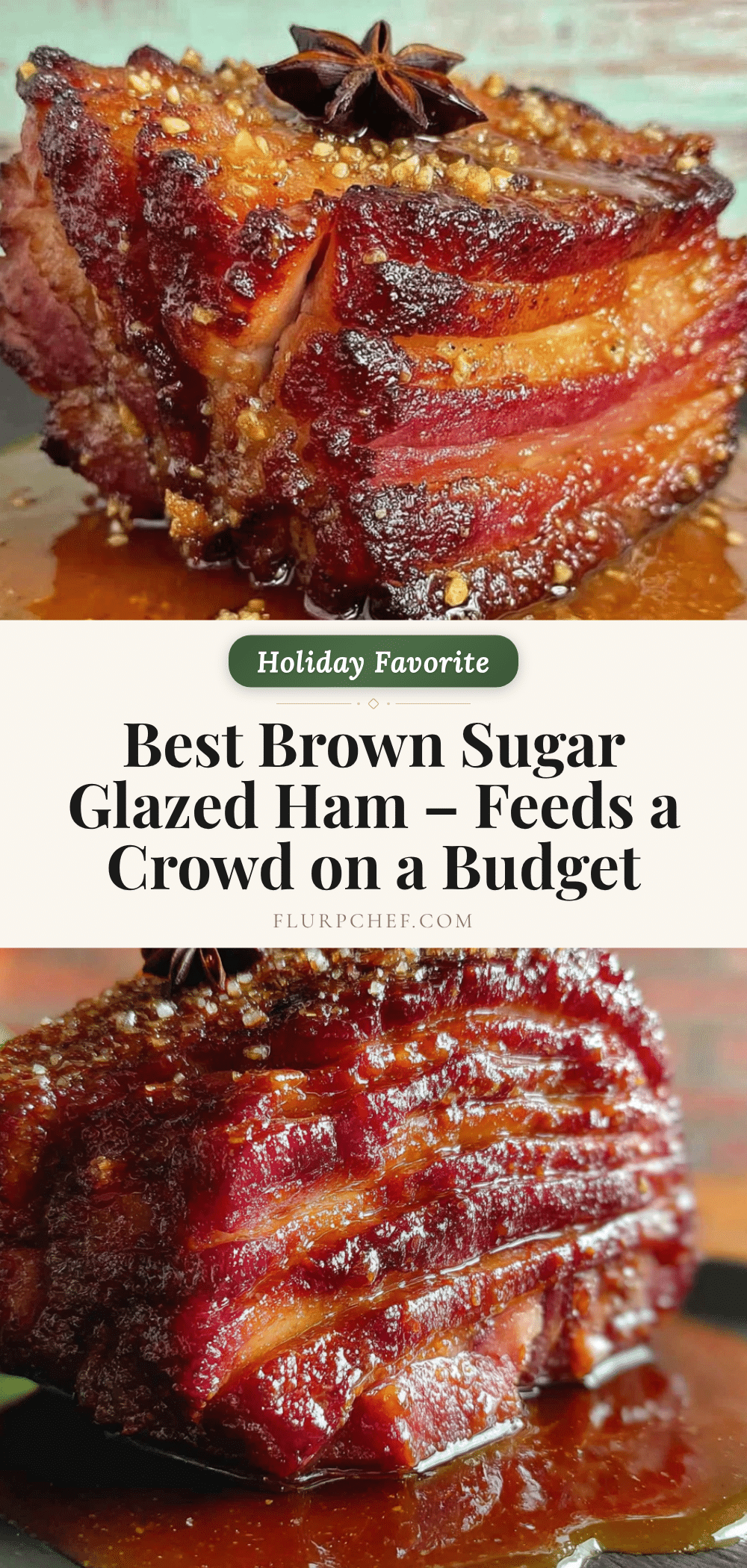
Best Brown Sugar Glazed Ham Recipe for a Crowd
This brown sugar glazed ham is a forgiving, affordable, and crowd-pleasing dish that delivers a perfect balance of sweet and savory with a sticky, caramelized crust. It’s the recipe that turned a kitchen disaster into a family tradition.
- Prep Time: 15 minutes
- Cook Time: 2 hours 30 minutes
- Total Time: 2 hours 45 minutes
- Yield: 10-12 servings 1x
- Category: Main Course
- Cuisine: American
Ingredients
- 1 (8-10 lb) bone-in fully cooked ham
- 1 cup packed brown sugar
- 2 tablespoons Dijon mustard
- 2 tablespoons apple cider vinegar
- 1/4 cup honey or maple syrup
- 1/2 teaspoon ground cloves
- 1/4 teaspoon ground ginger
- Optional: 1/2 cup pineapple juice or orange juice
Instructions
- Preheat the oven to 325°F (163°C). While it’s heating, take the ham out of the fridge and let it sit at room temperature for about 30 minutes.
- Prepare the glaze: In a small saucepan over medium heat, combine the brown sugar, Dijon mustard, apple cider vinegar, honey or maple syrup, ground cloves, and ground ginger. If using pineapple or orange juice, add it now. Stir constantly until the sugar dissolves and the mixture is smooth, about 3-4 minutes. Set aside.
- Score the ham: Using a sharp knife, cut shallow diagonal lines across the surface of the ham, about 1/4 inch deep, creating a diamond pattern.
- Place the ham in the roasting pan on the rack, flat side down.
- Brush the glaze generously: Use a basting brush to coat the entire surface of the ham with about half of the glaze. Reserve the rest for later.
- Bake the ham: Place in the preheated oven and bake for 15 minutes per pound. For an 8-pound ham, about 2 hours; for a 10-pound ham, about 2.5 hours. Every 30 minutes, baste the ham with the pan juices or additional glaze.
- Check the temperature: About 30 minutes before the end of the cooking time, insert a meat thermometer into the thickest part of the ham, avoiding the bone. Aim for an internal temperature of 140°F (60°C).
- Apply the final glaze: When the ham hits 130°F (54°C), brush on the remaining glaze. Turn the oven up to 400°F (204°C) for the last 15-20 minutes to caramelize the sugar.
- Rest and carve: Remove the ham from the oven and tent it loosely with aluminum foil. Let it rest for 15-20 minutes. Carve against the grain into thin slices.
Notes
Don’t overcook the ham; it’s fully cooked and only needs to be heated to 140°F. Baste every 30 minutes for a sticky crust. Score the ham deeply enough (1/4 inch) to let the glaze penetrate. Let the ham rest before carving for juicier slices. Make extra glaze to drizzle over sliced ham before serving.
Nutrition
- Serving Size: 3 ounces
- Calories: 275
- Sugar: 20
- Sodium: 900
- Fat: 12.5
- Saturated Fat: 4
- Carbohydrates: 22.5
- Protein: 22.5
Keywords: brown sugar glazed ham, holiday ham, baked ham, ham recipe, crowd-pleasing ham, Easter ham, Christmas ham


