My neighbor, a quiet guy named Leo who mostly keeps to himself, asked why I couldn’t just pipe the yolk mixture onto a plate in a web pattern, then place the egg white on top. I started to explain why that wouldn’t work — the structural integrity would be all wrong, the yolk would squish out the sides. Then I stopped. Honestly, I had no good reason. I was just being stubborn because I’d been making deviled eggs the same way for fifteen years. That tiny suggestion, made over a fence on a chilly October afternoon, completely changed how I approach this Halloween classic. It was humbling, honestly — the moment you realize you’ve been overcomplicating something simple because you thought you knew better. The result? A spider web deviled egg that looks impressive but comes together with way less stress than you’d think. Maybe you’ve had one of those moments where a beginner’s idea turns out to be the best one. That’s exactly what happened here, and now I can’t make these any other way. This recipe became my go-to for Halloween gatherings because it captures that cozy, slightly spooky feeling without requiring hours in the kitchen.
Why You’ll Love This Recipe
These spider web deviled eggs aren’t just another Halloween appetizer. They’re the kind of dish that makes people stop and stare before they even take a bite. I’ve tested this method at three different parties now, and every single time, someone asks for the secret. The best part? It’s actually easier than traditional deviled eggs.
- Quick & Easy: Comes together in under 30 minutes, leaving you more time for costume prep or pumpkin carving.
- Simple Ingredients: You probably already have everything in your fridge. No specialty stores needed.
- Perfect for Halloween Parties: These eggs fit right in at any spooky gathering, from kid-friendly bashes to adult costume parties.
- Crowd-Pleaser: Even folks who claim they don’t like deviled eggs end up reaching for seconds.
- Unbelievably Delicious: The creamy yolk filling with that subtle tang of pickle juice paired with the dramatic black web — it’s comfort food with a spooky twist.
What makes this recipe different is the piping technique. Instead of fighting with a piping bag to create perfect spider webs on top of each egg, you pipe the web onto the plate first. It sounds backwards, but trust me — it works. The web stays intact, the egg white stays clean, and you get that dramatic Halloween look without the frustration. Plus, the filling uses a secret ingredient that adds just the right amount of tang. This isn’t just another deviled egg recipe. It’s the one that’ll have everyone asking for the recipe before the night’s over.
What Ingredients You Will Need
This recipe uses simple, everyday ingredients to create something that looks far more complicated than it actually is. Most of these are pantry staples, so you might not even need a grocery run.
- Large eggs — 12 eggs, hard-boiled and peeled. Fresh eggs are harder to peel, so use eggs that are at least a week old if you can.
- Mayonnaise — 1/3 cup. I prefer Hellmann’s for its creamy texture and balanced flavor. Duke’s works great too if you like a tangier finish.
- Yellow mustard — 1 tablespoon. Adds that classic deviled egg zing without overpowering the filling.
- Sweet pickle relish — 2 tablespoons. This is my secret weapon. The sweetness balances the tanginess perfectly. You can use dill relish if you prefer a less sweet filling.
- Apple cider vinegar — 1 teaspoon. Brightens the whole filling and cuts through the richness of the yolks.
- Salt and black pepper — 1/4 teaspoon each, or to taste. Go easy on the salt since the relish and mustard already bring some.
- Paprika — For garnish. Smoked paprika adds a lovely depth, but regular works just fine.
- Black food coloring — For the spider webs. I use the gel kind from Wilton because it creates a deep black without thinning out the mayonnaise.
- Mayonnaise for the web — 2 tablespoons. You’ll mix this with the black food coloring to pipe the webs.
- Fresh chives or green onion tops — For garnish. Adds a pop of green that contrasts beautifully with the black web.
For the black food coloring, I’ve tried several brands. The gel-based ones work best because they don’t make the mayonnaise watery. Liquid food coloring will give you more of a grayish hue and can make the piping mixture too runny. If you’re serving these to kids, you can find natural black food coloring options made from vegetable juices, though they tend to produce a slightly lighter shade.
Equipment Needed
You don’t need fancy equipment for these spider web deviled eggs, but a few specific tools make the process much smoother.
- Large pot — For boiling the eggs. Use one big enough that the eggs sit in a single layer.
- Mixing bowls — One medium bowl for the filling, one small bowl for the black web mixture.
- Piping bags — Two small piping bags, or use zip-top bags with the corner snipped off. I’ve done both, and honestly, zip-top bags work just fine for this.
- Piping tips — A small round tip (like Wilton #3) for the spider webs, and a star tip (like Wilton #32) for the filling. If you don’t have tips, just snip a very small hole in the corner of your bag.
- Serving platter — A flat, light-colored platter works best so the black webs stand out.
- Sharp knife — For cleanly slicing the eggs in half. A dull knife will tear the whites.
- Small offset spatula or butter knife — For smoothing the filling into the piping bag.
I picked up my piping tips at a craft store for under five dollars, and they’ve lasted years. If you’re just starting out, the disposable piping bags from the grocery store are perfectly fine. The key is making sure your bags don’t have any holes — I learned that the hard way when black mayonnaise squirted all over my counter.
Preparation Method
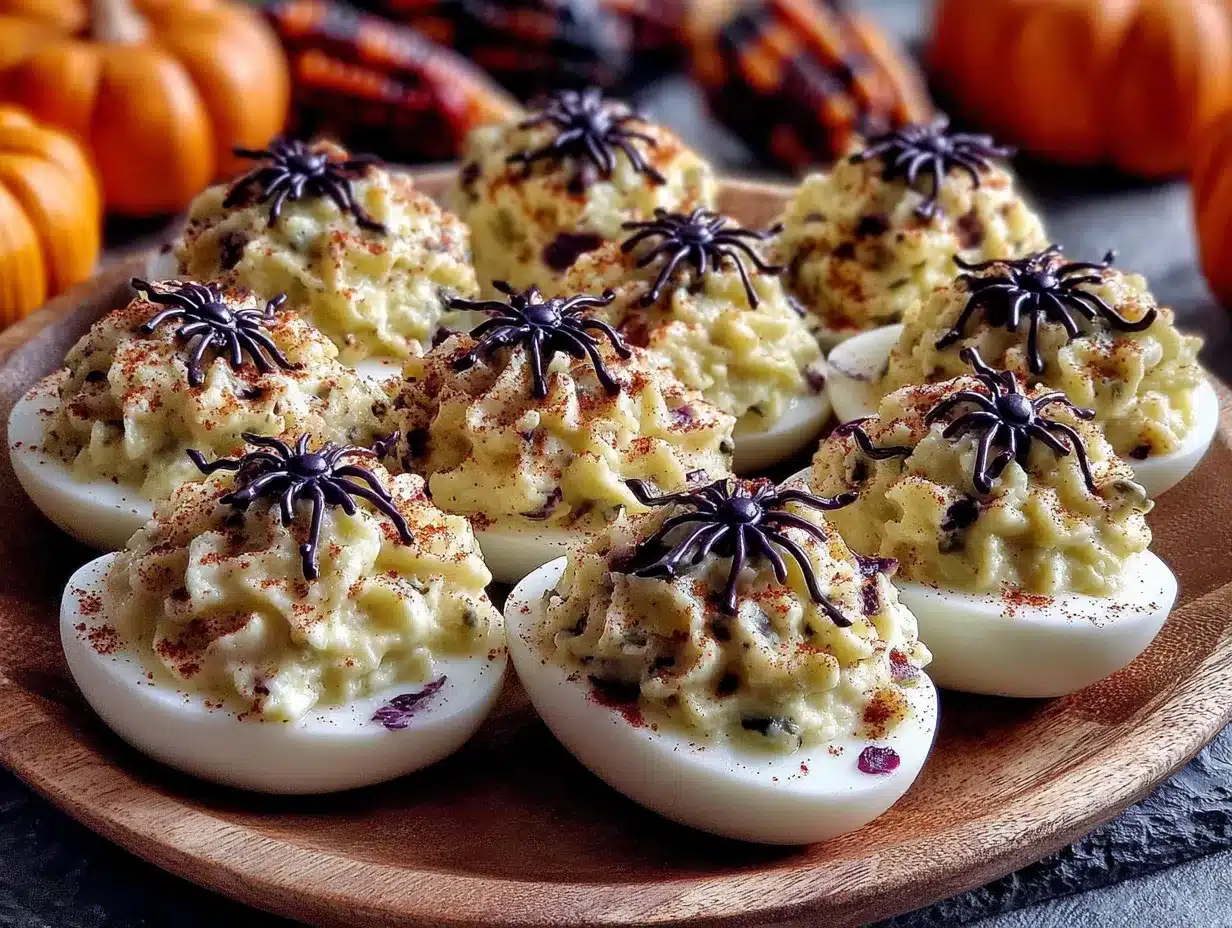
Let’s walk through this step by step. I’ve included all the little details that make the difference between good deviled eggs and unforgettable ones.
- Hard-boil the eggs. Place 12 eggs in a single layer in your pot. Cover them with cold water by about an inch. Bring to a rolling boil over high heat, then immediately cover the pot and remove it from the heat. Let it sit for exactly 12 minutes. This method gives you fully set yolks without that weird green ring around the outside. While the eggs sit, prepare an ice bath in a large bowl.
- Shock the eggs. After 12 minutes, transfer the eggs to the ice bath using a slotted spoon. Let them sit for at least 5 minutes. This stops the cooking process and makes peeling much easier. I’ve forgotten this step before, and peeling those hot eggs was a nightmare — shells stuck everywhere, and I lost half the whites.
- Peel the eggs. Gently tap each egg on the counter to crackle the shell, then roll it between your palms to loosen the shell. Start peeling from the wider end where the air pocket is. Rinse any small shell fragments off under cool water. Pat the eggs dry with a paper towel.
- Slice the eggs. Use a sharp knife to slice each egg lengthwise. Wipe the knife clean between cuts for the neatest results. You should have 24 egg white halves. Arrange them on your serving platter, cut side up.
- Make the filling. Carefully pop the yolks into a medium mixing bowl. Use a fork to mash them until they’re crumbly with no large chunks. Add the mayonnaise, yellow mustard, sweet pickle relish, apple cider vinegar, salt, and pepper. Mix until smooth and creamy. Taste it — this is important. Adjust the salt, pepper, or mustard to your liking. The filling should be rich, tangy, and just a little sweet.
- Fill the eggs. Spoon the yolk mixture into a piping bag fitted with a star tip. If you don’t have a piping bag, use a zip-top bag and snip off one corner. Pipe the filling into each egg white half, mounding it slightly. You want a nice swirl on top. Set the filled eggs aside.
- Prepare the black web mixture. In a small bowl, combine 2 tablespoons of mayonnaise with black gel food coloring. Start with a tiny amount of coloring — you can always add more. Stir until the color is uniform. You’re aiming for a deep, inky black. Transfer this to a piping bag fitted with a small round tip.
- Pipe the spider webs. This is the fun part. Instead of piping directly onto the eggs, pipe the webs onto the platter between the eggs. Start by piping a small dot in the center where you want the web to be. Then pipe 4-5 lines radiating outward like spokes on a wheel. Finally, connect the spokes with curved lines, starting from the center and working outward. It should look like a spider web. Place one filled egg on top of each web, pressing down gently so the web shows around the edges.
- Garnish and serve. Sprinkle a light dusting of paprika over the eggs. Snip fresh chives into small pieces and scatter them around the platter for a pop of green. If you want to get extra festive, place a small plastic spider on the platter or near the eggs.
The first time I tried piping directly onto the eggs, the black mayonnaise smeared everywhere. It looked like a toddler had gotten into the craft supplies. Piping onto the plate first was a total game-changer. The webs stay perfect, and the eggs look like they’re floating on a bed of spider silk.
Cooking Tips & Techniques
I’ve made more deviled eggs than I care to count, and I’ve learned a few things the hard way. Here are the tips that’ll save you from my mistakes.
Perfect hard-boiled eggs every time. The 12-minute sit time after boiling is non-negotiable. I once got distracted and let them sit for 18 minutes. The yolks were dry and crumbly, and the filling tasted like chalk. Set a timer. Also, older eggs peel much easier than fresh ones. If your eggs are super fresh, add a teaspoon of baking soda to the water — it helps loosen the shells.
Getting the black color right. Black gel food coloring is concentrated, so start with a tiny dab on a toothpick and mix it in. Add more gradually until you reach the desired shade. If you add too much at once, the mayonnaise can get bitter. And don’t use liquid food coloring — it’s too thin and will make your web mixture runny.
Piping consistency matters. Your filling should be soft enough to pipe easily but firm enough to hold its shape. If it’s too stiff, add a teaspoon more mayonnaise. If it’s too loose, add another mashed yolk or a tablespoon of breadcrumbs. The black web mixture should be slightly thicker than the filling so it doesn’t spread out on the plate.
Multitasking strategy. While the eggs are boiling, prep your piping bags and arrange your serving platter. While the eggs cool in the ice bath, mix your filling ingredients. This way, everything comes together in under 30 minutes without feeling rushed.
Keep it cold. Deviled eggs are best served cold. If you’re making them ahead of time, store the filled eggs and the piped webs separately in the refrigerator. Assemble them on the platter just before serving. The webs will stay crisp and defined this way.
Variations & Adaptations
This recipe is flexible, so feel free to make it your own. Here are a few variations I’ve tried and loved.
Spicy spider web eggs. Add 1/2 teaspoon of smoked paprika and a dash of cayenne pepper to the yolk filling. The heat pairs surprisingly well with the sweet pickle relish. I made these for a Halloween party last year, and they disappeared faster than the regular ones.
Avocado twist. Replace half the mayonnaise with mashed ripe avocado. The filling turns a lovely pale green, and the healthy fats make it a bit lighter. Just be aware that the filling will brown faster, so assemble these closer to serving time. Squeeze a little lime juice into the filling to slow down the browning.
Bacon lover’s version. Crumble 4 slices of crispy bacon and mix half into the filling. Sprinkle the remaining bacon on top of the filled eggs before adding the spider webs. The salty, smoky crunch is incredible against the creamy filling.
Dairy-free adaptation. Use vegan mayonnaise and skip the regular mayo in the web mixture (use a dairy-free version instead). The filling will be slightly less rich, but still delicious. I’ve served these alongside regular deviled eggs, and no one noticed the difference.
Herb garden variation. Add 2 tablespoons of finely chopped fresh dill or parsley to the filling. The herbal notes brighten the whole dish and make it feel more sophisticated. This version works great for fall gatherings that aren’t specifically Halloween-themed.
Serving & Storage Suggestions
These spider web deviled eggs are best served chilled, straight from the refrigerator. The contrast between the cold, creamy filling and the room-temperature platter makes the spider webs stand out even more. Arrange them on a white or light-colored platter so the black webs really pop.
For a full Halloween spread, pair these eggs with other spooky finger foods like mummy hot dogs, pumpkin-shaped cheese balls, or ghost-shaped sandwiches. A bowl of warm cider or a punch bowl with dry ice adds to the atmosphere without competing with the eggs. If you’re serving drinks, a crisp white wine or a light beer complements the tangy filling nicely.
Storage instructions: Store any leftover eggs in an airtight container in the refrigerator for up to 3 days. The spider webs may soften slightly over time, but the eggs will still taste great. Don’t leave them out at room temperature for more than 2 hours — food safety first, especially with mayonnaise-based fillings.
Freezing: I don’t recommend freezing deviled eggs. The texture of the filling changes when thawed, and the egg whites become watery. Make them fresh or up to a day ahead for the best results.
Reheating: These are served cold, so no reheating needed. If you’ve stored them in the fridge, just pull them out 15 minutes before serving to take the chill off slightly. The flavors actually develop and meld together beautifully after a day in the fridge.
Nutritional Information & Benefits
Each spider web deviled egg half contains approximately 70 calories, 6 grams of fat, 2 grams of protein, and 1 gram of carbohydrates. These numbers will vary slightly depending on your specific ingredients and portion sizes.
Eggs are a fantastic source of high-quality protein and contain important nutrients like vitamin D, vitamin B12, and choline, which supports brain health. The egg yolks provide healthy fats that help your body absorb fat-soluble vitamins. Using mayonnaise made with avocado oil or olive oil can boost the heart-healthy fat content even more.
This recipe is naturally gluten-free and low-carb, making it suitable for keto and paleo diets if you use a paleo-friendly mayonnaise. For those watching their sodium intake, you can reduce the salt and use a low-sodium relish. The black food coloring is typically vegan and free of common allergens, but check the label if you have specific dietary concerns.
I love that these deviled eggs feel indulgent but are actually a balanced snack. The protein from the eggs keeps you full, and the portion control is built right in — it’s easy to stop at two or three when they’re already individually portioned. For a Halloween party where there’s candy everywhere, having a savory, protein-rich option is a lifesaver.
Conclusion
These cozy spider web deviled eggs are proof that Halloween food can be both spooky and comforting. They look like they took hours to assemble, but the whole process takes under 30 minutes. The piping trick — making the webs on the plate instead of on the eggs — is the kind of kitchen hack that makes you wonder why you didn’t think of it sooner. I love how versatile this recipe is. You can dress it up with bacon or keep it classic, make it spicy or keep it mild. It works for a kid’s Halloween party or an adult costume gathering. The best part? Every time I serve these, someone asks for the recipe. That moment when they see how simple it is — that’s my favorite part. So go ahead, give these a try. Customize them to your taste, and don’t be afraid to get a little messy with the black food coloring. I promise, the result is worth it. If you make these, I’d love to hear how they turn out. Drop a comment below or tag me in your photos. Happy Halloween, and happy cooking!
Frequently Asked Questions
Can I make spider web deviled eggs ahead of time?
Yes! You can prepare the hard-boiled eggs and the filling up to 2 days in advance. Store the egg whites and filling separately in the refrigerator. Pipe the filling into the eggs and add the spider webs up to 6 hours before serving for the best presentation.
How do I get the black color really dark?
Use black gel food coloring, not liquid. Start with a tiny amount on a toothpick, mix it into the mayonnaise, and add more gradually. The gel formula is concentrated and won’t thin out the mayonnaise like liquid coloring does. If the color looks gray, add a tiny drop more.
Can I use a different color for the spider webs?
Absolutely! Orange, purple, or green webs would look fantastic for Halloween. You can use any gel food coloring in the same way. Just adjust the amount based on the color intensity you want. Orange might take a bit more coloring to show up vividly against the white plate.
What if I don’t have piping bags?
No problem! Use zip-top sandwich bags instead. Spoon the filling into one corner of the bag, seal it, and snip off the tip. For the spider web mixture, snip an even smaller opening. This method works perfectly and creates less cleanup. I’ve used this trick more times than I can count.
How long can these sit out at a party?
Deviled eggs should not sit out at room temperature for more than 2 hours. If your party runs longer, set out a small batch at a time and keep the rest refrigerated. You can also place the platter on a bed of ice to keep them cold longer. Food safety is important, especially with mayonnaise-based dishes.
PrintCozy Spider Web Deviled Eggs: Best Halloween Appetizer
These spider web deviled eggs are a spooky yet easy Halloween appetizer that looks impressive but comes together in under 30 minutes. The secret piping technique creates dramatic webs without the fuss.
- Prep Time: 15 minutes
- Cook Time: 12 minutes
- Total Time: 27 minutes
- Yield: 24 deviled egg halves (12 servings of 2 halves each) 1x
- Category: Appetizer
- Cuisine: American
Ingredients
- 12 large eggs
- 1/3 cup mayonnaise (e.g., Hellmann’s or Duke’s)
- 1 tablespoon yellow mustard
- 2 tablespoons sweet pickle relish
- 1 teaspoon apple cider vinegar
- 1/4 teaspoon salt
- 1/4 teaspoon black pepper
- Paprika for garnish
- Black gel food coloring (e.g., Wilton)
- 2 tablespoons mayonnaise (for the web)
- Fresh chives or green onion tops for garnish
Instructions
- Hard-boil the eggs: Place 12 eggs in a single layer in a pot. Cover with cold water by about an inch. Bring to a rolling boil over high heat, then cover and remove from heat. Let sit for exactly 12 minutes. Meanwhile, prepare an ice bath.
- Shock the eggs: Transfer eggs to the ice bath using a slotted spoon. Let sit for at least 5 minutes to stop cooking and make peeling easier.
- Peel the eggs: Gently tap each egg on the counter to crackle the shell, then roll between palms to loosen. Start peeling from the wider end. Rinse off any shell fragments and pat dry.
- Slice the eggs: Use a sharp knife to slice each egg lengthwise. Wipe the knife clean between cuts. Arrange the 24 egg white halves on a serving platter, cut side up.
- Make the filling: Pop the yolks into a medium bowl and mash with a fork until crumbly. Add 1/3 cup mayonnaise, yellow mustard, sweet pickle relish, apple cider vinegar, salt, and pepper. Mix until smooth and creamy. Taste and adjust seasoning.
- Fill the eggs: Spoon the yolk mixture into a piping bag fitted with a star tip (or use a zip-top bag with a corner snipped off). Pipe the filling into each egg white half, mounding slightly.
- Prepare the black web mixture: In a small bowl, combine 2 tablespoons mayonnaise with black gel food coloring. Start with a tiny amount and add more gradually until the color is deep black. Transfer to a piping bag fitted with a small round tip.
- Pipe the spider webs: Pipe the webs onto the platter between the eggs. Start with a small dot in the center, then pipe 4-5 lines radiating outward like spokes. Connect the spokes with curved lines from the center outward. Place one filled egg on top of each web, pressing gently so the web shows around the edges.
- Garnish and serve: Sprinkle paprika over the eggs. Snip fresh chives into small pieces and scatter around the platter. Optionally, place a small plastic spider on the platter.
Notes
Use older eggs for easier peeling. Black gel food coloring is essential; liquid coloring will make the web mixture runny. Pipe webs onto the plate first for best results. Store leftovers in an airtight container in the refrigerator for up to 3 days. Do not freeze.
Nutrition
- Serving Size: 2 deviled egg halves
- Calories: 140
- Sugar: 1
- Sodium: 200
- Fat: 12
- Saturated Fat: 3
- Carbohydrates: 2
- Protein: 4
Keywords: Halloween deviled eggs, spider web deviled eggs, Halloween appetizer, spooky deviled eggs, easy Halloween recipe


