My neighbor Karen wasn’t trying to impress anyone. I’d stopped by to borrow a ladder—ours had mysteriously vanished during a garage reorganization—and the smell hit me before I even made it to her front door. Warm apples, cinnamon, something almost caramelized. She opened the door holding a muffin tin, still wearing her gardening gloves, and said, “Oh, these are just something I threw together. Don’t make a big deal out of it.”
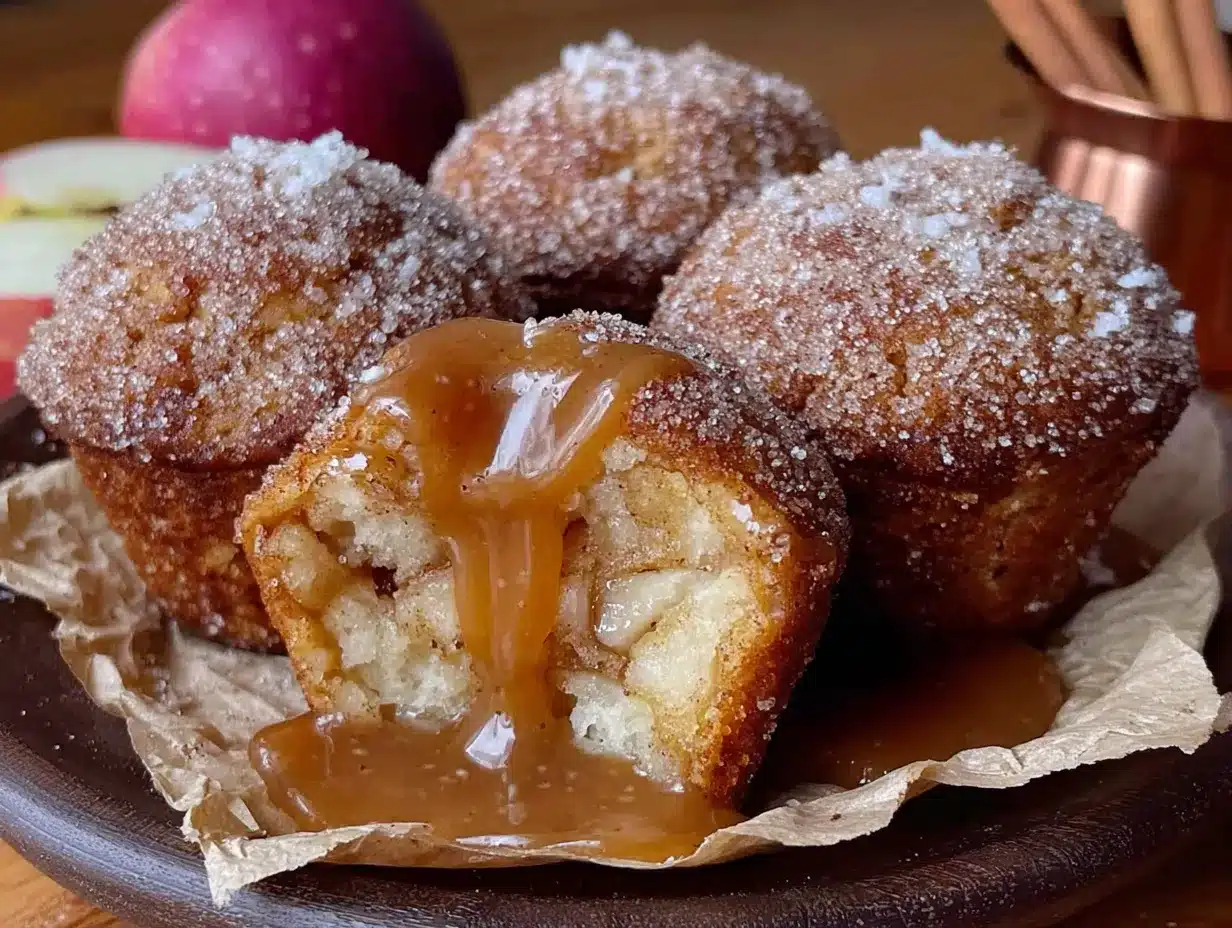
But I was already making a big deal out of it in my head. The tops were domed and golden, dusted with cinnamon sugar that caught the afternoon light. She handed me one still warm from the pan, and honestly? I almost dropped it because I bit into it before she’d even let go. That first bite was like fall had packed itself into a tiny, portable package. The outside had that slight crunch from the sugar coating, and the inside was so tender it practically dissolved on my tongue. I stood there in her doorway, probably looking ridiculous, and asked for the recipe before I’d even swallowed.
She laughed and told me it wasn’t a recipe—it was a shortcut. Apple cider concentrate, a box of this, a splash of that, and twenty minutes. Twenty minutes! I mean, I’ve made from-scratch donuts before, and they’re lovely, but they’re also a project. This was something else entirely. This was a weeknight miracle disguised as a muffin. Maybe you’ve been there—standing in someone’s kitchen, watching them casually create something extraordinary while acting like it’s no big deal. That’s the energy of this recipe. It’s unpretentious, it’s fast, and it tastes like you spent way more effort than you actually did. And that’s exactly why I’ve made it about forty times since that afternoon.
Why You’ll Love This Recipe
Let me tell you why these quick baked apple cider donut muffins have become my secret weapon for everything from rushed Tuesday mornings to last-minute fall gatherings. They solve the problem of wanting something that tastes like a bakery treat but fits into a real person’s schedule.
- Ready in 20 Minutes: From the moment you start pulling ingredients out of the pantry to the moment you’re biting into a warm muffin, you’re looking at about twenty minutes. No yeast, no rising time, no standing over a pot of hot oil.
- Simple Pantry Ingredients: You probably have most of this stuff already. The secret weapon is apple cider concentrate, which keeps in the fridge forever and does the heavy lifting for flavor.
- Perfect for Fall Mornings: These are tailor-made for those crisp autumn days when you want something cozy but don’t have time to fuss. Great for school mornings, coffee dates, or just because.
- Crowd-Pleaser Every Time: I’ve brought these to potlucks, book club, and even a casual work meeting. They disappear fast. Kids love them, adults love them, and nobody believes they took twenty minutes.
- Unbelievably Delicious: The texture is the real star here. The outside gets this delicate cinnamon-sugar crunch, and the inside stays tender and moist. It’s the closest thing to a real apple cider donut without the deep fryer.
What makes this different from every other muffin recipe out there? It’s the apple cider concentrate. Most recipes use regular apple cider, which is fine, but it’s watery and doesn’t pack enough punch. Concentrate gives you that intense, boiled-down apple flavor without having to reduce it yourself. Plus, the method of brushing the baked muffins with melted butter and rolling them in cinnamon sugar? That’s the move that turns a muffin into a donut. It’s not fancy—it’s just smart.
Honestly, this is the kind of recipe that makes you close your eyes after the first bite. It’s comfort food that respects your time. It’s faster than driving to a donut shop, cheaper than buying a dozen, and way more satisfying because you made it yourself in your own kitchen while your coffee was brewing.
What Ingredients You Will Need
This recipe uses straightforward ingredients to create something that tastes surprisingly complex. The magic is in the combination of apple cider concentrate and the cinnamon-sugar finish. Here’s what you’ll need to gather:
For the Muffin Batter
- 1 ¾ cups all-purpose flour (spooned and leveled—don’t scoop straight from the bag or you’ll pack it too tight)
- ½ cup granulated sugar (adds sweetness and helps create that tender crumb)
- 1 ½ teaspoons baking powder (for lift—make sure it’s fresh)
- ½ teaspoon baking soda (helps with browning and texture)
- 1 teaspoon ground cinnamon (the backbone of the flavor, use a good one like Saigon cinnamon if you have it)
- ½ teaspoon salt (balances sweetness and enhances everything)
- 1 large egg (room temperature if you remember, but honestly, cold works too in a pinch)
- ½ cup apple cider concentrate (this is the secret—look for frozen concentrate in the juice aisle, not the shelf-stable bottled stuff)
- ⅓ cup buttermilk (or make your own by adding 1 teaspoon vinegar to regular milk and letting it sit 5 minutes)
- ¼ cup unsalted butter, melted and slightly cooled (adds richness and keeps the muffins tender)
- 1 teaspoon vanilla extract (rounds out the apple flavor beautifully)
For the Cinnamon Sugar Coating
- ¼ cup unsalted butter, melted (for brushing the warm muffins)
- ½ cup granulated sugar
- 1 ½ teaspoons ground cinnamon
A few notes on ingredients. I’ve tested this with both all-purpose and whole wheat pastry flour, and while the whole wheat version works, the texture is noticeably denser. Stick with all-purpose for that light, bakery-style crumb. For the apple cider concentrate, I’ve had the best luck with the store brand from my local grocery—it’s cheap and consistent. If you can only find regular apple cider, you can simmer 1 cup down to about ⅓ cup on the stove, but that adds time and feels counterproductive to the whole “quick” thing.
For the buttermilk, I almost always use the vinegar trick because I never have actual buttermilk on hand. It works perfectly. And the butter—use unsalted so you control the salt level. If you only have salted, just reduce the added salt in the batter to ¼ teaspoon.
Equipment Needed
You don’t need anything fancy here, which is part of the appeal. Here’s what you’ll want to have ready:
- Standard 12-cup muffin tin (nonstick or regular—just grease it well either way)
- Paper muffin liners (optional, but they make cleanup a breeze and help the muffins stay tender)
- Two large mixing bowls (one for dry ingredients, one for wet)
- Whisk (for combining dry ingredients smoothly)
- Rubber spatula (for folding the batter without overmixing)
- Measuring cups and spoons (dry and liquid measures for accuracy)
- Pastry brush (for brushing the melted butter on the warm muffins—a silicone one works great)
- Small bowl (for the cinnamon sugar mixture)
- Cooling rack (helps the muffins cool evenly so the coating sets properly)
If you don’t have a pastry brush, you can use a spoon to drizzle the butter over the muffins and then roll them in the sugar. It’s a little messier but works just fine. I actually did that for the first few batches before I bought a brush. No judgment here. Also, if your muffin tin is dark-colored, keep an eye on the baking time—dark pans absorb more heat and can overbake the bottoms.
Preparation Method
Alright, let’s get to it. This whole process moves fast, so I like to have everything measured out and ready before I start. It takes about five minutes to prep and ten minutes to bake, and then you’re eating warm muffins. Here’s how it goes:
- Preheat your oven to 375°F (190°C). Position the rack in the center. While it’s heating, grease your muffin tin well with butter or nonstick spray, or line it with paper liners. I’ve done both, and I prefer liners because they make the muffins easier to handle when you’re coating them.
- Mix the dry ingredients. In a large bowl, whisk together the flour, sugar, baking powder, baking soda, cinnamon, and salt. Whisk for about 15 seconds to aerate everything and break up any lumps. Set this aside.
- Combine the wet ingredients. In a separate bowl, whisk the egg until it’s light and frothy, about 30 seconds. Add the apple cider concentrate, buttermilk, melted butter, and vanilla extract. Whisk until everything is well combined. The mixture will look a little thick and glossy—that’s normal.
- Make the batter. Pour the wet ingredients into the dry ingredients. Use a rubber spatula to fold everything together gently. Here’s the important part: mix just until you don’t see any more streaks of flour. A few small lumps are totally fine. Overmixing will make the muffins tough, and nobody wants that. The batter will be thick and slightly lumpy.
- Fill the muffin cups. Divide the batter evenly among the 12 muffin cups. Each cup should be about ¾ full. I use a cookie scoop for this—it’s faster and less messy than spooning. If you don’t have one, two spoons work fine.
- Bake. Place the tin in the preheated oven and bake for 10 to 12 minutes. Start checking at 10 minutes. The muffins are done when a toothpick inserted into the center of one comes out clean or with just a few moist crumbs. The tops should be golden and spring back when lightly pressed. Don’t overbake—they’ll dry out.
- Prepare the coating while the muffins bake. In a small bowl, mix the sugar and cinnamon together. Melt the ¼ cup of butter in another small bowl or a microwave-safe cup.
- Coat the muffins. As soon as the muffins come out of the oven, let them cool in the pan for just 2 minutes. Then, working one at a time, remove a muffin, brush it all over with melted butter (don’t skimp—the butter is what makes the sugar stick), and roll it in the cinnamon sugar mixture until it’s completely coated. Place on a cooling rack. Repeat with all the muffins.
- Serve warm. These are absolutely best eaten within 30 minutes of baking. The coating stays crunchy, and the inside is still soft and tender. If you can wait that long.
A couple of things I’ve learned the hard way. First, don’t let the muffins cool completely before coating them. The butter won’t soak in as well, and the sugar won’t stick properly. Two minutes in the pan is perfect—they’re still warm but not falling apart. Second, work quickly but gently. The muffins are delicate when they’re hot. I’ve definitely crushed a few in my enthusiasm. Third, if the butter starts to solidify in the bowl while you’re working, just pop it in the microwave for 10 seconds.
Cooking Tips & Techniques
Over the many batches I’ve made (and the few I’ve messed up), I’ve picked up some tricks that make these muffins even better. Let me share what I’ve learned so you don’t have to make the same mistakes.
Don’t overmix the batter. This is the number one mistake I see people make. Mix until the flour just disappears, and then stop. I promise, those little lumps will bake out. Overmixing develops the gluten and gives you dense, rubbery muffins instead of light, tender ones. I’ve done it. It’s sad. Learn from my pain.
Use a light hand with the coating. You want the muffins completely covered, but you don’t want to press the sugar into them. Just roll gently. I’ve had batches where I got too aggressive and ended up with a thick, sugary crust that overpowered the apple flavor. A light, even coating is the goal.
Work in batches if you’re making a double batch. Don’t try to coat all 24 muffins at once. The butter will cool, and the sugar will start to clump. Coat one pan, serve them, and then do the second pan. Or better yet, have a helper. This is a great recipe to make with a kid—they love the rolling part.
Watch your baking time closely. Every oven runs a little differently. My old oven took exactly 11 minutes. My new one takes 10. Start checking at the lower end of the range. You’re looking for that perfect moment when the tops are golden and a toothpick comes out clean. Pull them too early and they’re gummy inside. Too late and they’re dry.
Let them rest before serving. I know it’s hard, but letting the muffins sit on the cooling rack for about 5 minutes after coating helps the cinnamon sugar set. If you bite into one immediately, the sugar just slides off. Patience pays off here.
Multitask smartly. While the muffins are baking, set up your coating station. Have the melted butter and cinnamon sugar ready to go. That way, the moment those muffins come out of the oven, you’re ready to work. Every second counts when you’re trying to catch them at the perfect temperature.
Variations & Adaptations
One of the best things about this recipe is how flexible it is. I’ve played around with it quite a bit, and here are some variations that have worked well:
Gluten-Free Version: Substitute the all-purpose flour with a good 1:1 gluten-free baking flour blend. I’ve used Bob’s Red Mill and King Arthur with great results. The texture is slightly more crumbly, but the flavor is still fantastic. Just don’t overmix, and bake for an extra minute or two.
Dairy-Free Version: Use a plant-based butter for both the batter and the coating. For the buttermilk, mix 1 tablespoon of lemon juice or vinegar with enough unsweetened almond or oat milk to make ⅓ cup. Let it sit for 5 minutes before using. I’ve tried this with coconut oil too, and while it works, the coconut flavor is a little distracting.
Spiced Apple Variation: Add ¼ teaspoon of ground nutmeg and ⅛ teaspoon of ground cloves to the dry ingredients. It gives the muffins a more complex, chai-like warmth that’s perfect for cozy mornings. My sister-in-law actually prefers this version now and makes it every Thanksgiving weekend.
Maple Glaze Option: Instead of the cinnamon sugar coating, whisk together 1 cup of powdered sugar, 2 tablespoons of maple syrup, and 1 tablespoon of milk until smooth. Drizzle over the cooled muffins. It’s a completely different experience—sweeter, richer, and more decadent. I make these when I want something that feels more like dessert.
Mini Muffin Version: Use a mini muffin tin and bake for 7 to 9 minutes. The coating process is a little more tedious with smaller muffins, but they’re perfect for parties or lunchboxes. You’ll get about 36 mini muffins from one batch.
Serving & Storage Suggestions
These muffins are at their absolute best warm, within an hour of baking. That’s when the outside is still slightly crunchy and the inside is soft and almost pudding-like. I like to serve them with a hot cup of coffee or a glass of cold milk. They’re also fantastic alongside a bowl of chili or soup—the sweetness balances the savory perfectly.
If you have leftovers (which, let’s be honest, is rare in my house), here’s how to store them. Place the cooled muffins in an airtight container at room temperature. They’ll stay good for about 2 days, but the coating will soften over time. To revive them, pop a muffin in the microwave for 10 to 15 seconds. It won’t bring back the crunch, but it’ll warm the inside and make it taste freshly baked.
For longer storage, you can freeze the uncoated muffins. Bake them, let them cool completely, and place them in a freezer-safe bag or container. They’ll keep for up to 3 months. When you’re ready to eat them, thaw at room temperature, then reheat in a 350°F oven for 5 minutes. Brush with melted butter and roll in cinnamon sugar right before serving. The coating doesn’t survive freezing well, so always do it fresh.
I’ve also found that these muffins make excellent gifts. Pack them in a pretty box or a mason jar with a ribbon, and they’re the perfect hostess gift for fall parties. Just make sure you include a note that says “best eaten within 24 hours” so people know to enjoy them fresh.
Nutritional Information & Benefits
While these muffins are definitely a treat, they’re not totally devoid of redeeming qualities. Here’s the approximate nutritional breakdown for one muffin (based on 12 servings):
| Nutrient | Amount Per Muffin |
|---|---|
| Calories | 215 |
| Total Fat | 9g |
| Saturated Fat | 5g |
| Cholesterol | 35mg |
| Sodium | 220mg |
| Total Carbohydrates | 32g |
| Dietary Fiber | 1g |
| Sugars | 18g |
| Protein | 3g |
The apple cider concentrate does provide a small amount of vitamin C and antioxidants, and the cinnamon has been shown to help regulate blood sugar. So there’s that. But honestly, these are comfort food, and they’re meant to be enjoyed. They’re smaller and lighter than a typical bakery muffin, and they’re baked instead of fried, which makes them a bit more reasonable for a weekday treat.
If you’re watching your sugar intake, you can reduce the sugar in the batter to ⅓ cup and use a sugar substitute in the coating. I’ve tried it with a monk fruit blend, and while the texture is slightly different, it’s still delicious. Just know that the coating won’t be quite as crunchy.
Conclusion
So there you have it—quick baked apple cider donut muffins that taste like you spent all morning in the kitchen but actually took twenty minutes from start to finish. This recipe has saved me on busy school mornings, last-minute brunch invites, and those evenings when I just need something warm and sweet to make the day feel better.
What I love most about these muffins is how unpretentious they are. They don’t require any special skills or fancy equipment. They don’t demand your whole afternoon. They just deliver exactly what they promise: a cozy, apple-cinnamon moment in muffin form. And honestly, isn’t that what we all need sometimes?
I’d love to hear how these turn out for you. Did you try the classic cinnamon sugar coating or go for the maple glaze? Did your kids help with the rolling? Drop a comment below and let me know. And if you have a favorite fall recipe that’s saved your sanity on a busy weeknight, share that too—I’m always looking for new ideas. Happy baking, friend!
Frequently Asked Questions
Can I use regular apple cider instead of concentrate?
You can, but the flavor will be much milder. The concentrate gives you that intense, boiled-down apple taste without extra liquid. If you use regular cider, reduce the buttermilk to ¼ cup to compensate for the extra moisture, and expect a less pronounced apple flavor.
Why did my muffins turn out dense?
The most common culprit is overmixing the batter. Mix just until the flour disappears—a few lumps are fine. Another possibility is overfilling the muffin cups. Fill them about ¾ full for the best rise. Also, make sure your baking powder and baking soda are fresh.
Can I make these ahead of time?
These are best fresh, but you can bake the muffins a day ahead without the coating. Store them in an airtight container, then reheat, brush with butter, and coat with cinnamon sugar just before serving. The coating doesn’t hold up well overnight.
Can I freeze these muffins?
Yes! Freeze them uncoated in a freezer-safe bag for up to 3 months. Thaw at room temperature, then reheat in a 350°F oven for 5 minutes. Brush with melted butter and roll in cinnamon sugar right before eating. Don’t freeze them already coated—the sugar gets soggy.
What can I substitute for buttermilk?
Easy fix: add 1 teaspoon of white vinegar or lemon juice to a ⅓ cup measuring cup, then fill with regular milk. Let it sit for 5 minutes, and you’ve got homemade buttermilk. It works perfectly in this recipe. You can also use plain yogurt thinned with a little milk.
Pin This Recipe!

Quick Baked Apple Cider Donut Muffins

These quick baked apple cider donut muffins taste like you spent all morning in the kitchen but actually took twenty minutes from start to finish. They’re unpretentious, fast, and taste like you spent way more effort than you actually did.
- Prep Time: 5 minutes
- Cook Time: 10-12 minutes
- Total Time: 20 minutes
- Yield: 12 muffins 1x
- Category: Dessert
- Cuisine: American
Ingredients
- 1 ¾ cups all-purpose flour (spooned and leveled)
- ½ cup granulated sugar
- 1 ½ teaspoons baking powder
- ½ teaspoon baking soda
- 1 teaspoon ground cinnamon
- ½ teaspoon salt
- 1 large egg (room temperature preferred, cold works too)
- ½ cup apple cider concentrate (frozen, not shelf-stable)
- ⅓ cup buttermilk (or 1 teaspoon vinegar + milk to make ⅓ cup, let sit 5 minutes)
- ¼ cup unsalted butter, melted and slightly cooled
- 1 teaspoon vanilla extract
- ¼ cup unsalted butter, melted (for coating)
- ½ cup granulated sugar (for coating)
- 1 ½ teaspoons ground cinnamon (for coating)
Instructions
- Preheat oven to 375°F (190°C). Grease a 12-cup muffin tin well with butter or nonstick spray, or line with paper liners.
- In a large bowl, whisk together flour, ½ cup sugar, baking powder, baking soda, 1 teaspoon cinnamon, and salt for about 15 seconds.
- In a separate bowl, whisk the egg until light and frothy, about 30 seconds. Add apple cider concentrate, buttermilk, ¼ cup melted butter, and vanilla extract. Whisk until well combined.
- Pour wet ingredients into dry ingredients. Fold gently with a rubber spatula just until no streaks of flour remain. A few small lumps are fine. Do not overmix.
- Divide batter evenly among 12 muffin cups, filling each about ¾ full.
- Bake for 10 to 12 minutes, until a toothpick inserted into the center comes out clean or with a few moist crumbs. Tops should be golden and spring back when lightly pressed.
- While muffins bake, mix ½ cup sugar and 1 ½ teaspoons cinnamon in a small bowl. Melt ¼ cup butter in another small bowl.
- Let muffins cool in the pan for 2 minutes. Working one at a time, remove a muffin, brush all over with melted butter, then roll in cinnamon sugar until completely coated. Place on a cooling rack.
- Serve warm, ideally within 30 minutes of baking.
Notes
Don’t overmix the batter—mix just until flour disappears. Coat muffins while still warm (after 2 minutes cooling) for best sugar adhesion. Work quickly but gently as hot muffins are delicate. If butter solidifies, microwave for 10 seconds. For best texture, use all-purpose flour; whole wheat pastry flour yields denser results. If using salted butter, reduce added salt to ¼ teaspoon.
Nutrition
- Serving Size: 1 muffin
- Calories: 215
- Sugar: 18
- Sodium: 220
- Fat: 9
- Saturated Fat: 5
- Carbohydrates: 32
- Fiber: 1
- Protein: 3
Keywords: apple cider donut muffins, baked donut muffins, quick apple cider muffins, fall muffins, easy muffin recipe, 20-minute muffins, cinnamon sugar muffins


