My neighbor Sarah wasn’t trying to impress anyone. I’d stopped by to borrow a cup of sugar—how cliché, I know—and this smell hit me before I even got to her screen door. It wasn’t Thanksgiving. It wasn’t even October. It was a random Tuesday in September, and she was just… baking. Like it was nothing.
“Oh, that’s just apple cider cake,” she said, waving her hand like she’d made boxed brownies. She was wearing an old t-shirt with a coffee stain on the sleeve, and there was flour on her glasses. I mean, honestly. The casualness of it all was almost offensive. Here I was, standing in her doorway, practically drooling, and she was acting like this fragrant, golden-brown masterpiece was no big deal. Let me tell you, that first slice changed something in me. The crumb was so tender it practically dissolved, and that brown sugar glaze? It seeped into every warm crevice like it had been planned that way.
I asked for the recipe three times before she finally texted it to me, and I’ve been tweaking it ever since. Maybe you’ve been there—you taste something at someone else’s house and you know, deep down, that you’ll be thinking about it for weeks. That’s this cake. It’s the kind of recipe that makes you look like a hero at a potluck, but it’s so straightforward you’ll wonder why you ever bought boxed cake mix. The apple cider keeps it incredibly moist, and the brown sugar glaze adds this rich, caramel-like finish that honestly, I’d drink if it were socially acceptable.
Why You’ll Love This Recipe
I’ve tested this Best Apple Cider Cake more times than I care to admit. The first attempt was too dense. The second? The glaze slid right off. But this version? This is the one that made Sarah herself text me for the recipe. Here’s why it works:
- Incredibly Moist: The apple cider does double duty here—it adds flavor and keeps the cake tender for days. I’ve had slices on day three that still felt fresh-baked.
- Simple Ingredients: No apple peeling, no complicated techniques. You probably have most of this in your pantry right now.
- Perfect for Gatherings: This cake is made for sharing. It feeds a crowd, travels beautifully, and looks stunning on a dessert table without any fussy decorations.
- That Brown Sugar Glaze: Let’s be real—the glaze is the star. It’s thick, it’s rich, and it sets up just enough to crack a little when you cut into it.
- Foolproof Method: Even if you’re not a confident baker, this recipe works. The batter comes together in one bowl, and the glaze is practically impossible to mess up.
What makes this different from every other apple cake out there? It’s the reduction. You simmer the apple cider down before adding it to the batter, which concentrates the flavor without adding extra liquid. It’s a small step that makes a massive difference. Trust me on this one.
This isn’t just a good cake—it’s the kind that makes people close their eyes after the first bite. I’ve served it at fall dinners, spring brunches, and random Tuesday nights when I needed a little comfort. It always delivers.
What Ingredients You Will Need
This recipe uses simple, wholesome ingredients to deliver that deep apple flavor and luscious glaze without any complicated steps. Most of these are pantry staples, which makes this perfect for spontaneous baking.
For the Cake
- Apple Cider (1 ½ cups / 360 ml) – Use fresh, unfiltered apple cider if you can find it. The cloudier the better—it has more flavor. I like Martinelli’s or a local orchard brand.
- Unsalted Butter (½ cup / 113 grams, softened) – Make sure it’s truly at room temperature. Cold butter won’t cream properly with the sugar.
- Granulated Sugar (1 cup / 200 grams) – Regular white sugar works perfectly here.
- Light Brown Sugar (½ cup / 100 grams, packed) – This adds depth and moisture. Dark brown sugar would work too, but the flavor will be more molasses-forward.
- Large Eggs (2, at room temperature) – Room temperature eggs emulsify better into the batter. If you forgot to take them out, place them in warm water for 5 minutes.
- Vanilla Extract (2 teaspoons) – Pure vanilla makes a difference here. Save the imitation stuff for cookies.
- All-Purpose Flour (2 ½ cups / 312 grams) – Spoon and level your flour—don’t scoop directly from the bag or you’ll end up with a dry cake.
- Baking Powder (1 ½ teaspoons) – Check the expiration date! Old baking powder is the #1 reason cakes don’t rise.
- Baking Soda (½ teaspoon) – This helps balance the acidity from the cider.
- Salt (½ teaspoon) – Don’t skip it. Salt makes everything taste more like itself.
- Ground Cinnamon (1 teaspoon) – Fresh spices make a difference. If yours has been in the cabinet for two years, it’s time to replace it.
- Ground Nutmeg (¼ teaspoon) – Freshly grated is amazing if you have it.
- Ground Cloves (⅛ teaspoon) – Just a whisper—cloves are powerful.
- Buttermilk (½ cup / 120 ml, at room temperature) – Don’t have buttermilk? Add ½ tablespoon of lemon juice or vinegar to regular milk and let it sit for 5 minutes.
For the Brown Sugar Glaze
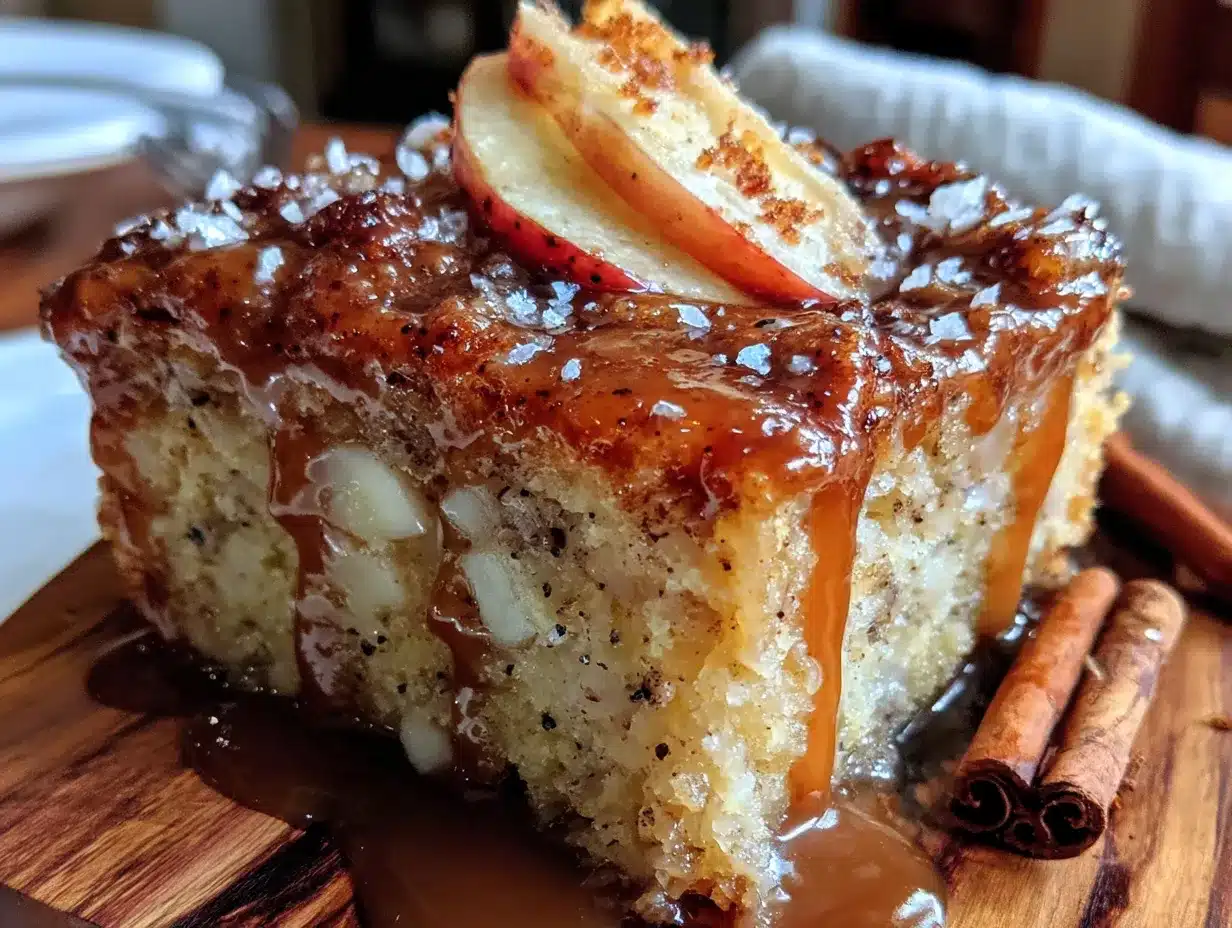
- Light Brown Sugar (½ cup / 100 grams, packed) – This is the base of the glaze. Don’t substitute granulated—you need that molasses richness.
- Unsalted Butter (¼ cup / 57 grams) – Cut it into pieces so it melts evenly.
- Heavy Cream (3 tablespoons / 45 ml) – Half-and-half works in a pinch, but the glaze won’t be as thick and luscious.
- Vanilla Extract (1 teaspoon) – Adds warmth and rounds out the brown sugar flavor.
- Powdered Sugar (½ cup / 60 grams, sifted) – Sifting prevents lumps. I learned this the hard way.
- Pinch of Salt – Trust me on this. It balances the sweetness.
Equipment Needed
You don’t need a fancy kitchen to make this Best Apple Cider Cake. Here’s what you’ll need:
- 10-inch Bundt Pan – This is my go-to for this recipe. The ridges catch the glaze beautifully. If you don’t have one, a 9×13-inch pan works—just reduce the baking time by about 10 minutes.
- Medium Saucepan – For reducing the apple cider. A heavy-bottomed one works best to prevent scorching.
- Large Mixing Bowl – For the batter. Glass or stainless steel is fine.
- Electric Mixer – A hand mixer or stand mixer both work. You can do this by hand, but your arm will get a workout.
- Measuring Cups and Spoons – For accuracy. Baking is a science, after all.
- Kitchen Scale – Optional but recommended for the flour. I bought one for $12 and it’s been a game-changer.
- Wire Rack – For cooling the cake properly. No wire rack? Invert a cooling rack or even use the grates from your oven.
- Small Saucepan – For the glaze. A non-stick one makes cleanup easier.
- Whisk – For smoothing out the glaze.
I’ve made this cake in a cheap bundt pan from the grocery store, and it worked fine. Just make sure to grease it really well—I use butter and then dust it with flour, paying special attention to all those ridges.
Preparation Method
Let’s get baking. This recipe takes about 20 minutes of active prep and 45-50 minutes of baking. The glaze comes together while the cake cools.
- Reduce the apple cider. Pour 1 ½ cups of apple cider into a medium saucepan. Bring it to a boil over medium-high heat, then reduce to a simmer. Let it bubble away for 15-20 minutes, stirring occasionally, until it’s reduced to about ⅓ cup. It should look syrupy and smell intensely of apples. Set it aside to cool while you prepare the rest.
- Preheat and prep. Preheat your oven to 350°F (175°C). Grease your bundt pan thoroughly—I use softened butter and a pastry brush, then dust with flour. Don’t skip the flour dusting. I forgot once and spent 20 minutes coaxing cake out of the pan.
- Cream the butter and sugars. In a large mixing bowl, beat the softened butter, granulated sugar, and brown sugar together until light and fluffy, about 3-4 minutes. Scrape down the sides halfway through. The mixture should look pale and feel airy.
- Add the eggs and vanilla. Add the eggs one at a time, beating well after each addition. Stir in the vanilla extract. The batter might look a little curdled at this point—that’s normal, don’t panic.
- Mix the dry ingredients. In a separate bowl, whisk together the flour, baking powder, baking soda, salt, cinnamon, nutmeg, and cloves. This ensures the spices are evenly distributed.
- Alternate adding dry ingredients and buttermilk. Add about a third of the flour mixture to the butter mixture and mix on low until just combined. Pour in half the buttermilk and mix again. Repeat with another third of flour, the remaining buttermilk, and finally the last of the flour. Mix until just combined—overmixing will make the cake tough.
- Add the reduced cider. Pour in the cooled, reduced apple cider and fold it in gently with a spatula. The batter will be thick and smell amazing. Don’t overmix—just fold until you don’t see streaks.
- Bake. Pour the batter into the prepared bundt pan and spread it evenly. Bake for 45-50 minutes, or until a toothpick inserted in the center comes out clean or with just a few moist crumbs. The top should be golden brown and spring back when lightly touched.
- Cool in the pan. Let the cake cool in the pan on a wire rack for 15 minutes. Then invert it onto the rack and let it cool completely. Don’t rush this—if you flip it too early, it might break apart.
- Make the glaze. While the cake cools, make the brown sugar glaze. In a small saucepan, combine the brown sugar, butter, and heavy cream. Cook over medium heat, stirring constantly, until the butter melts and the mixture is smooth. Let it bubble gently for 2 minutes, then remove from heat. Stir in the vanilla and salt. Let it cool for 5 minutes, then whisk in the powdered sugar until smooth. The glaze should be thick but pourable.
- Glaze the cake. Place the cooled cake on a serving plate. Slowly pour the glaze over the top, letting it drip down the sides. Use a spatula to spread it if needed. Let the glaze set for at least 15 minutes before slicing.
Cooking Tips & Techniques
I’ve made this Best Apple Cider Cake more times than I can count, and I’ve learned a few things along the way. Here’s what I wish someone had told me:
Don’t rush the cider reduction. This is the most important step. If you pull it off the heat too early, the cake won’t have that concentrated apple flavor. It should be syrupy and measure about ⅓ cup. I set a timer and stir every few minutes to prevent scorching.
Room temperature ingredients matter. I know it’s tempting to use cold eggs straight from the fridge, but cold ingredients don’t emulsify properly. The butter seizes up, and you end up with a dense cake. Take everything out 30 minutes before you start baking.
Grease that pan like you mean it. I use a pastry brush to get butter into every crevice, then dust with flour. For extra insurance, you can use a baking spray that contains flour. There’s nothing sadder than a beautiful cake stuck to the pan.
Check for doneness early. Every oven runs differently. Start checking at 40 minutes. If the top is browning too quickly but the center isn’t done, tent it loosely with foil for the last 10 minutes.
The glaze consistency is key. If it’s too thick, add a teaspoon of cream. Too thin? Add a tablespoon more powdered sugar. You want it thick enough to cling to the cake but loose enough to drip down the sides. I’ve definitely made glaze that was basically soup before—still tasty, but not pretty.
Let the glaze set before serving. I know you want to dig in immediately, but giving the glaze 15-20 minutes to set means it’ll form that beautiful, slightly crackly top layer. Worth the wait.
Variations & Adaptations
This recipe is forgiving, so feel free to play around. Here are some variations I’ve tried:
Spiced Apple Cider Cake: Add ½ teaspoon of ground ginger and a pinch of cardamom to the flour mixture. It gives the cake a warmer, more complex spice profile that’s incredible for fall gatherings.
Apple Cider Cake with Streusel: Before baking, sprinkle a streusel topping (½ cup flour, ¼ cup brown sugar, ¼ cup cold butter, and ½ teaspoon cinnamon, mixed until crumbly) over the batter. It bakes into a crunchy top layer that’s amazing with the glaze.
Gluten-Free Version: Swap the all-purpose flour with a 1:1 gluten-free baking blend. I’ve used King Arthur Measure for Measure with great results. Add 1 teaspoon of xanthan gum if your blend doesn’t include it.
Dairy-Free Adaptation: Use vegan butter and replace the buttermilk with ½ cup of almond milk mixed with ½ tablespoon of lemon juice. For the glaze, use coconut cream instead of heavy cream. It won’t be quite as rich, but it’s still delicious.
Apple Cider Bundt Cake with Caramel: Skip the brown sugar glaze and drizzle with warm store-bought or homemade caramel sauce instead. Add a sprinkle of flaky sea salt on top for that sweet-salty thing we all love.
Mini Cakes: Pour the batter into greased mini bundt pans or a muffin tin. Bake for 18-22 minutes for muffins, 25-30 minutes for mini bundts. Adjust the glaze quantity—you’ll need less.
Serving & Storage Suggestions
This Best Apple Cider Cake is a showstopper at any gathering. Here’s how to serve and store it:
Serving: Serve at room temperature or slightly warm. If you want to reheat individual slices, pop them in the microwave for 15 seconds—the glaze gets a little melty, and it’s divine. For a dinner party, dust the top with a little cinnamon or add a few fresh apple slices for presentation.
What to serve alongside: A scoop of vanilla ice cream or a dollop of lightly sweetened whipped cream is perfect. For a brunch spread, serve it alongside coffee or hot apple cider. It also pairs beautifully with a cup of chai tea.
Storage: Store the cake in an airtight container at room temperature for up to 3 days. The glaze will soften slightly, but the cake stays incredibly moist. If your kitchen is warm, you can refrigerate it—just bring slices to room temperature before serving.
Freezing: This cake freezes beautifully. Wrap the unglazed cake tightly in plastic wrap, then foil, and freeze for up to 3 months. Thaw overnight in the refrigerator, then bring to room temperature before glazing. I’ve done this for holiday prep, and nobody could tell it wasn’t fresh-baked.
Flavor development: Honestly, this cake tastes even better on day two. The flavors meld together, and the texture becomes even more tender. If you can resist eating it all on day one, you’re in for a treat.
Nutritional Information & Benefits
Here’s the approximate nutritional breakdown for one slice of this Best Apple Cider Cake (based on 12 servings):
- Calories: 385
- Fat: 16g
- Carbohydrates: 58g
- Protein: 4g
- Fiber: 1g
- Sugar: 38g
While this is definitely a treat, the apple cider does offer some benefits. Apple cider contains antioxidants called polyphenols, which can help reduce oxidative stress in the body. The cinnamon in this recipe has anti-inflammatory properties and may help with blood sugar regulation. Plus, using real ingredients means you’re avoiding the preservatives and artificial flavors found in boxed cake mixes.
This cake is vegetarian and can be made dairy-free or gluten-free with the substitutions mentioned above. It contains dairy, eggs, and gluten in its standard form, so keep that in mind for guests with allergies.
I believe in balance—this cake is meant to be enjoyed as part of a varied diet. It’s comfort food, plain and simple, and sometimes that’s exactly what we need.
Frequently Asked Questions
Can I use apple juice instead of apple cider?
You can, but the flavor won’t be as deep. Apple cider is unfiltered and has a more robust, tangy flavor. Apple juice is sweeter and more one-dimensional. If you use apple juice, consider adding an extra ¼ teaspoon of cinnamon to boost the flavor.
Why did my cake stick to the bundt pan?
This usually happens when the pan isn’t greased thoroughly enough. Make sure you get butter into every nook and cranny, then dust with flour. I also recommend letting the cake cool in the pan for exactly 15 minutes—not more, not less—before inverting it.
Can I make this cake without a bundt pan?
Absolutely. You can bake this in a 9×13-inch pan (reduce baking time to 30-35 minutes) or two 9-inch round cake pans (bake for 25-30 minutes). The glaze will pool on top instead of dripping down the sides, but it’ll taste just as good.
How do I know when the apple cider is reduced enough?
It should be syrupy and measure about ⅓ cup. You’ll notice it’s thickened and smells intensely of cooked apples. If you tilt the pan, it should coat the bottom and move slowly. Don’t let it go too long, or it’ll turn into caramel.
Can I add fresh apples to the batter?
I don’t recommend it. Fresh apples release moisture as they bake, which can make the cake soggy and prevent it from rising properly. If you want apple pieces, fold in ½ cup of finely diced, peeled apples that have been tossed in a tablespoon of flour—this helps absorb some of the moisture.
Conclusion
This Best Apple Cider Cake with Brown Sugar Glaze is the recipe that keeps on giving. It’s the cake I bring to potlucks when I want to impress without stress. It’s the one I bake on rainy Sunday afternoons when I need something warm and comforting. And it’s the recipe that makes people ask, “Can I get this recipe?” every single time.
What I love most about this cake is how approachable it is. There’s nothing fussy or complicated here—just good ingredients treated with care. The reduced apple cider does all the heavy lifting, and that brown sugar glaze is pure magic. Whether you’re hosting a fall dinner party or just want a slice of something special with your afternoon coffee, this cake delivers.
I’d love to hear how yours turns out! Did you add any twists? Did the glaze set perfectly? Drop a comment below and let me know. And if you’re looking for more fall baking inspiration, you might also enjoy my best pumpkin bread recipe or these cinnamon sugar donut muffins. Happy baking, friends!
Pin This Recipe!
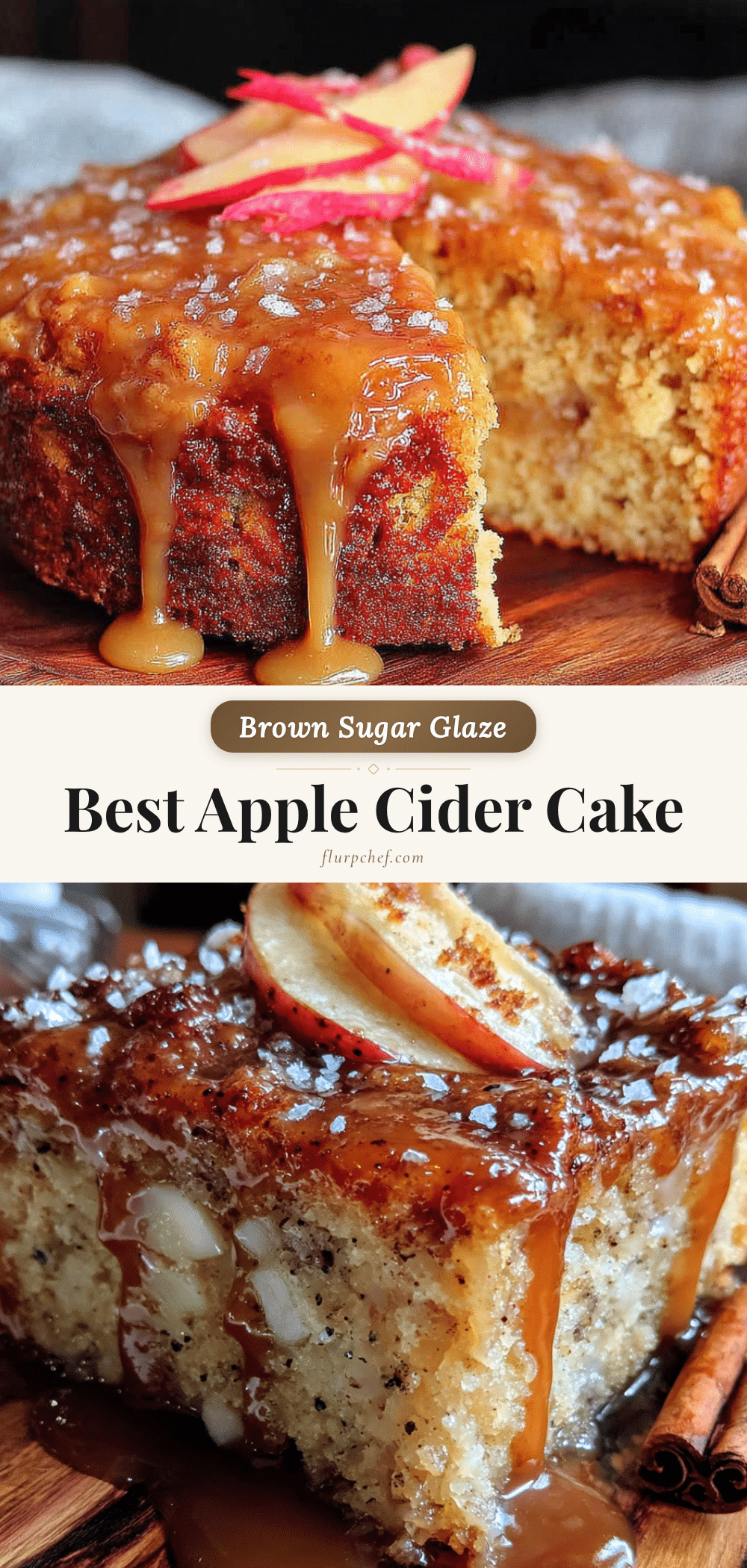
Best Apple Cider Cake with Easy Brown Sugar Glaze
This incredibly moist apple cider cake features a concentrated apple flavor from reduced cider and a rich brown sugar glaze that seeps into every crevice. It’s a foolproof, one-bowl recipe perfect for gatherings or a comforting treat any day.
- Prep Time: 20 minutes
- Cook Time: 45-50 minutes
- Total Time: 1 hour 10 minutes
- Yield: 12 servings 1x
- Category: Dessert
- Cuisine: American
Ingredients
- 1 ½ cups (360 ml) apple cider
- ½ cup (113 g) unsalted butter, softened
- 1 cup (200 g) granulated sugar
- ½ cup (100 g) light brown sugar, packed
- 2 large eggs, at room temperature
- 2 teaspoons vanilla extract
- 2 ½ cups (312 g) all-purpose flour
- 1 ½ teaspoons baking powder
- ½ teaspoon baking soda
- ½ teaspoon salt
- 1 teaspoon ground cinnamon
- ¼ teaspoon ground nutmeg
- ⅛ teaspoon ground cloves
- ½ cup (120 ml) buttermilk, at room temperature
- ½ cup (100 g) light brown sugar, packed (for glaze)
- ¼ cup (57 g) unsalted butter (for glaze)
- 3 tablespoons (45 ml) heavy cream (for glaze)
- 1 teaspoon vanilla extract (for glaze)
- ½ cup (60 g) powdered sugar, sifted (for glaze)
- Pinch of salt (for glaze)
Instructions
- Reduce the apple cider: Pour 1 ½ cups of apple cider into a medium saucepan. Bring to a boil over medium-high heat, then reduce to a simmer. Let it bubble for 15-20 minutes, stirring occasionally, until reduced to about ⅓ cup and syrupy. Set aside to cool.
- Preheat and prep: Preheat oven to 350°F (175°C). Grease a 10-inch bundt pan thoroughly with butter and dust with flour.
- Cream the butter and sugars: In a large mixing bowl, beat the softened butter, granulated sugar, and brown sugar together until light and fluffy, about 3-4 minutes. Scrape down the sides halfway through.
- Add the eggs and vanilla: Add the eggs one at a time, beating well after each addition. Stir in the vanilla extract.
- Mix the dry ingredients: In a separate bowl, whisk together the flour, baking powder, baking soda, salt, cinnamon, nutmeg, and cloves.
- Alternate adding dry ingredients and buttermilk: Add about a third of the flour mixture to the butter mixture and mix on low until just combined. Pour in half the buttermilk and mix again. Repeat with another third of flour, the remaining buttermilk, and finally the last of the flour. Mix until just combined.
- Add the reduced cider: Pour in the cooled, reduced apple cider and fold it in gently with a spatula until no streaks remain.
- Bake: Pour the batter into the prepared bundt pan and spread evenly. Bake for 45-50 minutes, or until a toothpick inserted in the center comes out clean or with a few moist crumbs. The top should be golden brown and spring back when lightly touched.
- Cool in the pan: Let the cake cool in the pan on a wire rack for 15 minutes. Then invert it onto the rack and let it cool completely.
- Make the glaze: In a small saucepan, combine the brown sugar, butter, and heavy cream. Cook over medium heat, stirring constantly, until the butter melts and the mixture is smooth. Let it bubble gently for 2 minutes, then remove from heat. Stir in the vanilla and salt. Let it cool for 5 minutes, then whisk in the powdered sugar until smooth. The glaze should be thick but pourable.
- Glaze the cake: Place the cooled cake on a serving plate. Slowly pour the glaze over the top, letting it drip down the sides. Use a spatula to spread if needed. Let the glaze set for at least 15 minutes before slicing.
Notes
Don’t rush the cider reduction; it should be syrupy and measure about ⅓ cup. Room temperature ingredients are crucial for proper emulsification. Grease the bundt pan thoroughly to prevent sticking. Check for doneness early (at 40 minutes) as oven temperatures vary. For the glaze, if too thick add a teaspoon of cream; if too thin add more powdered sugar. Let the glaze set for 15-20 minutes before serving for a beautiful crackly top. The cake tastes even better on day two.
Nutrition
- Serving Size: 1 slice
- Calories: 385
- Sugar: 38
- Sodium: 280
- Fat: 16
- Saturated Fat: 9
- Carbohydrates: 58
- Fiber: 1
- Protein: 4
Keywords: apple cider cake, brown sugar glaze, bundt cake, fall dessert, moist cake, easy cake recipe


