Let me be honest with you—I’ve made a lot of butternut squash soups in my day. Some were good, some were fine, and a few were downright disappointing. But this one? This is the one I keep coming back to. The sage brown butter isn’t just a garnish; it’s the whole reason this soup works. It adds this nutty, almost caramelized flavor that makes you wonder why you ever ate squash soup any other way.
- Quick & Easy: From start to table in under 45 minutes. Seriously, you can have this on the table faster than you can order takeout and wonder where your life went wrong.
- Simple Ingredients: No fancy grocery trips needed. Butternut squash, onion, garlic, broth, butter, and sage. That’s it. You probably have most of this already.
- Perfect for Cozy Nights: This is the soup you make when you want to feel like you’ve got your life together, even if you’re eating it in sweatpants on the couch.
- Crowd-Pleaser: I’ve served this to my picky sister-in-law who claims she “doesn’t like soup,” and she asked for seconds. It’s that good.
- Unbelievably Delicious: The texture is velvety without being heavy, and the sage brown butter adds a depth that makes it taste like you spent hours on it. You didn’t. But they don’t need to know that.
What makes this different from every other butternut squash soup recipe out there? It’s the technique. Most recipes just dump everything in a pot and call it a day. But roasting the squash first—even just for 20 minutes—changes everything. It concentrates the natural sugars and gives you that caramelized flavor that makes people close their eyes after the first bite. And the sage brown butter? That’s not just a drizzle. It’s the star of the show.
This is the kind of soup that makes you feel good about eating well. It’s packed with vitamins A and C, it’s naturally gluten-free, and it’s so satisfying that you won’t even miss the heavy cream. Honestly, this is comfort food reimagined—healthier, faster, but with the same soul-soothing satisfaction.
What Ingredients You Will Need
This recipe uses simple, wholesome ingredients to deliver big flavor without the fuss. Most of these are pantry staples, and the ones that aren’t are easy to find at any grocery store.
- Butternut squash: 1 large (about 3 pounds), peeled, seeded, and cubed. Look for one that feels heavy for its size and has a matte, beige skin. I prefer to buy pre-cut cubes from the store when I’m feeling lazy—no judgment here.
- Yellow onion: 1 medium, diced. A sweet onion like Vidalia works great here too.
- Garlic cloves: 4, smashed. Don’t bother mincing them finely; they’ll get blended anyway.
- Olive oil: 2 tablespoons, for roasting the squash. A good-quality extra virgin olive oil makes a difference here.
- Vegetable broth: 4 cups. I recommend using a low-sodium broth so you can control the salt level. My go-to is Pacific Foods organic vegetable broth—it’s got a clean flavor that doesn’t overpower the squash.
- Unsalted butter: 4 tablespoons. Don’t use salted butter here; you want to control the salt yourself.
- Fresh sage leaves: 12-15 leaves. Don’t even think about using dried sage for the brown butter. It won’t work. Fresh sage is non-negotiable here.
- Salt and black pepper: To taste. I use kosher salt for cooking and flaky sea salt for finishing.
- Optional garnish: Toasted pumpkin seeds, a drizzle of heavy cream or coconut milk, and extra crispy sage leaves.
For the best texture, I recommend using a high-speed blender like a Vitamix. If you’re using an immersion blender, make sure the squash is very tender before blending—otherwise, you’ll end up with a chunky soup that’s more like a stew. Not that there’s anything wrong with stew, but that’s not what we’re making here.
If you’re dairy-free, you can substitute the butter with a high-quality vegan butter or ghee. The flavor will be slightly different, but it’ll still be delicious. I’ve tried it with Miyoko’s vegan butter, and honestly? It worked better than I expected.
Equipment Needed
You don’t need a professional kitchen to make this soup. Here’s what you’ll actually use:
- Baking sheet: A rimmed baking sheet for roasting the squash. I use a half-sheet pan because it gives the squash room to caramelize instead of steam.
- Large pot or Dutch oven: A 5-6 quart pot works perfectly. I love my Le Creuset Dutch oven, but any heavy-bottomed pot will do.
- Blender: A high-speed blender is ideal for that velvety smooth texture. If you’re using an immersion blender, be patient and blend for at least 2 minutes.
- Small skillet: For making the sage brown butter. A light-colored skillet helps you see the butter change color.
- Chef’s knife and cutting board: A sharp knife makes peeling and cubing the squash so much easier. Trust me on this one.
- Wooden spoon or spatula: For stirring the soup as it cooks.
If you don’t have a blender, you can use a food processor or even a potato masher for a chunkier texture. But honestly? A blender gives you that restaurant-quality smoothness that makes this soup feel special.
Preparation Method
Let me walk you through this step by step. I’ve made this soup probably 20 times, and these are the exact steps I follow every single time.
- Preheat your oven to 400°F (200°C). Line a baking sheet with parchment paper for easy cleanup.
- Prep the squash: Peel the butternut squash using a vegetable peeler or a sharp knife. Cut it in half lengthwise and scoop out the seeds. Cut the flesh into 1-inch cubes. Don’t worry about being perfect—they’ll get blended anyway. Place the cubes on the prepared baking sheet.
- Roast the squash: Drizzle the cubed squash with 2 tablespoons of olive oil and season with a pinch of salt and pepper. Toss to coat evenly. Spread the cubes in a single layer—don’t overcrowd the pan or they’ll steam instead of caramelize. Roast for 20-25 minutes, flipping halfway through, until the squash is tender and the edges are golden brown.
- While the squash roasts, start the base: In your large pot or Dutch oven, heat 1 tablespoon of olive oil over medium heat. Add the diced onion and cook for 5-7 minutes, stirring occasionally, until translucent and starting to soften. Add the smashed garlic cloves and cook for another minute until fragrant.
- Combine and simmer: Add the roasted squash cubes to the pot along with 4 cups of vegetable broth. Bring to a boil, then reduce the heat to low and let it simmer for 10 minutes. This allows the flavors to meld together.
- Blend until smooth: Carefully transfer the soup to a blender. Work in batches if needed—never fill the blender more than halfway with hot liquid. Blend on high for 1-2 minutes until silky smooth. Alternatively, use an immersion blender directly in the pot. Season with salt and pepper to taste.
- Make the sage brown butter: While the soup simmers, melt 4 tablespoons of unsalted butter in a small skillet over medium heat. Add the fresh sage leaves. Cook for 3-4 minutes, swirling the pan occasionally, until the butter turns a deep golden brown and smells nutty. The sage leaves will become crispy. Remove from heat immediately—brown butter can go from perfect to burnt in seconds.
- Serve and garnish: Ladle the soup into bowls. Drizzle with the sage brown butter and top with the crispy sage leaves. Add a sprinkle of flaky sea salt and some toasted pumpkin seeds if you’re feeling fancy. Serve immediately.
Here’s a pro tip I learned the hard way: if you’re using an immersion blender, make sure the squash is really tender before blending. I once rushed this step and ended up with a soup that had little chunks of squash that refused to blend. It was still tasty, but the texture was all wrong.
The soup should be thick enough to coat the back of a spoon but still pourable. If it’s too thick, add more broth or water, one tablespoon at a time, until it reaches your desired consistency.
Cooking Tips & Techniques

I’ve made every mistake in the book with this soup, so you don’t have to. Here’s what I’ve learned:
Don’t skip the roasting step. I know it adds an extra 20 minutes, but it’s non-negotiable. Roasting concentrates the natural sugars in the squash and gives you that deep, caramelized flavor that makes this soup taste like it simmered for hours. I once tried to save time by just boiling the squash directly in the broth, and the result was watery and bland. Never again.
Watch the brown butter like a hawk. Brown butter can go from perfect to burnt in about 30 seconds. You’re looking for a deep amber color with a nutty aroma. The moment you see it turn golden, pull it off the heat. I’ve ruined more batches than I care to admit by getting distracted by my phone.
Season in layers. Add salt at every stage—when roasting the squash, when cooking the onion, and after blending. This builds flavor gradually instead of dumping it all in at the end. Trust me, your taste buds will thank you.
Use a light-colored skillet for the brown butter. Dark pans make it hard to see the color change. I learned this after three failed attempts where I ended up with black butter and a smoky kitchen.
Let the soup rest for 5 minutes before serving. This allows the flavors to settle and the texture to thicken slightly. It also gives you time to clean up the kitchen and pretend you’re a fancy chef.
Variations & Adaptations
This soup is incredibly versatile. Here are some ways to make it your own:
Vegan version: Substitute the butter with a high-quality vegan butter or coconut oil. I’ve tried this with Miyoko’s vegan butter, and the brown butter effect works surprisingly well. Use coconut cream instead of heavy cream if you’re adding a drizzle.
Spicy twist: Add 1/2 teaspoon of smoked paprika and a pinch of cayenne pepper when you’re cooking the onion. The smokiness pairs beautifully with the sweet squash. I made this version for a friend who loves heat, and she said it was the best soup she’d ever had.
Curried butternut squash soup: Add 1 tablespoon of curry powder when cooking the onion. Finish with a splash of coconut milk instead of the brown butter. This is my go-to when I’m craving something with a little more warmth and complexity.
Apple and squash combo: Roast a peeled and cubed apple along with the squash. The apple adds a subtle sweetness that complements the sage beautifully. I tried this on a whim one fall afternoon, and it’s become my favorite variation.
Nut-free option: Skip the pumpkin seeds and use crispy chickpeas instead. Toss canned chickpeas with olive oil and salt, then roast at 400°F for 20 minutes until crispy. They add the same crunch without the nuts.
Make it a meal: Add a can of drained and rinsed chickpeas or some cooked white beans to the soup before blending. This adds protein and makes it hearty enough for dinner. I do this when I want a one-bowl meal that actually fills me up.
Serving & Storage Suggestions
This soup is best served hot, right after you’ve made the brown butter. The crispy sage leaves will soften if they sit too long, so add them just before serving.
For a cozy dinner, serve this soup with a crusty loaf of sourdough bread and a simple green salad with a lemon vinaigrette. The acidity of the dressing cuts through the richness of the soup beautifully. I also love pairing it with a grilled cheese sandwich for the ultimate comfort food combo.
If you’re serving this for a dinner party, ladle the soup into small cups or shot glasses for an elegant appetizer. Top each with a tiny sage leaf and a drizzle of brown butter. It looks impressive but takes almost no extra effort.
Storage: Let the soup cool completely before transferring it to an airtight container. It will keep in the refrigerator for up to 5 days. The flavors actually deepen and improve after a day or two in the fridge, so don’t be afraid to make it ahead.
Freezing: This soup freezes beautifully. Portion it into freezer-safe bags or containers, leaving about an inch of headroom for expansion. It will keep for up to 3 months. Thaw overnight in the refrigerator before reheating.
Reheating: Reheat the soup gently on the stovetop over medium-low heat, stirring occasionally. Add a splash of broth or water if it’s too thick. You can also microwave individual portions in 30-second intervals, stirring between each. Make fresh brown butter for serving—it only takes 5 minutes and makes a huge difference.
Nutritional Information & Benefits
This soup is as good for you as it is delicious. Here’s what you’re getting in each serving (approximate values, based on 6 servings):
| Nutrient | Amount Per Serving |
|---|---|
| Calories | 185 |
| Total Fat | 12g |
| Saturated Fat | 6g |
| Carbohydrates | 18g |
| Fiber | 4g |
| Sugar | 6g |
| Protein | 3g |
| Vitamin A | 457% DV |
| Vitamin C | 35% DV |
| Potassium | 582mg |
Butternut squash is packed with vitamin A, which supports eye health and immune function. It’s also a great source of fiber, which keeps you feeling full and satisfied. The sage in the brown butter isn’t just for flavor—it’s also known for its anti-inflammatory properties. And since this soup is naturally gluten-free and can easily be made vegan, it works for almost any dietary preference.
I love that this soup feels indulgent but is actually pretty healthy. It’s the kind of meal that makes you feel good about eating well, without feeling like you’re missing out on anything.
Conclusion
This cozy butternut squash soup with sage brown butter is the kind of recipe that becomes a staple in your fall and winter rotation. It’s quick enough for a weeknight dinner but impressive enough for company. The roasted squash gives it that deep, caramelized flavor, and the sage brown butter takes it from good to absolutely unforgettable.
I hope you give this recipe a try. Don’t be afraid to make it your own—swap in different herbs, add some spice, or throw in an apple for sweetness. Cooking should be fun, and this soup is the perfect canvas for experimentation.
When you make it, I’d love to hear how it turned out. Leave a comment below and let me know what variations you tried. Did you add extra sage? Throw in some red pepper flakes? Serve it with a grilled cheese? I want to hear all about it. And if you loved it, share it with a friend who needs a little cozy comfort in their life.
Happy cooking, friends. Stay warm out there.
Frequently Asked Questions
Can I use frozen butternut squash instead of fresh?
Absolutely. Frozen butternut squash works perfectly in this recipe. Just skip the roasting step and add the frozen cubes directly to the pot with the onion and garlic. You might need to simmer it a few minutes longer to ensure it’s tender enough to blend.
How do I make this soup ahead of time?
This soup is perfect for meal prep. Make the soup up to 3 days in advance and store it in the refrigerator. When you’re ready to serve, reheat it gently on the stovetop and make the sage brown butter fresh. The crispy sage leaves are best added just before serving.
Can I use dried sage instead of fresh?
I really don’t recommend it for the brown butter. Fresh sage leaves crisp up beautifully and have a milder, more aromatic flavor. Dried sage can become bitter when fried in butter. If you’re in a pinch, you can add 1 teaspoon of dried sage to the soup itself for flavor, but skip the brown butter garnish.
What can I use instead of vegetable broth?
Chicken broth works wonderfully if you’re not vegetarian. You can also use water with a bouillon cube dissolved in it. For a richer flavor, try using bone broth. Just be mindful of the salt content—adjust your seasoning accordingly.
How can I make this soup thicker or thinner?
For a thicker soup, use less broth or add a peeled and cubed potato when you simmer the squash. The potato will break down and add creaminess without changing the flavor. For a thinner soup, add more broth or water until it reaches your desired consistency. Remember that the soup will thicken slightly as it cools.
Pin This Recipe!
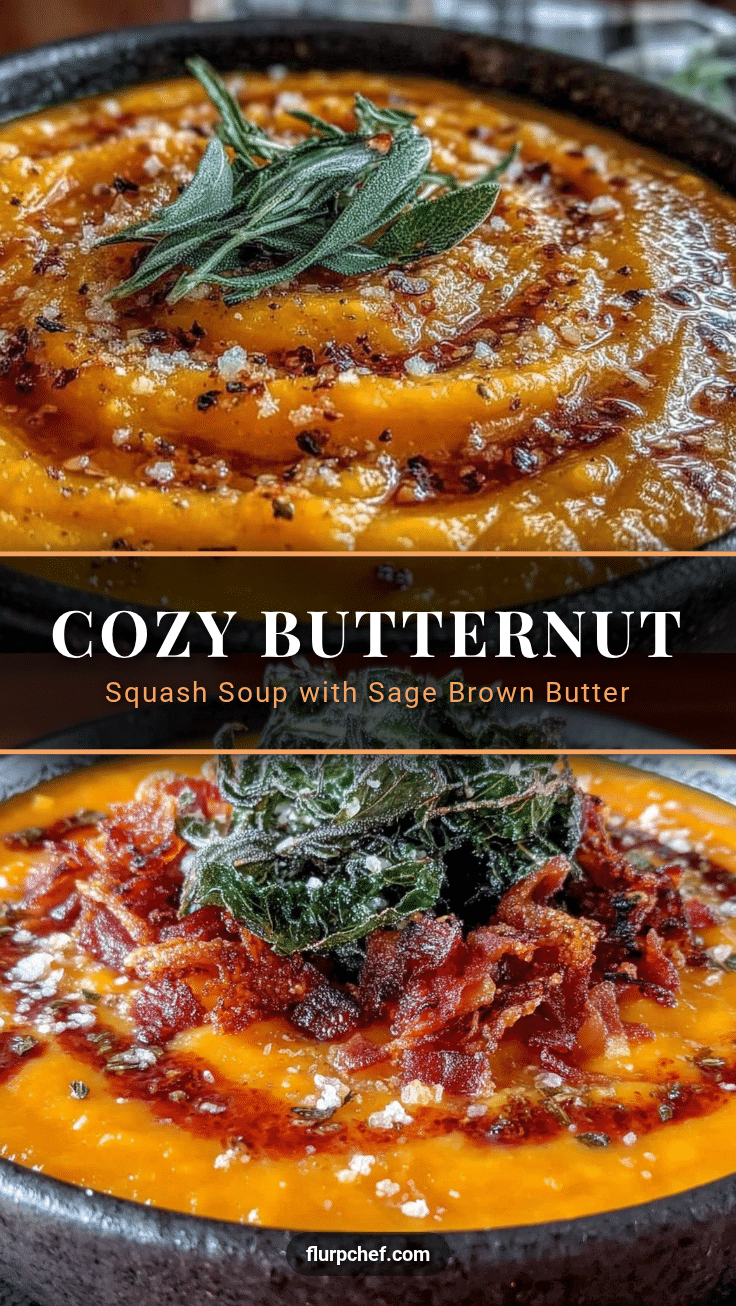
Cozy Butternut Squash Soup with Sage Brown Butter

This velvety butternut squash soup is elevated with nutty sage brown butter. Roasting the squash first concentrates its natural sweetness, making this quick and easy soup taste like it simmered for hours.
- Prep Time: 15 minutes
- Cook Time: 30 minutes
- Total Time: 45 minutes
- Yield: 6 servings 1x
- Category: Soup
- Cuisine: American
Ingredients
- 1 large butternut squash (about 3 pounds), peeled, seeded, and cubed
- 1 medium yellow onion, diced
- 4 garlic cloves, smashed
- 2 tablespoons olive oil
- 4 cups low-sodium vegetable broth
- 4 tablespoons unsalted butter
- 12–15 fresh sage leaves
- Salt and black pepper to taste
- Optional garnish: toasted pumpkin seeds, heavy cream or coconut milk, extra crispy sage leaves
Instructions
- Preheat your oven to 400°F (200°C). Line a baking sheet with parchment paper.
- Prep the squash: Peel the butternut squash using a vegetable peeler or sharp knife. Cut in half lengthwise, scoop out seeds, and cut flesh into 1-inch cubes. Place on prepared baking sheet.
- Roast the squash: Drizzle with 2 tablespoons olive oil, season with salt and pepper, and toss to coat. Spread in a single layer. Roast for 20-25 minutes, flipping halfway, until tender and edges are golden brown.
- While squash roasts, start the base: In a large pot or Dutch oven, heat 1 tablespoon olive oil over medium heat. Add diced onion and cook 5-7 minutes until translucent. Add smashed garlic and cook 1 minute until fragrant.
- Combine and simmer: Add roasted squash and 4 cups vegetable broth to the pot. Bring to a boil, then reduce heat to low and simmer for 10 minutes.
- Blend until smooth: Carefully transfer soup to a blender (work in batches if needed) and blend on high for 1-2 minutes until silky smooth. Alternatively, use an immersion blender directly in the pot. Season with salt and pepper to taste.
- Make the sage brown butter: While soup simmers, melt 4 tablespoons unsalted butter in a small skillet over medium heat. Add fresh sage leaves. Cook for 3-4 minutes, swirling occasionally, until butter turns deep golden brown and smells nutty. Remove from heat immediately.
- Serve and garnish: Ladle soup into bowls. Drizzle with sage brown butter and top with crispy sage leaves. Add flaky sea salt and toasted pumpkin seeds if desired. Serve immediately.
Notes
Don’t skip roasting the squash—it concentrates the natural sugars for deeper flavor. Watch the brown butter carefully; it can go from perfect to burnt in seconds. For a vegan version, substitute butter with high-quality vegan butter or coconut oil. The soup thickens as it cools; add more broth to adjust consistency. Store in the refrigerator for up to 5 days or freeze for up to 3 months.
Nutrition
- Serving Size: 1 bowl (about 1.5 cu
- Calories: 185
- Sugar: 6
- Sodium: 480
- Fat: 12
- Saturated Fat: 6
- Carbohydrates: 18
- Fiber: 4
- Protein: 3
Keywords: butternut squash soup, sage brown butter, fall soup, easy soup, gluten-free soup, vegetarian soup


