I was standing in the middle of a hardware store parking lot last Tuesday—my son’s jacket half-zipped, my keys somewhere in the bottomless pit of my bag—when the air shifted. A cold front had rolled in, and with it came that specific smell: wet asphalt, damp earth, and a faint, almost invisible whisper of woodsmoke from someone’s chimney a few blocks away. And just like that, I was eight years old again, sitting on a wobbly stool in my Aunt Lena’s cramped kitchen, watching her stir a pot that filled the whole house with the kind of warmth you could feel in your bones. She’d always hum off-key while she worked, and I’d always ask, “Is it ready yet?” about seventeen times before dinner. That stew of hers—cozy beef stew with red wine and root vegetables—was the only thing that ever made me forget to ask.
Honestly, I haven’t thought about that kitchen in years. Aunt Lena moved to Florida a decade ago, and the house smells like sunscreen and retirement now. But that parking lot moment? It hit me hard. I wanted that stew back. Not just the taste, but the feeling—the way the steam fogged up the windows, the way the carrots were so soft they practically melted, the way a bowl of it could make a rainy Tuesday feel like a small celebration. So I did what I always do when a memory gets stuck in my throat: I went home and tried to cook my way back to it.
Let me tell you, the first attempt was a mess. I forgot to brown the meat long enough, so it came out gray and sad. My son took one bite, looked at me with that heartbreaking honesty only a five-year-old can muster, and said, “Mom, this tastes like wet socks.” (He’s not wrong—I’d forgotten the salt entirely.) But I kept at it, tweaking and testing, until I landed on a version that made even him ask for seconds. Maybe you’ve been there, chasing a taste from your past that you can’t quite name but can’t let go of. This cozy beef stew with red wine and root vegetables is my attempt to bottle that feeling—and honestly, it’s the best thing I’ve made all year.
Why You’ll Love This Recipe
Look, I’m not a chef. I’m a mom who’s burned more pans than I care to admit and once served cereal for dinner because the stew I planned turned into charcoal. But this recipe? It’s the one I’m actually proud of. It’s the kind of cozy beef stew with red wine and root vegetables that makes you close your eyes after the first bite—and then open them wide to make sure you have leftovers for tomorrow.
- Kid-Approved and Parent-Tested: My son is a notoriously picky eater. He once rejected a perfectly good grilled cheese because it “looked too yellow.” But this stew? He cleans his bowl every time. The red wine cooks down to a rich, savory depth that kids don’t even notice, and the root vegetables get so tender they’re almost sweet.
- Budget-Friendly Ingredients: No fancy cuts of meat here. I use chuck roast, which is affordable and gets beautifully tender when braised. The vegetables are the usual suspects—carrots, potatoes, parsnips—all cheap and easy to find.
- One-Pot Wonder: Everything cooks in a single Dutch oven. Less cleanup, more time to actually sit down and eat with your family.
- Leftovers That Get Better: This is the kind of stew that tastes even better the next day. The flavors meld overnight, and the meat gets even more fall-apart tender. Perfect for meal prep or a cozy lunch the next day.
- No Special Skills Needed: If you can chop vegetables and stir, you can make this. I promise. Even if you’ve never braised meat before, the step-by-step instructions will hold your hand through it.
What makes this cozy beef stew with red wine and root vegetables different from all the other recipes out there? It’s the balance. The red wine adds a subtle acidity that cuts through the richness of the beef, while the root vegetables soak up all that savory broth until they’re practically bursting with flavor. It’s comfort food that doesn’t weigh you down—hearty, yes, but also bright and satisfying in a way that feels like a hug in a bowl.
What Ingredients You Will Need
This recipe uses simple, wholesome ingredients that come together to create something truly special. Most of these are pantry staples or easy to find at any grocery store, so you won’t need to hunt down obscure items. Here’s what you’ll need, broken down by category for clarity.
For the Beef and Browning
- 2 pounds (900 g) beef chuck roast, cut into 1.5-inch cubes (I prefer chuck for its marbling; it stays tender after long cooking)
- 2 tablespoons (30 ml) olive oil, divided (use a good-quality oil for browning; it makes a difference)
- 1 teaspoon (5 g) salt, plus more to taste
- 1/2 teaspoon (2 g) black pepper, freshly ground
- 2 tablespoons (16 g) all-purpose flour (for dusting the beef; helps thicken the stew)
For the Aromatics and Base
- 1 large yellow onion, diced (about 1.5 cups)
- 3 cloves garlic, minced
- 2 tablespoons (30 g) tomato paste (I recommend Cento or Amore for deep flavor)
- 1 cup (240 ml) dry red wine, like Cabernet Sauvignon or Merlot (use something you’d drink; the flavor concentrates)
- 4 cups (960 ml) beef broth, low-sodium (Better Than Bouillon is my go-to for rich flavor)
- 1 tablespoon (15 ml) Worcestershire sauce (adds umami depth)
- 2 bay leaves
- 1 teaspoon (2 g) dried thyme
- 1 teaspoon (2 g) dried rosemary
For the Root Vegetables
- 3 large carrots, peeled and cut into 1-inch chunks (about 2 cups)
- 2 large parsnips, peeled and cut into 1-inch chunks (about 1.5 cups; adds a subtle sweetness)
- 1 pound (450 g) Yukon Gold potatoes, cut into 1-inch chunks (about 3 cups; they hold their shape better than Russets)
- 2 celery stalks, cut into 1/2-inch slices (about 1 cup)
Optional Add-Ins and Garnishes
- 1 cup (150 g) frozen peas, added in the last 10 minutes (adds color and sweetness)
- Fresh parsley, chopped, for garnish
- Crusty bread or egg noodles, for serving
Substitution Guidance
- Gluten-free: Use 2 tablespoons (16 g) cornstarch mixed with 2 tablespoons (30 ml) cold water instead of flour for thickening. Add it in the last 15 minutes of cooking.
- Wine-free: Substitute the red wine with an additional cup of beef broth plus 1 tablespoon (15 ml) balsamic vinegar for acidity.
- Vegetable variations: Swap parsnips with turnips or sweet potatoes, or add mushrooms for an earthy twist.
- Low-sodium: Use low-sodium broth and adjust salt to taste at the end.
Equipment Needed
You don’t need a professional kitchen to make this cozy beef stew with red wine and root vegetables. Here’s what I use, along with some budget-friendly alternatives.
- Large Dutch Oven (5 to 6 quarts): This is my workhorse for stews. It distributes heat evenly and goes from stovetop to oven. If you don’t have one, a heavy-bottomed stockpot or a large oven-safe pot with a lid works fine. I use a Lodge enameled cast iron, which is affordable and lasts forever.
- Sharp Chef’s Knife: A good knife makes chopping vegetables and trimming beef a breeze. No need for anything fancy—a basic 8-inch knife from Victorinox is my budget pick.
- Cutting Board: Wood or plastic, whatever you have. Just make sure it’s stable.
- Wooden Spoon or Spatula: For stirring and scraping up the browned bits from the bottom of the pot (that’s where the flavor lives).
- Measuring Cups and Spoons: Accuracy matters, especially for the wine and broth.
- Tongs: For turning the beef cubes while browning. They give you better control than a fork.
- Oven Mitts: The pot gets hot, and you’ll need to transfer it to the oven if you’re using that method.
Pro tip: If you don’t have a Dutch oven, you can brown the meat in a skillet, then transfer everything to a slow cooker and cook on low for 8 hours. The results are just as good—maybe even more tender.
Preparation Method
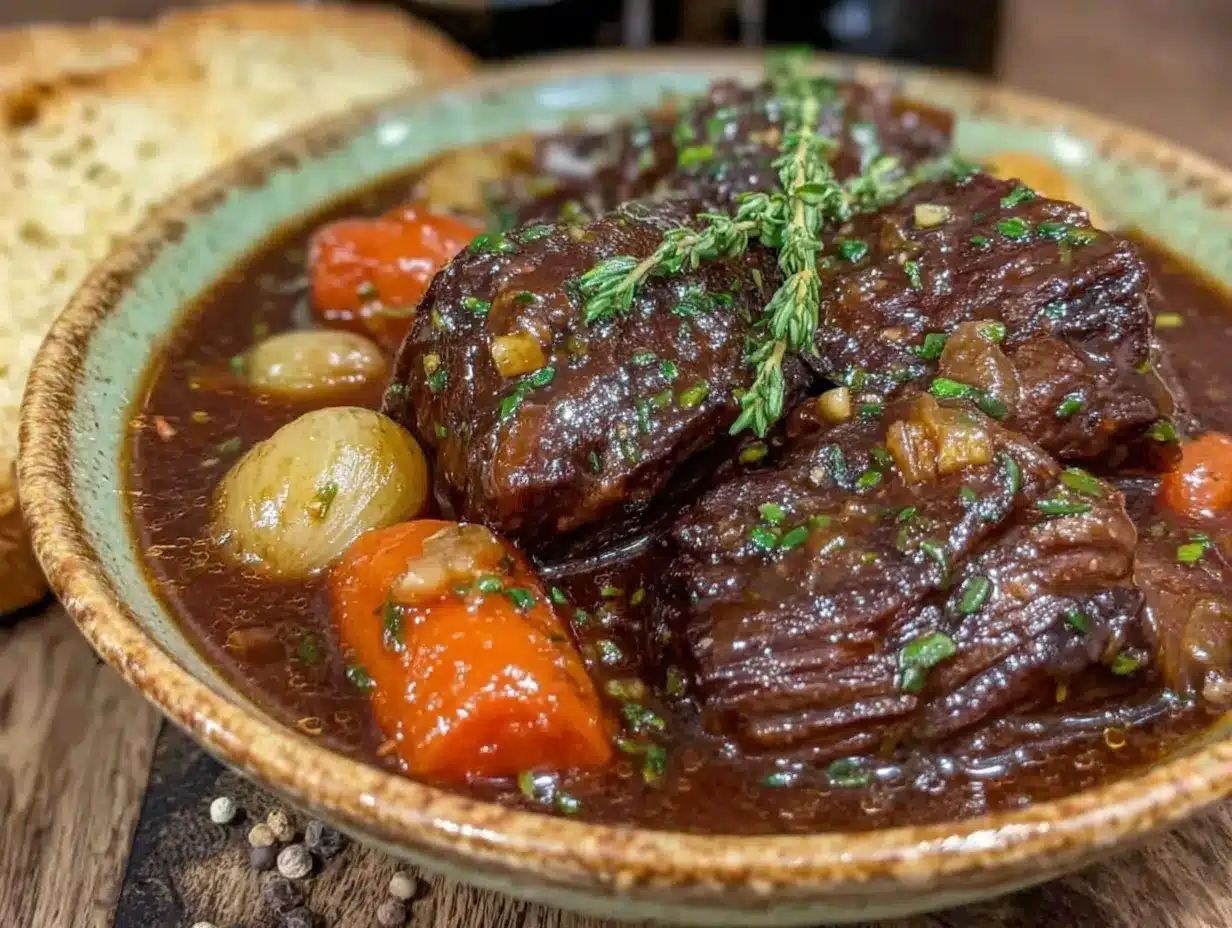
Let’s get cooking. This cozy beef stew with red wine and root vegetables comes together in about 2.5 hours, but most of that is hands-off simmering time. Here’s the step-by-step breakdown.
Step 1: Prep the Beef (10 minutes)
Pat the beef cubes dry with paper towels. This is crucial—wet meat won’t brown properly. Season them generously with salt and pepper, then sprinkle the flour over the cubes and toss to coat. Shake off any excess flour. Let the beef sit at room temperature for 10 minutes while you prep the vegetables.
Step 2: Brown the Beef (15 minutes)
Heat 1 tablespoon of olive oil in your Dutch oven over medium-high heat until it shimmers. Add half the beef cubes in a single layer—don’t overcrowd the pot, or they’ll steam instead of brown. Cook for 3-4 minutes per side until deeply browned. Use tongs to transfer the browned beef to a plate. Repeat with the remaining oil and beef. Don’t rush this step; the browned bits on the bottom of the pot are pure flavor gold.
Step 3: Sauté the Aromatics (8 minutes)
Reduce the heat to medium. Add the diced onion and cook for 4-5 minutes, stirring occasionally, until softened and translucent. Scrape up any browned bits from the bottom of the pot as you stir. Add the minced garlic and tomato paste, and cook for 1 minute more until fragrant. The tomato paste will darken slightly—that’s a good sign.
Step 4: Deglaze with Wine (3 minutes)
Pour in the red wine and stir, scraping the bottom of the pot to release all those flavorful browned bits. Let the wine simmer for 2-3 minutes, until it reduces by about half. The smell at this point is incredible—rich and slightly fruity.
Step 5: Build the Broth (5 minutes)
Return the browned beef and any accumulated juices to the pot. Add the beef broth, Worcestershire sauce, bay leaves, thyme, and rosemary. Stir everything together. Bring the liquid to a gentle boil, then reduce the heat to low. You want a steady simmer—bubbles breaking the surface but not a rolling boil.
Step 6: Simmer the Stew (1.5 hours)
Cover the pot with the lid slightly ajar (to let some steam escape) and let it simmer gently for 1.5 hours. Stir occasionally to prevent sticking. The beef should be fork-tender but not falling apart yet. If you’re using an oven, preheat it to 325°F (165°C) and transfer the covered pot to the oven for the same amount of time.
Step 7: Add the Vegetables (30 minutes)
After 1.5 hours, add the carrots, parsnips, potatoes, and celery to the pot. Stir to combine, making sure the vegetables are submerged in the broth. Cover and continue simmering for another 25-30 minutes, until the vegetables are tender when pierced with a fork. If using frozen peas, add them in the last 10 minutes of cooking.
Step 8: Finish and Adjust (5 minutes)
Remove the bay leaves. Taste the broth and adjust seasoning with salt and pepper. If the stew is too thin for your liking, mix 1 tablespoon of cornstarch with 2 tablespoons of cold water to make a slurry, stir it in, and let it simmer for 2-3 minutes to thicken. If it’s too thick, add a splash of beef broth or water.
Step 9: Rest and Serve (10 minutes)
Let the stew rest off the heat for 10 minutes before serving. This allows the flavors to settle and the meat to relax. Ladle into bowls, garnish with fresh parsley, and serve with crusty bread or over egg noodles.
Cooking Tips & Techniques
I’ve made this cozy beef stew with red wine and root vegetables at least a dozen times, and I’ve learned a few things the hard way. Here are my best tips to make sure yours turns out perfect every time.
Don’t Skip the Browning
I know it’s tempting to just dump everything in the pot and call it a day, but browning the beef first is non-negotiable. That deep, caramelized crust is what gives the stew its rich flavor. I once tried to save time by skipping this step, and the result was a pale, sad broth that tasted more like boiled meat than stew. Learn from my mistake.
Use the Right Wine
You don’t need an expensive bottle, but use something you’d actually drink. A cheap cooking wine will leave a harsh, metallic taste. I usually grab a $10 Cabernet Sauvignon from the grocery store, and it works beautifully. If you’re not a wine drinker, ask a friend for a recommendation—or just use the substitution I mentioned earlier.
Cut Vegetables Uniformly
This matters more than you’d think. If your carrot chunks are twice the size of your potato chunks, they’ll cook at different rates. You’ll end up with mushy potatoes and undercooked carrots. Aim for 1-inch pieces across the board.
Low and Slow is the Way to Go
This stew needs time. Rushing it on high heat will toughen the meat and make the vegetables fall apart. A gentle simmer—where you see small bubbles breaking the surface—is your best friend. If you’re short on time, a pressure cooker can work (20 minutes on high pressure), but the texture won’t be quite as tender.
Taste as You Go
I can’t stress this enough. Seasoning is a journey, not a destination. The broth might taste perfect at the start, but as it reduces, the flavors concentrate. Always taste before serving and adjust salt and pepper accordingly. My biggest failure was undersalting a batch that ended up tasting flat—now I taste at least three times during cooking.
Multitasking Tip
While the stew simmers, I prep my vegetables for the next addition. It keeps me from scrambling later and makes the process feel less chaotic. You can also use that time to clean up the kitchen or set the table.
Variations & Adaptations
This cozy beef stew with red wine and root vegetables is incredibly versatile. Here are some ways to make it your own.
Dietary Adaptations
- Gluten-free: Skip the flour when browning the beef. Instead, thicken the stew at the end with a cornstarch slurry (1 tablespoon cornstarch mixed with 2 tablespoons cold water).
- Dairy-free: This recipe is naturally dairy-free, so no changes needed. Just serve it without buttered bread.
- Low-carb/Keto: Omit the potatoes and add more non-starchy vegetables like mushrooms, zucchini, or cauliflower. The stew will still be hearty and satisfying.
Flavor Twists
- Herb Swap: Replace thyme and rosemary with 1 tablespoon of fresh chopped sage or 2 teaspoons of smoked paprika for a different flavor profile.
- Spicy Kick: Add 1/2 teaspoon of red pepper flakes along with the garlic for a subtle heat that warms you from the inside out.
- Mushroom Love: Sauté 8 ounces of sliced cremini mushrooms with the onions for an extra umami boost.
Cooking Method Variations
- Slow Cooker: Brown the beef and sauté the aromatics on the stovetop, then transfer everything to a slow cooker. Cook on low for 8 hours or high for 4 hours. Add the vegetables in the last 1.5 hours of cooking.
- Instant Pot: Use the sauté function to brown the beef and cook the aromatics. Add the wine, broth, and seasonings, then pressure cook on high for 35 minutes. Quick release, add the vegetables, and pressure cook for another 5 minutes.
- Oven Braise: After adding the broth, cover the pot and transfer it to a 325°F (165°C) oven for 2 hours, then add the vegetables and cook for another 30 minutes.
Personal Variation I Love
I once added a parsnip and a half to the pot because I had one sitting in the fridge, and it was a game-changer. The subtle sweetness balanced the red wine’s acidity perfectly. Now I always add parsnips—they’re my secret ingredient.
Serving & Storage Suggestions
This cozy beef stew with red wine and root vegetables is at its best when served hot, straight from the pot. But here’s how to make the most of it, whether you’re eating it now or saving it for later.
Serving Temperature and Presentation
Serve the stew piping hot in deep bowls. Ladle it over a bed of egg noodles, mashed potatoes, or alongside a thick slice of crusty bread for soaking up the broth. Garnish with a sprinkle of fresh parsley and a crack of black pepper. For a cozy touch, serve it with a side of buttered peas or a simple green salad.
Complementary Dishes and Beverages
- Bread: A crusty sourdough or a warm baguette is perfect for dipping.
- Side Salad: A light arugula salad with lemon vinaigrette balances the richness of the stew.
- Wine Pairing: Pour the same red wine you used in the stew—it’s a classic pairing that never fails.
Storage Instructions
Let the stew cool completely before storing. Transfer it to an airtight container and refrigerate for up to 4 days. The flavors actually improve overnight, so don’t be afraid to make it a day ahead.
Freezing Instructions
This stew freezes beautifully. Portion it into freezer-safe bags or containers, leaving about an inch of headspace for expansion. Freeze for up to 3 months. Thaw overnight in the refrigerator before reheating.
Reheating Methods
- Stovetop: Reheat in a pot over medium-low heat, stirring occasionally, until heated through. Add a splash of broth or water if the stew has thickened too much.
- Microwave: Transfer a portion to a microwave-safe bowl and heat in 1-minute intervals, stirring between each, until hot.
- Oven: Place the stew in an oven-safe dish, cover with foil, and reheat at 350°F (175°C) for 20-25 minutes.
Flavor Development Note
I’ve found that this stew tastes even better on day two. The beef absorbs more of the broth, and the vegetables become incredibly tender. If you can, make it a day ahead—your future self will thank you.
Nutritional Information & Benefits
Here’s a rough estimate of the nutritional content per serving (based on 6 servings, not including bread or noodles):
| Nutrient | Amount per Serving |
|---|---|
| Calories | 420 |
| Protein | 35 g |
| Fat | 18 g |
| Carbohydrates | 32 g |
| Fiber | 7 g |
| Sugar | 9 g |
| Sodium | 780 mg |
Health Benefits of Key Ingredients
- Beef: A great source of iron, zinc, and B vitamins, which support energy and immune function.
- Carrots and Parsnips: Rich in beta-carotene and fiber, good for eye health and digestion.
- Potatoes: Provide potassium and vitamin C, especially if you leave the skins on.
- Red Wine: Contains antioxidants like resveratrol, which may support heart health in moderation.
Dietary Considerations
- Gluten-free: With the cornstarch substitution, this recipe is gluten-free.
- Low-carb: Omit the potatoes to reduce carbs to about 15 g per serving.
- Allergens: This recipe contains gluten (if using flour) and may contain sulfites from the wine. Check your broth for any additives.
I’m not a nutritionist, but I do believe in eating food that makes you feel good. This stew is hearty without being heavy, and it’s packed with vegetables and lean protein. It’s the kind of meal that fills you up and leaves you satisfied—not sluggish.
Conclusion
This cozy beef stew with red wine and root vegetables is more than just a recipe—it’s a way to bring warmth and comfort to your table, even on the busiest of days. It’s the kind of meal that makes your kitchen smell like home, that makes your kids ask for seconds, that makes you feel like you’ve got this whole cooking thing figured out.
I’ve made this stew on rainy Sundays, on frantic Wednesday nights, and on lazy Saturdays when I just wanted to spend the afternoon tending a pot on the stove. Every time, it delivers. The beef is tender, the vegetables are sweet, and the broth is so rich you’ll want to drink it straight from the ladle. And the best part? It’s forgiving. You can tweak the vegetables, swap the wine, or adjust the herbs, and it still turns out delicious.
So here’s my challenge to you: Make this stew your own. Add extra carrots if that’s your thing. Throw in a parsnip because you’re curious. Serve it over mashed potatoes because why not? Then come back and tell me how it went. I’d love to hear about your version—the one that makes your family gather around the table a little faster, the one that makes a cold night feel a little warmer.
Happy cooking, friends. And remember: the best stews are the ones made with a little patience and a whole lot of love.
Frequently Asked Questions
Can I make this stew in a slow cooker?
Absolutely! Brown the beef and sauté the aromatics on the stovetop first, then transfer everything to a slow cooker. Cook on low for 8 hours or high for 4 hours. Add the vegetables in the last 1.5 hours of cooking so they don’t get mushy.
What’s the best cut of beef for stew?
Chuck roast is my top choice. It has enough marbling to stay tender during long cooking, and it’s affordable. You can also use bottom round or brisket, but avoid lean cuts like sirloin—they’ll turn tough.
Can I use frozen vegetables?
Yes, but add them later in the cooking process. Frozen vegetables are already blanched, so they cook faster. Add frozen peas in the last 10 minutes, and frozen carrots or potatoes in the last 20 minutes.
How do I thicken the stew if it’s too thin?
Mix 1 tablespoon of cornstarch with 2 tablespoons of cold water to make a slurry. Stir it into the simmering stew and cook for 2-3 minutes until thickened. Alternatively, you can mash some of the cooked potatoes against the side of the pot to release their starch.
Can I skip the red wine?
Yes! Substitute the red wine with an equal amount of beef broth plus 1 tablespoon of balsamic vinegar. The vinegar adds acidity that mimics the wine’s flavor without the alcohol.
Pin This Recipe!
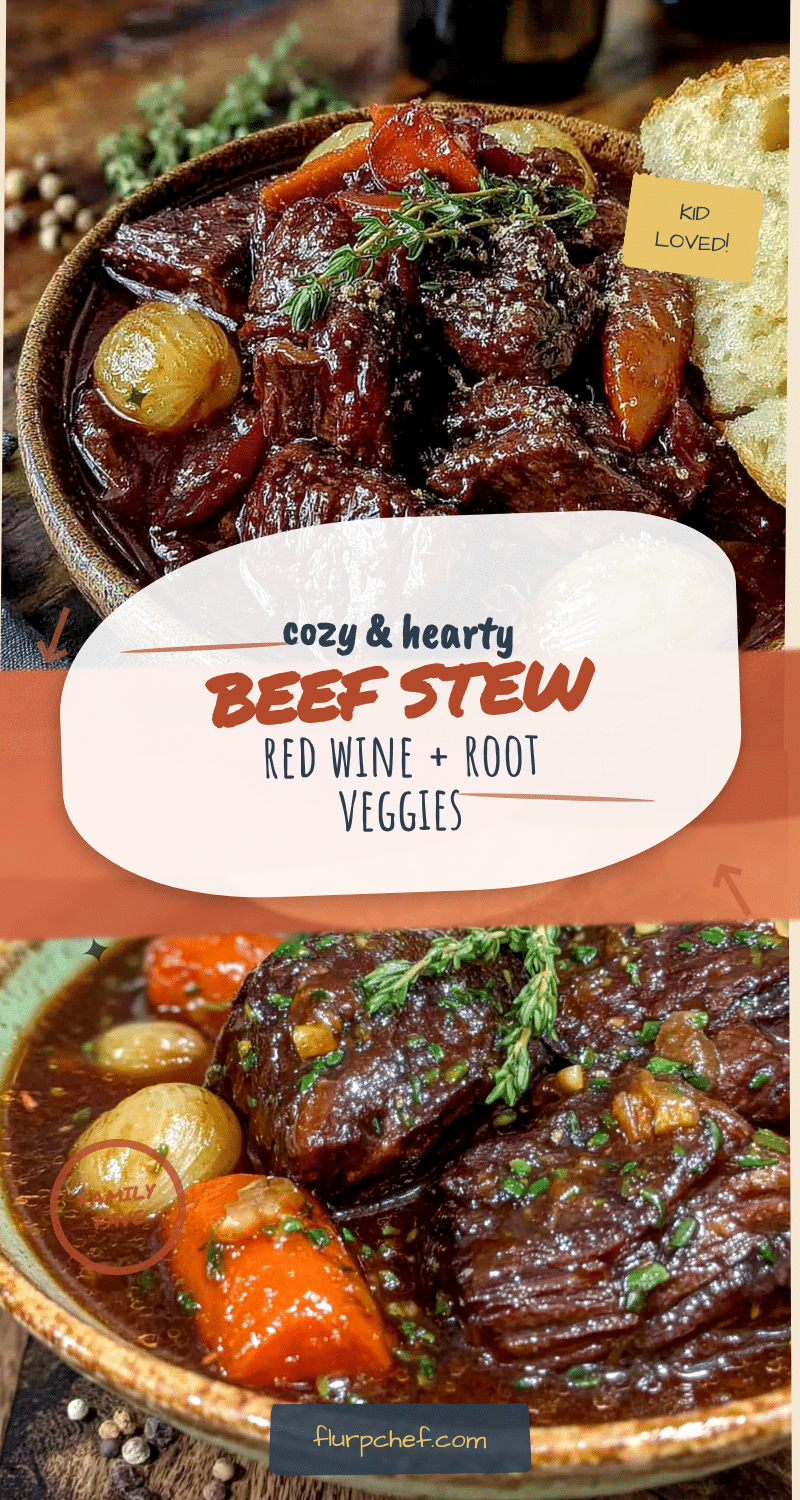
Cozy Beef Stew with Red Wine & Root Vegetables
A hearty and comforting beef stew made with red wine and root vegetables, perfect for cold days. This one-pot meal features tender beef, sweet carrots and parsnips, and a rich, savory broth that gets even better the next day.
- Prep Time: 20 minutes
- Cook Time: 2 hours 30 minutes
- Total Time: 2 hours 50 minutes
- Yield: 6 servings 1x
- Category: Main Course
- Cuisine: American
Ingredients
- 2 pounds (900 g) beef chuck roast, cut into 1.5-inch cubes
- 2 tablespoons (30 ml) olive oil, divided
- 1 teaspoon (5 g) salt, plus more to taste
- 1/2 teaspoon (2 g) black pepper, freshly ground
- 2 tablespoons (16 g) all-purpose flour
- 1 large yellow onion, diced (about 1.5 cups)
- 3 cloves garlic, minced
- 2 tablespoons (30 g) tomato paste
- 1 cup (240 ml) dry red wine, like Cabernet Sauvignon or Merlot
- 4 cups (960 ml) beef broth, low-sodium
- 1 tablespoon (15 ml) Worcestershire sauce
- 2 bay leaves
- 1 teaspoon (2 g) dried thyme
- 1 teaspoon (2 g) dried rosemary
- 3 large carrots, peeled and cut into 1-inch chunks (about 2 cups)
- 2 large parsnips, peeled and cut into 1-inch chunks (about 1.5 cups)
- 1 pound (450 g) Yukon Gold potatoes, cut into 1-inch chunks (about 3 cups)
- 2 celery stalks, cut into 1/2-inch slices (about 1 cup)
- 1 cup (150 g) frozen peas (optional)
- Fresh parsley, chopped, for garnish
- Crusty bread or egg noodles, for serving
Instructions
- Pat the beef cubes dry with paper towels. Season generously with salt and pepper, then sprinkle with flour and toss to coat. Shake off excess flour. Let sit at room temperature for 10 minutes.
- Heat 1 tablespoon olive oil in a Dutch oven over medium-high heat until shimmering. Add half the beef cubes in a single layer and cook for 3-4 minutes per side until deeply browned. Transfer to a plate. Repeat with remaining oil and beef.
- Reduce heat to medium. Add diced onion and cook for 4-5 minutes, stirring occasionally, until softened. Add minced garlic and tomato paste, cook for 1 minute more until fragrant.
- Pour in red wine and stir, scraping the bottom of the pot to release browned bits. Let simmer for 2-3 minutes until reduced by half.
- Return browned beef and any juices to the pot. Add beef broth, Worcestershire sauce, bay leaves, thyme, and rosemary. Stir to combine. Bring to a gentle boil, then reduce heat to low for a steady simmer.
- Cover pot with lid slightly ajar and simmer gently for 1.5 hours, stirring occasionally, until beef is fork-tender.
- Add carrots, parsnips, potatoes, and celery to the pot. Stir to submerge vegetables in broth. Cover and continue simmering for 25-30 minutes until vegetables are tender. If using frozen peas, add in the last 10 minutes.
- Remove bay leaves. Taste broth and adjust seasoning with salt and pepper. If stew is too thin, mix 1 tablespoon cornstarch with 2 tablespoons cold water, stir in, and simmer for 2-3 minutes to thicken. If too thick, add a splash of broth or water.
- Let stew rest off heat for 10 minutes before serving. Ladle into bowls, garnish with fresh parsley, and serve with crusty bread or over egg noodles.
Notes
For best flavor, make the stew a day ahead. The flavors meld overnight and the meat becomes even more tender. If using a slow cooker, brown the beef and sauté aromatics first, then cook on low for 8 hours or high for 4 hours, adding vegetables in the last 1.5 hours.
Nutrition
- Serving Size: 1 serving (about 1.5
- Calories: 420
- Sugar: 9
- Sodium: 780
- Fat: 18
- Saturated Fat: 6
- Carbohydrates: 32
- Fiber: 7
- Protein: 35
Keywords: beef stew, red wine stew, root vegetables, comfort food, one-pot meal, winter recipe, cozy dinner


