The neighborhood potluck was in four hours and I’d completely forgotten. Not just forgotten — I’d blocked it out, apparently. Everyone else would be bringing their signature dishes: the famous lasagna that takes all day, the hand-rolled sushi, the artisanal bread that requires a sourdough starter named “Bartholomew.” I had two sweet potatoes, a couple of sad carrots, and a single parsnip rolling around in my crisper drawer. Oh, and a bunch of rosemary that was more brown than green. Honestly, I almost just grabbed a bag of chips on the way. But instead, I chopped everything into rough chunks, drizzled it with the last of my olive oil, and threw it in the hottest oven I could manage. I figured I’d show up with something, at least. Maybe you’ve been there — that moment when you’re staring at random vegetables and a ticking clock, wondering how you got yourself into this mess.
The thing is, I didn’t even taste it before I left. I just tossed it in a dish, ran out the door, and spent the whole car ride mentally apologizing to my neighbors. When I set this Quick Roasted Root Vegetable Medley with Rosemary on the table next to the elaborate spreads, I felt a little embarrassed. But then something weird happened. People started going for it. Not just picking at it — going back for seconds. Someone asked for the recipe. Then someone else. By the end of the night, the dish was empty, and the lasagna lady was asking me how I got the rosemary so fragrant. I had to laugh. I mean, I literally threw it together in a panic. That’s when I realized: sometimes the simplest things win, not because they’re fancy, but because they’re just done right.
That’s why this recipe has stayed with me. It’s not complicated. It’s not a project. It’s the kind of thing you make when you’re tired, when you’re busy, when you think you have nothing to work with. And somehow, it always works. It’s become my go-to for weeknights when I need something on the table fast, and honestly, it’s the dish I’m most proud of bringing anywhere. Because it proves you don’t need hours or a pantry full of specialty ingredients to make something people actually love. You just need a little heat, a little rosemary, and a willingness to trust that simple can be enough.
Why You’ll Love This Recipe
Let me tell you why this Quick Roasted Root Vegetable Medley with Rosemary is about to become your new best friend on busy nights. I’ve tested this dozens of times — tweaking the temperature, the cut size, the oil ratio — to make sure it works every single time. Here’s what you can expect:
- Quick & Easy: This comes together in about 35 minutes from start to finish. That’s less time than it takes to decide what to order for delivery. The active prep is maybe 10 minutes — the oven does the rest.
- Simple Ingredients: No fancy grocery trips. Carrots, potatoes, maybe a parsnip or sweet potato if you have one. Olive oil, salt, pepper, and rosemary. That’s it. You probably have most of this right now.
- Perfect for Busy Weeknights: This is a weeknight hero. It goes with practically anything — roasted chicken, grilled fish, a quick pan-seared steak, or even just a fried egg on top. Minimal cleanup too, since everything roasts on one sheet pan.
- Crowd-Pleaser: I’ve served this to picky kids, vegetable-skeptical adults, and full-on food snobs. It gets eaten every time. There’s something about the caramelized edges and the woodsy rosemary that just works.
- Unbelievably Delicious: The secret is high heat and good timing. The vegetables get crispy on the outside and tender on the inside, with the rosemary infusing everything while it roasts. It’s comfort food that somehow feels a little fancy too.
What makes this different from every other roasted vegetable recipe out there? It’s the technique. Most recipes tell you to toss everything together and roast at 400°F. But I found that starting at 425°F and giving the vegetables space on the pan makes all the difference. They actually brown instead of steaming. And the rosemary — I add it two ways: whole sprigs during roasting for a gentle infusion, then a sprinkle of chopped fresh rosemary at the end for that bright, piney punch. It’s a small thing, but it changes everything.
This is the kind of recipe that makes you close your eyes after the first bite. It’s simple, yes, but it’s also deeply satisfying. It’s the vegetable dish that non-vegetable people ask for. And on a tired Tuesday night, when you just need something good on the table, it delivers without any drama.
What Ingredients You Will Need
This recipe uses simple, honest ingredients that work together to create something greater than the sum of their parts. Most of these are pantry or fridge staples, which makes this dish perfect for those nights when you think you have nothing to cook.
For the Vegetable Medley
- Carrots — 3 medium, peeled and cut into 1-inch chunks (about 1 cup). Look for carrots that feel firm and aren’t rubbery. I prefer regular carrots over baby carrots here because they roast better and have more flavor.
- Sweet potato — 1 medium, peeled and cut into 1-inch cubes (about 1.5 cups). You want one that’s firm and heavy for its size. The orange-fleshed variety works best — it gets creamy on the inside and crispy on the outside.
- Parnsip — 1 large, peeled and cut into 1-inch chunks (about 1 cup). Parsnips add a subtle sweetness and a slightly nutty flavor that’s hard to beat. If you can’t find parsnips, you can substitute with an extra carrot and another small potato.
- Red onion — 1 medium, cut into wedges (about 1 cup). The wedges should be about 1 inch thick so they cook evenly. Red onion gets sweet and almost jammy when roasted — it’s a game-changer.
- Russet or Yukon Gold potato — 1 medium, cut into 1-inch cubes (about 1 cup). Yukon Golds are my favorite here because they’re buttery and hold their shape well. Russets work too, but they’re a little starchier.
- Olive oil — 3 tablespoons (use a good quality one for better flavor). I like California Olive Ranch for everyday cooking — it’s reliable and not too expensive.
- Fresh rosemary — 2-3 sprigs for roasting, plus 1 teaspoon finely chopped for garnish. Fresh is non-negotiable here. Dried rosemary is too woody and can be overpowering. Look for sprigs that are bright green and fragrant.
- Kosher salt — 1 teaspoon (I use Diamond Crystal — it’s less salty by volume, so if you use Morton’s, reduce to ¾ teaspoon).
- Black pepper — ½ teaspoon, freshly ground. Pre-ground pepper is fine in a pinch, but fresh makes a real difference here.
- Garlic cloves — 3 cloves, smashed (optional, but highly recommended). They roast alongside the vegetables and become sweet and spreadable. You can leave them whole if you prefer.
Optional Add-Ins
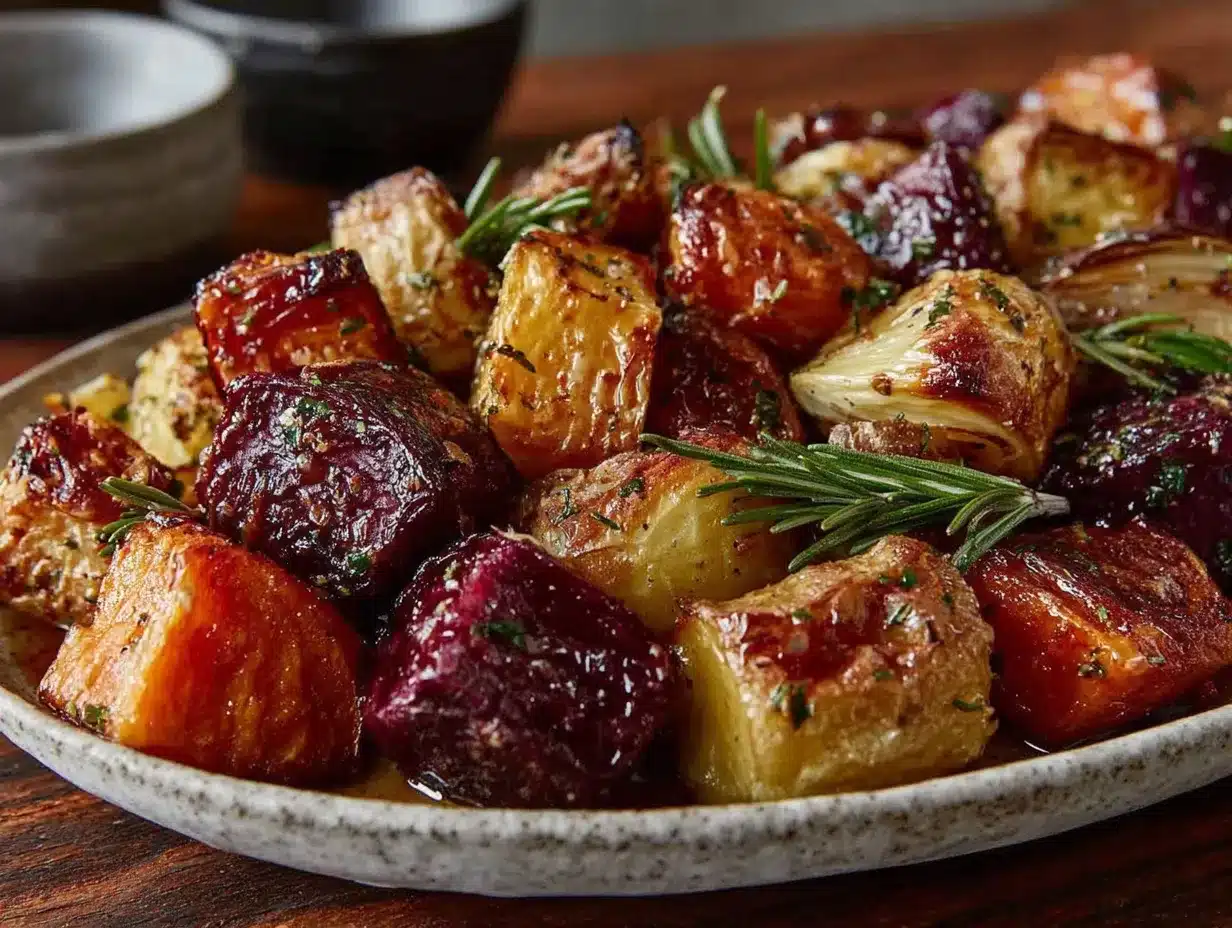
- Beets — 1 medium, peeled and cut into 1-inch chunks. They add gorgeous color and earthy sweetness. Just be warned: they’ll stain everything pink, including your cutting board and your hands.
- Fresh thyme — 2-3 sprigs, if you want to layer in another herb. Thyme and rosemary are best friends.
- Balsamic vinegar — 1 tablespoon, drizzled at the end for a touch of acidity. It cuts through the richness beautifully.
Equipment Needed
You don’t need much for this recipe, which is part of the beauty. Here’s what you’ll need:
- Large rimmed baking sheet — 13×18 inches or similar. The rim is important to catch any juices. I use a Nordic Ware half-sheet pan — it’s sturdy, doesn’t warp, and costs about $20. If you don’t have a large sheet pan, use two smaller ones. Crowding the pan is the enemy of crispy vegetables.
- Chef’s knife — An 8-inch chef’s knife makes quick work of all that chopping. No need for anything fancy — a sharp Victorinox is around $40 and will last forever.
- Cutting board — Any sturdy board will do. I prefer wood because it’s gentler on knives, but plastic is fine too.
- Mixing bowl — For tossing the vegetables with oil and seasonings. A large stainless steel bowl works great.
- Spatula or tongs — For flipping the vegetables halfway through roasting. Silicone-tipped tongs won’t scratch your pan.
- Parchment paper or aluminum foil — Optional, but makes cleanup even easier. I use parchment paper for almost everything.
If you don’t have a large baking sheet, you can use a 9×13 baking dish, but the vegetables won’t get as crispy since they’ll be more crowded. Just increase the roasting time by about 5-7 minutes and stir halfway through. A cast-iron skillet also works beautifully — it holds heat well and gives you great browning.
Preparation Method
Alright, let’s get cooking. This is straightforward, but I’ll walk you through every step so you get perfect results every time.
- Preheat your oven to 425°F (220°C). This is important — don’t skip the preheat. A hot oven is what gives you those caramelized edges. While the oven heats up, position a rack in the middle. This usually takes about 15 minutes, so use that time to prep your vegetables.
- Prep the vegetables. Wash and peel the carrots, sweet potato, parsnip, and regular potato. Don’t skip the peeling on the parsnip — the skin can be tough and bitter. Cut everything into roughly 1-inch chunks. The key here is uniformity: if some pieces are much smaller than others, they’ll burn before the bigger ones are done. I aim for pieces that are about the size of a golf ball. For the red onion, cut it into wedges about 1 inch thick at the widest point. Smash the garlic cloves with the flat side of your knife — just enough to crack them open.
- Toss with oil and seasonings. Put all the cut vegetables (including the smashed garlic, if using) into a large mixing bowl. Add the 3 tablespoons of olive oil, 1 teaspoon of kosher salt, and ½ teaspoon of black pepper. Use your hands or a spatula to toss everything until every piece is evenly coated. This takes about 30 seconds. Don’t rush this step — uneven coating means uneven browning.
- Arrange on the baking sheet. Line your baking sheet with parchment paper if you’re using it. Spread the vegetables in a single layer. This is crucial: if they’re piled on top of each other, they’ll steam instead of roast. Give them space. If they don’t all fit in one layer, use two pans or roast in batches. Lay the rosemary sprigs on top of the vegetables — don’t bury them, just lay them on top so the oils can release into the hot air.
- Roast for 20 minutes. Place the pan in the preheated oven and set a timer. Don’t open the oven during this time — you want to keep the heat steady. The vegetables will start to soften and brown on the bottom.
- Flip and continue roasting. After 20 minutes, remove the pan from the oven. Use your spatula or tongs to flip the vegetables. The rosemary sprigs will have softened — just move them around with everything else. Return the pan to the oven and roast for another 15-20 minutes. The vegetables are done when they’re golden brown on the outside and easily pierced with a fork. The sweet potatoes should feel tender all the way through. Total roasting time is usually 35-40 minutes, but ovens vary, so start checking at the 30-minute mark.
- Finish with fresh rosemary. Remove the pan from the oven. Discard the roasted rosemary sprigs — they’ve done their job. Sprinkle the finely chopped fresh rosemary over the hot vegetables. Toss gently to distribute. The heat will release the essential oils and make the whole kitchen smell incredible. Let them rest for 2-3 minutes before serving — this helps the flavors settle.
- Taste and adjust. Give one piece a taste. Does it need more salt? A pinch more pepper? Sometimes I add a tiny squeeze of lemon juice at this point if I want a little brightness. Adjust to your preference, then transfer to a serving dish.
Pro tip: If you’re making this for a crowd, you can prep the vegetables up to a day ahead. Just chop everything, store it in a sealed container in the fridge, and toss with oil and seasonings right before roasting. The garlic can be pre-smashed too. This saves you about 10 minutes on the day you’re cooking.
Cooking Tips & Techniques
I’ve made this recipe more times than I can count, and I’ve learned a few things the hard way. Let me save you from my mistakes.
Don’t overcrowd the pan. This is the number one mistake people make with roasted vegetables. If the pieces are touching or overlapping, they steam instead of brown. You want them to have a little breathing room. If you’re doubling the recipe, use two pans. Trust me on this — I once tried to cram everything onto one pan and ended up with soggy, pale vegetables that nobody wanted to eat. Learn from my failure.
Cut uniform pieces. I know it’s tedious, but taking the extra minute to make sure your chunks are roughly the same size makes a huge difference. A 1-inch cube of sweet potato takes about the same time to cook as a 1-inch chunk of carrot. But if your carrot pieces are ½ inch and your potato pieces are 1½ inches, one will burn while the other stays raw. I aim for pieces that are all about the size of my thumb from the knuckle to the tip — that’s roughly 1 inch.
Use a hot oven. 425°F is the sweet spot. Lower temperatures won’t give you that caramelization, and higher temperatures risk burning the outside before the inside is cooked. If your oven runs hot, check the vegetables at the 25-minute mark. If it runs cool, give them an extra 5 minutes. Know your oven — every one is a little different.
Flip halfway through. This ensures even browning on all sides. I set a timer for 20 minutes, flip, then set another timer for 15 minutes. If you forget to flip, the bottoms will be dark and the tops will be pale. It’s not the end of the world, but it’s not as good.
Don’t skip the resting time. Those 2-3 minutes after roasting are important. The vegetables continue to cook slightly from residual heat, and the flavors meld together. Plus, they’re too hot to eat right away anyway. Let them rest, then serve.
My biggest failure: The first time I made this, I used dried rosemary because I thought it was the same thing. Big mistake. Dried rosemary is woody and sharp — it doesn’t soften during roasting and leaves you with little pine needle-like bits that are unpleasant to bite into. Fresh rosemary is non-negotiable here. It’s widely available and inexpensive, and it makes all the difference.
Variations & Adaptations
This recipe is incredibly flexible. Here are some ways to make it your own:
Dietary Variations
- Low-Carb / Keto: Skip the sweet potatoes and regular potatoes. Replace them with cauliflower florets, broccoli, and radishes. Radishes become surprisingly mild and sweet when roasted — they lose all their peppery bite. Use the same oil and rosemary, and roast for about 25-30 minutes since cauliflower cooks faster than root vegetables.
- Vegan: It’s already vegan! Just make sure you’re using a good quality olive oil. If you want to add a little richness, drizzle with tahini or a cashew cream sauce before serving.
- Gluten-Free: Naturally gluten-free. No changes needed. Just be careful if you’re serving it with anything that might contain gluten, like a soy-based sauce.
Seasonal Adaptations
- Fall / Winter: Add cubed butternut squash, peeled and cut into 1-inch pieces. It roasts beautifully and adds a sweet, nutty flavor. You can also add a few whole shallots — they become sweet and jammy. Toss in some fresh thyme along with the rosemary for a more complex herb profile.
- Spring / Summer: Swap the root vegetables for zucchini, bell peppers, cherry tomatoes, and red onion. Cut the zucchini and peppers into 1-inch pieces, leave the tomatoes whole. Roast for only 20-25 minutes since these vegetables are more delicate. The rosemary still works, but you could also use fresh oregano or basil at the end.
- Year-Round: Add a tablespoon of balsamic vinegar or maple syrup to the oil mixture before roasting. It adds a touch of sweetness and helps with caramelization. I do this when I want a slightly sweeter, more complex flavor profile.
Flavor Twists
- Spicy: Add ½ teaspoon of red pepper flakes along with the salt and pepper. The heat pairs beautifully with the sweetness of the roasted vegetables.
- Herb Swap: Replace the rosemary with fresh thyme, oregano, or sage. Each gives a different character — sage is earthy, thyme is floral, oregano is bold. I’ve done all three, and they’re all delicious.
- Garlic Lovers: Double the garlic cloves. Roasted garlic is so sweet and mellow — you can spread it on bread or just eat it straight. I’ve definitely been caught picking the roasted garlic cloves out of the pan before serving.
Serving & Storage Suggestions
This vegetable medley is versatile enough to go with almost anything. Here’s how I like to serve and store it:
Serving Temperature: Serve warm, right out of the oven. The contrast between the crispy edges and tender centers is best when they’re fresh. They’re also good at room temperature — I’ve served them as part of a cold buffet and they hold up beautifully.
Presentation: Transfer to a wide, shallow serving bowl or platter. Sprinkle the chopped fresh rosemary over the top for a pop of green. If you want to get fancy, add a few fresh rosemary sprigs as a garnish. A sprinkle of flaky sea salt right before serving adds a nice textural contrast.
What to Serve With It:
- Protein: Pairs perfectly with roasted chicken, grilled steak, pan-seared salmon, or baked tofu. I often make this alongside a simple roast chicken — they go in the oven at the same time and finish together.
- Grains: Serve over quinoa, farro, or wild rice for a heartier meal. The vegetables and grains together make a satisfying vegetarian main dish.
- Salad: Pair with a simple green salad dressed with lemon vinaigrette. The acidity cuts through the richness of the roasted vegetables.
- Bread: Crusty bread or warm pita on the side is always welcome for sopping up any juices.
Storage: Store leftovers in an airtight container in the refrigerator for up to 4 days. The flavors actually deepen overnight — the rosemary becomes more pronounced and the vegetables get even sweeter. They’re great cold straight from the fridge, or reheated.
Reheating: The best way to reheat is in the oven or toaster oven at 350°F for about 10 minutes. This restores some of the crispiness. You can also reheat in a skillet over medium heat for 5-7 minutes, stirring occasionally. The microwave works in a pinch, but the vegetables will be softer — still tasty, just not as crispy.
Freezing: I don’t recommend freezing roasted vegetables — they become mushy when thawed. If you have a lot of leftovers, eat them within the 4-day window or repurpose them into a frittata, soup, or grain bowl.
Nutritional Information & Benefits
This recipe isn’t just delicious — it’s genuinely good for you. Here’s what you’re getting in a serving (about 1 cup of roasted vegetables):
| Nutrient | Amount Per Serving |
|---|---|
| Calories | 180-200 |
| Total Fat | 10g |
| Saturated Fat | 1.5g |
| Carbohydrates | 22g |
| Fiber | 5g |
| Sugar | 6g |
| Protein | 3g |
| Vitamin A | 180% DV |
| Vitamin C | 25% DV |
| Potassium | 15% DV |
Health Benefits: This dish is packed with fiber from the root vegetables, which supports digestive health and keeps you feeling full. The sweet potatoes and carrots are loaded with beta-carotene, which your body converts to vitamin A for healthy vision and immune function. Rosemary contains antioxidants and anti-inflammatory compounds — plus it makes everything taste amazing. The olive oil provides heart-healthy monounsaturated fats. It’s a nutrient-dense side dish that actually tastes like a treat.
Dietary Considerations: This recipe is naturally vegan, gluten-free, dairy-free, and nut-free. It’s also relatively low in calories for the volume you get. If you’re watching your sodium, you can reduce the salt to ½ teaspoon — the herbs provide plenty of flavor.
Potential Allergens: None, really. Just make sure your olive oil is pure and not blended with other oils if you have sensitivities. Some people are allergic to rosemary, but it’s rare.
Conclusion
This Quick Roasted Root Vegetable Medley with Rosemary is proof that you don’t need a complicated recipe or a fully stocked pantry to make something truly delicious. It’s the dish I turn to when I’m tired, when I’m busy, when I think I have nothing to work with. And it never lets me down. The caramelized edges, the tender interiors, the woodsy rosemary — it’s simple, but it’s perfect.
I hope you’ll give it a try, and more than that, I hope you’ll make it your own. Swap in whatever vegetables you have. Add a little spice if that’s your thing. Serve it with your favorite protein or just eat it straight from the pan (no judgment here). The beauty of this recipe is that it’s a starting point, not a rulebook. It’s meant to be adapted to whatever you have and whatever you’re craving.
I’d love to hear how it goes for you. Did you try a variation? Add something unexpected? Serve it with something amazing? Drop a comment below and let me know. And if you share a photo on Pinterest or Instagram, tag me — I love seeing your creations. Until next time, happy cooking, and remember: sometimes the simplest things are the ones worth making again and again.
Frequently Asked Questions
Can I use frozen vegetables for this recipe?
I don’t recommend it. Frozen vegetables release a lot of water as they thaw, which will make them steam instead of roast. You’ll end up with soggy, pale vegetables instead of crispy, caramelized ones. If you’re in a pinch, you can try roasting frozen vegetables at 450°F for a shorter time, but fresh really is best here.
How do I prevent the garlic from burning?
Garlic burns easily at high temperatures. To avoid this, smash the cloves rather than mincing them — larger pieces take longer to burn. You can also add the garlic halfway through the roasting time instead of at the beginning. If you notice the garlic getting too dark, just remove the cloves from the pan and set them aside while the rest of the vegetables finish cooking.
Can I make this ahead of time for a party?
Absolutely. You can prep the vegetables up to 24 hours in advance — just chop them, store them in a sealed container in the fridge, and toss with oil and seasonings right before roasting. You can also roast them a few hours ahead and reheat them in a 350°F oven for 10 minutes before serving. The rosemary flavor actually deepens overnight, so leftovers are delicious too.
What’s the best way to get crispy roasted vegetables?
Three things: high heat (425°F), don’t crowd the pan (give each piece space), and don’t flip them too early (let them sit for at least 20 minutes before stirring). Also, make sure your vegetables are dry before you oil them — any excess moisture will create steam. Pat them dry with a clean kitchen towel if they seem wet after washing.
Can I use dried rosemary instead of fresh?
I really don’t recommend it. Dried rosemary is woody and sharp — it doesn’t soften during roasting and leaves unpleasant little needles throughout the dish. Fresh rosemary is widely available and inexpensive, and it makes a huge difference in flavor and texture. If you absolutely must use dried, crush it well in your hands before adding, and use about 1 teaspoon instead of the fresh sprigs. But honestly, fresh is worth the trip to the store.
Pin This Recipe!
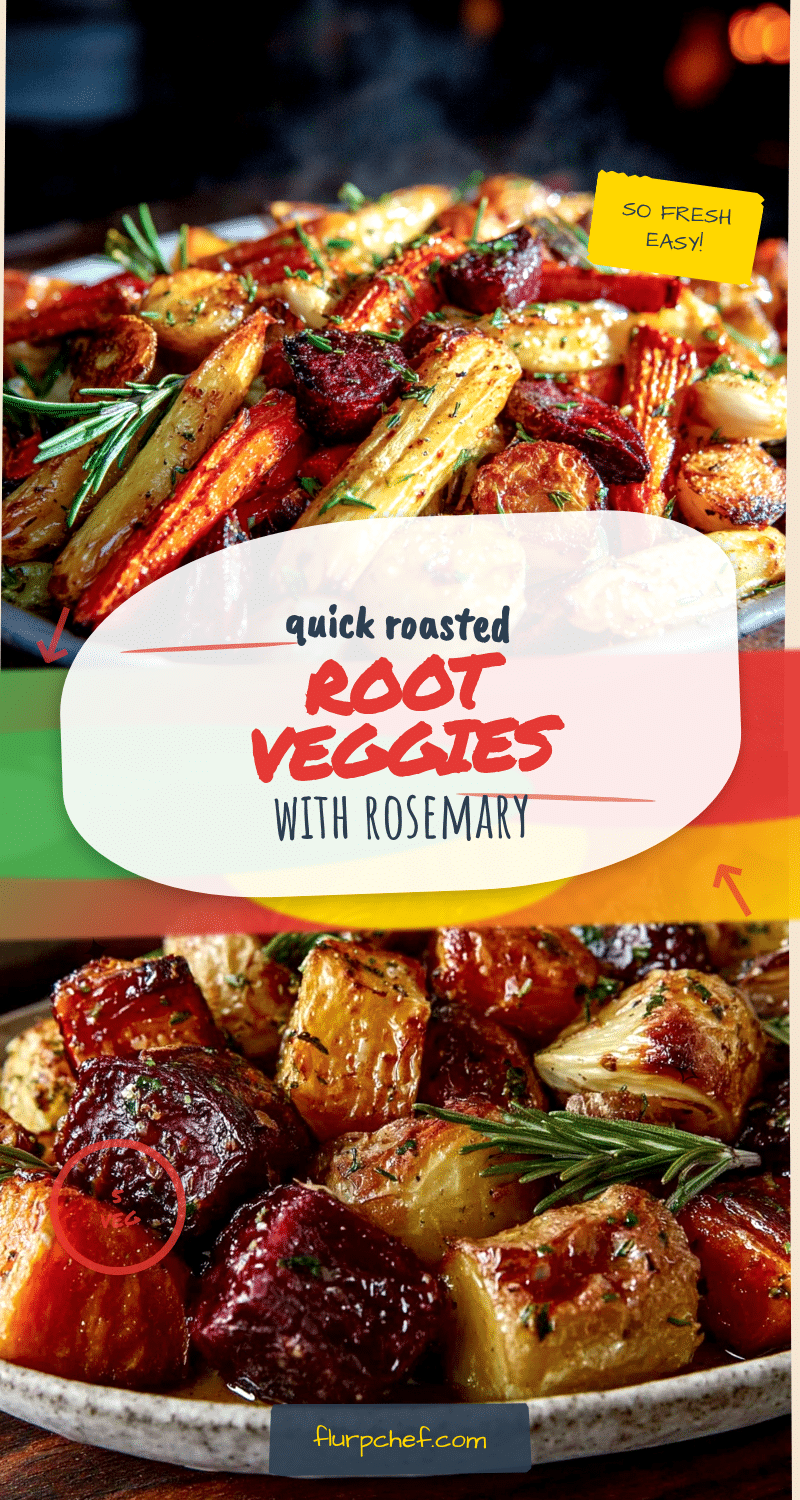
Easy Roasted Root Vegetable Medley with Rosemary

A quick and easy roasted root vegetable medley with rosemary that comes together in about 35 minutes. Perfect for busy weeknights, this simple dish features caramelized edges and tender interiors, making it a crowd-pleaser that proves simple ingredients can be truly delicious.
- Prep Time: 10 minutes
- Cook Time: 35-40 minutes
- Total Time: 45-50 minutes
- Yield: 4 servings 1x
- Category: Side Dish
- Cuisine: American
Ingredients
- 3 medium carrots, peeled and cut into 1-inch chunks (about 1 cup)
- 1 medium sweet potato, peeled and cut into 1-inch cubes (about 1.5 cups)
- 1 large parsnip, peeled and cut into 1-inch chunks (about 1 cup)
- 1 medium red onion, cut into 1-inch wedges (about 1 cup)
- 1 medium Russet or Yukon Gold potato, cut into 1-inch cubes (about 1 cup)
- 3 tablespoons olive oil
- 2–3 sprigs fresh rosemary, plus 1 teaspoon finely chopped for garnish
- 1 teaspoon kosher salt (Diamond Crystal; reduce to ¾ teaspoon if using Morton’s)
- ½ teaspoon black pepper, freshly ground
- 3 cloves garlic, smashed (optional)
Instructions
- Preheat your oven to 425°F (220°C). Position a rack in the middle.
- Wash and peel the carrots, sweet potato, parsnip, and regular potato. Cut everything into roughly 1-inch chunks. Cut the red onion into 1-inch wedges. Smash the garlic cloves with the flat side of a knife.
- Put all the cut vegetables (including the smashed garlic, if using) into a large mixing bowl. Add the olive oil, kosher salt, and black pepper. Toss until every piece is evenly coated.
- Line a large rimmed baking sheet with parchment paper (optional). Spread the vegetables in a single layer, giving them space. Lay the rosemary sprigs on top.
- Roast for 20 minutes. Do not open the oven during this time.
- Remove the pan from the oven. Flip the vegetables using a spatula or tongs. Return the pan to the oven and roast for another 15-20 minutes, until the vegetables are golden brown and easily pierced with a fork.
- Remove the pan from the oven. Discard the roasted rosemary sprigs. Sprinkle the finely chopped fresh rosemary over the hot vegetables and toss gently. Let rest for 2-3 minutes before serving.
- Taste and adjust seasoning if needed. Transfer to a serving dish.
Notes
Don’t overcrowd the pan—give vegetables space to brown. Cut uniform 1-inch pieces for even cooking. Use fresh rosemary, not dried. For extra crispiness, ensure vegetables are dry before oiling. Prep vegetables up to a day ahead and store in the fridge. Reheat leftovers in a 350°F oven for 10 minutes to restore crispiness.
Nutrition
- Serving Size: 1 cup
- Calories: 180200
- Sugar: 6
- Sodium: 4801
- Fat: 10
- Saturated Fat: 1.5
- Carbohydrates: 22
- Fiber: 5
- Protein: 3
Keywords: roasted root vegetables, rosemary, quick side dish, easy vegetable recipe, weeknight dinner, sheet pan vegetables, healthy side dish


