My in-laws called at 3 PM on a random Saturday. “We’re thirty minutes out,” my mother-in-law chirped. I looked around my kitchen—a bag of onions, some sad carrots, and one lone turkey breast I’d grabbed on a whim at the store the day before. No plan. No side dishes. No dessert. Just a single, beautiful 3-pound turkey breast sitting in the fridge, waiting for something to happen.
I’d been craving a real roast—the kind that makes the house smell like Sunday—but it was just the four of us. A whole turkey felt ridiculous. But a breast? That I could handle. I grabbed the butter from the counter, raided my herb garden (okay, the three sad pots on the windowsill), and started mixing. Rosemary, thyme, sage, garlic—the usual suspects. I slathered that butter under the skin like I meant it, seasoned the outside like I had something to prove, and tossed it in the oven with no clue if it would work.
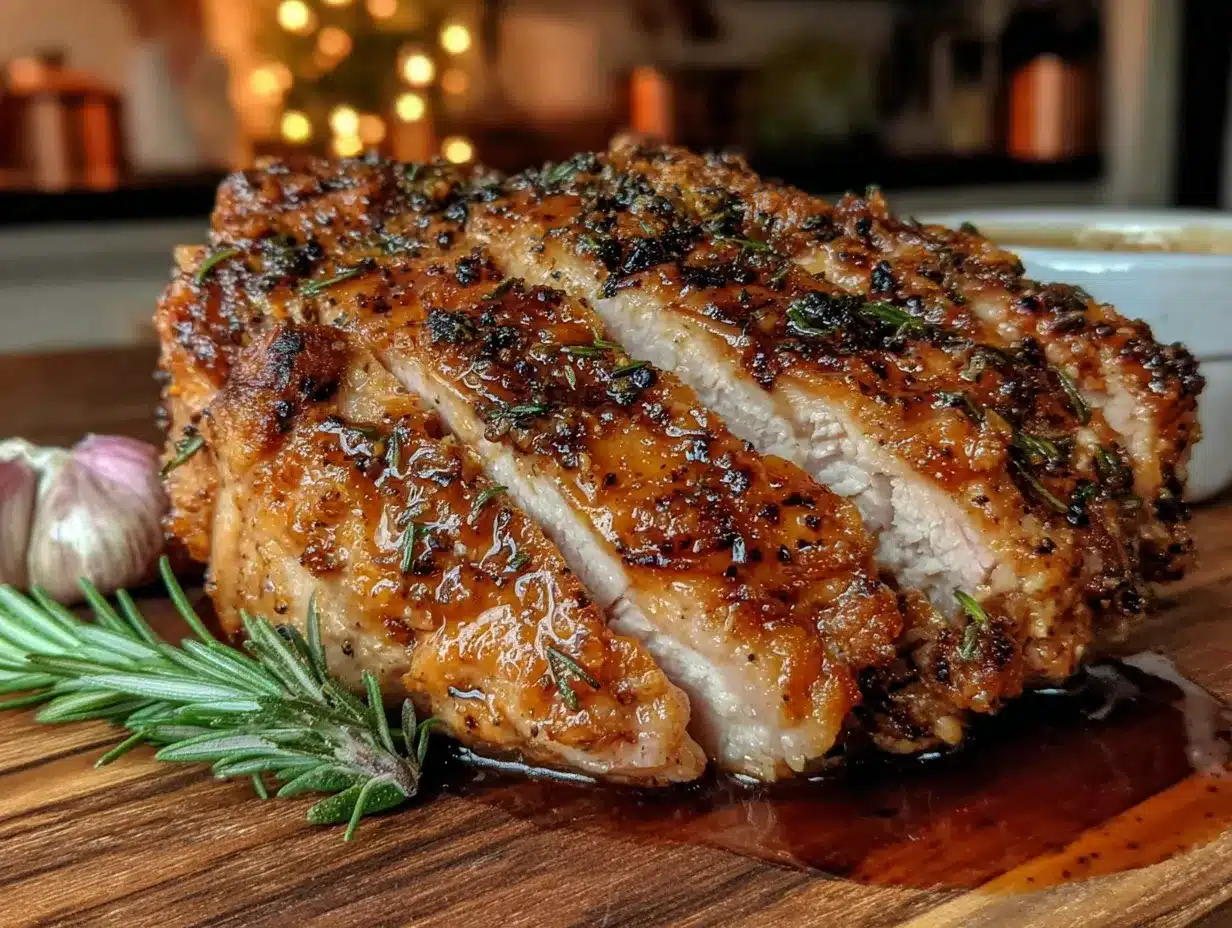
An hour later, that turkey breast came out golden and glistening, the skin crackling when I touched it with a fork. The juices ran clear. The smell—honestly, it was ridiculous. We ate at the kitchen table with paper towels for napkins and laughed about how the best meals always come from panic. This juicy herb-butter roasted turkey breast for small gatherings became our accidental tradition that night. It’s the recipe I now turn to when I want the feeling of a holiday meal without the stress of a 20-pound bird.
Why You’ll Love This Recipe
This isn’t just another turkey recipe. I’ve tested this method at least a dozen times—through dry Thanksgivings, rushed weeknight dinners, and one particularly disastrous attempt where I forgot to thaw the breast (don’t ask). Each time, I tweaked something. The butter-to-herb ratio. The roasting temperature. The resting time. What I landed on is foolproof.
- Perfect for Small Gatherings: Serves 4-6 people without the leftovers that haunt you for weeks. No more turkey sandwiches until you cry.
- Incredibly Juicy: The herb butter gets worked under the skin, basting the meat from the inside out. It’s the difference between dry and “wait, is this really turkey?”
- Simple Ingredients: Butter, garlic, fresh herbs, salt, pepper—things you probably already have. No weird marinades or complicated brines.
- Fast for a Roast: Under 90 minutes from prep to table. Compare that to a whole turkey that takes half your day.
- Foolproof Method: I’ve burned, dried out, and undercooked enough poultry to know what works. This recipe is built on my failures, which means you get to skip them.
This is the kind of meal that makes people close their eyes after the first bite. It’s comfort food, plain and simple—but made with intention. You can pair it with something like creamy slow cooker Tuscan ravioli soup on the side for a truly cozy spread, or keep it simple with roasted vegetables. Either way, it delivers.
What Ingredients You Will Need
This recipe uses simple, wholesome ingredients to deliver bold flavor and satisfying texture without the fuss. Most of these are pantry staples or easy to find at any grocery store. The key is using fresh herbs and good-quality butter—it makes a real difference.
- 1 bone-in, skin-on turkey breast (3-4 pounds): This is the star. Bone-in keeps the meat moist during roasting. Skin-on gives you that golden, crispy exterior everyone fights over. If you can only find a boneless breast, reduce cooking time by about 15 minutes.
- 4 tablespoons unsalted butter, softened: I use Kerrygold when I’m feeling fancy, but any good unsalted butter works. Let it sit out for 30 minutes so it spreads easily. Salted butter will work too—just reduce the added salt slightly.
- 2 cloves garlic, minced: Fresh garlic is non-negotiable here. The jarred stuff has a different flavor profile that doesn’t meld as well with the herbs. Microplane it if you want it to disappear into the butter completely.
- 1 tablespoon fresh rosemary, finely chopped: Rosemary brings that piney, aromatic quality that screams “roast dinner.” Dried rosemary works in a pinch, but use half the amount—it’s more concentrated.
- 1 tablespoon fresh thyme leaves: Thyme is subtle but essential. It adds earthiness without overpowering the turkey. Strip the leaves from the stems—nobody wants to chew on a twig.
- 1 tablespoon fresh sage, finely chopped: Sage has that slightly peppery, almost floral note that pairs beautifully with poultry. If you hate sage (some people do), swap it for marjoram or extra rosemary.
- 1 teaspoon salt: I use kosher salt for its clean flavor and easy pinch-ability. Diamond Crystal is my go-to. If you’re using table salt, reduce to ¾ teaspoon.
- ½ teaspoon black pepper, freshly ground: Freshly ground pepper has more punch than pre-ground. It matters here because the pepper sits on the skin and creates a little crust.
- 1 tablespoon olive oil: This helps the outside crisp up and gives the seasoning something to stick to. Extra virgin is fine, but regular olive oil works just as well.
- ½ cup chicken broth (optional, for the pan): Adding broth to the bottom of the roasting pan creates steam that keeps the breast moist. It also makes a quick pan sauce afterward. I use low-sodium broth to control the salt level.
Equipment Needed
You don’t need a fancy kitchen for this recipe. Here’s what you’ll actually use:
- Roasting pan or baking dish: A 9×13-inch baking dish works perfectly. If you have a proper roasting pan with a rack, even better—the air circulates underneath for more even cooking. I’ve used a cast iron skillet in a pinch, and it worked fine.
- Instant-read meat thermometer: This is the most important tool you’ll use. Guessing doneness is how dry turkey happens. A $10 thermometer from the grocery store works. I use a Thermapen because I’m extra like that, but you don’t need one.
- Small bowl: For mixing the herb butter. Any bowl works.
- Chef’s knife and cutting board: For chopping herbs and garlic. Keep your knife sharp—dull blades bruise herbs.
- Kitchen twine (optional): Tying the breast helps it cook evenly. If you don’t have twine, skip it. The breast will still taste great, it just might look a little wild.
- Aluminum foil: For tenting the turkey if the skin browns too quickly, and for resting the meat after it comes out of the oven.
- Basting brush (optional): You can use a spoon to baste, but a brush makes it easier to coat the skin without disturbing the seasonings.
Preparation Method
- Preheat your oven to 375°F (190°C). Position the rack in the lower third of the oven. This gives the turkey room to cook evenly without the top burning before the inside is done. While the oven heats, take the turkey breast out of the fridge and let it sit on the counter for 20 minutes. Cold meat cooks unevenly—this little rest helps.
- Pat the turkey breast completely dry with paper towels. This is crucial. Moisture on the surface prevents browning and makes the skin soggy. Get in all the crevices. If the skin is wet, the butter won’t stick properly, and you’ll end up with pale, rubbery skin instead of golden, crispy perfection.
- Make the herb butter. In a small bowl, combine the softened butter, minced garlic, chopped rosemary, thyme, sage, ½ teaspoon of the salt, and ¼ teaspoon of the black pepper. Mash it together with a fork until everything is evenly distributed. Taste a tiny bit (it’s safe—the garlic is fresh but the butter is fine). Adjust seasoning if needed. The butter should taste boldly seasoned because it has to flavor the entire breast.
- Loosen the skin. Using your fingers, gently work your way under the turkey skin, separating it from the meat without tearing it. Start at the top edge and slide your fingers down between the skin and the breast meat. Go slowly—the skin is delicate. You want to create a pocket for the butter without ripping holes in it.
- Apply the herb butter. Take about two-thirds of the herb butter and push it under the skin, spreading it evenly over the breast meat. Use your fingers to massage it around so it covers as much surface area as possible. The remaining butter gets spread over the outside of the skin. Don’t forget the sides. This double-layer approach is what makes the meat incredibly flavorful and the skin extra crispy.
- Season the outside. Drizzle the olive oil over the buttered skin, then sprinkle the remaining salt and pepper over the entire surface. Rub it in gently so the seasoning adheres. If you have kitchen twine, tie the legs together and tuck the wing tips under the breast. This creates a compact shape that cooks evenly.
- Add broth to the pan (optional). Pour the chicken broth into the bottom of the roasting pan, being careful not to splash it onto the seasoned skin. The broth will create steam and keep the meat moist. It also catches any drippings for a quick gravy later.
- Roast the turkey breast. Place the pan in the preheated oven and roast for 50-65 minutes, depending on the size of your breast. The general rule is about 20 minutes per pound, but always rely on temperature, not time. Start checking at the 45-minute mark if your breast is on the smaller side.
- Baste halfway through. About 30 minutes in, open the oven and spoon some of the pan juices over the turkey. This keeps the skin from drying out and adds another layer of flavor. Don’t baste too often—every time you open the oven, heat escapes and extends the cooking time.
- Check for doneness. Insert an instant-read thermometer into the thickest part of the breast, avoiding the bone. You’re looking for 155°F (68°C). The temperature will rise to 160-165°F during resting, which is the safe zone. If the skin is browning too quickly, tent loosely with aluminum foil for the last 15 minutes.
- Rest the turkey. Once it hits temperature, remove the turkey from the oven and transfer it to a cutting board. Cover it loosely with foil and let it rest for 15-20 minutes. This is not optional. Resting allows the juices to redistribute throughout the meat. Cut into it too soon, and all that moisture ends up on the cutting board instead of on your plate.
- Carve and serve. Slice the breast against the grain into ½-inch thick pieces. The meat should be juicy, tender, and infused with herb butter flavor. Spoon any pan juices over the slices before serving.
Cooking Tips & Techniques
I learned most of these the hard way—through turkey that was dry enough to qualify as jerky, and skin that looked more like wet paper than golden deliciousness. Here’s what I wish someone had told me:
Let the meat come to room temperature before roasting. I know it sounds like a fancy chef thing, but it’s practical. A cold turkey breast straight from the fridge will cook unevenly, with the outside drying out before the center is done. Twenty minutes on the counter makes a noticeable difference.
Don’t skip the pat-dry step. Water is the enemy of crispy skin. Even after rinsing, there’s moisture trapped in the crevices. Use multiple paper towels and really get in there. I once skipped this step because I was in a hurry, and the skin came out pale and rubbery. Never again.
Use a thermometer, not a timer. Ovens run hot or cold. Turkey breasts vary in size. The only reliable way to know when it’s done is by temperature. I’ve had a 3-pound breast take 55 minutes one time and 70 minutes the next. Trust the thermometer, not the clock.
Let it rest. I cannot stress this enough. The internal temperature will rise 5-10 degrees during resting, which means you can pull it out at 155°F and it will safely reach 165°F without overcooking. Plus, the juices settle back into the meat. Carving immediately is the number one mistake home cooks make.
Save the drippings for gravy. After you remove the turkey, pour the pan juices into a small saucepan. Add a tablespoon of butter and a tablespoon of flour, whisk over medium heat until thickened, and you have an instant, flavorful gravy. It takes two minutes and tastes better than anything from a packet.
Variations & Adaptations
This recipe is flexible—I’ve played around with it more times than I can count. Here are some variations that worked well:
Citrus-Herb Turkey Breast: Add the zest of one lemon and one orange to the herb butter. The citrus brightens the richness of the butter and pairs beautifully with the herbs. I tried this for a spring dinner and it was a hit. Squeeze the juice from the zested fruit into the pan broth for extra flavor.
Spicy Chipotle Butter: Replace the sage and thyme with 1 teaspoon of chipotle powder and ½ teaspoon of cumin. The smoky heat cuts through the richness of the turkey and gives it a Southwestern twist. Serve with black beans and rice for a full meal.
Garlic and Herb Butter with Parmesan: Add 2 tablespoons of grated Parmesan cheese to the herb butter. The cheese crisps up on the skin during roasting, creating a savory crust that’s absolutely addictive. Just watch the salt—Parmesan is salty, so reduce the added salt by ¼ teaspoon.
Dairy-Free Version: Swap the butter for a high-quality vegan butter or olive oil. Use 3 tablespoons of olive oil mixed with the herbs and garlic. The texture won’t be quite as rich, but the flavor is still excellent. I’ve made this for dairy-free guests and they didn’t miss the butter.
Herb Mix Variations: Don’t have fresh herbs? Use 1 teaspoon each of dried rosemary, thyme, and sage. Dried herbs are more concentrated, so you need less. Rehydrate them in a tablespoon of olive oil before mixing with the butter to release their flavors.
If you’re serving this as part of a larger spread, consider pairing it with cozy sheet pan cheeseburger sliders for a fun twist on a dinner party menu, or keep it classic with roasted vegetables and mashed potatoes.
Serving & Storage Suggestions
Serve this turkey breast hot, right after resting. Slice it and arrange on a platter, then spoon some of the pan juices over the top. It pairs beautifully with roasted potatoes, steamed green beans, or a simple salad. For a truly cozy meal, serve alongside creamy roasted hatch green chile and potato chowder for a soup-and-sandwich-style dinner that feels special.
Storage: Leftover turkey keeps in an airtight container in the refrigerator for up to 4 days. The herb butter flavor actually deepens overnight, so leftovers might taste even better than the original. Slice the turkey before storing for easier reheating.
Freezing: Wrap leftover turkey tightly in plastic wrap, then aluminum foil, and freeze for up to 3 months. Thaw overnight in the refrigerator before reheating. The texture will be slightly less moist than fresh, but it’s still great for sandwiches or soups.
Reheating: The best way to reheat turkey without drying it out is in a low oven. Place slices in a baking dish with a splash of chicken broth, cover with foil, and warm at 300°F for 10-15 minutes. You can also microwave individual portions, but cover them with a damp paper towel to add moisture. Avoid high heat—it turns tender turkey into shoe leather.
Make-Ahead Tip: You can prepare the herb butter up to 3 days in advance and store it in the refrigerator. Let it soften at room temperature for 30 minutes before using. You can also season the turkey breast the night before and keep it uncovered in the fridge—this dries out the skin for even crispier results.
Nutritional Information & Benefits
Turkey breast is one of the leanest protein sources available, making it a great choice for balanced eating. A 4-ounce serving of roasted turkey breast (without skin) provides about 180 calories, 25 grams of protein, and only 8 grams of fat. The skin adds some calories and fat, but it also delivers flavor and satisfaction that helps you feel full with smaller portions.
The herbs in this recipe offer more than just taste. Rosemary contains antioxidants that support digestion, thyme is rich in vitamin C and has antimicrobial properties, and sage has been studied for its cognitive benefits. Garlic is known for its immune-boosting compounds. Even the butter, in moderation, provides fat-soluble vitamins A, D, E, and K.
Dietary Considerations: This recipe is naturally gluten-free and low-carb. It’s suitable for keto and paleo diets if you use the dairy-free butter option. If you’re watching sodium, use low-sodium broth and reduce the added salt to ½ teaspoon. The turkey itself is naturally low in sodium.
Allergens: This recipe contains dairy (butter). For a dairy-free version, substitute with olive oil or vegan butter as noted in the variations section. The recipe is free from nuts, eggs, soy, and gluten.
Conclusion
This juicy herb-butter roasted turkey breast for small gatherings has become my go-to for those in-between occasions—not quite a holiday, but still worth celebrating. It’s the recipe that saved me from a panic-induced kitchen meltdown and turned into a tradition I actually look forward to.
The beauty of this recipe is how adaptable it is. Use whatever herbs you have. Swap the butter for oil if you need to. Add citrus, spice, or cheese—it’s forgiving enough to handle your creativity. The method is solid, and the results are consistently good.
I’d love to hear how yours turns out. Did you try a variation? Serve it with something unexpected? Drop a comment below and let me know—I read every single one. And if you make this for your next small gathering, tag me in your photos. There’s nothing better than seeing this recipe become part of someone else’s story.
Frequently Asked Questions
Can I use a boneless turkey breast for this recipe?
Yes, but reduce the cooking time by about 15 minutes and start checking the temperature earlier. Boneless breasts cook faster because there’s no bone to conduct heat. The meat might also be slightly less moist, so consider adding an extra tablespoon of butter to the herb mixture.
How do I know when the turkey breast is fully cooked?
Use an instant-read thermometer inserted into the thickest part of the breast, avoiding the bone. The safe internal temperature is 165°F (74°C), but I recommend pulling it out at 155°F (68°C) and letting it rest. The temperature will rise to 165°F during resting, and the meat will be much juicier.
Can I make the herb butter ahead of time?
Absolutely. The herb butter can be made up to 3 days in advance and stored in the refrigerator. Let it soften at room temperature for 30 minutes before using so it spreads easily. You can also freeze the butter for up to 3 months—just wrap it tightly in plastic wrap.
What if I don’t have fresh herbs?
Dried herbs work fine. Use 1 teaspoon each of dried rosemary, thyme, and sage instead of the fresh amounts. Rehydrate them in a tablespoon of olive oil before mixing with the butter to help release their flavors. The result won’t be quite as vibrant, but it will still be delicious.
Can I roast vegetables alongside the turkey breast?
Yes, and it’s a great time-saver. Cut root vegetables like carrots, potatoes, and onions into 1-inch chunks, toss them with olive oil, salt, and pepper, and arrange them around the turkey breast in the roasting pan. Add them during the last 30-40 minutes of cooking so they don’t burn. The vegetables will absorb some of the herb butter flavor from the pan juices.
Pin This Recipe!
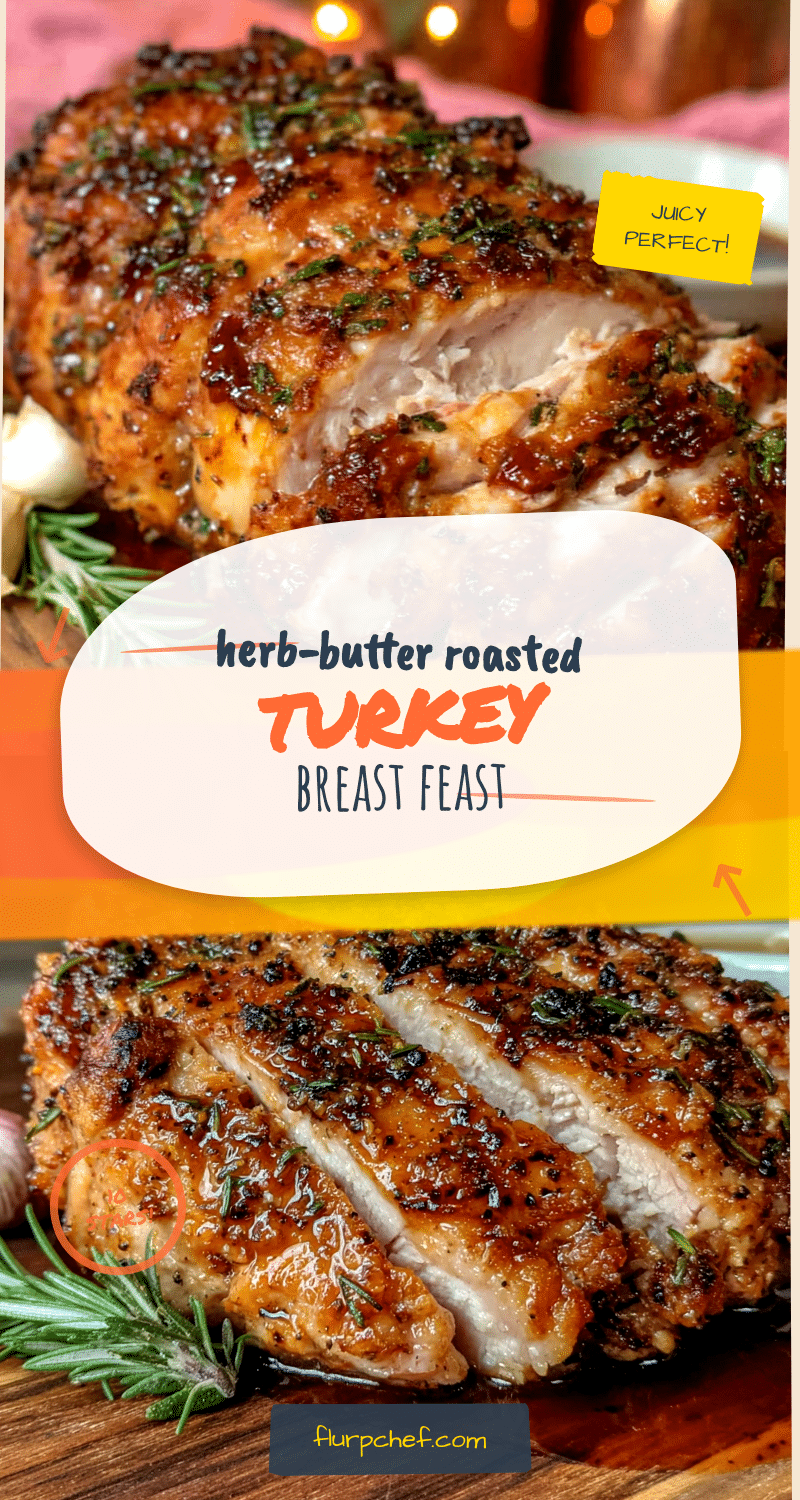
Best Juicy Herb-Butter Turkey Breast Recipe for Small Gatherings
A foolproof, juicy herb-butter roasted turkey breast perfect for small gatherings. This recipe delivers golden, crispy skin and tender meat in under 90 minutes, using simple ingredients and a reliable method.
- Prep Time: 20 minutes
- Cook Time: 55 minutes
- Total Time: 1 hour 30 minutes
- Yield: 4-6 servings 1x
- Category: Main Course
- Cuisine: American
Ingredients
- 1 bone-in, skin-on turkey breast (3–4 pounds)
- 4 tablespoons unsalted butter, softened
- 2 cloves garlic, minced
- 1 tablespoon fresh rosemary, finely chopped
- 1 tablespoon fresh thyme leaves
- 1 tablespoon fresh sage, finely chopped
- 1 teaspoon kosher salt
- ½ teaspoon black pepper, freshly ground
- 1 tablespoon olive oil
- ½ cup chicken broth (optional, for the pan)
Instructions
- Preheat your oven to 375°F (190°C). Position the rack in the lower third of the oven. Take the turkey breast out of the fridge and let it sit on the counter for 20 minutes.
- Pat the turkey breast completely dry with paper towels, getting into all crevices.
- Make the herb butter: In a small bowl, combine the softened butter, minced garlic, chopped rosemary, thyme, sage, ½ teaspoon of the salt, and ¼ teaspoon of the black pepper. Mash together with a fork until evenly distributed.
- Loosen the skin: Using your fingers, gently work your way under the turkey skin, separating it from the meat without tearing it, creating a pocket for the butter.
- Apply the herb butter: Push about two-thirds of the herb butter under the skin, spreading it evenly over the breast meat. Spread the remaining butter over the outside of the skin.
- Season the outside: Drizzle the olive oil over the buttered skin, then sprinkle the remaining salt and pepper over the entire surface. Rub in gently. If using kitchen twine, tie the legs together and tuck the wing tips under the breast.
- Add broth to the pan (optional): Pour the chicken broth into the bottom of the roasting pan, being careful not to splash it onto the seasoned skin.
- Roast the turkey breast: Place the pan in the preheated oven and roast for 50-65 minutes, depending on size. Start checking at the 45-minute mark.
- Baste halfway through: About 30 minutes in, spoon some of the pan juices over the turkey.
- Check for doneness: Insert an instant-read thermometer into the thickest part of the breast, avoiding the bone. Look for 155°F (68°C). If skin browns too quickly, tent loosely with aluminum foil for the last 15 minutes.
- Rest the turkey: Remove from oven, transfer to a cutting board, cover loosely with foil, and let rest for 15-20 minutes.
- Carve and serve: Slice the breast against the grain into ½-inch thick pieces. Spoon any pan juices over the slices before serving.
Notes
Let the meat come to room temperature before roasting for even cooking. Don’t skip patting the turkey dry for crispy skin. Use a thermometer, not a timer, for doneness. Let the turkey rest for 15-20 minutes before carving. Save the drippings for gravy. The herb butter can be made up to 3 days in advance.
Nutrition
- Serving Size: 4 ounces (about 113g
- Calories: 180
- Sodium: 380
- Fat: 8
- Saturated Fat: 4
- Carbohydrates: 1
- Protein: 25
Keywords: turkey breast, herb butter, roasted turkey, small gathering, juicy turkey, Thanksgiving, easy turkey recipe


