“Do you really think olives and rosemary belong on focaccia?” — and that was it. I was mid-bite on a rather crispy corner piece when my friend casually tossed that question over the kitchen counter. Honestly, I hadn’t given it much thought before that moment. I mean, focaccia is bread, right? But as the salty olive oils mingled with the piney rosemary and the tang of sourdough hit just right, I realized this wasn’t just any focaccia. It was something a little wild, a little unexpected, and totally addictive.
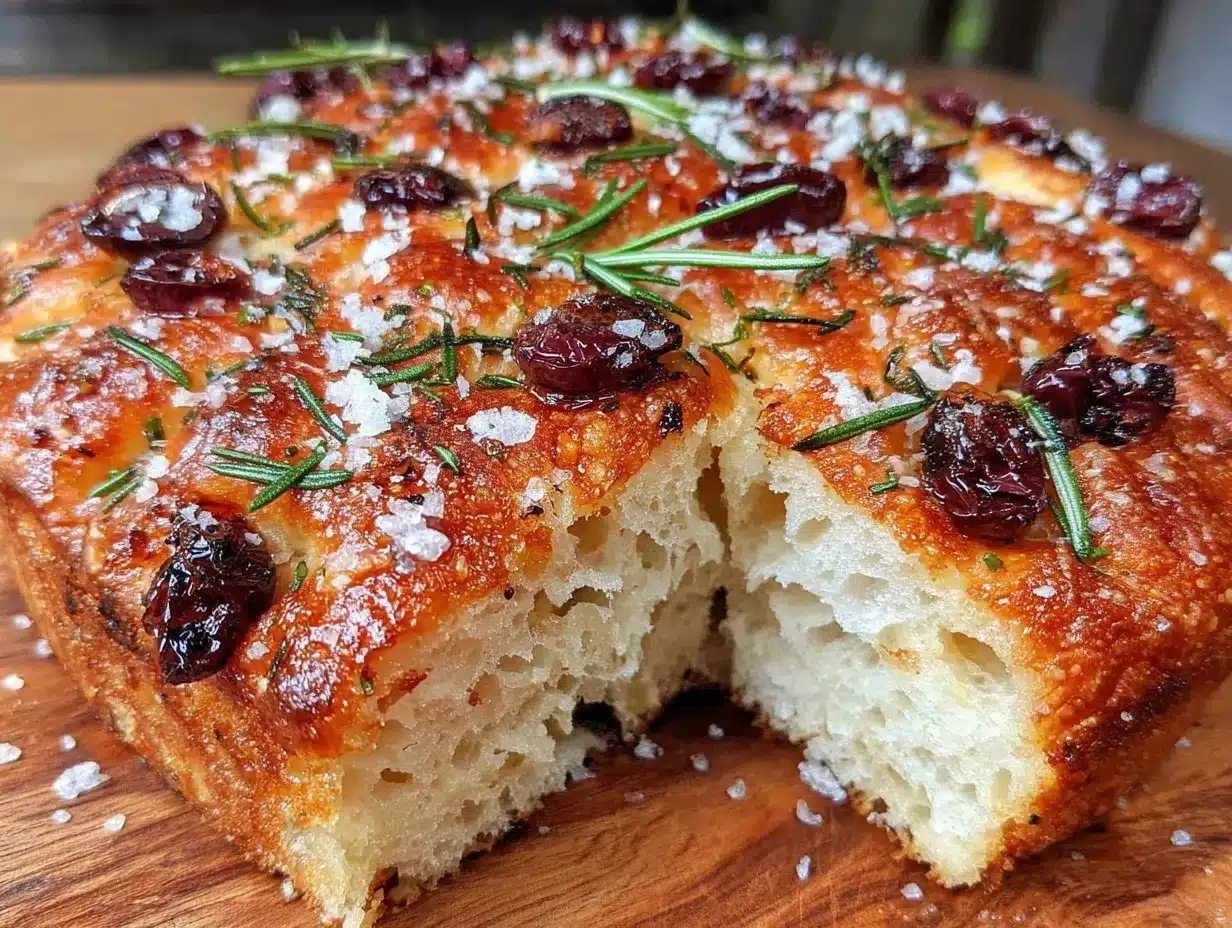
At that exact moment, the smell of that golden, crackly crust filled the whole kitchen, wrapping us up like a warm, cozy blanket. You know that feeling when a simple homemade bread feels like a tiny celebration? That’s what this crispy herbed sourdough focaccia with olives and rosemary brings to the table—no fuss, just real-deal flavor and texture that sticks with you. I’ve made my share of focaccias, but this recipe has that perfect balance of crunch and chew that keeps me reaching for another slice.
It’s funny how a little question can make you appreciate a recipe differently. Since then, every time I bake this focaccia, I’m reminded of that exact afternoon—the laughter, the crispy crust, the olive-studded surface glistening under a drizzle of good olive oil. That’s why this recipe holds a special place in my heart and why I think it just might become a staple in your kitchen too.
Why You’ll Love This Recipe
Honestly, this crispy herbed sourdough focaccia with olives and rosemary is one of those recipes that seem simple but nails every detail you want in a homemade bread. I’ve tested it multiple times, tweaking the hydration and fermentation to get that perfect crackly crust and tender crumb. Here’s why it’s such a keeper:
- Quick & Easy: While sourdough takes its time to ferment, the hands-on part is surprisingly short — under 20 minutes of active work for a rewarding loaf.
- Simple Ingredients: You don’t need anything fancy. Just basic pantry staples like flour, salt, olive oil, plus fresh rosemary and a handful of olives.
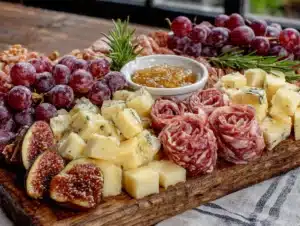
- Perfect for Entertaining: This focaccia shines at casual gatherings, paired with a cheese board or alongside a fresh salad like my Mediterranean cucumber tomato salad.
- Crowd-Pleaser: The combination of savory herbs and briny olives gets rave reviews from everyone, from picky eaters to bread enthusiasts.
- Unbelievably Delicious: The crust snaps with each bite while the inside stays airy and soft, bursting with flavor from the rosemary and olives.
What sets this focaccia apart is the sourdough starter—it’s not just yeast doing the work but a living culture that adds depth and a slight tang. Plus, I like to press the olives and rosemary gently into the dough before baking, letting those flavors infuse without overwhelming the bread’s natural character. It’s like comfort food, but with a thoughtful twist that makes you pause for a moment and savor.
What Ingredients You Will Need
This recipe uses simple, wholesome ingredients to deliver bold flavor and a satisfying texture without the fuss. Most are pantry staples, but a few fresh touches make all the difference.
- Sourdough starter (active and bubbly, about 100g) – the heart of the bread’s flavor and rise.
- All-purpose flour (350g / 2 ¾ cups) – you can swap half with bread flour for extra chew.
- Water (280ml / 1 ⅛ cups), lukewarm – to hydrate the dough.
- Extra-virgin olive oil (50ml / 3 ½ tablespoons), plus more for drizzling – I recommend a fruity brand for brightness.
- Sea salt (1 ½ teaspoons) – for flavor balance.
- Fresh rosemary (2 tablespoons, chopped) – gives that piney, herbal punch.
- Black olives (100g / ½ cup, pitted and halved) – Kalamata or Castelvetrano work best for their rich, briny flavor.
You can swap fresh rosemary for dried if that’s what you have on hand, but fresh really brings the aroma alive here. And if olives aren’t your favorite, green olives or even sun-dried tomatoes can add a different but equally delicious twist. When selecting flour, I usually pick King Arthur for consistent results, but any quality all-purpose flour will do. For a gluten-free option, try a blend labeled for baking, though texture will differ.
Equipment Needed
- Mixing bowl: A large one to give the dough room to rise comfortably.
- Dough scraper or spatula: Super handy for folding and moving sticky dough without losing patience.
- Kitchen scale: For precise measurements (recommended but not mandatory).
- Baking sheet or cast-iron skillet: Preferably rimmed to hold the dough’s shape and olive oil during baking.
- Pastry brush: To spread olive oil evenly on the dough surface.
- Clean kitchen towel or plastic wrap: To cover the dough and keep it moist during rises.
If you don’t have a kitchen scale, measuring cups work too, but baking is a bit like a science experiment, so weighing ingredients helps. I’ve tried this focaccia in everything from rimmed baking sheets to pizza stones, but a cast-iron skillet adds a lovely crisp base (and makes for a beautiful presentation). For an affordable option, a sturdy rimmed sheet pan from any home store will do just fine.
Preparation Method
- Mix the dough (10 minutes): In your mixing bowl, combine 350g (2 ¾ cups) all-purpose flour, 1 ½ teaspoons sea salt, and 100g (½ cup) pitted black olives. In a separate container, mix 100g (about ½ cup) active sourdough starter with 280ml (1 ⅛ cups) lukewarm water and 50ml (3 ½ tablespoons) olive oil. Pour the wet mixture into the dry ingredients. Using a dough scraper or your hands, mix until just combined. The dough will be sticky and shaggy — that’s perfect. Don’t over-knead.
- Bulk fermentation (4 to 6 hours): Cover the bowl with a damp towel or plastic wrap and place it in a warm spot (around 75°F / 24°C). Every 30 minutes during the first 2 hours, do a series of stretch and folds: reach under the dough, pull it up gently, then fold it over itself. This builds strength and structure. After the initial two hours, let it rest undisturbed for another 2 to 4 hours until it has nearly doubled in size and looks bubbly on the surface.
- Prepare the baking pan: Generously oil your rimmed baking sheet or cast-iron skillet with olive oil. This encourages that signature crisp crust and prevents sticking.
- Shape and second rise (1 hour): Transfer the dough to the prepared pan, gently pressing it out with your fingertips to fill the pan evenly. Don’t worry about perfect edges — rustic charm is the goal here. Cover loosely and let it rest for about an hour until puffy but not overly risen.
- Add herbs and olives: Press 2 tablespoons chopped fresh rosemary evenly over the surface along with a few extra olives if you like. Use your fingertips to create dimples all over the dough—those pockets hold olive oil and herbs for flavor and texture.
- Final olive oil drizzle and salt: Brush or drizzle the top with another 2 tablespoons of olive oil and sprinkle a pinch of flaky sea salt evenly. This is the magic touch for that irresistible finish.
- Bake (25-30 minutes): Preheat your oven to 450°F (230°C). Bake the focaccia in the middle rack for 25 to 30 minutes or until the crust is deep golden brown and crispy to the touch. You’ll smell that intoxicating rosemary and olive aroma filling your kitchen.
- Cool and enjoy: Let the focaccia cool in the pan for 10 minutes before slicing. This resting step helps the crumb set nicely without getting gummy.
Pro tip: If your oven runs hot, check at 20 minutes to prevent burning the herbs. And don’t skip the dimpling—those little pockets are what make focaccia so deliciously textured. I learned the hard way that skipping them leads to a flatter, less interesting loaf.
Cooking Tips & Techniques
Here’s what I’ve picked up making this crispy herbed sourdough focaccia over and over:
- Hydration matters: The dough is quite wet compared to a typical loaf, which helps create that open crumb and crispy crust. Don’t be tempted to add more flour; the stickiness is key.
- Stretch and folds build strength: Since this is a no-knead style dough, those early folds during bulk fermentation develop gluten gradually. It’s worth the patience.
- Olive oil is your friend: Don’t be shy with it on the pan and the top. It crisps the bottom and adds flavor. I usually keep a small bottle handy just for focaccia.
- Don’t overproof: If the dough rises too much during the second fermentation, it can collapse in the oven and lose that lovely texture.
- Use fresh herbs: Rosemary can get bitter if overcooked, so fresh leaves sprinkled on before baking are perfect. Dried herbs tend to dry out or burn.
- Temperature control: A hot oven is critical for that crust. Preheat well, and if you have a baking stone or steel, this focaccia loves that radiant heat.
One time, I left the dough to rise too long and ended up with a dense, flat focaccia. Lesson learned: watch the dough, not the clock. Also, multitasking helps—while the dough ferments, I prep a simple side like the grilled zucchini with balsamic feta. It’s a perfect pairing with this herby bread.
Variations & Adaptations
Feel free to switch things up with these tasty variations:
- Cheese lovers: Sprinkle grated Parmesan or crumbled feta on top before baking for an extra savory kick.
- Seasonal herbs: Swap rosemary with thyme, oregano, or a mix of fresh herbs you have on hand.
- Different olives: Use green olives, Castelvetrano, or even chopped sun-dried tomatoes if you want to mix it up.
- Gluten-free option: Try a gluten-free sourdough starter and blend with a gluten-free flour mix designed for bread. Texture will differ but still tasty.
- Spicy twist: Add a pinch of red pepper flakes to the dough or brush chili-infused olive oil on top for some heat.
I once made this focaccia with fresh thyme and kalamata olives—turned out to be a hit at a weekend brunch. It’s also great with a drizzle of honey and flaky sea salt after baking for a sweet-savory version. If you’re short on time, you can bake individual focaccia rounds in muffin tins—they cook faster and are perfect for snacks.
Serving & Storage Suggestions
This focaccia is best served warm, fresh from the oven, drizzled with a little extra olive oil. It pairs beautifully with soups, stews, or a fresh salad like the roasted cherry tomato pasta with burrata for a cozy meal. Slice it thick for sandwiches or tear it into rustic chunks for dipping in olive oil or balsamic vinegar.
To store, wrap the cooled focaccia tightly in plastic wrap or place in an airtight container. It keeps well at room temperature for up to 2 days. For longer storage, freeze it wrapped in foil and plastic wrap for up to 1 month. To reheat, warm in a 350°F (175°C) oven for about 10 minutes or toast slices in a skillet until crispy again.
Flavors actually deepen after a day, so if you can wait, the rosemary and olive notes get even more pronounced. Just bring back that crispness with a quick reheat before serving.
Nutritional Information & Benefits
One generous slice (about 80g) of this crispy herbed sourdough focaccia contains approximately:
| Calories | 180 kcal |
|---|---|
| Carbohydrates | 28g |
| Fat | 6g (mostly from olive oil) |
| Protein | 5g |
| Fiber | 2g |
Thanks to the sourdough fermentation, this bread is easier on digestion compared to conventional yeast breads. Olive oil adds heart-healthy monounsaturated fats, and rosemary contributes antioxidants. The olives offer a boost of vitamins and minerals as well. It’s a flavorful way to enjoy wholesome ingredients without overdoing calories.
For those watching carbs, this bread is moderate but can be enjoyed in moderation as part of a balanced diet. It’s naturally vegan and dairy-free, though not gluten-free unless adapted.
Conclusion
This crispy herbed sourdough focaccia with olives and rosemary is one of those recipes that sticks with you for all the right reasons—flavor, texture, and ease. It’s approachable enough for weeknight baking but special enough to impress guests without stress. I love how the sourdough tang plays off the savory olives and fragrant rosemary, creating a loaf that feels like a little celebration in every bite.
Make it your own by swapping herbs or olives to suit your mood or what’s in your pantry. And if you try it, I’d love to hear how you made it yours or what you paired it with. This recipe has been a quiet kitchen companion for me—hope it finds a cozy spot in yours too.
FAQs About Crispy Herbed Sourdough Focaccia with Olives and Rosemary
Can I use store-bought yeast instead of sourdough starter?
Yes, but the flavor and texture will change. Use about 2 teaspoons active dry yeast and adjust water accordingly. The sourdough starter adds tang and chew you won’t get with commercial yeast.
How do I know when my sourdough starter is ready to use?
It should be bubbly and doubled in size about 4-6 hours after feeding. A simple float test (a spoonful floats in water) can confirm it’s active.
Can I make this focaccia ahead of time?
You can prepare the dough and refrigerate it overnight for a slow, cold fermentation. Just bring it to room temp before shaping and baking. This often improves flavor.
What’s the best way to store leftovers?
Wrap cooled bread tightly in plastic wrap or store in an airtight container at room temp for 1-2 days or freeze for up to a month.
Can I add other toppings besides olives and rosemary?
Definitely! Caramelized onions, cherry tomatoes, or olives mixed with herbs all work well. Just be mindful of moisture content to keep the crust crisp.
Pin This Recipe!
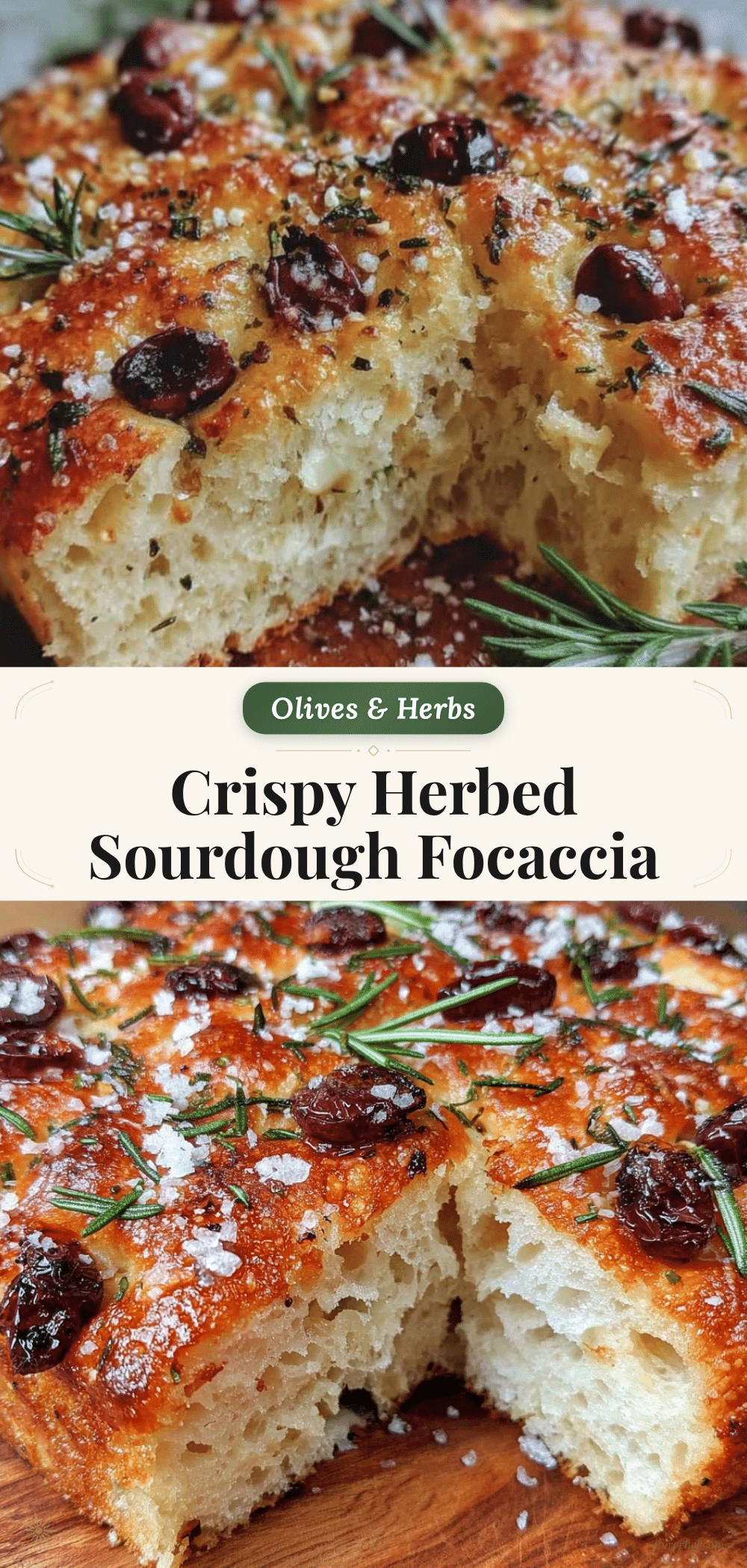
Crispy Herbed Sourdough Focaccia with Olives and Rosemary
A crispy herbed sourdough focaccia featuring olives and rosemary, delivering a perfect balance of crunch and chew with a tangy sourdough flavor. This easy homemade bread is flavorful, textured, and perfect for casual gatherings or everyday enjoyment.
- Prep Time: 20 minutes
- Cook Time: 25-30 minutes
- Total Time: 5 to 7 hours (including fermentation and rising times)
- Yield: 1 loaf (about 8 servings) 1x
- Category: Bread
- Cuisine: Italian
Ingredients
- 100g (about ½ cup) active sourdough starter
- 350g (2 ¾ cups) all-purpose flour
- 280ml (1 ⅛ cups) lukewarm water
- 50ml (3 ½ tablespoons) extra-virgin olive oil, plus more for drizzling
- 1 ½ teaspoons sea salt
- 2 tablespoons fresh rosemary, chopped
- 100g (½ cup) black olives, pitted and halved (Kalamata or Castelvetrano recommended)
Instructions
- Mix the dough (10 minutes): In a mixing bowl, combine flour, sea salt, and black olives. In a separate container, mix sourdough starter with lukewarm water and olive oil. Pour wet mixture into dry ingredients and mix until just combined. Dough will be sticky and shaggy; do not over-knead.
- Bulk fermentation (4 to 6 hours): Cover bowl with damp towel or plastic wrap and place in a warm spot (~75°F/24°C). Every 30 minutes during the first 2 hours, perform stretch and folds to build dough strength. After 2 hours, let rest undisturbed for 2 to 4 more hours until nearly doubled and bubbly.
- Prepare baking pan: Generously oil a rimmed baking sheet or cast-iron skillet with olive oil.
- Shape and second rise (1 hour): Transfer dough to prepared pan, gently press out with fingertips to fill pan evenly. Cover loosely and let rest for about 1 hour until puffy but not overly risen.
- Add herbs and olives: Press chopped rosemary evenly over surface along with a few extra olives if desired. Create dimples all over dough with fingertips.
- Final olive oil drizzle and salt: Brush or drizzle top with 2 tablespoons olive oil and sprinkle flaky sea salt evenly.
- Bake (25-30 minutes): Preheat oven to 450°F (230°C). Bake focaccia on middle rack for 25 to 30 minutes until crust is deep golden brown and crispy.
- Cool and enjoy: Let focaccia cool in pan for 10 minutes before slicing.
Notes
Do not over-knead the dough; it should remain sticky and shaggy. Perform stretch and folds during bulk fermentation to build gluten strength. Use fresh rosemary for best aroma and flavor. Press olives and herbs gently into dough before baking. Watch oven temperature and check at 20 minutes if your oven runs hot to avoid burning herbs. Let bread cool before slicing to set crumb. For gluten-free option, use gluten-free sourdough starter and flour blend. Variations include adding cheese, different herbs, or spicy olive oil.
Nutrition
- Serving Size: 1 slice (about 80g)
- Calories: 180
- Fat: 6
- Carbohydrates: 28
- Fiber: 2
- Protein: 5
Keywords: focaccia, sourdough, herbed bread, olives, rosemary, homemade bread, crispy crust, easy bread recipe