My father-in-law, a man of few words and very firm opinions, had claimed to hate meatloaf for forty-two years. Forty-two years. He’d make a face if someone even mentioned it at a potluck, muttering about dry, ketchup-slathered bricks his mother used to serve. Then, last Thanksgiving, I made this version just for the rest of the family, figuring I’d stash a portion for him in the freezer for a night he was out. I found him standing over the cooling rack in the kitchen, a fork in one hand and a guilty look on his face, having just carved a slice from the end. “That’s not meatloaf,” he said, chewing. “That’s beef cake.” And honestly? That’s the highest compliment this crowd-pleasing no-fail meatloaf with brown sugar glaze has ever gotten. It was the moment I realized I had stumbled onto something special—a recipe that could actually change someone’s mind.
I’ll be honest with you, I wasn’t a meatloaf fan myself for a long time. I mean, who could blame me? I’d had one too many dry, crumbly versions that felt like a punishment for a Tuesday night. But this recipe? It’s different. It’s tender, it’s juicy, and that sticky, tangy-sweet brown sugar glaze on top? Let me tell you, it’s the kind of thing that makes you close your eyes after the first bite. I first made it for a casual dinner party, and I was nervous—I mean, serving meatloaf to guests felt a little… retro. But the loaf pan came out empty, and three people asked for the recipe before I’d even poured myself a second glass of wine. Maybe you’ve been there, looking for a dish that feels both comforting and impressive, something you can pull off without a ton of stress while everyone’s mingling in your living room. This is that dish.
This recipe has become my secret weapon for hosting. It’s the dish I make when I want to feed a crowd without being chained to the stove. The best part? You can mix it up hours before your guests arrive, pop it in the oven, and let the incredible smell do all the work of getting everyone excited. It’s forgiving, it’s flexible, and it has never, ever let me down. Not once. That “no-fail” in the title isn’t just marketing—it’s a promise born from a few personal kitchen disasters with other recipes. This one just works.
Why You’ll Love This Recipe
This isn’t your grandma’s meatloaf—well, maybe it is, but with a few smart upgrades that make it absolutely foolproof. I’ve tested this recipe more times than I can count, tweaking the ratio of meat to binder, adjusting the glaze, and even accidentally baking it at the wrong temperature once (it still came out great). Here’s what makes it a winner for your next gathering:
- Completely Foolproof: This recipe uses a simple panade (a mixture of breadcrumbs and milk) that guarantees a moist, tender loaf every single time. No more dry, crumbly disasters.
- Made with Simple Ingredients: You likely have most of these items in your pantry and fridge right now. No fancy grocery store trips needed.
- Perfect for Entertaining: You can prep it entirely the day before. Just cover, refrigerate, and bake when your guests arrive. The house will smell incredible.
- Always a Crowd-Pleaser: I’ve served this to picky eaters, health-conscious friends, and even my uncle who “doesn’t do ground beef.” It gets rave reviews across the board.
- That Brown Sugar Glaze: The caramelized, tangy-sweet topping is what sets this apart. It’s not just a glaze; it’s a crust that everyone fights over.
What makes this recipe different from the rest is the technique. Instead of just mixing everything in a bowl and hoping for the best, we’re building flavor by sautéing the aromatics first. It’s a small step that makes a huge difference. The result is a meatloaf that’s deeply savory, perfectly seasoned, and has a texture that’s almost like a good, old-fashioned hamburger steak. It’s comfort food reimagined—a little bit elevated, but with the same soul-soothing satisfaction that makes you want to go back for seconds. Perfect for impressing guests without the stress, or turning a simple Sunday supper into something memorable.
What Ingredients You Will Need
This recipe uses simple, wholesome ingredients to deliver bold flavor and a satisfying texture. Most of these are pantry staples, which makes this dish perfect for a last-minute gathering or a cozy night in. I’ve included a few notes on why each ingredient matters, so you can feel confident making substitutions if needed.
- For the Meatloaf:
- 2 pounds ground beef (80/20 blend): I recommend an 80/20 blend for the best balance of flavor and moisture. Too lean, and your meatloaf will be dry. Ground chuck is my go-to. (If you’re feeding a crowd, you can easily scale this up, but two pounds is the perfect size for a standard loaf pan.)
- 1 cup plain breadcrumbs (or panko): These act as the binder. Panko gives a slightly lighter texture, but regular breadcrumbs work perfectly. For a gluten-free option, use gluten-free panko or crushed pork rinds.
- 1/2 cup whole milk: This is the key to a tender meatloaf. The milk soaks into the breadcrumbs to create a panade, which keeps the meat from getting tough. You can use 2% or even unsweetened almond milk in a pinch.
- 1 medium yellow onion, finely diced: Sautéing the onion before adding it to the meat mixture is a game-changer. It softens the onion and releases its natural sweetness, preventing any harsh, raw onion bites. I use about 1 cup once diced.
- 3 cloves garlic, minced: Fresh garlic is best here. It adds a warm, savory depth that powder just can’t replicate.
- 2 large eggs, lightly beaten: The eggs help bind everything together. Make sure they’re at room temperature so they incorporate evenly.
- 2 tablespoons Worcestershire sauce: This adds a deep, umami richness. It’s a non-negotiable for me in a good meatloaf.
- 1 tablespoon tomato paste: A little concentrated tomato flavor goes a long way. It adds a subtle tang and color to the loaf.
- 1 teaspoon dried thyme: Earthy and slightly floral, thyme pairs beautifully with beef. You can substitute with 1 tablespoon of fresh thyme leaves.
- 1 teaspoon smoked paprika: This gives the meatloaf a subtle smoky flavor and a beautiful color. Regular paprika works too, but smoked is worth seeking out.
- 1 1/2 teaspoons kosher salt: Don’t skimp on the salt—it’s essential for flavor. I prefer kosher salt for its clean taste.
- 1/2 teaspoon black pepper: Freshly ground is always better.
- 2 tablespoons fresh parsley, chopped (optional): For a pop of color and freshness at the end.
- For the Brown Sugar Glaze:
- 1/2 cup ketchup: The base of our glaze. I use a standard brand like Heinz, but any good-quality ketchup will work.
- 1/3 cup packed light brown sugar: This is what gives the glaze its signature sticky-sweetness and caramelized crust. Dark brown sugar will work too, for a deeper molasses flavor.
- 1 tablespoon apple cider vinegar: A touch of acidity balances the sweetness and adds a little tang.
- 1 teaspoon yellow mustard: This adds a subtle, bright kick that cuts through the richness of the meat. Dijon mustard is a fine substitute.
- Pinch of cayenne pepper (optional): For a tiny bit of heat that wakes up your taste buds.
Equipment Needed
You don’t need a lot of fancy equipment to make this meatloaf, which is part of its charm. Here’s what you’ll need to get the job done:
- 9×5-inch Loaf Pan: A standard metal or glass loaf pan is perfect. I prefer a metal pan because it conducts heat a little better, leading to a nice crust on the sides. If you use glass, you might need to add 5-10 minutes to the baking time.
- Large Mixing Bowl: You’ll need a big bowl to get your hands in there and mix everything together evenly.
- Medium Skillet: For sautéing the onions and garlic. A non-stick or stainless steel pan works great.
- Small Bowl: For whisking together the brown sugar glaze.
- Measuring Cups and Spoons: Accuracy is your friend here.
- Chef’s Knife and Cutting Board: For dicing the onion and mincing the garlic.
- Wooden Spoon or Spatula: For sautéing.
- Meat Thermometer: This is my number one tip for a no-fail meatloaf. An instant-read thermometer takes the guesswork out of doneness. Trust me, it’s worth the investment. I once forgot to use mine and ended up with a loaf that was overdone on the outside and slightly underdone in the center. Never again!
- Aluminum Foil: For tenting the meatloaf while it rests.
- Cooling Rack: Placing the loaf pan on a cooling rack helps air circulate, preventing the bottom from getting soggy.
Preparation Method
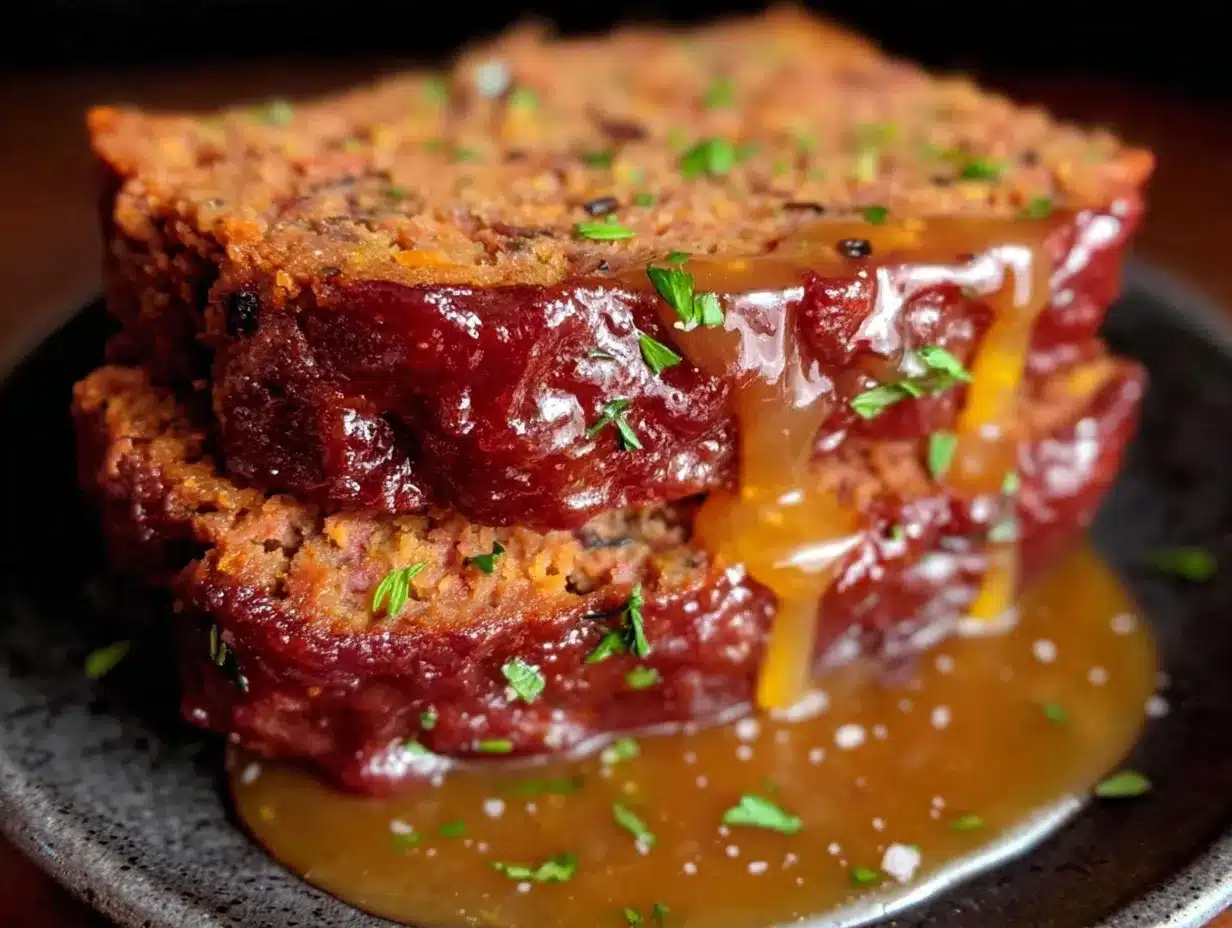
Let’s get cooking! This process is straightforward, but I’ve broken it down into clear steps with a few of my personal tips to guarantee success. The total time is about 1 hour and 30 minutes, but most of that is hands-off baking time.
- Preheat and Prep: Preheat your oven to 350°F (175°C). Lightly grease your 9×5-inch loaf pan with a little cooking spray or a thin layer of butter. This will help the meatloaf release easily after baking.
- Sauté the Aromatics: Heat a drizzle of olive oil (about 1 tablespoon) in your medium skillet over medium heat. Add the finely diced onion and cook, stirring occasionally, for 5-7 minutes, until it’s soft and translucent. Add the minced garlic and cook for another 30 seconds until fragrant. Be careful not to burn the garlic! Remove the skillet from the heat and let it cool slightly while you prepare the other ingredients. This step is crucial—it mellows the onion and garlic, creating a much more complex flavor than just throwing them in raw.
- Make the Panade: In your large mixing bowl, combine the breadcrumbs and milk. Let it sit for about 5 minutes. The breadcrumbs will soak up the milk, creating a thick, pasty mixture. This is your panade, and it’s the secret to a tender, never-dry meatloaf. It acts as a sponge, holding onto moisture during baking.
- Mix the Meatloaf Base: To the bowl with the panade, add the beaten eggs, Worcestershire sauce, tomato paste, dried thyme, smoked paprika, salt, and pepper. Whisk everything together until it’s a smooth, well-combined slurry. This ensures the seasoning is evenly distributed throughout the meatloaf.
- Add the Meat and Onions: Add the ground beef and the cooled sautéed onions and garlic to the bowl. Now, here’s the most important part: use your hands to gently mix everything together. I know it’s a little messy, but your hands are the best tool for this job. Mix just until everything is combined—don’t overwork the meat! Overmixing can make the meatloaf tough and dense. You want to see the ingredients incorporated, but you don’t want to pack it into a tight ball. Stop as soon as you don’t see any more streaks of raw meat.
- Form the Loaf: Transfer the meat mixture to your prepared loaf pan. Gently press it into the pan, making sure it’s evenly distributed. Don’t pack it down too firmly! You want a gentle, even shape. Form a slight indentation down the center of the loaf—this helps it cook more evenly and prevents a dome from forming.
- Make the Glaze: In your small bowl, whisk together the ketchup, brown sugar, apple cider vinegar, yellow mustard, and a pinch of cayenne pepper (if using). Set aside about 1/4 cup of the glaze for serving.
- Apply the First Coat of Glaze: Spread about half of the remaining glaze evenly over the top of the meatloaf. Reserve the rest for later.
- Bake: Place the loaf pan on a baking sheet (to catch any drips) and bake in the preheated oven for 45 minutes.
- Apply the Second Coat: After 45 minutes, carefully remove the meatloaf from the oven. Spoon the remaining glaze over the top, spreading it gently. Return the meatloaf to the oven.
- Finish Baking: Continue baking for another 20-30 minutes, or until the internal temperature of the meatloaf reaches 160°F (71°C) when measured with a meat thermometer inserted into the center. The glaze should be bubbling and caramelized. The total baking time is usually around 65-75 minutes.
- Rest and Serve: Once it’s done, remove the meatloaf from the oven and let it rest in the pan on a cooling rack for at least 10-15 minutes. This is a critical step! The meatloaf needs time to reabsorb its juices. If you slice into it immediately, it will fall apart and be dry. After it rests, carefully pour off any excess fat from the pan. Then, run a knife around the edges to loosen it, and gently turn it out onto a cutting board or serving platter. Slice and serve with the reserved glaze on the side.
Cooking Tips & Techniques
I’ve made my fair share of meatloaf mistakes, and I’m happy to share them so you don’t have to repeat them. Here are my best tips for a perfect result every single time.
Don’t Overmix the Meat. This is the number one mistake. When you overmix ground beef, you’re developing the proteins, which leads to a tough, dense, almost rubbery texture. Use a light hand. Mix just until the ingredients are combined. You should still be able to see small flecks of the other ingredients. I once had a friend who used a stand mixer to mix her meatloaf. It was, without exaggeration, like eating a hockey puck. Learn from her mistake!
Use a Meat Thermometer. I cannot stress this enough. Ovens vary, loaf pan sizes vary, and even the fat content of your beef can affect cooking time. The only way to know for sure that your meatloaf is perfectly cooked (and safe to eat) without drying it out is to use a thermometer. 160°F (71°C) is your magic number. It’s the difference between a perfect, juicy loaf and a dry, overdone one. I keep my instant-read thermometer in my utensil drawer right next to my spatulas.
Let It Rest. I know it’s tempting to slice right into that beautiful, glazed loaf, but patience is a virtue here. Letting the meatloaf rest for at least 10-15 minutes allows the juices to redistribute throughout the loaf. If you cut it too soon, all those delicious juices will run out onto your cutting board, and you’ll be left with a dry slice. Use this time to mash some potatoes or toss a salad.
Line Your Pan (Optional but Genius). For the easiest cleanup ever, line your loaf pan with a sling of parchment paper. Just cut two long strips of parchment that are wide enough to overhang the long sides of the pan. Place them in the pan, crisscrossing them. This makes lifting the entire meatloaf out of the pan a breeze, and you won’t have to scrub the pan.
Don’t Skip Sautéing the Onions. This is a non-negotiable step in my kitchen. Raw onion can be harsh and overpowering. Sautéing it until soft and translucent sweetens it and makes its flavor much more mellow and integrated. It’s a small extra step that makes a world of difference in the final flavor profile of the meatloaf.
Variations & Adaptations
This recipe is incredibly versatile. Feel free to make it your own! Here are a few of my favorite ways to change it up.
- The “Italian Job” Variation: Swap the thyme and smoked paprika for 1 teaspoon of dried oregano and 1 teaspoon of dried basil. Add 1/2 cup of finely grated Parmesan cheese to the meat mixture. Replace the brown sugar glaze with a simple marinara sauce (about 1/2 cup) spread over the top during the last 20 minutes of baking. Top with fresh mozzarella cheese for the last 5 minutes and let it melt. Serve with spaghetti!
- The “BBQ Ranch” Twist: Replace the Worcestershire sauce with 2 tablespoons of your favorite BBQ sauce. Add 1 packet of dry ranch dressing mix to the meat mixture. For the glaze, mix 1/2 cup BBQ sauce with 2 tablespoons of brown sugar. It’s a tangy, smoky, crowd-pleasing variation that’s perfect for a summer cookout.
- Low-Carb / Keto Adaptation: This is a great option for those watching their carbs. Replace the breadcrumbs with 1 cup of crushed pork rinds (pork panko) or 1/2 cup of almond flour. Use a sugar-free ketchup and a brown sugar substitute (like Swerve or Lakanto) for the glaze. The texture is slightly different, but it’s still incredibly moist and flavorful.
- Mini Meatloaves: For a fun, individual-serving option, divide the mixture into a greased 12-cup muffin tin. Press the mixture into each cup and top with the glaze. Bake for about 20-25 minutes, or until they reach 160°F (71°C). These are great for parties or for portion-controlled meals, and they cook much faster!
- Turkey Meatloaf: Substitute the ground beef with ground turkey (93/7 is best for moisture). Since turkey is leaner, you’ll want to add a little extra moisture. I add 1/4 cup of grated zucchini (squeezed dry) and an extra tablespoon of olive oil to the meat mixture. The cooking time may be slightly shorter, so start checking the temperature at the 50-minute mark.
Serving & Storage Suggestions
This meatloaf is a star in its own right, but it loves company. Here’s how to serve it and store any leftovers (if there are any!).
Serving: Serve the meatloaf warm, sliced about 1-inch thick. It’s a classic pairing with creamy mashed potatoes to soak up all that extra glaze. A side of roasted green beans or a simple steamed vegetable adds a nice, fresh contrast. For a truly impressive spread, I’ll often serve it with a side of buttery egg noodles and a crisp garden salad. The leftovers are also amazing cold in a sandwich the next day—just pile a few slices on some good bread with a little extra ketchup.
Presentation for a Crowd: When I’m hosting, I like to slice the entire meatloaf and fan the slices out on a large, warm platter. I drizzle a little of the reserved glaze over the top and sprinkle with fresh parsley. It looks beautiful and makes it easy for guests to serve themselves.
Storage: Store leftover meatloaf in an airtight container in the refrigerator for up to 4 days. The flavors actually meld and get even better the next day!
Freezing: This meatloaf freezes beautifully. You can freeze it either baked or unbaked. To freeze a baked meatloaf, let it cool completely, then wrap it tightly in plastic wrap, followed by a layer of aluminum foil. It will keep for up to 3 months. To reheat, thaw it in the refrigerator overnight, then reheat slices in a 350°F (175°C) oven for about 10-15 minutes, or in the microwave. To freeze an unbaked meatloaf, prepare it in the pan, but don’t add the glaze. Wrap the pan tightly in plastic wrap and then foil. Thaw overnight in the fridge, add the glaze, and bake as directed, adding about 10-15 minutes to the cooking time.
Reheating: The best way to reheat individual slices is in a skillet over medium-low heat with a splash of beef broth or water. Cover the skillet to create steam, and heat for 3-5 minutes per side. This helps keep the meatloaf moist. The microwave works in a pinch, but it can dry it out.
Nutritional Information & Benefits
While this is a comfort food dish, it does offer some nutritional benefits, especially when paired with vegetables. Here’s a general estimate per serving (based on 8 servings). Please note that these are estimates and can vary based on specific ingredients used.
- Calories: ~450-500
- Protein: ~30-35g
- Fat: ~25-30g
- Carbohydrates: ~20-25g
- Fiber: ~1g
- Sugar: ~12-15g (mostly from the glaze)
Key Ingredient Benefits:
- Beef: A great source of high-quality protein, iron, zinc, and B vitamins, which are essential for energy and immune function.
- Onions and Garlic: These allium vegetables are packed with antioxidants and compounds that have been linked to heart health and immune support.
- Eggs: Provide protein, choline (important for brain health), and various vitamins.
Dietary Considerations:
- Gluten-Free: Use gluten-free breadcrumbs or crushed pork rinds.
- Low-Carb/Keto: Use almond flour or pork panko and a sugar-free glaze.
- Dairy-Free: Use unsweetened almond milk or oat milk in the panade. The recipe is naturally dairy-free otherwise.
- Potential Allergens: This recipe contains gluten (breadcrumbs), dairy (milk), and eggs.
From a personal wellness perspective, I love that this recipe allows me to serve a hearty, satisfying meal that everyone enjoys, while I can easily adapt it to meet different dietary needs. It’s a meal that feels like a hug on a plate, and that has its own kind of nutritional value for the soul.
Conclusion
This crowd-pleasing no-fail meatloaf with brown sugar glaze is more than just a recipe—it’s a solution. It’s the answer to the question of what to serve when you want to impress without the stress, when you want comfort without compromise, and when you want a dish that will genuinely make people happy. From the incredibly tender, flavorful interior to that sticky, caramelized, sweet-and-tangy glaze on top, every element is designed to be a winner. It’s the recipe that turned my father-in-law into a meatloaf believer, and I have a feeling it’ll do the same for the skeptics in your life.
I truly hope you give this recipe a try. Don’t be afraid to make it your own—swap in your favorite spices, try the BBQ ranch version, or make a batch of mini meatloaves for a party. The beauty of this recipe is its flexibility. It’s a forgiving, reliable friend in the kitchen.
When you make it, I’d love to hear how it turns out! Did you make any changes? Did it convert any meatloaf haters in your family? Drop a comment below and let me know. And if you share a photo on Pinterest or Instagram, tag me—I love seeing your creations. Happy cooking, friend. You’ve got this.
Frequently Asked Questions
Can I make this meatloaf ahead of time?
Absolutely! You can prepare the entire meatloaf mixture, form it in the pan, and cover it tightly with plastic wrap. Refrigerate it for up to 24 hours before baking. When you’re ready to bake, just remove the plastic wrap, apply the glaze, and bake as directed. You may need to add an extra 10-15 minutes to the baking time since it’s starting from cold.
Why did my meatloaf fall apart?
This usually happens for one of two reasons: either there wasn’t enough binder (the breadcrumbs and eggs) to hold it together, or it wasn’t allowed to rest long enough after baking. The panade is crucial for structure, so make sure you’re using the correct amounts. And don’t skip the resting step! Letting it sit for 10-15 minutes allows the proteins to firm up and the whole loaf to become sliceable.
Can I use a different type of ground meat?
Yes! Ground pork, ground veal, or a mixture of all three (often called “meatloaf mix”) works wonderfully. Ground turkey or chicken is also an option, but because they are leaner, you’ll want to add a little extra fat or moisture, like a tablespoon of olive oil or a grated, squeezed-dry zucchini, to prevent it from drying out.
My glaze is too runny. What did I do wrong?
A runny glaze can happen for a few reasons. First, make sure you’re using packed brown sugar. Second, the glaze thickens as it bakes and caramelizes on top of the meatloaf. If you’re applying it too early, it may not have time to reduce properly. Applying a second coat after 45 minutes of baking is key. Finally, make sure your oven is at the correct temperature (350°F). If it’s too low, the glaze won’t caramelize properly.
Can I cook this in a different pan?
Absolutely! For a more traditional, crusty meatloaf, you can shape the mixture into a free-form loaf on a parchment-lined baking sheet. This allows more surface area to brown and get crispy. Just shape it into a log about the same size as your loaf pan. The baking time will be slightly shorter, usually around 50-60 minutes, so start checking the internal temperature at the 45-minute mark.
Pin This Recipe!
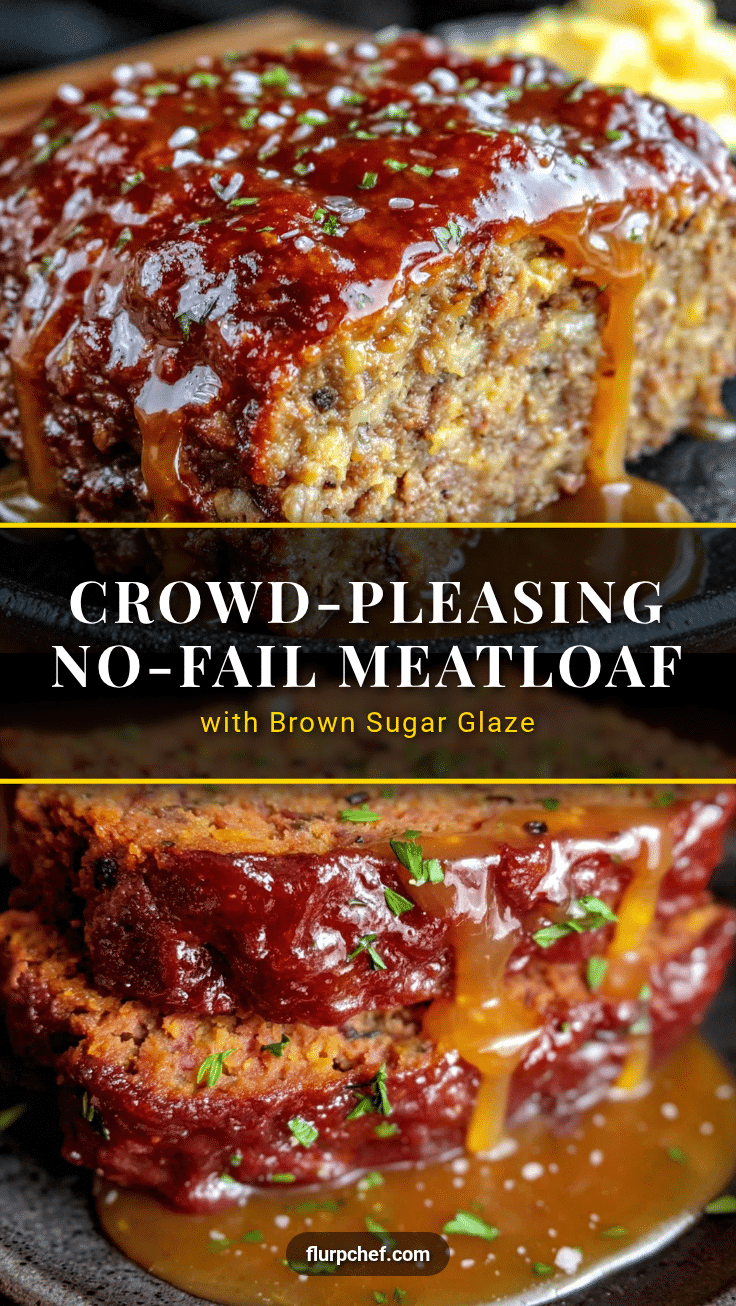
Crowd-Pleasing No-Fail Meatloaf with Brown Sugar Glaze
This tender, juicy meatloaf with a sticky, tangy-sweet brown sugar glaze is a foolproof recipe that converts even the most ardent meatloaf skeptics. Perfect for entertaining, it can be prepped ahead and always delivers a moist, flavorful loaf.
- Prep Time: 20 minutes
- Cook Time: 65 minutes
- Total Time: 1 hour 25 minutes
- Yield: 8 servings 1x
- Category: Main Course
- Cuisine: American
Ingredients
- 2 pounds ground beef (80/20 blend)
- 1 cup plain breadcrumbs (or panko)
- 1/2 cup whole milk
- 1 medium yellow onion, finely diced
- 3 cloves garlic, minced
- 2 large eggs, lightly beaten
- 2 tablespoons Worcestershire sauce
- 1 tablespoon tomato paste
- 1 teaspoon dried thyme
- 1 teaspoon smoked paprika
- 1 1/2 teaspoons kosher salt
- 1/2 teaspoon black pepper
- 2 tablespoons fresh parsley, chopped (optional)
- 1/2 cup ketchup
- 1/3 cup packed light brown sugar
- 1 tablespoon apple cider vinegar
- 1 teaspoon yellow mustard
- Pinch of cayenne pepper (optional)
Instructions
- Preheat oven to 350°F (175°C). Lightly grease a 9×5-inch loaf pan.
- Heat a drizzle of olive oil in a medium skillet over medium heat. Add the finely diced onion and cook, stirring occasionally, for 5-7 minutes until soft and translucent. Add the minced garlic and cook for 30 seconds until fragrant. Remove from heat and let cool slightly.
- In a large mixing bowl, combine the breadcrumbs and milk. Let sit for 5 minutes to create a panade.
- To the panade, add the beaten eggs, Worcestershire sauce, tomato paste, dried thyme, smoked paprika, salt, and pepper. Whisk until smooth.
- Add the ground beef and the cooled sautéed onions and garlic. Use your hands to gently mix just until combined—do not overmix.
- Transfer the mixture to the prepared loaf pan. Gently press it in, forming a slight indentation down the center.
- In a small bowl, whisk together the ketchup, brown sugar, apple cider vinegar, yellow mustard, and cayenne pepper (if using). Set aside 1/4 cup for serving.
- Spread about half of the remaining glaze evenly over the top of the meatloaf.
- Place the loaf pan on a baking sheet and bake for 45 minutes.
- After 45 minutes, remove from oven and spoon the remaining glaze over the top.
- Return to oven and bake for another 20-30 minutes, until internal temperature reaches 160°F (71°C).
- Let the meatloaf rest in the pan on a cooling rack for 10-15 minutes. Pour off excess fat, run a knife around the edges, and turn out onto a cutting board. Slice and serve with reserved glaze.
Notes
For a gluten-free version, use gluten-free breadcrumbs or crushed pork rinds. For a low-carb/keto version, use almond flour or pork panko and a sugar-free glaze. For a dairy-free version, use unsweetened almond milk. Do not overmix the meat; use a light hand. Let the meatloaf rest for 10-15 minutes before slicing to allow juices to redistribute.
Nutrition
- Serving Size: 1 slice (1/8 of loaf
- Calories: 475
- Sugar: 14
- Sodium: 780
- Fat: 28
- Saturated Fat: 10
- Carbohydrates: 22
- Fiber: 1
- Protein: 32
Keywords: meatloaf, brown sugar glaze, crowd-pleasing, no-fail, comfort food, ground beef, easy dinner


