I was standing in the frozen food aisle of a grocery store last November, staring at a stack of vacuum-sealed butternut squash cubes, when the smell hit me. Not from the freezer section, obviously. It was that sharp, almost nutty scent of browned butter, mixed with the earthy whisper of sage. And suddenly I was nine years old, barefoot on the cold linoleum floor of my Aunt Carol’s farmhouse kitchen, watching her swirl a stick of butter in a cast iron pan until it turned the color of a penny. She’d pour it over everything—mashed potatoes, green beans, even popcorn. But the thing I remember most was the way she layered it into her lasagna, replacing the usual tomato sauce with a puree of roasted squash. I never got the recipe from her. She passed a few years later, and I didn’t think to ask. So for the last decade, I’ve been chasing that exact feeling—the warmth of that kitchen, the way the butter smelled like autumn in a pan. This recipe is my best attempt, and honestly, it might be even better than I remember. Maybe you’ve been there too, trying to recreate a dish from a memory that’s just slightly out of reach. Let me tell you, this Crowd-Pleasing Butternut Squash Lasagna with Sage Brown Butter gets you pretty close.
Why You’ll Love This Recipe
Let’s be real—lasagna can be a project. But this version is built for the host who wants to impress without spending the whole party in the kitchen. I’ve tested this recipe for everything from casual family dinners to holiday buffets, and it never fails to get that “whoa, what is this?” reaction. Here’s what makes it stand out:
- Make-Ahead Friendly: You can assemble this whole thing the day before your gathering. Just pop it in the oven when guests arrive, and let the smell do the talking.
- No-Boil Noodles: Seriously. Use the oven-ready kind, and skip the pot of boiling water. One less thing to clean when you’re trying to set the table.
- Vegetarian Showstopper: Even the meat-lovers at your table won’t miss the beef. The roasted squash and sage brown butter create this rich, savory depth that feels indulgent.
- Scales Like a Dream: Need to feed twelve? Double the recipe in two 9×13 pans. It’s the kind of dish that actually gets better when you make a big batch.
- That Brown Butter Moment: This isn’t just a lasagna—it’s an experience. The nutty, toasty butter drizzled over each layer is what makes people close their eyes on the first bite.
I’ve made this for Thanksgiving potlucks, New Year’s Eve dinners, and even a casual Sunday supper where I forgot to set the timer and the top got a little dark. Guess what? Nobody cared. The flavor was still there. This recipe is forgiving, which is exactly what you need when you’re cooking for a crowd.
What Ingredients You Will Need
This recipe uses simple, whole ingredients to build layers of flavor without any fancy tricks. Most of these are pantry staples, but a few key players make all the difference.
For the Butternut Squash Filling
- 1 large butternut squash (about 3 lbs) — peeled, seeded, and cut into 1-inch cubes (about 4 cups cubed). Look for one with a long neck; it’s easier to peel and has fewer seeds.
- 2 tablespoons olive oil — for roasting. I prefer a mild extra-virgin here so it doesn’t overpower the squash.
- 1 teaspoon salt — plus more to taste
- ½ teaspoon black pepper
- ¼ teaspoon nutmeg — freshly grated if you have it. It adds warmth without screaming “holiday spice.”
For the Sage Brown Butter Sauce

- ½ cup (1 stick) unsalted butter — don’t use salted here; you want control over the salt level.
- 10-12 fresh sage leaves — plus more for garnish. Dried sage won’t give you the same texture or color.
- 2 cloves garlic — minced. I sometimes use a shallot instead if I’m out of garlic.
- 3 tablespoons all-purpose flour — for thickening the béchamel-style base
- 2 cups whole milk — warmed slightly. Cold milk into hot butter can seize up.
- 1 cup heavy cream — for richness. You can use half-and-half if you want it lighter, but the cream really makes it luxurious.
- ½ cup grated Parmesan cheese — the real stuff, not the green can. It melts smoother.
- Salt and pepper to taste
For Assembly
- 12 oven-ready lasagna noodles — I like the Barilla brand for consistent results.
- 2 cups shredded whole-milk mozzarella — low-moisture, please. Fresh mozzarella gets too watery.
- 1 cup ricotta cheese — full-fat for best texture. Drain it in a fine-mesh strainer for 15 minutes if it looks wet.
- 1 egg — to bind the ricotta layer
- ½ cup grated Parmesan cheese — for the top layer
- Fresh sage leaves — for garnish. I like to fry a few in butter for a crispy topping.
Equipment Needed
You don’t need a professional kitchen to pull this off, but a few tools make the process smoother. A 9×13-inch baking dish is non-negotiable—glass or ceramic works best for even heat distribution. You’ll also want a rimmed baking sheet for roasting the squash, a medium saucepan for the brown butter sauce, and a sharp chef’s knife for cutting the squash (seriously, a dull knife is dangerous with winter squash).
A food processor or immersion blender is helpful for pureeing the roasted squash, but you can also mash it by hand with a potato masher if you like a chunkier texture. I’ve done it both ways, and honestly, the hand-mashed version has more character. Just make sure you have a small skillet for toasting the sage leaves if you want that fancy garnish. Oh, and aluminum foil—you’ll need it to cover the lasagna while baking so the top doesn’t burn before the middle is hot.
If you don’t own a microplane, grab one for grating the nutmeg and Parmesan. It’s a cheap tool that makes a big difference in texture.
Preparation Method
Here’s the step-by-step. I’ve broken it into stages so you can multitask without losing your mind.
Step 1: Roast the Squash
Preheat your oven to 400°F (200°C). Toss the cubed butternut squash with the olive oil, salt, pepper, and nutmeg on the baking sheet. Spread it in a single layer—crowding it will steam instead of roast. Roast for 25-30 minutes, flipping halfway, until the edges are caramelized and a fork slides in easily. Let it cool for 5 minutes, then transfer to a bowl and mash or puree until smooth. You should have about 2 cups of puree. Set aside.
Step 2: Make the Sage Brown Butter Sauce
While the squash roasts, melt the butter in the saucepan over medium heat. Swirl the pan occasionally. After about 4-5 minutes, the butter will start to foam and turn golden. Watch closely—it can go from perfect to burnt in seconds. When you see brown specks forming at the bottom and it smells nutty, toss in the fresh sage leaves. They’ll sizzle and crisp up in about 30 seconds. Remove the sage leaves with a slotted spoon and set them aside on a paper towel.
Reduce the heat to low. Add the minced garlic to the brown butter and cook for 30 seconds until fragrant. Sprinkle the flour over the butter and whisk constantly for 1 minute to cook out the raw taste. Slowly pour in the warm milk and cream, whisking continuously to prevent lumps. Keep whisking until the sauce thickens, about 3-4 minutes. It should coat the back of a spoon. Stir in the ½ cup Parmesan until melted. Season with salt and pepper. Taste it—you want it slightly salty since the noodles and cheese will balance it out.
Step 3: Prep the Ricotta Layer
In a small bowl, mix the ricotta cheese with the egg and a pinch of salt and pepper. That’s it. Don’t overmix or it’ll get runny.
Step 4: Assemble the Lasagna
Spread a thin layer of the brown butter sauce (about ½ cup) on the bottom of your 9×13 dish. This prevents the noodles from sticking. Lay down 3 lasagna noodles side by side—they shouldn’t overlap, but a tiny gap is fine since they expand. Spread ⅓ of the squash puree over the noodles. Dollop ⅓ of the ricotta mixture on top and gently spread it. Sprinkle ½ cup of mozzarella over that. Drizzle with ⅓ of the remaining brown butter sauce. Repeat this layering two more times: noodles, squash, ricotta, mozzarella, sauce.
For the final layer, lay down the last 3 noodles. Pour the remaining brown butter sauce over the top, making sure to cover all the noodle edges (they’ll dry out otherwise). Sprinkle with the remaining ½ cup mozzarella and ½ cup Parmesan. Arrange the reserved crispy sage leaves on top for a gorgeous finish.
Step 5: Bake It
Cover the dish tightly with aluminum foil and bake at 375°F (190°C) for 30 minutes. Remove the foil and bake for another 15-20 minutes until the cheese is bubbly and golden brown. Let it rest for at least 10 minutes before slicing—this is crucial. If you cut too soon, the layers will slide apart like a bad magic trick. The resting time lets everything set up.
Cooking Tips & Techniques
Here’s where I save you from my own mistakes. First, don’t skip the step of warming the milk for the sauce. I learned this the hard way when my sauce turned into a lumpy mess because I poured cold milk into hot butter. It still tasted fine, but the texture was off. Warm milk (just microwave it for 30 seconds) makes a world of difference.
Second, if you’re making this for a party, assemble it the night before. Cover and refrigerate, then add 10-15 minutes to the baking time since it’s starting cold. The flavors actually meld better overnight—it’s like the squash and sage have a chance to get to know each other.
Third, don’t over-roast the squash. You want it tender but not mushy, with some caramelized edges for depth. If you puree it too smooth, it can make the lasagna feel heavy. A slightly chunky texture gives it more personality. I’ve also found that using a potato masher instead of a food processor keeps more of that rustic feel.
One more thing: if you’re feeding a crowd that includes picky eaters, you can sneak in a handful of spinach between the layers. It wilts down to nothing and adds color without changing the flavor. My neighbor’s kids ate it without noticing, which felt like a small victory.
Variations & Adaptations
This recipe is surprisingly flexible. Here are a few ways I’ve tweaked it over the years:
- Gluten-Free Version: Use gluten-free lasagna noodles (the brown rice kind work best) and substitute the all-purpose flour with a 1:1 gluten-free blend. The sauce might be slightly thinner, so cook it an extra minute.
- Vegan Adaptation: Swap the butter with vegan butter (Miyoko’s is my favorite), use cashew cream instead of milk and cream, and replace the cheeses with vegan alternatives. The texture won’t be exactly the same, but the sage and squash still shine.
- Add Protein: If you want to make it heartier for the meat-eaters, add a layer of cooked Italian sausage or shredded rotisserie chicken between the squash layers. I’ve done this for a Super Bowl party and it disappeared fast.
- Seasonal Swap: In summer, use roasted zucchini and yellow squash instead of butternut. You’ll need to cook them a bit less so they don’t get watery. The sage brown butter still works beautifully.
- Spice It Up: Add a pinch of red pepper flakes to the brown butter sauce for a subtle kick. It doesn’t make it spicy, just more interesting.
I once tried a version with caramelized onions folded into the ricotta layer. It was amazing, but it added an extra 20 minutes of prep. Save that for when you have time to play around.
Serving & Storage Suggestions
This lasagna is best served warm, not piping hot. Let it rest those 10 minutes, then slice into squares with a sharp knife. I like to garnish each plate with a few extra fried sage leaves and a sprinkle of flaky salt—it looks fancy with almost no effort. Serve it alongside a simple arugula salad with lemon vinaigrette to cut through the richness. A glass of dry white wine, like a Sauvignon Blanc or Pinot Grigio, pairs beautifully. For a non-alcoholic option, sparkling water with a slice of lemon works.
If you have leftovers (unlikely, but possible), store them in an airtight container in the fridge for up to 4 days. The flavors get even better on day two. To reheat, pop a slice in a 350°F oven for 10-15 minutes, or microwave it for 2 minutes if you’re in a hurry. The microwave will soften the crispy sage, but it still tastes great. You can also freeze the assembled but unbaked lasagna for up to 3 months. Thaw it in the fridge overnight, then bake as directed, adding 10 minutes to the covered baking time.
One tip: if you’re bringing this to a potluck, transport it in the baking dish wrapped in a few layers of foil and a kitchen towel. It stays warm for about an hour. I’ve done this for a friend’s Friendsgiving, and it was still steaming when we cut into it.
Nutritional Information & Benefits
This lasagna is indulgent, but it also packs some surprising nutritional perks. Butternut squash is loaded with vitamin A (great for eye health) and fiber, which helps keep you full. Sage has anti-inflammatory properties, and the brown butter—well, it’s butter, so enjoy it in moderation. Each serving (about 1/8 of the pan) contains roughly:
- Calories: 480
- Protein: 18g
- Fat: 28g
- Carbohydrates: 42g
- Fiber: 4g
- Sugar: 8g
These numbers are estimates and will vary based on your specific ingredients. If you’re watching your sodium, use low-sodium cheese and skip the added salt in the sauce. For a lighter version, swap the heavy cream for half-and-half and use part-skim mozzarella. It won’t be as creamy, but it’ll still satisfy that comfort food craving.
Conclusion
This Crowd-Pleasing Butternut Squash Lasagna with Sage Brown Butter is more than just a recipe—it’s a way to bring that feeling of warmth and connection to your table. Whether you’re hosting a holiday dinner or just want to make a Tuesday night feel special, this dish delivers. It’s forgiving enough for a beginner but impressive enough for a seasoned cook. I’ve made it more times than I can count, and every time, I think of Aunt Carol’s farmhouse kitchen and the way she made everything taste like love.
I’d love to hear how it turns out for you. Did you add any twists? Did your guests go back for seconds? Drop a comment below and share your version. And if you’re looking for more crowd-friendly recipes, check out our easy vegetable lasagna recipe or this creamy autumn risotto for another seasonal favorite. Happy cooking!
Frequently Asked Questions
Can I use frozen butternut squash instead of fresh?
Yes, you can. Just thaw it first and pat it dry with paper towels to remove excess moisture. Roast it at 400°F for about 20 minutes, but keep in mind it won’t caramelize as well as fresh squash. The flavor will still be good, just slightly less intense.
How do I prevent the lasagna from being watery?
Watery lasagna usually comes from wet ingredients. Make sure your ricotta is drained (let it sit in a fine-mesh strainer for 15 minutes), and don’t overdo the sauce. Also, let the lasagna rest for 10-15 minutes after baking so the noodles absorb any extra liquid.
Can I use dried sage instead of fresh?
You can, but it won’t give you the same texture or color. Dried sage is more potent, so use about 1 teaspoon for the sauce and skip the fried garnish. Fresh sage is worth seeking out for this recipe—it’s usually available year-round in the produce section.
How far in advance can I assemble this lasagna?
You can assemble it up to 24 hours ahead. Just cover it tightly with foil and refrigerate. When you’re ready to bake, add about 10-15 minutes to the covered baking time since it’s starting cold. The flavor actually improves overnight.
What can I serve with this lasagna for a complete meal?
A simple green salad with a tangy vinaigrette is perfect—the acidity cuts through the richness. Crusty bread is also great for sopping up any extra sauce. For a heartier meal, add a side of roasted broccoli or sautéed green beans.
Pin This Recipe!
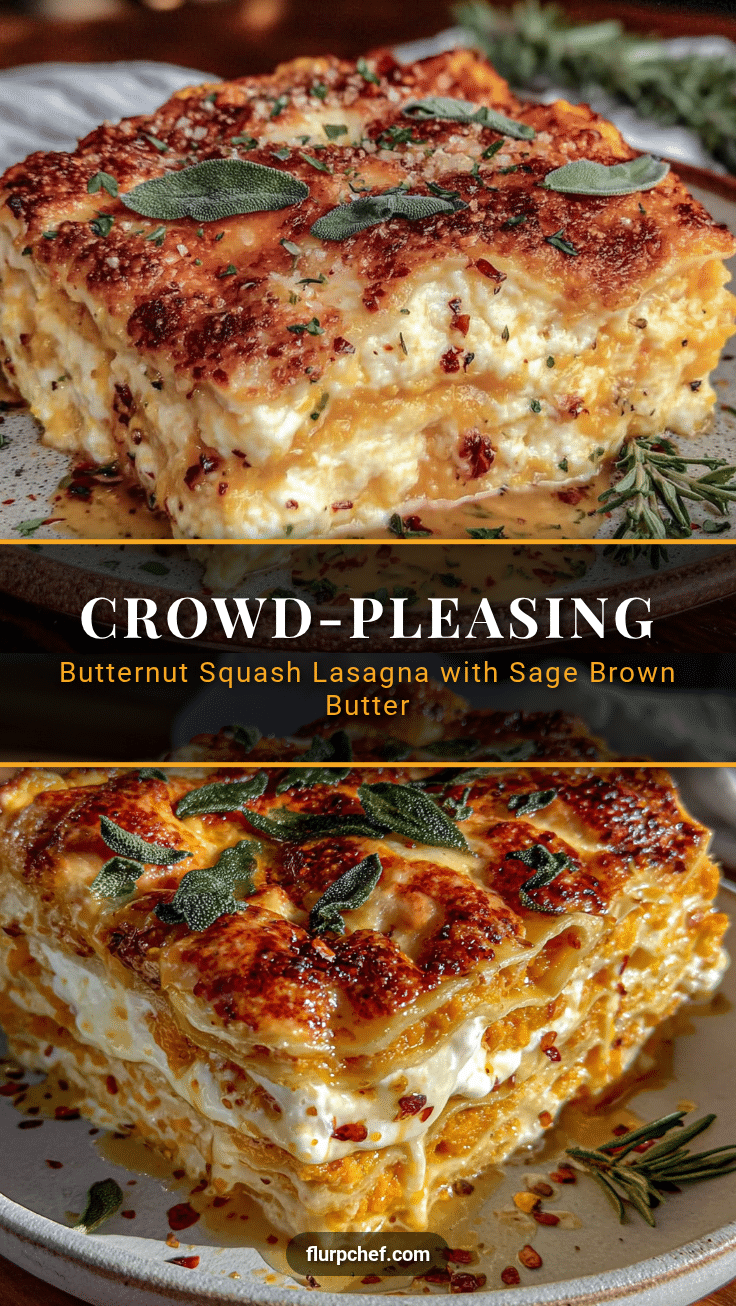
Easy Butternut Squash Lasagna with Sage Brown Butter Recipe

A crowd-pleasing vegetarian lasagna featuring roasted butternut squash, sage brown butter sauce, and creamy cheeses. Perfect for holidays or cozy dinners, this make-ahead dish delivers rich, savory flavor without the need for boiling noodles.
- Prep Time: 30 minutes
- Cook Time: 1 hour 10 minutes
- Total Time: 1 hour 40 minutes
- Yield: 8 servings 1x
- Category: Main Course
- Cuisine: Italian-American
Ingredients
- 1 large butternut squash (about 3 lbs), peeled, seeded, and cut into 1-inch cubes (about 4 cups cubed)
- 2 tablespoons olive oil
- 1 teaspoon salt
- ½ teaspoon black pepper
- ¼ teaspoon nutmeg, freshly grated if possible
- ½ cup (1 stick) unsalted butter
- 10–12 fresh sage leaves, plus more for garnish
- 2 cloves garlic, minced
- 3 tablespoons all-purpose flour
- 2 cups whole milk, warmed
- 1 cup heavy cream
- ½ cup grated Parmesan cheese
- Salt and pepper to taste
- 12 oven-ready lasagna noodles
- 2 cups shredded whole-milk mozzarella (low-moisture)
- 1 cup ricotta cheese (full-fat)
- 1 egg
- ½ cup grated Parmesan cheese (for top layer)
- Fresh sage leaves for garnish
Instructions
- Preheat oven to 400°F (200°C). Toss cubed butternut squash with olive oil, salt, pepper, and nutmeg on a rimmed baking sheet. Spread in a single layer and roast for 25-30 minutes, flipping halfway, until caramelized and fork-tender. Let cool 5 minutes, then mash or puree until smooth. Set aside (about 2 cups puree).
- While squash roasts, melt butter in a medium saucepan over medium heat. Swirl occasionally until butter foams and turns golden with brown specks (about 4-5 minutes). Add fresh sage leaves; they will sizzle and crisp in about 30 seconds. Remove sage leaves with a slotted spoon and set aside on paper towel.
- Reduce heat to low. Add minced garlic to brown butter and cook 30 seconds until fragrant. Sprinkle flour over butter and whisk constantly for 1 minute. Slowly pour in warm milk and cream, whisking continuously to prevent lumps. Cook until sauce thickens (3-4 minutes), then stir in ½ cup Parmesan until melted. Season with salt and pepper. Set aside.
- In a small bowl, mix ricotta cheese with egg and a pinch of salt and pepper. Do not overmix.
- Spread a thin layer (about ½ cup) of brown butter sauce on the bottom of a 9×13-inch baking dish. Layer 3 lasagna noodles side by side. Spread ⅓ of the squash puree over noodles. Dollop ⅓ of ricotta mixture and gently spread. Sprinkle ½ cup mozzarella. Drizzle with ⅓ of remaining brown butter sauce. Repeat layering two more times: noodles, squash, ricotta, mozzarella, sauce.
- For final layer, place last 3 noodles on top. Pour remaining brown butter sauce over noodles, covering edges. Sprinkle with remaining ½ cup mozzarella and ½ cup Parmesan. Arrange reserved crispy sage leaves on top.
- Cover dish tightly with aluminum foil and bake at 375°F (190°C) for 30 minutes. Remove foil and bake another 15-20 minutes until cheese is bubbly and golden brown. Let rest at least 10 minutes before slicing.
Notes
For make-ahead, assemble the night before, cover, and refrigerate. Add 10-15 minutes to covered baking time. To prevent watery lasagna, drain ricotta in a fine-mesh strainer for 15 minutes and let lasagna rest after baking. For a lighter version, use half-and-half instead of heavy cream and part-skim mozzarella. To add protein, layer cooked Italian sausage or shredded rotisserie chicken between squash layers.
Nutrition
- Serving Size: 1/8 of lasagna
- Calories: 480
- Sugar: 8
- Sodium: 720
- Fat: 28
- Saturated Fat: 16
- Carbohydrates: 42
- Fiber: 4
- Protein: 18
Keywords: butternut squash lasagna, sage brown butter, vegetarian lasagna, holiday lasagna, make-ahead lasagna, crowd-pleasing lasagna