My brother-in-law claimed he hated squash for thirty-seven years. Thirty-seven years! He’d push butternut around his plate like a kid avoiding broccoli, and he’d make this face—you know the one—like he was being asked to eat a candle. Then last Thanksgiving, I made this honeynut squash soup just for myself, figuring I’d have leftovers for days. I found him standing at the stove at 11 p.m., eating it straight from the pot with a ladle. He didn’t even bother with a bowl.
Honestly, I should’ve been annoyed—he was supposed to be bringing more chairs up from the basement. But watching him take that third ladleful, I just felt this quiet, ridiculous satisfaction. He didn’t say a word, just looked at me with these wide eyes like, what is this magic? And that’s the thing about this soup. It doesn’t argue with you. It just sits there, all velvety and sweet and a little smoky from the pepitas, and lets you prove yourself wrong.
This recipe started as a happy accident. I had picked up a few honeynut squashes at the farmers market because they looked cute—honestly, that’s the only reason. They’re smaller than butternut, with this deep orange flesh that’s naturally sweeter and creamier. I roasted them with a little olive oil and salt, blended them with some broth and coconut milk, and something just clicked. It was rich without being heavy, savory with just a whisper of sweetness. The toasted pepitas on top? That was pure instinct, and it was the right call. They add this nutty crunch that makes every spoonful interesting.
Maybe you’ve been there—skeptical of a certain ingredient, convinced you just don’t like it. Or maybe you’re the one trying to convince someone else. Either way, this soup has a way of changing minds without even trying. It’s the dish I bring to potlucks when I want to impress without stress. It’s the thing I make on a rainy Tuesday when I need something that feels like a hug. And every single time, someone takes a bite and gets that look—the one that says, okay, I get it now.
Why You’ll Love This Recipe
This isn’t just another squash soup recipe. I’ve tested this thing at least a dozen times—for picky relatives, for dinner parties, for that one friend who “doesn’t do soup.” Every single time, it disappears. Here’s why this version is different:
- Naturally Sweet & Creamy: Honeynut squash is sweeter and denser than butternut, so you don’t need to add sugar or heavy cream. The texture is naturally silky—no straining required.
- Simple Ingredients: You need about eight ingredients, and most are pantry staples. No fancy trips to specialty stores. The pepitas are the only thing you might not have, and they’re worth tracking down.
- Perfect for Hosting: This soup is a dinner party dream. You can make it entirely ahead of time, reheat it in minutes, and serve it in individual bowls or a big tureen. It looks impressive with minimal effort.
- Crowd-Pleaser: I’ve served this to kids, grandparents, vegans, and meat-lovers. Everyone loves it. The flavor is balanced enough to please a range of palates, and the texture is universally comforting.
- Unbelievably Delicious: The combination of roasted squash, warm spices, creamy coconut milk, and crunchy pepitas is next-level. It’s the kind of soup that makes you close your eyes after the first bite.
What really sets this recipe apart is the roasting technique. Instead of boiling the squash, you roast it until the edges caramelize. That browning adds a depth of flavor you just can’t get any other way. It’s a small extra step that makes a huge difference. Plus, the toasted pepitas seasoned with a pinch of cayenne and smoked paprika add a little heat and smokiness that cuts through the sweetness perfectly.
This is comfort food reimagined—healthier, faster, and with the same soul-soothing satisfaction. It’s perfect for impressing guests without stress, or turning a simple weeknight into something memorable. Honestly, it’s the soup that made my brother-in-law a believer. If that’s not a testimonial, I don’t know what is.
What Ingredients You Will Need
This recipe uses simple, wholesome ingredients to deliver bold flavor and satisfying texture without any fuss. Most of these are things you probably already have in your kitchen, and the few that aren’t are easy to find at any grocery store. Here’s what you’ll need:
For the Soup
- Honeynut squash (3 medium, about 2.5 lbs total) – Look for squash that feels heavy for its size with firm, unblemished skin. Honeynut squash is smaller and sweeter than butternut, with a deeper orange color. If you can’t find it, butternut works, but you may need to add a touch of maple syrup for sweetness.
- Olive oil (3 tablespoons, divided) – Use a good-quality extra virgin olive oil for roasting. It adds richness and helps the squash caramelize beautifully.
- Yellow onion (1 large, diced) – Yellow onions have the best balance of sweet and savory for this soup. White or sweet onions work too, but red onions will change the color slightly.
- Garlic (4 cloves, smashed) – Fresh garlic is non-negotiable here. Smashing the cloves releases more flavor than chopping, and it blends smoothly into the soup.
- Vegetable broth (4 cups) – I recommend homemade vegetable broth for the best flavor, but store-bought works fine. Look for a low-sodium option so you can control the salt level.
- Full-fat coconut milk (1 can, 13.5 oz) – This is what makes the soup luxuriously creamy without any dairy. Light coconut milk works, but the texture won’t be as velvety. Shake the can well before opening.
- Maple syrup (1 tablespoon, optional) – You probably won’t need this if your squash is sweet enough. Taste your soup first, then add if you want a touch more sweetness.
- Salt and black pepper (to taste) – I use fine sea salt and freshly ground black pepper. Start with 1 teaspoon of salt and adjust from there.
- Ground cinnamon (½ teaspoon) – Adds warmth without overpowering the squash. Freshly ground cinnamon is noticeably more aromatic.
- Ground nutmeg (¼ teaspoon, freshly grated if possible) – A little goes a long way. Freshly grated nutmeg is worth the extra effort—it has a floral quality that pre-ground nutmeg lacks.
For the Toasted Pepitas

- Pepitas (⅓ cup, raw hulled pumpkin seeds) – Look for bright green pepitas. They toast quickly and add the perfect crunchy contrast to the smooth soup.
- Olive oil (1 teaspoon) – Just enough to coat the seeds. You can also use coconut oil or avocado oil.
- Smoked paprika (¼ teaspoon) – This gives the pepitas a subtle smoky flavor that pairs beautifully with the sweet squash.
- Cayenne pepper (⅛ teaspoon, or to taste) – Adds a tiny kick of heat. Skip it if you’re serving to kids or sensitive palates, or use a pinch of regular paprika instead.
- Flaky sea salt (a pinch) – Maldon or any flaky salt works great. It adds a nice textural pop on top of the soup.
Ingredient Tips & Substitutions
If you’re dairy-free, this recipe is already perfect as written. For a nut-free version, use oat milk or extra broth instead of coconut milk—just know the texture will be thinner. I’ve also made this with roasted butternut squash when I couldn’t find honeynut, and it was still delicious. Just add a teaspoon of maple syrup to compensate for the lower natural sweetness.
For the pepitas, I’ve used toasted almonds and even crispy chickpeas in a pinch. Both work, but the pepitas really are the star topping here. They’re small enough to get a little bit in every spoonful, and the smoky-spicy seasoning is just right.
Equipment Needed
You don’t need a ton of fancy equipment for this soup, which is part of why I love it. Here’s what you’ll need:
- Baking sheet (1 large, rimmed) – A rimmed sheet prevents squash juices from spilling into your oven. Line it with parchment paper for easy cleanup.
- Chef’s knife and cutting board – Honeynut squash is smaller and easier to cut than butternut, but it’s still dense. A sharp chef’s knife makes the job safer and faster.
- Large pot or Dutch oven (5-6 quart) – A heavy-bottomed pot distributes heat evenly and prevents burning. I use my enameled cast iron Dutch oven and it works perfectly.
- Immersion blender or regular blender – An immersion blender lets you blend the soup right in the pot, which means less cleanup. If using a regular blender, work in batches and don’t fill it more than halfway with hot liquid. Let the soup cool slightly first, and hold the lid down with a towel.
- Small skillet (for toasting pepitas) – Any small non-stick or stainless steel pan works. You just need enough surface area to toast the seeds evenly.
- Measuring spoons and cups – For accuracy, especially with the spices. I use my measuring spoons even when I think I can eyeball it.
If you don’t have an immersion blender, a regular blender works fine. Just be careful with the hot liquid—trust me, I’ve learned that lesson the hard way. A potato masher won’t give you a smooth texture, so stick with a blender for the best results.
Preparation Method
Let me walk you through this step by step. The whole process takes about an hour, but most of that is hands-off roasting time. Here’s how to make the best honeynut squash soup of your life:
- Preheat your oven to 400°F (200°C). Line a rimmed baking sheet with parchment paper for easy cleanup. While the oven heats, prep your squash.
- Cut the honeynut squash in half lengthwise. Use a sharp chef’s knife and go slowly. The squash is dense, so be careful. Scoop out the seeds and stringy bits with a spoon. You can save the seeds and roast them like pumpkin seeds if you want! Place the squash halves cut-side up on the baking sheet.
- Drizzle the squash with 2 tablespoons of olive oil. Use your hands or a brush to coat the cut surfaces evenly. Season generously with salt and pepper—about ½ teaspoon of salt total. Flip the squash cut-side down onto the baking sheet. This helps them steam and caramelize at the same time.
- Roast for 35-40 minutes, until the squash is fork-tender and the cut sides are deeply golden and caramelized. The flesh should be soft enough that a fork slides in easily. Let the squash cool for about 10 minutes—long enough to handle, but still warm.
- While the squash roasts, start the aromatics. Heat the remaining 1 tablespoon of olive oil in a large pot or Dutch oven over medium heat. Add the diced onion and cook, stirring occasionally, for 6-8 minutes until soft and translucent. Add the smashed garlic cloves and cook for 1 more minute until fragrant. The garlic should sizzle gently—if it’s browning too fast, turn the heat down.
- Scoop the roasted squash flesh out of the skins and add it to the pot with the onions and garlic. Discard the skins. The flesh should come away easily—if it doesn’t, the squash needs a few more minutes of roasting.
- Add the vegetable broth, cinnamon, and nutmeg. Stir everything together, scraping up any browned bits from the bottom of the pot. Bring the soup to a gentle simmer over medium-high heat, then reduce the heat to low and let it cook for 10 minutes. This allows the flavors to meld together.
- Remove the pot from the heat. Use an immersion blender to blend the soup until completely smooth. If using a regular blender, work in batches—fill the blender no more than halfway, hold the lid down with a clean kitchen towel, and blend until smooth. Return the blended soup to the pot.
- Stir in the full-fat coconut milk. Start with ¾ of the can and add more to reach your desired consistency. I like mine thick enough to coat the back of a spoon, but feel free to thin it with extra broth or water. Taste and adjust seasoning—add the maple syrup if you want more sweetness, and more salt and pepper if needed.
- Make the toasted pepitas. While the soup finishes, heat a small skillet over medium heat. Add 1 teaspoon of olive oil and the pepitas. Cook, stirring constantly, for 2-3 minutes until the pepitas are fragrant and start to pop. They can burn quickly, so keep an eye on them. Remove from heat and immediately toss with smoked paprika, cayenne, and a pinch of flaky sea salt. Set aside to cool.
- Serve the soup hot, ladled into bowls. Top each bowl with a generous sprinkle of toasted pepitas and a drizzle of coconut milk or olive oil if you’re feeling fancy. I like to add a tiny pinch of flaky salt on top right before serving—it adds a nice contrast.
Cooking Tips & Techniques
I’ve made this soup more times than I can count, and I’ve definitely made my share of mistakes along the way. Here are the things I wish someone had told me:
Don’t skip the roasting step. I know it’s tempting to just boil the squash to save time, but roasting is where the magic happens. The caramelization adds a depth of flavor that you simply cannot get from boiling. The squash gets sweeter, nuttier, and more complex. Trust me on this one—I tried the shortcut version once, and it was fine, but it wasn’t this.
Toast the pepitas just before serving. They lose their crunch after a few hours, especially if they’re sitting on top of hot soup. Toast them while the soup simmers, and store any leftovers in an airtight container at room temperature. They’ll stay crispy for a day or two.
Season in layers. Add salt at every stage—when roasting the squash, when cooking the onions, and at the end. This builds flavor from the ground up. Underseasoned soup is one of the most common mistakes, and it’s easy to fix by tasting and adjusting at the end.
Watch the heat when blending. Hot liquid expands in a blender, and if you fill it too full, you’ll end up with soup all over your ceiling. I learned this one the hard way. Let the soup cool for a few minutes before blending, and always hold the lid down with a towel. An immersion blender is safer and easier if you have one.
Make it ahead of time. This soup actually gets better after a day in the fridge. The flavors meld and deepen overnight. So if you’re hosting, make it a day ahead, reheat it gently, and save yourself the stress. Just hold the pepitas until serving.
Variations & Adaptations
This recipe is pretty perfect as-is, but I love playing around with variations. Here are a few of my favorites:
Vegan & Dairy-Free: This recipe is already vegan and dairy-free if you use vegetable broth and coconut milk. It’s naturally rich and creamy without any animal products.
Spicy Version: Add a chopped jalapeño (seeds removed if you want less heat) when you cook the onions. You can also add an extra pinch of cayenne to the soup itself. The heat pairs beautifully with the sweet squash.
Herb-Infused: Add a sprig of fresh rosemary or thyme to the pot while the soup simmers. Remove the sprig before blending. The herbal notes add a lovely complexity that feels very grown-up.
Apple-Squash Combo: Roast a peeled and chopped apple (Honeycrisp or Fuji work great) alongside the squash. Blend it into the soup for a subtle fruity sweetness that’s unexpected and delicious.
Different Toppings: Swap the pepitas for toasted walnuts, crispy sage leaves, or even a dollop of Greek yogurt (if you’re not dairy-free). I’ve also topped this with crumbled goat cheese for a tangy contrast—it’s amazing.
Curried Version: Add 1 tablespoon of curry powder when you cook the onions. It transforms the soup into something entirely different—warm, aromatic, and deeply satisfying. Serve with naan bread for a complete meal.
Serving & Storage Suggestions
This soup is incredibly versatile when it comes to serving. Here’s how I like to do it:
Serving Temperature: Serve the soup hot, but not boiling. I find it’s best when it’s just below a simmer—hot enough to warm you through, but not so hot that you burn your tongue. The pepitas should be added right before serving so they stay crunchy.
Presentation Tips: For dinner parties, I serve this in small individual bowls with a swirl of coconut milk on top and a sprinkle of pepitas. A tiny pinch of flaky salt and a few microgreens make it look restaurant-worthy. If you’re doing a buffet, a large tureen with the toppings on the side works beautifully.
What to Serve Alongside: This soup pairs beautifully with a crusty sourdough bread or a simple green salad with a lemony vinaigrette. For a heartier meal, serve it alongside a roasted chicken or a grilled cheese sandwich. It’s also great as a starter before a heavier main course.
Storage: Store leftover soup in an airtight container in the refrigerator for up to 5 days. The flavors actually get better after a day or two. The soup will thicken as it sits, so you may want to thin it with a little broth or water when reheating.
Freezing: This soup freezes beautifully. Let it cool completely, then transfer to freezer-safe containers or zip-top bags. Leave a little room for expansion. It will keep for up to 3 months. Thaw overnight in the refrigerator and reheat gently on the stovetop. Don’t freeze the pepitas—make fresh ones when you’re ready to serve.
Reheating: Reheat the soup in a pot over medium-low heat, stirring occasionally. Add a splash of broth or water if it’s too thick. You can also reheat individual portions in the microwave—just do it in 30-second bursts, stirring in between.
Nutritional Information & Benefits
This soup is as good for you as it is delicious. Here’s what you’re getting in each serving (based on 6 servings):
| Nutrient | Amount per Serving |
|---|---|
| Calories | 245 |
| Total Fat | 16g |
| Saturated Fat | 8g |
| Carbohydrates | 22g |
| Fiber | 5g |
| Sugar | 8g |
| Protein | 5g |
| Vitamin A | 350% DV |
| Vitamin C | 25% DV |
| Potassium | 15% DV |
Honeynut squash is packed with vitamin A (beta-carotene), which is fantastic for eye health and immune function. It’s also a good source of vitamin C and fiber. Coconut milk provides healthy medium-chain triglycerides (MCTs) that can support energy and metabolism. Pepitas are rich in magnesium, zinc, and healthy fats.
This soup is naturally gluten-free, dairy-free, and vegan. It’s also relatively low in calories for how satisfying it is. I love that I can serve something this indulgent-tasting and know it’s actually nourishing my body.
Conclusion
This honeynut squash soup has become my go-to for so many occasions. It’s the dish I bring to fall gatherings when I want to impress without spending all day in the kitchen. It’s the thing I make on a cold Sunday when I need a little comfort. And it’s the recipe that finally proved to my brother-in-law that squash doesn’t have to be boring.
What I love most about this recipe is how adaptable it is. You can dress it up for a dinner party or keep it simple for a weeknight. You can adjust the spices to your taste, swap in different toppings, or make it ahead of time. It’s forgiving and reliable—the kind of recipe that makes you look like a pro even when you’re just winging it.
I’d love to hear how this turns out for you! Did you add any fun twists? Did you serve it to someone who claimed they didn’t like squash? Drop a comment below and let me know. And if you’re looking for more cozy soup recipes, be sure to check out my creamy tomato basil soup and roasted carrot ginger soup. Happy cooking, friends!
Frequently Asked Questions
Can I use butternut squash instead of honeynut?
Absolutely! Butternut squash is larger and slightly less sweet, so you may want to add a tablespoon of maple syrup or honey to compensate. The roasting time will also be a bit longer—about 45-50 minutes depending on the size of your squash pieces.
Can I make this soup in a slow cooker or Instant Pot?
Yes! For a slow cooker, roast the squash first, then add all ingredients except the coconut milk to the slow cooker. Cook on low for 4-6 hours or high for 2-3 hours. Blend, then stir in the coconut milk. For an Instant Pot, sauté the onions and garlic using the sauté function, add the roasted squash and broth, and pressure cook on high for 5 minutes. Quick release, blend, and stir in the coconut milk.
How can I make this soup thicker or thinner?
For a thicker soup, use less broth or add an extra half-can of coconut milk. You can also blend in a cooked potato or a handful of cashews for extra creaminess. For a thinner soup, add more broth or water until you reach your desired consistency.
Can I freeze this soup?
Yes, this soup freezes beautifully! Let it cool completely, then transfer to freezer-safe containers. Leave some room for expansion. It will keep for up to 3 months. Thaw overnight in the refrigerator and reheat gently on the stovetop. I recommend making fresh pepitas when you’re ready to serve.
What can I use instead of coconut milk?
If you’re not a fan of coconut milk or don’t have any on hand, you can use heavy cream, half-and-half, or even oat milk. Keep in mind that the flavor and texture will change slightly. Oat milk will give a thinner result, while heavy cream will be richer. For a dairy-free option, cashew cream works beautifully.
Pin This Recipe!
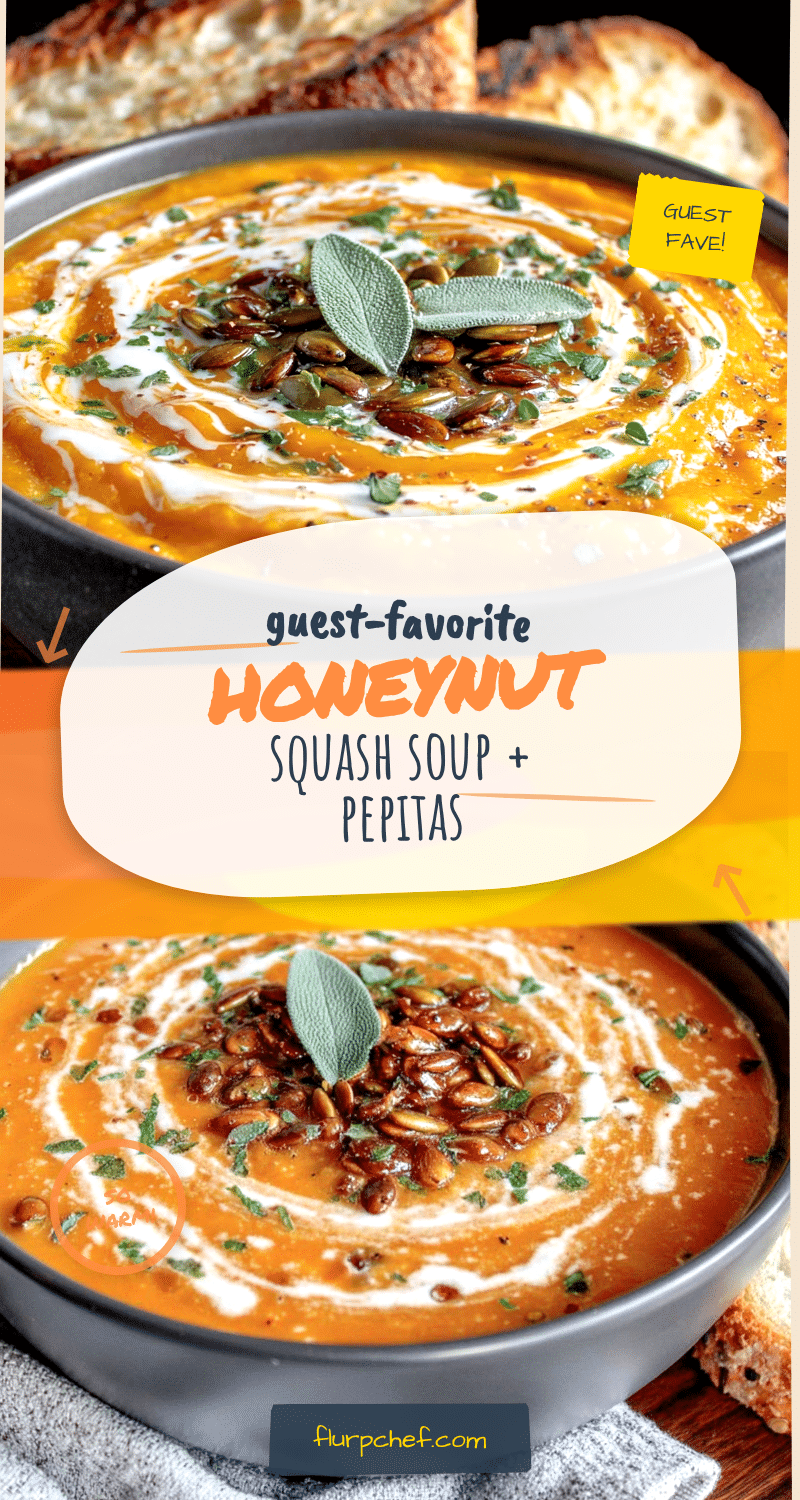
Easy Guest-Favorite Honeynut Squash Soup with Pepitas

This velvety honeynut squash soup is naturally sweet and creamy, with a smoky crunch from toasted pepitas. It’s a crowd-pleasing, dairy-free, and vegan-friendly dish that’s perfect for fall gatherings or cozy weeknights.
- Prep Time: 15 minutes
- Cook Time: 45 minutes
- Total Time: 1 hour
- Yield: 6 servings 1x
- Category: Soup
- Cuisine: American
Ingredients
- 3 medium honeynut squash (about 2.5 lbs total)
- 3 tablespoons olive oil, divided
- 1 large yellow onion, diced
- 4 cloves garlic, smashed
- 4 cups vegetable broth
- 1 can (13.5 oz) full-fat coconut milk
- 1 tablespoon maple syrup (optional)
- Salt and black pepper to taste
- ½ teaspoon ground cinnamon
- ¼ teaspoon ground nutmeg (freshly grated if possible)
- ⅓ cup raw hulled pumpkin seeds (pepitas)
- 1 teaspoon olive oil (for pepitas)
- ¼ teaspoon smoked paprika
- ⅛ teaspoon cayenne pepper (or to taste)
- Pinch of flaky sea salt
Instructions
- Preheat oven to 400°F (200°C). Line a rimmed baking sheet with parchment paper.
- Cut honeynut squash in half lengthwise. Scoop out seeds and stringy bits. Place cut-side up on baking sheet.
- Drizzle squash with 2 tablespoons olive oil, coating cut surfaces. Season with salt and pepper. Flip cut-side down.
- Roast for 35-40 minutes until fork-tender and caramelized. Let cool 10 minutes.
- While squash roasts, heat remaining 1 tablespoon olive oil in a large pot over medium heat. Add onion and cook 6-8 minutes until soft. Add garlic and cook 1 minute until fragrant.
- Scoop roasted squash flesh into pot with onions and garlic. Discard skins.
- Add vegetable broth, cinnamon, and nutmeg. Stir, scraping up browned bits. Bring to a gentle simmer, then reduce heat to low and cook 10 minutes.
- Remove from heat. Blend soup with an immersion blender until smooth (or in batches in a regular blender).
- Stir in coconut milk, starting with ¾ can and adding more to desired consistency. Taste and adjust seasoning, adding maple syrup if desired.
- Make pepitas: Heat 1 teaspoon olive oil in a small skillet over medium heat. Add pepitas and cook, stirring constantly, 2-3 minutes until fragrant and popping. Remove from heat and toss with smoked paprika, cayenne, and flaky sea salt.
- Serve soup hot, topped with toasted pepitas and optional drizzle of coconut milk or olive oil.
Notes
Don’t skip roasting the squash—it adds depth of flavor. Toast pepitas just before serving to keep them crunchy. Season in layers for best flavor. Soup can be made ahead and refrigerated for up to 5 days or frozen for up to 3 months.
Nutrition
- Serving Size: 1 serving (about 1.5
- Calories: 245
- Sugar: 8
- Sodium: 480
- Fat: 16
- Saturated Fat: 8
- Carbohydrates: 22
- Fiber: 5
- Protein: 5
Keywords: honeynut squash soup, vegan soup, dairy-free soup, fall soup, roasted squash soup, pepitas, coconut milk soup


