Introduction
I was at the hardware store last Tuesday—not exactly where you expect to find dinner inspiration. The guy behind the counter, a grizzled older man named Frank who I’d only ever talked to about paint samples, was wiping down the counter and muttering about chicken. “You ever make that garlic butter thing?” he asked me out of nowhere. I blinked. Frank did not seem like the type to give cooking advice. But there I was, holding a new spatula, listening to him describe how he throws chicken in a pan, drowns it in butter and garlic, and calls it dinner. He said his wife works late and this is what he makes when he wants her to think he tried.
Honestly, I almost laughed. But Frank was serious. He scribbled the gist of it on a receipt, and I shoved it in my pocket, fully expecting to toss it. That night, though, I was tired. The kind of tired where takeout sounds good but waiting for delivery sounds worse. I had chicken thawed on the counter, and I remembered Frank’s scribble. Let me tell you—I was not prepared for how good it turned out. I mean, it’s just butter, garlic, and cream. But something about the way it comes together, the way the sauce coats every piece of chicken, it felt like a cheat code for weeknights. Maybe you’ve been there, staring into your fridge at 6 PM with zero plan. This recipe is that plan. It’s the one I keep coming back to, and it all started because a hardware store guy named Frank decided to share his secret.
Why You’ll Love This Recipe
Look, I’ve tested a lot of chicken recipes. Some are too fussy, some take forever, and some just don’t deliver on flavor. This one? It’s the Goldilocks of weeknight dinners. Here’s why it works:
- Quick & Easy: From fridge to table in 20 minutes flat. No marinating, no complicated steps. It’s perfect for those nights when you’re running on empty.
- Simple Ingredients: You probably have garlic, butter, and cream in your kitchen right now. No fancy grocery trips required. Frank would approve.
- Perfect for Busy Weeknights: This isn’t a weekend project. It’s a “I just got home and I’m hungry” kind of meal that actually feels special.
- Crowd-Pleaser: My picky-eating nephew asked for seconds. My dad, who never compliments food, said it was “restaurant quality.” That’s a win.
- Unbelievably Delicious: The sauce is velvety, the garlic is fragrant, and the chicken stays juicy. It’s comfort food that comes together in the time it takes to watch one episode of a sitcom.
What makes this different from other creamy chicken recipes? It’s the balance. A lot of versions are either too heavy or too bland. This one uses a technique where you sear the chicken first to build flavor, then let the cream and butter do the heavy lifting. It’s not just another recipe—it’s the one you’ll text your friends about. And honestly, it’s the kind of dish that makes you close your eyes after the first bite. That’s not an exaggeration. I’ve done it.
What Ingredients You Will Need
This recipe relies on a handful of pantry staples to deliver maximum flavor with minimum effort. Here’s what you’ll need and why each ingredient matters:
- Boneless, Skinless Chicken Breasts (2 large, about 1 lb total): I prefer chicken breasts here because they cook quickly and stay tender when you don’t overcook them. Look for even thickness—if one side is thicker, pound it gently with a rolling pin or your fist. (I’ve used thighs too, and they work great, just add 2-3 minutes to the cook time.)
- Unsalted Butter (3 tablespoons): Butter is the backbone of this sauce. I use unsalted so I can control the salt level. If you only have salted butter, just reduce the added salt by half. I like Kerrygold for its rich flavor, but any good butter works.
- Garlic (4-5 cloves, minced): Fresh garlic is non-negotiable here. The pre-minced stuff in a jar won’t give you that same punch. I’ve made the mistake before—it’s just not the same. Mince it yourself; it takes 30 seconds.
- Heavy Cream (1 cup): This creates that luscious, velvety sauce. You can substitute half-and-half if you want something lighter, but the sauce won’t be as thick. For a dairy-free option, full-fat coconut milk works surprisingly well.
- Chicken Broth (¼ cup): A little broth deglazes the pan and adds savory depth. I use low-sodium broth to keep things balanced. If you don’t have broth, water with a pinch of bouillon works in a pinch.
- Grated Parmesan Cheese (¼ cup): This is my secret weapon. It adds umami and helps thicken the sauce. Use real parmesan, not the powdery stuff in a green can. I recommend Parmigiano-Reggiano for best results.
- Italian Seasoning (1 teaspoon): A blend of oregano, basil, and thyme adds a subtle herbaceous note. You can use dried oregano or thyme alone if that’s what you have.
- Salt and Black Pepper (to taste): Simple seasonings that let the garlic butter shine. I use about ½ teaspoon of salt and ¼ teaspoon of pepper.
- Fresh Parsley (for garnish, optional): A sprinkle of green makes it look pretty, but it’s totally optional. I forget it half the time and the dish is still amazing.
That’s it. Seven main ingredients (plus salt, pepper, and garnish) and you’re on your way to a dinner that tastes like you spent an hour in the kitchen.
Equipment Needed
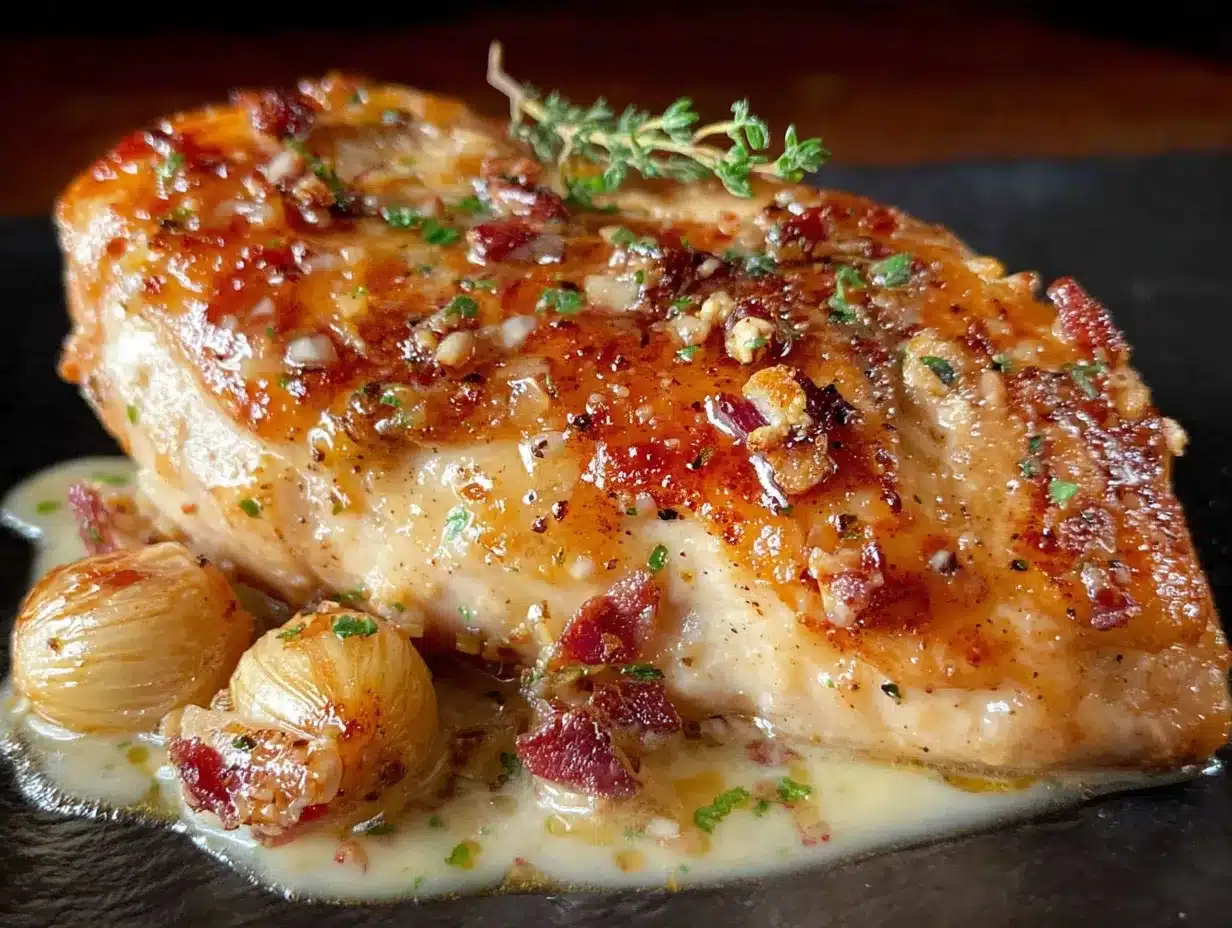
You don’t need a fancy kitchen to pull this off. Here’s the gear:
- Large Skillet or Frying Pan (12-inch): A non-stick or stainless steel pan works best. I use a cast iron skillet sometimes, and it gives a great sear. Just watch the heat—cast iron holds heat longer.
- Cutting Board and Sharp Knife: For mincing garlic and prepping chicken. A dull knife makes everything harder, so if yours is old, take a minute to sharpen it.
- Measuring Cups and Spoons: Accuracy matters for the cream and broth. Eyeballing it can lead to a sauce that’s too thin or too salty.
- Wooden Spoon or Silicone Spatula: For stirring the sauce and scraping up the browned bits from the pan (that’s where the flavor lives).
- Tongs: For flipping the chicken without piercing it. Piercing releases juices and dries out the meat.
- Small Bowl (optional): For mixing the parmesan and Italian seasoning if you want to prep ahead.
If you don’t have a skillet, a deep sauté pan works. No tongs? Use a fork, but be gentle. I’ve made this with a cheap non-stick pan from the grocery store and it turned out fine. You don’t need to spend a lot.
Preparation Method
Let’s get cooking. This comes together fast, so have everything prepped before you start. Trust me, you don’t want to be mincing garlic while the chicken is burning.
- Prep the chicken (2 minutes): Pat the chicken breasts dry with paper towels. This is important—dry chicken sears better. Season both sides generously with salt and pepper. If the breasts are thick, slice them in half horizontally to create two thinner cutlets. This helps them cook faster and more evenly.
- Heat the pan (1 minute): Place your skillet over medium-high heat. Add 1 tablespoon of the butter. Let it melt and sizzle—it should foam slightly. Swirl the pan to coat the bottom.
- Sear the chicken (5-6 minutes): Carefully place the chicken in the hot pan. Don’t crowd the pan; cook in batches if needed. Let it cook undisturbed for 3-4 minutes until the bottom is golden brown. Flip using tongs and cook for another 2-3 minutes. The chicken should be cooked through (internal temp of 165°F) and have a nice crust. Transfer the chicken to a plate and set aside. Don’t wipe the pan—those browned bits are flavor gold.
- Sauté the garlic (1 minute): Reduce the heat to medium. Add the remaining 2 tablespoons of butter to the pan. Once melted, add the minced garlic. Stir constantly for about 30-60 seconds until fragrant. Be careful—garlic burns fast. If it turns dark brown, you’ve gone too far. Start over if you have to (I’ve done it, it’s fine).
- Deglaze the pan (30 seconds): Pour in the chicken broth. Use your wooden spoon to scrape up all the browned bits from the bottom of the pan. This is called deglazing, and it infuses the sauce with all that savory flavor from the seared chicken.
- Make the cream sauce (3 minutes): Pour in the heavy cream and stir to combine. Add the Italian seasoning and a pinch of salt. Let the sauce simmer gently for 2-3 minutes, stirring occasionally, until it thickens slightly. It should coat the back of a spoon. If it’s too thin, let it simmer another minute. Too thick? Add a splash of broth or water.
- Add the parmesan (1 minute): Sprinkle in the grated parmesan cheese. Stir until it melts completely into the sauce. Taste and adjust seasoning—add more salt, pepper, or Italian seasoning if needed.
- Return the chicken (2 minutes): Place the seared chicken back into the skillet. Spoon the sauce over the tops. Let it simmer for 1-2 minutes to reheat the chicken and let the flavors meld. If you want a thicker sauce, let it simmer uncovered. If you prefer more sauce, add a splash of cream or broth.
- Garnish and serve (1 minute): Sprinkle fresh parsley over the top if you’re using it. Serve immediately. The sauce is best fresh, but it’s still good reheated.
A few sensory cues: When you’re searing the chicken, listen for a steady sizzle—if it’s silent, the pan isn’t hot enough. When the garlic hits the butter, it should smell fragrant and nutty within seconds. The sauce should look glossy and smooth, not greasy or separated. If it separates, it’s likely too hot—remove from heat and whisk vigorously.
Cooking Tips & Techniques
I’ve made this recipe maybe twenty times now, and I’ve messed it up plenty. Here’s what I’ve learned so you don’t have to repeat my mistakes:
- Don’t skip drying the chicken: Patting it dry is the difference between a nice golden crust and a sad, steamed exterior. Wet chicken releases steam, and steam prevents browning. I learned this the hard way after a batch of pale, rubbery chicken that made me want to cry.
- Watch the garlic: Garlic goes from fragrant to burnt in about 15 seconds. If you’re a slow chopper, mince it before you even turn on the stove. Burnt garlic tastes bitter and will ruin the whole sauce. Ask me how I know.
- Use low heat for the cream: High heat can cause heavy cream to curdle or separate. Keep it at a gentle simmer—bubbles should be small and lazy, not vigorous. If you see the sauce starting to look grainy, pull it off the heat immediately and whisk in a tablespoon of cold butter to bring it back together.
- Season as you go: Don’t just salt at the end. Season the chicken before searing, add a pinch to the sauce, and taste before serving. Layers of seasoning make the final dish taste more complex.
- Multitask smartly: While the chicken is searing, mince your garlic and measure your cream. While the sauce simmers, set the table or boil pasta. Every minute counts on a weeknight.
One more thing: if your sauce is too thin, don’t panic. Let it simmer a few extra minutes, or stir in a slurry of 1 teaspoon cornstarch mixed with 2 teaspoons cold water. That’s a cheat I use when I’m in a hurry.
Variations & Adaptations
This recipe is a great base, and you can tweak it to fit your mood or what’s in your fridge. Here are a few ways I’ve changed it up:
- Lighter Version: Swap the heavy cream for half-and-half or evaporated milk. Use only 1 tablespoon of butter and skip the parmesan. The sauce will be thinner but still flavorful. I’ve done this when I’m trying to eat lighter, and it’s still satisfying.
- Add Vegetables: Toss in a handful of spinach or kale after you add the cream. Let it wilt for 2 minutes. You can also add sliced mushrooms when you sauté the garlic—they soak up the butter beautifully. I like adding sun-dried tomatoes for a tangy twist.
- Spicy Kick: Add ½ teaspoon of red pepper flakes along with the Italian seasoning. Or stir in a tablespoon of hot sauce at the end. My brother-in-law loves this version—he says it wakes up the dish.
- Herb Swap: Instead of Italian seasoning, use fresh thyme or rosemary. Add a sprig to the sauce while it simmers, then remove before serving. I tried this with fresh sage once, and it was amazing for fall.
- Dairy-Free Adaptation: Use full-fat coconut milk instead of heavy cream and a dairy-free butter substitute. The coconut flavor is subtle and pairs well with the garlic. Skip the parmesan or use a vegan alternative.
- Different Protein: Chicken thighs work great—just cook them a few minutes longer. You can also use pork chops or even firm tofu (press it first, then sear). I’ve done it with shrimp, and it cooks in half the time.
My personal favorite variation? I add a squeeze of lemon juice at the end and a handful of capers. It brightens up the richness and makes it feel fancier. I served it to friends once and they thought I’d spent an hour on it. Nope—just 20 minutes and a little creativity.
Serving & Storage Suggestions
This dish is versatile when it comes to serving. Here’s how I like to enjoy it:
Serving Temperature and Presentation: Serve the chicken hot, straight from the skillet. Spoon extra sauce over the top. I like to put the whole skillet on the table for a family-style presentation—it looks rustic and impressive. Garnish with fresh parsley or a sprinkle of red pepper flakes for color.
What to Serve With It: The creamy garlic sauce begs for something to soak it up. I usually serve this over egg noodles, rice, or mashed potatoes. Crusty bread is also amazing for sopping up every last drop. On the side, a simple green salad with lemon vinaigrette or steamed broccoli balances the richness. I’ve also served it with roasted asparagus or a side of garlic bread for a full meal.
Storage Instructions: Store leftovers in an airtight container in the refrigerator for up to 3 days. The sauce will thicken as it cools—that’s normal. I recommend storing the chicken and sauce together so the chicken stays moist.
Reheating Methods: Reheat gently on the stovetop over low heat, adding a splash of milk or broth to thin the sauce if needed. Microwave works in a pinch—use 50% power and stir halfway through. Avoid boiling, as it can cause the sauce to separate. The flavors actually deepen overnight, so leftovers taste even better the next day.
Freezer Instructions: You can freeze this dish for up to 2 months. Let it cool completely, then transfer to a freezer-safe container. Thaw overnight in the fridge before reheating. The sauce might separate slightly after freezing—just whisk it back together while reheating.
Nutritional Information & Benefits
Here’s an approximate nutritional breakdown per serving (based on 4 servings, using chicken breasts and heavy cream):
| Nutrient | Amount per Serving |
|---|---|
| Calories | 420 |
| Protein | 35g |
| Fat | 28g |
| Saturated Fat | 16g |
| Carbohydrates | 5g |
| Fiber | 0g |
| Sugar | 2g |
| Sodium | 580mg |
Health Benefits: Chicken breast is a lean source of protein, which supports muscle health and keeps you full. Garlic has anti-inflammatory properties and may support immune health. While this dish is indulgent, you can lighten it up with the variations above. I like to serve it with a big side of vegetables to round out the meal. If you’re watching your saturated fat, swap the heavy cream for half-and-half or use less butter. It’s all about balance—this is a treat, not an everyday meal, and that’s okay.
Dietary Considerations: This recipe is gluten-free (check your broth label). For a low-carb option, serve it with zucchini noodles or cauliflower rice. It’s not dairy-free in its standard form, but the dairy-free adaptation works well. Potential allergens include dairy and (if using) gluten in some broths.
Conclusion
So there it is—a creamy garlic butter chicken that comes together in 20 minutes, thanks to a hardware store guy named Frank. I don’t know about you, but I love finding recipes in unexpected places. It makes them feel more real, more lived-in. This one has earned a permanent spot in my weeknight rotation because it’s reliable, delicious, and doesn’t ask much of me after a long day.
I hope you give it a try. Play with the variations, make it your own, and don’t stress about perfection. If you burn the garlic, start over. If the sauce is too thin, let it simmer. Cooking is supposed to be forgiving. And honestly, even a slightly messed-up version of this dish is still pretty darn good.
When you make it—and I hope you do—come back and let me know how it turned out. Did you add something unexpected? Serve it with something weird? I’d love to hear. Drop a comment below or tag me in your photos. Happy cooking!
Frequently Asked Questions
Can I use chicken thighs instead of breasts?
Absolutely. Boneless, skinless chicken thighs work great—they’re even more forgiving and stay juicy. Just cook them for an extra 2-3 minutes per side since they’re a bit thicker. The sauce is the same either way.
How do I prevent the cream sauce from curdling?
Keep the heat low after adding the cream. A gentle simmer is all you need—no boiling. Also, let the cream come to room temperature before adding it to the pan. Cold cream hitting a hot pan is more likely to curdle. If it does curdle, whisk in a tablespoon of cold butter to smooth it out.
Can I make this dairy-free?
Yes. Use full-fat coconut milk instead of heavy cream, and a dairy-free butter substitute. The coconut flavor is mild and complements the garlic. Skip the parmesan or use a vegan version. The sauce will be slightly thinner but still delicious.
What can I serve with this to soak up the sauce?
Egg noodles, rice, mashed potatoes, or crusty bread are all excellent choices. I’m partial to egg noodles because they catch every bit of sauce. If you’re low-carb, try cauliflower rice or zucchini noodles.
How do I store and reheat leftovers?
Store in an airtight container in the fridge for up to 3 days. Reheat gently on the stovetop over low heat, adding a splash of milk or broth to thin the sauce. You can also microwave on 50% power. The flavors get even better overnight, so leftovers are a bonus.
Pin This Recipe!
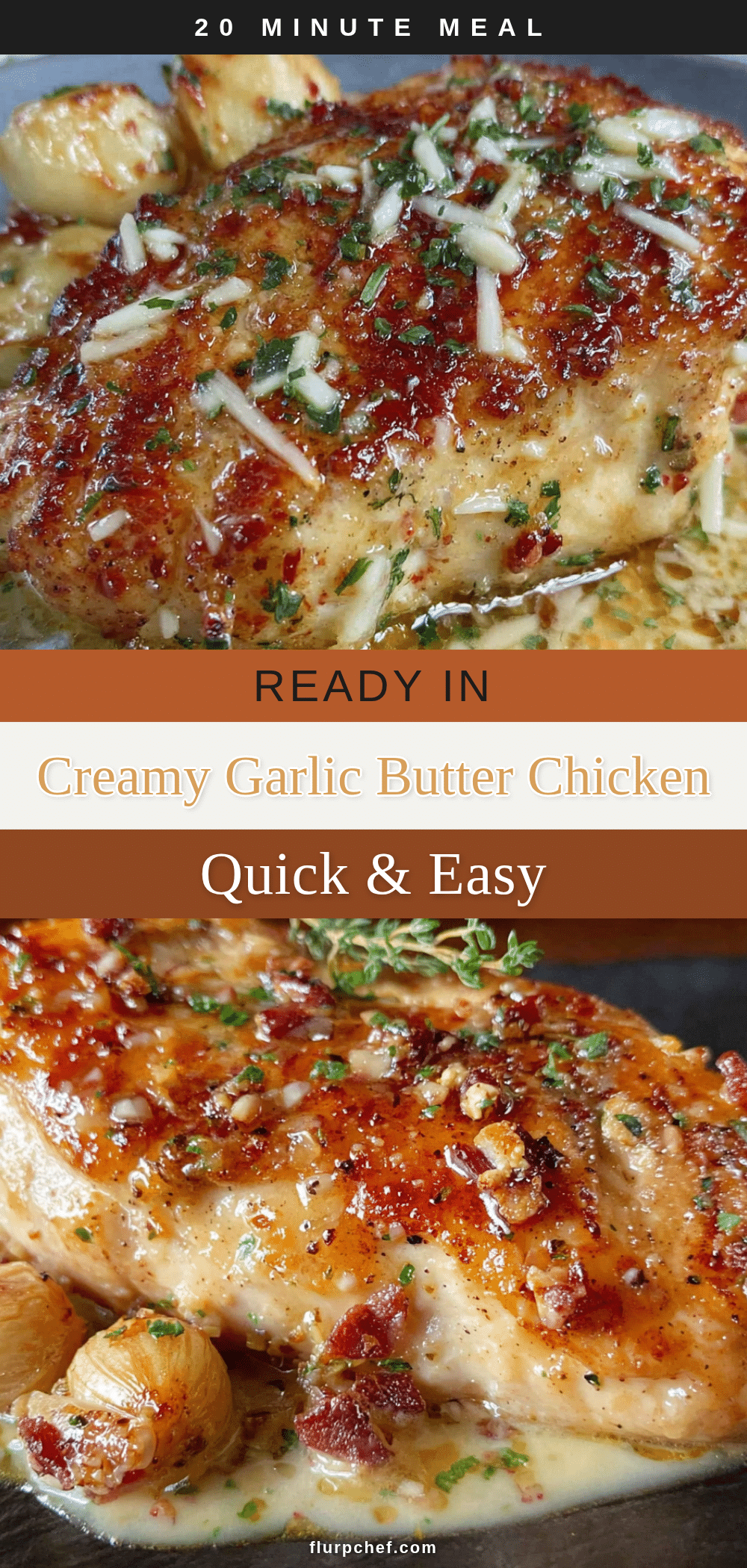
Quick Creamy Garlic Butter Chicken – Easy 20-Minute Dinner

A quick and easy creamy garlic butter chicken recipe that comes together in just 20 minutes. Perfect for busy weeknights, this dish features tender chicken breasts in a velvety garlic cream sauce with parmesan cheese.
- Prep Time: 5 minutes
- Cook Time: 15 minutes
- Total Time: 20 minutes
- Yield: 4 servings 1x
- Category: Main Course
- Cuisine: American
Ingredients
- 2 large boneless, skinless chicken breasts (about 1 lb total)
- 3 tablespoons unsalted butter
- 4–5 cloves garlic, minced
- 1 cup heavy cream
- ¼ cup chicken broth
- ¼ cup grated Parmesan cheese
- 1 teaspoon Italian seasoning
- Salt and black pepper to taste
- Fresh parsley for garnish (optional)
Instructions
- Pat the chicken breasts dry with paper towels. Season both sides generously with salt and pepper. If thick, slice in half horizontally to create thinner cutlets.
- Place a large skillet over medium-high heat. Add 1 tablespoon of butter and let it melt and sizzle.
- Carefully place the chicken in the hot pan. Cook undisturbed for 3-4 minutes until golden brown. Flip and cook for another 2-3 minutes until cooked through (internal temp 165°F). Transfer to a plate and set aside.
- Reduce heat to medium. Add remaining 2 tablespoons of butter. Once melted, add minced garlic and stir constantly for 30-60 seconds until fragrant.
- Pour in chicken broth and use a wooden spoon to scrape up browned bits from the bottom of the pan.
- Pour in heavy cream and stir. Add Italian seasoning and a pinch of salt. Let simmer gently for 2-3 minutes until slightly thickened.
- Sprinkle in grated Parmesan cheese and stir until melted. Taste and adjust seasoning.
- Return chicken to the skillet. Spoon sauce over the tops. Let simmer for 1-2 minutes to reheat and meld flavors.
- Garnish with fresh parsley if desired. Serve immediately.
Notes
Pat chicken dry for best sear. Watch garlic carefully as it burns quickly. Keep heat low when adding cream to prevent curdling. Season in layers for best flavor. If sauce is too thin, let simmer longer or add cornstarch slurry (1 tsp cornstarch mixed with 2 tsp cold water).
Nutrition
- Serving Size: 1 serving
- Calories: 420
- Sugar: 2
- Sodium: 580
- Fat: 28
- Saturated Fat: 16
- Carbohydrates: 5
- Protein: 35
Keywords: creamy garlic butter chicken, quick chicken dinner, 20-minute meal, weeknight dinner, garlic cream sauce chicken


