The Día de Muertos altar setup was in three hours and I’d completely forgotten to bake the pan de muerto. My neighbor, Mrs. Vega, had spent two days making her famous mole negro. Across the street, the Rodriguez family was assembling a tower of sugar skulls and marigolds. And me? I was staring at a bag of flour on my counter, realizing I had zero time to run to the panadería. Everyone else would be bringing these elaborate, multi-day preparations. I had a half-stick of butter, some yeast I hoped was still alive, and a vague memory of my grandmother’s hands kneading dough on a marble counter. Honestly, I almost gave up and bought some sad grocery-store cookies. But then I remembered the orange blossom water I’d picked up on a whim last spring. And let me tell you—sometimes the best recipes are born from pure, panicked desperation. That loaf, slightly lopsided and dusted with too much sugar, ended up being the first thing to disappear from the altar table. I mean, Mrs. Vega even asked for the recipe. Traditional Pan de Muerto with Orange Blossom Glaze isn’t just a holiday bread—it’s the one that saved me from total potluck humiliation. Maybe you’ve been there, staring down a deadline with nothing but pantry staples and a prayer. That’s exactly why this recipe stuck with me.
Why You’ll Love This Recipe
This Traditional Pan de Muerto with Orange Blossom Glaze is the kind of recipe that makes you look like you planned ahead when you absolutely did not. I’ve tested this dough more times than I care to admit—through sticky summer humidity, dry winter air, and one memorable attempt where I forgot the salt entirely. It works every single time.
- Surprisingly Simple: Despite looking like something from a fancy bakery, this dough comes together in about 30 minutes of active work. No stand mixer required—your hands work just fine.
- Pantry-Friendly Ingredients: Flour, sugar, butter, eggs, yeast. The orange blossom water is the only specialty item, and a little bottle lasts forever.
- Perfect for Día de Muertos: This bread is the heart of any ofrenda. It’s traditional, symbolic, and tastes like the holiday itself.
- Foolproof for Beginners: I’ve walked three different friends through this recipe over FaceTime. None of them had ever baked yeast bread before. All three succeeded.
- That Orange Blossom Glaze: This is what sets it apart from every other pan de muerto recipe out there. The floral notes cut through the buttery richness in a way that’s honestly addictive.
What makes this version different is the technique. Instead of adding the orange blossom water directly to the dough (which can mute its delicate flavor), I use it in the glaze and brush it onto the warm bread. The aroma hits you first, then the taste—it’s like capturing spring and autumn in one bite. This isn’t just another holiday bread recipe. It’s the one that makes you close your eyes after that first bite and remember exactly why you love baking.
What Ingredients You Will Need
This recipe uses simple, wholesome ingredients to deliver that signature soft, slightly sweet bread with a fragrant floral finish. Most of these are standard baking staples, so you’re probably already halfway there.
- All-purpose flour (4 cups / 500g): Provides structure without being too dense. I prefer King Arthur Flour for consistent results, but any brand works. Spoon and level your flour—don’t scoop directly from the bag or you’ll end up with dry dough.
- Active dry yeast (2 ¼ teaspoons / one 7g packet): Make sure your yeast is fresh. If it doesn’t foam after five minutes in warm water, toss it and start over. Trust me on this—I’ve ruined a batch by being stubborn.
- Warm milk (½ cup / 120ml, around 110°F): Whole milk gives the richest flavor, but 2% works fine. The warmth wakes up the yeast. Too hot and you’ll kill it; too cold and it won’t activate. Think baby bottle temperature.
- Granulated sugar (½ cup / 100g): Adds just enough sweetness without making it a dessert bread. The dough should taste subtly sweet, not like cake.
- Unsalted butter (½ cup / 113g, softened): Adds richness and tenderness. Use the real stuff—margarine changes the texture completely.
- Large eggs (3, room temperature): Room temperature eggs incorporate more evenly into the dough. If you forgot to take them out, place them in warm water for five minutes.
- Orange zest (1 tablespoon, from about 1 large orange): Fresh zest only. Dried zest won’t give you that bright citrus pop. Wash your orange well first.
- Vanilla extract (1 teaspoon): Pure vanilla, not imitation. It rounds out the floral notes beautifully.
- Salt (½ teaspoon): Don’t skip it. Salt controls yeast activity and enhances flavor. I use fine sea salt.
For the Orange Blossom Glaze:
- Powdered sugar (1 ½ cups / 180g): Sift it first to avoid lumps in your glaze.
- Orange blossom water (3 tablespoons): This is the star. Look for it in Middle Eastern grocery stores or online. Nielsen-Massey makes a good one. A little goes a long way.
- Milk (1-2 tablespoons, as needed): Adjust for your desired consistency. The glaze should be thick but pourable.
For the Topping:
- Granulated sugar (¼ cup / 50g, for dusting): Traditional pan de muerto uses plain white sugar. Some bakers mix in a pinch of cinnamon, but I keep it classic.
Substitution tip: If you can’t find orange blossom water, use fresh orange juice mixed with a drop of orange extract. It won’t be exactly the same, but it’s a decent backup. For a dairy-free version, use plant-based butter and oat milk in the dough.
Equipment Needed
You don’t need a professional bakery setup for this bread. Here’s what actually matters:
- Large mixing bowl: Glass or ceramic works best. Metal can react with the yeast.
- Whisk and wooden spoon: For mixing the dough before you get your hands in there.
- Baking sheet: Line it with parchment paper. The glaze can get sticky.
- Pastry brush: For applying the glaze while the bread is still warm. A silicone brush is easier to clean.
- Clean kitchen towel: For covering the dough while it rises. I use an old flour sack towel—it’s lightweight and breathable.
- Cooling rack: Essential for even cooling. If you leave the bread on the baking sheet, the bottom gets soggy.
I’ve made this dough in a cheap metal bowl from the dollar store and it turned out fine. Don’t overthink the equipment. Your hands are the most important tool here—you’ll feel when the dough is ready.
Preparation Method
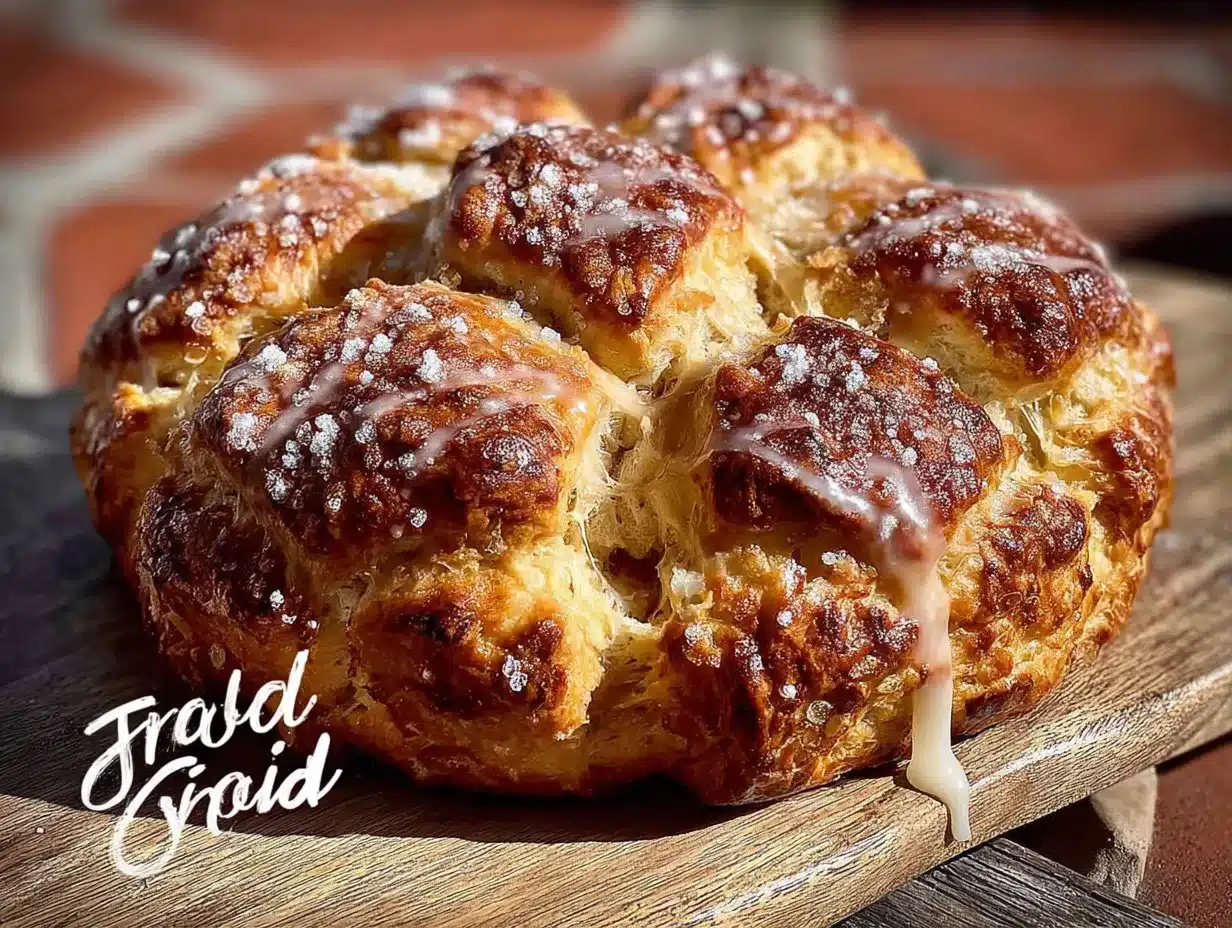
- Activate the yeast (5 minutes): In a small bowl, combine the warm milk, 1 tablespoon of sugar, and the yeast. Stir gently and let it sit for 5-7 minutes until frothy. If nothing happens, your yeast is dead. Start over.
- Mix the dry ingredients (2 minutes): In your large bowl, whisk together the flour, remaining sugar, orange zest, and salt. Make a well in the center.
- Combine wet ingredients (3 minutes): In a separate bowl, whisk the eggs and vanilla until smooth. Pour the egg mixture and the yeast mixture into the well of flour. Stir with a wooden spoon until a shaggy dough forms.
- Knead the dough (8-10 minutes): Turn the dough onto a lightly floured surface. Knead by pushing the dough away with the heel of your hand, folding it back, and repeating. Add the softened butter in three additions, kneading after each. The dough will be sticky at first—resist the urge to add too much flour. After about 8 minutes, it should be smooth, elastic, and slightly tacky. You’ll know it’s ready when you press a finger into it and the indent springs back.
- First rise (1-1.5 hours): Place the dough in a lightly greased bowl, cover with a towel, and let it rise in a warm spot. I put mine in the oven with the light on. It should double in size. This is the hardest part—waiting.
- Shape the dough (10 minutes): Punch down the dough gently. Divide it into two pieces: one large (about two-thirds of the dough) for the base, and one smaller for the decorations. Shape the large piece into a round loaf and place it on your parchment-lined baking sheet. Roll the smaller piece into ropes and shape them into bone-like pieces—traditional pan de muerto has four “bones” crossed on top, plus a small round knob in the center. Attach them with a dab of water.
- Second rise (45 minutes): Cover the shaped loaf loosely with a towel and let it rise again. It should puff up visibly but not double.
- Bake (25-30 minutes at 350°F / 175°C): Bake until the top is deep golden brown and the loaf sounds hollow when tapped on the bottom. If the top is browning too fast, tent it with foil halfway through.
- Glaze while warm (5 minutes): While the bread bakes, whisk together the powdered sugar and orange blossom water. Add milk a tablespoon at a time until it reaches a thick, pourable consistency. As soon as the bread comes out of the oven, brush the glaze over the top. The warmth will help it soak in. Sprinkle generously with granulated sugar.
- Cool completely (1 hour): Transfer to a cooling rack. I know it’s tempting, but let it cool fully before slicing. The texture sets as it rests.
Cooking Tips & Techniques
I’ve burned through a lot of flour perfecting this recipe. Here’s what I learned the hard way:
Temperature matters more than you think. Cold ingredients make the dough stubborn. Your milk should be warm, your butter soft, your eggs at room temperature. If your kitchen is cold, the dough will take forever to rise. I once left it for three hours and it barely moved. Pop it in the oven with just the light on—it’s a game changer.
Don’t over-flour your surface. Sticky dough is normal, especially when you add butter. Adding too much flour makes the bread dense and heavy. Instead, use a bench scraper to lift and fold the dough. A little patience goes a long way.
The bone shapes are forgiving. I cannot roll perfect ropes to save my life. My first attempt looked more like mutant worms than bones. Here’s the trick: roll the ropes thicker than you think you need—they shrink slightly during the second rise. And don’t stress about symmetry. Handmade bread is supposed to look handmade.
Brush the glaze immediately. That window between “hot from the oven” and “cool enough to handle” is when the glaze absorbs best. If you wait too long, it just sits on top and gets sticky. Set a timer if you have to.
Let it rest overnight. This bread is actually better the next day. The flavors meld together, the crumb softens, and the orange blossom aroma deepens. I always bake mine the day before I need it.
Variations & Adaptations
This dough is surprisingly flexible. Here are a few ways I’ve adapted it:
- Chocolate Orange Pan de Muerto: Replace ¼ cup of flour with unsweetened cocoa powder. Add ½ cup of dark chocolate chips with the butter. The chocolate and orange blossom combination is incredible—think fancy European chocolate orange, but in bread form.
- Vegan Version: Use plant-based butter, replace the eggs with flax eggs (2 tablespoons ground flaxseed mixed with 6 tablespoons water), and use oat milk. The texture is slightly denser but still delicious. My vegan friend requested this for her ofrenda last year and it was a hit.
- Spiced Variation: Add 1 teaspoon of ancho chili powder and ½ teaspoon of cinnamon to the flour. The warmth of the chili plays beautifully with the sweet orange glaze. It’s not spicy—just aromatic.
- Gluten-Free Adaptation: Use a 1:1 gluten-free baking flour blend. Add an extra egg and reduce the milk by 2 tablespoons. The dough will be stickier, so wet your hands when shaping. It won’t rise as high, but the flavor is spot on.
- Mini Loaves: Divide the dough into 8 pieces instead of 2. Shape each into a small round, skip the bone decorations, and bake for 15-18 minutes. Perfect for sharing or gifting.
I personally love the chocolate orange version during the colder months. It feels like a warm hug in bread form.
Serving & Storage Suggestions
Serve this Traditional Pan de Muerto with Orange Blossom Glaze at room temperature or slightly warm. It’s perfect alongside a cup of Mexican hot chocolate, café de olla, or even a simple black coffee. For a full Día de Muertos spread, pair it with tamales, atole, and fresh fruit.
The glaze will stay glossy for about 6 hours after baking. If you’re serving it later, wait to glaze until just before serving—or embrace the matte look. It tastes the same either way.
Storage: Wrap the cooled bread tightly in plastic wrap and store at room temperature for up to 3 days. Do not refrigerate—it dries out the crumb. If your kitchen is humid, store it in a paper bag instead.
Freezing: Freeze the unglazed loaf for up to 2 months. Wrap it in plastic wrap, then foil. Thaw overnight at room temperature, then warm in a 300°F oven for 10 minutes before glazing. I always bake an extra loaf for the freezer—it’s a lifesaver when you forget a potluck.
Reheating: Pop slices in the toaster or microwave for 10 seconds. The orange blossom aroma really blooms when the bread is warm.
The flavors actually deepen after a day. Day-old pan de muerto is perfect for French toast or bread pudding. Don’t throw away stale pieces—they’re a gift.
Nutritional Information & Benefits
Per serving (1/8 of the loaf, with glaze):
- Calories: 320
- Fat: 12g
- Carbohydrates: 48g
- Protein: 7g
- Fiber: 1g
- Sugar: 22g
This bread is a treat, not a health food. But it does have some redeeming qualities. The eggs provide high-quality protein and choline for brain health. Orange zest is packed with vitamin C and antioxidants. And orange blossom water has been used in traditional medicine for its calming properties—there’s a reason it’s associated with relaxation and celebration.
If you’re watching your sugar intake, reduce the glaze sugar by half or skip the final dusting. The bread itself is only moderately sweet. For a lower-carb option, try the almond flour version mentioned in the variations.
I personally love that this bread feels special without being over-the-top indulgent. It’s a celebration bread, meant to be shared. One slice won’t derail your week—it’ll just make your Tuesday better.
Conclusion
This Traditional Pan de Muerto with Orange Blossom Glaze is more than just a recipe—it’s the bread that saved me from potluck disaster and became a family tradition overnight. It’s soft, fragrant, and surprisingly simple to make. Whether you’re building an ofrenda, hosting a holiday gathering, or just want to taste something that feels like autumn and spring combined, this bread delivers.
I hope you give it a try, even if you’re nervous about working with yeast. Trust the process—your hands know what to do. And if your first loaf is a little lopsided? That’s perfect. That’s handmade. That’s real.
I’d love to hear how yours turns out. Did you try a variation? Did your family fight over the last slice? Drop a comment below and tell me all about it. And if you share it on social media, tag me—I want to see your beautiful, imperfect, delicious loaves.
Happy baking, and may your kitchen always smell like orange blossoms.
Frequently Asked Questions
Can I make this bread ahead of time?
Absolutely. Bake it a day ahead, skip the glaze, and store it wrapped at room temperature. Glaze and sugar just before serving. The flavors actually improve overnight.
What can I use instead of orange blossom water?
Fresh orange juice mixed with a drop of orange extract works in a pinch. The floral notes won’t be as pronounced, but you’ll still get that citrusy brightness.
My dough isn’t rising. What went wrong?
Most likely your yeast was dead or your liquid was too hot. Check the expiration date on your yeast and use a thermometer for your milk. Around 110°F is the sweet spot.
Can I use instant yeast instead of active dry?
Yes. Use the same amount and skip the activation step. Mix it directly with the flour. You may need to add an extra minute or two to the rise time.
How do I store leftover pan de muerto?
Wrap tightly in plastic wrap and keep at room temperature for up to 3 days. Do not refrigerate. For longer storage, freeze the unglazed loaf for up to 2 months.
Pin This Recipe!
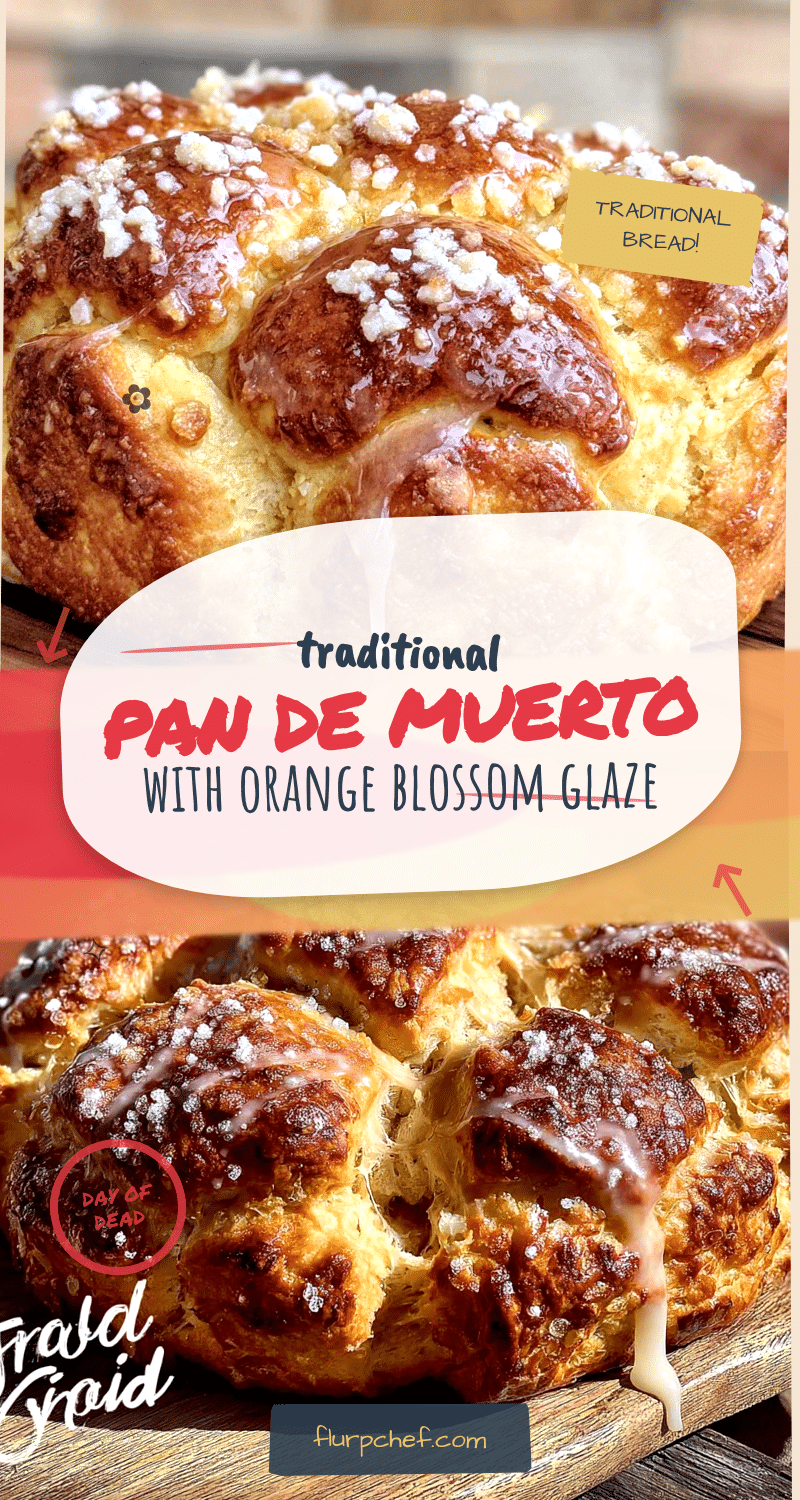
Traditional Pan de Muerto with Orange Blossom Glaze
A soft, fragrant Mexican holiday bread infused with orange blossom glaze, perfect for Día de Muertos celebrations. This foolproof recipe yields a beautifully golden loaf with a delicate floral finish that will impress at any ofrenda.
- Prep Time: 30 minutes
- Cook Time: 30 minutes
- Total Time: 3 hours 30 minutes
- Yield: 8 servings 1x
- Category: Bread
- Cuisine: Mexican
Ingredients
- 4 cups (500g) all-purpose flour
- 2 ¼ teaspoons (one 7g packet) active dry yeast
- ½ cup (120ml) warm milk (around 110°F)
- ½ cup (100g) granulated sugar
- ½ cup (113g) unsalted butter, softened
- 3 large eggs, room temperature
- 1 tablespoon orange zest (from about 1 large orange)
- 1 teaspoon vanilla extract
- ½ teaspoon fine sea salt
- 1 ½ cups (180g) powdered sugar, sifted
- 3 tablespoons orange blossom water
- 1–2 tablespoons milk (as needed for glaze consistency)
- ¼ cup (50g) granulated sugar (for dusting)
Instructions
- Activate the yeast: In a small bowl, combine warm milk, 1 tablespoon sugar, and yeast. Stir gently and let sit for 5-7 minutes until frothy.
- Mix dry ingredients: In a large bowl, whisk together flour, remaining sugar, orange zest, and salt. Make a well in the center.
- Combine wet ingredients: In a separate bowl, whisk eggs and vanilla until smooth. Pour egg mixture and yeast mixture into the well of flour. Stir with a wooden spoon until a shaggy dough forms.
- Knead the dough: Turn dough onto a lightly floured surface. Knead for 8-10 minutes, adding softened butter in three additions. Dough should be smooth, elastic, and slightly tacky.
- First rise: Place dough in a lightly greased bowl, cover with a towel, and let rise in a warm spot for 1-1.5 hours until doubled in size.
- Shape the dough: Punch down dough. Divide into two pieces (one large for base, one small for decorations). Shape large piece into a round loaf on parchment-lined baking sheet. Roll small piece into ropes and shape into bone-like pieces, attaching with water. Add a small round knob in the center.
- Second rise: Cover shaped loaf loosely with a towel and let rise for 45 minutes until puffed.
- Bake: Bake at 350°F (175°C) for 25-30 minutes until deep golden brown and hollow-sounding when tapped. Tent with foil if browning too fast.
- Glaze while warm: Whisk together powdered sugar and orange blossom water. Add milk 1 tablespoon at a time until thick but pourable. Brush glaze over warm bread immediately after baking. Sprinkle generously with granulated sugar.
- Cool completely: Transfer to a cooling rack and let cool fully for 1 hour before slicing.
Notes
Temperature matters: use warm milk (110°F), room temperature eggs, and softened butter. Don’t over-flour your surface; sticky dough is normal. Brush glaze immediately after baking for best absorption. Bread is better the next day as flavors meld. For best results, bake a day ahead and glaze before serving.
Nutrition
- Serving Size: 1 slice (1/8 of loaf
- Calories: 320
- Sugar: 22
- Sodium: 180
- Fat: 12
- Saturated Fat: 7
- Carbohydrates: 48
- Fiber: 1
- Protein: 7
Keywords: pan de muerto, day of the dead bread, mexican bread, orange blossom bread, holiday bread, traditional mexican recipe


